Final Inspection in Footwear Manufacturing – Full Shoe Assembly Series
Final inspection represents the most decisive quality checkpoint in footwear manufacturing, where every pair is evaluated before it is approved for packing and dispatch. At this stage, the product reflects the combined outcome of all upstream operations such as cutting, stitching, lasting, cementing, and assembly. Even minor lapses that go unnoticed earlier can surface here, making this step essential for protecting product quality and brand reputation.
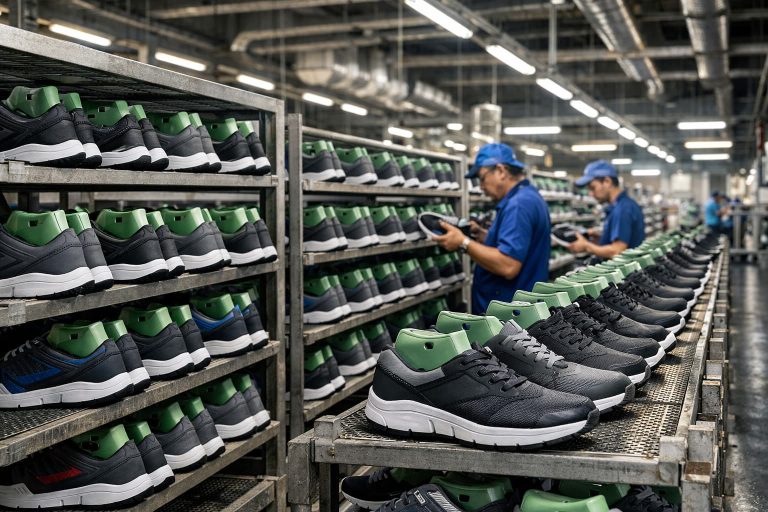
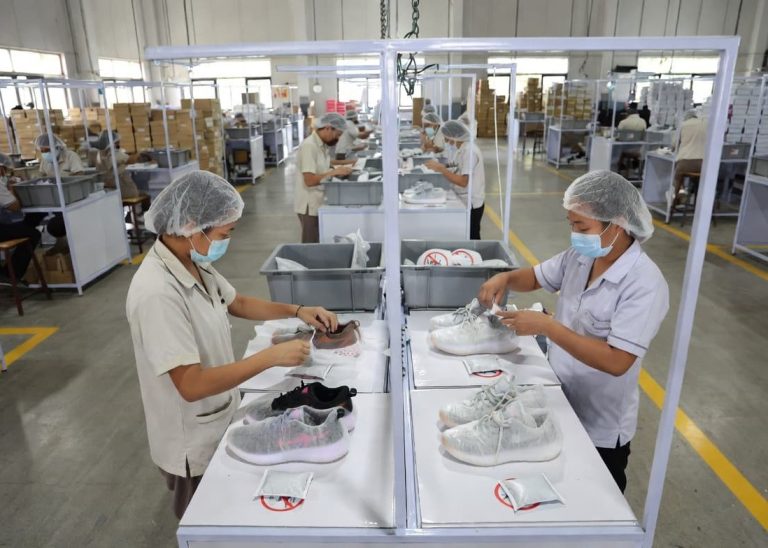
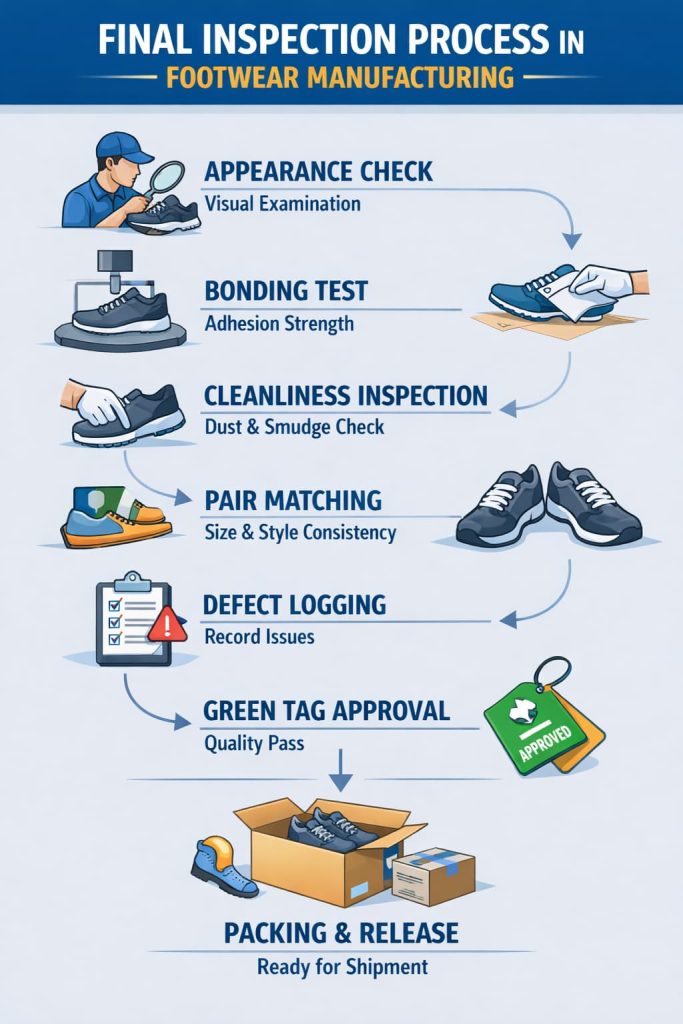
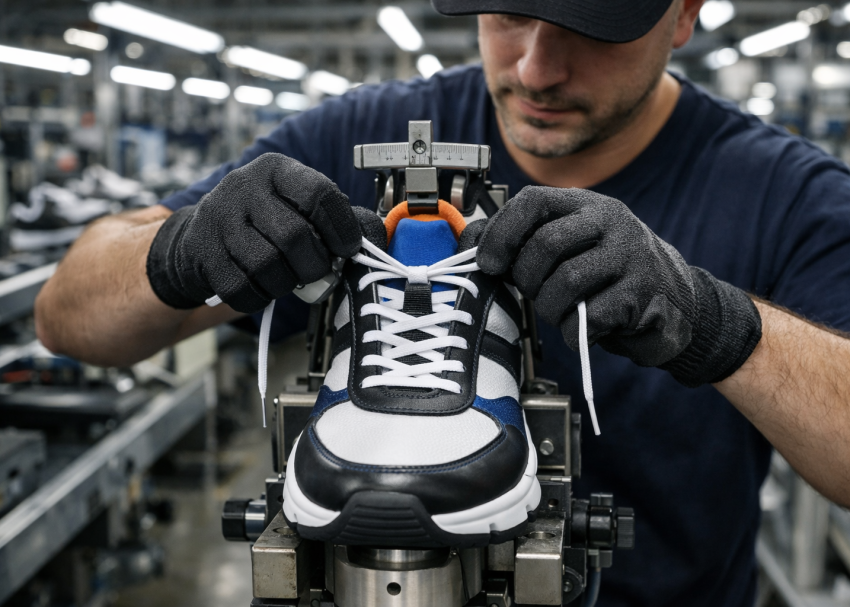
After completing lacing and other finishing operations, footwear is transferred to a controlled inspection environment where trained quality personnel conduct a detailed evaluation. The focus is not limited to a single aspect of the shoe. Instead, it covers overall appearance, construction integrity, bonding strength, pair symmetry, cleanliness, labeling accuracy, and dimensional consistency.
To ensure accuracy and consistency, modern factories rely on standardized inspection systems supported by proper lighting, inspection fixtures, defect classification guidelines, and structured reporting methods. This reduces subjectivity and helps maintain uniform quality decisions across different inspectors and production lines.
Final inspection also plays an important feedback role in the manufacturing system. The observations recorded during this stage are used to identify recurring defects and improve upstream processes, making it not just a checkpoint, but an important driver of continuous quality improvement.
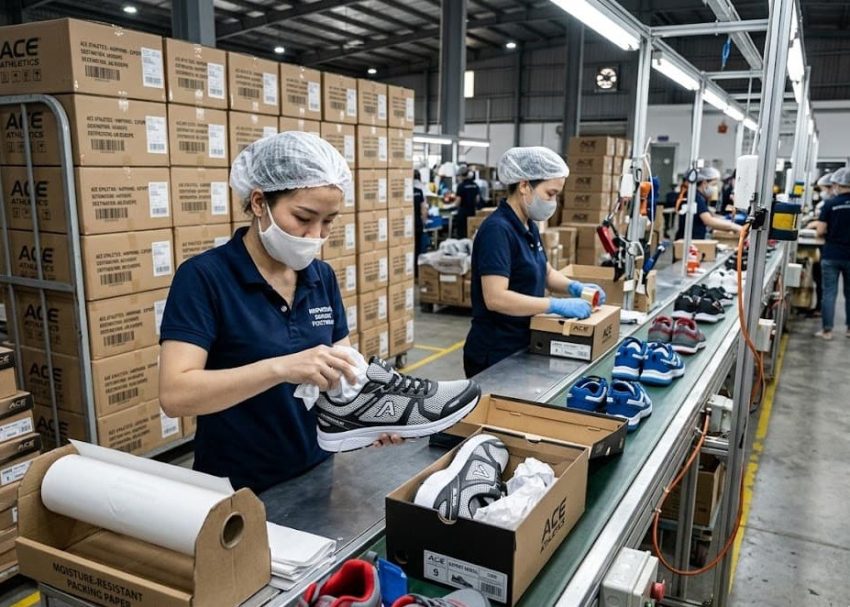
Importance of Final Inspection in Footwear Manufacturing
Final inspection acts as the last protection layer between the factory and the customer. It determines whether the footwear is approved for shipment, sent for rework, downgraded, or rejected completely. Since the customer sees only the finished product, even minor visual defects can damage brand reputation and increase claim costs.
Factories perform final inspection to ensure consistency across all pairs in terms of appearance, shape, finishing quality, bonding performance, color shade, size accuracy, and cleanliness. Moreover, final inspection confirms that all earlier manufacturing operations achieved the required standards.
Without proper final inspection, defects such as uneven bonding, shape distortion, dirty uppers, wrong size pairing, poor symmetry, loose threads, adhesive marks, or logo inconsistencies can escape into the market. Consequently, brands may face returns, retailer complaints, warranty claims, and loss of consumer trust.
Additionally, inspection data supports continuous improvement activities. Quality engineers analyze defect trends to identify high-risk operations, recurring machine problems, operator skill gaps, or material inconsistencies.
Key Control Points
- Maintain standardized inspection procedures across all inspectors
- Use approved master standards for comparison
- Ensure calibrated lighting and inspection equipment
- Record defects accurately for root-cause analysis
Expert Tip: Rotate inspectors periodically between production lines to reduce familiarity blindness and improve defect detection accuracy.
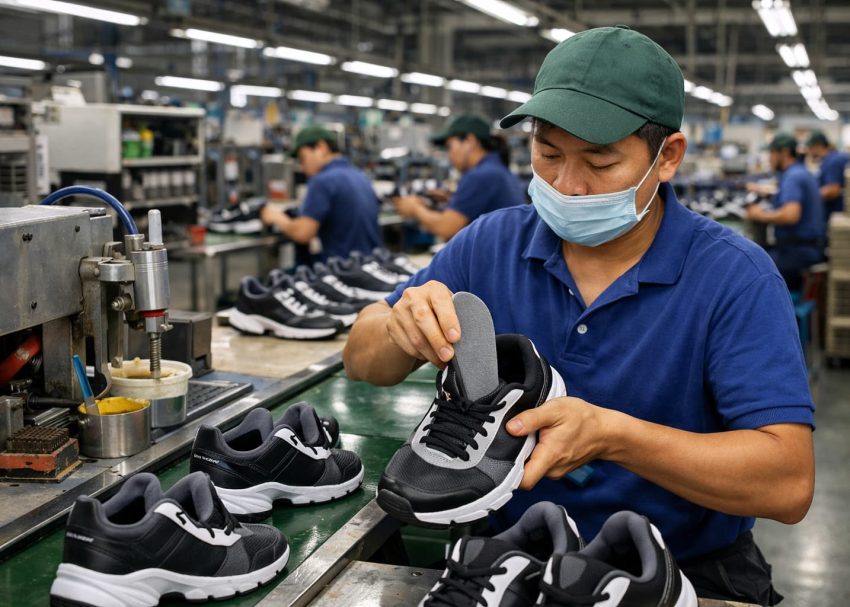
Final Inspection Area Setup and Environment
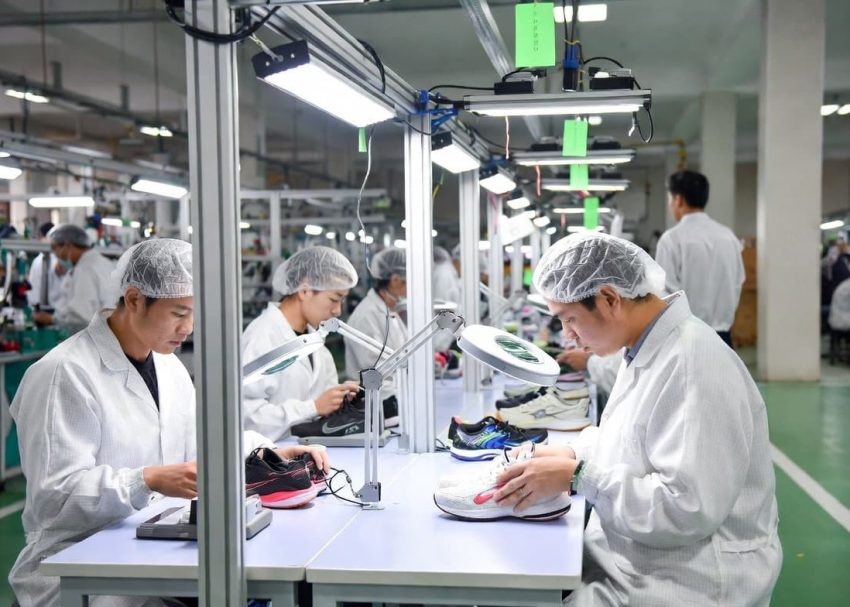
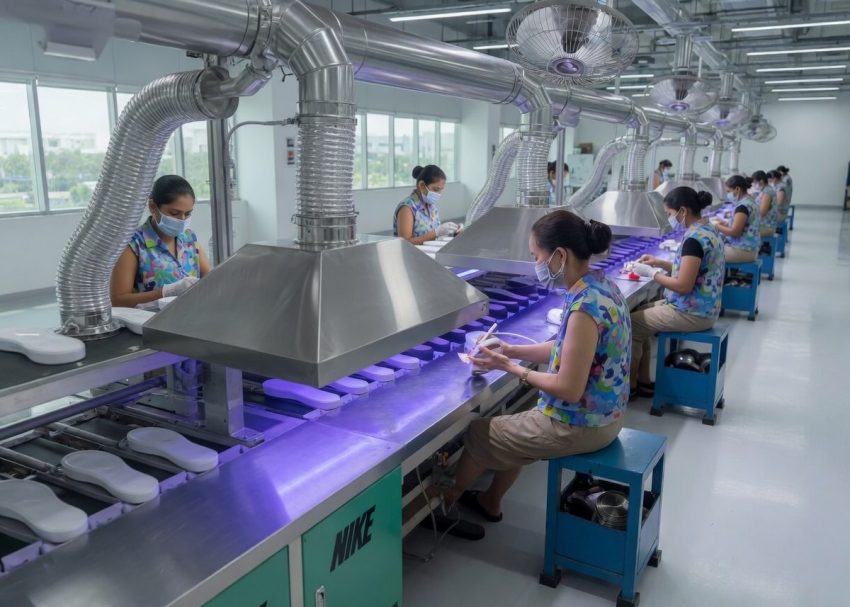
The inspection area must provide controlled conditions that allow inspectors to identify defects clearly and consistently. Therefore, factories design final inspection rooms with proper lighting intensity, ergonomic workstation layout, airflow control, and organized material flow.
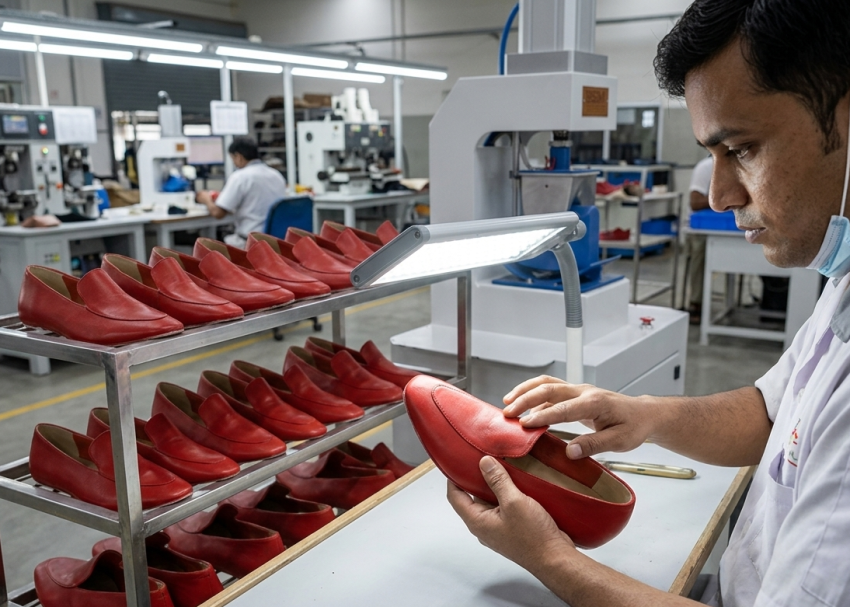
Most footwear factories use white LED daylight lighting between 1000–1500 lux to improve defect visibility and reduce color distortion. Additionally, inspectors use magnifying lamps to detect minor stitching defects, surface scratches, contamination, or finishing inconsistencies.
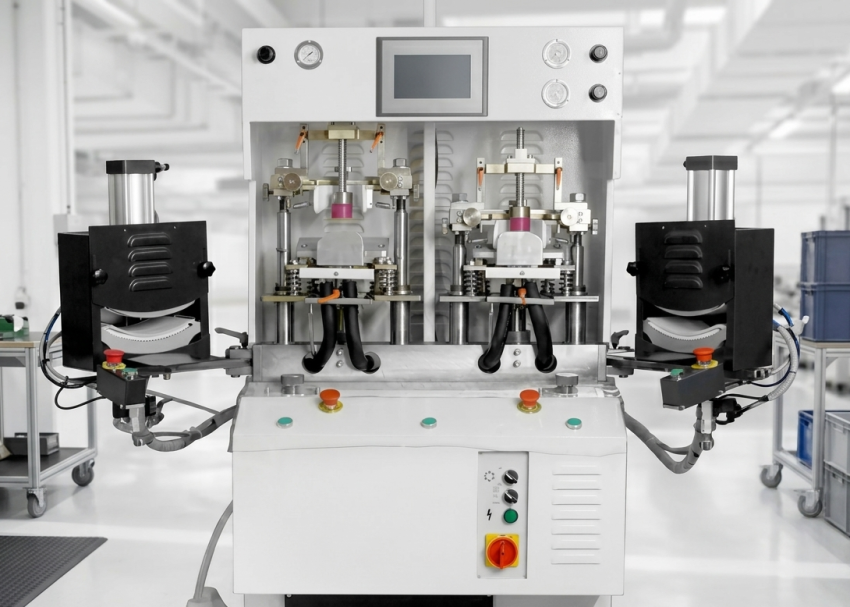
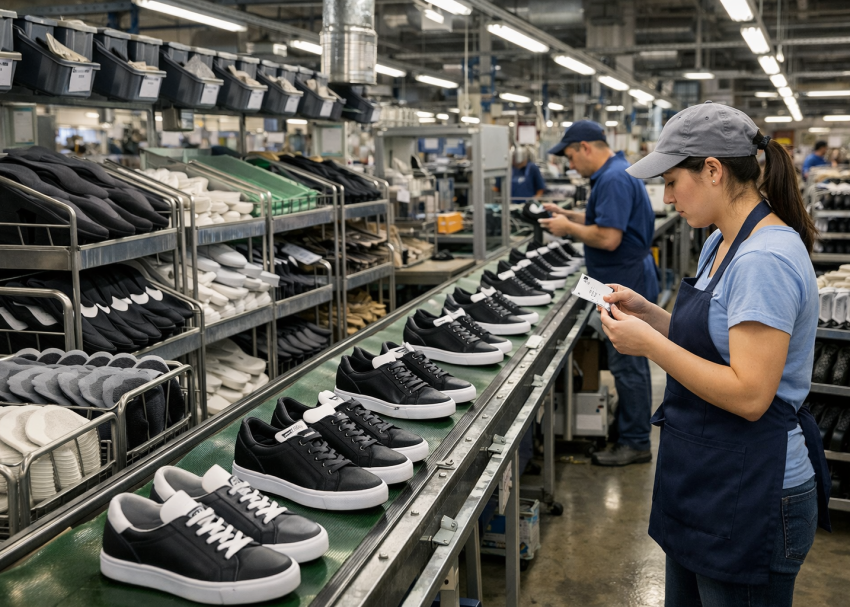
Inspection tables usually include pair stands, rotation platforms, defect tagging stations, barcode scanners, flexing devices, and specification sheets. Some advanced factories also use conveyor-based inspection systems to improve productivity and consistency.
Environmental cleanliness is equally important because dust contamination during inspection can create false rejection conditions or damage approved products before packing.
Key Control Points
- Maintain calibrated lighting intensity and color temperature
- Ensure dust-free inspection environment
- Provide ergonomic workstation design
- Separate approved, rejected, and rework zones clearly
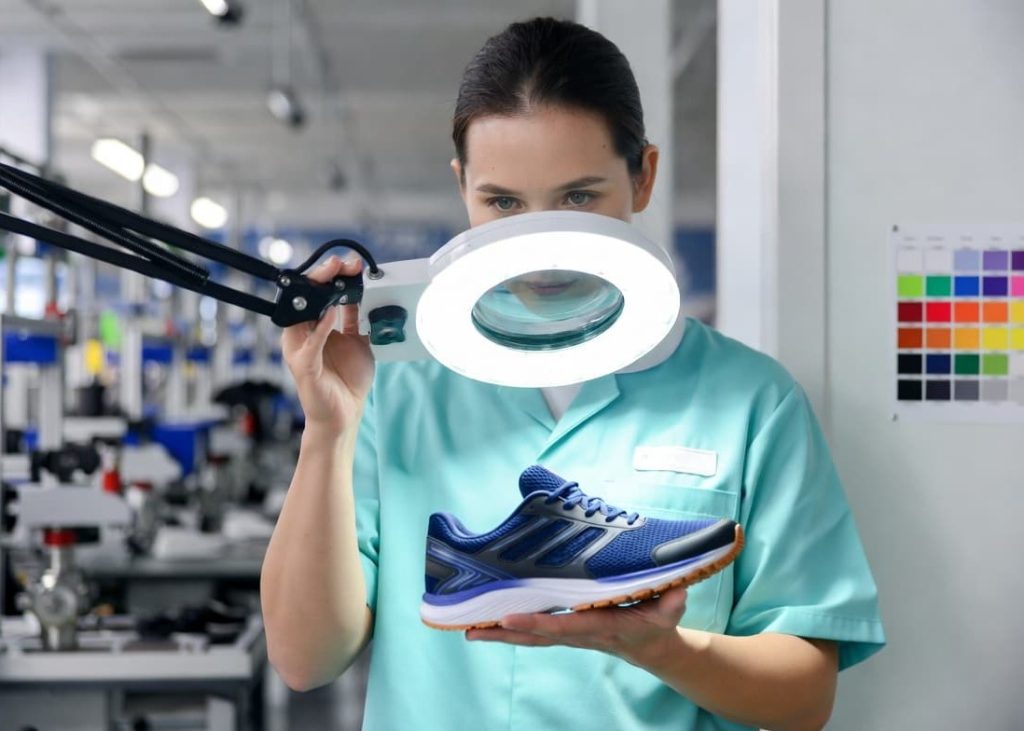
Pro Tip: Use approved defect sample boards during every inspection shift to maintain consistent judgment standards across inspectors.
Inspector Training and Qualification Standards
Final inspection quality depends heavily on inspector skill, judgment consistency, and technical understanding. Therefore, footwear factories conduct structured training programs before inspectors receive authorization to approve finished goods.
Inspectors must understand footwear construction methods, material behavior, bonding standards, stitching quality requirements, symmetry expectations, size specifications, and brand tolerance limits. Furthermore, they must recognize both critical and minor defects accurately.
Training normally includes defect identification exercises, master sample comparison, inspection sequence learning, pair matching practice, lighting evaluation, and reporting procedures. Many factories also conduct periodic re-certification tests to maintain inspection reliability.
Experienced inspectors learn how to differentiate between acceptable cosmetic variation and true defects requiring rejection. This judgment becomes especially important for leather footwear where natural material variation exists.
Key Control Points
- Train inspectors using approved defect standards
- Conduct periodic skill validation tests
- Maintain consistent acceptance criteria
- Monitor inspector defect detection accuracy
Pro Tip: Install air blow cleaning stations before final inspection to reduce unnecessary dust-related rejection.
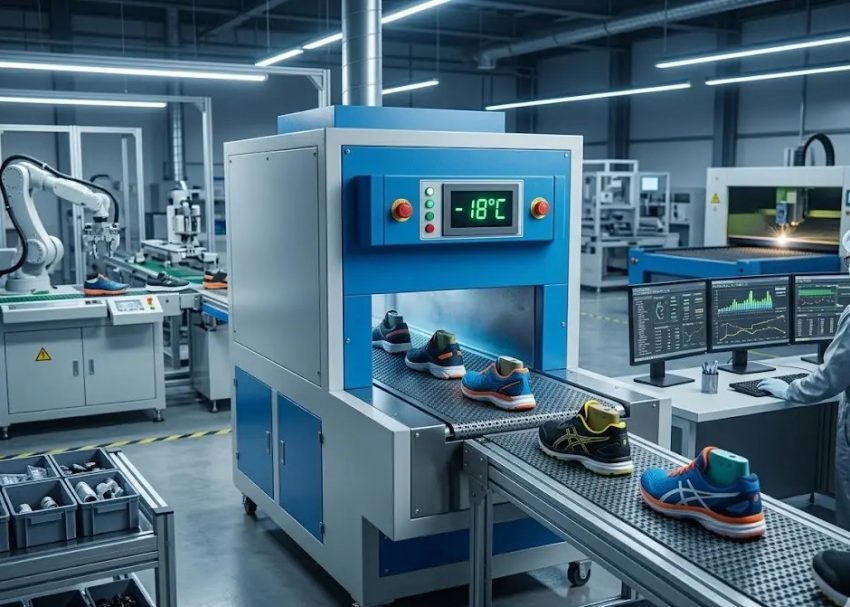
Overall Appearance Inspection
Appearance evaluation forms the most visible part of final inspection. Inspectors carefully examine the complete footwear pair for visual consistency, surface quality, construction alignment, and finishing accuracy.
The inspector rotates the shoe under controlled lighting while checking upper smoothness, material texture consistency, logo positioning, stitching alignment, edge finishing, decorative components, and overall aesthetic presentation.
Factories pay special attention to visible customer-facing zones such as toe area, vamp, quarter, heel counter, tongue, and outsole sidewall because defects in these regions strongly affect consumer perception. Additionally, inspectors compare both left and right shoes simultaneously to verify uniform appearance and balanced construction.
Key Control Points
- Check all visible surfaces under proper lighting
- Compare left and right shoe appearance together
- Verify logo placement and branding consistency
- Identify scratches, wrinkles, dents, or contamination
Pro Tip: Analyze top five recurring defects weekly and assign corrective actions immediately instead of waiting for monthly reviews.
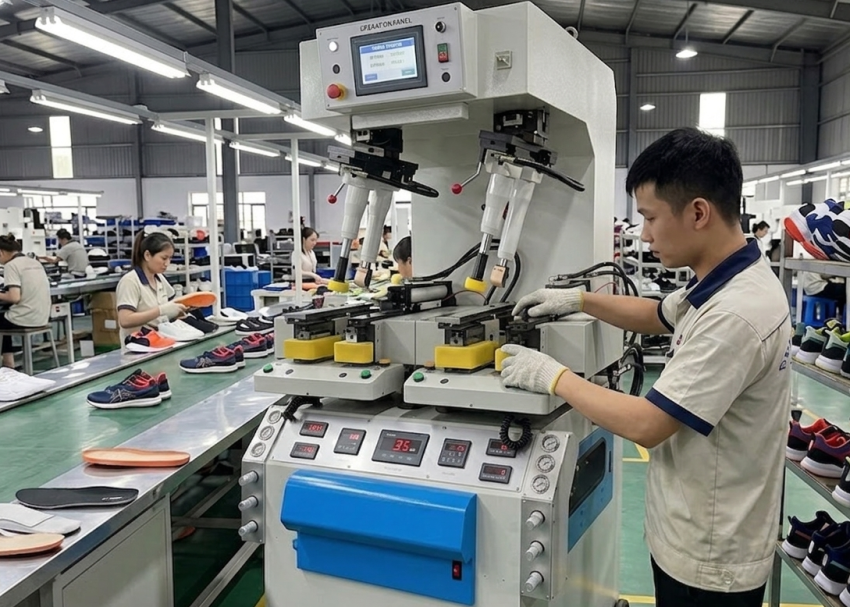
Color Consistency and Shade Evaluation
Color matching becomes extremely important in footwear manufacturing because customers immediately notice shade variation between shoe pairs. Therefore, inspectors carefully evaluate color consistency across both shoes and all footwear components.
Inspectors compare uppers, eyestays, tongue materials, linings, outsoles, foxing, laces, labels, and decorative parts against approved standards. They also evaluate the product under standardized lighting to avoid incorrect shade interpretation.
Leather footwear requires additional attention because natural hide variation can create visible tonal differences. In such cases, factories establish acceptable commercial tolerance ranges while maintaining pair harmony. Factories often use shade grouping systems during production to minimize mismatch risks before final inspection begins.
Key Control Points
- Use standardized daylight lighting conditions
- Compare against approved master sample
- Verify component shade consistency
- Check left-right pair harmony carefully
Pro Tip: Conduct random reverse audits on approved cartons to validate inspection effectiveness continuously.
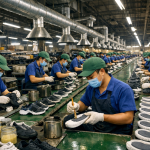
Bond Strength Verification
Bonding integrity directly affects footwear durability and customer satisfaction. Therefore, inspectors verify that all bonded areas maintain proper adhesion strength without separation risk.
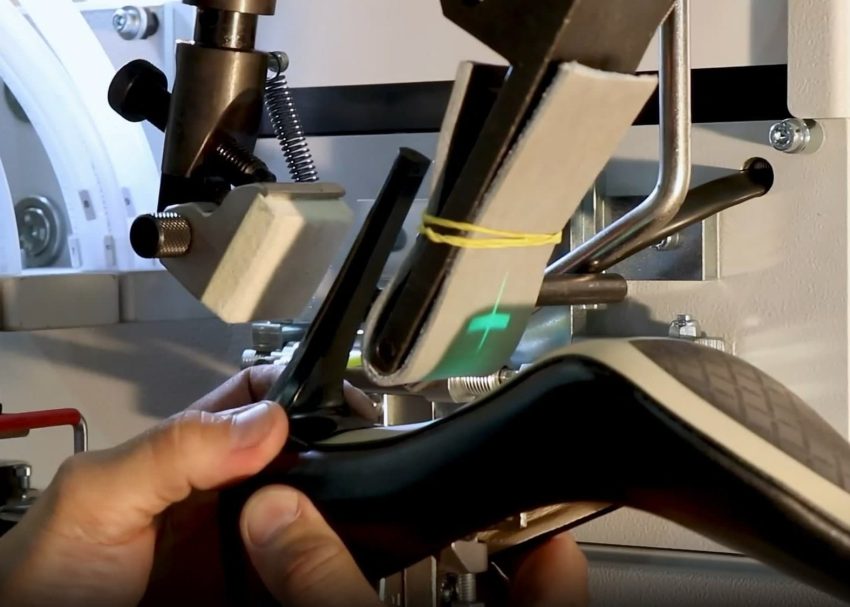
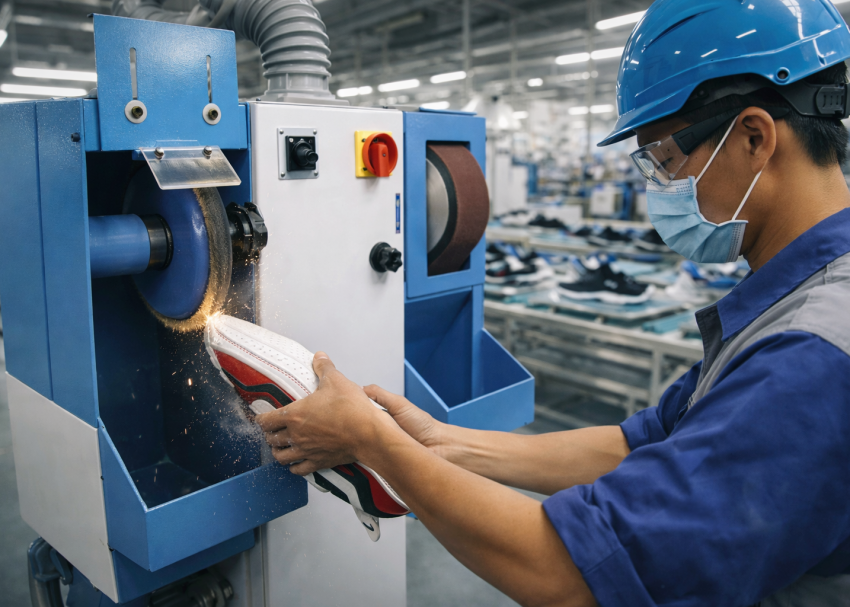
Critical bonding zones include toe spring area, forepart flex zone, heel seat region, outsole edges, foxing areas, and sidewall interfaces. Inspectors manually flex and press these areas to identify weak adhesion or lifting tendency.
Some factories also conduct random destructive bond tests from inspection lots to validate production bonding performance scientifically. Additionally, inspectors examine adhesive overflow, uneven cement application, bubbling, sole gaps, and edge lifting conditions which may indicate process instability.
Key Control Points
- Check forepart and heel bonding carefully
- Flex outsole to identify weak adhesion
- Detect bubbling or edge lifting immediately
- Escalate repeated bonding defects for investigation
Pro Tip: Use digital defect tracking dashboards to identify process instability trends faster.
Shape Retention and Symmetry Confirmation
Footwear shape consistency strongly influences comfort, appearance, and fitting performance. Consequently, final inspectors verify that each pair maintains the approved last shape without distortion.
Inspectors evaluate toe spring balance, heel alignment, collar shape, vamp tension, outsole centering, and overall footwear posture. They place both shoes together to compare symmetry and dimensional balance.
Shape defects may originate from improper lasting tension, incorrect cooling, premature de-lasting, storage pressure, or outsole attachment misalignment. Sports footwear, formal footwear, and fashion footwear each require different shape evaluation priorities depending on design intent and performance requirements.
Key Control Points
- Compare left and right shoe symmetry
- Verify heel and toe alignment
- Check vamp smoothness and shape retention
- Identify collapsed or twisted shoe structures
Pro Tip: Maintain separate lighting calibration checks for white footwear and dark-colored footwear because defect visibility differs significantly.
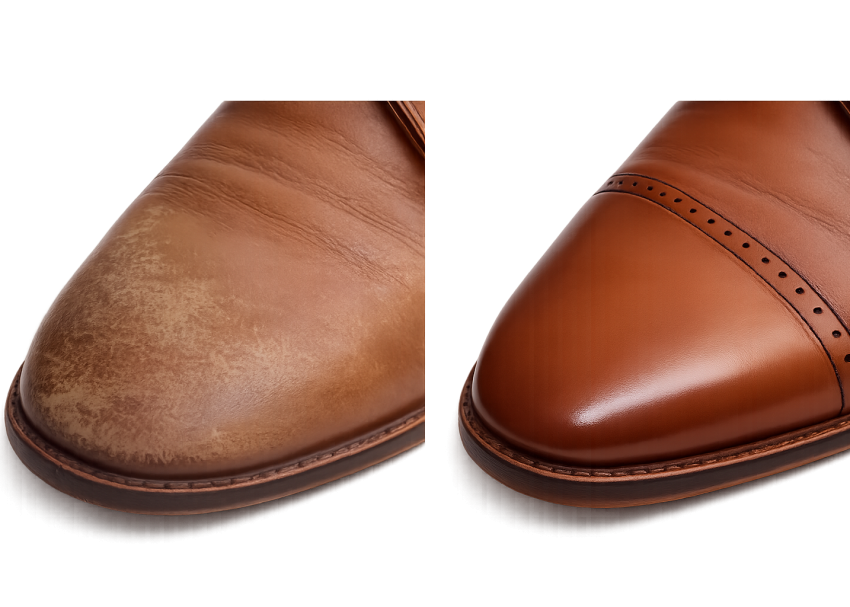
Internal Cleanliness Inspection
Internal cleanliness directly impacts wearer comfort and brand perception. Therefore, inspectors carefully examine the inside of the shoe for contamination, loose materials, or unfinished components. The inspection includes checking sock liner positioning, internal stitching exposure, nail presence, adhesive contamination, foam irregularities, foreign particles, and loose threads.
Factories use inspection lamps and manual hand-feel methods to identify sharp edges or uncomfortable internal protrusions. Even small contamination particles can cause customer discomfort during wear. Additionally, inspectors confirm that all internal labels, size markings, and production codes remain properly attached and legible.
Key Control Points
- Remove all loose threads and foreign matter
- Verify sockliner positioning accuracy
- Check for exposed nails or sharp edges
- Ensure clean internal finishing
Pro Tip: Train inspectors to inspect functionally first and cosmetically second to avoid overlooking structural failures.
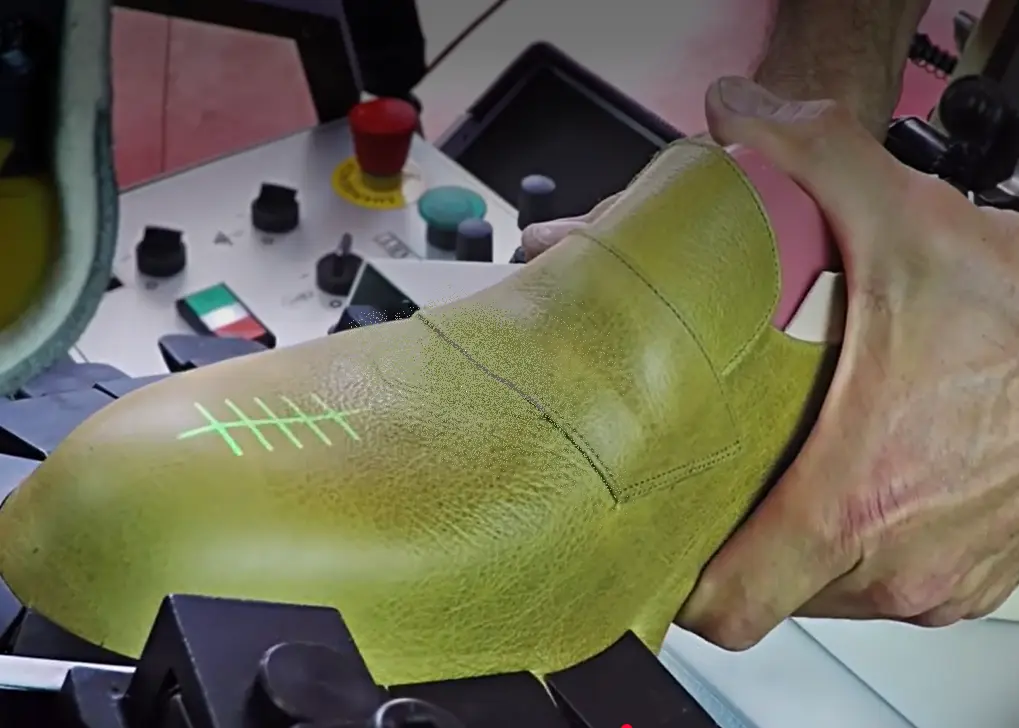
External Cleanliness and Surface Finishing
External cleanliness inspection ensures that the footwear reaches customers in perfect visual condition. Inspectors evaluate every visible area for dust, adhesive marks, fingerprints, polishing inconsistency, stains, or contamination.
White footwear and light-colored materials require especially strict cleanliness control because minor contamination becomes highly visible.
Inspectors use approved cleaning agents, microfiber cloths, brushes, and compressed air systems to remove removable contamination before rejection decisions are made. Furthermore, factories establish contamination prevention controls between inspection and packing to avoid re-soiling approved products.
Key Control Points
- Check adhesive marks and stain presence
- Clean removable contamination immediately
- Protect approved pairs from re-contamination
- Use approved cleaning chemicals only
Left–Right Pair Matching Verification
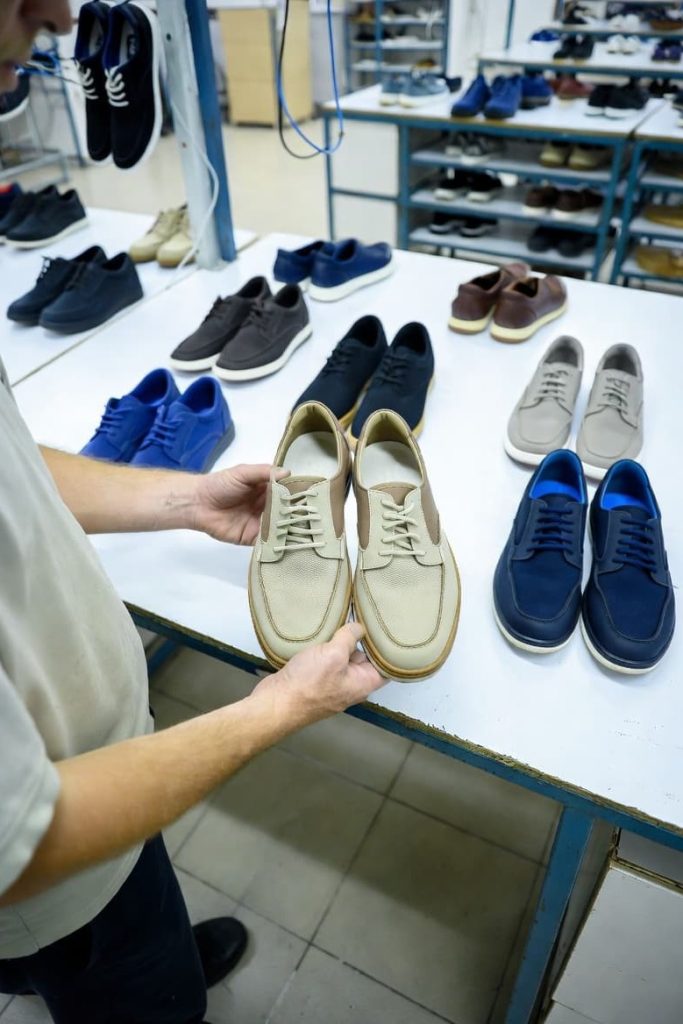
Pair matching is one of the most important final inspection activities because mismatch defects create immediate customer complaints. Inspectors compare both shoes side-by-side to confirm visual and dimensional consistency.
Inspectors compare both shoes side-by-side to confirm visual and dimensional consistency.
The evaluation includes size matching, color harmony, outsole height consistency, toe shape similarity, lace alignment, logo placement, stitching balance, and overall construction symmetry.
Factories normally use pair matching stations with alignment guides to improve inspection accuracy and reduce human variation. Incorrect pair matching may occur because of production mixing, improper sorting, carton handling errors, or poor line organization.
Key Control Points
- Verify identical size and specification codes
- Compare left-right symmetry carefully
- Ensure outsole height consistency
- Prevent mixed-pair packing errors
Specification Compliance Verification
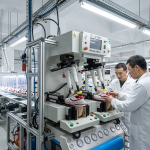
Final inspectors confirm that finished footwear fully complies with technical specifications approved by the customer or brand. This verification includes checking size labeling, logo artwork, material usage, outsole pattern, lace type, stitching color, packaging labels, carton markings, and product coding.
Factories use specification sheets, approved samples, digital measurement tools, and barcode systems to validate compliance efficiently. Even minor specification deviations can create customer rejection during incoming inspection at distribution centers.
Key Control Points
- Prevent unauthorized material substitutions
- Compare product against approved specifications
- Verify barcode and labeling accuracy
- Confirm component compliance requirements
Defect Classification and Decision-Making
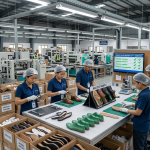
Factories classify defects into critical, major, and minor categories to standardize inspection decisions and maintain customer quality expectations.
Critical defects create safety risk or make the product unusable. Major defects strongly affect appearance or functionality. Minor defects create slight cosmetic variation without affecting performance significantly.
Inspectors follow predefined acceptance criteria while documenting all detected defects using digital systems or inspection reports. Factories often apply AQL (Acceptable Quality Level) standards during shipment inspection to determine overall lot acceptance status.
Key Control Points
- Apply standardized defect classification system
- Record defects accurately with photographs if needed
- Follow approved AQL procedures
- Separate rejected and approved products clearly
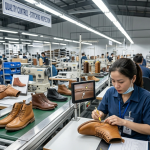
Defect Logging and Root-Cause Analysis
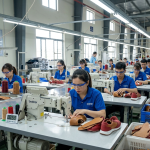
Modern footwear factories use final inspection not only for product approval but also for continuous improvement activities. Therefore, defect logging becomes an essential quality management process.
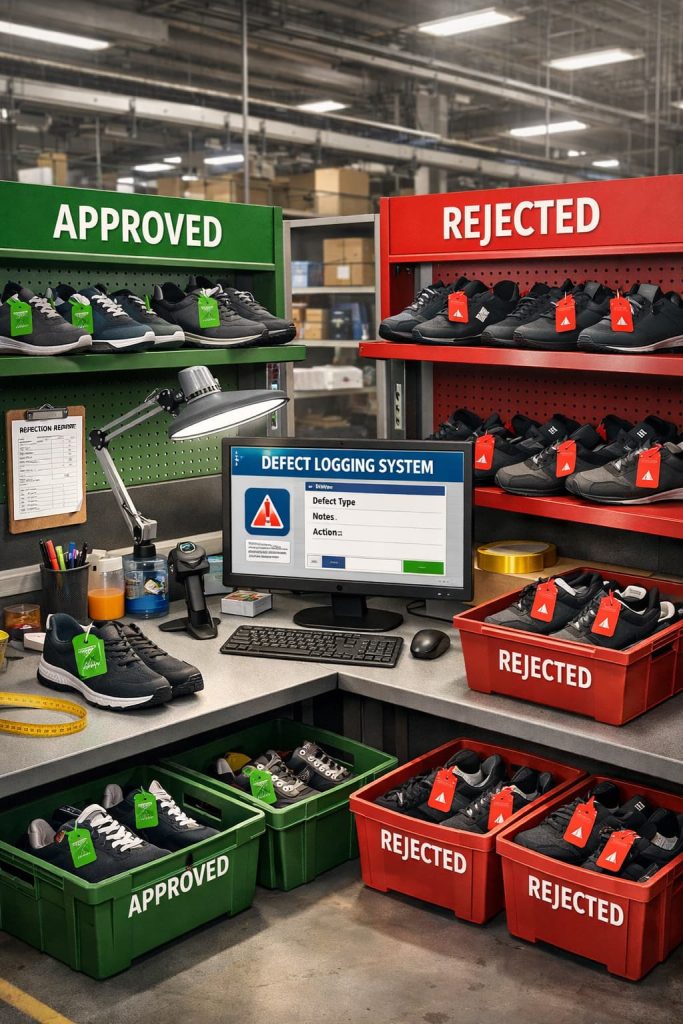
Inspectors record defect type, production line, operator code, material batch, process stage, and defect frequency into centralized quality systems. Quality teams then analyze trends to identify recurring problems.
For example, repeated bonding failures may indicate adhesive activation issues, while repeated shape distortion may indicate lasting parameter instability. Factories use this information to implement corrective actions, operator retraining, process adjustments, or supplier quality improvement initiatives.
Key Control Points
- Record accurate defect trend data
- Identify high-frequency recurring defects
- Link defects to process root causes
- Monitor corrective action effectiveness

Green Tag Approval and Release for Packing
Only fully approved footwear pairs receive final clearance for packing. Most factories use green tags, barcode approvals, or digital release systems to distinguish approved products from rejected or rework items.
The approval process confirms that all inspection stages were completed successfully and all required quality standards were achieved.
After approval, operators transfer footwear carefully to packing areas while maintaining cleanliness and pair integrity. Factories also use handling controls to prevent damage after inspection. This final release step represents the official quality acceptance of the product before shipment.
Key Control Points
- Approve only fully compliant footwear pairs
- Prevent mixing of rejected and approved products
- Maintain product cleanliness during transfer
- Use traceable approval identification systems
Common Final Inspection Defects in Footwear Manufacturing
Several defects commonly appear during final inspection despite upstream quality controls. Understanding these issues helps factories strengthen preventive measures earlier in production.
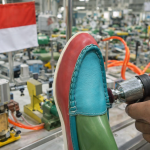
Common appearance defects include wrinkles, scratches, glue stains, uneven stitching, asymmetrical shape, color mismatch, dirty surfaces, and logo misalignment.
Structural defects may include weak bonding, outsole lifting, heel instability, deformed toe shape, exposed nails, or improper insole positioning. Operational discipline, process control, worker training, material consistency, and preventive maintenance all influence final inspection performance significantly.
Key Control Points
- Track recurring high-frequency defects
- Strengthen upstream process controls
- Improve operator awareness programs
- Conduct preventive quality audits regularly
Role of Final Inspection in Brand Reputation
Final inspection directly affects customer satisfaction, retailer confidence, and long-term brand reputation. Consumers judge footwear quality based on visual appearance, comfort, cleanliness, symmetry, and durability immediately after opening the box.
Therefore, even technically minor defects can negatively influence perceived quality. Premium footwear brands especially maintain extremely strict inspection standards to protect brand positioning.
Strong final inspection systems reduce return rates, warranty claims, customer complaints, and shipment rejections. Additionally, consistent inspection performance improves factory credibility with international buyers.
Consequently, final inspection should never operate as a simple checking activity. Instead, it must function as a strategic quality assurance process integrated with continuous manufacturing improvement.
Key Control Points
- Maintain consistent customer-focused standards
- Protect brand reputation through strict quality control
- Reduce market complaints and return rates
- Use inspection feedback for continuous improvement
Conclusion
Final inspection represents the final quality assurance barrier before footwear reaches the customer. It combines technical verification, cosmetic evaluation, structural assessment, and specification compliance into one comprehensive quality control process.
Effective final inspection systems protect brand reputation, reduce market complaints, improve customer satisfaction, and support continuous manufacturing improvement. Furthermore, strong inspection discipline allows factories to identify recurring process weaknesses and strengthen overall production stability.
As footwear manufacturing becomes increasingly quality-driven, factories must continue investing in inspector training, standardized procedures, calibrated inspection systems, and digital quality analysis tools to maintain global competitiveness.
In the next blog of TheFootwearEdge Full Shoe Assembly Series, we will discuss Wrapping Paper, Desiccants, and Anti-Mold Protection in Footwear Manufacturing – Full Shoe Assembly Series. This topic will cover shoe wrapping methods, tissue protection systems, silica gel placement, unit box standards, barcode labeling, carton preparation, and shipment packing controls used in modern footwear factories.
Frequently Asked Questions – FAQs
What is final inspection in footwear manufacturing?
Final inspection is the last quality audit performed before packing and shipment. Inspectors verify appearance, bonding, symmetry, cleanliness, specifications, and overall product quality.
Why is final inspection important in shoe factories?
Final inspection prevents defective footwear from reaching customers and protects brand reputation, customer satisfaction, and shipment quality performance.
What lighting is used for footwear final inspection?
Most footwear factories use calibrated daylight LED lighting between 1000–1500 lux for accurate defect visibility and color evaluation.
What are the most common defects found during final inspection?
Common defects include glue marks, color mismatch, weak bonding, dirty surfaces, shape distortion, stitching irregularities, and wrong pair matching.
How do factories check bonding quality during final inspection?
Inspectors manually flex and press critical outsole bonding zones to identify lifting, bubbling, or weak adhesion conditions.
What is pair matching in footwear inspection?
Pair matching ensures that left and right shoes have identical size, shape, color, outsole height, and overall appearance consistency.
What happens to rejected shoes after final inspection?
Rejected shoes normally move to rework, downgrade evaluation, or rejection holding areas depending on defect severity and correction feasibility.