Primary & Secondary Cementing in Footwear Manufacturing – Full Shoe Assembly Series
Strong footwear bonding begins long before the outsole meets the upper. Surface preparation processes such as roughing, washing and priming create the foundation for adhesion by removing contaminants, increasing surface energy, and preparing materials to accept adhesive effectively. However, surface preparation alone does not create bond strength. The actual performance of the shoe depends on how accurately the adhesive system is applied and controlled during the next stage of production.
Primary and secondary cementing represent the transition from surface preparation to structural bonding. At this stage, adhesive is not merely applied to join two components together. Instead, it must penetrate prepared surfaces, establish chemical interaction with different materials, and develop the film thickness required to withstand flexing, impact, heat, moisture, and long-term wear conditions.
Modern footwear construction has made this process increasingly complex. Athletic and casual footwear often combine rubber, TPU, EVA, Phylon, synthetic leather, textiles, engineered meshes, and other advanced materials within a single product. Because each material responds differently to adhesives, factories must carefully select adhesive chemistry and maintain precise control over coating weight, viscosity, drying conditions, and application consistency.
To achieve reliable bonding performance, most footwear manufacturers use a dual-coat adhesive system. The first coat acts primarily as a penetrating layer that anchors into the prepared substrate, while the second coat builds the cohesive adhesive film necessary for final bond strength. When executed correctly, these two stages work together to create a durable bond capable of meeting demanding laboratory and real-world performance requirements.
This article explores the complete primary and secondary cementing process used in modern footwear manufacturing, including adhesive technologies, application methods, process controls, quality requirements, common defects, and best practices for achieving consistent bonding performance on the production floor.
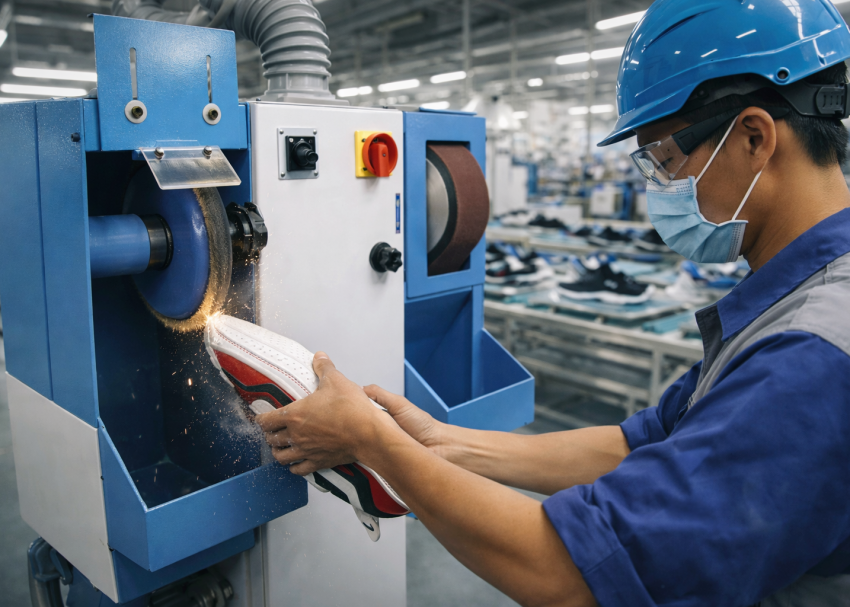
Understanding Primary Cementing in Footwear Manufacturing
Primary cementing refers to the first adhesive coat applied onto prepared bonding surfaces after roughing and priming operations are completed. This adhesive layer is designed primarily for penetration into the substrate structure rather than for building visible film thickness on the surface.
During this stage, the adhesive flows into the microscopic pores and roughened cavities created during mechanical roughing. As the adhesive penetrates deeper into the material structure, it forms a strong chemical and mechanical anchoring system between the adhesive layer and the substrate itself. This penetration behavior becomes extremely important because insufficient penetration weakens long-term adhesion performance, especially during repeated flexing and peel loading.
Different footwear materials absorb adhesive differently. Rubber compounds usually allow moderate penetration, while EVA foam may absorb adhesive more aggressively because of its porous structure. TPU surfaces, however, often require stronger chemical activation because they naturally resist adhesion. Textile and knitted uppers also behave differently depending on weave density, coating layers, and reinforcement structures.
For this reason, factories carefully select adhesive viscosity and coating thickness according to the material compatibility matrix defined inside the technical data sheet (TDS). If the adhesive becomes too thick, penetration reduces significantly and weak surface anchorage develops. On the other hand, excessive penetration can create adhesive starvation during later bonding stages because too much cement disappears into the substrate structure. Experienced operators visually inspect the appearance of the first adhesive coat under factory lighting conditions.
A properly applied primary coat should appear uniform, smooth, and fully distributed without heavy pooling, dry patches, or visible brush accumulation. Uneven penetration patterns often indicate incorrect roughing quality, unstable viscosity, or inconsistent application technique.
In large-scale footwear factories, the primary cementing process is strictly timed because the penetration stage directly influences secondary coat behavior and final activation response during sole bonding.
Key Control Points
- Monitor penetration consistency across all bonding areas
- Maintain adhesive viscosity according to TDS standards
- Avoid excessive saturation on textile and mesh uppers
- Ensure complete coverage without dry zones
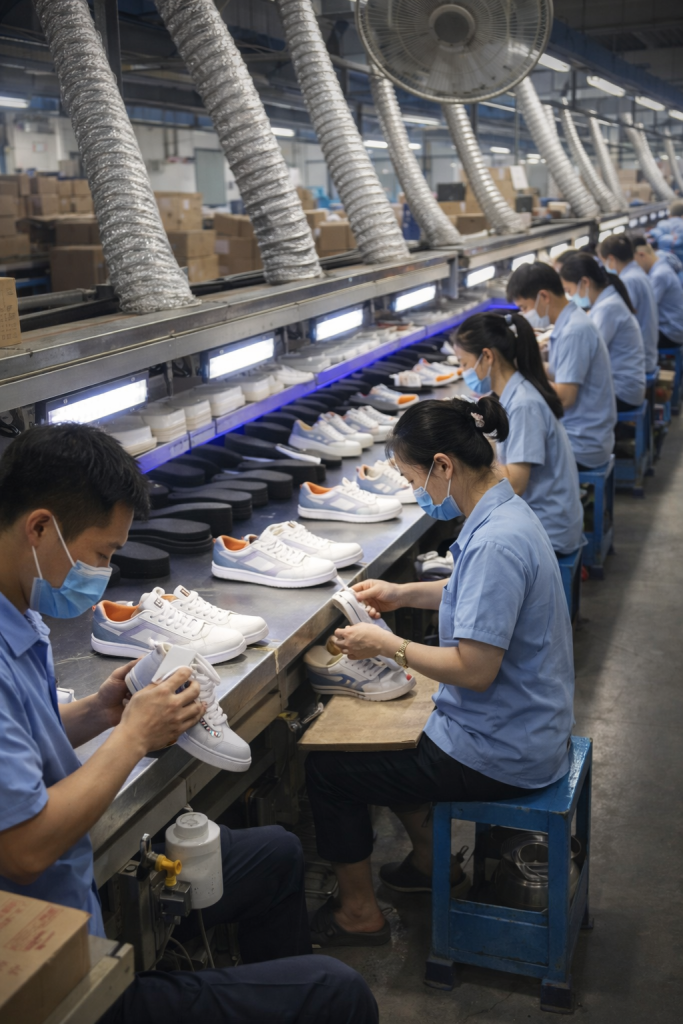
Expert Tip: Standardize adhesive weight using reference panels every shift.
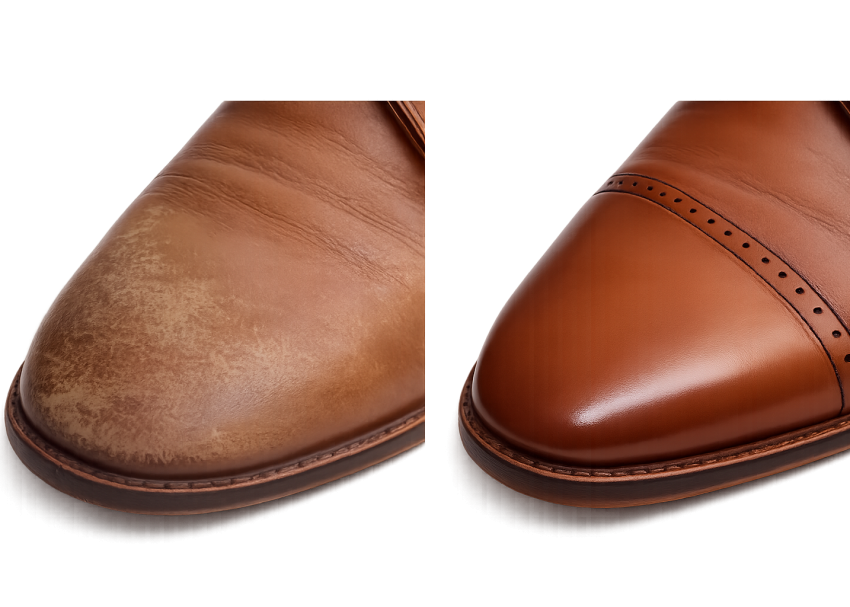
Understanding Secondary Cementing in Footwear Manufacturing
Secondary cementing is the second adhesive application stage performed after the primary coat reaches the required drying condition. Unlike the first coat, the secondary coat focuses mainly on developing the final adhesive film thickness responsible for cohesive bonding strength.
During this process, the adhesive creates a controlled tack layer that later reacts during heat activation and sole pressing operations. The thickness of this adhesive film becomes extremely important because insufficient coating creates weak bonding zones, while excessive coating generates squeeze-out, contamination, and unstable curing behavior.
Factories typically define precise adhesive weight standards measured in grams per square meter or milligrams per square centimeter. These standards ensure that every shoe receives the correct amount of adhesive regardless of operator, production line, or factory location.
The secondary coat also determines how effectively the adhesive layers fuse together during activation. If the adhesive film becomes too thin, the bond may initially pass inspection but later fail during flex testing or customer usage. Conversely, excessively thick coatings trap solvents inside the adhesive structure. During heat activation or pressing, trapped solvent vapor can expand and create bubbling, blistering, or internal delamination.
Another major concern during secondary cementing is edge cleanliness. Excess cement near visible upper edges can wick into textile materials or create staining around bonding lines. Therefore, experienced operators apply the second coat carefully while maintaining consistent edge distance and smooth film appearance.
In automated production environments, machines regulate coating thickness more consistently than manual operators. However, machine calibration, nozzle condition, roller pressure, and adhesive circulation stability become equally important to maintain uniform application quality.
Key Control Points
- Maintain specified secondary coat film thickness
- Prevent adhesive accumulation near upper edges
- Verify consistent tack condition before activation
- Control drying window between coats carefully
Pro Tip: Never mix different adhesive batches without lab approval.

Adhesive Chemistry Used in Footwear Manufacturing
Modern footwear manufacturing uses multiple adhesive technologies because no single adhesive system works effectively for every material combination or product category. Therefore, factories select adhesive systems according to outsole material, upper construction, flexibility requirements, environmental regulations, production speed, and customer durability expectations.
Solvent-based polyurethane adhesive systems remain among the most widely used technologies in sports footwear manufacturing. These adhesives provide excellent flex resistance, peel strength, and heat durability under demanding performance conditions. Polyurethane systems bond effectively with rubber, TPU, EVA, synthetic leather, and various engineered compounds commonly used in athletic footwear production. Additionally, PU adhesives maintain flexibility after curing, which helps prevent cracking during repetitive shoe flexing.
However, solvent-based systems require careful handling because solvent evaporation affects viscosity stability and workplace safety. Factories must therefore install proper ventilation systems, solvent recovery systems, and explosion-proof electrical infrastructure inside cementing departments.
Neoprene adhesive systems are also widely used, particularly in casual footwear manufacturing and certain rubber bonding applications. These adhesives provide fast tack development and relatively simple processing behavior. Operators often prefer neoprene systems for production lines requiring faster handling and shorter drying windows. Nevertheless, neoprene adhesives may not achieve the same long-term durability or heat resistance as advanced polyurethane systems used in performance footwear.
Water-based adhesive technologies are becoming increasingly important because global footwear brands continue demanding environmentally compliant manufacturing practices. Water-based systems significantly reduce VOC emissions and improve workplace safety conditions. However, water-based adhesives require tighter control over drying temperature, humidity, and air circulation because water evaporation behaves differently compared to solvent evaporation.
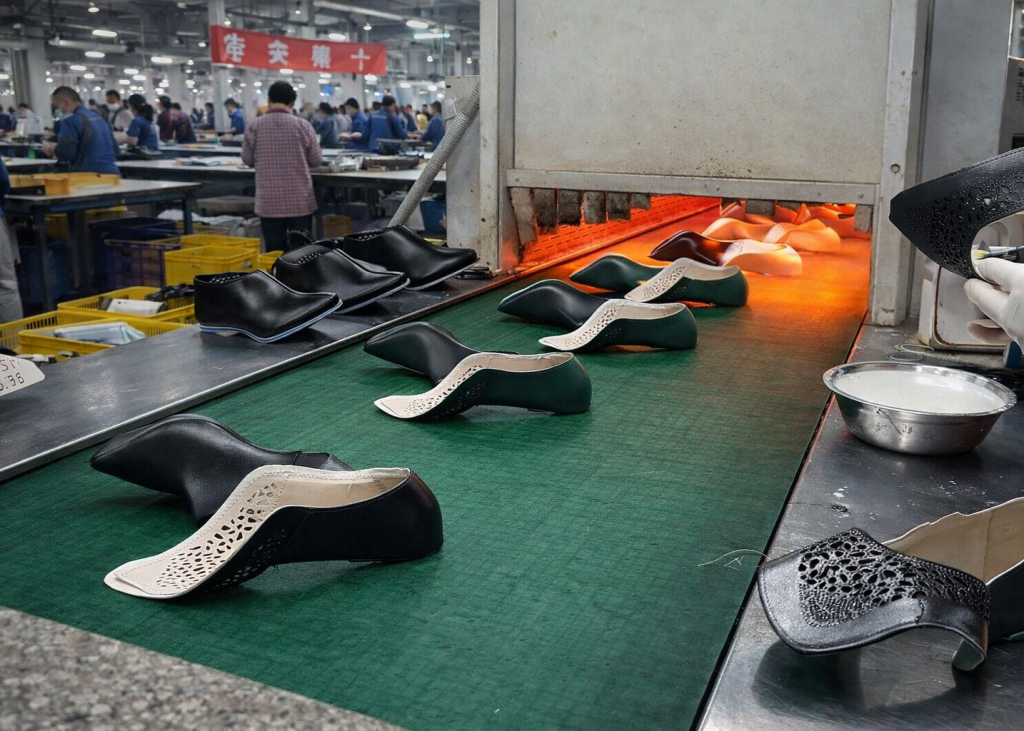
Reactive hot-melt adhesive systems represent another growing technology in automated footwear manufacturing. These systems provide rapid setting behavior, strong heat resistance, and improved compatibility with robotic production systems. Since reactive hot melts cure through chemical reaction after application, factories must control temperature stability and application timing very carefully.
The selection of adhesive chemistry depends heavily on the upper-outsole compatibility matrix defined during product development. A mismatch between adhesive type and material combination may initially appear acceptable but later fail during ageing, hydrolysis, or flex testing.
Key Control Points
- Select adhesives according to material compatibility
- Follow TDS recommendations strictly
- Verify adhesive shelf life before production
- Monitor environmental conditions continuously
Pro Tip: Maintain separate brushes for primer and cement application.
Adhesive Viscosity Control During Cementing
Adhesive viscosity directly influences coating behavior, penetration quality, film build-up, and overall bonding consistency during footwear manufacturing. Even minor viscosity variations can significantly change adhesive performance across the production line.
When viscosity becomes too high, the adhesive loses flow capability and fails to penetrate properly into roughened surfaces. Operators may notice brush marks, uneven spreading, and surface accumulation during application. Thick adhesive also creates inconsistent film build-up, which increases the risk of weak bonding zones after activation.
Conversely, excessively low viscosity creates a different set of problems. Thin adhesive penetrates too deeply into porous materials such as EVA foam or textile structures, leaving insufficient film thickness on the bonding surface. This condition, commonly called cement starvation, often causes poor peel strength and premature delamination during flexing.
Viscosity naturally changes throughout the production shift because solvent evaporation gradually thickens the adhesive mixture. Environmental temperature also influences viscosity behavior significantly. Higher temperatures accelerate solvent evaporation, while colder conditions increase adhesive thickness and reduce flow stability.
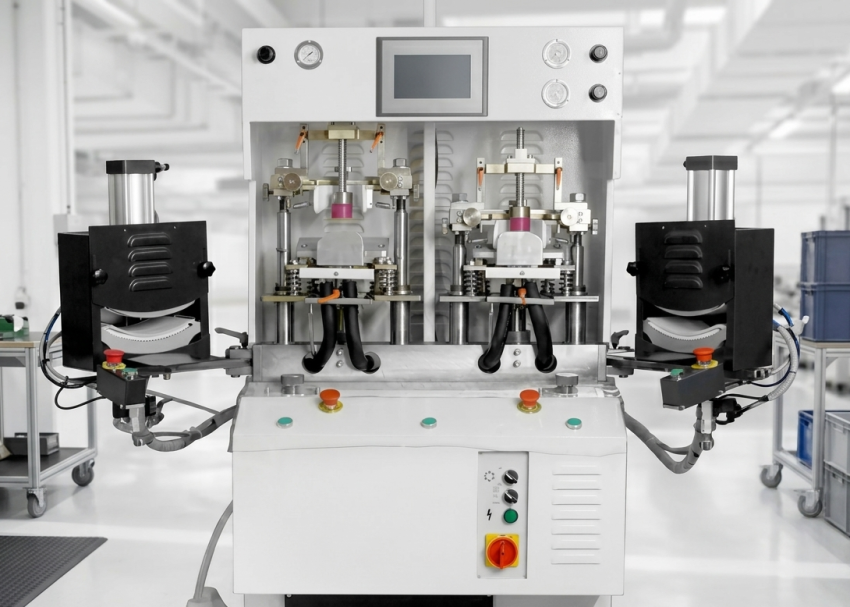
For this reason, footwear factories conduct regular viscosity checks using Zahn cups1, Ford cups2, or digital viscometers. Production technicians typically measure viscosity at the beginning of every shift and continue monitoring throughout production. Digital systems provide higher accuracy, especially in automated cementing environments where coating consistency becomes critical.
Operators must never add thinner randomly to adjust adhesive behavior. Uncontrolled dilution changes solids content, chemical balance, and drying performance. Instead, factories establish controlled thinner addition procedures based on laboratory-approved mixing ratios.
Proper viscosity management improves, Coating consistency, Film uniformity, Penetration control, Bonding durability, Machine application stability
Key Control Points
- Check viscosity at the start of every shift
- Record viscosity data regularly
- Use approved thinner ratios only
- Reject unstable adhesive mixtures immediately
Pro Tip: Monitor humidity carefully during monsoon production periods.
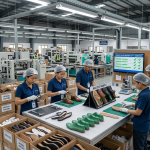
Manual Cementing Process in Footwear Factories
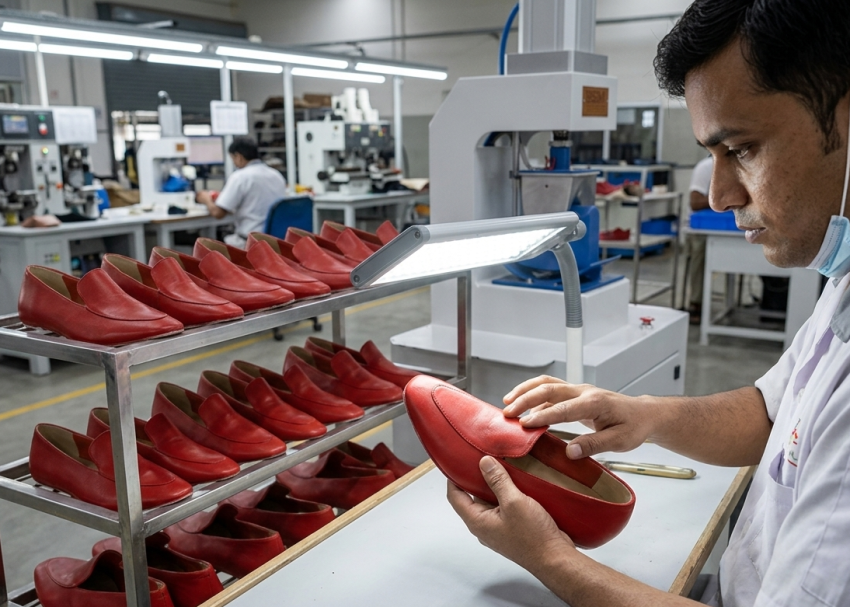
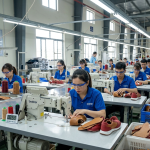
Despite increasing automation, many footwear factories still rely heavily on manual cementing operations because hand application provides flexibility for complex product designs and irregular bonding surfaces.
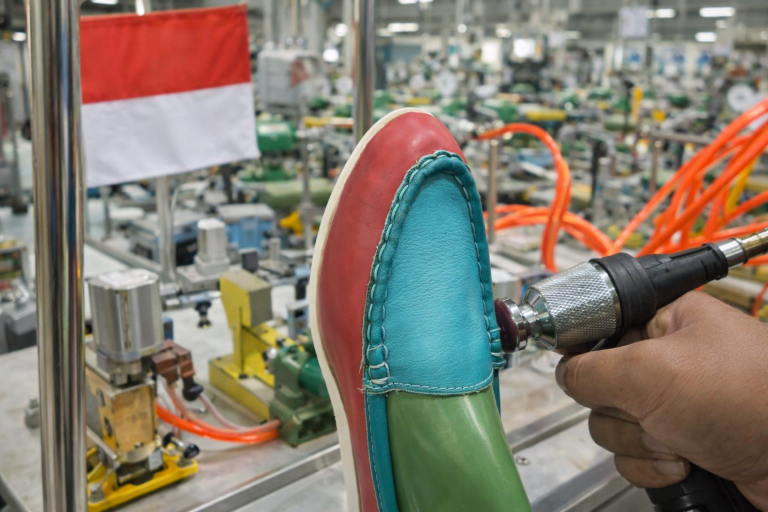
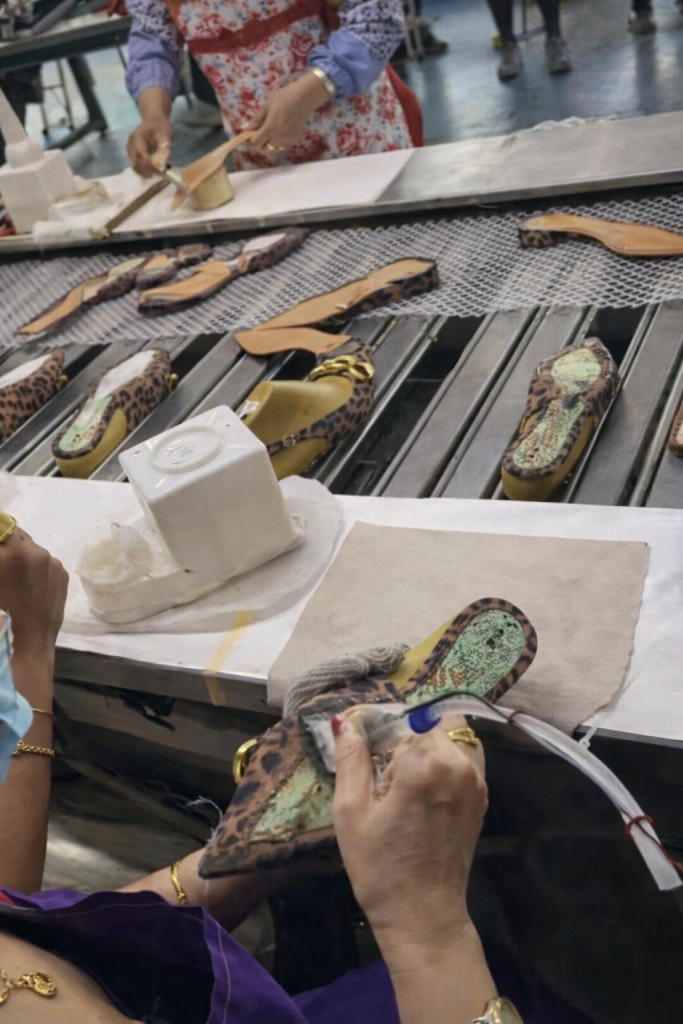
During manual cementing, operators apply adhesive using brushes onto upper bottom areas, outsole bonding surfaces, foxing sections, and sidewall structures. The operator’s hand movement, brush pressure, and coating sequence directly influence film consistency and bonding quality. Experienced operators develop highly controlled brush techniques through years of practice.
They maintain consistent stroke direction, controlled overlap patterns, and stable coating thickness while avoiding adhesive accumulation near visible upper edges. In contrast, inexperienced operators often create uneven film patterns, dry gaps, excessive brush marks, or edge contamination.
Manual cementing also allows better process adaptability during, Development samples, small production lots, Complex fashion footwear, multi-material constructions. However, operator variation remains one of the biggest challenges in manual adhesive application. Therefore, factories conduct regular operator training programs and visual standard audits to maintain coating consistency.
Key Control Points
- Maintain consistent brush stroke direction
- Avoid excessive edge coating
- Replace damaged brushes immediately
- Clean adhesive containers regularly
Pro Tip: Conduct peel testing after ageing, not only immediate bonding.
Automatic Cementing Machines in Footwear Manufacturing
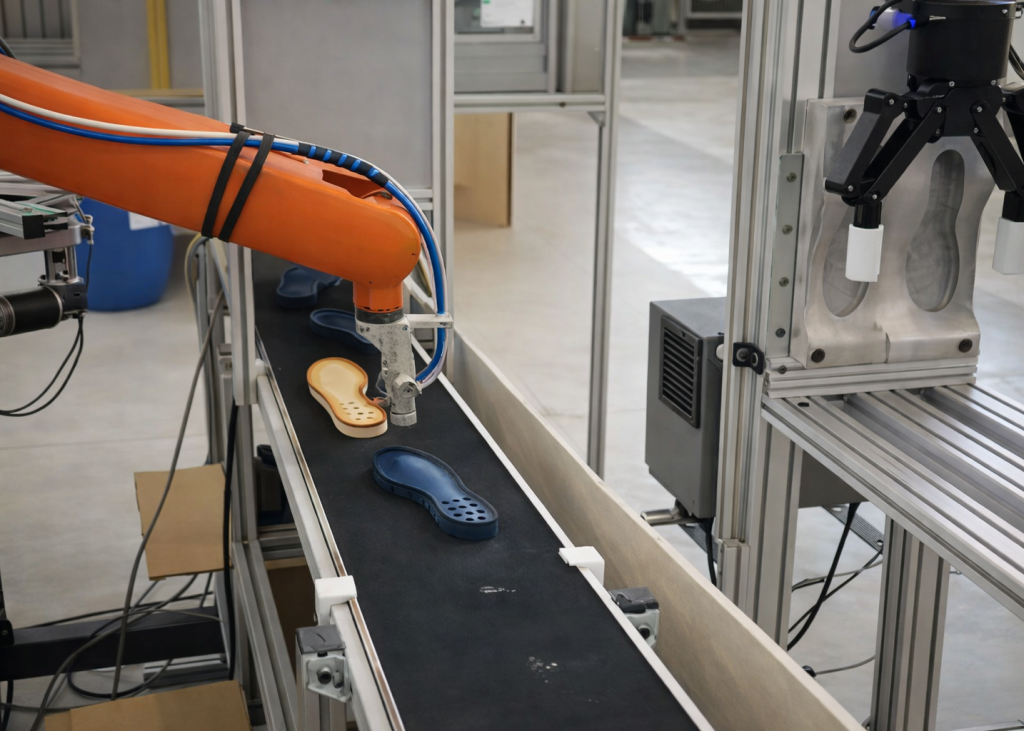
Large-scale footwear factories increasingly use automatic cementing systems because modern production requires higher consistency, lower material wastage, and improved productivity.
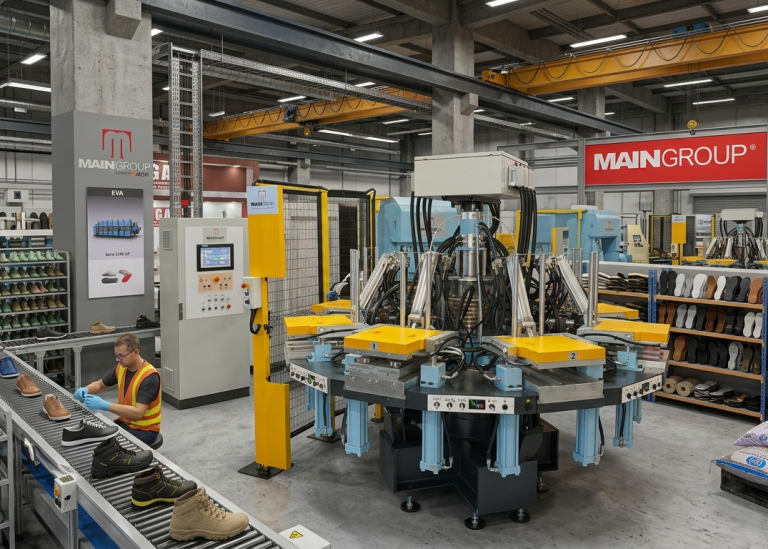
Automatic cementing machines apply adhesive using controlled mechanical systems such as rollers, spray guns, disc applicators, or programmable robotic arms. These systems regulate film thickness more accurately than manual application while significantly reducing operator variation.
Roller coating systems are commonly used for flat outsole bonding surfaces because they distribute adhesive uniformly across large areas. Disc application systems work effectively for curved bonding geometries, while robotic spray systems support highly automated athletic footwear production lines.
Inside these systems, adhesive continuously circulates through pumps, hoses, filters, and application heads. Therefore, circulation stability becomes extremely important because adhesive settling or solvent evaporation can create inconsistent coating behavior.
Machine calibration also plays a critical role. Incorrect roller pressure, unstable spray pressure, clogged nozzles, or uneven conveyor synchronization can rapidly create large-scale production defects affecting thousands of pairs.
Modern automatic systems often include, Digital coating control, Pump pressure monitoring, Adhesive temperature regulation, Film thickness adjustment, Production traceability systems.
Although automation improves consistency, it also increases dependency on preventive maintenance and technical supervision.
Key Control Points
- Calibrate coating systems daily
- Monitor nozzle and roller cleanliness
- Verify adhesive circulation stability
- Conduct preventive maintenance routinely
Pro Tip: Train operators to identify tack condition visually.

Spray Cementing Technology in Athletic Footwear
Spray cementing technology is widely used in athletic footwear manufacturing because it supports high-speed production while maintaining consistent adhesive distribution across complex bonding surfaces.
During spray application, compressed air atomizes adhesive into fine particles before deposition onto the bonding area. Proper atomization creates thin, uniform adhesive films with better distribution compared to heavy manual brush application.
Spray angle, air pressure, nozzle diameter, and spraying distance all influence coating quality significantly. If air pressure becomes unstable, the spray pattern changes immediately and creates inconsistent film thickness. Similarly, incorrect spray distance causes either excessive overspray or concentrated adhesive pooling.
Sports footwear factories prefer spray systems because modern athletic shoes contain complex geometries, multi-layer structures, and engineered upper designs that are difficult to coat manually with high consistency. However, spray cementing also introduces additional challenges. Airborne adhesive particles can create, Worker health risks, Equipment contamination, Fire hazards, Adhesive wastage.
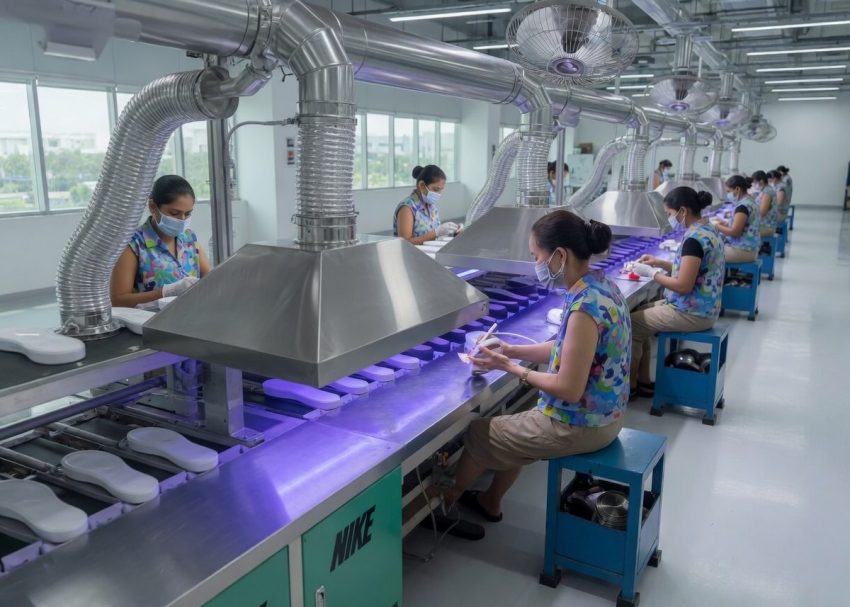
Therefore, factories install dedicated spray booths equipped with extraction systems, filtration units, and controlled ventilation infrastructure. Operators working inside spray areas must use proper PPE including respirators, gloves, and eye protection.
Key Control Points
- Maintain stable spray pressure
- Clean nozzles frequently
- Verify spray pattern consistency
- Ensure proper booth ventilation
Pro Tip: Train operators to identify tack condition visually.
Drying Time Between Primary and Secondary Cementing
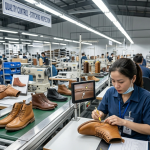
Drying control between adhesive coats is one of the most critical process parameters in footwear bonding operations. Improper drying conditions frequently create hidden bonding defects that only appear during flex testing, ageing evaluation, or customer usage.
After primary cementing, the adhesive requires sufficient flash-off time to allow controlled solvent evaporation. During this stage, the adhesive gradually transitions from wet liquid form into a semi-dry tackable layer suitable for secondary coating.
If the second coat is applied too early, trapped solvents remain inside the adhesive structure. Later, during heat activation or pressing, these trapped solvents expand and create bubbling, blistering, or internal delamination.
Excessive drying creates a different problem. Over-dried adhesive loses surface tack and reduces chemical bonding activity during activation. As a result, the adhesive layers fail to fuse properly during pressing. Ideally 5 – 20 Mins Drying time of Each Interval is maintained depending on the type of Adhesive, Material, Weather and Drying cabinet/Tunnel availability.
Environmental conditions strongly influence drying behavior. High humidity slows evaporation, while poor air circulation creates uneven drying patterns across production lines. Temperature also changes solvent flash-off speed significantly.
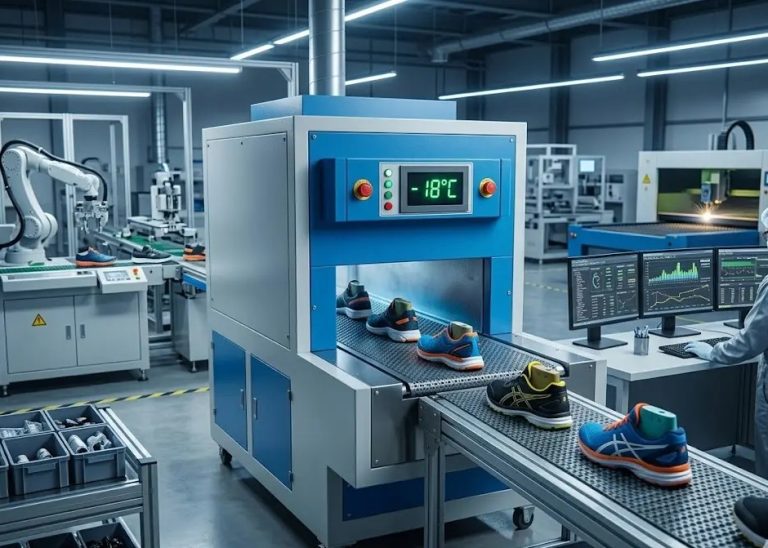
For this reason, many factories use controlled drying tunnels equipped with, Hot air circulation, Infrared heating, Conveyor timing systems, Temperature regulation controls. Production engineers carefully define acceptable drying windows according to adhesive chemistry and factory environmental conditions.
Key Control Points
- Follow defined flash-off timing strictly
- Monitor temperature and humidity continuously
- Avoid stacking wet components
- Standardize drying tunnel conditions
Pro Tip: Schedule preventive maintenance for pumps and spray systems regularly.
Common Cementing Defects in Footwear Manufacturing
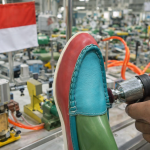
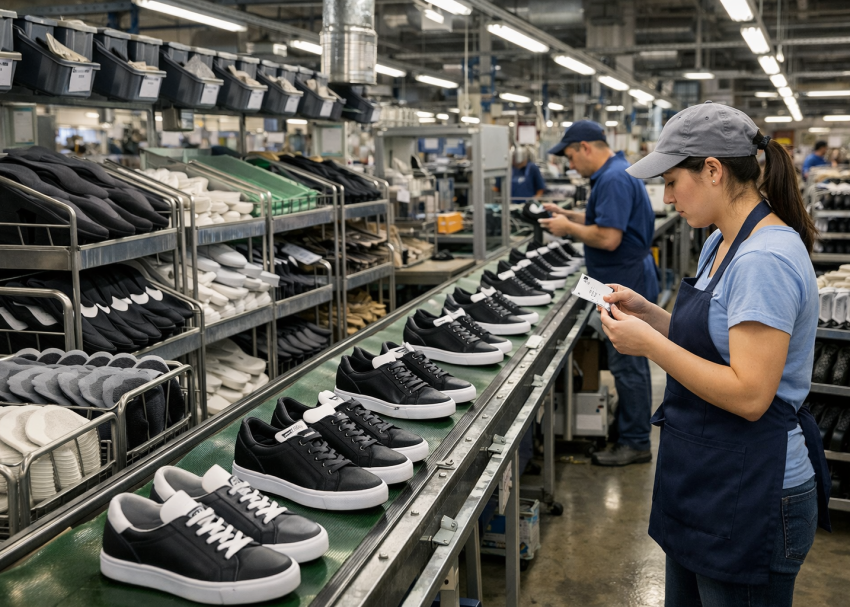
Cementing defects often become visible only after activation, pressing, flex testing, or customer usage. Therefore, prevention and early detection remain essential for maintaining product quality.
Cement Starvation
Cement starvation occurs when insufficient adhesive remains on the bonding surface after penetration or drying. This condition creates weak bonding zones with poor peel strength and early delamination behavior.
Starvation commonly results from excessive thinning, porous substrates, or insufficient secondary coating thickness. During peel testing, starved areas usually separate cleanly without cohesive adhesive tearing.
Cement Squeeze-Out
Cement squeeze-out occurs when excessive adhesive flows beyond bonding edges during sole pressing. Besides creating cosmetic contamination, squeeze-out also indicates unstable film thickness and poor process control.
Common causes include excessive coating weight, insufficient drying, or excessive pressing pressure.
Bubbling and Blistering
Bubbling defects develop when trapped solvent vapor expands during activation or pressing. The bonded area may initially appear acceptable but later develop raised surface defects or internal separation.
This issue frequently originates from wet adhesive layers, poor flash-off control, or excessively thick coating application.
Poor Adhesion Failure
Poor adhesion failure occurs when adhesive chemistry, activation conditions, or surface preparation become incompatible. These failures may appear during flex testing, hydrolysis testing, or customer usage after ageing.
Incorrect adhesive selection, poor priming, contamination, and insufficient activation temperature are among the most common causes.
Key Control Points
- Conduct regular peel testing
- Audit coating quality continuously
- Verify activation readiness carefully
- Isolate defective batches immediately
Pro Tip: Follow the Pot Life of Adhesive Strictly to avoid Bond Failures
Quality Inspection Standards During Cementing
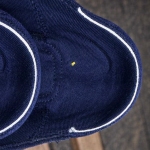
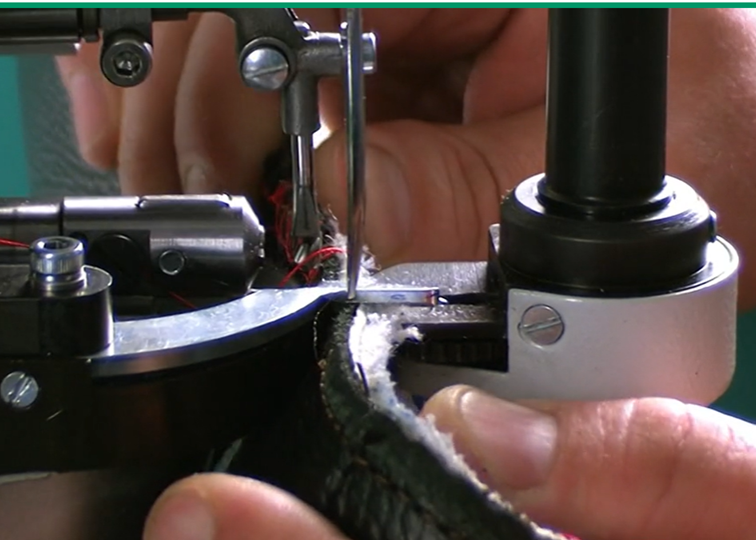
Quality inspection inside the cementing department involves continuous monitoring because adhesive defects become increasingly difficult to correct after sole pressing begins. Inline inspectors evaluate coating appearance, drying condition, edge cleanliness, tack level, and contamination risks throughout production. Inspectors also compare production samples against approved reference standards to identify process drift early.
Most factories conduct destructive peel testing at scheduled intervals to verify actual bond strength performance. During peel testing, inspectors evaluate whether failure occurs cohesively inside the adhesive layer or adhesively between substrate surfaces.
Laboratories additionally perform, Flex testing, Heat ageing, Hydrolysis resistance evaluation, Environmental conditioning tests. Modern footwear factories also implement traceability systems that record, Adhesive batch numbers, Operator identity, Machine settings, Production line information, Shift timing. These systems help isolate root causes quickly whenever bonding issues occur.
Key Control Points
- Approve first-piece samples every shift
- Maintain adhesive traceability records
- Conduct random destructive testing
- Audit coating appearance hourly

Safety and Environmental Controls in Cementing Areas
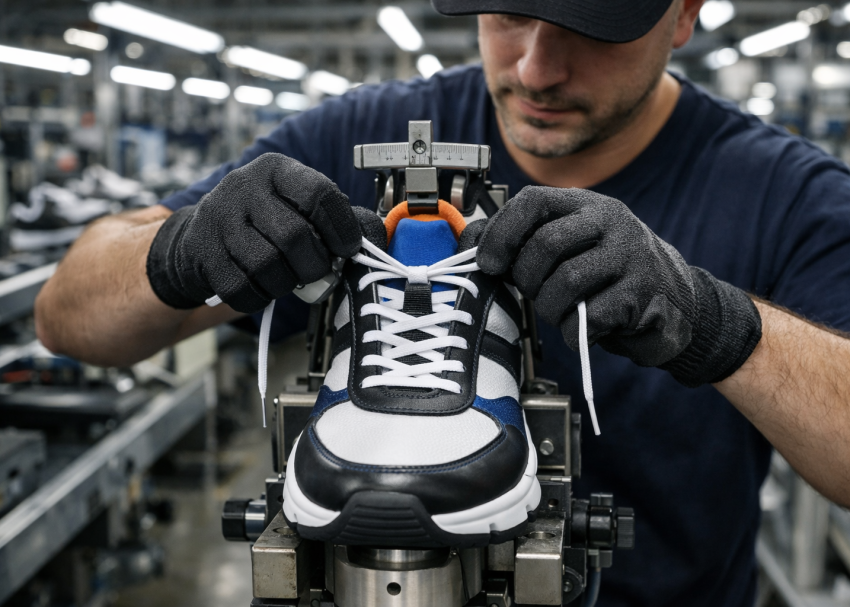
Footwear cementing departments involve significant chemical handling and solvent exposure risks. Therefore, factories must maintain strict safety and environmental control systems throughout production operations.
Solvent vapors generated during adhesive application can create worker health risks and fire hazards if ventilation systems become inadequate. Consequently, factories install extraction systems, airflow controls, and explosion-proof electrical equipment inside cementing and drying areas.
Operators working with adhesives must wear appropriate PPE including, Chemical-resistant gloves, Respirators, Eye protection, Antistatic footwear. Factories also implement strict solvent storage procedures because improper chemical storage significantly increases fire risk. Adhesives and thinners must remain inside approved storage containers with controlled temperature conditions and proper labeling systems.
Global footwear brands increasingly require environmentally compliant manufacturing practices. As a result, many factories are transitioning toward low-VOC adhesive technologies, water-based systems, and solvent recovery systems to reduce environmental impact.
Key Control Points
- Monitor VOC levels regularly
- Maintain ventilation system efficiency
- Train workers on spill response procedures
- Inspect fire prevention systems frequently
Quality Control in Washing and Priming Operations
Quality control during washing and priming directly influences final shoe durability, especially for athletic and export-grade footwear. Consequently, factories implement both visual and laboratory verification systems.
Operators first inspect roughing cleanliness and confirm that all loose particles are removed before primer application. Supervisors then verify coating uniformity, flash-off timing, and environmental conditions.
Additionally, factories monitor primer viscosity regularly because solvent evaporation gradually changes application characteristics. Variations in viscosity directly affect coating thickness and penetration performance.
Laboratory teams often conduct peel strength testing, hydrolysis aging, humidity exposure testing, and flex testing to validate bonding reliability. In advanced facilities, primer batches are traceable by production shift to simplify root-cause analysis during customer complaints.
Furthermore, FIFO management becomes extremely important because expired primer chemistry may lose activation capability despite appearing visually normal.
Key Control Points
- Enforce strict FIFO management
- Record primer lot traceability
- Monitor viscosity at defined intervals
- Conduct regular peel-strength testing
Conclusion
Primary and secondary cementing remain among the most critical operations in footwear manufacturing because adhesive bonding ultimately determines long-term product durability, structural stability, and customer satisfaction. Even small deviations in viscosity, coating thickness, drying time, or activation conditions can create major failures after production.
Successful footwear factories therefore treat cementing as a highly controlled engineering process rather than a simple glue application stage. Stable bonding performance depends on disciplined process management, operator training, machine calibration, environmental control, and continuous quality monitoring throughout production.
As footwear manufacturing continues evolving toward automation and sustainable production, adhesive technologies and cementing systems will also continue advancing rapidly. However, the core principle remains unchanged: consistent process control creates consistent bonding strength.
In the next blog, Drying & Activation in Footwear Manufacturing – Full Shoe Assembly Series, we will explain how controlled heat activation and drying conditions prepare adhesive layers for final sole attachment and long-term structural bonding performance.
Frequently Asked Questions – FAQs
Why do footwear factories use two adhesive coats?
Factories use dual-coat systems because the first coat penetrates and anchors into the substrate while the second coat develops the final bonding film strength.
What causes weak bonding in footwear cementing?
Weak bonding commonly results from poor surface preparation, incorrect viscosity, insufficient drying, improper activation, or incompatible adhesive selection.
Why is adhesive viscosity important?
Viscosity directly affects penetration, coating thickness, film build-up, and final peel strength performance.
What is cement starvation?
Cement starvation occurs when insufficient adhesive remains on the bonding surface, creating weak bonding zones and early delamination.
Why are automatic cementing machines used?
Automatic systems improve coating consistency, reduce operator variation, increase productivity, and minimize adhesive wastage.
What is the role of drying between adhesive coats?
Drying allows solvent evaporation and proper tack development before activation and sole pressing.
Which adhesive is most commonly used in sports footwear?
Solvent-based polyurethane adhesives are widely used because of their excellent flexibility, peel strength, and durability.