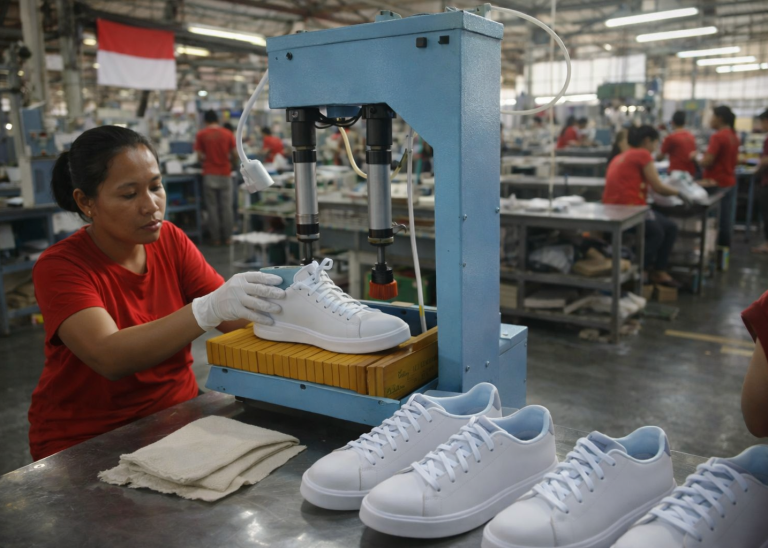
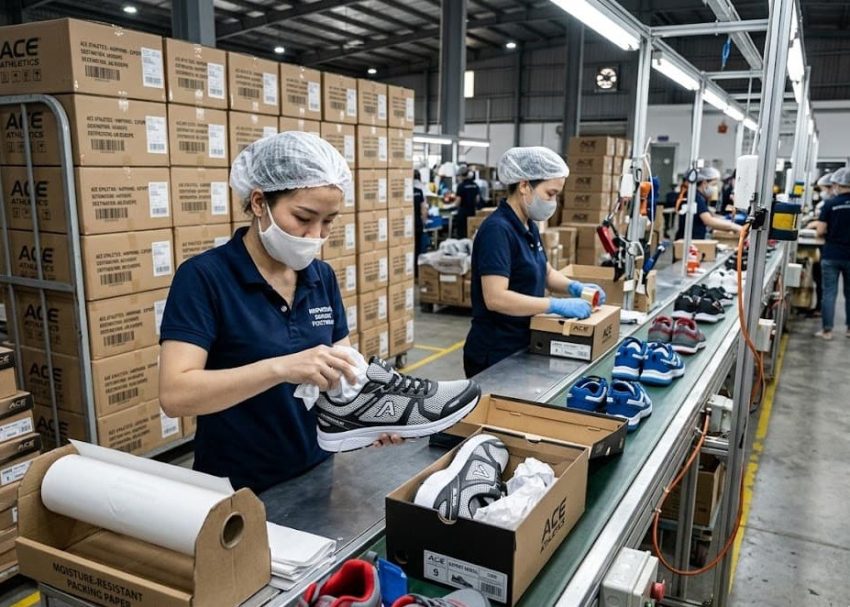
Paper Stuffing in Footwear Manufacturing – Full Shoe Assembly Series
Once footwear completes final cleaning and appearance correction, the product enters a stage where internal shape protection becomes critical before packing and dispatch. At this point, the shoe is fully assembled, but its upper materials still remain sensitive to external pressure and environmental conditions.
To safeguard the designed structure, factories introduce paper stuffing as a controlled internal support process. This step ensures that the toe box, vamp, and forefoot areas retain their original geometry even when shoes are stacked in cartons, stored in warehouses, or transported across long export routes.
Although the operation is simple in execution, its impact on product stability is significant. Proper stuffing maintains internal volume and prevents the upper from collapsing under load or humidity variation during transit. It also helps preserve the intended look and fit that was established during development approval.
When stuffing density and material selection are correctly controlled, the footwear maintains a consistent profile from factory dispatch to final retail opening. However, any inconsistency in stuffing practice can quickly result in shape distortion, uneven pair appearance, and customer complaints related to toe and vamp deformation.
At this point in the process, paper stuffing becomes a preventive quality control step that protects the product’s structural integrity throughout the entire logistics chain.
Purpose of Paper Stuffing in Footwear Manufacturing
Paper stuffing supports the internal structure of the footwear after assembly completion and before final packing. Since the upper materials remain flexible even after lasting and finishing, internal reinforcement becomes necessary to preserve shape consistency.
The stuffing material fills the internal cavity of the shoe, especially around the toe box, vamp, and forepart regions. As a result, the upper maintains its designed contour during handling, carton stacking, transportation vibration, and long storage periods.
This process becomes especially important for lightweight athletic footwear, knit uppers, fashion casual shoes, soft leather constructions, and thin synthetic uppers because these materials deform more easily under pressure.
Additionally, paper stuffing minimizes internal compression during container shipment where temperature fluctuations and humidity variations can soften upper materials temporarily. Factories also use stuffing to, Prevent vamp collapse, Maintain toe spring appearance, Protect decorative upper components, Support retail presentation quality, Reduce shape variation between left and right shoes.
Key Control Points
- Match stuffing size with approved last dimensions
- Ensure uniform stuffing density between pairs
- Prevent excessive pressure on toe seams
- Verify complete forepart filling without distortion
Expert Tip: For knit uppers and engineered mesh footwear, reduce insertion force because aggressive stuffing pressure can permanently distort flexible upper structures.
Types of Stuffing Materials Used in Footwear Factories
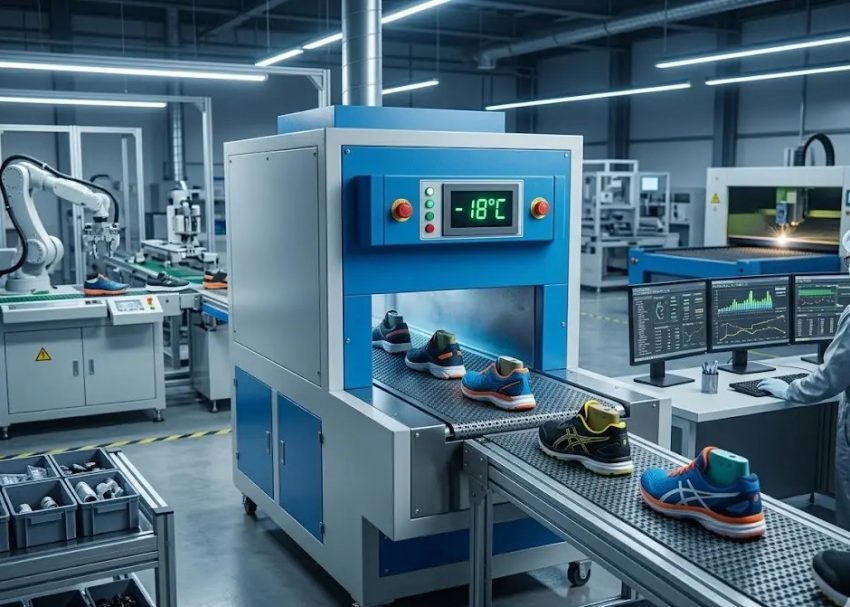
Different footwear categories require different stuffing materials depending on upper sensitivity, export route, cost target, and sustainability requirements. The most commonly used stuffing material is pre-formed moisture-resistant paper because it provides good shape retention while remaining lightweight and economical. However, many factories now use recycled fiber fillers, molded inserts, kraft paper systems, biodegradable stuffing, or air-filled support structures for premium footwear categories.
Athletic footwear manufacturers often prefer engineered stuffing forms that maintain precise toe geometry during extended shipping durations. Meanwhile, fashion footwear factories may use softer stuffing materials to avoid pressure marks on delicate uppers.
Moisture resistance is another critical selection factor. Export footwear traveling through tropical climates faces high humidity exposure during ocean transit.
Therefore, treated stuffing materials with anti-moisture properties help prevent shape loss and internal dampness.
Factories must also ensure stuffing material cleanliness because contaminated stuffing can transfer dust, odor, or stains onto sock liners and internal shoe components. Common Stuffing Materials – Moisture-resistant paper inserts, Recycled fiber stuffing, Kraft paper rolls, Molded toe fillers, Tissue wrapping systems, Biodegradable paper fillers, Air-pocket stuffing systems.
Key Control Points
- Use non-staining stuffing materials
- Confirm moisture resistance for export orders
- Avoid rough-textured fillers for delicate uppers
- Ensure stuffing material consistency across production lots
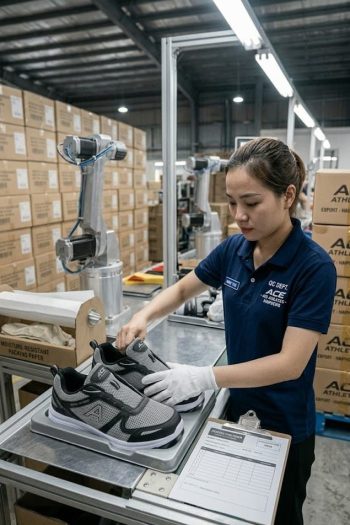
Pro Tip: Incorrect stuffing density is one of the most common root causes of toe shape complaints appearing after 30–60 days of ocean transit.
Preparation Before the Stuffing Process
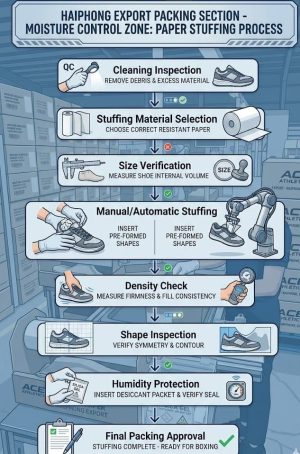
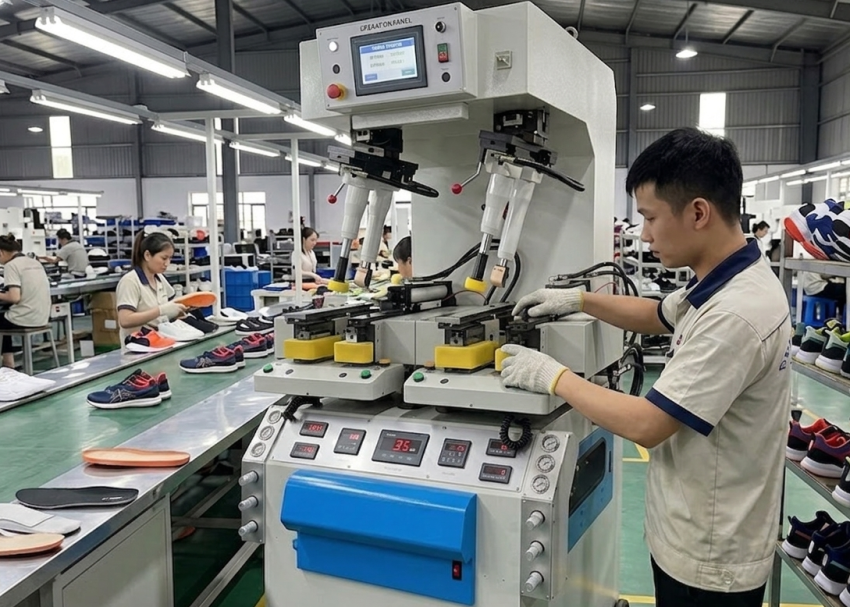
Before stuffing begins, operators must verify that the shoes have successfully passed repairing, cleaning, and finishing inspections. Any unresolved upper deformation, loose thread, or adhesive contamination should be corrected beforehand because stuffing can hide visible defects temporarily.
Operators then prepare the correct stuffing size according to shoe size, last profile, and construction type. Most factories maintain stuffing size charts linked to SKU specifications to prevent operator selection errors. The stuffing station must remain clean and dry because contaminated worktables can transfer dirt onto finished footwear. Furthermore, stuffing bundles should remain protected from humidity absorption before use.
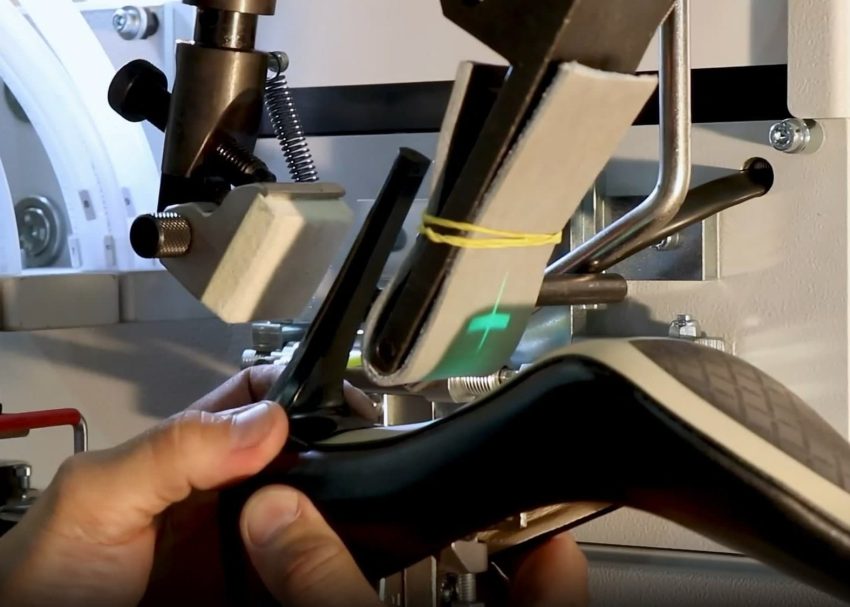
Factories using automated stuffing equipment must calibrate insertion pressure regularly to prevent over-compression of the upper. Meanwhile, manual stuffing operators require proper training to maintain insertion consistency. Supervisors should also verify, Left and right shoe matching, Correct stuffing orientation, Pairing integrity, Approved stuffing quantity standards.
Key Control Points
- Confirm shoe cleanliness before stuffing
- Use approved stuffing size charts
- Maintain clean stuffing storage conditions
- Calibrate automated insertion systems regularly
Pro Tip: For high-volume export programs exceeding 45–60 days of transit and warehouse storage, molded paper forms often provide superior shape retention compared with conventional stuffed paper systems
Manual Paper Stuffing Procedure
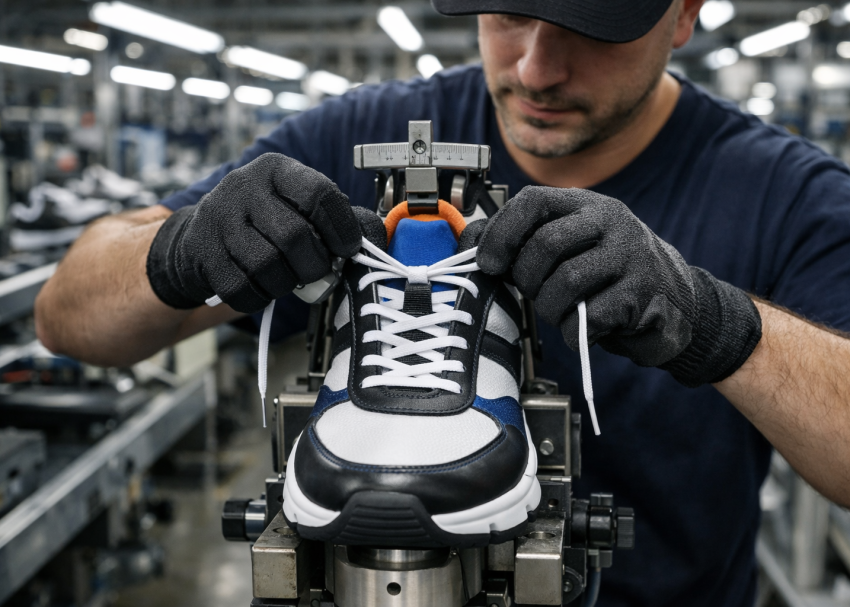
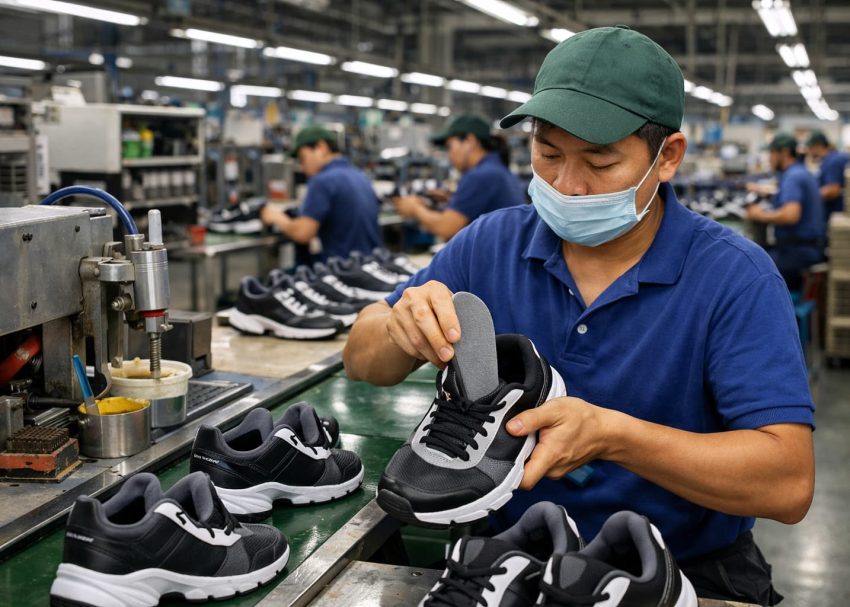
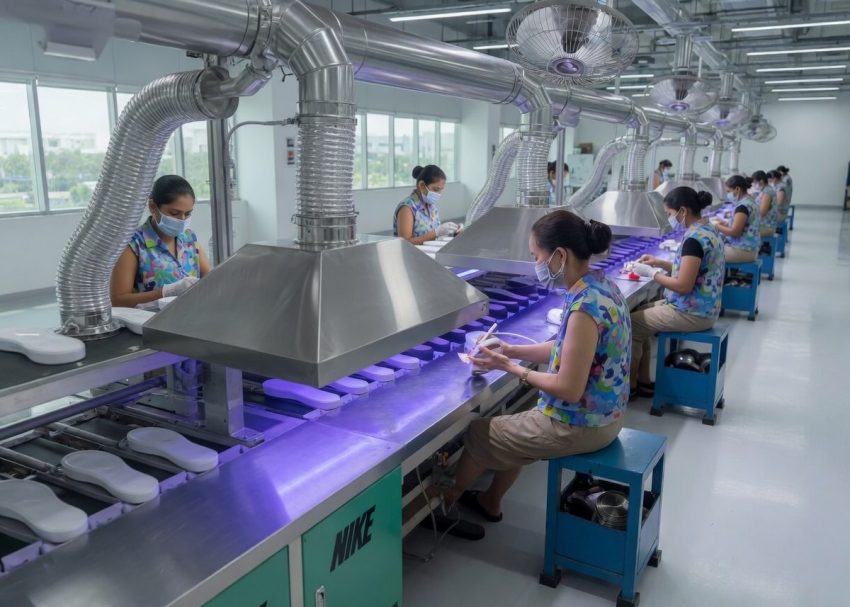
In manual stuffing operations, operators insert pre-formed stuffing material carefully into the shoe opening while controlling pressure distribution throughout the forepart area. The operator first opens the collar area gently to avoid stress on heel stitching or collar foam. Then, the stuffing material is inserted progressively toward the toe box using fingers or specialized insertion tools.
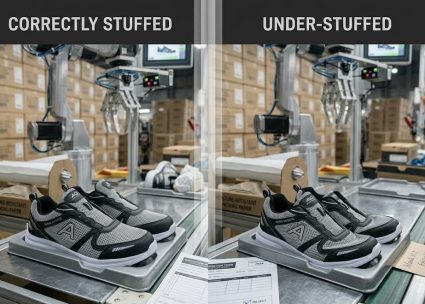
The stuffing must fill the toe and vamp region completely without creating excessive internal pressure. If the operator compresses the stuffing too tightly, the upper may stretch outward, causing seam stress, shape distortion, or lasting line deformation.
On the other hand, insufficient stuffing leaves empty internal spaces that allow toe collapse and vamp wrinkling during carton stacking. Proper manual stuffing creates balanced support across: Toe cap area, Vamp curvature, Medial forepart, Lateral forepart. Experienced operators can visually identify the correct stuffing density by evaluating upper tension and shape stability immediately after insertion.
Key Control Points
- Fill the toe area completely
- Avoid stretching stitching lines
- Maintain equal density between left and right shoes
- Prevent collar damage during insertion
Pro Tip: Select humidity-resistant treated paper grades specifically for tropical export routes and extended ocean shipment conditions.
Stuffing Density Control and Shape Retention
Stuffing density directly affects long-term shoe shape stability. Therefore, factories must establish density standards according to upper flexibility, toe structure design, and shipment duration. Excessive stuffing density creates outward pressure that can: Stretch upper materials, Distort toe profiles, Open stitching tension, Create asymmetry between pairs.
Conversely, under-stuffing allows internal collapse during stacking pressure and transportation vibration. The ideal stuffing density supports the upper naturally while preserving the original last shape without creating artificial expansion.
Factories often perform compression simulation testing by stacking packed cartons under controlled load conditions to evaluate stuffing effectiveness after several days or weeks. Humidity exposure testing also helps validate stuffing performance for export markets with tropical environmental conditions.
Key Control Points
- Standardize stuffing density by shoe category
- Perform carton compression validation testing
- Monitor toe profile consistency
- Verify shape retention after storage simulation
Pro Tip: Always inspect stuffed footwear under actual carton stacking conditions because some deformation appears only after compression exposure.
Shoe Paper Molded Forms for Premium Shape Retention
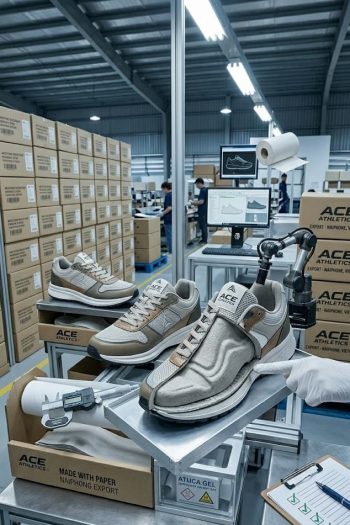
Many footwear manufacturers have gradually shifted from loose paper stuffing to pre-shaped molded paper forms for enhanced shape protection and presentation quality. Unlike conventional stuffing paper, molded paper forms are engineered to replicate the internal geometry of the shoe. These inserts are produced from recycled paper pulp and formed into specific three-dimensional shapes that match the forepart, vamp, and toe box profile of the footwear.
Premium sports footwear brands frequently specify molded paper forms because they provide consistent support regardless of operator technique. As a result, factories achieve better shape retention throughout warehousing, container shipment, retail display, and consumer unboxing.
Molded forms also improve packing consistency because every shoe receives identical internal support. Consequently, variation caused by manual stuffing density is significantly reduced. Another advantage is sustainability. Most molded paper inserts use recycled fiber material and can be recycled again after consumer use. Therefore, many brands prefer molded paper forms as part of their packaging sustainability initiatives.
However, factories must ensure that molded forms are designed specifically for the approved last shape. Oversized forms may stretch upper materials and create seam stress, while undersized forms may fail to prevent deformation during shipment. Molded paper forms are commonly used for: Running shoes, Lifestyle sneakers, Leather casual footwear, Premium fashion footwear, Export products with long transit durations.
Key Control Points
- Match molded form dimensions with approved last shape
- Verify proper insertion without upper distortion
- Use moisture-resistant molded fiber grades for export orders
- Conduct carton stacking validation before bulk production
Pro Tip: Validate recycled stuffing materials through compression and humidity simulation testing before full-scale production approval.
Moisture Resistance and Export Protection
Long-haul export shipments expose footwear to severe environmental changes including humidity fluctuations, temperature variation, and prolonged storage periods. Without moisture-resistant stuffing materials, internal paper absorption can soften upper structures and accelerate deformation risks.
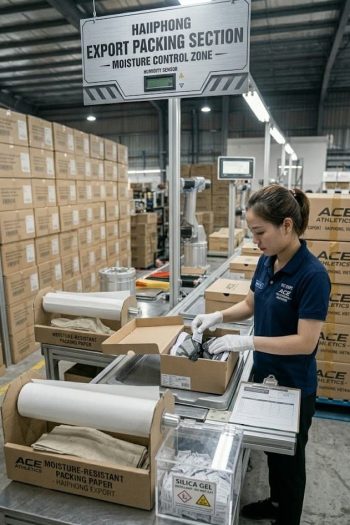
Therefore, factories supplying export brands frequently use treated stuffing materials designed to resist moisture absorption while maintaining structural support. This becomes especially critical for: Tropical shipping routes, Ocean container transport, Monsoon climate distribution, Long warehouse storage cycles.
Moisture-resistant stuffing also reduces odor development and internal dampness that may affect sock liners or insoles. Some factories additionally combine stuffing with silica gel insertion to improve internal humidity control further.
Key Control Points
- Use export-approved moisture-resistant stuffing
- Store stuffing material in dry conditions
- Monitor humidity exposure in packing areas
- Combine with silica gel where required
Pro Tip: Always validate stuffing density after carton stacking simulation because some deformation appears only under compression load.


Common Defects in Paper Stuffing Operations
Although stuffing appears simple, several defects can occur if operators fail to follow standardized procedures consistently. The most common defect is toe collapse caused by insufficient stuffing support. This issue becomes highly visible after warehouse stacking or container shipment.
Another major defect involves overstretching of uppers due to excessive stuffing pressure. Delicate materials such as knit uppers and soft leather constructions are especially sensitive to this problem. Additional stuffing-related defects include: Vamp wrinkling, Pair asymmetry, Toe shape distortion, Internal lining marks, Collar deformation, Packing appearance inconsistency.
Factories must identify whether defects originate from stuffing operations, packing pressure, or earlier assembly process instability. Common Root Causes: Incorrect stuffing size, Poor operator training, Excessive insertion force, Weak material quality, Improper storage conditions, Uncontrolled humidity exposure.
Key Control Points
- Conduct regular operator audits
- Verify stuffing specifications continuously
- Inspect random packed cartons daily
- Monitor complaint trends from export markets
Pro Tip:
Use softer stuffing materials for knit uppers to avoid permanent vamp stretching.
Store stuffing materials away from humidity exposure because damp stuffing loses structural stability quickly.
Quality Inspection Standards for Paper Stuffing
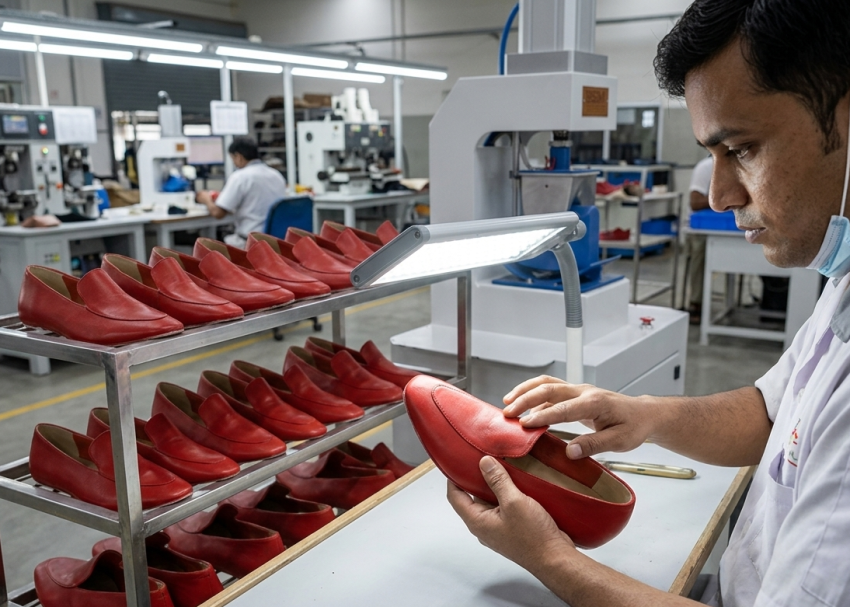
Quality inspectors evaluate stuffed footwear before final packing approval to confirm shape stability, symmetry, and internal support consistency. The inspection process normally includes visual evaluation, touch verification, and shape comparison between left and right shoes.
Inspectors focus heavily on: Toe shape uniformity, Vamp smoothness, Sidewall stability, Upper tension balance, Internal support effectiveness. Many factories also implement random storage simulation audits where packed footwear remains under controlled stacking pressure for extended periods before reinspection.
This helps validate stuffing performance under realistic logistics conditions. Inspection teams should also monitor whether stuffing materials create internal pressure marks or lining impressions after prolonged storage.
Key Control Points
- Compare pair symmetry carefully
- Verify toe shape consistency
- Conduct storage simulation checks
- Monitor upper tension visually
Pro Tip:
Standardize stuffing size charts by last dimension instead of shoe size alone for better shape accuracy.
Inspect stuffing symmetry visually from top view because asymmetrical pressure creates pair appearance variation.

Worker Training and Standardization
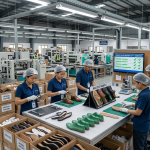
Operator skill significantly influences stuffing consistency because manual pressure control varies naturally between individuals. Therefore, factories must establish standardized work instructions supported by visual references, approved stuffing samples, and defect comparison boards.
Training programs should cover: Correct insertion sequence, Density evaluation, Material handling, Shape recognition, Upper sensitivity awareness. New operators should practice on multiple footwear constructions before handling live export production.
Supervisors must also conduct periodic skill validation because operator habits gradually change under production pressure. Digital work instructions and visual density comparison samples improve consistency further in multilingual factory environments.
Key Control Points
- Use visual stuffing standards
- Conduct routine operator retraining
- Monitor operator consistency frequently
- Maintain approved reference samples at the line
Pro Tip: Validate recycled stuffing materials through long-duration storage simulation before production approval.
Sustainability Considerations in Paper Stuffing
Sustainability requirements increasingly influence stuffing material selection across global footwear supply chains. Many brands now require: Recycled stuffing content, FSC-certified paper materials, Biodegradable fillers, Reduced packaging waste, Plastic-free internal supports.
Factories must balance sustainability goals with structural performance because weak recycled stuffing may lose compression resistance during export shipment. Therefore, material qualification testing becomes essential before changing stuffing specifications. Some advanced manufacturers now use engineered recycled fiber systems that combine sustainability performance with high structural stability.
Key Control Points
- Verify sustainability certifications
- Test recycled material durability
- Monitor compression resistance performance
- Align stuffing specifications with brand requirements
Pro Tip: Monitor export complaint trends carefully because many late-stage shape issues originate from poor stuffing practices.
Conclusion
Paper stuffing plays a far more important role in footwear manufacturing than many people assume. Beyond simple packing preparation, it protects upper shape integrity, preserves product appearance, and supports export quality stability throughout the logistics chain.
When factories control stuffing material quality, insertion density, moisture resistance, and operator consistency correctly, they significantly reduce customer complaints related to shape collapse and deformation.
As footwear supply chains continue expanding globally, paper stuffing standards become increasingly critical for maintaining product quality across long shipping durations and challenging environmental conditions.
In the next blog, we will continue the Full Shoe Assembly Series with Lacing in Footwear Manufacturing – Full Shoe Assembly Series, where lace insertion methods, automation systems, presentation standards, and lace quality controls will be discussed in detail.
Frequently Asked Questions – FAQs
Why is paper stuffing important in footwear manufacturing?
Paper stuffing maintains shoe shape, prevents toe collapse, protects the vamp area, and supports upper stability during storage and export transportation.
Which area of the shoe requires the most stuffing support?
The toe box and vamp region require the highest support because these areas deform easily during stacking and shipment pressure.
What happens if stuffing density is too high?
Excessive stuffing density can stretch uppers, distort toe shape, stress stitching lines, and create pair asymmetry.
Why are moisture-resistant stuffing materials used?
Moisture-resistant stuffing helps maintain shoe shape stability during ocean shipment and prevents humidity-related deformation.
Can automated stuffing systems improve quality?
Yes. Automated systems improve insertion consistency, reduce operator variation, and support high-volume production efficiency.
Which footwear types are most sensitive to stuffing pressure?
Knit uppers, lightweight athletic shoes, soft leather footwear, and thin synthetic constructions are highly sensitive to stuffing pressure.
How do factories validate stuffing performance?
Factories perform carton compression testing, humidity simulation, storage trials, and post-shipment quality evaluations.