Outsole Attaching in Footwear Manufacturing – Full Shoe Assembly Series
A strong adhesive bond in footwear manufacturing depends on far more than adhesive selection and application alone. Even when bonding surfaces are properly prepared, cemented, dried, and activated, the final assembly can still fail if the outsole is not positioned accurately during attachment. This makes outsole attaching one of the most critical quality-control stages in the entire shoe assembly process.
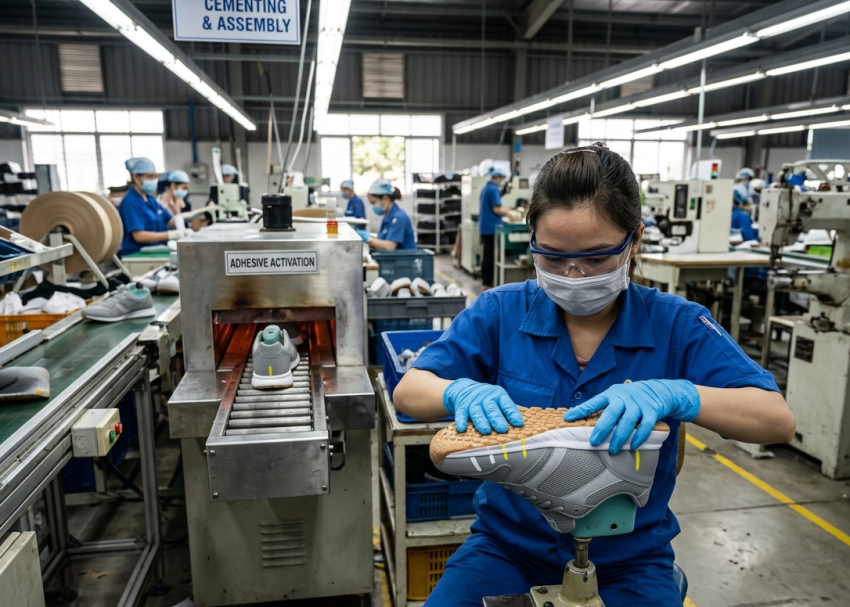
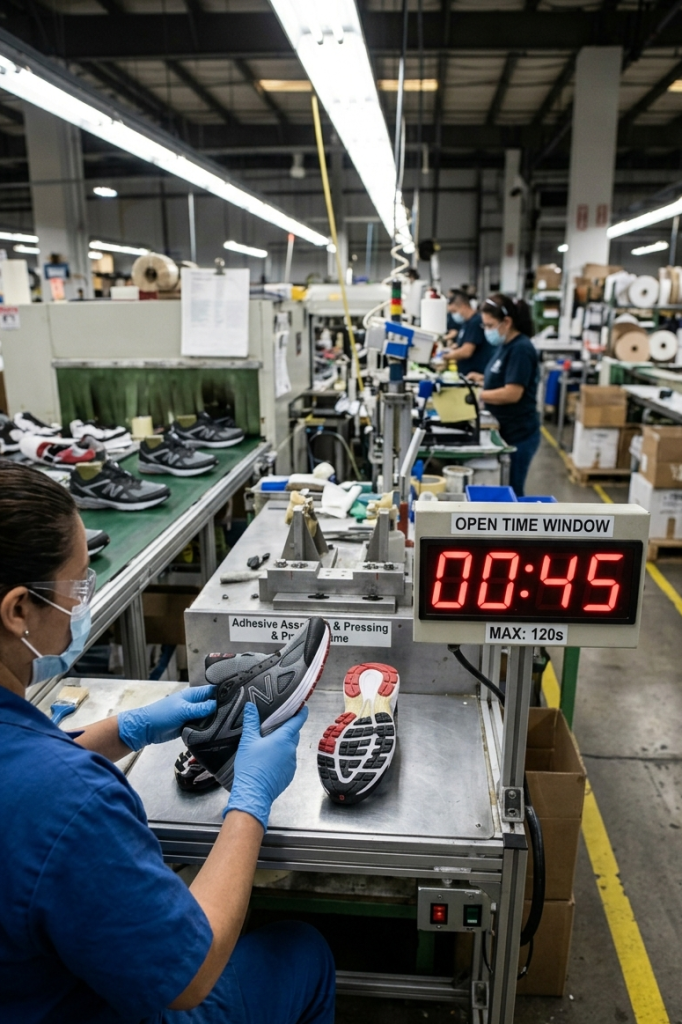
At this point in production, both the upper and outsole have completed all necessary bonding preparation steps and are ready to be joined. The challenge lies in achieving precise alignment within a limited adhesive open-time window, often lasting only a few seconds under production conditions. During this short period, operators must accurately position the outsole, establish full surface contact, and ensure the shoe maintains its intended shape, symmetry, and appearance..
Unlike many manufacturing operations where adjustments can be made later, outsole attaching offers little room for error. Once the activated bonding surfaces come into contact, repositioning becomes difficult and may damage the adhesive layer. A minor alignment mistake can lead to uneven outsole overhang, visual asymmetry, trapped air pockets, bonding weaknesses, or costly rework.
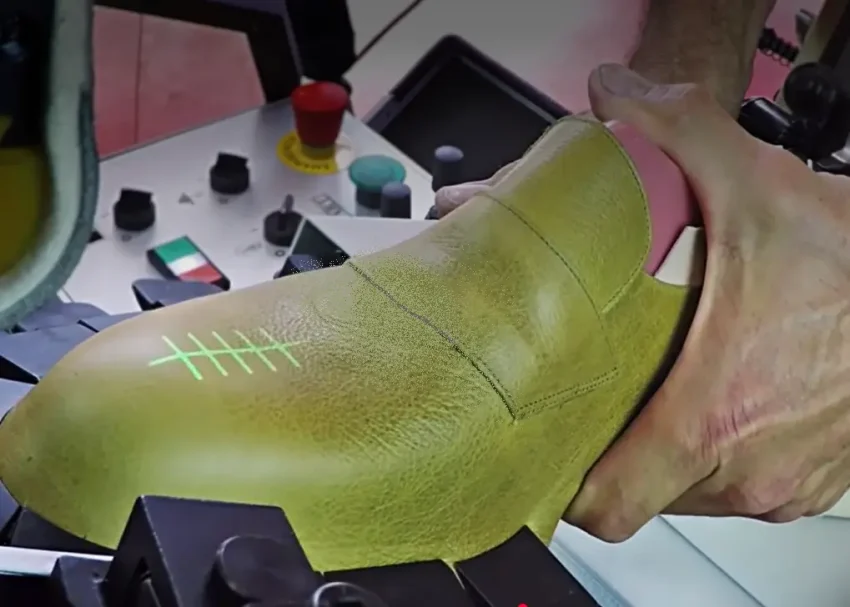
Because of these risks, footwear factories place significant emphasis on operator training, workstation ergonomics, alignment standards, and process control. Many manufacturers also use positioning guides, laser alignment systems, and visual reference markings to improve consistency and reduce variation between operators.
This article explores how outsole attaching is performed in modern footwear factories, the factors that influence alignment accuracy, common production challenges, and the control methods used to achieve reliable bonding quality and consistent product appearance.

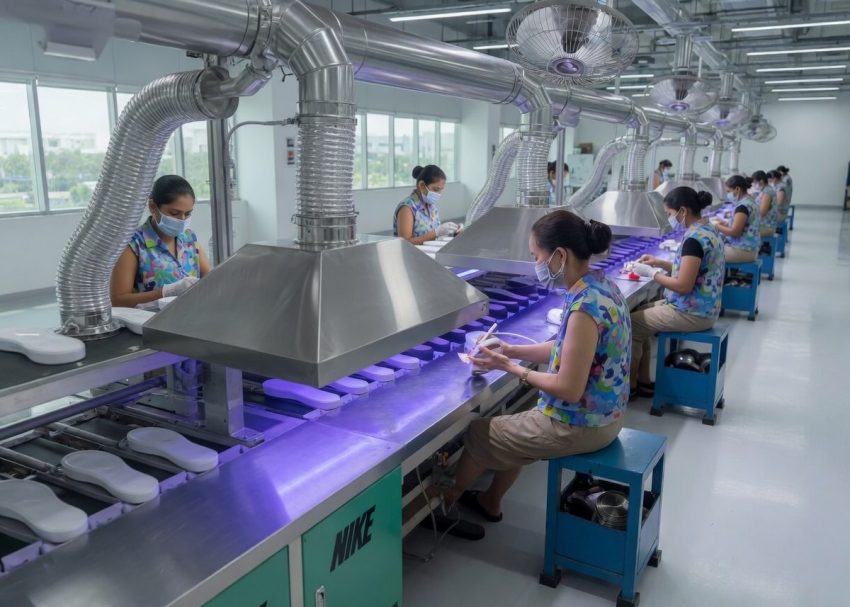
Understanding the Role of Outsole Attaching in Footwear Manufacturing
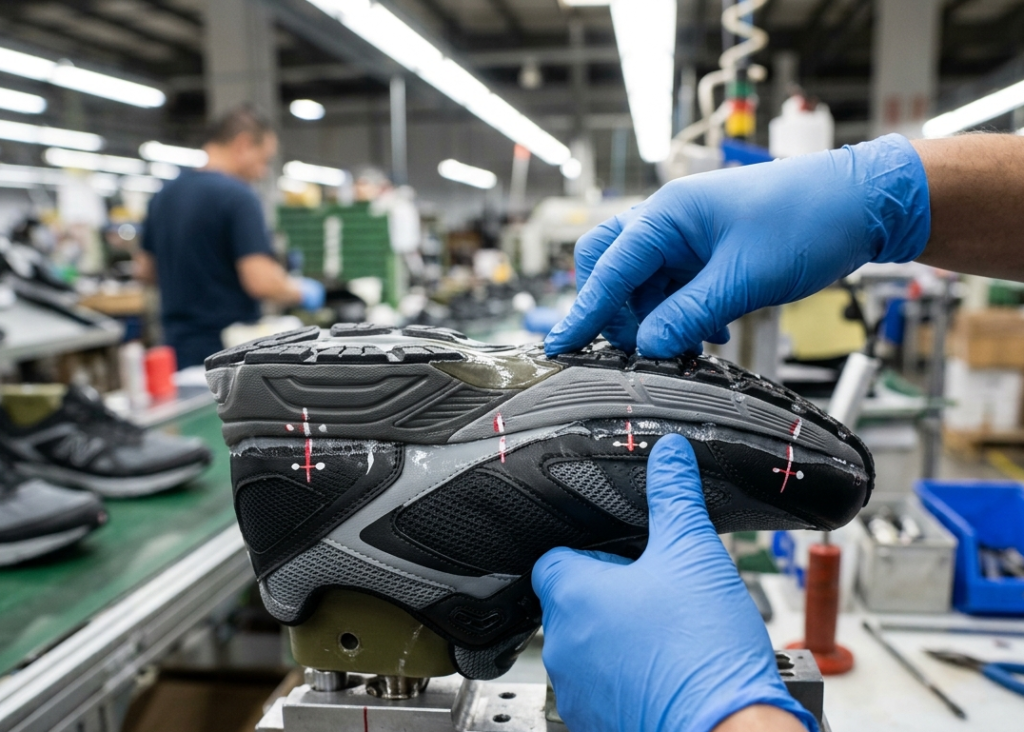
Outsole attaching is the operation in which the prepared outsole is aligned and joined to the prepared upper assembly after both bonding surfaces have completed adhesive activation. This process creates the initial mechanical and adhesive connection between the two major components of the shoe before they proceed to the pressing stage.
The importance of outsole attaching extends far beyond simply placing one component onto another. This operation establishes the foundation for final appearance, dimensional accuracy, comfort, durability, and long-term product performance. Any error introduced during attaching will usually remain visible throughout the life of the footwear.
A correctly attached outsole ensures that the shoe maintains proper symmetry when viewed from the front, rear, and side profiles. It also ensures that the outsole tread pattern aligns correctly with the upper design, preserving both functional performance and aesthetic appearance. In athletic footwear, where sole designs often include aggressive geometries and highly visible sidewall details, even small alignment deviations can become immediately noticeable to consumers.
From a manufacturing perspective, outsole attaching serves as the transition point between adhesive preparation and bond consolidation. The quality achieved during this operation directly influences the effectiveness of subsequent outsole pressing operations. If the outsole is positioned incorrectly during attaching, even the most advanced pressing machine cannot correct the problem. The operation therefore combines three critical objectives:
- Accurate positioning of the outsole relative to the upper.
- Complete contact between both adhesive surfaces.
- Preservation of adhesive effectiveness within the available open-time window.
Key Control Points
- Verify outsole and upper alignment marks before attaching.
- Maintain attaching within specified adhesive open time.
- Ensure full initial contact across the bonding surface.
- Prevent movement after first contact is established.
Expert Tip: Use approved master samples at every attaching station to provide continuous visual alignment references.
Preparation Before Outsole Attaching
Successful outsole attaching begins well before the operator physically joins the outsole and upper. In fact, many outsole attaching defects originate from inadequate preparation during earlier assembly stages.
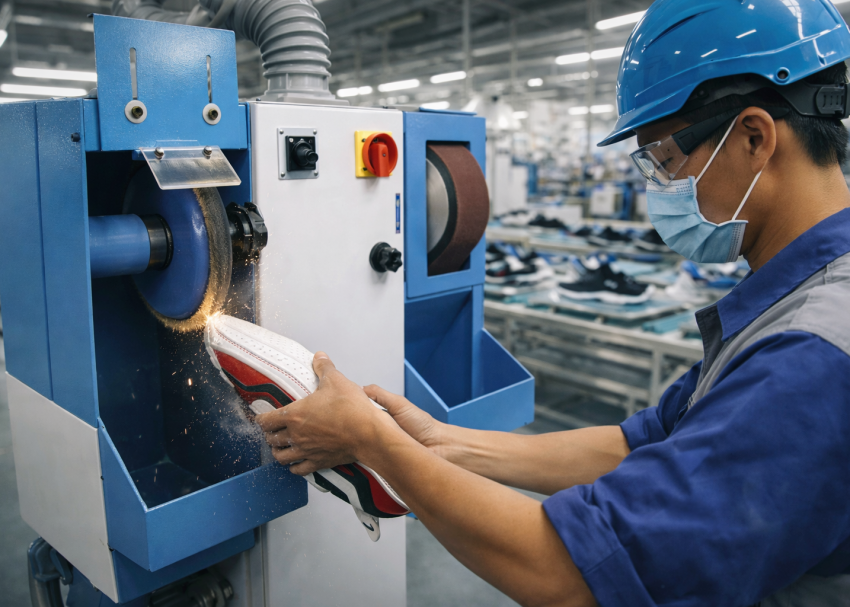
Before arriving at the attaching workstation, the upper assembly must have successfully completed lasting, bottom cleaning, roughing, primer application, cementing, drying, and adhesive activation. Similarly, the outsole must have completed all necessary surface preparation processes, including cleaning, chemical treatment where required, cement application, drying, and activation.
At this stage, both bonding surfaces are fully prepared and ready for assembly. However, the quality of preparation must be verified before attaching begins. Operators typically perform a quick visual inspection to confirm that no contamination, dust, loose particles, or handling damage is present on either bonding surface.
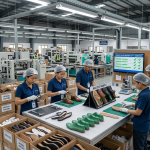
Factories often establish specific workstation standards to support this verification process. Components are arranged in a predetermined sequence to minimize handling time and reduce the risk of exceeding adhesive open-time limitations. Many assembly lines also use visual management systems that allow operators to identify prepared pairs quickly and maintain production flow.
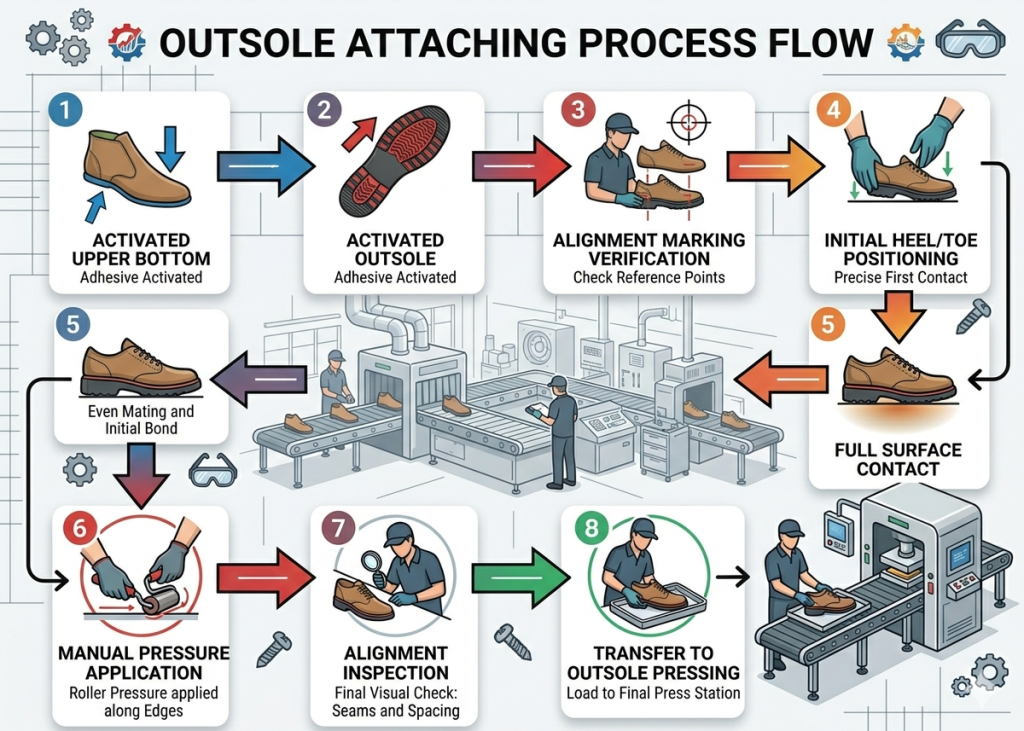
Another critical preparation activity involves marking alignment reference points. Depending on the footwear category and manufacturing method, operators may use center lines, heel reference marks, toe positioning indicators, or sidewall alignment marks. These references provide visual guidance during outsole positioning and help reduce variation between operators.
Preparation also includes verifying that the outsole and upper belong to the correct pair, size, and production order. In high-volume manufacturing environments, even a minor mix-up can result in significant rework and production delays. A well-prepared attaching station allows the operator to focus entirely on alignment and contact quality rather than searching for components or making last-minute adjustments.
Key Control Points
- Confirm bonding surfaces are free from contamination.
- Verify outsole and upper belong to the correct pair.
- Ensure alignment markings remain visible.
- Position components for quick access during attaching.
Pro Tip: Replace faded alignment markings immediately rather than relying on operator estimation.
Outsole Alignment During Attaching
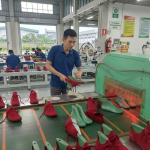
Among all activities performed during outsole attaching, alignment is the most critical. The success of the entire bonding process depends on the operator’s ability to position the outsole accurately within a matter of seconds.
When the outsole reaches the attaching station, the adhesive has already been activated and the bonding window has begun. The operator must therefore balance speed with precision. Moving too slowly may exceed adhesive open-time limits, while moving too quickly may increase the likelihood of positioning errors.
Most factories establish a standardized alignment sequence to improve consistency. Operators are trained to use specific reference points and follow the same positioning procedure for every pair. Standardization reduces variation between individuals and makes quality performance easier to monitor.
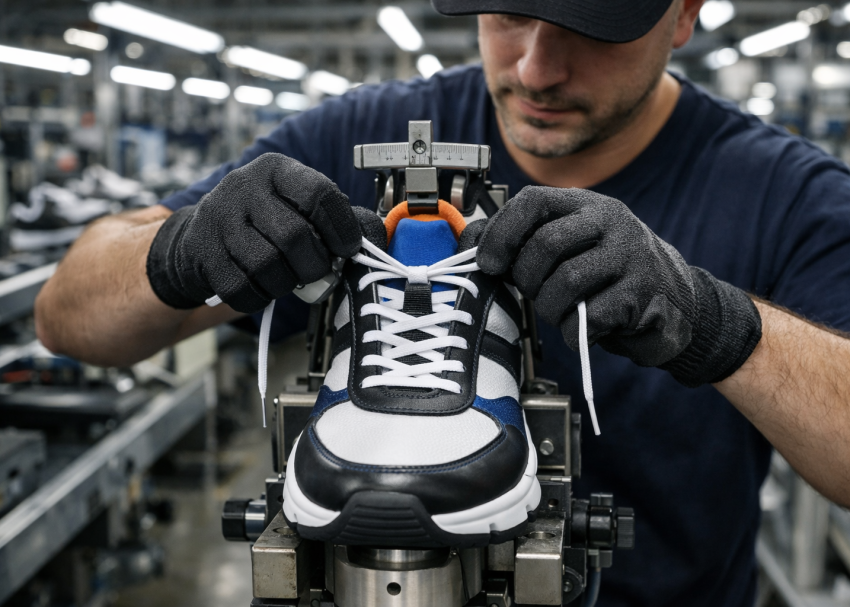
The alignment process generally begins by matching key reference points between the outsole and upper. Depending on the footwear design, operators may establish initial contact at the heel, toe, or center section before progressively lowering the remaining outsole surface into position.
Visual judgment plays a major role during this operation. Operators continuously evaluate – Toe centering, Heel centering, Sidewall symmetry, Outsole overhang consistency, Alignment of molded design features, Overall shoe appearance.
This evaluation occurs within only a few seconds, which explains why operator experience remains such a valuable asset in footwear assembly operations.
Athletic footwear presents additional challenges because outsole shapes often include complex geometries, sculpted midsoles, exposed foam sections, and asymmetrical tread patterns. These features increase the visibility of alignment errors and demand greater precision from the operator.
Factories frequently use sample shoes, visual guides, alignment templates, and digital images to help operators maintain consistency throughout production.
Key Control Points
- Match outsole and upper center lines accurately.
- Maintain consistent sidewall positioning.
- Verify toe and heel centering.
- Follow standardized alignment sequence.
Pro Tip: Audit outsole alignment hourly instead of waiting for end-of-line inspections.
Adhesive Open Time Management
One of the most important factors influencing outsole attaching quality is adhesive open time. Open time refers to the period during which activated adhesive surfaces remain capable of forming a strong bond after activation.
This bonding window is typically limited. Depending on adhesive chemistry, factory conditions, and process settings, the available open time may range from approximately less than 60 seconds. Within this period, the outsole must be positioned accurately and brought into full contact with the upper.
Open-time management is therefore not simply a chemical issue. It becomes a production management issue as well. If attaching occurs too late, the adhesive surface may lose tack and bonding effectiveness. Although the outsole may initially appear secure, the bond may weaken significantly during wear testing or customer use.
For this reason, footwear factories carefully monitor the time interval between activation and attaching. Production supervisors often track workstation performance and line balancing to ensure that activated components move through the process without unnecessary delays.
Environmental conditions also influence open time. High temperatures accelerate solvent evaporation and shorten the available bonding window.
Low temperatures may slow adhesive response. Humidity can further affect adhesive behavior depending on the adhesive formulation being used.
Modern factories often establish standard operating procedures that define – Maximum activation-to-attaching time, Environmental operating ranges, Component flow requirements, Re-activation criteria when open time is exceeded. By controlling these variables, manufacturers improve bonding consistency and reduce adhesive-related failures.
Key Control Points
- Monitor activation-to-attachment timing continuously.
- Prevent component accumulation after activation.
- Follow specified open-time limits.
- Re-activate components when required.
Pro Tip: Monitor attaching defects by operator and shift to identify training opportunities.

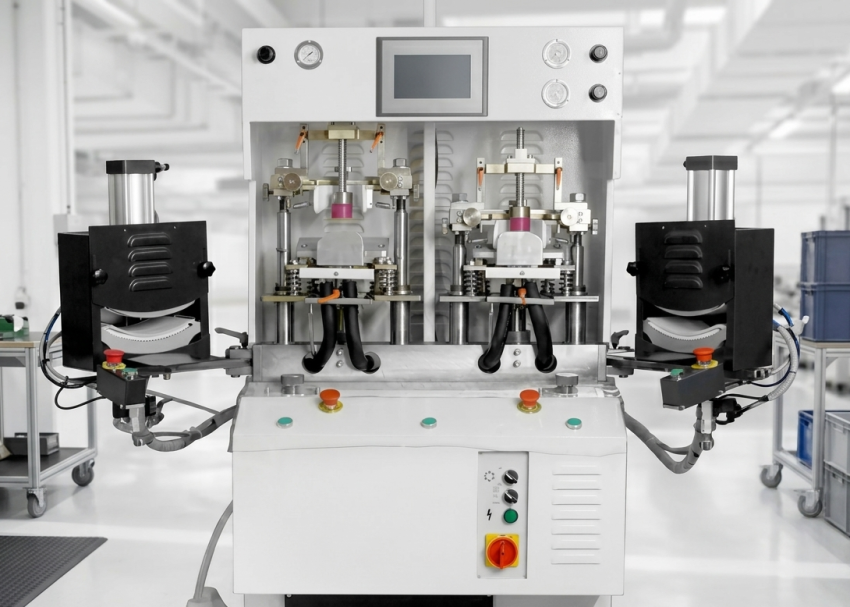
Pressure Application During Initial Contact
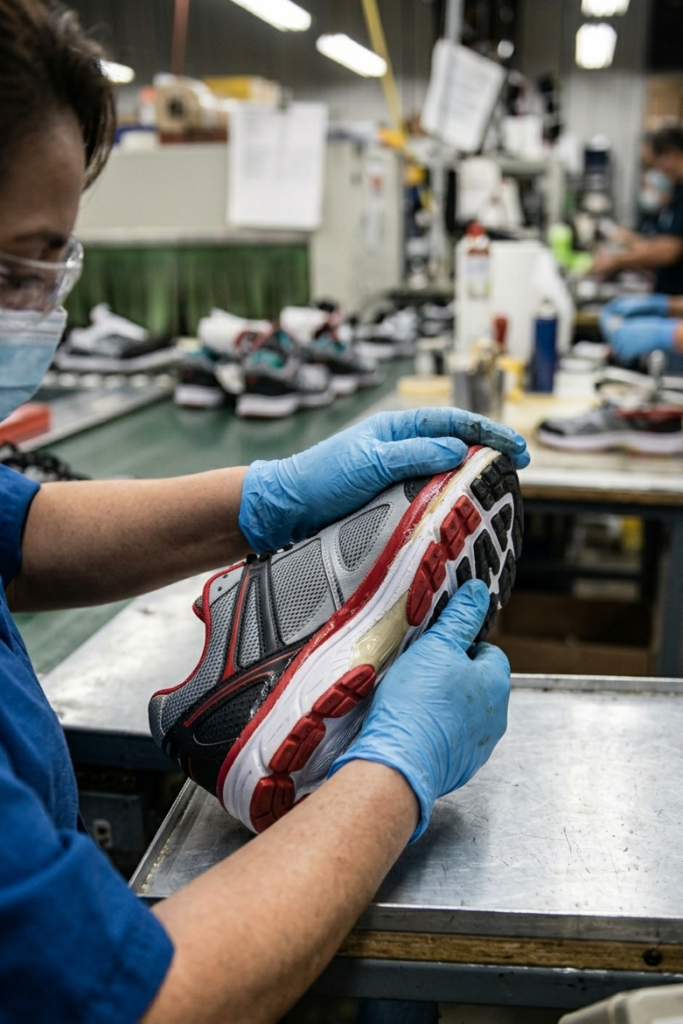
After alignment has been confirmed, the operator must establish full contact between the outsole and upper. This step may appear straightforward, but the method of pressure application significantly influences final bonding quality.
The objective during initial contact is to transfer the adhesive bond evenly across the entire interface while avoiding air entrapment. If pressure is applied inconsistently, certain areas may achieve strong contact while others remain partially bonded.
Most experienced operators apply pressure progressively rather than simultaneously across the entire outsole. By controlling the contact sequence, they guide air outward and reduce the likelihood of trapped pockets forming within the bonding area.
Special attention is often required in areas with complex geometry. Toe spring regions, arch sections, heel seats, and sharply contoured sidewalls may require additional pressure to achieve proper contact. These locations frequently become the first areas to show bonding issues if initial contact is inadequate.
The effectiveness of pressure application depends on several factors – Outsole material flexibility, Upper bottom shape, Adhesive condition, Operator technique, Shoe design complexity.
Factories therefore invest considerable effort in training operators to recognize proper contact quality. Many manufacturers use sample demonstrations, skill certification programs, and practical evaluations to standardize pressure application methods across production lines. Although final bond consolidation will occur later during outsole pressing, the quality of initial contact established during attaching remains a major contributor to overall bond performance.
Key Control Points
- Apply pressure progressively across the bonding area.
- Remove trapped air during contact formation.
- Focus on difficult contour regions.
- Ensure complete initial adhesive transfer.
Pro Tip: Review open-time performance whenever seasonal temperature changes occur.
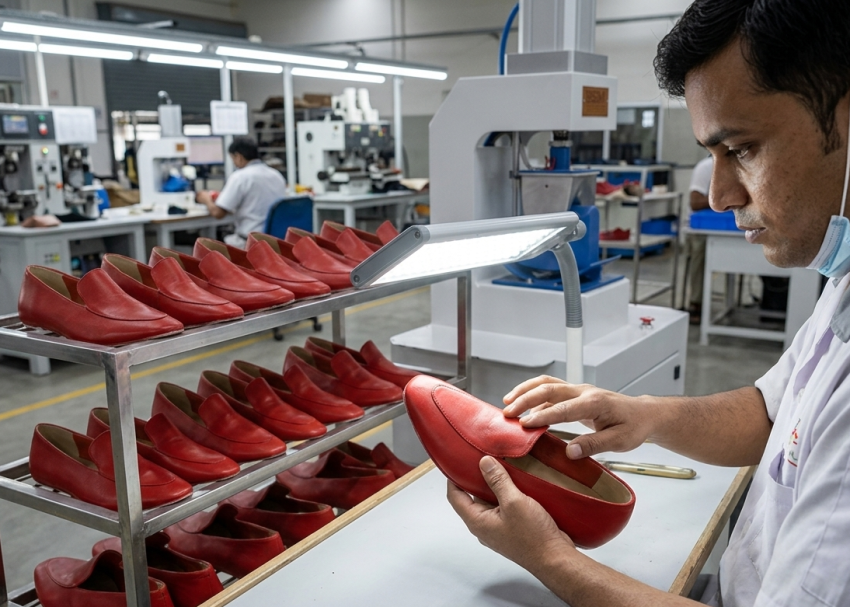
Operator Skill Dependency in Outsole Attaching
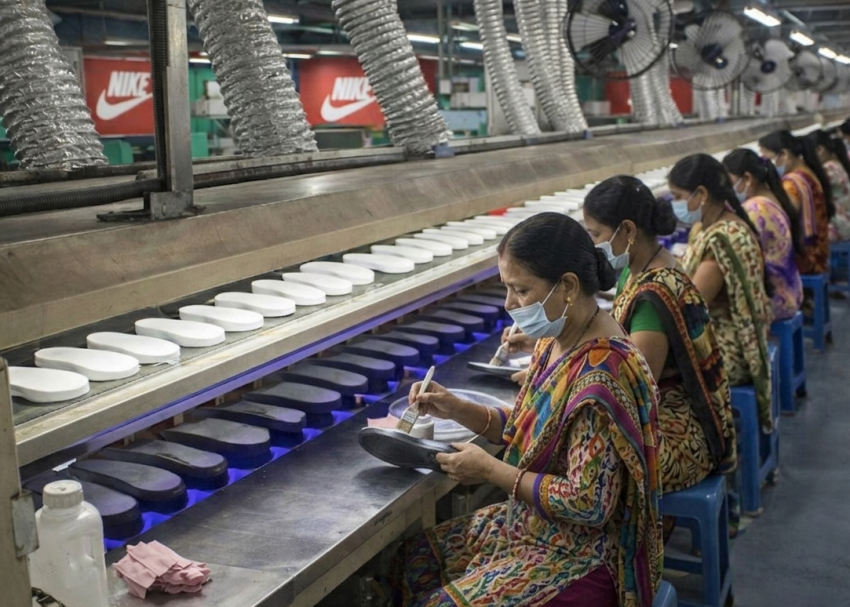
Few footwear manufacturing operations rely on operator skill as heavily as outsole attaching. While automation continues to advance throughout the industry, this process still depends significantly on human judgment, visual evaluation, and manual dexterity.
An experienced outsole attaching operator develops the ability to recognize alignment deviations almost instantly. Through repetition and practice, skilled operators learn to assess symmetry, identify positioning risks, and establish contact with remarkable consistency. This expertise often becomes one of the most valuable assets on a production line.
Unlike automated systems that follow predefined parameters, human operators can respond dynamically to variations in upper shape, outsole flexibility, material behavior, and manufacturing tolerances. This adaptability remains one of the primary reasons why complete automation of outsole attaching continues to be challenging.
However, the strong dependence on operator skill also introduces potential risks. Fatigue, distraction, production pressure, and repetitive motion can gradually affect performance during long shifts. Even highly experienced operators may show increased variation when workstation conditions are poor or workloads become excessive.
For this reason, leading footwear manufacturers focus not only on operator training but also on fatigue management, workstation ergonomics, visual aids, and performance monitoring systems. Many factories conduct periodic skill evaluations and provide refresher training to maintain consistency across production teams.
Ultimately, the success of outsole attaching depends on a combination of technical preparation and human capability. Even with advanced adhesives and sophisticated equipment, the operator remains the final decision-maker responsible for positioning accuracy and initial bonding quality.
Key Control Points
- Maintain regular operator skill certification.
- Monitor fatigue-related performance variation.
- Use visual standards for consistency.
- Support operators with ergonomic workstations.
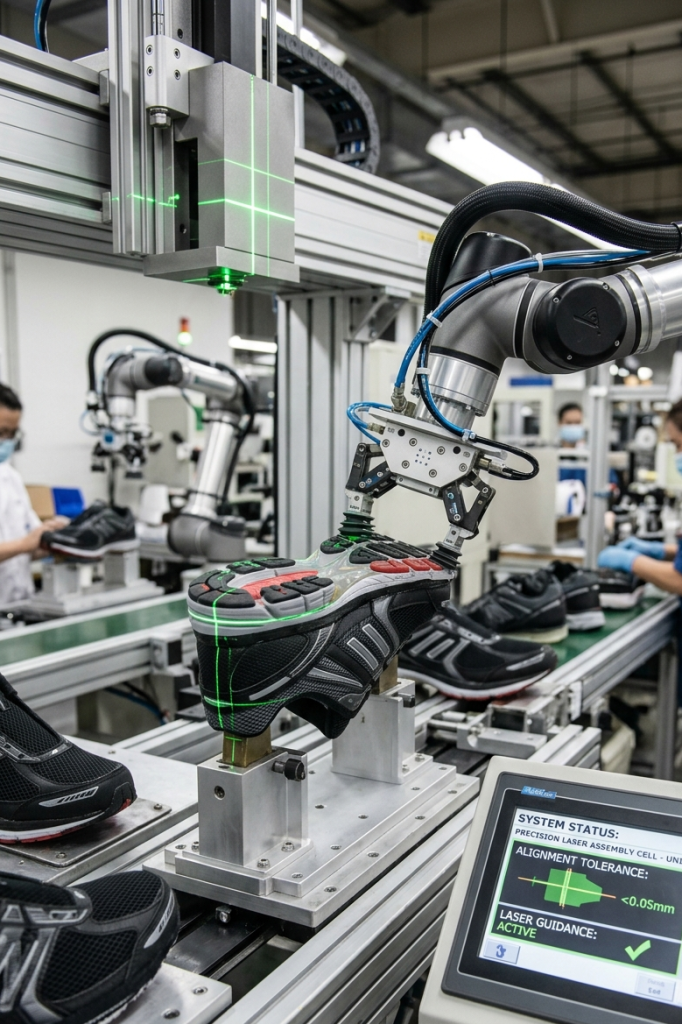
Pro Tip: Use laser positioning aids for highly visible athletic outsole designs.
Common Defects During Outsole Attaching
Outsole attaching defects can significantly impact both product quality and manufacturing efficiency. Because the operation occurs immediately before bond consolidation, errors introduced during attaching often require costly rework or product rejection. Understanding common defects allows factories to establish preventive controls rather than relying solely on final inspection activities.
Outsole Misalignment
Outsole misalignment is one of the most visible and costly defects associated with outsole attaching. It occurs when the outsole is positioned incorrectly relative to the upper centerlines and exactly to the Roughing/Buffing Line.
Even small alignment deviations can affect overall shoe appearance. In athletic footwear, misalignment often becomes highly noticeable because outsole patterns, logos, and sculpted sidewalls create strong visual references.
Misalignment generally results from inadequate operator focus, improper marking and roughing lines, poor workstation lighting, or rushed production conditions.
Key Control Points
- Verify alignment marks before contact.
- Improve workstation illumination.
- Standardize positioning sequence.
- Monitor operator performance trends.
Trapped Air and Voids
Air entrapment occurs when pockets of air become trapped between the outsole and upper during initial contact. These voids prevent complete adhesive transfer and create weak bonding zones within the shoe.
The problem often develops when operators apply pressure unevenly or bring large portions of the outsole into contact simultaneously.
Instead of allowing air to escape gradually, the contact sequence traps air inside the bonding interface.
Over time, trapped air can contribute to localized delamination, visible bubbling, or customer complaints regarding sole separation.
Key Control Points
- Apply progressive pressure during attaching.
- Avoid sudden full-surface contact.
- Inspect high-risk contour areas.
- Verify contact quality before pressing.
Pro Tip: Conduct periodic workstation ergonomic reviews to reduce fatigue-related variation.

Outsole Shifting After Contact
Once adhesive surfaces meet, operators should avoid unnecessary movement. Attempting to reposition the outsole after initial contact may damage adhesive films and reduce bond integrity.
Shifting typically occurs when operators lack confidence in alignment or attempt to correct positioning errors after contact has already begun. Unfortunately, these adjustments often create more problems than they solve.
Factories reduce shifting defects through operator training, visual standards, and improved alignment systems.
Key Control Points
- Confirm positioning before contact.
- Avoid repositioning after contact begins.
- Improve operator confidence through training.
- Use positioning aids when necessary.
Uneven Overhang and Appearance Variation
Many footwear designs require consistent outsole overhang around the perimeter of the shoe. Uneven overhang affects aesthetics and may indicate underlying alignment problems.
Consumers frequently notice this defect immediately because outsole edges create strong visual boundaries between upper and sole components.
Consistent alignment practices and effective visual inspection help minimize appearance-related variation.
Key Control Points
- Monitor perimeter symmetry.
- Verify toe and heel centering.
- Compare production against approved samples.
- Inspect both left and right shoes together.
Pro Tip: Establish a defect photo library to improve operator recognition and training effectiveness.
Inline Quality Inspection During Outsole Attaching
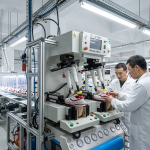
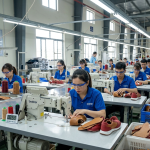
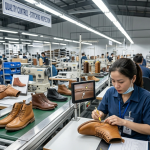
Inline quality inspection serves as the primary defense against attaching-related defects. Since many errors become difficult to correct later, early detection significantly reduces rework costs and improves production efficiency.
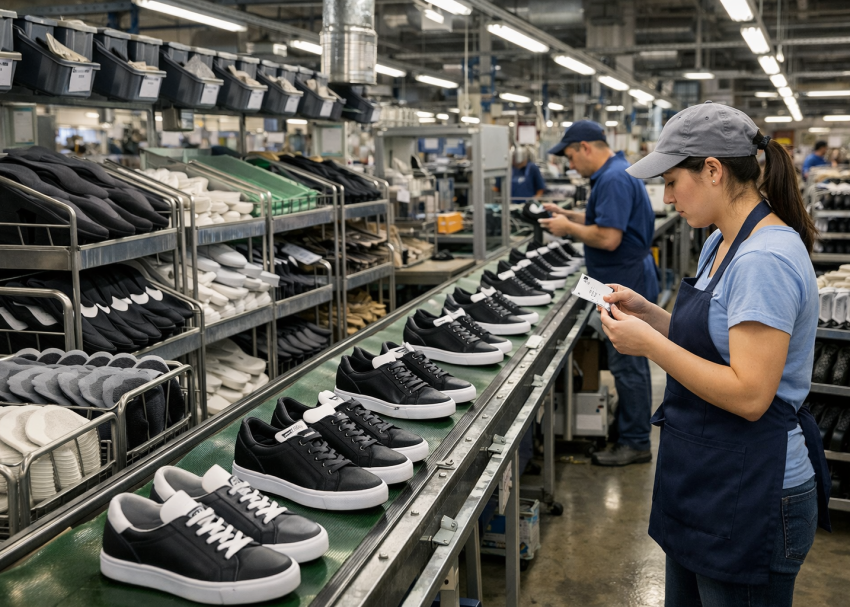
Most footwear factories establish dedicated inspection checkpoints immediately after outsole attaching. Inspectors verify positioning accuracy before the shoe proceeds to outsole pressing operations.
Many factories also implement first-piece approval procedures at the beginning of each production shift, style change, or size change. These approvals establish reference standards that guide production throughout the day.
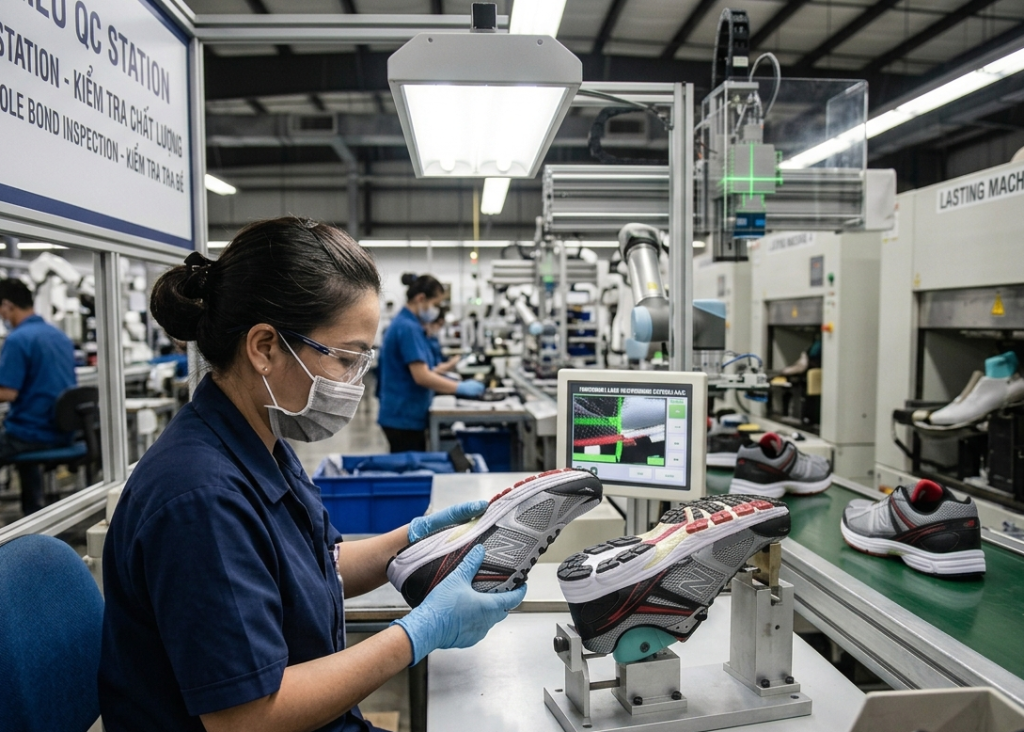
Increasingly, manufacturers are incorporating digital inspection technologies into assembly operations. Vision systems and camera-based measurement tools can identify alignment deviations more consistently than manual inspection alone. Nevertheless, human inspectors continue to play an essential role because appearance evaluation often requires subjective judgment.
Effective inline inspection not only improves quality but also strengthens operator accountability. Immediate feedback helps operators recognize trends and adjust techniques before defects become widespread.
Key Control Points
- Conduct frequent inline inspections.
- Verify first-piece approvals.
- Provide immediate operator feedback.
- Monitor recurring defect patterns.
Environmental Factors Affecting Outsole Attaching Quality
Environmental conditions exert a significant influence on outsole attaching performance. Even when materials, equipment, and operators remain unchanged, variations in temperature and humidity can alter adhesive behavior and bonding consistency.
Temperature is one of the most influential variables. Elevated temperatures accelerate solvent evaporation and shorten adhesive open time. As a result, operators may have less time available to complete accurate positioning before adhesive effectiveness begins to decline. Conversely, low temperatures can reduce adhesive responsiveness and slow bonding development. Materials may also become less flexible, creating additional challenges during positioning.
Humidity introduces another layer of complexity. Excessive moisture levels can affect certain adhesive systems and contribute to inconsistent bonding performance. In some situations, humidity may also encourage condensation on surfaces, creating contamination risks.
Dust contamination remains a persistent concern in footwear assembly operations. Small particles trapped between the outsole and upper can interfere with adhesive contact and create localized bond weaknesses. Consequently, many factories implement strict housekeeping procedures and workstation cleanliness standards.
Key Control Points
- Monitor temperature continuously.
- Control humidity within specifications.
- Prevent dust accumulation.
- Maintain clean attaching stations.
Safety and Ergonomics in Outsole Attaching Operations
Although outsole attaching is primarily considered a quality-critical operation, safety and ergonomics also deserve significant attention. The repetitive nature of the task places continuous demands on operators throughout the production shift.
Operators perform thousands of similar hand movements during a typical working day. Without proper workstation design, repetitive motion may contribute to fatigue, discomfort, and reduced performance consistency.
Ergonomically designed workstations help minimize these risks. Adjustable worktable heights allow operators to maintain neutral body positions while performing alignment activities. Proper seating arrangements further reduce physical strain during extended production periods.
Lighting quality also affects both ergonomics and quality performance. Poor illumination forces operators to work harder when evaluating alignment marks and appearance characteristics. Adequate lighting improves accuracy while reducing visual fatigue.
Because adhesive systems may contain solvents or other chemical components, ventilation remains another important consideration. Effective airflow helps maintain air quality and supports worker comfort.
Key Control Points
- Maintain ergonomic workstation design.
- Provide adequate task lighting.
- Ensure effective ventilation.
- Monitor fatigue-related performance issues.
Conclusion
Outsole attaching represents one of the most important precision operations within the footwear assembly process. Although the operation may appear straightforward, it requires a careful balance of alignment accuracy, timing control, pressure application, and operator expertise.
The process takes place within a limited adhesive open-time window, leaving very little opportunity for correction once contact is established. Consequently, manufacturers invest significant resources in operator training, visual controls, positioning aids, and quality monitoring systems to maintain consistency.
Successful outsole attaching delivers benefits that extend throughout the product lifecycle. Accurate positioning improves appearance quality, enhances bond reliability, reduces rework costs, and supports long-term product durability. Conversely, errors introduced during attaching can remain visible throughout the life of the shoe and contribute to customer dissatisfaction.
In the next blog of the Full Shoe Assembly Series, we will examine Outsole Pressing in Footwear Manufacturing, where hydraulic and pneumatic pressing systems transform initial contact into a durable, production-ready bond.
Frequently Asked Questions – FAQs
Why is outsole attaching considered a critical operation?
It determines alignment accuracy, appearance quality, and initial bond formation before pressing.
What happens if adhesive open time is exceeded?
Bond strength may decrease significantly, increasing the risk of sole separation.
Can outsole alignment be corrected after contact?
In most cases, correction is difficult and often requires complete rework.
What is the most common outsole attaching defect?
Outsole misalignment is typically the most common and most visible defect.
How do factories improve attaching consistency?
Through operator training, alignment guides, laser systems, and inline quality inspections.
Why are positioning aids used?
They reduce variation and improve repeatability across operators and production shifts.
Does environmental control affect outsole attaching?
Yes. Temperature, humidity, and cleanliness directly influence adhesive performance and bonding quality.
Is outsole attaching fully automated today?
Most factories still rely heavily on skilled operators, although automation and positioning assistance systems continue to increase..