Unit Box Packing in Footwear Manufacturing – Full Shoe Assembly Series
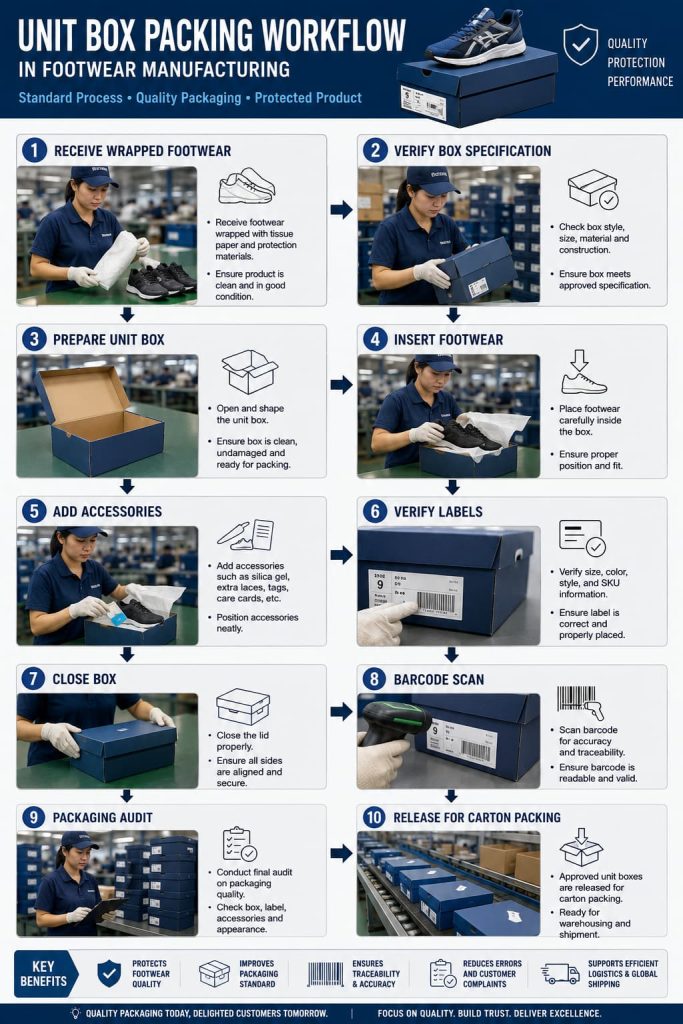
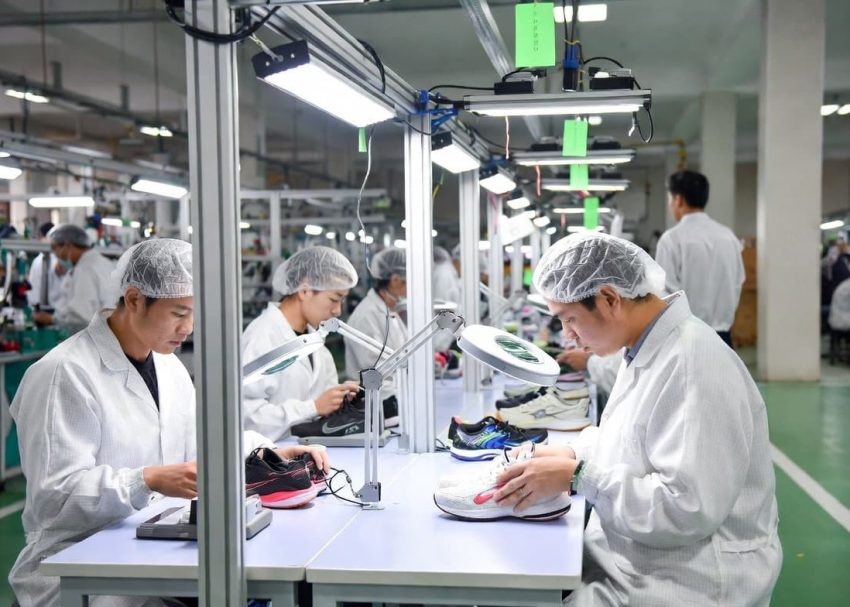
The journey of a finished pair of shoes does not end when manufacturing and quality inspections are completed. Before footwear can move safely through warehouses, distribution centers, retail environments, and transportation networks, it must be packed into a packaging system designed to protect both the product and the brand. At the center of this system is the unit box, commonly known as the shoe box.
Although often overlooked by consumers, the unit box performs several critical functions. It protects footwear from compression, impact, dust, and handling damage while maintaining product shape during storage and transportation. It also serves as an important carrier of product information, inventory data, branding elements, and retail presentation requirements.
The design and construction of a footwear unit box involve far more engineering than many people realize. Factors such as box dimensions, board strength, stacking performance, moisture resistance, printing quality, and logistics efficiency must all be carefully considered. A poorly designed box can lead to product damage, increased transportation costs, warehouse inefficiencies, and negative customer experiences. Conversely, a well-engineered unit box helps preserve product quality, improve supply chain performance, and strengthen brand perception.
For this reason, footwear manufacturers and global brands establish detailed specifications governing box materials, construction methods, labeling requirements, testing standards, and quality control procedures. Every approved unit box must meet defined performance criteria before it can be used in production.

Understanding the Role of Unit Boxes in Footwear Manufacturing
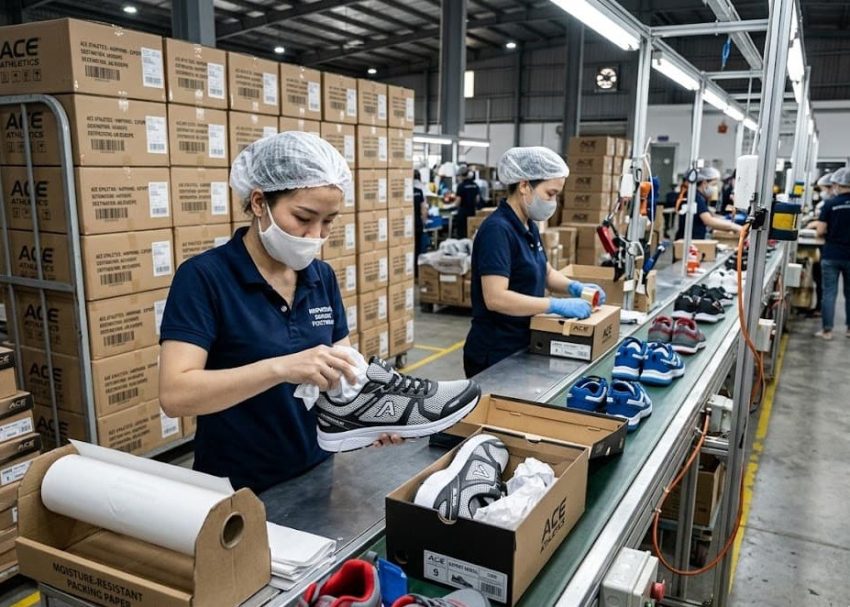
A unit box is the primary packaging container that houses one pair of footwear before it enters the shipping carton. It acts as the first structural protective layer surrounding the product and serves as the connection between manufacturing operations, logistics systems, retail channels, and consumers.
Unlike wrapping materials that protect individual footwear surfaces, the unit box provides structural protection against external forces encountered during transportation and handling. During its lifecycle, a unit box may be stacked in warehouses, loaded onto pallets, transported through distribution centers, stored in retail environments, and handled multiple times before reaching the final customer.
Because footwear products vary significantly in shape, weight, materials, and value, unit boxes must be engineered specifically for the product they contain. A lightweight running shoe requires different packaging characteristics than a heavy safety shoe or premium leather boot.
Modern unit boxes must balance several objectives simultaneously. They must provide adequate protection, maintain attractive appearance, support efficient logistics, minimize environmental impact, and remain cost-effective.
Key Control Points
- Use approved box specifications.
- Verify box dimensions before production.
- Confirm correct material grade.
- Ensure packaging compliance with customer standards.
Expert Tip: Standardize unit box specifications globally.
Functions of a Unit Box
The unit box performs far more functions than simply containing the footwear. It acts as a protective, informational, logistical, and marketing tool throughout the supply chain.
The primary function is product protection. During transportation and warehousing, boxes absorb impacts, resist compression loads, and prevent external contamination from reaching the footwear. Without adequate box strength, even properly wrapped footwear can become damaged.
The unit box also serves as an information carrier. Product descriptions, sizes, colors, SKU numbers, barcodes, country-of-origin information, and consumer instructions are displayed on the box.
This information supports warehouse operations, retail management, inventory control, and customer identification.
Another important function is retail presentation. The shoe box often forms part of the customer’s purchasing experience. Attractive packaging enhances perceived product value and reinforces brand identity.
Furthermore, unit boxes contribute significantly to logistics efficiency. Standardized box sizes improve pallet utilization, transportation efficiency, warehouse organization, and inventory management.
Primary Functions of a Unit Box
- Product protection
- Inventory identification
- Retail presentation
- Brand communication
- Warehouse management
- Transportation efficiency
- Consumer information delivery
Pro Tip: Validate packaging through transportation testing.
Unit Box Construction and Structural Design
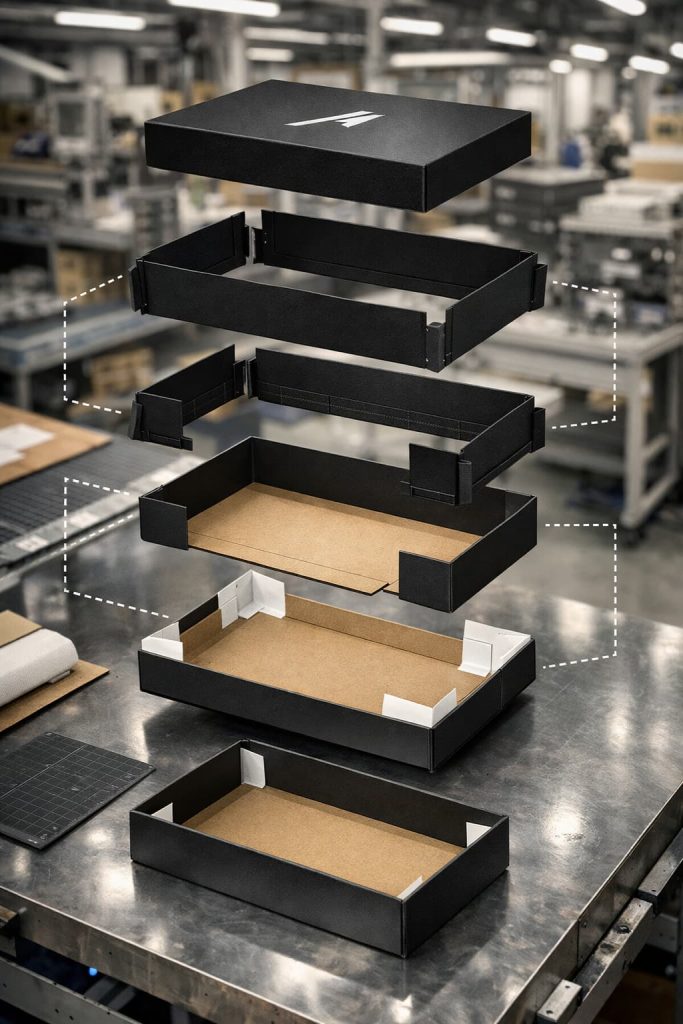
The structural design of a unit box determines its ability to withstand transportation and storage conditions. While shoe boxes may appear simple, their construction significantly affects performance.
Most footwear unit boxes consist of a bottom section and a lid. The side walls, corners, fold lines, and glue joints work together to create structural rigidity. During stacking, these components distribute loads throughout the box and help prevent collapse.
Corner construction is particularly important because corners absorb a large percentage of stacking and handling forces. Weak corner design can lead to box deformation even when high-quality materials are used.
The lid design also influences performance. A properly fitted lid helps maintain box shape and protects against dust and contamination. Excessively loose lids may separate during handling, while overly tight lids can create operational difficulties. Packaging engineers must carefully evaluate structural geometry to ensure the box performs adequately under real transportation conditions.
Key Control Points
- Verify corner integrity.
- Check fold quality.
- Inspect glue joints.
- Confirm lid fit consistency.
Pro Tip: Monitor supplier performance regularly.
Materials Used for Footwear Unit Boxes
Material selection is one of the most important aspects of unit box engineering. The material must provide sufficient strength while remaining economically viable and environmentally responsible. Most footwear boxes are manufactured from paperboard or corrugated materials. The specific material depends on footwear category, customer requirements, transportation conditions, and product value.
Premium footwear products often utilize higher-grade materials with superior appearance and print quality. Work footwear and safety shoes may require stronger materials capable of supporting heavier loads. Sustainability considerations have also influenced material selection. Many footwear brands now require recycled content, certified fiber sources, and environmentally responsible manufacturing practices.
Common Unit Box Materials
- Duplex board
- Corrugated board
- Virgin fiber board
- Recycled paperboard
- Kraft board
- Folding box board
Important Material Properties
- Compression strength
- Stiffness
- Moisture resistance
- Print quality
- Durability
- Sustainability
Pro Tip: Audit box dimensions frequently.
Unit Box Dimensions and Sizing Requirements
Unit box dimensions directly affect product protection, transportation efficiency, warehouse utilization, and shipping costs. Selecting the correct box size is therefore a critical packaging engineering activity.
A unit box must provide enough space to accommodate the footwear, wrapping materials, stuffing components, desiccants, and product accessories. However, excessive space can create significant problems.
However, excessive space can create significant problems.
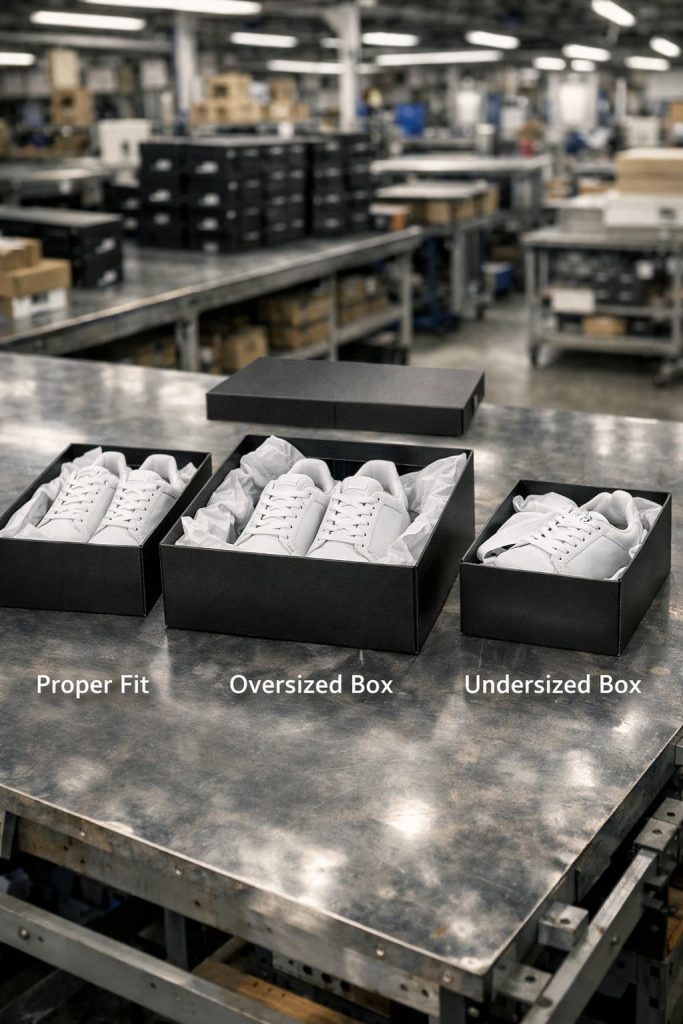
When a box is too large, the footwear can move freely during transportation. Continuous movement causes friction between footwear components and packaging materials, increasing the risk of scratches, abrasions, shape loss, and appearance defects. Larger boxes also increase shipping volume and transportation costs.
On the other hand, boxes that are too small create compression forces on the footwear. Tight packaging may deform collars, collapse uppers, distort toe shapes, and damage decorative components.
Packaging engineers therefore calculate box dimensions carefully based on product measurements, protective materials, and transportation requirements. The objective is to achieve secure product positioning while minimizing unnecessary volume.
Problems Caused by Oversized Boxes
- Excessive shoe movement
- Surface abrasion
- Shape distortion
- Increased freight costs
- Poor customer experience
Problems Caused by Undersized Boxes
- Product damage
- Upper deformation
- Collar collapse
- Toe distortion
- Pressure marks
Pro Tip: Verify barcode readability during production.
Unit Box Printing Requirements
Unit box printing serves both operational and marketing purposes. The printed information allows products to be identified throughout the supply chain while also communicating brand identity to consumers. Brand logos and graphics must meet strict visual standards because packaging often represents the consumer’s first physical interaction with the product. Print quality directly influences perceived product quality.
Operational information is equally important. Warehouse personnel, retailers, and logistics providers rely on box information for product identification and inventory management. Print consistency becomes particularly important for global brands operating across multiple factories and suppliers. Packaging standards ensure that products maintain a consistent appearance regardless of manufacturing location.
Common Printing Elements
- Brand logo
- Product name
- Size information
- Color description
- SKU number
- Barcode
- QR code
- Country of origin
- Sustainability markings
Pro Tip: Control warehouse stacking heights.


Unit Box Labeling Requirements
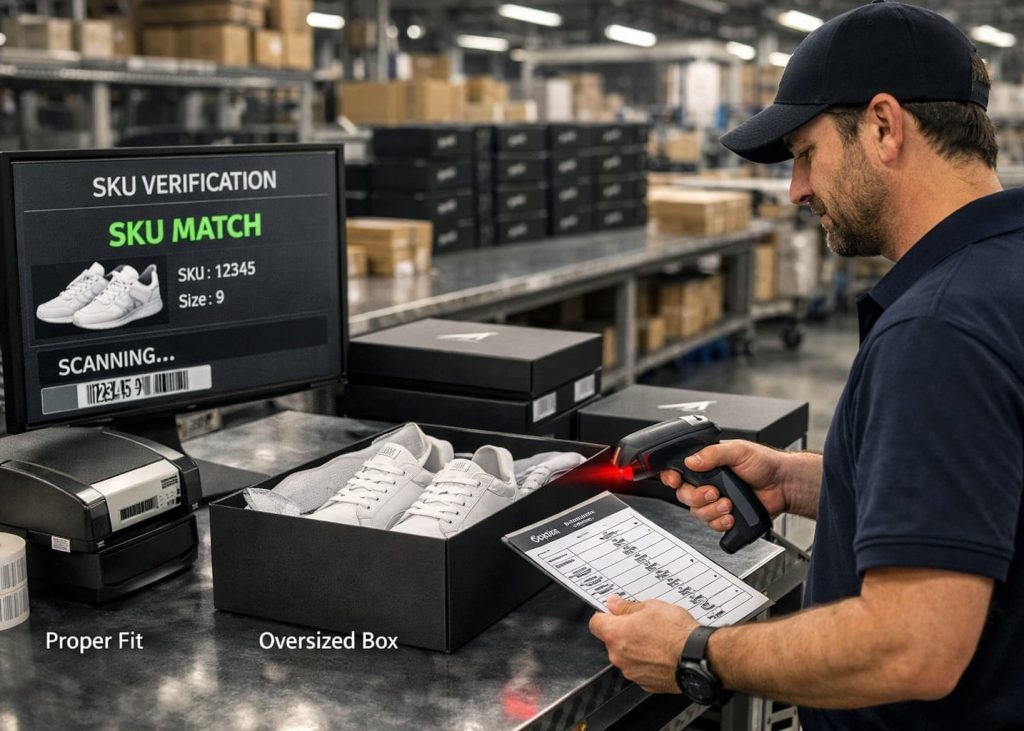
Labels provide critical product identification information throughout the supply chain. Accurate labeling reduces operational errors and improves inventory management. Each unit box label must correspond precisely with the footwear inside the package. Incorrect labels can result in shipping errors, customer complaints, retailer penalties, and inventory discrepancies.
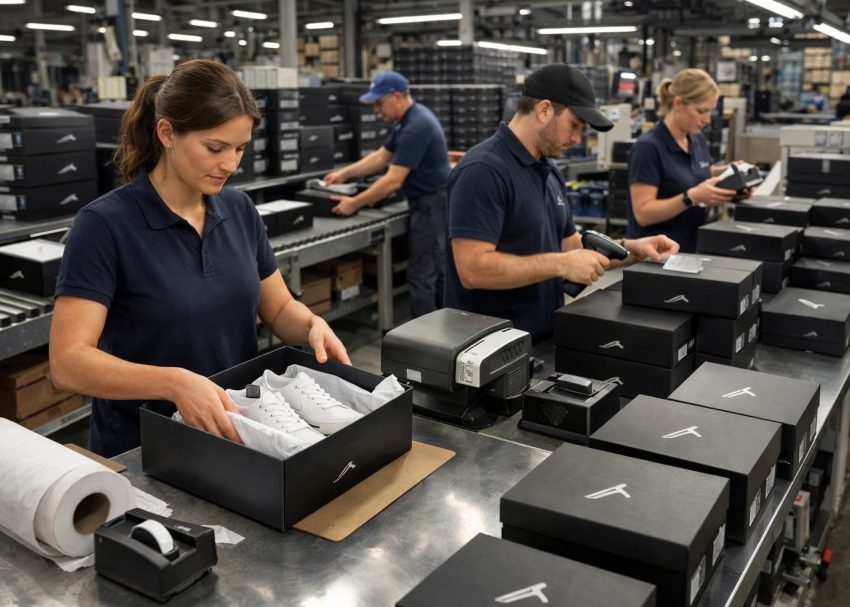
Modern footwear operations frequently use barcode systems that integrate directly with warehouse management software.
Therefore, label quality and barcode readability are essential requirements. Many footwear brands implement multiple verification stages during packing to ensure label accuracy before shipment.
Key Control Points
- Verify SKU accuracy.
- Check barcode readability.
- Confirm size information.
- Match label to footwear.
Pro Tip: Use packaging trials before new product launches.
Physical Properties Required for Unit Boxes
Unit boxes must possess specific physical properties to survive transportation and storage conditions. These properties determine the overall performance of the packaging system. Compression strength is particularly important because footwear boxes are frequently stacked in warehouses and shipping containers. Weak boxes may collapse under load, damaging the products inside.
Stiffness contributes to dimensional stability and appearance. A stiff box maintains its shape more effectively and provides better product presentation. Moisture resistance is also important because packaging may encounter humid environments during transportation. Excessive moisture absorption can weaken box structures and reduce protective performance.
Important Physical Properties
- Print durability
- Compression strength
- Edge crush resistance
- Burst strength
- Bending stiffness
- Moisture resistance
Pro Tip: Review freight efficiency when selecting box sizes.
Box Compression Test (BCT)
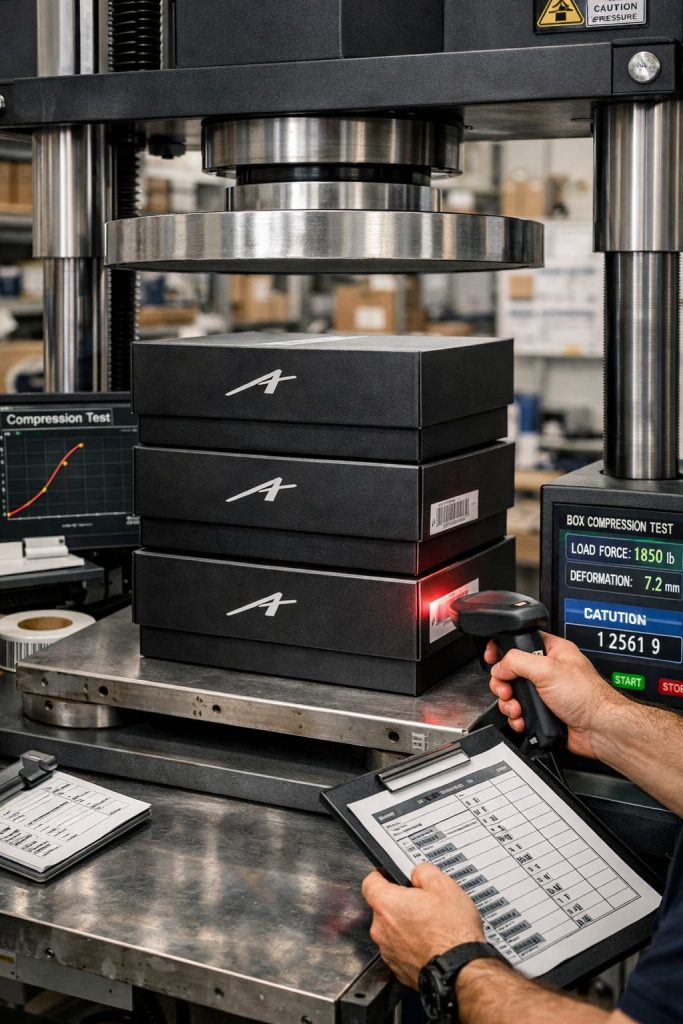
The Box Compression Test evaluates a unit box’s ability to withstand vertical stacking loads. During warehousing and transportation, boxes are often stacked in multiple layers. Each box must support the weight of boxes positioned above it.
In a BCT evaluation, a controlled load is applied until the box begins to deform or collapse. The measured strength helps packaging engineers determine whether the box can safely survive expected storage conditions.
BCT results are particularly important for export shipments where products may remain stacked for extended periods.
Purpose of BCT
- Validate stacking performance.
- Prevent box collapse.
- Protect footwear during storage.
Edge Crush Test (ECT)
The Edge Crush Test measures the compressive strength of corrugated materials along their edges. Because box walls carry much of the stacking load, edge strength directly influences overall box performance.
A low ECT value often indicates increased risk of box collapse under warehouse stacking conditions. Therefore, many footwear brands establish minimum ECT requirements for approved packaging materials.
Purpose of ECT
- Evaluate side-wall strength.
- Predict stacking performance.
- Verify corrugated board quality.


Burst Strength Test
The Burst Strength Test measures the resistance of paperboard materials to rupture when subjected to increasing pressure. Boxes frequently encounter impacts, handling forces, and compression during transportation. Materials with inadequate burst strength may tear or fail unexpectedly.
This test helps packaging engineers verify that the selected board material provides sufficient durability for intended logistics conditions.
Purpose of Burst Testing
- Evaluate material durability.
- Verify board quality.
- Prevent transportation failures.
Cobb Test for Moisture Resistance
The Cobb Test measures the amount of water absorbed by packaging materials over a specified period. Moisture absorption directly influences packaging performance because wet paperboard loses strength and stiffness.
This test is particularly important for export footwear transported through humid environments and ocean freight routes. Packaging materials with lower water absorption values generally provide better performance under challenging environmental conditions.
Purpose of Cobb Testing
- Measure water absorption.
- Evaluate moisture resistance.
- Support export packaging validation.

Drop Testing and Transportation Simulation
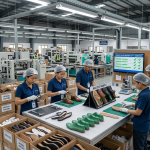
Footwear packages experience numerous impacts during transportation. Boxes may be dropped during handling, loading, unloading, and warehouse operations.
Drop testing simulates these events under controlled laboratory conditions. Boxes are dropped from specified heights onto different surfaces and orientations.
Testing typically includes: Corner drops, Edge drops, Face drops. Successful drop performance demonstrates that the packaging system can protect footwear against common handling hazards.
Pro Tip: Drop testing should always be performed using actual product weight because empty box testing rarely reflects real transportation conditions.
Vibration and Stacking Tests
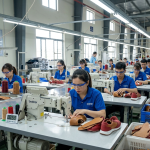
Transportation vehicles generate continuous vibration throughout the logistics process. Over time, vibration can cause footwear movement, packaging wear, and structural degradation.
Vibration testing simulates truck, rail, and ocean transportation conditions. The objective is to evaluate how the packaging system performs during prolonged transit.
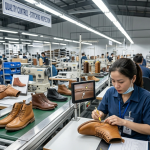
Stacking tests complement vibration testing by evaluating long-term load-bearing capability. Together, these tests provide valuable insight into packaging durability.
Key Benefits
- Improve product protection.
- Evaluate transportation durability.
- Identify packaging weaknesses.

Packaging Audits During Unit Box Packing
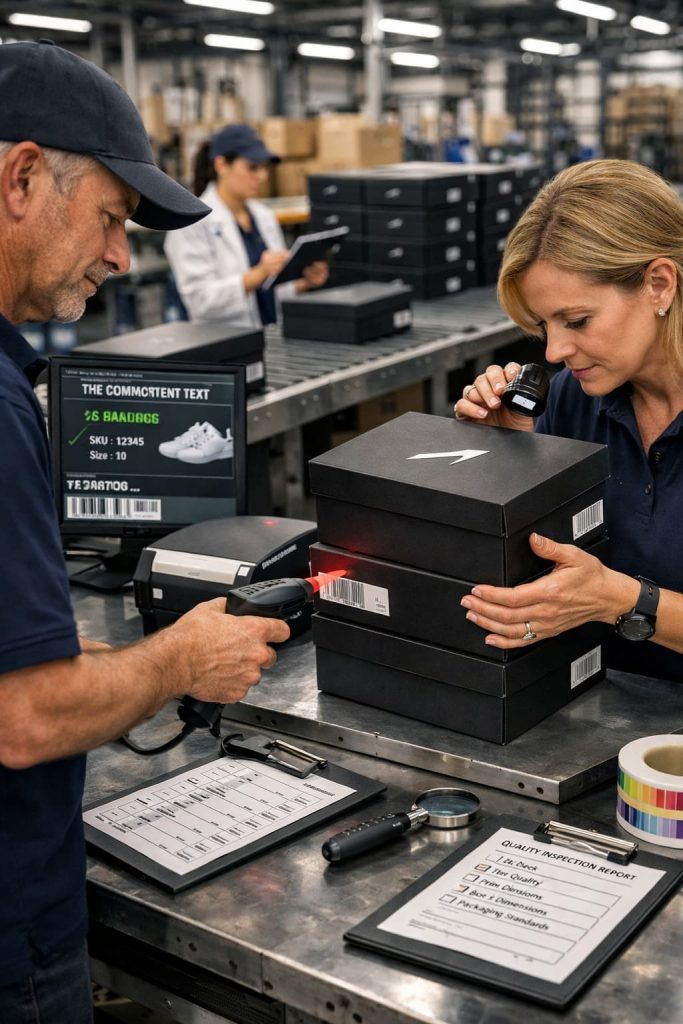
Packaging audits ensure that every unit box meets customer specifications before shipment. Audits help identify errors before products leave the factory. Auditors verify product identity, packaging materials, labeling accuracy, print quality, box condition, and packing consistency. These evaluations reduce the risk of customer complaints and improve overall packaging reliability.
Many footwear manufacturers conduct both in-process audits and final packaging inspections to maintain high standards.
Packaging audits ensure that every unit box meets customer specifications before shipment. Audits help identify errors before products leave the factory. Auditors verify product identity, packaging materials, labeling accuracy, print quality, box condition, and packing consistency. These evaluations reduce the risk of customer complaints and improve overall packaging reliability.
Many footwear manufacturers conduct both in-process audits and final packaging inspections to maintain high standards.
Audit Verification Items
- Accurate barcode
- Correct product
- Exact size
- Proper color
- Correct label
- Accurate box
- Correct packaging materials
Common Unit Box Defects and Root Causes
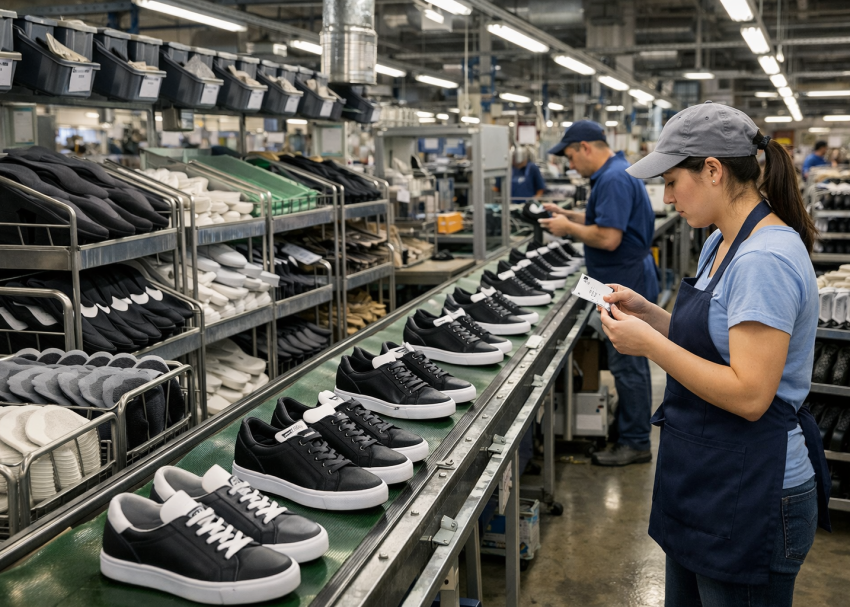
Packaging defects can compromise product protection and negatively affect customer perception. Understanding common defects helps manufacturers implement effective preventive controls.
Crushed boxes often result from inadequate material strength or excessive stacking loads. Incorrect dimensions may cause shoe movement or product compression. Printing defects can create branding issues, while labeling errors may disrupt inventory management.
Most packaging defects originate from inadequate specifications, supplier variability, or insufficient process controls.
Common Unit Box Defects
- Crushed boxes
- Torn corners
- Poor print quality
- Incorrect labels
- Weak glue joints
- Incorrect dimensions
- Barcode failures
- Moisture damage
Pro Tip: Regular supplier audits and incoming material inspections significantly reduce packaging-related quality issues.
Conclusion
Unit box packing is far more than a simple packaging operation. It is a critical engineering function that protects footwear quality, supports global logistics operations, improves inventory management, and enhances customer experience.
From material selection and structural design to dimension control, labeling, testing, and auditing, every aspect of the unit box influences product protection and supply chain performance. A properly engineered unit box minimizes damage, reduces transportation risks, improves operational efficiency, and reinforces brand image.
As footwear supply chains continue expanding across international markets, packaging performance becomes increasingly important. Manufacturers that invest in robust unit box specifications, testing programs, supplier controls, and quality audits can significantly reduce packaging failures and improve customer satisfaction.
In the next article of the Full Shoe Assembly Series, we will explore Carton Packing in Footwear Manufacturing – Full Shoe Assembly Series, where individual unit boxes are consolidated into shipping cartons for warehousing, export logistics, container loading, and global distribution..
Frequently Asked Questions – FAQs
Why is unit box size important in footwear packaging?
- Prevents shoe movement.
- Maintains product shape.
- Reduces transportation damage.
- Improves freight efficiency.
What happens if a shoe box is too large?
- Shoes may move excessively.
- Abrasion and scratches can occur.
- Transportation costs may increase.
What is the purpose of Box Compression Testing?
- Evaluates stacking performance.
- Prevents box collapse.
- Protects footwear during storage.
Why is barcode quality important?
- Supports warehouse operations.
- Improves inventory accuracy.
- Reduces shipping errors.
What is the Cobb Test?
- Measures water absorption.
- Evaluates moisture resistance.
- Supports export packaging validation.
What is the most common packaging defect?
- Crushed boxes due to insufficient strength or poor stacking practices.
Why are packaging audits necessary?
- Verify compliance.
- Prevent customer complaints.
- Improve consistency.