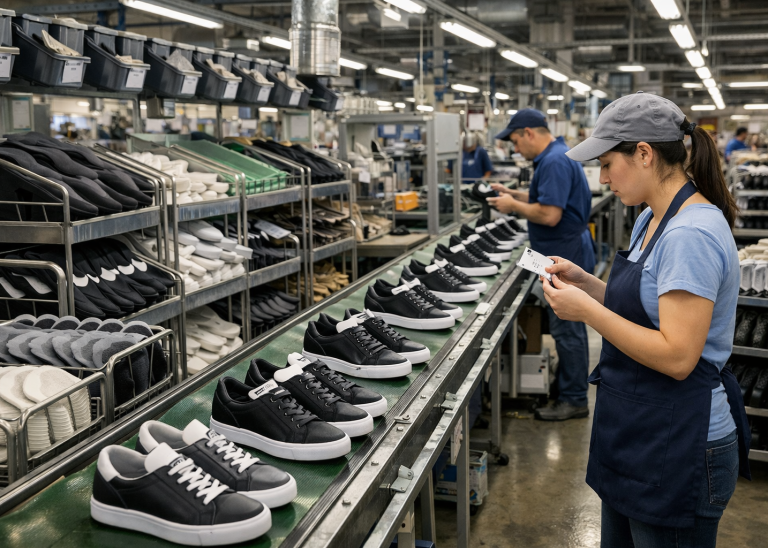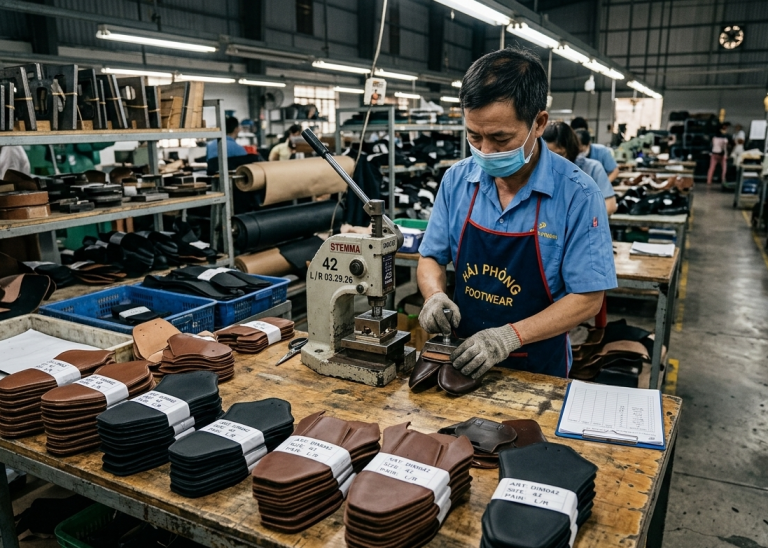
Carton Packing in Footwear Manufacturing – Full Shoe Assembly Series
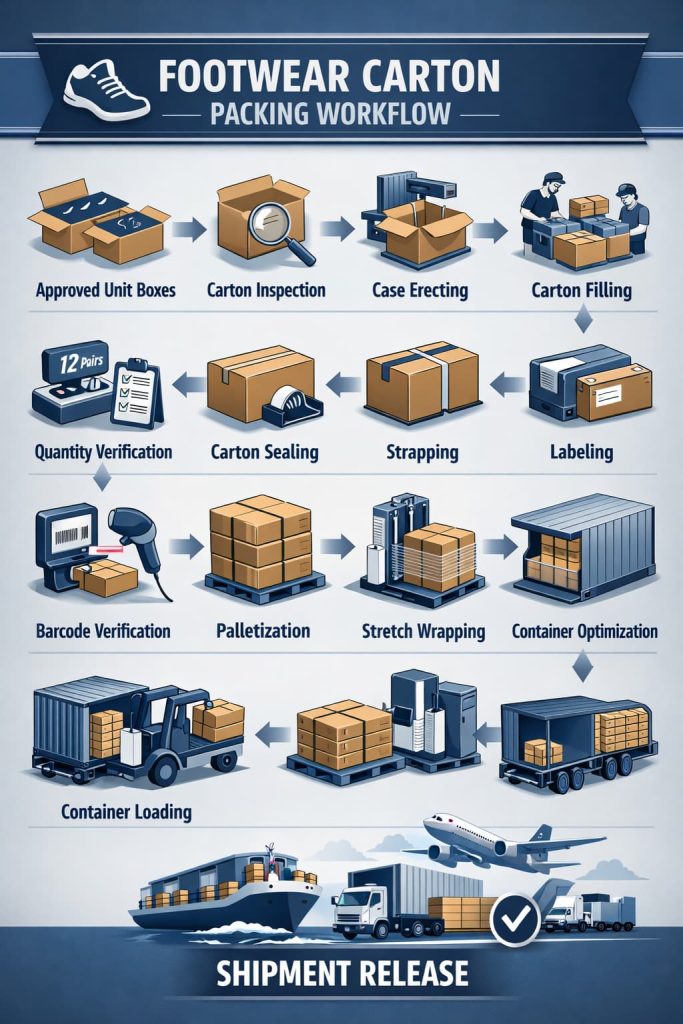
After footwear has been inspected, protected, and packed into individual shoe boxes, the focus shifts from product-level packaging to shipment-level protection. At this stage, multiple unit boxes are consolidated into larger corrugated cartons that are designed to safeguard products throughout the supply chain. This operation, known as carton packing, plays a vital role in ensuring footwear reaches its destination in the same condition in which it left the factory.
Carton packing is far more than simply placing shoe boxes into a larger container. The carton must withstand stacking loads in warehouses, vibrations during transportation, repeated handling at distribution centers, and varying environmental conditions throughout the shipping journey. A packaging failure at this stage can result in damaged products, increased logistics costs, shipment delays, and customer complaints, even when the footwear itself has been manufactured to the highest quality standards.
To minimize these risks, footwear manufacturers establish detailed carton specifications covering material strength, carton dimensions, packing configurations, sealing methods, labeling requirements, and palletization standards. Modern factories further enhance reliability through barcode verification systems, automated carton-forming equipment, weight checks, and structured quality inspections.
Because footwear products often travel long distances through complex global supply chains, carton packing serves as a critical link between manufacturing and delivery. Effective carton design and packing practices not only protect the product but also improve warehouse efficiency, transportation performance, and overall supply chain reliability.

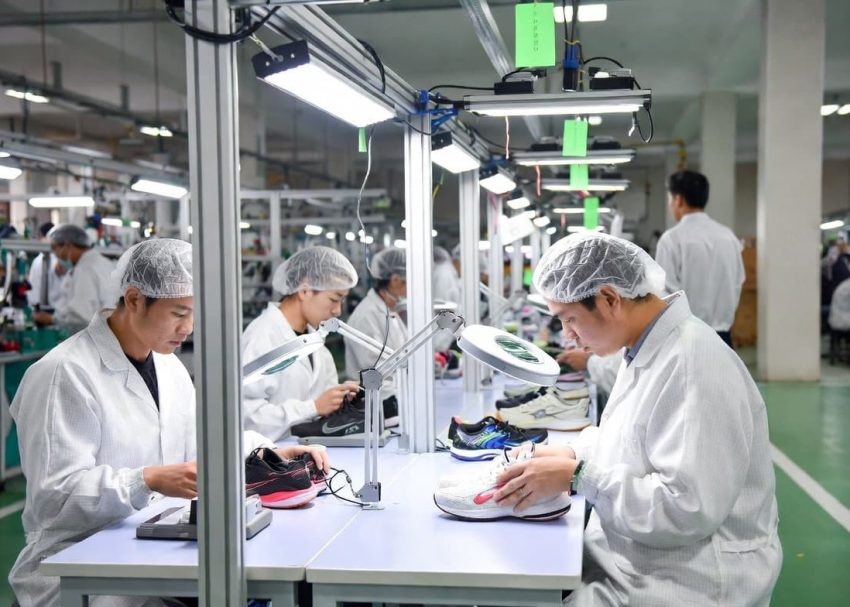
Understanding Carton Packing in Footwear Manufacturing
Carton packing is the process of consolidating multiple approved unit boxes into a larger corrugated shipping carton according to customer-approved packing specifications. The carton serves as the primary transportation package and provides protection throughout the supply chain.
Unlike retail shoe boxes, which are designed mainly for presentation and individual product protection, shipping cartons are engineered to withstand external forces encountered during storage and transportation. These cartons must support stacking loads, resist compression, tolerate handling impacts, and maintain structural integrity during long transit periods.
In footwear manufacturing, carton packing is performed only after all preceding operations have been completed successfully. The footwear must pass final inspection, accessories must be verified, labels must be confirmed, and unit box packing must be approved before products are released for carton packing. This ensures that only approved goods enter the shipping process.
The carton packing department acts as the final packaging checkpoint before palletization and shipment. Any errors discovered at this stage can result in shipment delays, customer complaints, inventory discrepancies, or costly rework activities. Consequently, most footwear factories establish strict verification procedures during carton packing operations.
Customer requirements heavily influence carton packing methods. International brands often provide detailed packaging manuals specifying carton dimensions, carton strength, box orientation, labeling locations, pallet stacking methods, and shipping marks.
Properly designed carton configurations improve warehouse storage, optimize container utilization, reduce transportation costs, and minimize product damage. As a result, carton packing contributes not only to product protection but also to overall supply chain performance.
Key Control Points
- Verify only approved unit boxes enter carton packing.
- Follow customer carton specifications exactly.
- Ensure correct carton size is used.
- Maintain carton traceability throughout packing operations.
Expert Tip:
Verify every carton before shipment.
Conduct routine packaging testing.
Maintain traceability systems.

Carton Specifications and Material Requirements
The effectiveness of carton packing depends heavily on the quality of the carton itself. Even perfectly packed footwear can suffer damage if the carton material is unable to withstand transportation and storage conditions.
Footwear factories typically use corrugated fiberboard cartons manufactured from multiple layers of kraft paper. The corrugated structure creates a combination of strength, cushioning, and rigidity while maintaining relatively low weight. This design allows cartons to protect products effectively without significantly increasing shipping costs.
Carton specifications vary depending on product category, customer requirements, shipment destination, transportation method, and storage conditions. Lightweight casual footwear may require different carton construction compared to heavy safety footwear or boots. Similarly, domestic shipments may use different packaging standards than export shipments traveling through multiple countries and transportation modes.
Most export footwear factories use 5-ply corrugated cartons because they provide a strong balance between durability and cost efficiency. However, heavier products or demanding logistics routes may require stronger constructions. Packaging engineers evaluate factors such as carton weight, stacking height, transit duration, and environmental conditions before selecting carton specifications.
Dimensional accuracy is equally important. If cartons are oversized, excessive movement can occur inside the carton, increasing the risk of product damage. Conversely, undersized cartons can compress unit boxes and deform packaging. Therefore, carton dimensions must be carefully matched to the approved pack ratio and box arrangement.
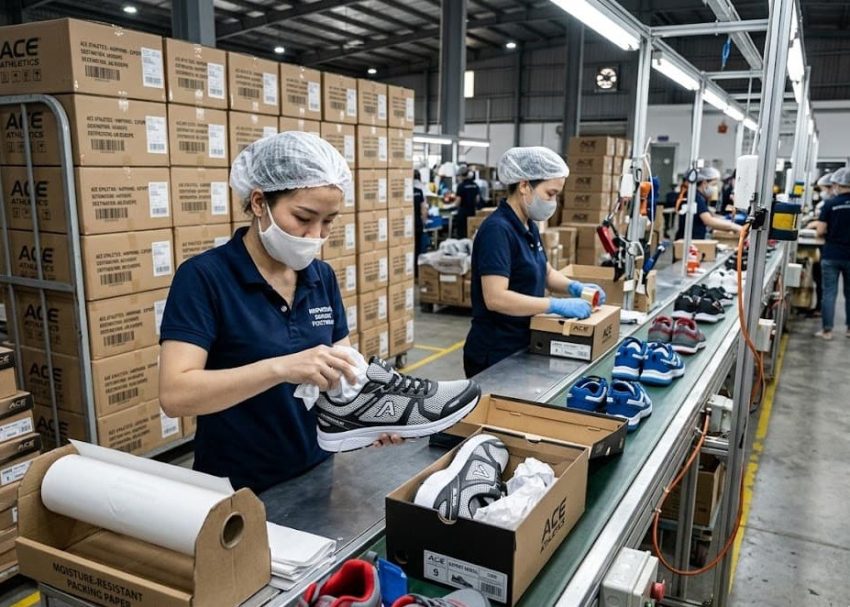
Moisture resistance also plays a critical role. Footwear shipments frequently encounter humidity changes during ocean freight transportation. Excessive moisture can weaken carton strength and compromise packaging performance. Consequently, many brands specify moisture-resistant carton materials or require additional protective measures for high-risk shipping routes.
Key Control Points
- Verify carton dimensions against specifications.
- Inspect cartons for moisture damage.
- Check printing quality and shipping marks.
- Reject warped or structurally damaged cartons.
Pro Tip:
Inspect cartons at the beginning of every shift.
Store cartons in dry environments to prevent moisture absorption.
Rotate carton inventory using FIFO principles.

Carton Burst Strength and Edge Crush Test (ECT) Requirements
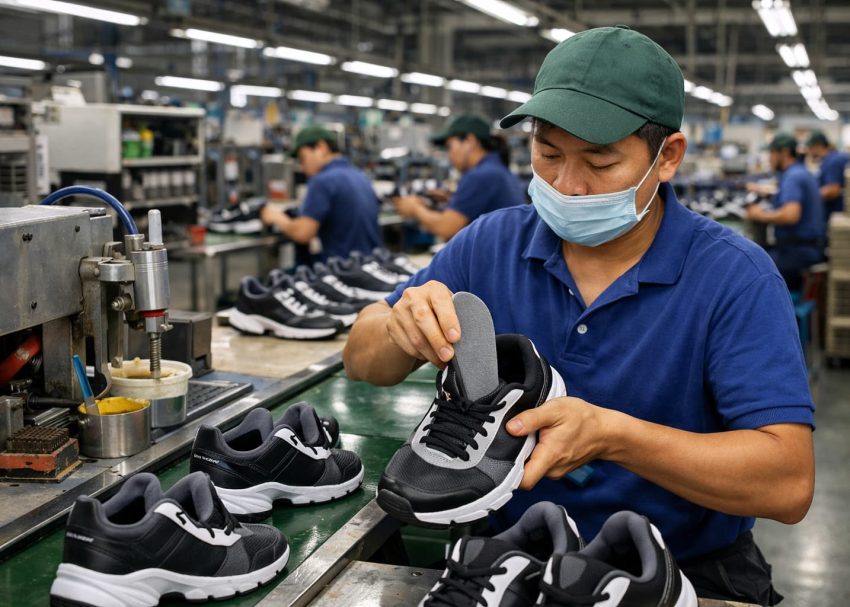
Carton appearance alone does not determine packaging quality. A carton may look acceptable visually but still fail under transportation and stacking conditions if its structural strength is insufficient. For this reason, footwear manufacturers rely on technical packaging tests to verify carton performance before shipment.
Two of the most important packaging measurements are Burst Strength and Edge Crush Test (ECT). These tests help packaging engineers determine whether a carton can withstand the mechanical stresses encountered throughout the supply chain.
Burst strength measures the amount of pressure required to rupture the carton material. This value indicates how well the carton can resist punctures, impacts, and external forces. Higher burst strength generally provides better protection against rough handling and transportation damage.
ECT, on the other hand, evaluates the compression strength of the carton edges. Since cartons are typically stacked on pallets and inside containers, vertical compression resistance becomes a critical performance requirement. A carton with inadequate ECT values may collapse under stacking loads, damaging the products inside and creating safety risks during storage.
Footwear factories select burst strength and ECT values based on several operational factors. These include carton weight, stacking height, warehouse storage duration, transportation method, climatic conditions, and customer packaging standards. Export shipments usually require more demanding specifications because they encounter longer transit periods and more complex logistics networks.
Many global footwear brands define minimum burst strength and ECT requirements in their packaging manuals. Factories must verify compliance through supplier certifications, incoming material inspections, and periodic laboratory testing. Failure to meet these requirements can result in shipment rejection or product damage claims.
Key Control Points
- Verify supplier strength certifications.
- Review burst strength test reports regularly.
- Monitor ECT compliance for all carton batches.
- Investigate carton failures immediately.
Pro Tip:
Conduct periodic supplier quality audits.
Verify carton dimensions using calibrated measuring tools.
Maintain separate storage areas for approved and rejected cartons.

Carton Assembly and Case Erecting Process
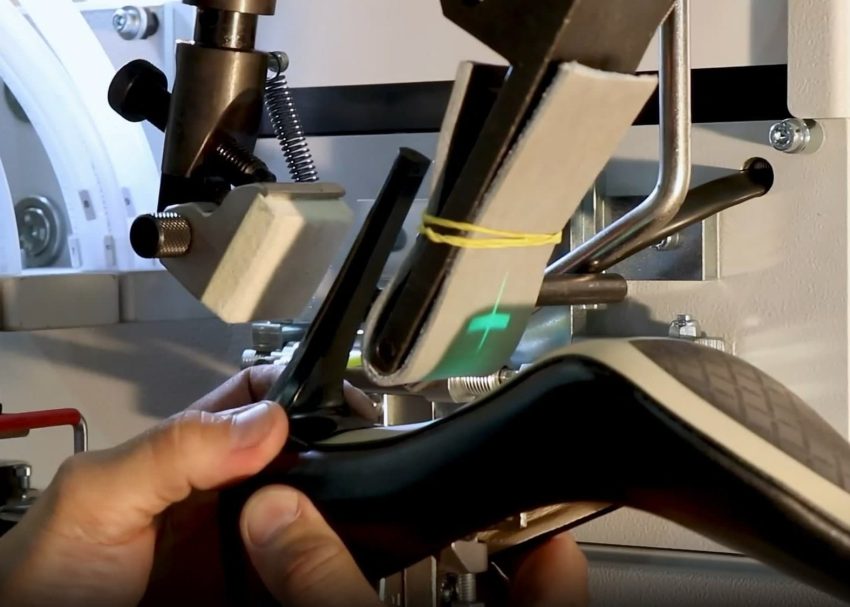
Before cartons can be filled with unit boxes, they must first be assembled into their final three-dimensional shape. This operation is commonly known as carton erection or case erecting and represents the first physical step in the carton packing process.
Most footwear factories receive cartons in a flat-packed condition to reduce storage space and transportation costs. Flat cartons are easy to store and handle; however, they must be properly erected before use. Poor carton erection can create structural weaknesses that negatively affect the entire packaging process.
Large footwear factories increasingly use automated case erectors to improve consistency and productivity. These machines automatically pick flat cartons, open them into shape, fold the bottom flaps, and apply tape or adhesive to seal the carton base. Automated systems reduce labor requirements while ensuring uniform carton construction.
Smaller facilities may continue using manual erection methods. In these operations, workers assemble cartons by hand and seal the bottom flaps using packaging tape. Although manual methods provide flexibility, they require greater operator attention to maintain consistency and quality.
Regardless of the method used, carton geometry must remain accurate. Cartons should form precise right angles, maintain dimensional stability, and sit evenly on packing surfaces. Cartons that lean, twist, or deform can create problems during filling, palletization, and container loading.
Key Control Points
- Verify bottom flap sealing integrity.
- Ensure cartons maintain square geometry.
- Remove damaged cartons immediately.
- Confirm correct carton size before filling.
Pro Tip:
Calibrate automatic case erectors regularly.
Monitor tape application consistency.
Train operators to recognize carton defects.
Pack Ratio Planning and Carton Configuration
Pack ratio planning is one of the most important decisions in footwear carton packing because it directly influences product protection, warehouse efficiency, transportation costs, and container utilization.
The term pack ratio refers to the number of footwear pairs packed inside a single shipping carton. Common pack ratios include six, eight, ten, and twelve pairs per carton, although specific requirements vary depending on customer specifications and product characteristics.
At first glance, increasing pack ratio may appear beneficial because more products fit into fewer cartons. However, carton configuration involves much more than simply maximizing quantity. Packaging engineers must carefully balance logistics efficiency with product protection. Excessive packing density can increase compression forces, deform unit boxes, and elevate the risk of transit damage.
During pack ratio development, engineers evaluate shoe dimensions, unit box dimensions, carton dimensions, carton strength, product weight, pallet stacking requirements, and container loading plans. Every variable influences the final carton configuration. The goal is to create a carton that maximizes shipping efficiency without compromising product quality.
Orientation planning is equally important. Unit boxes must be arranged in a manner that distributes weight evenly throughout the carton. Poor orientation can create pressure points that damage cartons or crush individual shoe boxes during transportation. Consequently, footwear brands often provide approved packing diagrams showing exactly how boxes should be arranged inside the carton.
Key Control Points
- Follow approved pack ratio specifications.
- Verify carton dimensions match packing plans.
- Prevent overpacking and carton bulging.
- Maintain approved unit box orientation.
Pro Tip:
Perform hourly carton quality checks.
Replace damaged cartons rather than repairing them.
Track erection defects as part of packaging KPIs.
Unit Box Arrangement Inside the Carton
After determining the approved pack ratio, operators begin arranging unit boxes inside the shipping carton according to the customer-approved packing layout. Although this activity appears simple, it has a significant influence on transportation performance, product protection, and warehouse efficiency.
The arrangement of unit boxes must create a stable internal structure that minimizes movement during transportation. When cartons travel through trucks, warehouses, ports, and shipping containers, they are exposed to vibration, sudden impacts, and repeated handling. If excessive empty space exists inside the carton, unit boxes can shift during transit, leading to damaged shoe boxes, crushed corners, and poor product presentation upon arrival.
For this reason, footwear brands normally approve a specific carton loading pattern before production begins. The pattern defines how boxes are positioned, which direction they face, and how layers are built within the carton. Factories must follow these approved layouts consistently throughout production.
Weight distribution is another important consideration. Uneven loading can create pressure concentrations within the carton, causing deformation during pallet stacking. A properly balanced carton distributes weight uniformly across all surfaces, improving both stacking performance and transportation durability.
In addition, correct box arrangement improves warehouse efficiency. Distribution centers often handle thousands of cartons daily. Standardized packing layouts allow operators to verify carton contents quickly and simplify inventory management activities.
Key Control Points
- Follow approved packing layout diagrams.
- Maintain consistent box orientation.
- Eliminate excessive internal void space.
- Ensure balanced weight distribution.
- Verify correct size assortment before packing.
Pro Tip:
Use barcode verification before every carton closure.
Implement dual verification for high-value orders.
Conduct random packing audits throughout the shift.


Carton Filling Operations
Once the carton has been erected and the unit box arrangement has been confirmed, the carton filling process begins. This operation involves placing the required quantity of approved unit boxes into the shipping carton while maintaining complete accuracy and traceability.
In footwear manufacturing, carton filling is not simply a manual loading activity. Instead, it functions as a critical verification stage where operators confirm product identity, quantity, size range, color assortment, and order compliance before the carton is sealed.
Many factories use barcode scanning systems during filling operations. Operators scan unit boxes before placing them into the carton, allowing the system to verify that the correct products are being packed. This approach significantly reduces the risk of mixed styles, incorrect sizes, and quantity discrepancies.
The efficiency of carton filling directly affects overall production flow. If cartons are filled incorrectly, downstream processes such as sealing, palletization, and shipping become vulnerable to costly errors. Therefore, factories establish standardized work instructions and packing procedures to maintain consistency across all production shifts.
During filling, operators must also monitor carton condition continuously. Cartons may become damaged during handling, and any structural defects discovered during packing should result in immediate replacement. Using damaged cartons increases the risk of shipment failures later in the logistics chain.
Key Control Points
- Verify product identity before loading.
- Confirm quantity matches packing specification.
- Prevent mixing of styles or colors.
- Replace damaged cartons immediately.
- Maintain carton traceability records.
Pro Tip:
Display approved packing layouts at every workstation.
Train operators to identify carton defects early.
Monitor filling accuracy as a packaging KPI.

Carton Sealing Process
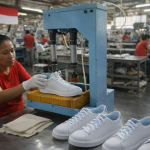
After the carton has been filled and verified, it moves to the sealing operation. The primary objective of sealing is to secure the carton structure and prevent accidental opening during handling, transportation, and storage.
Although sealing appears straightforward, poor sealing quality remains one of the most common causes of packaging failures. A carton that opens during transportation can expose products to contamination, moisture, impact damage, and even product loss.
Most footwear factories use pressure-sensitive BOPP tape, reinforced packaging tape, or hot-melt adhesive systems to seal cartons. The selection depends on customer requirements, carton weight, transportation conditions, and environmental factors.
Environmental conditions can also influence sealing performance. High humidity, dust contamination, and temperature fluctuations may affect tape adhesion and long-term seal integrity. Consequently, factories often increase inspection frequency during seasonal weather changes.
A properly sealed carton forms a secure package capable of withstanding transportation stresses without opening or deforming. Therefore, sealing quality must be treated as a critical packaging characteristic rather than a routine production activity.
Key Control Points
- Verify complete tape coverage.
- Check tape adhesion strength.
- Ensure flaps are properly aligned.
- Monitor sealing machine settings.
- Inspect cartons for open edges.
Pro Tip:
Validate strap tension at the start of each shift.
Use reinforced strapping for heavy footwear products.
Monitor strap breakage trends

Carton Strapping and Reinforcement
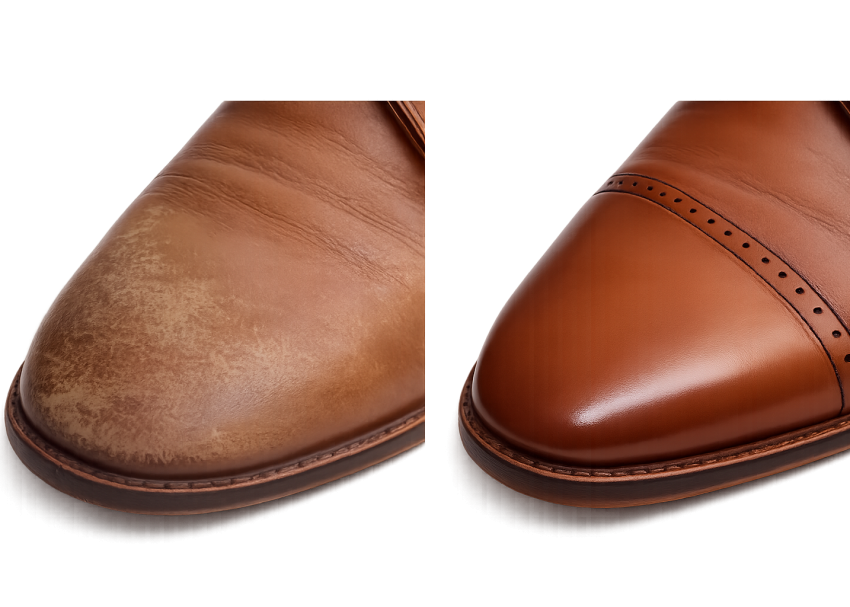
Certain footwear shipments require additional reinforcement after carton sealing. This reinforcement is typically achieved through strapping, which increases carton stability and improves resistance to transportation stresses.
Strapping becomes particularly important when shipping heavy footwear categories such as safety shoes, industrial footwear, hiking boots, and specialized protective products. These products generate greater internal loads and place additional stress on carton structures during handling and stacking.
The strapping process involves applying high-strength bands around the carton to secure the package and reduce expansion during transportation. Polypropylene and polyester straps are commonly used because they provide strong holding power while remaining lightweight and cost-effective.
Factories carefully determine strap quantity, position, and tension according to customer requirements and carton characteristics. Excessive tension can deform cartons, while insufficient tension may fail to provide adequate reinforcement. Therefore, maintaining proper strap settings is essential.
Automatic strapping machines are increasingly common in footwear manufacturing because they improve consistency and reduce operator variability. These systems apply controlled strap tension and create uniform strap joints, resulting in more reliable packaging performance.
Key Control Points
- Verify strap tension settings.
- Ensure correct strap positioning.
- Prevent carton deformation.
- Check strap joint integrity.
- Remove damaged straps immediately.
Pro Tip:
Inspect strap joints during packaging audits.
Train operators on tension adjustment procedures.
Include strapping quality in packaging inspections.
Shipping Marks and Carton Labeling
Carton labeling is one of the most important communication tools within the global footwear supply chain. Every carton must provide accurate information that allows products to be identified, tracked, stored, and distributed efficiently.
Shipping marks and labels serve multiple purposes. They help warehouse operators identify products quickly, support inventory management activities, guide transportation providers, and ensure shipments reach the correct destination. Without accurate labeling, even perfectly manufactured products can experience significant logistics problems.
Most footwear brands provide detailed labeling standards that specify label content, size, format, position, and printing requirements. Factories must comply precisely with these specifications to avoid shipment rejection or customer complaints.
Typical carton labels contain information such as purchase order numbers, style numbers, color codes, size ranges, quantity details, destination information, country of origin declarations, and carton sequence numbers. Many labels also include machine-readable barcodes that support automated inventory systems.
Label placement is equally important. Distribution centers often use automated scanning equipment that relies on standardized label locations. Incorrect placement may prevent efficient scanning and disrupt warehouse operations.
Printing quality must remain consistently high throughout production. Faded printing, missing information, damaged labels, or incorrect data can create costly shipment errors. Consequently, many factories perform label verification before cartons proceed to palletization.
Accurate carton labeling improves visibility throughout the supply chain and helps ensure that products arrive at the correct destination without delays or identification issues.
Key Control Points
- Verify label information accuracy.
- Confirm correct label placement.
- Ensure print quality remains clear.
- Prevent duplicate carton numbers.
- Inspect labels before palletization.
Pro Tip:
Perform final barcode verification before palletization.
Maintain backup label printing systems.
Audit traceability records regularly.


Barcode Verification and Traceability
As footwear supply chains become increasingly complex, traceability has become a major requirement for both manufacturers and brands. Barcode systems provide the foundation for modern carton tracking and inventory management processes.
Every carton receives a unique identification code that links the shipment to production records, packing information, order details, and distribution data. This traceability allows factories to track products throughout the supply chain and respond quickly if quality concerns arise.
Barcode verification systems are commonly integrated into carton packing operations. Before cartons move to palletization, scanners verify that barcode information matches the shipment requirements. If discrepancies are detected, the system immediately alerts operators and prevents incorrect cartons from advancing.
Traceability systems offer numerous operational advantages. They improve inventory accuracy, reduce shipping errors, simplify customer claim investigations, and support regulatory compliance requirements. In addition, they provide valuable data that can be used to analyze production efficiency and logistics performance.
Many advanced footwear factories have expanded beyond traditional barcodes and now use QR codes, RFID technology, and cloud-based tracking platforms. These technologies provide greater visibility throughout the supply chain and enable real-time shipment monitoring.
As global footwear distribution networks continue to grow, traceability will become even more important. Factories that maintain accurate carton-level tracking systems are better positioned to meet customer expectations and respond effectively to operational challenges.
Key Control Points
- Verify barcode readability.
- Confirm barcode data accuracy.
- Prevent duplicate barcode generation.
- Maintain complete traceability records.
- Investigate scanning failures immediately.
Pro Tip:
Validate scanner calibration weekly.
Use automated alerts for packing errors.
Retain shipment data for customer claim investigations.
Palletization Process
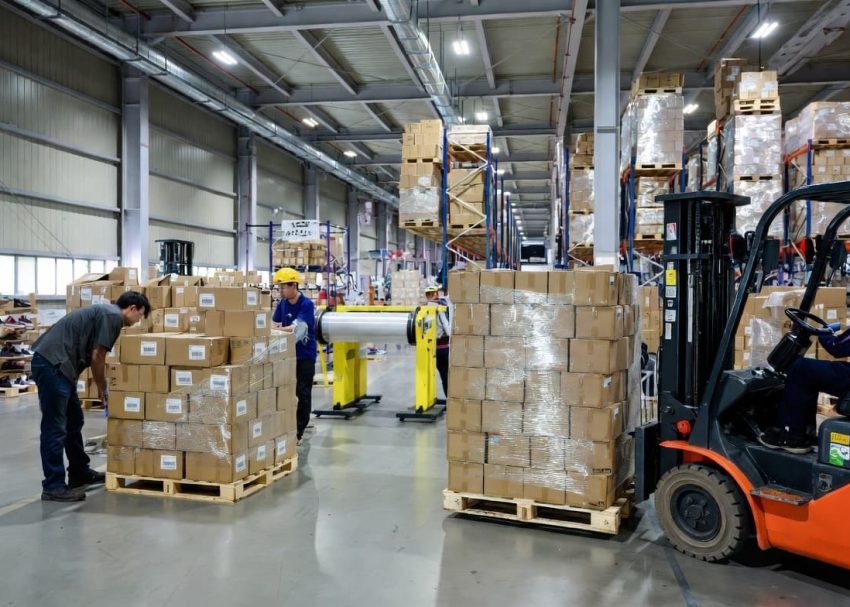
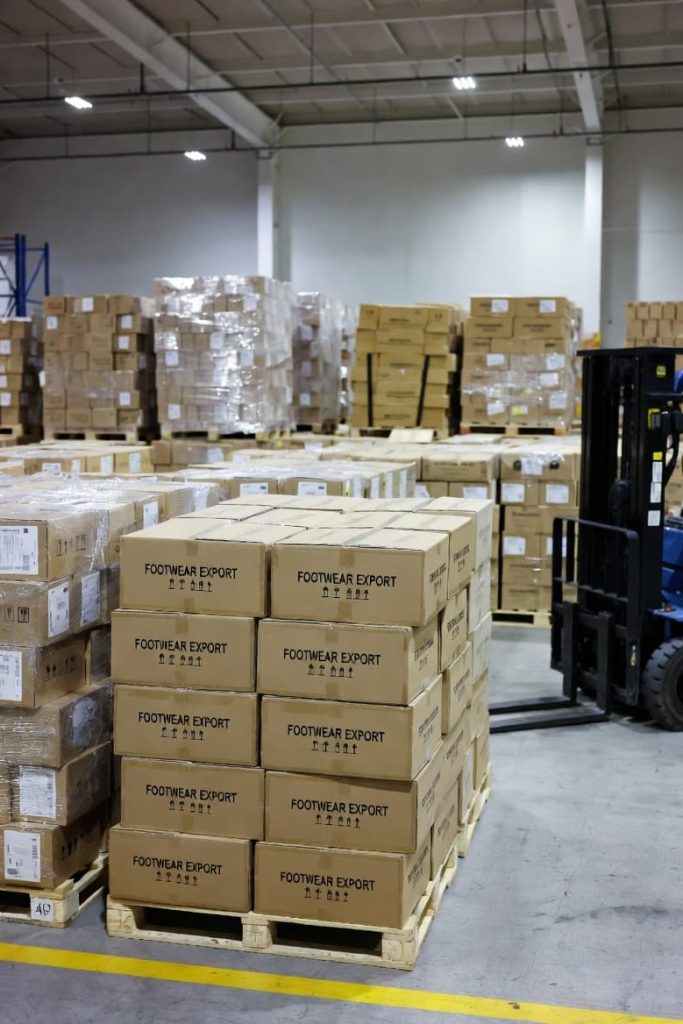
After carton packing is completed, cartons are transferred to the palletization area. Palletization is the process of arranging shipping cartons on pallets according to approved stacking patterns that provide stability during storage and transportation.
In footwear manufacturing, palletization serves several purposes. First, it improves handling efficiency because forklifts and pallet trucks can move large quantities of cartons simultaneously. Second, it protects cartons from floor moisture and contamination. Third, it creates stable unit loads that can withstand transportation and warehouse stacking conditions.
Most footwear brands provide pallet stacking diagrams that specify exactly how cartons should be arranged. These diagrams are developed based on carton dimensions, carton weight, pallet size, warehouse requirements, and container loading plans. Factories must follow these instructions carefully because even small deviations can affect shipment stability. The arrangement of cartons on the pallet significantly influences load performance.
If weight distribution is uneven, the pallet may become unstable during movement. Similarly, excessive carton overhang can expose cartons to impact damage and increase the risk of collapse. Therefore, pallet layouts are designed to distribute weight uniformly across the pallet surface.
Warehouse operations also benefit from proper palletization. Standardized pallet configurations simplify storage planning, inventory management, and shipment preparation. Furthermore, consistent pallet dimensions improve compatibility with automated warehouse systems.
Key Control Points
- Ensure pallet load stability.
- Follow approved pallet stacking diagrams.
- Maintain even weight distribution.
- Prevent carton overhang.
- Verify pallet condition before use.
Pro Tip:
Increase wrapping layers for export shipments.
Use corner protectors for heavy loads.
Monitor stretch film consumption regularly.

Stretch Wrapping and Load Stabilization
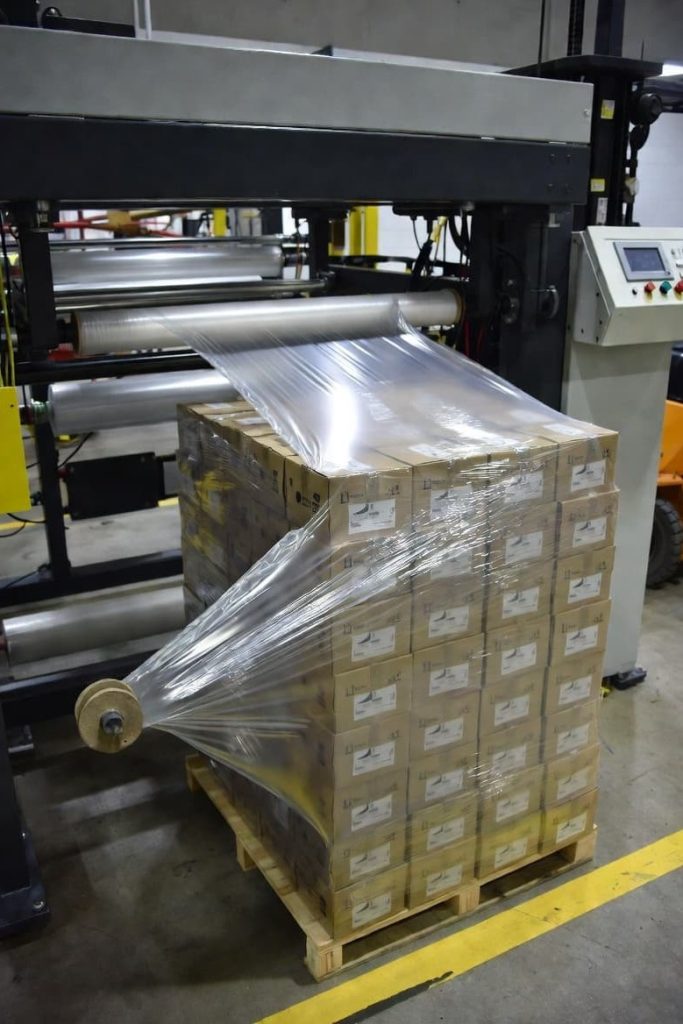
Once cartons have been arranged on pallets, the entire load must be stabilized before shipment. Stretch wrapping is the most widely used method for securing palletized footwear shipments and preventing movement during handling and transportation.
Stretch wrapping involves applying elastic plastic film around the palletized load under controlled tension. The film creates a secure unit load by holding cartons together and reducing movement between individual packages. This stabilization significantly improves transportation performance.
Without adequate load stabilization, cartons can shift during forklift handling, truck transportation, and container movement. Even minor movement can cause cartons to lean, collapse, or become damaged. Consequently, stretch wrapping has become a standard requirement throughout the footwear industry.
In addition to stabilizing the load, stretch wrapping provides protection against dust, dirt, and moisture exposure. While it is not completely waterproof, it offers an additional barrier against environmental contamination during storage and transportation.
The effectiveness of stretch wrapping depends on several factors, including film quality, wrapping pattern, film tension, and wrapping coverage. Excessive tension can deform cartons, while insufficient tension may fail to stabilize the load properly. Therefore, factories establish standard wrapping parameters and monitor performance regularly.
Key Control Points
- Verify complete pallet coverage.
- Maintain correct film tension.
- Ensure pallet load remains stable.
- Protect pallet corners when required.
- Inspect wrapping quality before shipment.
Pro Tip:
Validate wrapping performance through transport trials.
Inspect pallets after forklift movement.
Review wrapping standards during seasonal humidity changes.
Container Optimization and Shipment Preparation
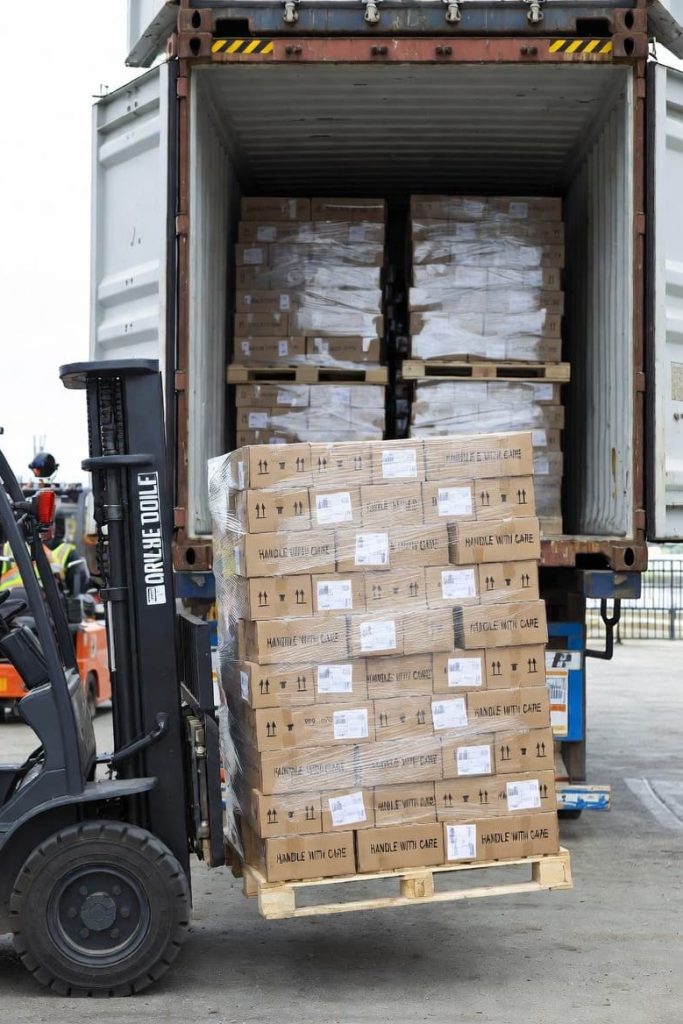
After palletization is completed, footwear manufacturers prepare shipments for loading into containers or transportation vehicles. At this stage, logistics efficiency becomes a major focus because transportation costs represent a significant portion of total supply chain expenses.
Container optimization involves arranging cartons or pallets to maximize available container space while maintaining product protection and load stability. The objective is not simply to fit the highest quantity of products into a container. Instead, manufacturers seek to balance space utilization, weight distribution, product safety, and unloading efficiency.
Modern footwear factories frequently use container optimization software to calculate the most effective loading patterns. These systems analyze carton dimensions, pallet sizes, product weight, container dimensions, and customer requirements to generate optimized loading plans.
Proper loading reduces transportation costs because more products can be shipped within the same container. However, optimization must never compromise packaging integrity. Excessive compression or poor load distribution can damage cartons and increase product claims. Before loading begins, factories also inspect containers thoroughly.
The container floor, walls, roof, and doors must be free from structural damage, contamination, moisture intrusion, and odor. Any deficiencies should be corrected before shipment proceeds.
For international shipments, additional protective measures may be required. Desiccants, moisture absorbers, and container liners are often used to reduce condensation risks during ocean transportation. Seasonal weather conditions frequently influence the quantity and placement of these protective materials. Effective shipment preparation helps ensure products arrive safely while minimizing logistics costs and transportation risks.
Key Control Points
- Follow approved loading plans.
- Verify container cleanliness.
- Ensure proper weight distribution.
- Use desiccants when required.
- Inspect container condition before loading.
Pro Tip:
Maintain packaging validation records.
Perform testing using actual shipment configurations.
Include seasonal packaging reviews.


Carton Compression Testing
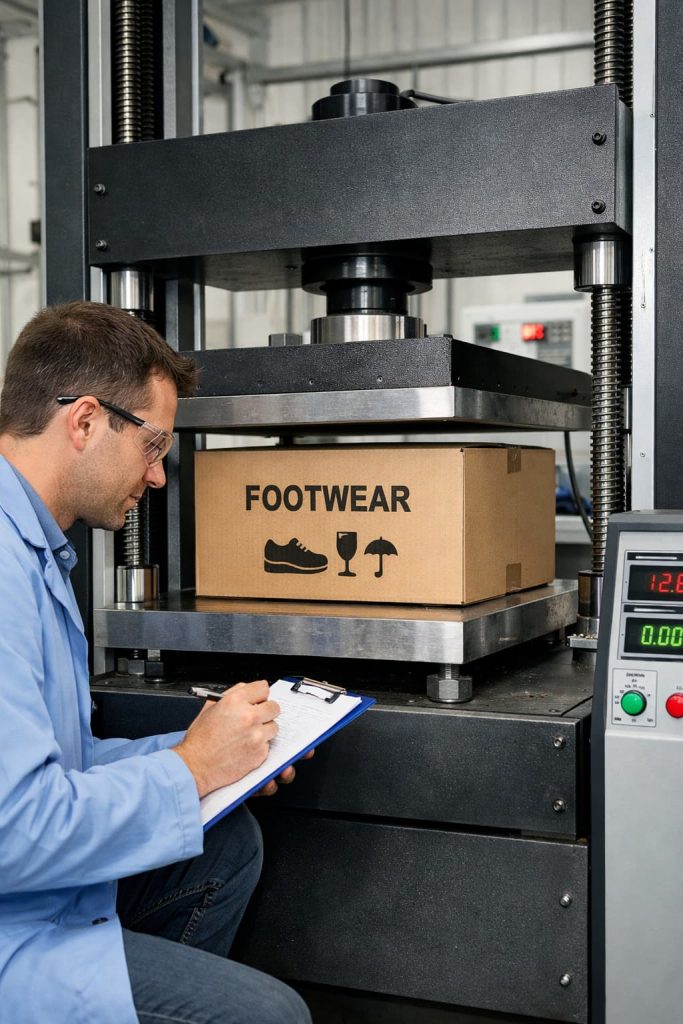
Packaging performance cannot be evaluated solely through visual inspection. Therefore, footwear manufacturers conduct compression testing to verify that cartons can withstand stacking loads encountered during warehousing and transportation.
Compression testing measures the ability of a carton to resist vertical pressure without collapsing. During the test, controlled force is applied to the carton until deformation or failure occurs. The results help determine whether the carton design is suitable for the intended logistics environment.
This test is particularly important because footwear cartons are often stacked multiple layers high in warehouses, distribution centers, and shipping containers. If cartons lack sufficient compression strength, they may collapse under load and damage the products inside. The results also support continuous improvement activities aimed at reducing packaging-related failures.
The results also support continuous improvement activities aimed at reducing packaging-related failures.. Regular testing helps identify changes in carton quality caused by material variations, supplier inconsistencies, or environmental conditions.
Consequently, many factories include compression testing within their routine packaging validation programs. Compression testing becomes especially valuable when introducing new carton designs, changing suppliers, or shipping products through demanding transportation routes.
Key Control Points
- Conduct periodic compression testing.
- Record and analyze test results.
- Verify compliance with customer requirements.
- Monitor supplier consistency.
- Investigate packaging failures promptly.
Pro Tip:
Validate new carton suppliers before approval.
Retest packaging after specification changes.
Analyze transportation damage trends.
Carton Drop Testing
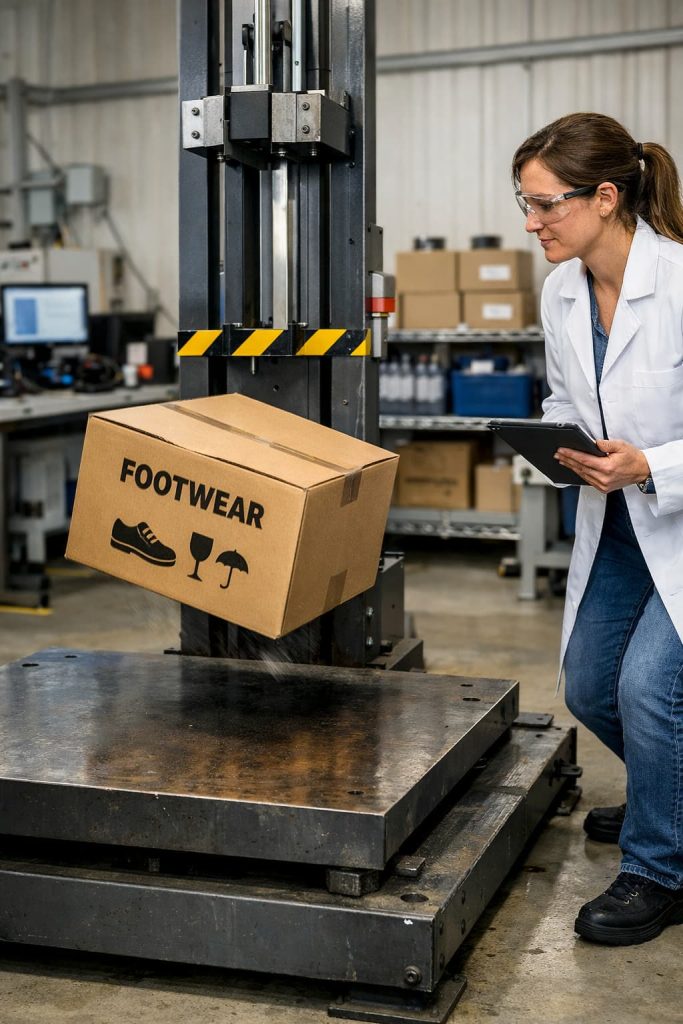
While compression testing evaluates stacking performance, drop testing examines a carton’s ability to protect products during impacts and handling events. Throughout the supply chain, cartons may be dropped accidentally during loading, unloading, sorting, or warehouse operations. Even careful handling cannot eliminate all impact risks. Therefore, footwear manufacturers use drop testing to simulate real-world transportation conditions and evaluate packaging effectiveness.
During the test, packed cartons are dropped from predetermined heights onto specific surfaces and orientations. After testing, inspectors evaluate both the carton and the footwear to determine whether damage occurred.
Drop testing helps identify weaknesses in carton construction, pack ratios, internal arrangements, and cushioning methods. The results provide valuable information for packaging improvement projects and help reduce transportation-related claims.
Many footwear brands require drop testing as part of packaging approval programs. Factories must demonstrate that packaging systems can protect products under realistic handling conditions before shipment authorization is granted.
Seasonal transportation conditions may also influence testing requirements. For example, shipments traveling long distances through multiple logistics networks may require more rigorous validation. Regular drop testing strengthens packaging reliability and improves confidence in shipment performance.
Key Control Points
- Use approved test procedures.
- Test actual production-packed cartons.
- Inspect footwear after testing.
- Document all failures.
- Implement corrective actions when necessary.
Pro Tip:
Continuously improve packaging designs.
Standardize all packing procedures.
Use approved carton specifications only.

Common Carton Packing Defects
Despite standardized procedures, carton packing defects can still occur if controls are inadequate. These defects can create customer complaints, shipment delays, inventory discrepancies, and financial losses. Many carton packing problems originate from human error, insufficient verification, equipment malfunction, or weak process controls. Consequently, factories conduct routine packaging audits to identify issues before shipments leave the facility.
Common defects include incorrect quantities, mixed sizes, mixed styles, damaged cartons, missing labels, unreadable barcodes, weak sealing, poor strapping, and pallet instability. Although these defects vary in severity, all have the potential to disrupt supply chain operations.
Effective prevention requires a combination of training, standardized work procedures, automation, verification systems, and continuous monitoring. Packaging quality should receive the same attention as manufacturing quality because both directly influence customer satisfaction. Trend analysis also plays an important role. By monitoring packaging defects over time, factories can identify recurring problems and implement targeted corrective actions.
Common Defects
- Wrong quantity packed.
- Mixed size assortment.
- Mixed color assortment.
- Incorrect carton labels.
- Missing shipping marks.
- Barcode scanning failures.
- Weak carton sealing.
- Loose strapping.
- Carton deformation.
- Unstable pallet loads.
Key Control Points
- Implement corrective actions quickly.
- Conduct final shipment audits.
- Verify all carton documentation.
- Track packaging defect trends.
Pro Tip:
Verify every carton before shipment.
Conduct routine packaging testing.
Maintain traceability systems.
Machinery Used in Carton Packing
Modern footwear factories use a variety of equipment to improve packaging consistency, traceability, and productivity.
Common Machinery
- Automatic case erector
- Carton filling conveyor system
- Barcode scanner
- Label printer
- Automatic carton sealer
- Strapping machine
- Stretch wrapping machine
- Palletizer
- Compression testing machine
- Drop testing equipment
- Container optimization software
- Warehouse management system (WMS)
Benefits of Automation
- Lower packaging defects
- Higher productivity
- Improved packing accuracy
- Better traceability
- Reduced labor dependency
- Enhanced shipment consistency
Best Practices for Carton Packing Excellence
Successful footwear manufacturers treat carton packing as a strategic quality process rather than a simple logistics activity. Every stage of packaging should support product protection, shipment accuracy, and customer satisfaction.
Factories that consistently achieve excellent packaging performance typically invest in standardized procedures, employee training, packaging validation, and continuous improvement programs. They monitor packaging quality indicators just as closely as manufacturing quality metrics.
Furthermore, collaboration between packaging, quality, logistics, warehouse, and production departments improves overall packaging effectiveness. Cross-functional teamwork helps ensure packaging decisions support both operational efficiency and customer requirements.
Pro Tip:
Audit packaging suppliers regularly.
Monitor transportation damage claims.
Conclusion
Carton packing represents the final major packaging operation before footwear enters the global supply chain. Although the process occurs near the end of production, its impact extends far beyond the factory walls.
Strong cartons, correct pack ratios, accurate labeling, secure sealing, proper palletization, and validated packaging performance all contribute to successful product delivery. When these elements work together effectively, footwear reaches customers in excellent condition while transportation costs remain under control.
As supply chains become increasingly global and customer expectations continue to rise, carton packing will remain a critical component of footwear manufacturing excellence. Factories that invest in robust packaging systems not only reduce product damage but also strengthen brand reputation and customer satisfaction.
In the next article of the Full Shoe Assembly Series, we will explore Metal Detection in Footwear Manufacturing – Full Shoe Assembly Series, where finished footwear is inspected for broken needles, metallic contaminants, and foreign metal fragments before shipment.

Why is palletization important in footwear manufacturing?
- Improves handling efficiency.
- Increases shipment stability.
- Protects cartons from floor moisture.
- Supports warehouse operations.
What is the purpose of stretch wrapping?
- Stabilizes pallet loads.
- Reduces carton movement.
- Protects against dust and moisture.
- Improves transportation safety.
Why are compression tests performed?
- Validate stacking performance.
- Verify carton strength.
- Prevent warehouse collapse issues.
- Support packaging design approval.
What does drop testing evaluate?
- Packaging impact resistance.
- Product protection effectiveness.
- Carton durability.
- Transportation performance.
Why are desiccants used inside containers?
- Control moisture levels.
- Reduce condensation risks.
- Protect cartons during ocean transport.
- Improve shipment quality.
What are the most common carton packing defects?
- Incorrect quantities.
- Mixed sizes.
- Labeling errors.
- Weak sealing.
- Barcode failures.
How can footwear factories reduce carton packing errors?
- Use barcode verification.
- Implement standard procedures.
- Train operators regularly.
- Conduct routine audits.
- Improve traceability systems.