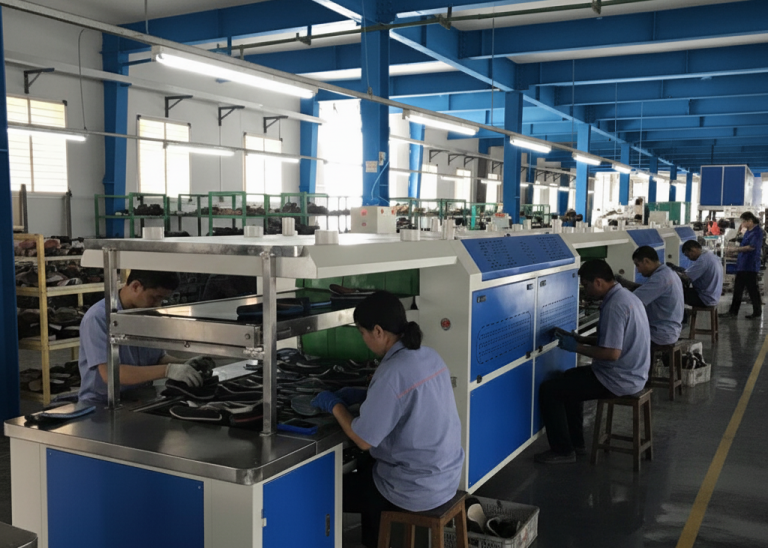
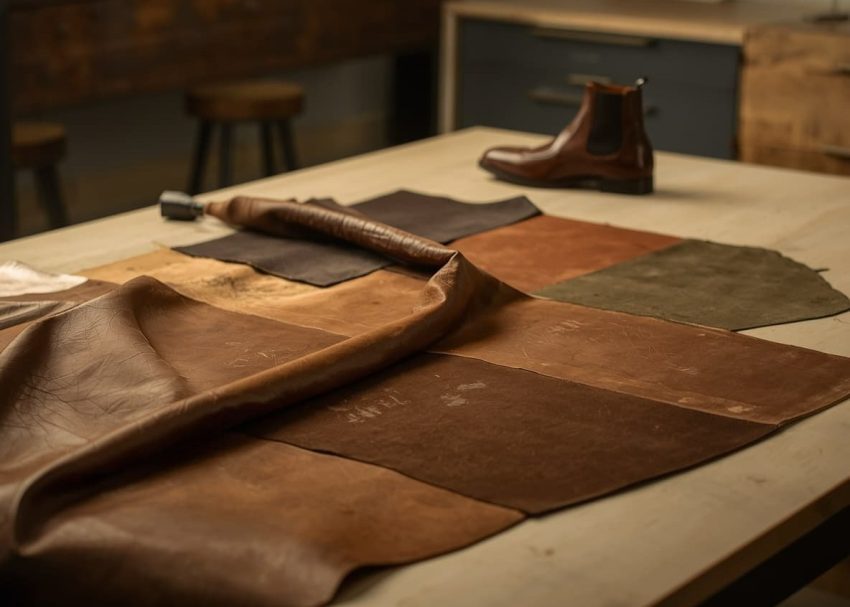
Leather Fundamentals: Understanding Types, Properties, Quality and Footwear Applications
Leather has been part of footwear for centuries, yet it remains one of the most technically interesting materials used in modern shoe manufacturing. It can be soft or firm, smooth or textured, natural-looking or heavily finished, lightweight or highly structured. Its behaviour changes with the animal source, hide area, fibre structure, tanning system, retanning, finishing and manufacturing process.
For someone working in footwear, therefore, the question is not simply “Is this leather?”
The more useful question is:
“Is this leather suitable for the intended footwear application?”
That distinction matters because two genuine leathers can behave very differently during cutting, stitching, lasting, wear and finishing. There is also something distinctive about the material that many footwear professionals recognize immediately: “nothing like leather” when it comes to its combination of natural grain, fibre structure, handle, ageing and material character.
This article provides a practical foundation for understanding leather before going deeper into individual manufacturing processes, leather types, testing methods and footwear applications.
What Is Leather?
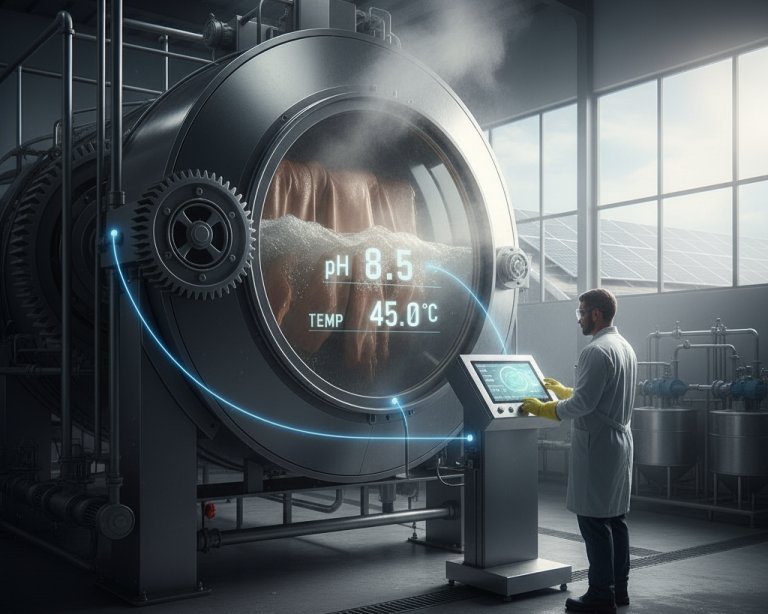
Leather is a durable material produced from animal skin or hide by processing and stabilising its collagen fibre structure, most importantly through tanning. The untreated skin contains proteins, fats, water, hair, connective tissue and other biological components. If it is not properly preserved and processed, it will naturally deteriorate.
Tanning changes the behaviour of the collagen structure and makes the material more resistant to decay while giving it useful properties such as strength, flexibility and dimensional stability.
After tanning, additional operations such as retanning, dyeing, fatliquoring, drying, staking and finishing can be used to develop the required appearance and performance.
Key Takeaway
Leather is not simply dried animal skin. It is an engineered material whose properties are developed through a controlled sequence of physical and chemical processes.
Leather, Skin, Hide and Pelt — Are They the Same?
Skin
A general term for animal covering. In leather production, smaller animal skins are commonly processed into leather..
Hide
Usually refers to the skin of larger animals, particularly cattle and other large livestock.
Pelt
The skin of an animal with the hair or wool still attached, particularly when discussing sheep and similar materials.
Leather
The processed material obtained after preservation, preparation and tanning, followed by further finishing where required.
The terminology can vary between regions and parts of the leather industry, so these terms should be understood in context.
What Is Leather Made Of?
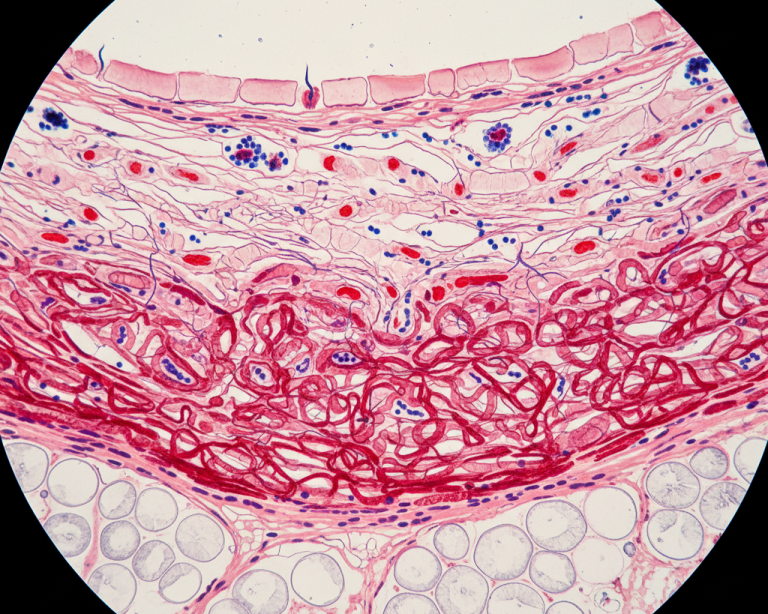
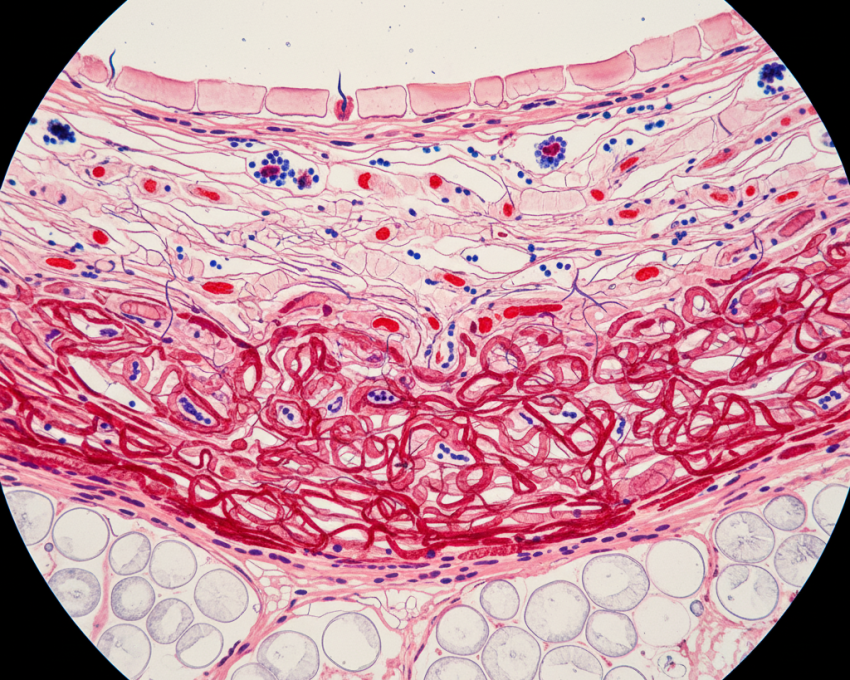
The most important structural component of leather is collagen. Collagen fibres are arranged into a complex three-dimensional network. Their orientation, density and interconnection influence many of the final characteristics of the leather.
Other constituents are present in raw skin, including water, proteins, fats, minerals and non-collagenous materials. During leather manufacturing, many of these components are removed, modified or redistributed. The final leather structure therefore depends not only on the original skin but also on how the material is processed.
Why collagen matters
The collagen fibre network contributes to:
- Tensile strength
- Tear resistance
- Flexibility
- Elongation
- Handle
- Grain behaviour
- Resistance to repeated flexing
For a deeper explanation of skin structure and biochemistry, link this section to:
Beneath the Surface: Unraveling the Anatomy and Biochemistry of Skin in Leather Manufacturing
How Is Leather Made?
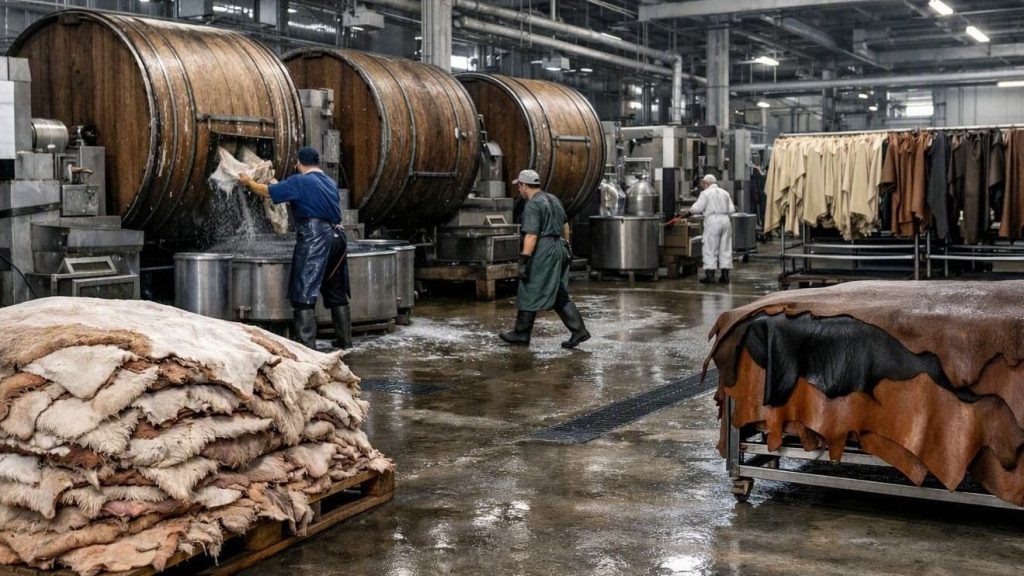
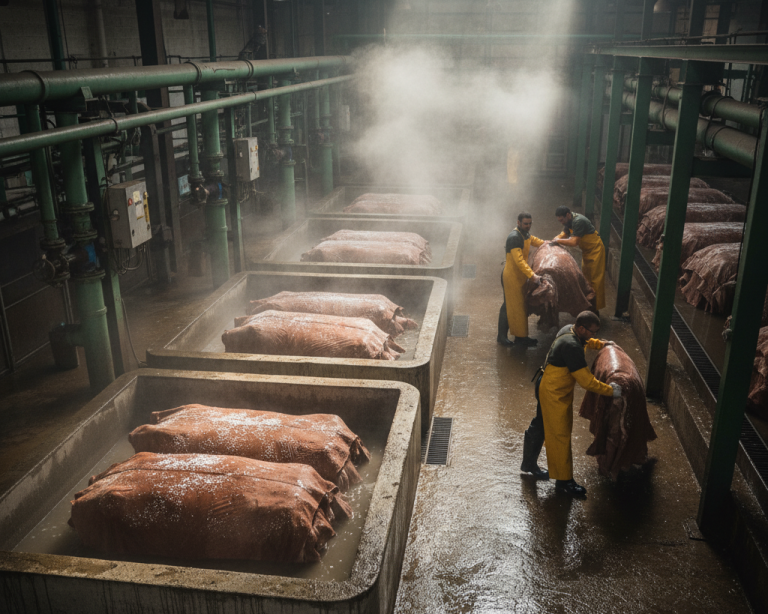
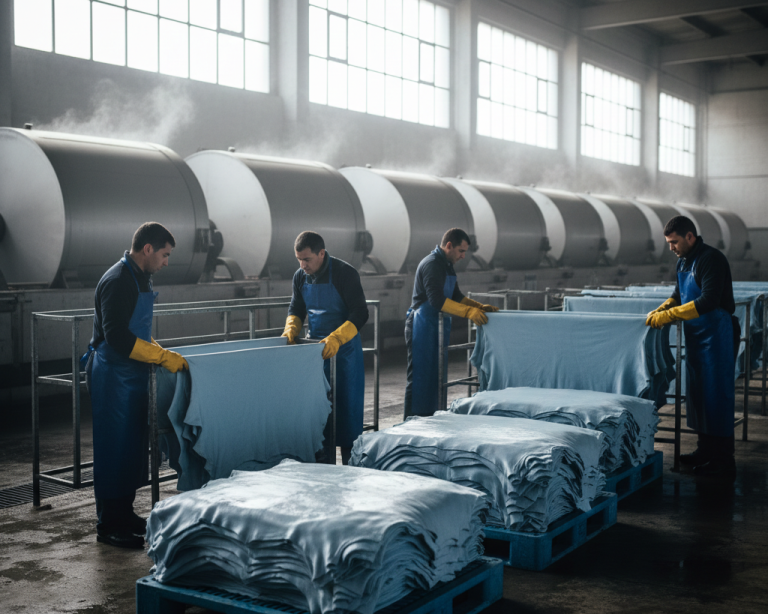
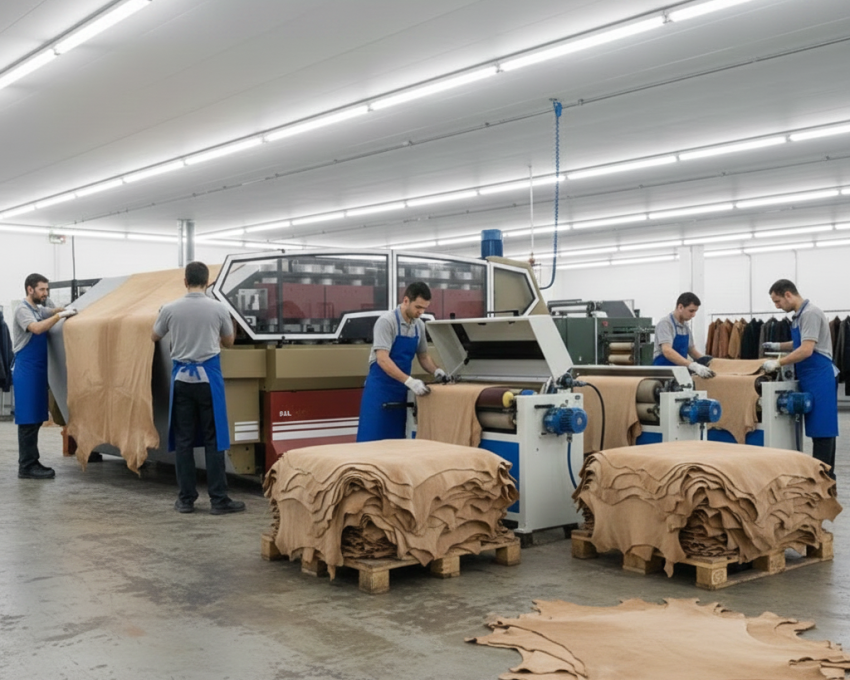
The complete conversion of hide into leather involves several stages:
Raw Hide/Skin → Preservation → Beamhouse → Tanning → Retanning → Dyeing & Fatliquoring → Drying → Crust → Finishing → Finished Leather
Each stage contributes to the final properties of the leather. The detailed process is already covered in TheFootwearEdge Leather Manufacturing Series:
Explore the detailed manufacturing process
- From Hide to Pre-Tanning – Leather Manufacturing Series-Part 1
- Leather Manufacturing Series-Part 2: Preparing Hides for Tanning
- Transforming Hides into Leather – Leather Manufacturing Series-Part 3
- Leather Manufacturing Series-Part 4: Tanning to Crust
- Leather Manufacturing Series-Part 5: Crust to Finishing
This article focuses on understanding leather as a material, rather than repeating those manufacturing processes.
Types of Leather
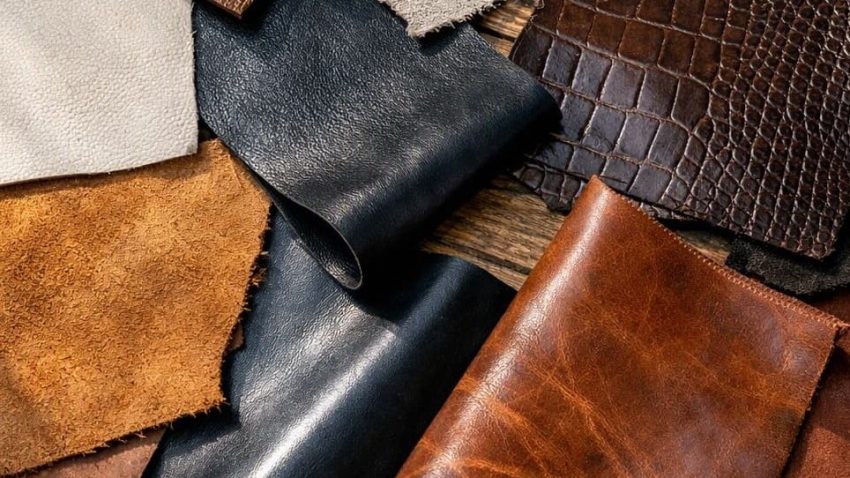
This can be classified in several different ways. One important point is that these classifications describe different characteristics, so a single leather can belong to several categories simultaneously. For example, a leather can be chrome-tanned, full-grain, bovine and pull-up finished.
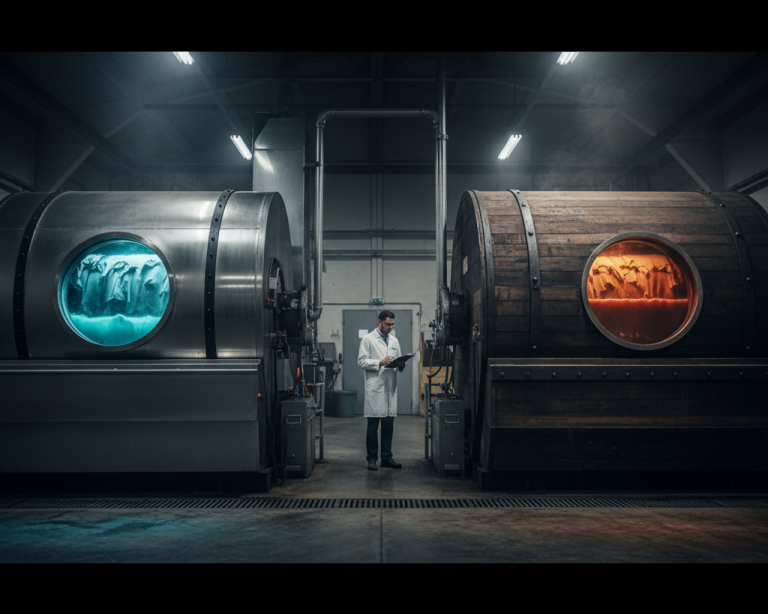
Chrome-Tanned Leather
Produced using chromium-based tanning chemistry. It is widely used because the process can produce leather with a broad range of softness, colour and performance characteristics.
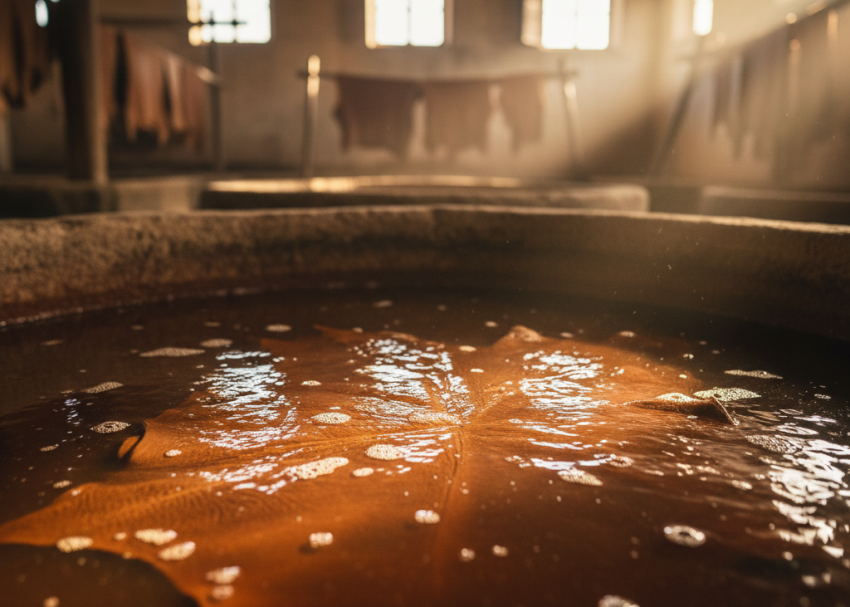
Vegetable-Tanned Leather
Uses tannins derived from plant sources. Vegetable-tanned leather is often associated with firmer handle, distinctive ageing and traditional leather goods.
Chrome-Free and Alternative Tanning
Other tanning systems include aldehyde-based, synthetic, titanium, zirconium and combination systems.
The tanning system influences the leather’s structure, handle, colour response, thermal behaviour, biodegradation behaviour and other properties.For a deeper discussion of retanning:
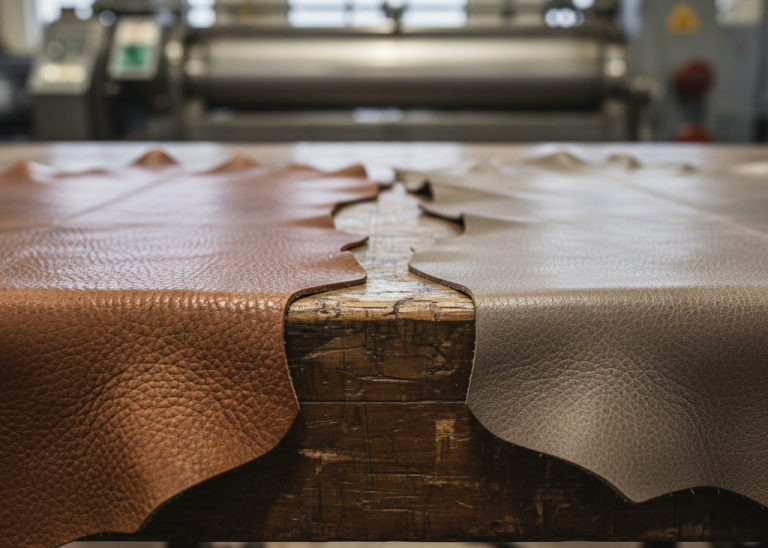
Full-Grain Leather
Uses the natural grain surface with minimal correction. Natural characteristics and surface variation remain visible.
Corrected-Grain Leather
The grain surface is mechanically or otherwise corrected to achieve greater uniformity before finishing.
Split Leather
Produced from layers obtained when the hide is split into thicknesses.
Suede
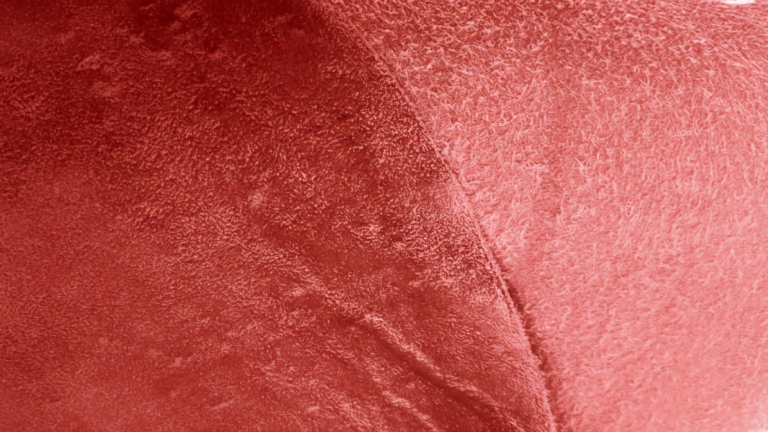
Generally refers to leather finished to produce a napped surface, commonly using the flesh or split side.
Nubuck
Produced by creating a fine nap on the grain side.
The terminology used commercially can vary, so the actual construction and finishing system should always be confirmed from the supplier’s specification.
Common leather sources include:
- Cattle
- Calf
- Sheep
- Goat
- Buffalo
- Pig
- Other legally and commercially permitted animal sources
Animal source influences fibre structure, thickness, grain appearance, softness, area and typical application.
This can also be described by its surface treatment or visual effect, including:
- Smooth leather
- Aniline leather
- Semi-aniline leather
- Pigmented leather
- Embossed leather
- Patent leather
- Pull-up leather
- Waxed/oiled leather
- Printed or patterned leather
Important: tanning method, grain classification and surface finish are not interchangeable terms.
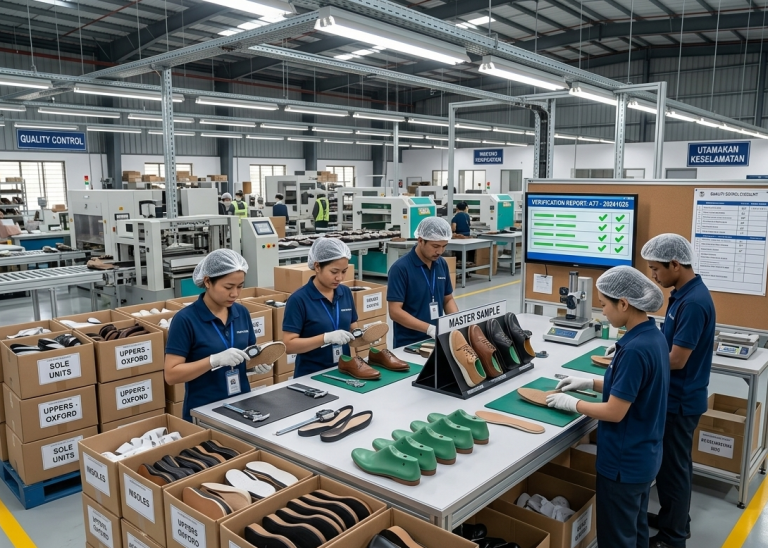
Leather Used in Footwear
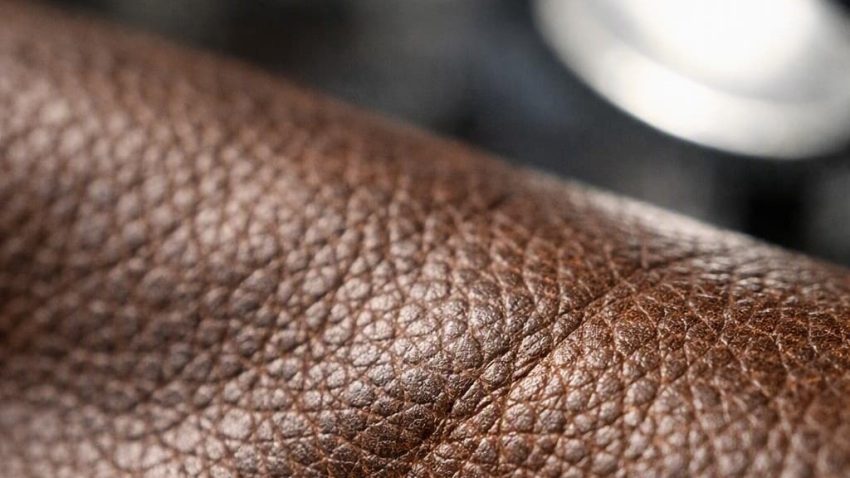
Leather is used in many footwear components because different grades and constructions can provide different combinations of appearance, flexibility, strength, comfort and durability.
Upper Leather
Upper leather may need:
- Good grain appearance
- Suitable flexibility
- Adequate tear strength
- Good stitching behaviour
- Suitable thickness
- Controlled stretch
- Appropriate finish adhesion
Lining Leather
Lining materials may be selected for:
- Softness
- Comfort
- Sweat and moisture interaction
- Colour fastness
- Low friction
- Flexibility
- Wear resistance
Bottom and Structural Applications
Leather can also be used in selected:
- Insoles
- Welting
- Outsoles
- Heel components
- Counters
- Straps
- Reinforcement components
The required properties are different for each application. That is why leather selection should always start with the footwear component and end-use requirement, rather than simply choosing a leather because it looks attractive.
Physical Properties of Leather
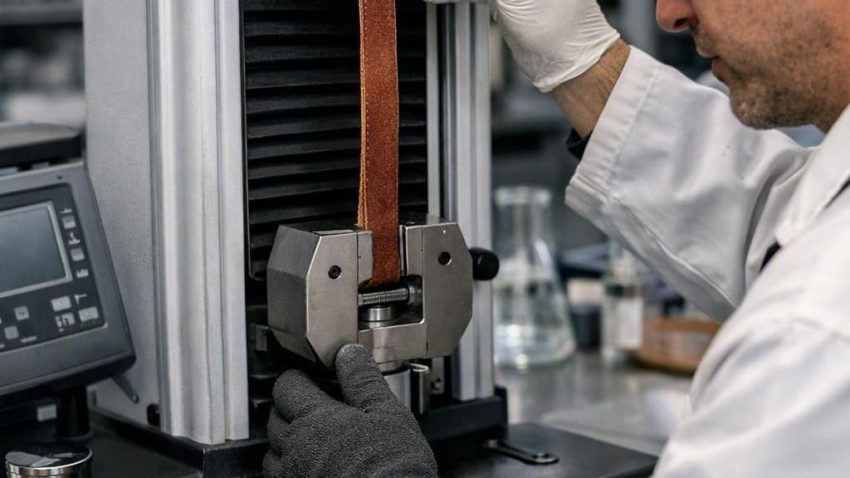
Leather does not have one universal set of physical properties. Performance depends on animal source, hide location, thickness, tanning, retanning, finishing, conditioning and test method.
Property | What It Indicates | Footwear Relevance |
Thickness | Material gauge | Fit, construction and component suitability |
Tensile Strength | Resistance to pulling force | Upper durability and component integrity |
Tear Strength | Resistance to propagation of a tear | Stitching and stress areas |
Elongation | Ability to stretch before failure | Fit, lasting and dimensional behaviour |
Flex Resistance | Ability to withstand repeated bending | Vamp, forepart and flex zones |
Abrasion Resistance | Resistance to surface wear | High-contact and wear areas |
Grain Strength | Integrity of grain layer | Surface appearance and durability |
Softness/Handle | Tactile flexibility | Comfort and upper construction |
Water Resistance | Resistance to water penetration | Outdoor and wet-condition applications |
Breathability | Ability to allow moisture vapour transfer | Comfort |
Heat Resistance | Behaviour at elevated temperature | Manufacturing and end-use conditions |
Factory Tip
Never compare a physical test value without checking the test method, specimen direction, thickness, conditioning and acceptance requirement.
Different Areas of a Hide
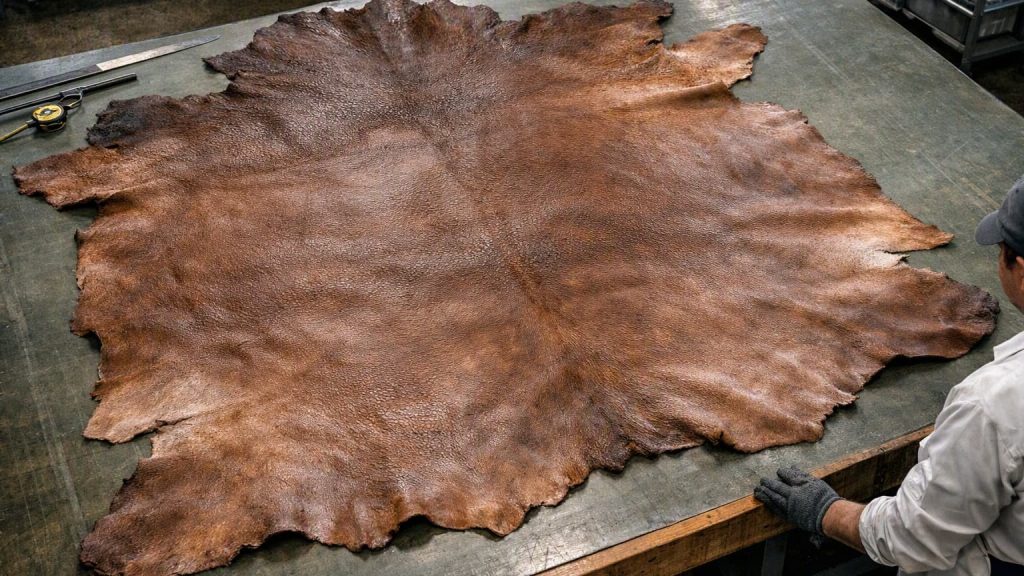
A hide is not mechanically uniform from edge to edge. Its fibre structure, thickness, stretch, density and natural characteristics vary according to location.
1. Butt / Croupon Area
Generally associated with a dense and relatively firm fibre structure.
2. Shoulder
May show greater natural movement and structural variation than the central butt region.
3.Neck
Often contains more pronounced wrinkles and fibre variation.
4.Belly
Usually has a looser and more extensible fibre structure and therefore requires careful selection for demanding components.
Why this matters in footwear
The cutting department must consider hide area when placing components. High-demand components should not automatically be positioned wherever sufficient area is available. Material direction, fibre structure, defects, stretch and component function must be considered together.
Natural Characteristics and Leather Defects
Not every visible mark on leather is a defect. Natural leather can show variations resulting from the animal’s life, hide structure and processing history.
Natural Characteristics
Examples include:
- Natural grain variation
- Wrinkles
- Veins
- Minor scars
- Insect marks
- Colour variation
- Fibre variation
Processing or Quality Defects
Potential defects include:
- Excessive loose grain
- Poor finishing adhesion
- Uneven colour
- Excessive thickness variation
- Poor dye penetration
- Surface cracking
- Excessive stretch
- Poor grain break
- Chemical or processing damage
The acceptance level depends on the leather specification and final footwear application.
What Determines Leather Quality?
Leather quality is not determined by appearance alone.
A practical quality assessment considers:
- Grain quality
- Fibre structure
- Thickness consistency
- Colour and shade
- Handle and softness
- Physical test performance
- Surface defects
- Application suitability
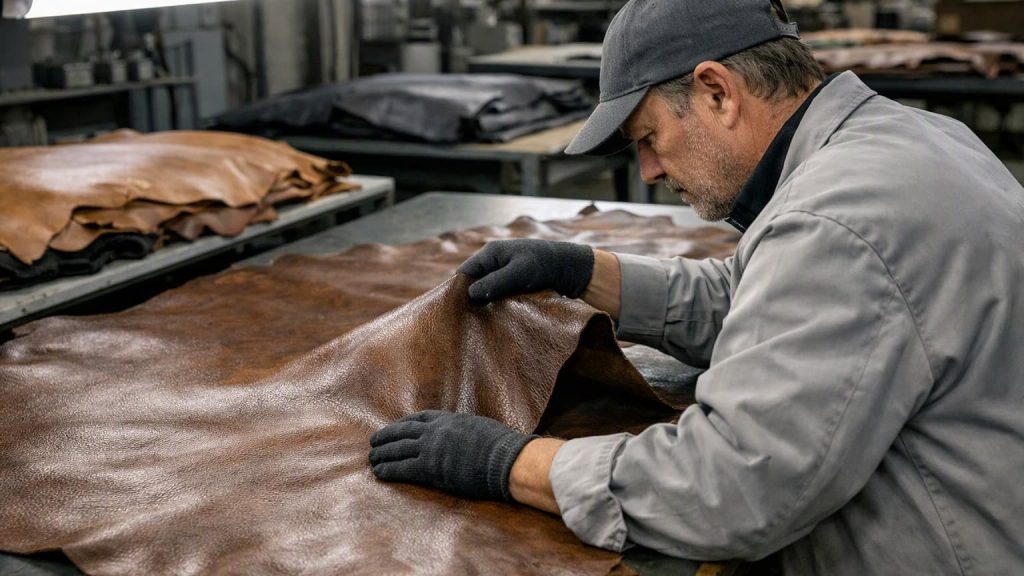
A beautiful leather that fails the required flex, tear or adhesion requirements is not suitable simply because it looks premium.
Key principle
Leather quality should always be judged against the intended application and agreed specification.
How to Select Leather for Footwear
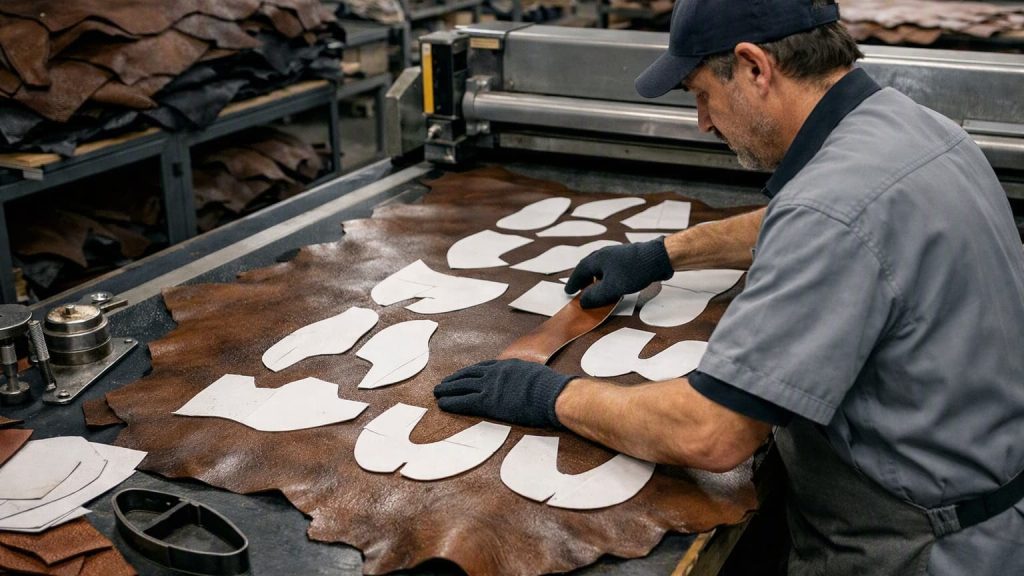
Before approving a leather for production, consider the following sequence:
1. Define the Footwear Application
Identify whether the material is for an upper, lining, insole, outsole or reinforcement.
2. Specify the Required Appearance
Specify grain, colour, gloss, texture and finish
3. Define Mechanical Requirements
Consider tensile strength, tear strength, flex resistance, elongation and abrasion.
4. Check Thickness
Confirm that the leather thickness is compatible with the component and manufacturing process.
5. Evaluate Cutting Yield
Check usable area, defects, grain direction and expected cutting loss.
6. Test Production Behaviour
Evaluate stitching, skiving, folding, lasting, bonding and finishing where applicable.
7. Confirm End-Use Performance
The final material should meet the performance requirements of the finished footwear.
This approach is more reliable than selecting leather based only on a swatch or visual appearance.
Leather vs Synthetic Leather
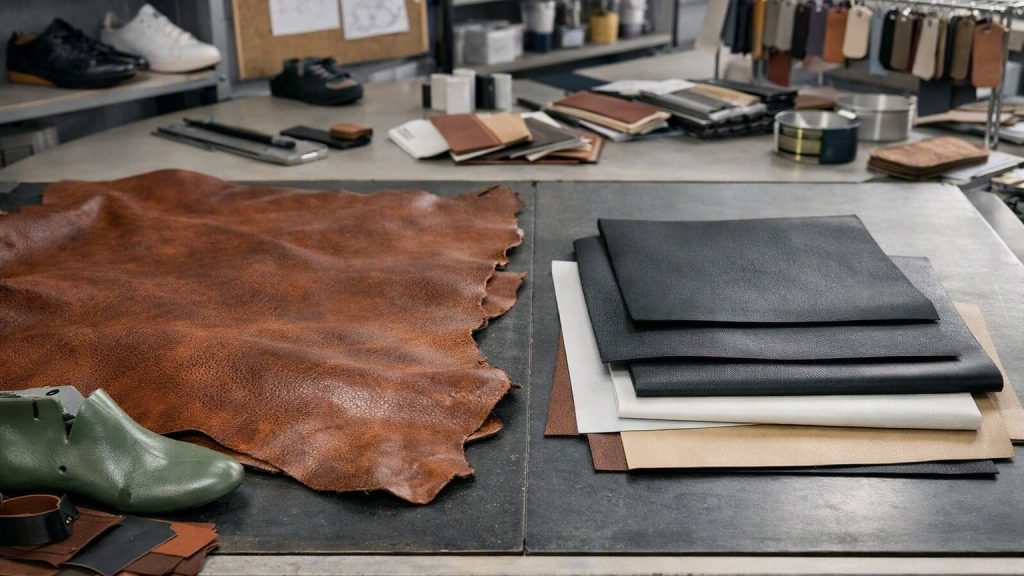
Synthetic leather & Leather are fundamentally different materials.
Leather is based on a natural collagen fibre structure that has been stabilised through tanning and subsequent processing.
Synthetic leather typically consists of a textile or polymeric base structure with a polymer surface system.
Factor | Leather | Synthetic Leather |
|---|---|---|
Basic structure | Natural collagen fibre network | Textile/polymeric substrate with polymer surface |
Surface variation | Naturally variable | Usually more uniform |
Breathability | Depends on construction and finish | Depends strongly on polymer/substrate construction |
Thickness control | Developed through splitting/shaving and processing | Can be engineered within product limits |
Appearance | Natural grain and material character possible | Highly consistent patterns possible |
Repair/ageing | Can develop patina and may be repairable | Depends on construction and coating |
Water behaviour | Depends on tanning and finishing | Decide on polymer and construction |
End-of-life | Depends strongly on tanning/finishing | Depends on polymer composition and structure |
Neither material should be judged by one property alone. The appropriate choice depends on the product, performance requirements, manufacturing process, cost and intended use.
How Long Does Leather Last?
There is no fixed lifespan for leather. Leather service life varies significantly. A well-made leather product can remain functional for many years, and some leather footwear and leather goods can last for decades when the material, construction, use conditions and maintenance are appropriate. However, leather does not automatically become durable simply because it is leather.
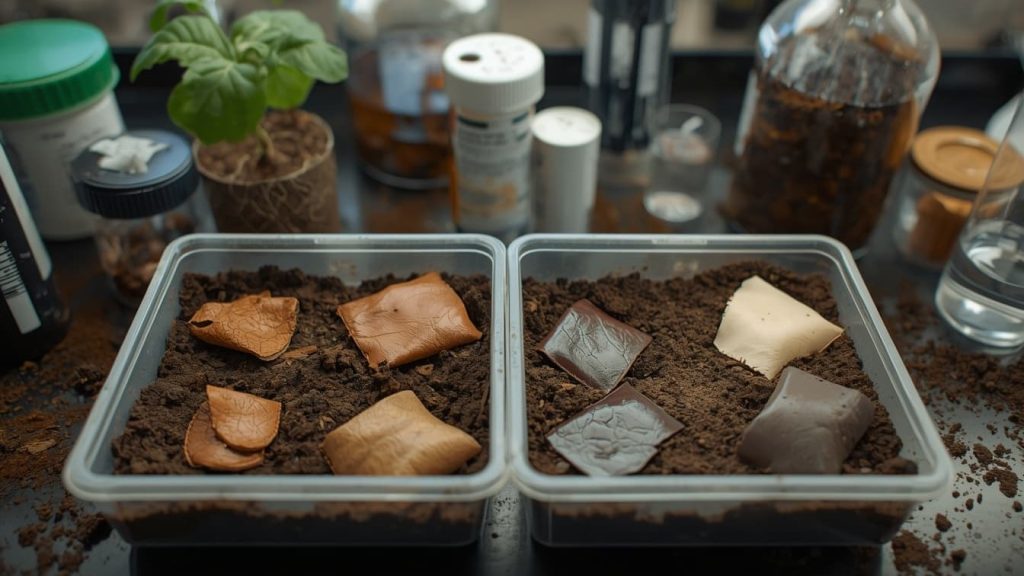
Service life depends on:
- Leather quality
- Construction quality
- Thickness and component design
- Frequency of use
- Moisture exposure
- Heat and environmental conditions
- Flexing and abrasion
- Cleaning and maintenance
- Repairability
Important distinction
Material durability and product durability are not the same thing.
A durable leather cannot compensate for weak stitching, poor bonding, unsuitable construction or inadequate component design.
Leather and Sustainability
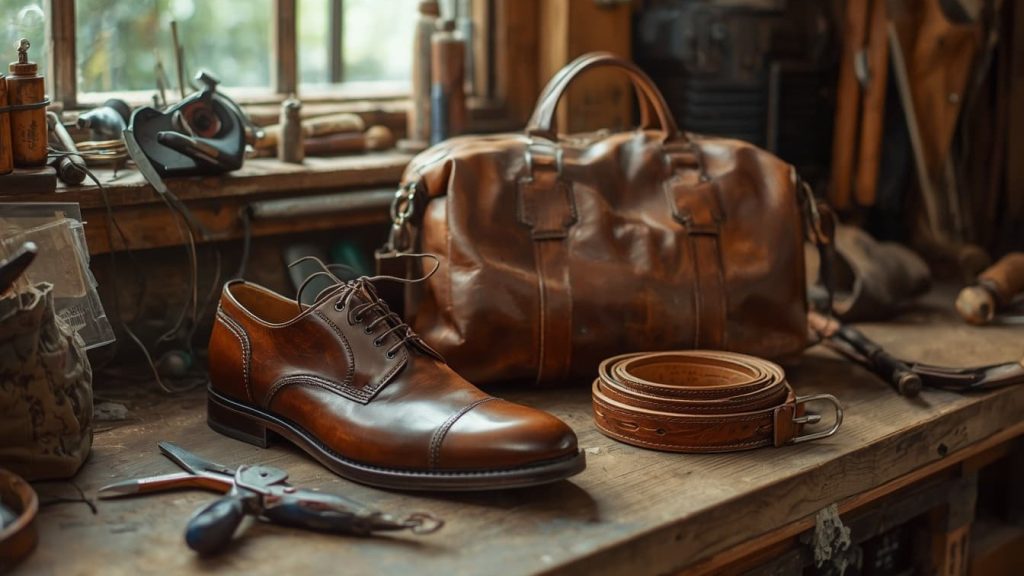
Sustainability of leather needs to be considered across the whole material and product life cycle, not from biodegradability alone. Important factors include:
Raw Material
Leather is produced from animal hides and skins, which are associated with the livestock and meat industries. However, the environmental impacts associated with livestock production and land use remain relevant when assessing the broader system.
Manufacturing
Tanning and finishing require water, energy and chemicals, and generate wastewater and solid waste. Responsible process control, chemical management, effluent treatment and resource efficiency therefore matter.
Product Life
Long service life, maintenance and repair can reduce the frequency with which a product needs to be replaced.
End of Life
Leather is a collagen-based material, but tanning and finishing change how readily it biodegrades.
How Long Does Leather Take to Decompose?
There is no single decomposition time for leather
There is no scientifically reliable universal number such as “leather takes X years to decompose.”
The rate depends on:
- Tanning chemistry
- Finishing system
- Thickness
- Moisture
- Temperature
- Microbial activity
- Soil or compost conditions
- Oxygen availability
- Waste-management environment
Biodegradation
Research demonstrates that different leather types can behave very differently under controlled biodegradation or composting conditions. For example, a 2024 study evaluating finished leathers found that biodegradability and composability varied according to material characteristics, while earlier research found major differences between different tanning systems.
More recent research has also shown that chromium-tanned leather can undergo substantial structural degradation under specific thermophilic composting conditions, but the researchers explicitly caution that this does not establish routine composting as a universal disposal method for chromium-tanned leather.
Therefore: “Leather is biodegradable” is too broad a statement.
The correct question is: “How does this particular leather behave under this particular end-of-life condition?”
Leather, Reconstituted Leather and Leather-Like Materials
Genuine Leather
Material produced from animal skin or hide through tanning and subsequent processing.
Reconstituted / R.C. Leather
Material manufactured using leather fibres or leather processing residues combined with binders and formed into a usable sheet or material. For more detail:
Leather-Like Synthetic Materials
Materials designed to provide a leather-like appearance or function using polymeric and textile structures.
These materials should not be treated as interchangeable. Their construction, performance, environmental profile and processing behaviour can be substantially different.
Why Does Leather Remain Important in Footwear?
Leather continues to be important because it combines a range of characteristics that can be difficult to reproduce in one material. Depending on its construction and processing, leather can provide:
- Natural fibre structure
- Characteristic grain
- Flexibility
- Strength
- Handle
- Comfort
- Repair potential
- Long service life
- A distinctive ageing behaviour
Modern footwear has many alternatives, and material selection continues to evolve. Yet leather remains an important footwear material because it can be engineered and selected for very different applications while retaining a distinctive natural material character.
Nothing like leather remains a phrase many footwear professionals use because the material’s feel, grain, response and ageing behaviour are difficult to describe through appearance alone.
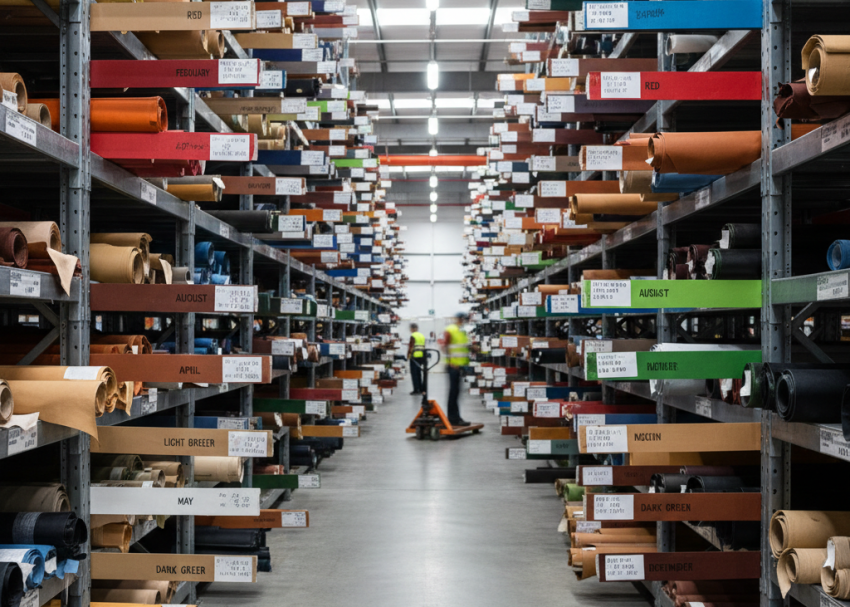
Leather Storage and Handling
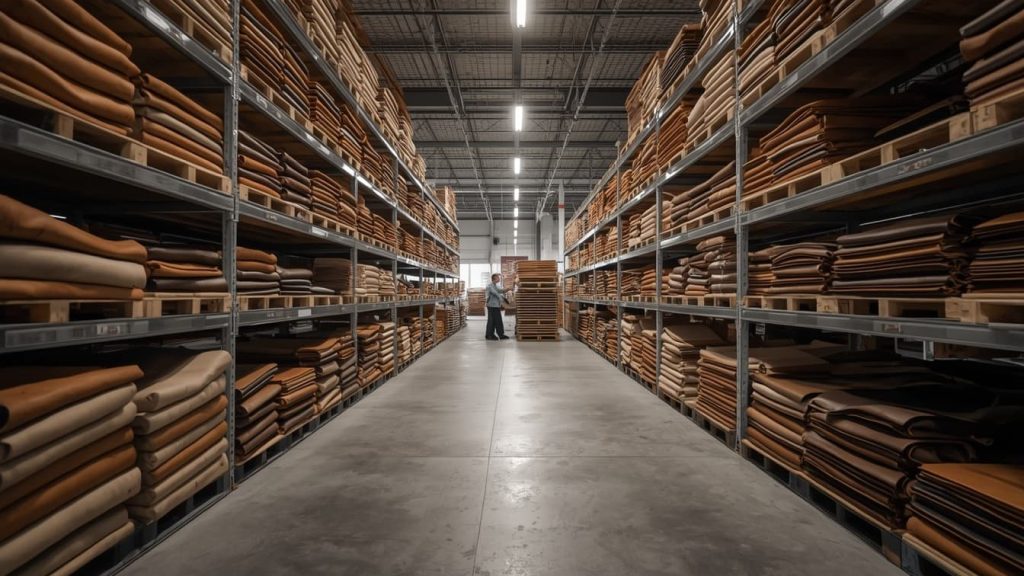
Even good leather can lose its desired properties through poor storage. Factories should consider:
- Suitable temperature and humidity
- Protection from excessive heat
- Protection from direct sunlight
- Proper stacking
- Protection from moisture
- Avoiding excessive compression
- Colour and lot segregation
- Stock rotation
Correct storage helps preserve the characteristics achieved during leather manufacturing.
Final Thoughts
Its behaviour begins with the natural collagen structure of skin and continues to develop through preservation, preparation, tanning, retanning, drying, finishing and manufacturing. For footwear professionals, understanding leather means understanding the connection between:
Structure → Processing → Properties → Selection → Manufacturing → Performance → Service Life
That connection is what makes leather selection so important. A leather may look excellent but perform poorly in a demanding application. Another may have visible natural variation but provide exactly the physical and manufacturing characteristics required for the product.
So, when evaluating leather for footwear, do not ask only:
“Is it good leather?”
Ask:
“Is it the right leather for this application?”
That is the foundation of practical leather selection.