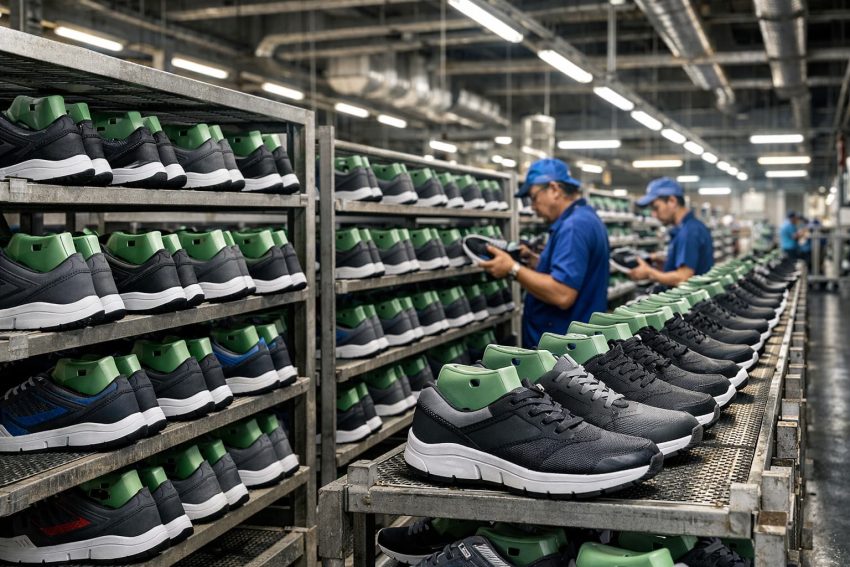
Ageing in Footwear Manufacturing – Full Shoe Assembly Series
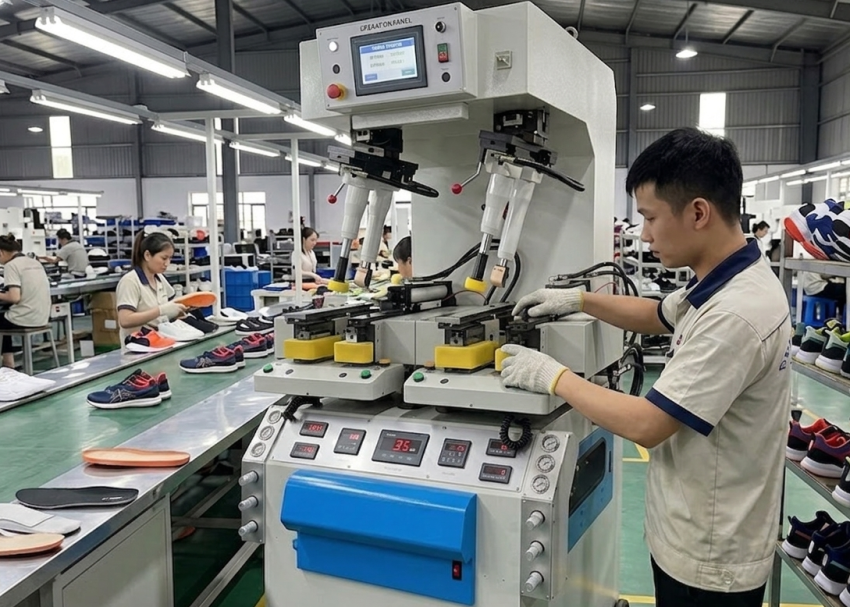
A shoe may appear fully assembled once the outsole has been pressed and chilled, but the manufacturing process is not yet complete. At this stage, important changes are still taking place inside the footwear structure. Adhesive systems continue developing bond strength, upper materials remain under residual lasting stress, and the entire shoe is still adjusting to its final shape.
Many footwear factories focus heavily on adhesive selection, activation temperatures, and pressing parameters because these operations have an immediate and visible impact on bonding quality. However, even a perfectly pressed outsole can develop performance issues later if the footwear is moved too quickly into de-lasting, finishing, or packing operations. Problems such as sole edge lifting, shape distortion, heel instability, or premature bond failure often originate from inadequate stabilization time after assembly rather than from the bonding process itself.
To prevent these issues, footwear manufacturers introduce a controlled ageing period between chilling and de-lasting. During this stage, the adhesive system continues cross-linking, internal stresses gradually relax, and the upper adapts fully to the outsole geometry and last shape. This controlled stabilization allows the shoe to reach its intended structural condition before further handling.
Depending on production requirements, factories may use traditional rack ageing systems or accelerated conditioning tunnels to achieve the required results. Regardless of the equipment used, ageing remains a critical quality-control step that directly influences bond durability, shape retention, and long-term product performance after the footwear leaves the factory.
The Purpose of Ageing in Footwear Manufacturing
Ageing in footwear manufacturing refers to the controlled resting period provided after outsole pressing and chilling to allow adhesive curing, structural stabilization, and stress relaxation inside the assembled shoe. Although the footwear may appear fully assembled immediately after pressing, the internal bonding system is still developing its final mechanical strength.
During outsole pressing, the shoe experiences multiple forces simultaneously. The upper remains stretched over the last, adhesives remain under compression, and outsole materials experience temporary deformation from pressing pressure. At this stage, the shoe structure is mechanically unstable even if visual bonding appears acceptable. Therefore, ageing provides the necessary stabilization period before the shoe undergoes further handling.
As the footwear rests during ageing, several important internal processes continue progressing. Adhesive molecules continue forming stronger chemical bonds, solvent residues gradually evaporate, and the upper materials begin relaxing into their permanent shape. At the same time, the outsole settles into its final curvature while internal moisture levels slowly equalize throughout the shoe structure. Because of this stabilization effect, ageing significantly improves, Adhesive peel strength, Bond shear resistance, Shape retention, Dimensional stability, Long-term outsole durability.
Key Control Points
- Maintain standardized ageing duration for each product category
- Ensure stable environmental conditions during ageing
- Prevent immediate de-lasting after pressing
- Allow sufficient airflow around footwear pairs
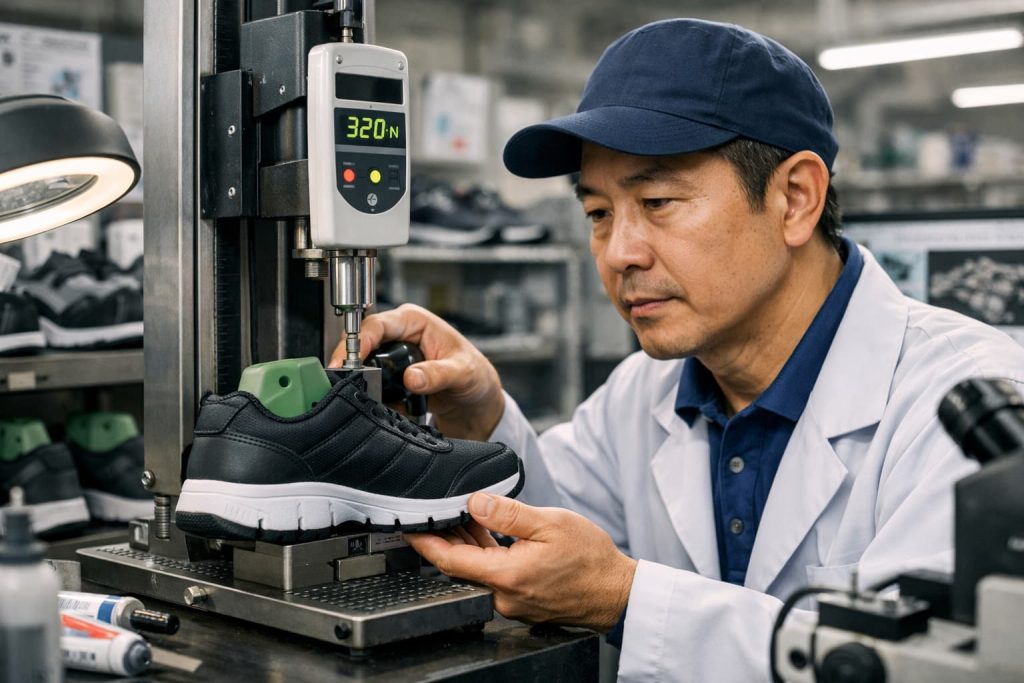
Expert Tip: Always validate ageing duration separately for rubber, EVA, TPU, and PU sole constructions because each material stabilizes differently after pressing.
Why Adhesive Systems Require Controlled Ageing
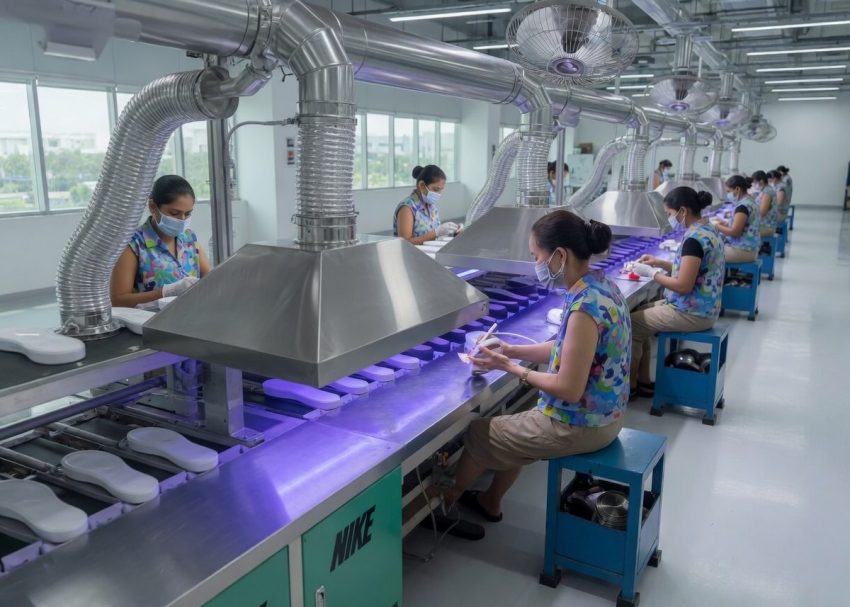
Footwear adhesive systems do not achieve maximum strength immediately after outsole pressing. Instead, most adhesive technologies require additional stabilization time to complete curing and develop full bond performance. This is especially important in athletic footwear manufacturing where shoes experience repeated flexing, high stress concentration, and demanding performance requirements.
After pressing, the adhesive layer may appear sufficiently bonded for handling purposes. However, internally, chemical reactions and molecular interactions continue progressing for an extended period. During this phase, polymer chains strengthen gradually while residual solvents continue evaporating from the bond interface.
This process is critical for, PU cement systems, Water-based adhesives, Chloroprene adhesive systems, Reactive polyurethane adhesives. If the shoe proceeds too quickly into de-lasting or packing operations, internal stresses may weaken the partially cured bond before full stabilization occurs. Consequently, footwear may later develop outsole lifting, edge separation, toe opening, or heel delamination during warehousing or consumer use.
Furthermore, modern footwear constructions often combine multiple materials with different thermal expansion and flexibility characteristics. Lightweight foams, TPU components, knitted uppers, and engineered mesh structures all respond differently after pressing. Controlled ageing allows these materials to stabilize gradually without creating excessive stress at the adhesive interface.
Factories that implement strict ageing control consistently achieve, Higher bond durability, Better flex resistance, Improved heat resistance, Reduced customer complaints, Lower field failure rates. For this reason, ageing should never be treated as idle waiting time inside footwear manufacturing operations. Instead, it must be controlled as a technical curing and stabilization process.
Key Control Points
- Validate adhesive cure timing through testing
- Separate ageing standards by adhesive type
- Avoid premature packing after pressing
- Monitor bond maturity before de-lasting
Pro Tip: Install localized humidity sensors directly inside ageing areas rather than depending only on central HVAC readings.
Stress Relaxation and Shape Stabilization During Ageing
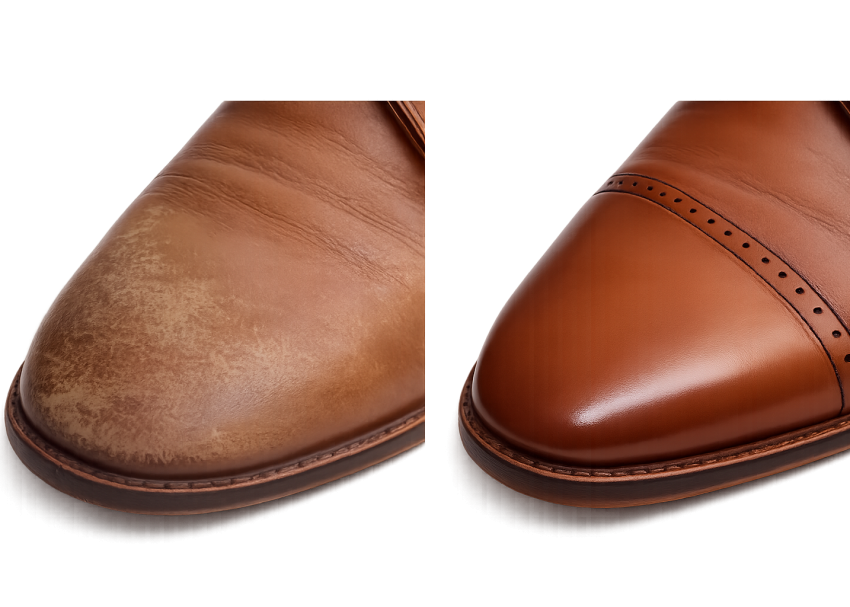
One of the most important functions of ageing is allowing the upper structure to relax gradually after lasting and sole attachment operations. During lasting, significant tension is applied to the upper materials in order to shape the shoe accurately around the last. Even after outsole pressing, these internal stresses remain trapped inside the footwear structure.
If the shoe moves too quickly into de-lasting, the upper may attempt to return partially toward its original unstretched condition. As a result, several dimensional and cosmetic defects can appear later during storage or use.
During the ageing period, the upper slowly conforms to the outsole shape and final shoe geometry. This controlled relaxation stabilizes the Vamp profile, Toe spring, Sidewall contour, Heel seat alignment, Collar positioning.
This stabilization process becomes especially important in modern lightweight footwear constructions where materials are softer and more flexible than traditional leather footwear. Knitted uppers, engineered mesh, laminated synthetics, and thin TPU-supported constructions are particularly sensitive to post-lasting stress relaxation.
When ageing is insufficient, factories may observe, Toe shape widening, Heel distortion, Quarter wrinkling, Sidewall unevenness, Outsole curvature changes. In many cases, these defects do not appear immediately on the production line. Instead, they develop gradually after the footwear remains inside cartons for several days or weeks.
Consequently, poor ageing control often creates delayed customer complaints that are difficult to trace back to the original process issue.
Key Control Points
- Avoid excessive compression during ageing
- Maintain consistent shoe positioning on racks
- Increase monitoring for knit upper constructions
- Validate shape retention after stabilization
Pro Tip: Conduct outsole peel testing only after full ageing completion to obtain realistic bond strength data.
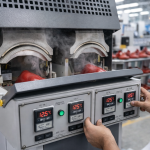
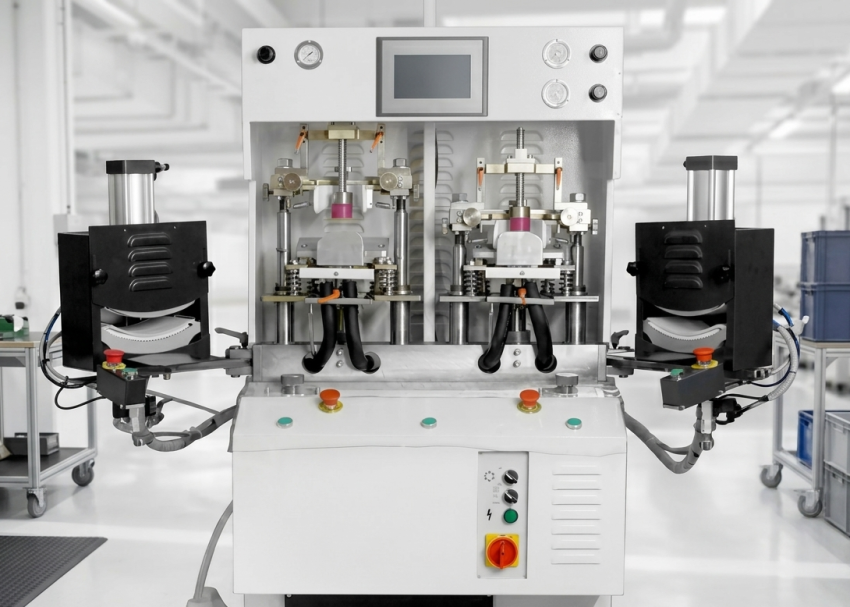
Natural Rack Ageing Systems in Footwear Factories
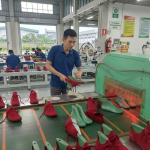
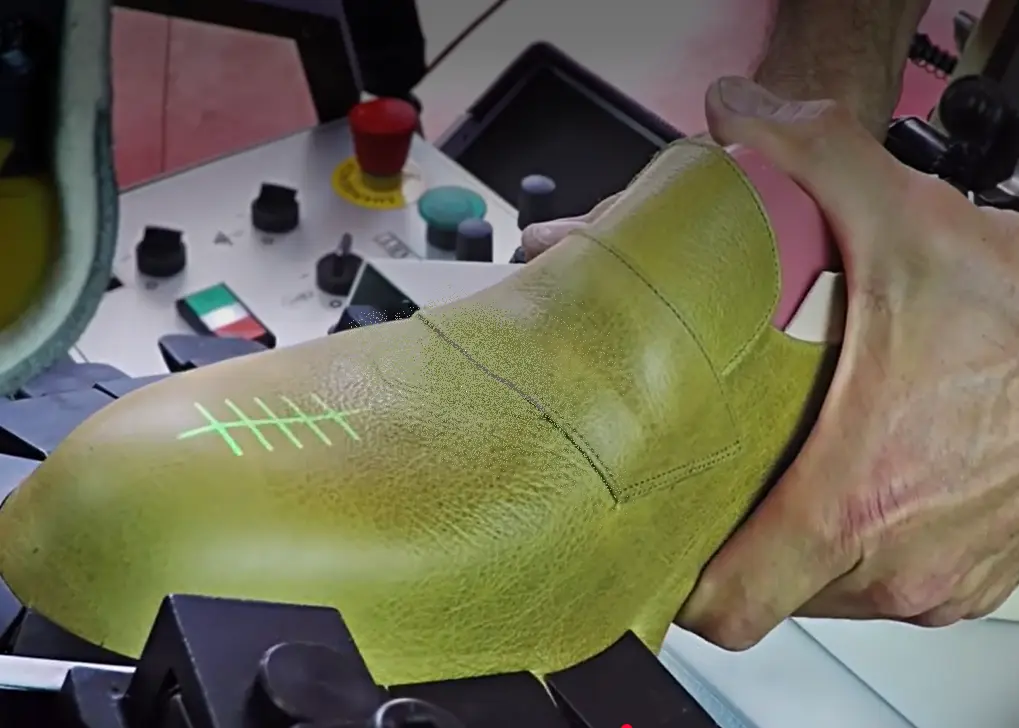
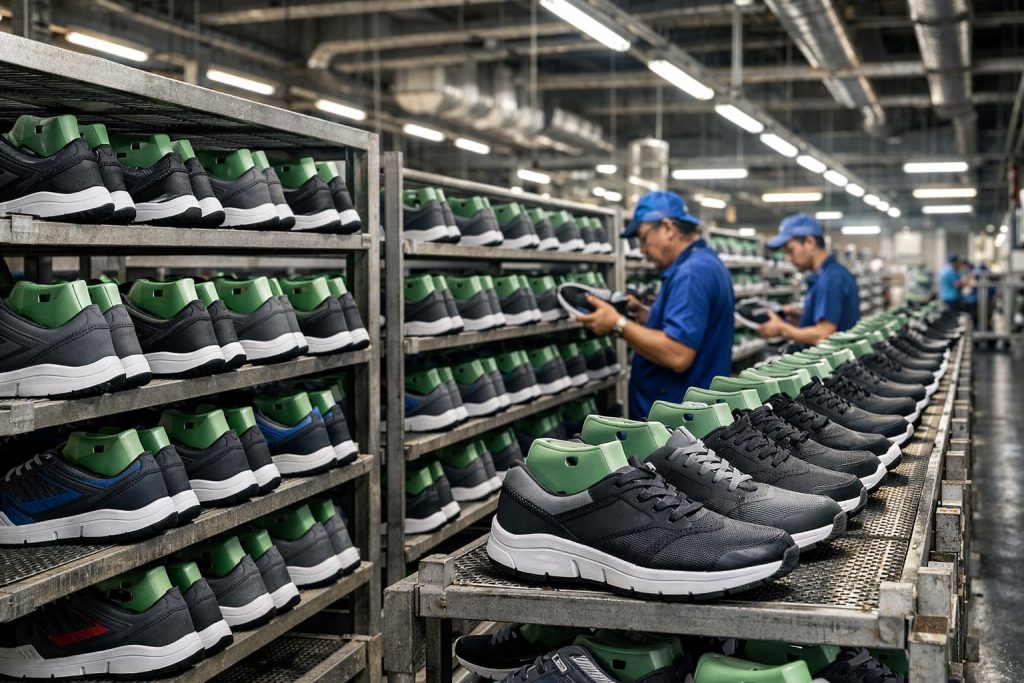
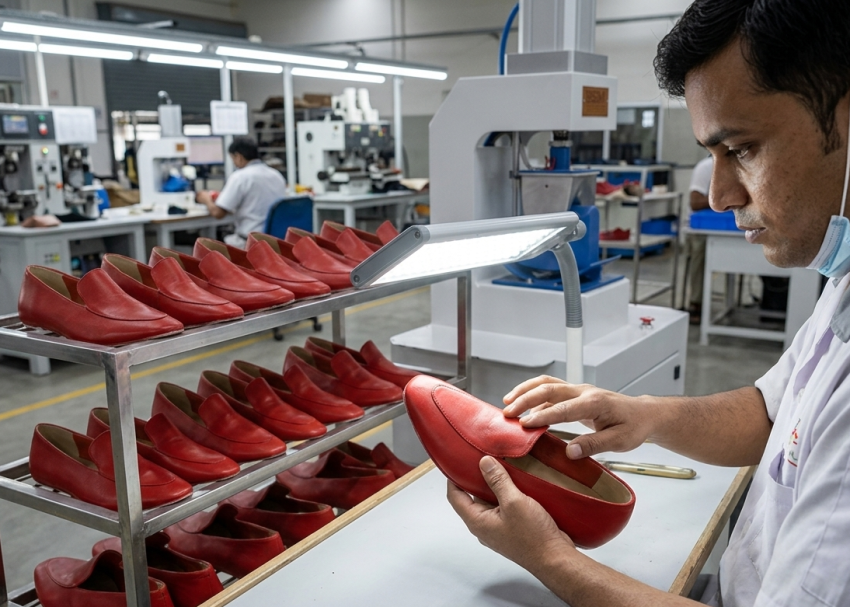
Many footwear factories continue using natural rack ageing systems because they provide reliable stabilization with relatively simple equipment requirements. In this method, assembled shoes remain on multi-level racks under controlled ambient conditions for a specified duration before proceeding to the next operation.
Natural ageing works effectively because it allows gradual adhesive curing and stress relaxation without exposing footwear materials to excessive thermal energy. This is particularly beneficial for leather footwear, casual shoes, and material-sensitive constructions where aggressive heating may create unwanted deformation or surface variation.
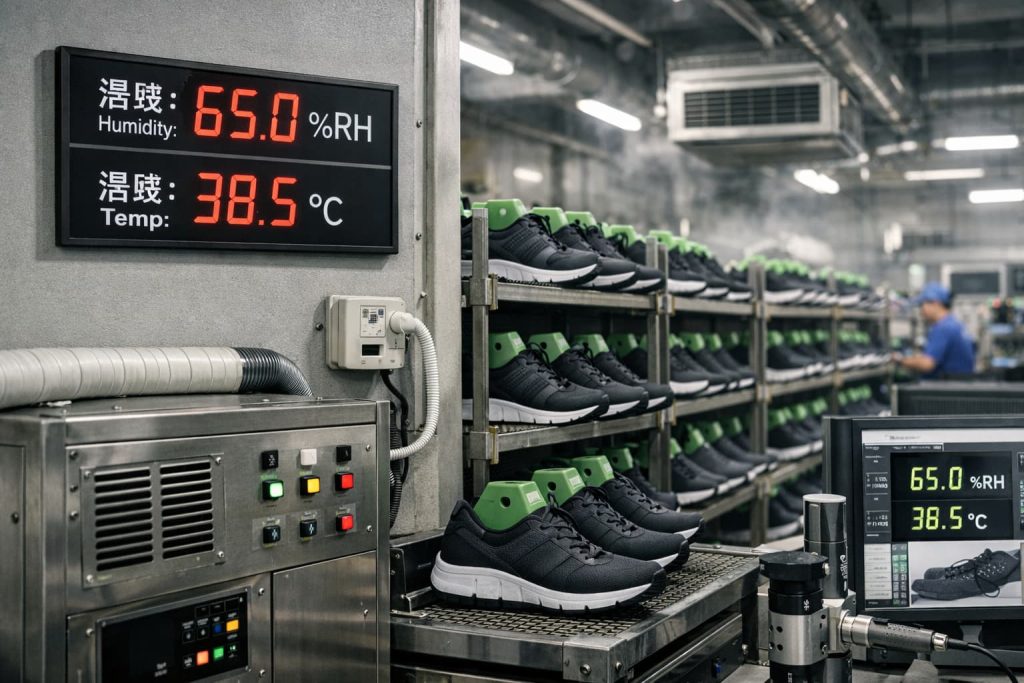
Typically, footwear remains in the ageing area under controlled conditions such as, Temperature between 22–30 °C, Relative humidity between 50–65 %, Ageing duration between 45–90 minutes. During this time, operators or automated systems monitor the flow of footwear through the rack system to ensure every pair receives sufficient stabilization time.
Well-organized rack ageing systems also improve, Production traceability, WIP management, Process balancing, Inline inspection opportunities, Batch identification control. In advanced factories, barcode systems or MES tracking platforms automatically record footwear entry and exit timing from the ageing area. This prevents premature movement to downstream operations. However, natural ageing systems require sufficient factory space and careful production planning.
If rack capacity becomes inadequate, assembly bottlenecks can quickly develop during high-volume production periods.
Key Control Points
- Maintain FIFO flow through ageing racks
- Ensure adequate spacing between footwear pairs
- Prevent direct sunlight exposure
- Standardize rack loading procedures
Pro Tip: During monsoon or high-humidity seasons, increase outsole adhesion audit frequency to detect curing variation early.
Rapid Ageing Tunnel Systems in Modern Footwear Production
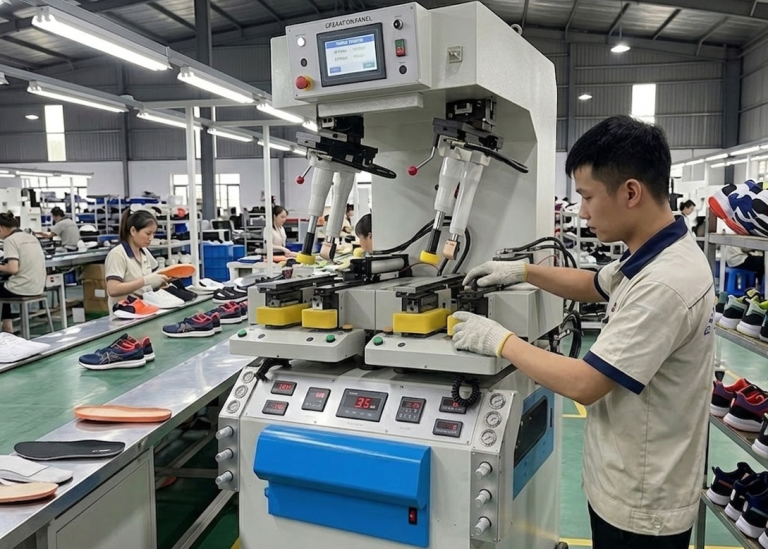
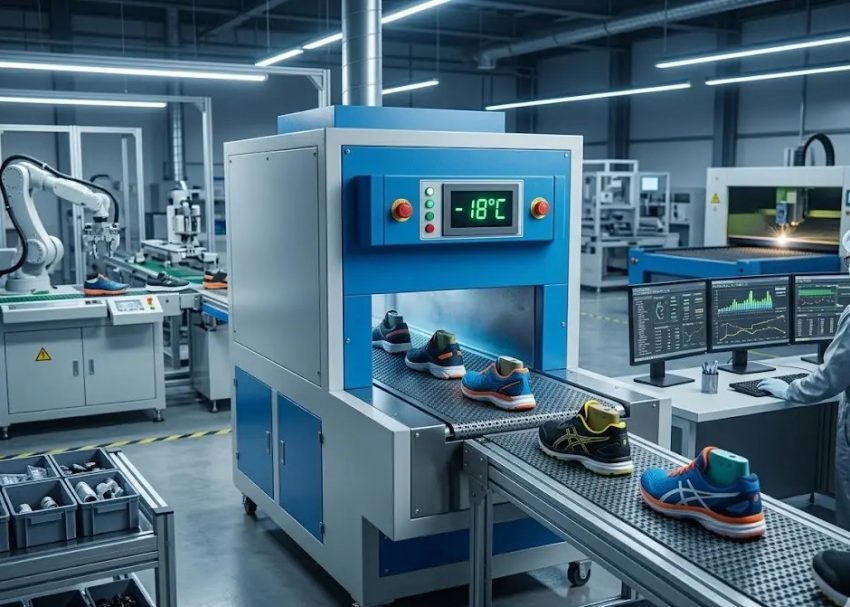
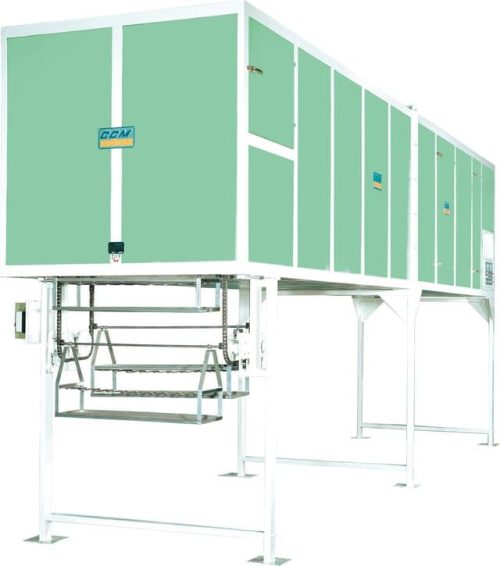
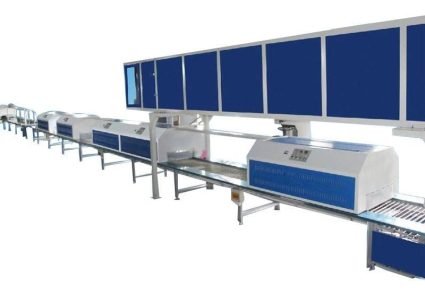
As footwear factories increase automation and production speed, many manufacturers now use rapid ageing tunnel systems to reduce stabilization time while maintaining adhesive performance quality.
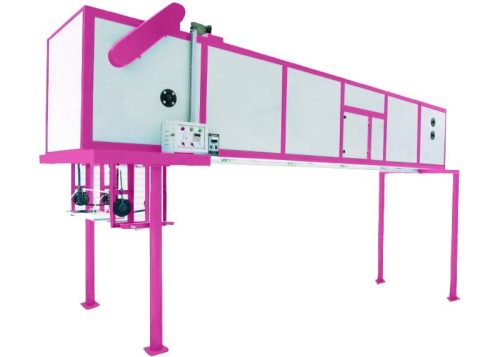
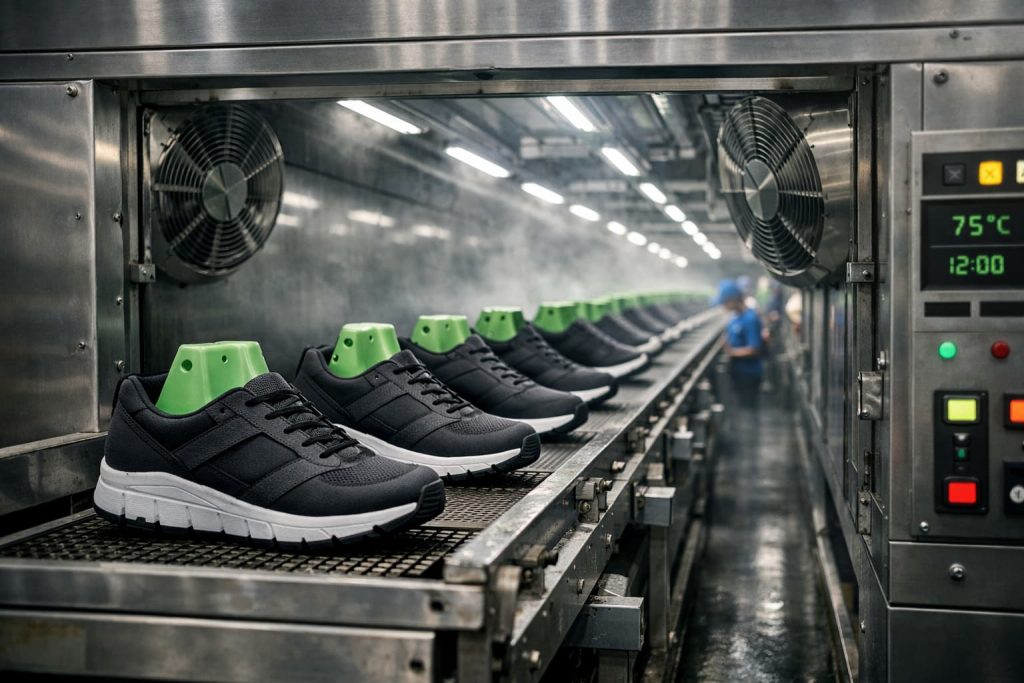
Rapid ageing systems use controlled warm airflow, humidity management, and sometimes mild infrared assistance to accelerate adhesive curing and structural stabilization safely. Instead of requiring up to 90 minutes of natural ageing, some tunnel systems can reduce stabilization time to less than 30 minutes.
This approach becomes highly valuable in, High-volume athletic footwear factories, Lean manufacturing systems, conveyorized assembly operations, Fast-response production environments. Inside the tunnel, footwear moves continuously through carefully controlled conditioning zones. The system regulates airflow temperature, air velocity, and humidity to accelerate curing without damaging sensitive materials.
When properly calibrated, rapid ageing systems improve, Production efficiency, Line balancing, Factory throughput, WIP reduction, Space utilization. However, excessive tunnel temperature or poor airflow distribution may create serious quality risks. Overheating can distort outsole geometry, shrink upper materials, or weaken adhesive surfaces instead of improving bond performance.
Therefore, rapid ageing systems require close validation between, Process engineering teams, Adhesive suppliers, Material engineering departments, Quality laboratories. Factories typically perform peel testing, flex testing, and accelerated ageing trials before approving tunnel conditions for mass production.
Key Control Points
- Calibrate tunnel temperature daily
- Validate dwell time by construction type
- Monitor outsole deformation continuously
- Avoid excessive infrared exposure
Pro Tip: Avoid excessive stacking pressure during ageing because compression can distort outsole geometry before stabilization completes.

Environmental Control During the Ageing Process
Environmental conditions strongly influence footwear ageing performance. Even when adhesive selection and pressing quality remain stable, uncontrolled factory conditions can significantly alter bond curing behavior and stabilization efficiency.
Among all environmental factors, relative humidity has one of the greatest impacts on footwear ageing. High humidity slows solvent evaporation and delays moisture equilibrium inside the footwear structure. As a result, adhesives may require longer stabilization time before achieving full bond strength.
According to industrial process experience, ambient relative humidity above 70 % may increase required ageing duration by as much as 30 %. This becomes particularly important in tropical manufacturing regions where seasonal humidity fluctuations directly affect production consistency.
When environmental control is poor, factories may experience, Inconsistent bond strength, Delayed adhesive curing, Shape instability, Moisture-related deformation, Increased outsole failure risk. Excessively low humidity can also create problems.
Adhesive surfaces may dry too quickly, leading to reduced surface activation and weaker bonding performance.
Key Control Points
- Monitor RH continuously inside ageing zones
- Adjust dwell time during high-humidity periods
- Maintain stable airflow circulation
- Record environmental data shift-wise
Pro Tip: Validate rapid ageing tunnels carefully whenever introducing new upper materials or adhesive systems.
Quality Problems Caused by Improper Ageing
Improper ageing creates some of the most difficult footwear quality problems to identify because many defects appear only after production has already finished. Shoes may initially pass visual inspection successfully but later fail during warehousing, transportation, retail storage, or customer use.
When adhesives do not complete proper curing, bond strength remains unstable. Similarly, if upper materials do not fully relax, hidden stresses remain trapped inside the footwear structure. Over time, these conditions gradually create deformation and bonding failures.
Common problems associated with insufficient ageing include, Outsole edge opening, Toe delamination, Heel separation, Sidewall wrinkling, Shape collapse, Bond cracking during flexing and Inconsistent Fitting. In some cases, premature packing after pressing traps residual solvent and moisture inside the footwear. This can later create odor retention, adhesive softening, or internal material instability during shipment.
Furthermore, high-temperature ocean container environments can accelerate the failure of partially cured adhesive systems. Therefore, footwear that appears acceptable inside the factory may fail after export transportation due to inadequate stabilization during ageing.
Key Control Points
- Include ageing review in failure analysis
- Perform periodic peel strength audits
- Verify stabilization before packing
- Monitor delayed defect trends carefully
Pro Tip: Train supervisors to identify latent stress-relaxation defects before de-lasting operations begin.
Integrating Ageing into Lean Footwear Manufacturing Systems
Although ageing is technically a resting process, advanced footwear factories integrate it strategically into lean manufacturing systems rather than treating it as idle production time.
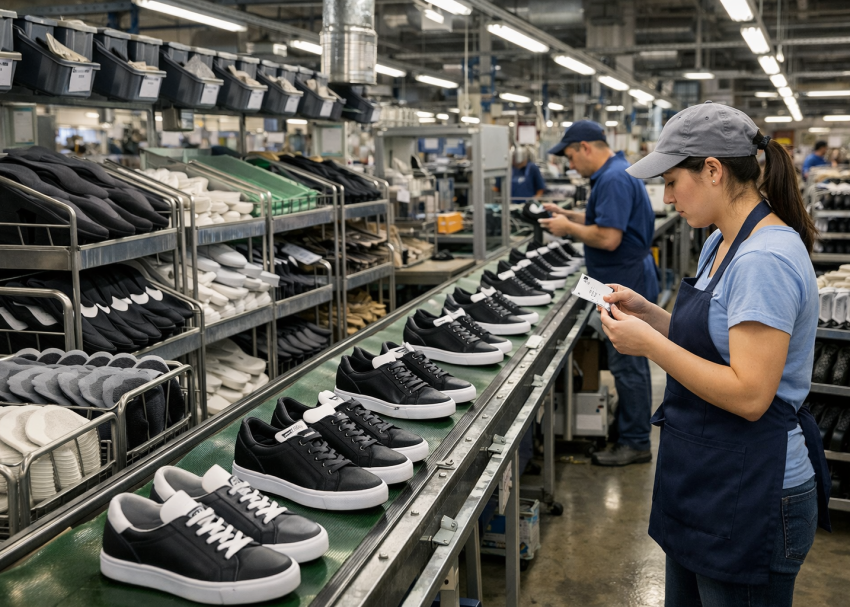
Modern factories use ageing areas as controlled production buffers that support assembly balancing and process synchronization. Instead of creating uncontrolled WIP accumulation, structured ageing systems help stabilize workflow between sole attaching and de-lasting operations.
Digital manufacturing systems now monitor, Ageing entry timing, Exit authorization, Environmental conditions, Product dwell time, Batch traceability. This data improves production visibility and prevents operators from bypassing minimum stabilization requirements during high-pressure production periods.
Key Control Points
- Digitally monitor ageing duration
- Prevent unauthorized early removal
- Balance rack utilization efficiently
- Integrate ageing into MES systems
Pro Tip: Use quarantine racks for footwear exposed to abnormal environmental conditions during production interruptions.
Conclusion
Ageing in footwear manufacturing is a critical stabilization stage that directly influences adhesive durability, structural integrity, and long-term product quality. Although the process occurs after outsole pressing and chilling, its impact extends throughout the entire product lifecycle, including warehousing, shipping, retail handling, and consumer use.
By allowing adhesives to complete curing and enabling upper materials to relax gradually, controlled ageing prevents delayed outsole failures, shape distortion, and hidden structural instability. Whether factories use traditional rack ageing systems or advanced rapid conditioning tunnels, process control remains essential for maintaining consistent manufacturing quality.
As footwear constructions become lighter, softer, and increasingly material-complex, ageing management becomes even more important for ensuring long-term product reliability.
In the next blog of TheFootwearEdge Full Shoe Assembly Series, we will discuss “Last Removal (De-Lasting) in Footwear Manufacturing” and examine how improper de-lasting can damage footwear shape, heel structure, and final assembly quality.
Frequently Asked Questions – FAQs
What is ageing in footwear manufacturing?
Ageing is the controlled resting period after outsole attachment that allows adhesive curing, stress relaxation, and shape stabilization before de-lasting and finishing.
Why is ageing important after sole pressing?
Ageing improves adhesive bond strength and prevents delayed defects such as sole separation, shape distortion, and upper deformation.
How long does footwear ageing normally take?
Natural ageing typically requires 45–90 minutes, while rapid conditioning tunnels may reduce the duration to 20–30 minutes.
Can insufficient ageing cause outsole failure?
Yes. Inadequate ageing can reduce adhesive curing quality and increase the risk of outsole delamination during storage or customer usage.
Why does humidity affect footwear ageing?
High humidity slows solvent evaporation and adhesive stabilization, which may require longer ageing duration for proper curing.
What is rapid ageing in shoe manufacturing?
Rapid ageing uses conditioned air or mild infrared systems to accelerate adhesive curing and material stabilization safely.
Which footwear types require stricter ageing control?
Athletic footwear, knit shoes, lightweight constructions, and high-flex performance shoes require especially careful ageing management.