Outsole Component Receipt and Incoming Inspection
Outsole (Stock Fitting) Assembly Series
In the previous article, Understanding the Three Basic Types of Outsole – Outsole (Stock Fitting) Assembly Series, we explored the main outsole categories used in footwear manufacturing. However, selecting the right outsole is only the first step. Before any component moves into cutting or assembly, manufacturers must confirm that every incoming material meets the required quality standards.
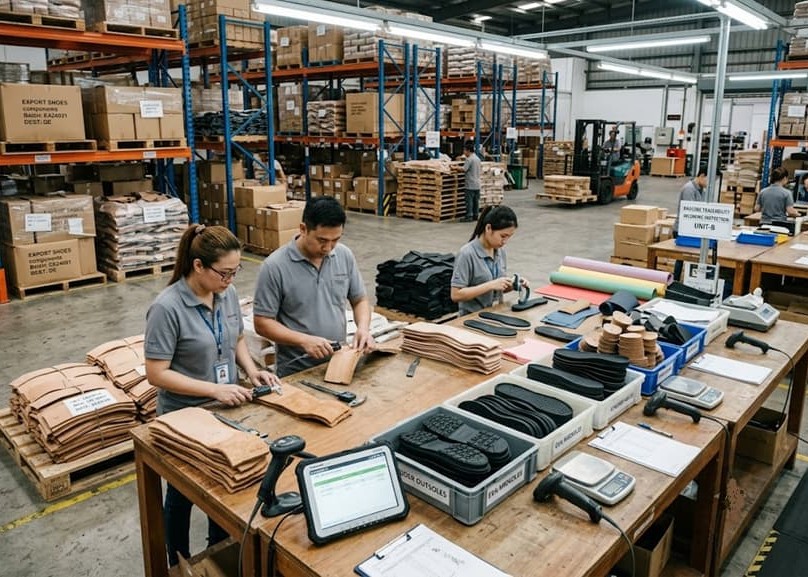
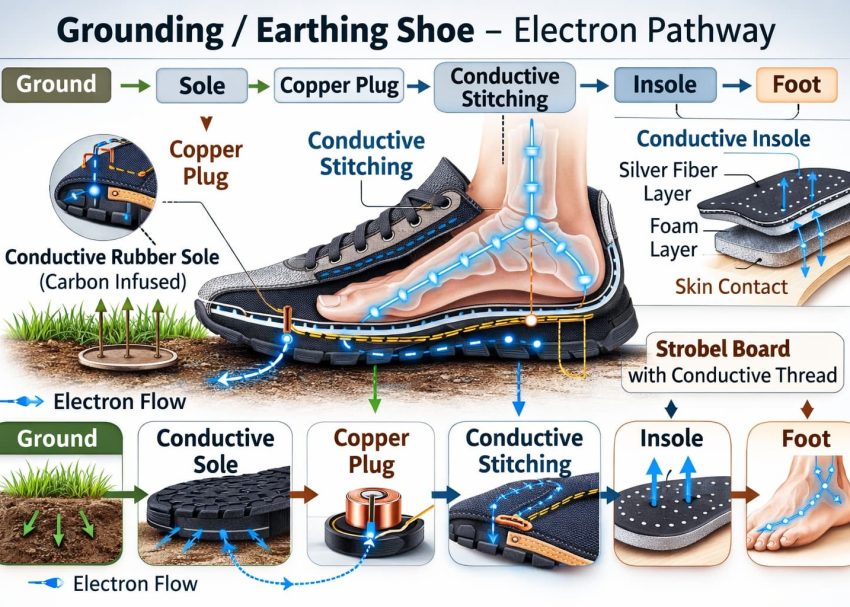
This verification begins with Component Receipt and Incoming Inspection, the first quality checkpoint in the outsole assembly process. Components such as leather bends, synthetic sheets, outsoles, midsoles, heels, shanks, welts, wedges, inserts, and veneers are inspected to verify quantity, specifications, dimensions, appearance, and supporting documentation before they are approved for production.
A well-controlled incoming inspection process helps prevent defective or incorrect materials from entering production, reducing rework, production delays, and unnecessary costs. At the same time, it improves inventory accuracy, material traceability, and supplier performance monitoring.
In this article, we will examine the complete process of receiving outsole components, conducting incoming inspections, identifying common defects, and releasing approved materials to support consistent, high-quality outsole manufacturing.

Importance of Incoming Inspection in Outsole Manufacturing
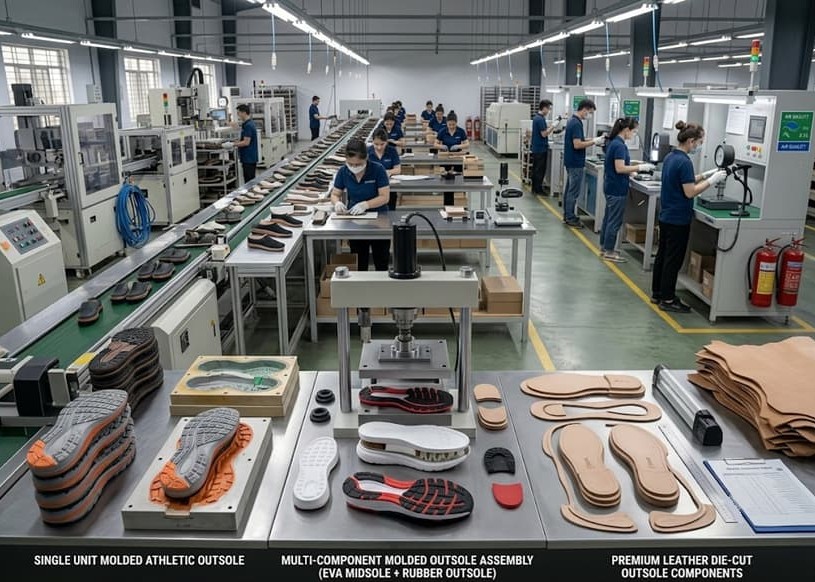
Incoming inspection represents one of the most cost-effective quality control activities in footwear production. A defect discovered during material receipt typically costs very little to correct. However, the same defect identified after cutting, assembly, or shipment can result in significant financial losses, production delays, customer complaints, and brand reputation damage. Consequently, footwear factories establish formal incoming quality control procedures to ensure only approved materials enter production.
A well-managed incoming inspection system helps factories:
- Prevent production interruptions
- Reduce material-related defects
- Improve supplier accountability
- Maintain product consistency
- Support traceability requirements
- Protect customer quality standards
- Reduce rework and rejection costs
Most importantly, incoming inspection prevents poor-quality materials from progressing further into the manufacturing process.
Key Control Points
- Verify approved supplier status
- Confirm inspection plan availability
- Review incoming quality standards
- Ensure inspection records are maintained
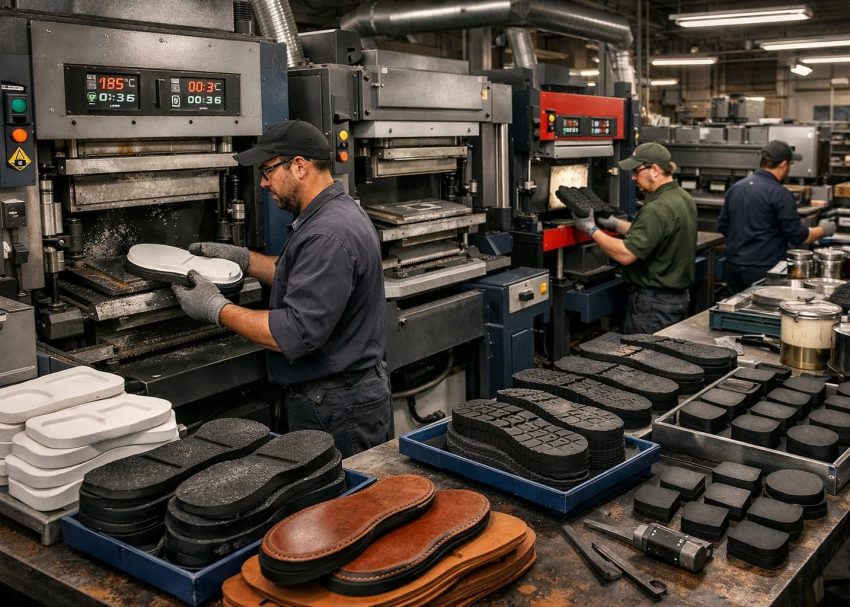
Expert Tip: Many factories focus heavily on visual appearance while overlooking hardness verification. However, outsole hardness variation can significantly affect comfort, flexibility, wear resistance, and customer satisfaction. Always include hardness checks for critical outsole programs.

Material Receipt Process at the Warehouse
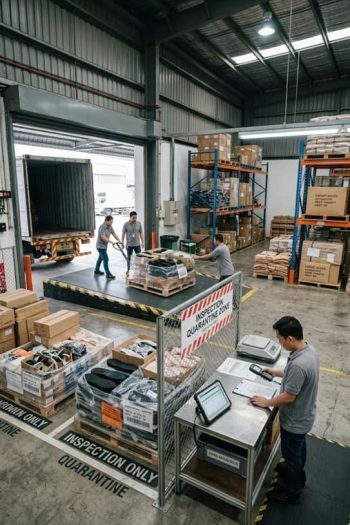
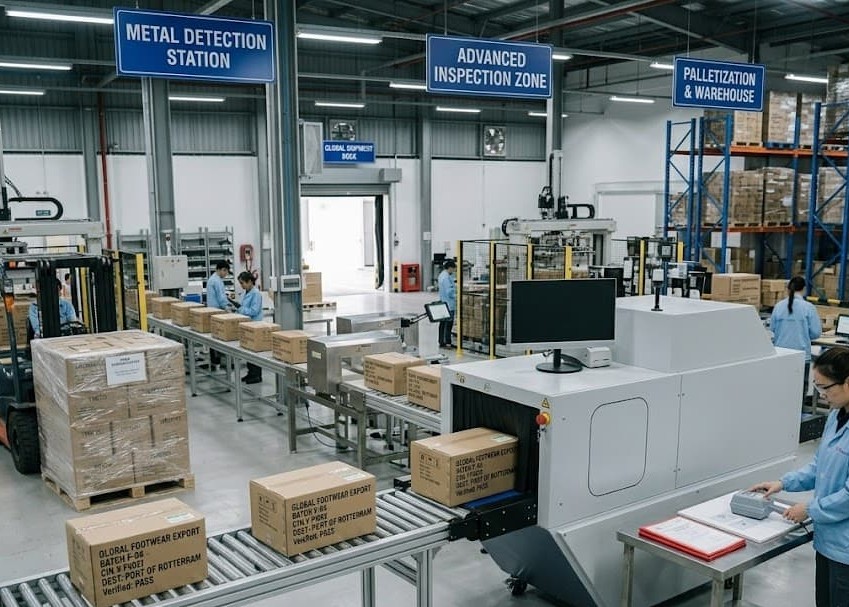
The inspection process begins immediately after materials arrive at the factory. Warehouse personnel receive materials, compare shipment quantities against purchase orders, and verify shipping documentation before unloading. Once unloading is completed, materials are moved to a designated incoming inspection area.
At this stage, materials remain in a quarantine status until quality verification is completed. Inspection personnel then review delivery notes, supplier certificates, packing lists, and quality documents. Only after successful inspection are materials released into approved inventory locations. This controlled process prevents unverified materials from accidentally entering production. Additionally, warehouse and quality departments work closely together to ensure accurate inventory records and material traceability.
Key Control Points
- Verify purchase order details
- Confirm delivery quantities
- Segregate inspection lots
- Maintain quarantine status before approval

Leather Bends Receipt and Inspection
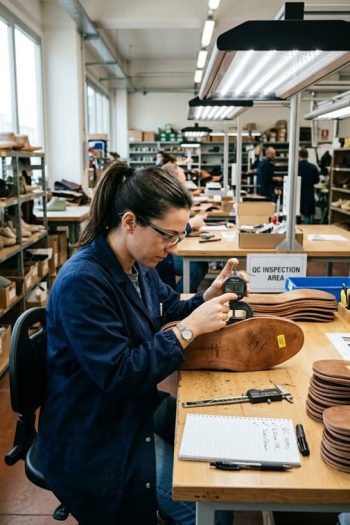
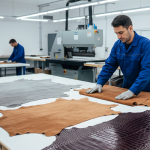
Leather bends remain one of the most common outsole materials used in leather outsole production. Upon receipt, inspectors verify leather grade, tannage type, thickness, color, finish quality, and overall appearance. Since outsole leather directly affects durability and appearance, inspection standards are typically strict.
Inspectors evaluate both sides of the leather for defects such as scars, loose grain, cuts, wrinkles, holes, insect bites, and uneven finishing. Thickness measurements are performed at multiple locations because inconsistent thickness can create cutting and outsole performance issues later in production.
Moisture content may also be checked when required by factory standards. After inspection, approved leather bends receive batch identification labels and are transferred to controlled storage areas.
Common Defects
- Loose grain
- Thickness variation
- Surface scratches
- Color inconsistency
- Deep scars
- Poor finishing
Key Control Points
- Verify leather grade
- Measure thickness consistency
- Check moisture condition
- Maintain batch traceability
Expert Tip: Always verify the latest engineering revision level during incoming inspection. Material quality may be acceptable, but outdated component versions can create serious production and customer approval issues.

Synthetic Sheet Receipt and Inspection
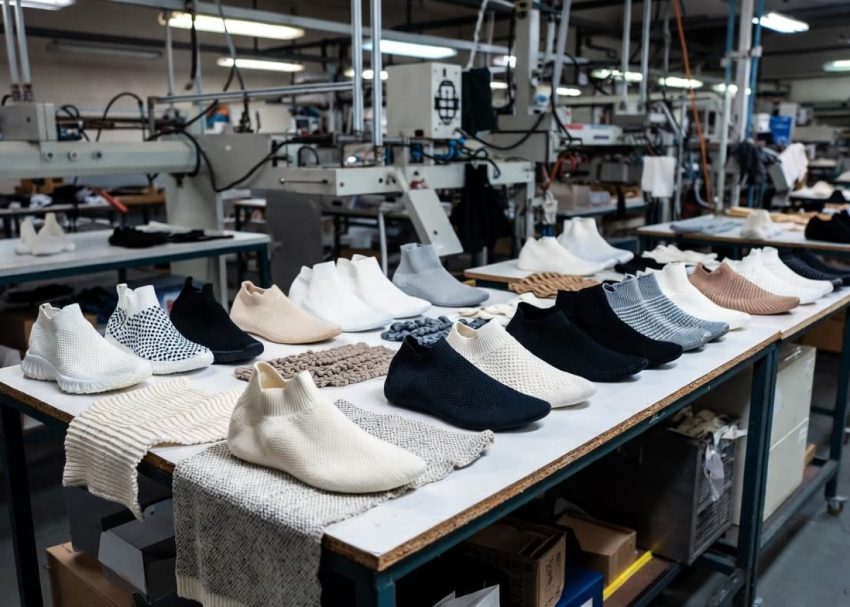
Many footwear manufacturers use synthetic sheet materials for outsoles, insoles, midsoles, wedges, and decorative components. Incoming inspection focuses on material specification compliance and appearance quality.
Inspectors verify, Thickness, Density, Color, Surface texture, Width, Roll length or sheet dimensions. Since synthetic materials often come in large production batches, color consistency becomes particularly important. Factories frequently compare incoming materials against approved master standards to ensure visual matching. Material flexibility and bonding performance may also undergo laboratory testing when required by customer specifications.
Common Defects
- Thickness variation
- Surface contamination
- Color mismatch
- Uneven texture
- Material distortion
Key Control Points
- Compare with approved standard
- Measure critical dimensions
- Verify material specifications
- Record lot identification
Outsole Receipt and Incoming Verification
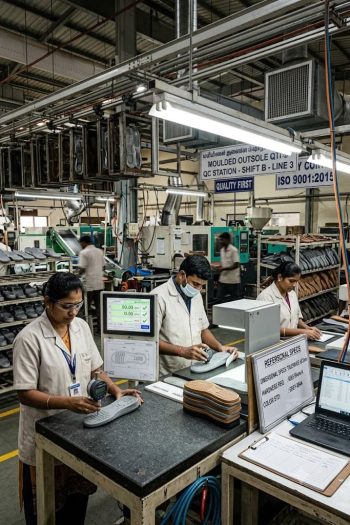
Pre-molded outsoles sourced from external suppliers require detailed incoming inspection because they directly influence final product performance. Inspectors verify outsole dimensions, design accuracy, hardness, color consistency, logo appearance, mold quality, and overall finishing.
Measurements often include, Length, Width, Heel height, Thickness, Weight. Visual inspection focuses on molding defects such as short shots, flash, sink marks, contamination, bubbles, and surface imperfections.
In addition, inspectors compare incoming outsoles against approved reference samples to ensure manufacturing consistency. Laboratory testing may include hardness verification and physical performance checks depending on customer requirements.
Common Defects
- Short molding
- Flash formation
- Color variation
- Dimensional deviation
- Surface contamination
- Logo defects
Key Control Points
- Verify approved mold version
- Check hardness specifications
- Compare against reference sample
- Maintain lot traceability
Pro Tip: Create digital photo standards for all appearance-related components. Visual defect interpretation becomes significantly more consistent when inspectors compare materials against approved photographic defect libraries.


Midsole Receipt and Inspection
Midsoles play a critical role in footwear cushioning, stability, and performance. Incoming inspection verifies dimensions, density, weight, hardness, color, and overall appearance. Since midsoles frequently utilize EVA, PU, or specialized foam compounds, inspectors often review supplier test reports alongside physical inspections.
Visual evaluation includes checking for Compression damage, Shrinkage, Surface contamination, Color variation, Deformation. Dimensional consistency is particularly important because improper midsole sizing can create assembly problems during outsole attachment.
Common Defects
- Density inconsistency
- Warpage
- Compression marks
- Color variation
- Size mismatch
Key Control Points
- Ensure batch identification
- Verify density requirements
- Check dimensional stability
- Review supplier test reports

Heel Receipt and Inspection
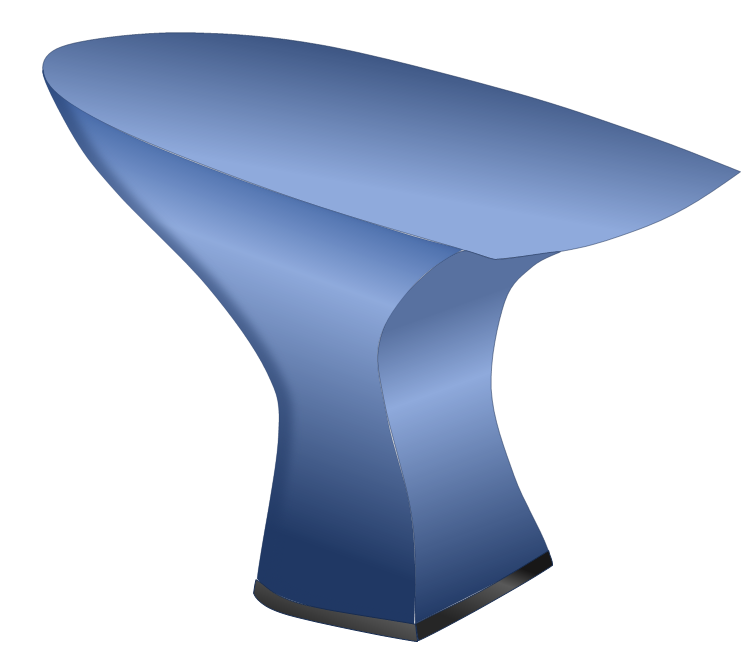
Heel components require strict dimensional control because even minor deviations can affect footwear balance and appearance. Inspectors evaluate heel height, width, shape accuracy, finish quality, color consistency, and attachment surfaces.
Special attention is given to dimensional tolerances because heel alignment issues can create stability problems after assembly. Factories commonly use gauges, templates, and approved reference samples during inspection. Any cracks, surface defects, molding imperfections, or dimensional deviations result in rejection or segregation for further review.
Common Defects
- Height variation
- Surface defects
- Cracks
- Color mismatch
- Shape distortion
Key Control Points
- Verify dimensional tolerances
- Inspect attachment surfaces
- Compare with approved sample
- Ensure proper labeling

Shank Receipt and Inspection
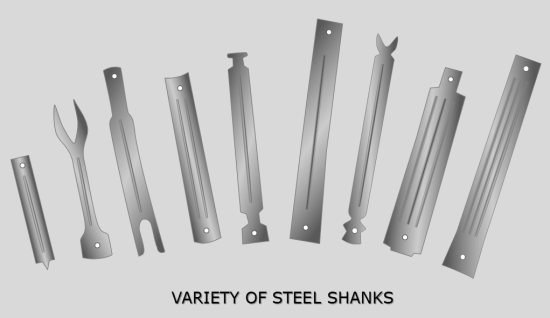
Shanks provide structural support within footwear and contribute to stability and shape retention. Incoming inspection focuses on dimensions, material type, thickness, stiffness, and corrosion condition where metal shanks are involved.
Inspectors compare received shanks against engineering specifications and approved technical drawings. Material identification becomes particularly important because incorrect shank specifications can significantly impact footwear performance. Some factories perform load or flex testing to verify structural integrity.
Common Defects
- Wrong material
- Thickness variation
- Corrosion
- Dimensional mismatch
- Insufficient stiffness
Key Control Points
- Verify engineering specifications
- Check structural integrity
- Confirm material type
- Maintain traceability records
Pro Tip: The strongest incoming inspection programs combine physical inspection results with supplier quality data. Trend analysis often identifies recurring problems before they become major quality issues.
Posts you make Like


Troubleshooting Adhesive Bond Failures in Footwear Manufacturing…
Welt Receipt and Inspection
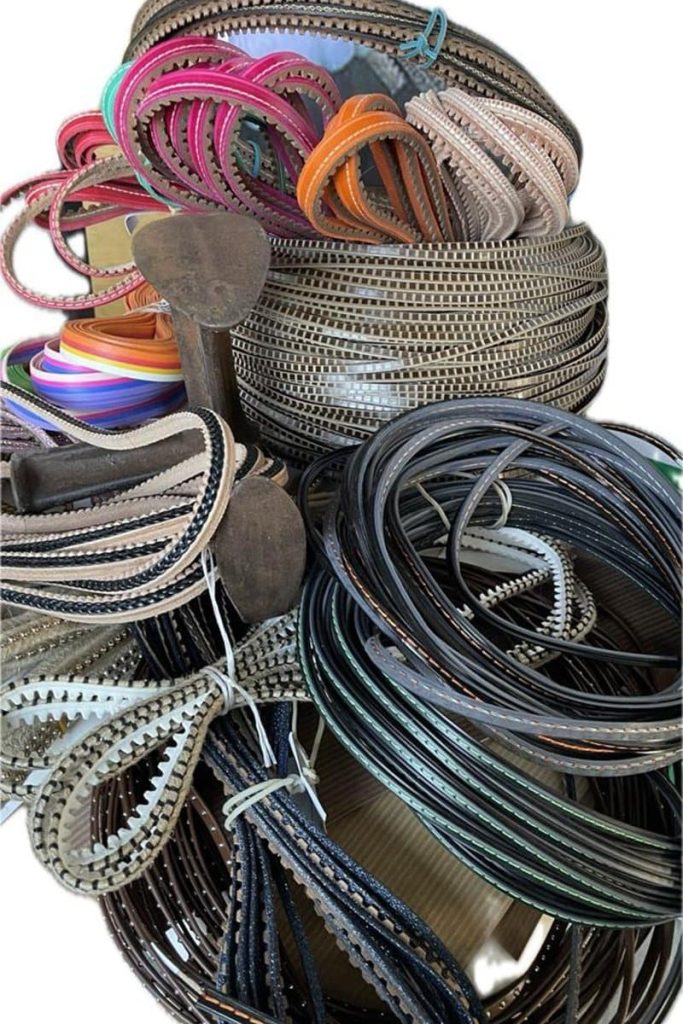
Welts contribute both functional and aesthetic value, particularly in Goodyear welted and stitch-down constructions. Inspection activities focus on dimensional accuracy, color consistency, stitching quality, material condition, and finish appearance.
Inspectors ensure welt dimensions match engineering specifications because even small variations can affect lasting and outsole attachment operations.
Special attention is given to edge quality and surface finish. Approved welts are identified with lot numbers before storage.
Common Defects
- Uneven dimensions
- Color variation
- Surface damage
- Stitching defects
- Material distortion
Key Control Points
- Maintain batch control
- Verify dimensions
- Check stitching quality
- Review appearance standards
Wedge Receipt and Inspection
Wedges often combine comfort, height, and fashion requirements in footwear construction. Incoming inspection includes dimensional verification, density checks, color assessment, appearance evaluation, and bonding surface inspection. Because wedges frequently undergo additional covering or finishing operations, inspectors carefully evaluate surface quality. Any dimensional inconsistency may create alignment issues during assembly.
Common Defects
- Density variation
- Shape distortion
- Surface defects
- Color inconsistency
- Dimensional mismatch
Key Control Points
- Confirm approved specifications
- Verify dimensions
- Check density consistency
- Inspect bonding surfaces
Pro Tip: Always compare incoming materials against approved master standards rather than relying solely on supplier descriptions.
Insert Receipt and Inspection
Inserts provide cushioning, support, and comfort enhancements within footwear. Incoming inspection focuses on material composition, dimensions, thickness, density, and appearance quality. Inspectors compare inserts against approved standards and evaluate comfort-related characteristics when applicable. Dimensional consistency remains essential because insert variation can affect fit and assembly performance.
Common Defects
- Thickness variation
- Material inconsistency
- Shape deformation
- Surface contamination
- Color mismatch
Key Control Points
- Maintain traceability
- Measure thickness
- Verify dimensions
- Review specifications
Veneer Receipt and Inspection
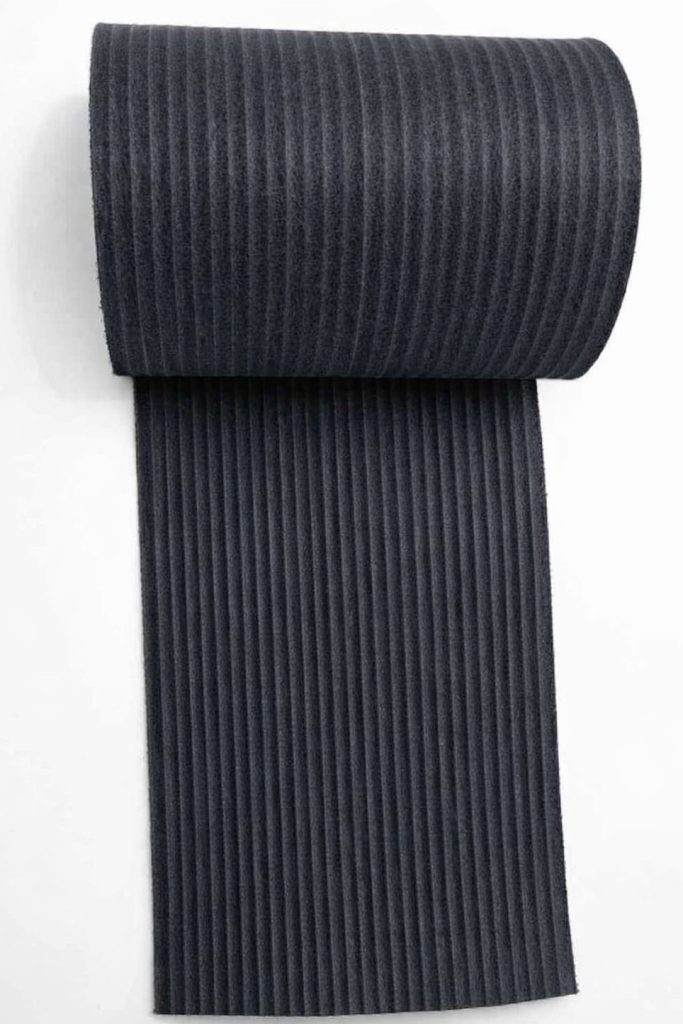
Veneers are frequently used for decorative enhancement and aesthetic detailing in footwear construction.
Incoming inspection evaluates color consistency, grain appearance, finish quality, thickness, and overall material condition.
Inspectors compare veneers against approved master samples to ensure consistency throughout production. Because veneers often contribute directly to visual appearance, cosmetic standards are generally strict.
Common Defects
- Color variation
- Surface defects
- Thickness inconsistency
- Finish irregularities
- Material damage
Key Control Points
- Match approved standards
- Verify appearance quality
- Measure thickness
- Maintain lot identification
Pro Tip: Digitize incoming inspection records to improve traceability and trend analysis.
Quantity Verification Process
Quantity verification ensures that received materials match purchase orders and shipping documentation. Inspectors verify, Carton quantities, Piece counts, Weight verification, Bundle counts, Pallet quantities. Any discrepancy is immediately documented and communicated to procurement and suppliers. Accurate quantity verification prevents inventory inaccuracies and production shortages.
Key Control Points
- Update inventory records
- Verify packing lists
- Count sampling accuracy
- Document shortages
Visual Inspection Requirements
Visual inspection remains one of the most important incoming quality control activities. Inspectors evaluate appearance, workmanship, contamination, color consistency, damage, and overall material condition. Factories typically establish acceptance standards using approved samples, defect catalogs, and customer specifications. Consistent lighting conditions improve inspection accuracy and defect detection.
Key Control Points
- Maintain inspection records
- Use approved standards
- Ensure proper lighting
- Document defects accurately
Pro Tip: Establish clear quarantine zones for uninspected materials.
Dimension Verification Procedures
Dimensional inspection confirms that materials comply with engineering specifications. Inspectors use calibrated measuring equipment including:
- Vernier calipers
- Thickness gauges
- Measuring tapes
- Templates
- Digital measuring systems
Measurement results are recorded and compared against tolerance requirements. Regular calibration ensures inspection accuracy.
Key Control Points
- Verify tolerance compliance
- Use calibrated equipment
- Follow inspection plans
- Record measurements
Material Specification Verification
Material specification verification ensures that received components match approved technical requirements.
Inspectors review:
- Material codes
- Technical specifications
- Customer requirements
- Engineering drawings
- Material certifications
This process prevents incorrect materials from entering production.
Key Control Points
- Confirm approval status
- Verify material codes
- Review specifications
- Compare certifications
Supplier Documentation Review
Supplier documentation provides evidence that incoming materials meet established requirements. Documents commonly reviewed include:
- Certificates of analysis
- Material certifications
- Test reports
- Packing lists
- Delivery notes
- Compliance declarations
Document verification strengthens traceability and supports audit compliance.
Key Control Points
- Verify document completeness
- Match lot numbers
- Review test results
- Maintain document records
Pro Tip: Perform periodic supplier audits alongside incoming inspection programs.
Managing Common Incoming Material Defects
Incoming inspection frequently identifies recurring material issues that require corrective action. Common defects include:
Wrong Material
Incorrect material codes, specifications, hardness levels, densities, or constructions.
Color Variation
Shade differences between approved standards and received materials.
Thickness Variation
Non-uniform thickness causing processing and performance issues.
Surface Defects
Scratches, contamination, dents, bubbles, wrinkles, cracks, or finishing defects.
Quantity Shortages
Missing pieces, incorrect packaging quantities, or inventory discrepancies.
Effective defect management requires immediate segregation, documentation, supplier notification, and corrective action follow-up.
Key Control Points
- Implement corrective actions
- Segregate non-conforming material
- Issue quality alerts
- Track supplier performance
Pro Tip: Calibrate inspection equipment according to defined schedules.
Traceability and Batch Identification
Traceability ensures every component can be tracked from receipt through finished footwear production.
Factories assign unique batch numbers that connect materials to suppliers, inspection records, production orders, and finished products.
This capability becomes especially important during customer complaints, recalls, audits, and quality investigations.
Modern footwear factories increasingly use barcode and ERP systems to strengthen traceability control.
Key Control Points
- Protect record accuracy
- Assign unique lot numbers
- Maintain inspection history
- Link materials to production
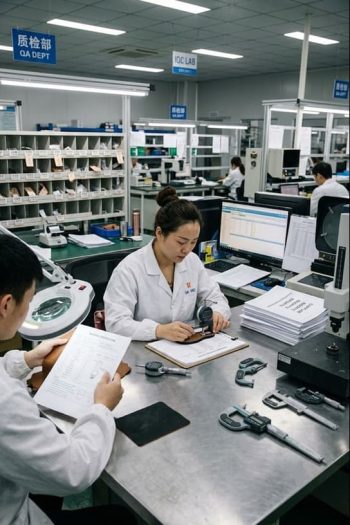
Pro Tip: Create defect photo libraries for inspector training.
Inspection Sampling Plans
Because inspecting every piece is often impractical, factories commonly implement statistical sampling plans. Sampling methods balance inspection efficiency with risk control. The sampling plan typically defines, Sample size, Acceptance criteria, Rejection criteria, Critical defect limits, Major defect limits, Minor defect limits. Consistent sampling improves inspection reliability and supplier evaluation.
Key Control Points
- Train inspectors regularly
- Follow approved sampling plans
- Apply acceptance criteria consistently
- Document inspection results
Pro Tip: Integrate inspection data into ERP systems for stronger quality control.
Material Approval and Release System
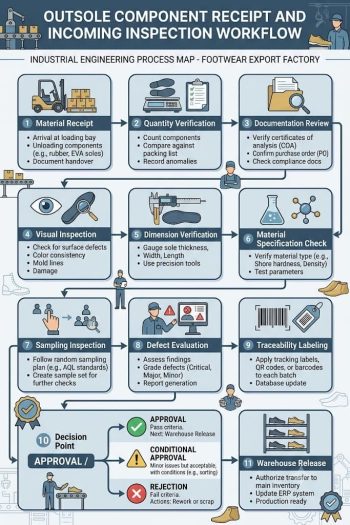
After inspection completion, materials receive one of three status classifications:
Approved
Materials meet all requirements and are released to production.
Conditional Approval
Materials may be used under defined restrictions or deviation approvals.
Rejected
Materials fail requirements and are segregated from production inventory. A controlled approval process prevents accidental use of non-conforming materials.
Key Control Points
- Maintain release authorization controls
- Clearly identify material status
- Segregate rejected lots
- Record approval decisions
Pro Tip: Monitor supplier defect trends monthly.
Conclusion
Component Receipt and Incoming Inspection forms the foundation of successful outsole manufacturing. By verifying quality, quantity, specifications, dimensions, and documentation before production begins, footwear factories significantly reduce downstream quality risks and manufacturing costs.
A disciplined incoming inspection process strengthens supplier performance, improves traceability, protects production schedules, and supports consistent product quality. Most importantly, it ensures that only approved materials enter the outsole manufacturing process.
In the next blog of the Outsole (Stock Fitting) Assembly Series, we will explore Cutting Operations in Outsole Process, where approved materials are transformed into outsole components ready for subsequent manufacturing operations.
Frequently Asked Questions (FAQs)
Why is incoming inspection important in outsole manufacturing?
It prevents defective materials from entering production and reduces downstream quality issues.
Which outsole components require incoming inspection?
Leather bends, synthetic sheets, outsoles, midsoles, heels, shanks, welts, wedges, inserts, and veneers.
What is the main purpose of traceability?
Traceability allows factories to track materials from supplier receipt to finished footwear.
What are the most common incoming material defects?
Wrong materials, color variation, thickness variation, surface defects, and quantity shortages.
Why are supplier documents reviewed?
They verify compliance with specifications, testing requirements, and traceability standards.
What happens to rejected materials?
Rejected materials are segregated, documented, and prevented from entering production.
How does incoming inspection support supplier improvement?
Inspection data identifies recurring issues and supports corrective action programs.