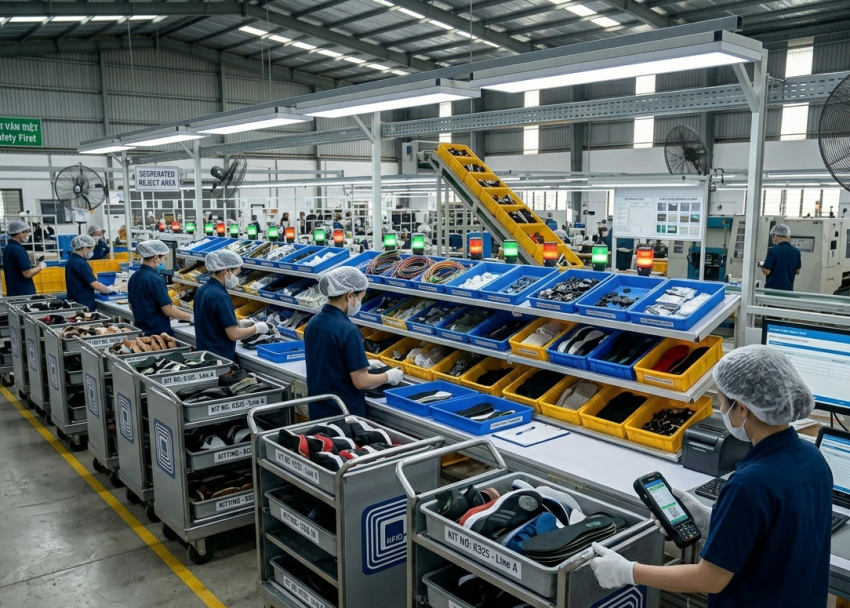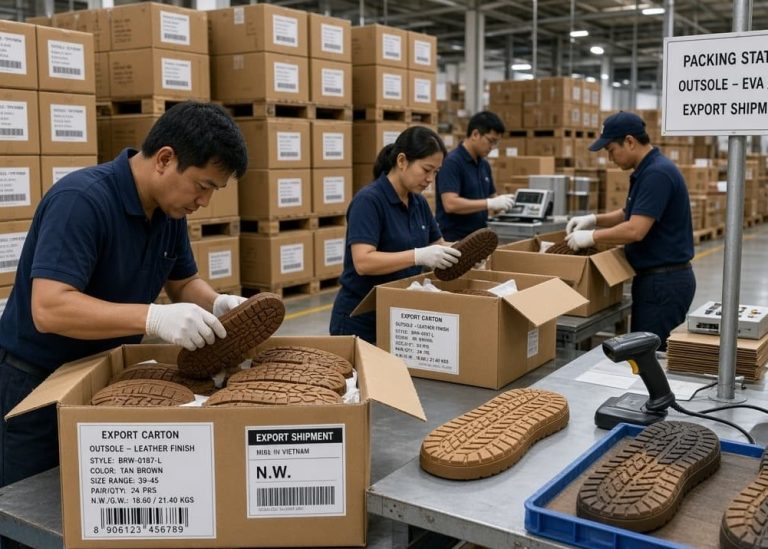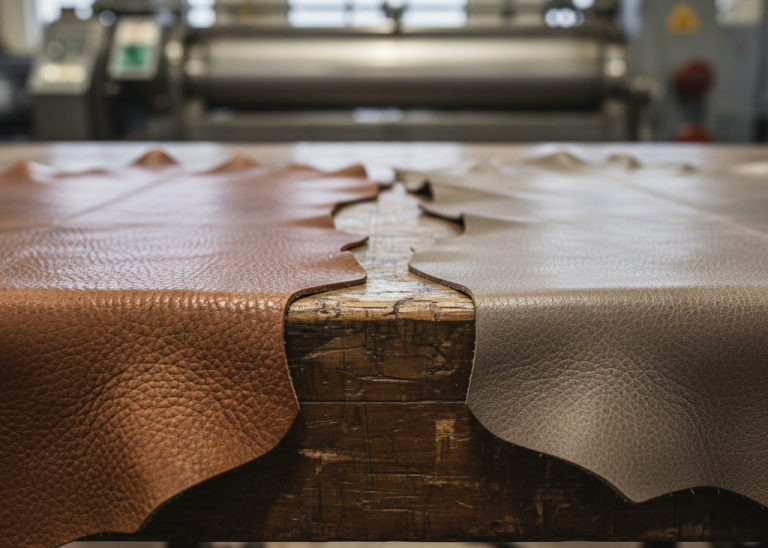
Wheeling Operations in Outsole Process: Outsole (Stock Fitting) Assembly Series
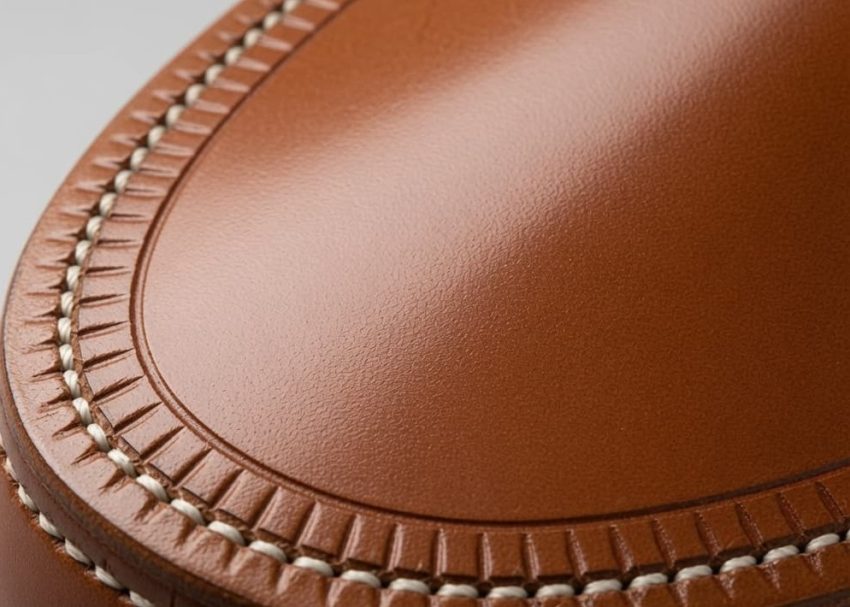
Premium leather footwear is recognized not only for its materials but also for the fine details that distinguish it from mass-produced shoes. After completing the Outsole Stitching Operations, the outsole often undergoes additional decorative finishing processes that enhance its appearance without affecting structural strength. One of the most respected traditional finishing techniques is Wheeling.
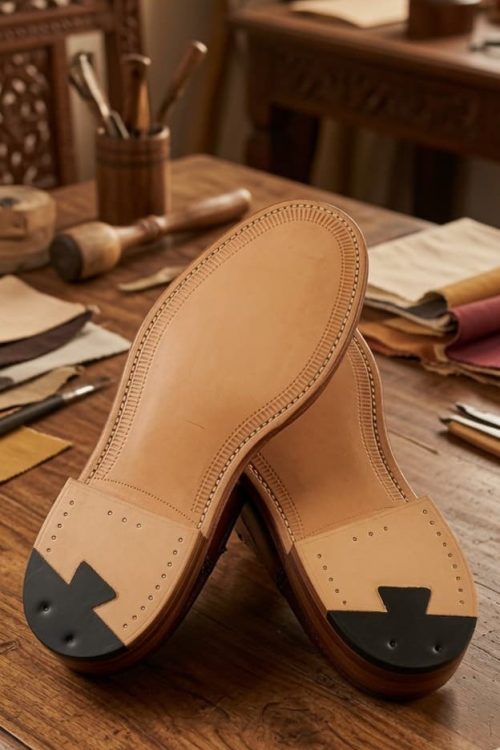
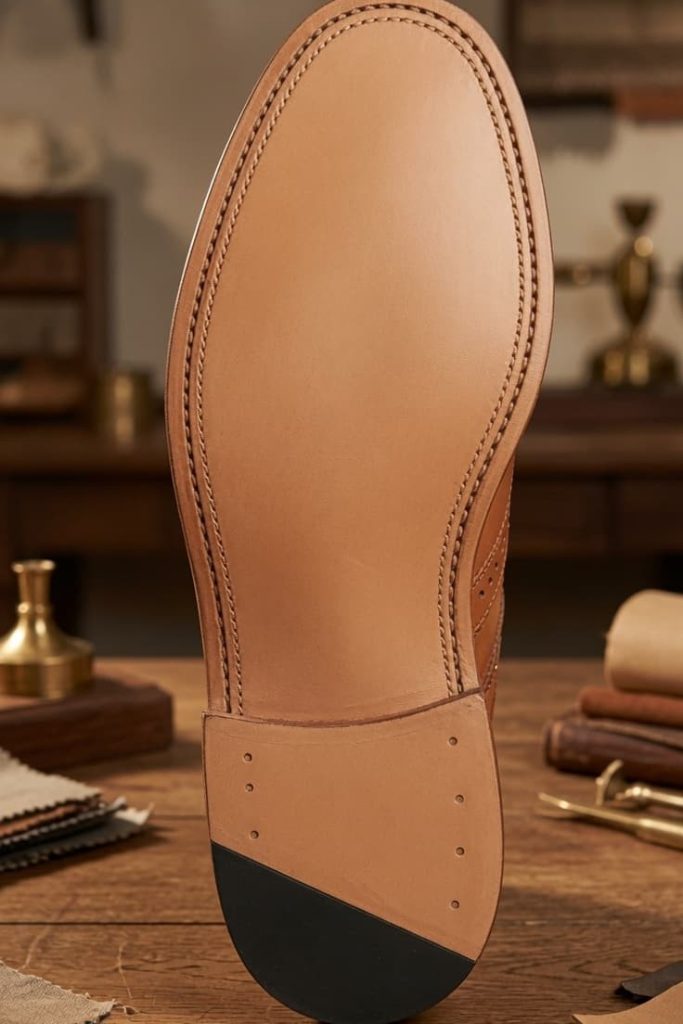
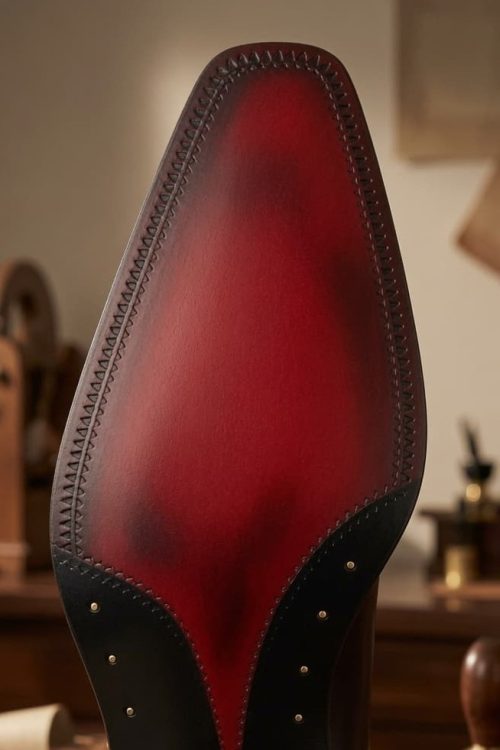
In premium Goodyear welted shoes, Blake stitched shoes, and other high-end leather footwear, wheeling creates elegant decorative impressions around the outsole edge. These fine markings closely resemble hand stitching, giving the shoe an appearance associated with luxury craftsmanship and traditional shoemaking.
Although wheeling does not improve the mechanical strength of the outsole, it significantly increases the perceived quality and visual value of the finished product. When performed correctly, it delivers consistent decorative patterns that elevate the overall aesthetics of premium footwear.
In this article, we will explore the complete wheeling process, equipment, operating parameters, quality standards, common defects, and factory best practices used in modern footwear manufacturing.
What is Wheeling in Outsole Manufacturing?
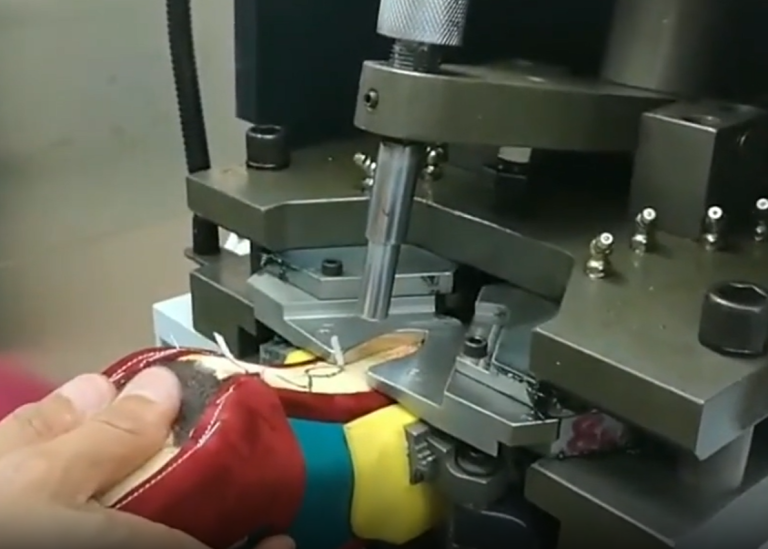
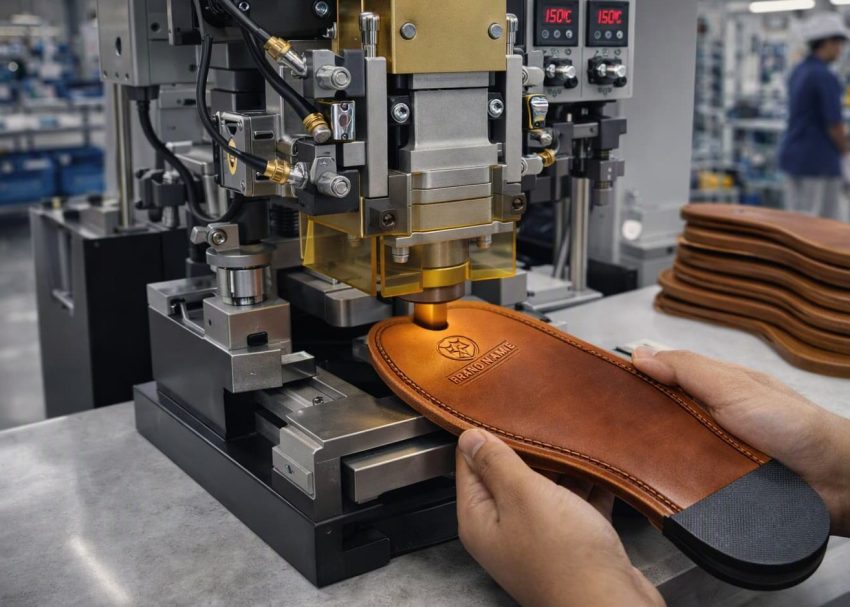
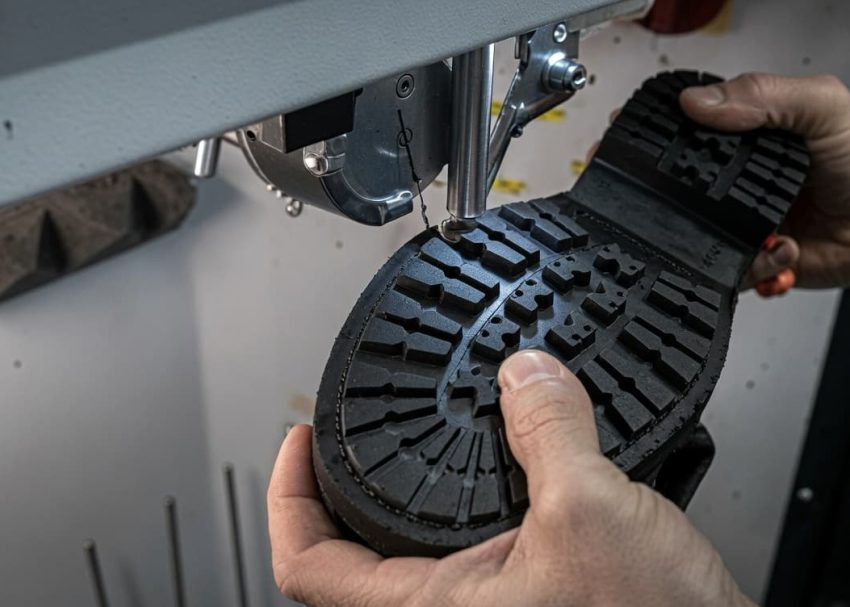
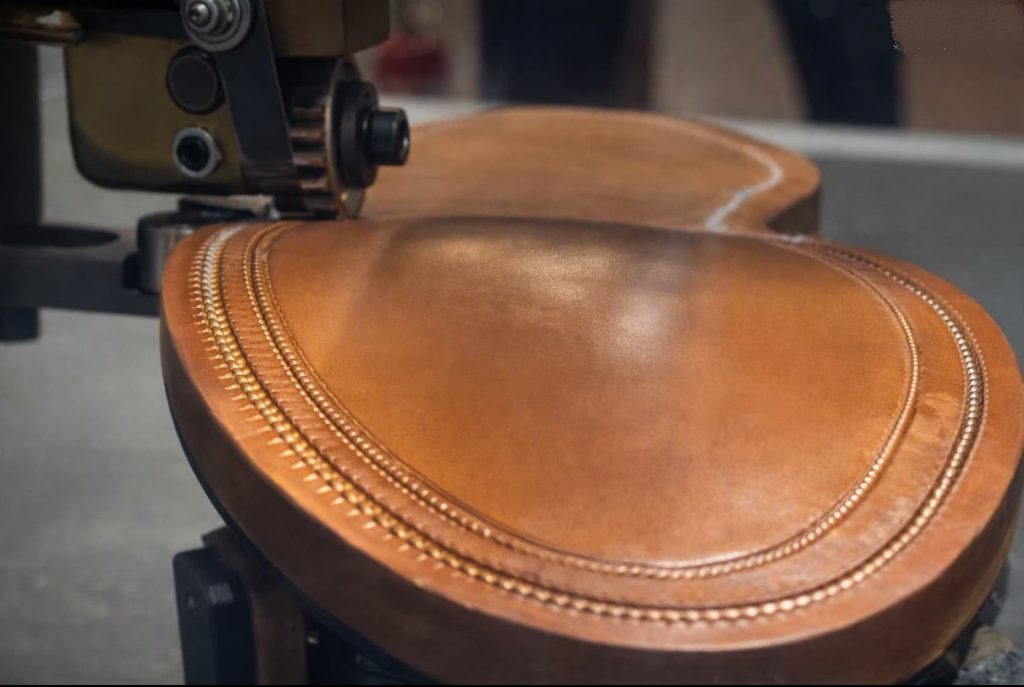
Wheeling is a decorative finishing operation in which a specially designed heated patterned wheel rolls along selected areas of a leather outsole to create a series of uniform impressions. These impressions imitate fine decorative stitching and produce a handcrafted appearance that has long been associated with premium shoemaking.
The operation is performed after outsole stitching and edge preparation but before the final finishing processes such as painting, polishing, or waxing. The patterned wheel is heated to a controlled temperature and pressed against the outsole with consistent pressure while following a predetermined guide line.
Unlike stitching, wheeling does not penetrate the leather or join components together. Instead, it embosses the surface to produce clean, decorative grooves that complement the shoe’s overall design.
Today, wheeling remains widely used in luxury men’s dress shoes, formal leather footwear, premium boots, handcrafted shoes, and bespoke collections where visual detail plays an important role in customer perception.
Expert Tip:
Heat the Wheel Gradually: Allow the wheel to reach operating temperature before production begins. Sudden overheating may discolor the leather surface and produce inconsistent impressions.
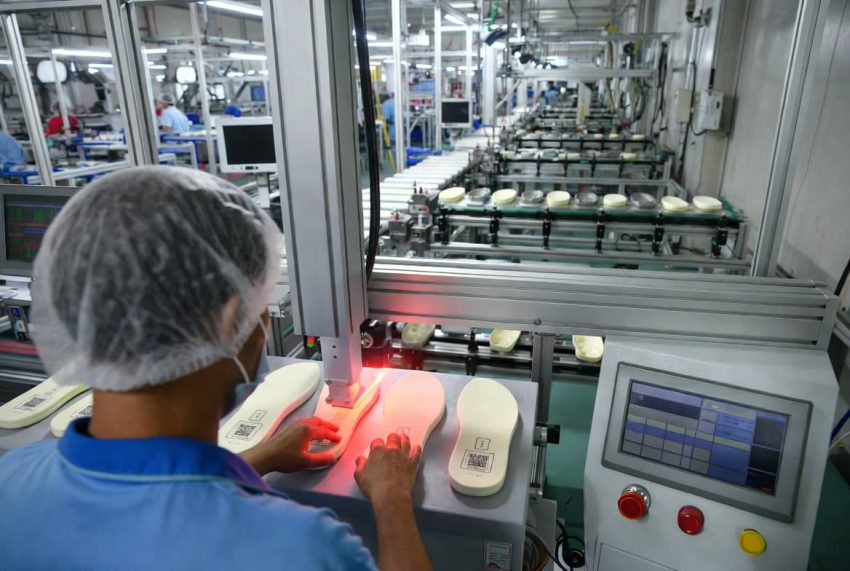
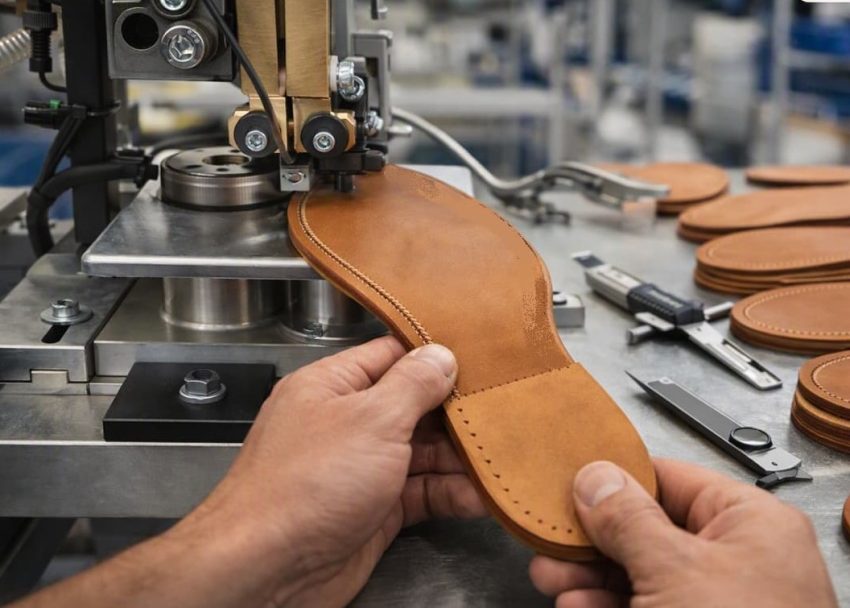
Why Wheeling is Used in Premium Footwear
Footwear manufacturers invest considerable effort in creating products that communicate quality before the customer even wears the shoe. Decorative outsole detailing is one of the subtle elements that differentiates luxury footwear from standard commercial products.
Wheeling adds visual depth to the outsole by producing precise decorative impressions that resemble carefully executed hand stitching. As a result, the outsole appears more refined and handcrafted, even though the operation is completed using specialized equipment.
Moreover, wheeling improves product consistency compared to purely manual decorative techniques. Skilled operators can reproduce identical decorative patterns across thousands of pairs while maintaining the premium appearance expected by luxury footwear brands.
Another advantage is its compatibility with various finishing processes. The embossed pattern remains visible after edge painting, waxing, polishing, and final finishing, allowing manufacturers to create sophisticated outsole designs without increasing assembly complexity.
Major Benefits
- Creates a premium handcrafted appearance.
- Enhances luxury product aesthetics.
- Produces decorative stitch-like impressions.
- Improves visual consistency between pairs.
- Increases perceived product value.
- Supports premium brand positioning.
- Complements edge painting and polishing.
- Suitable for formal leather footwear.
Expert Tip:
Standardize Operating Speed: A constant rolling speed produces more uniform decorative patterns than frequent acceleration or stopping during wheeling.
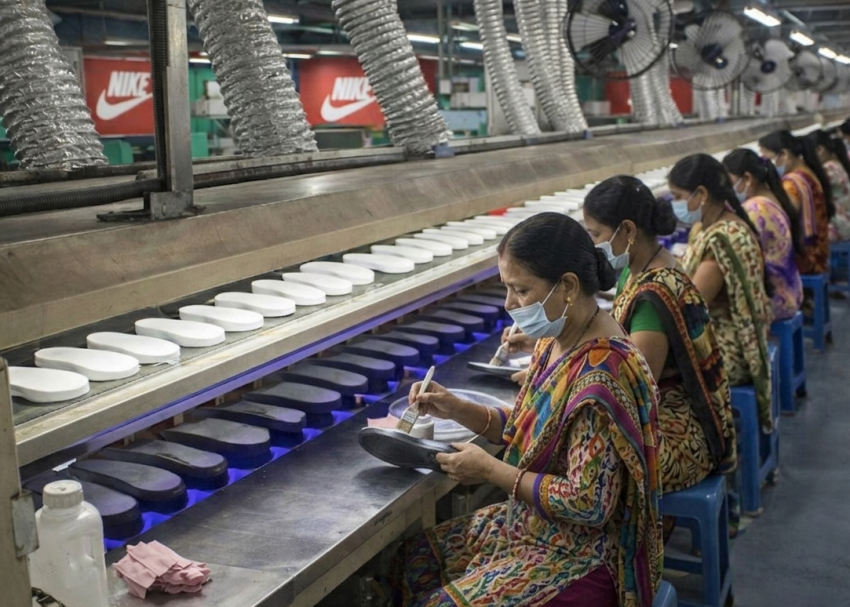
Types of Decorative Wheeling Patterns
Different footwear brands use specific wheeling patterns to establish their own design identity. The wheel profile determines the final decorative appearance, while the spacing and impression depth influence how prominent the pattern appears after finishing. Manufacturers typically select wheel designs according to shoe style, outsole thickness, leather type, and customer specifications.
Fine Stitch Pattern
This is the most widely used decorative pattern in premium dress shoes. Closely spaced impressions create the appearance of fine hand stitching around the outsole edge, delivering an elegant and refined finish.
Heavy Decorative Pattern
Some luxury boots and heritage footwear require larger, deeper decorative impressions to emphasize traditional craftsmanship. These wheels feature wider tooth spacing and create a more pronounced visual effect.
Smooth Decorative Line
Certain minimalist footwear collections use smooth rolling wheels to emboss subtle continuous decorative lines instead of stitch-like impressions. This style creates a clean and modern appearance while preserving the premium finish.
Custom Brand Patterns
Luxury brands occasionally develop proprietary wheeling wheels with exclusive decorative profiles. These customized wheels become part of the brand’s visual identity and help differentiate products in the marketplace.
Expert Tip:
Inspect the First Five Pairs: Always approve the first production samples before full-scale manufacturing to verify impression depth, alignment, and pattern quality.
Complete Wheeling Operation Procedure
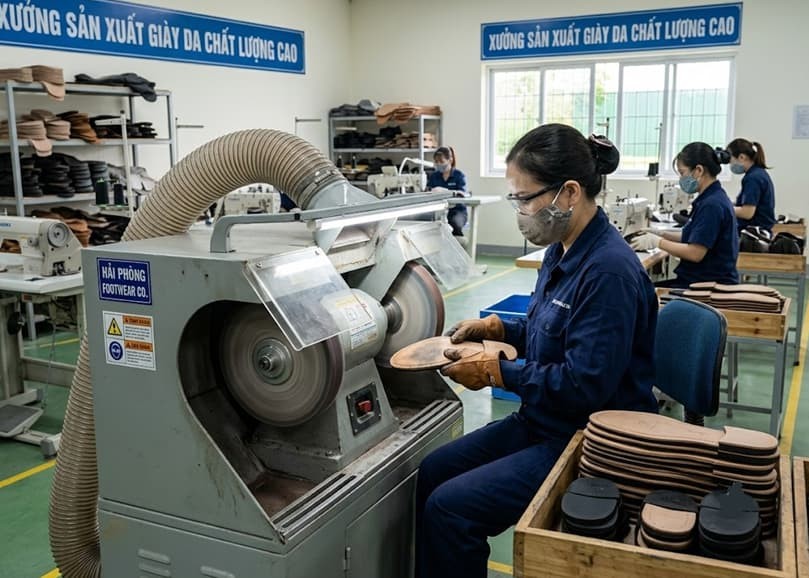
Achieving a premium wheeling finish requires more than simply rolling a heated wheel along the outsole edge. The operator must control temperature, pressure, alignment, and rolling speed simultaneously to create crisp, uniform impressions without damaging the leather. Even small variations can result in inconsistent decorative patterns that are immediately noticeable on premium footwear. Most factories develop standardized operating procedures (SOPs) that specify machine settings, inspection checkpoints, and acceptable quality standards.
This ensures every operator produces identical decorative results regardless of production volume.
Inspect the Leather Outsole
Before wheeling begins, inspect the outsole thoroughly to ensure it is suitable for decorative embossing. Any scratches, loose fibers, glue contamination, stitching defects, or uneven edge finishing will become more visible after wheeling.
The outsole should also be clean and free from dust, polishing compounds, wax residue, or moisture. A clean surface allows the heated wheel to produce sharp, consistent impressions.
Expert Tip:
Replace Worn Wheels Early: Even slight wear on the wheel teeth can reduce pattern sharpness. Scheduled replacement maintains decorative consistency throughout production.
Select the Correct Decorative Wheel
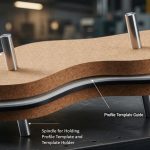
Different footwear models require different wheel profiles depending on customer specifications. The wheel tooth spacing, profile depth, and diameter determine the final decorative appearance. Before production, verify that the installed wheel matches the approved production sample and technical specification sheet. Using the wrong decorative wheel may not affect shoe performance, but it can lead to customer rejection due to aesthetic non-conformance.
Set Wheel Temperature
Temperature is one of the most critical process parameters in wheeling. The heated wheel softens the leather surface slightly, allowing the decorative pattern to form cleanly without tearing the material. If the wheel temperature is too low, impressions become shallow and inconsistent. Conversely, excessive heat can burn, darken, or glaze the leather surface, permanently damaging the outsole. Factories usually determine the optimum temperature through production trials for each leather type and finish.
Typical Temperature Guide
| Leather Type | Typical Wheel Temperature |
|---|---|
| Vegetable-tanned leather | 70–90°C |
| Chrome-tanned leather | 60–80°C |
| Finished leather | 55–75°C |
| Premium polished leather | As approved during trials |
Actual settings depend on leather thickness, finish, moisture content, and machine design
Expert Tip:
Keep the Wheel Clean: Leather residue gradually accumulates on the wheel teeth, reducing pattern sharpness. Clean the wheel at scheduled intervals without damaging the decorative profile.
Decorative Wheeling Operation
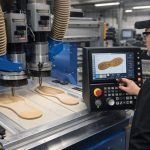
Once the machine is properly adjusted, position the outsole firmly against the guide while ensuring the decorative wheel follows the specified wheeling path. The operator should maintain a smooth, continuous movement without hesitation or sudden changes in speed.
Uniform rolling pressure is equally important. Excessive pressure creates deep impressions that appear uneven, whereas insufficient pressure produces faint decorative marks. Skilled operators develop a consistent rhythm that maintains identical impressions throughout the entire outsole perimeter.
Complex outsole shapes, particularly around the waist and toe areas, require slower and more controlled wheel movement to maintain alignment without distorting the decorative pattern.
Expert Tip:
Standardize Machine Settings: Document approved temperature, pressure, rolling speed, and wheel profile for every footwear style to minimize operator variation.
Machine Settings and Process Parameters
Although machine designs differ among manufacturers, the following process parameters are commonly monitored in premium footwear factories. These values should always be validated through production trials and customer approvals.
| Parameter | Typical Range |
|---|---|
| Wheel Temperature | 75–110°C |
| Rolling Speed | Smooth, continuous movement |
| Pressure | Moderate and uniform |
| Wheel Alignment | Parallel to outsole edge |
| Impression Depth | Customer specification |
| Operator Feed | Steady without interruption |
Note: Actual settings vary according to leather grade, outsole thickness, wheel profile, and machine manufacturer.
Expert Tip:
Use Sample Pieces Before Production: Run several trial impressions on scrap leather whenever changing wheel patterns, leather suppliers, or machine settings..

Common Wheeling Defects
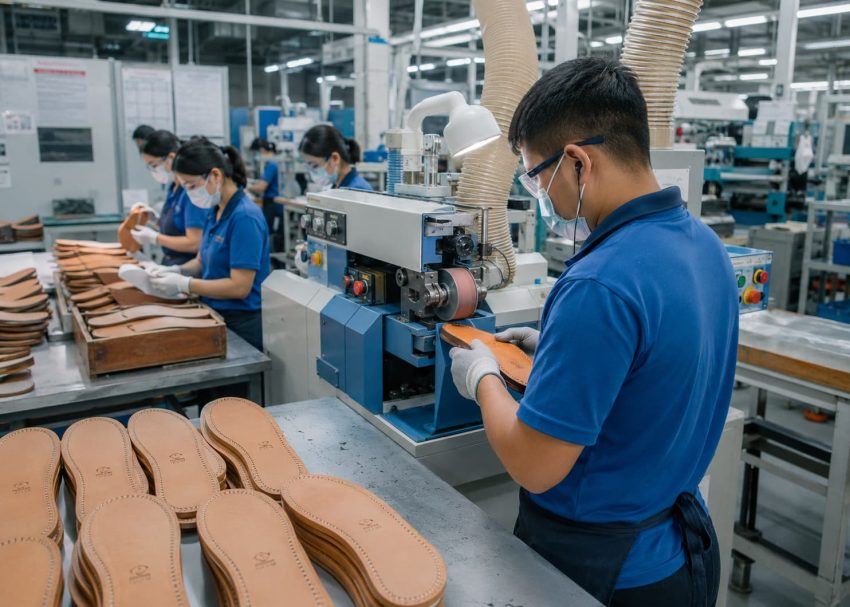
Decorative wheeling is highly visible on premium footwear. Therefore, even minor imperfections can reduce perceived product quality. Early detection and corrective action prevent large-scale cosmetic rejection.
Uneven Impressions
Uneven decorative impressions usually result from inconsistent pressure, irregular operator movement, or fluctuating wheel temperature. The pattern may appear deeper in some areas and lighter in others.
Possible Causes
- Uneven rolling pressure
- Variable operating speed
- Worn decorative wheel
- Improper machine adjustment
Corrective Actions
- Standardize operator technique.
- Replace worn wheels.
- Verify machine calibration.
- Maintain constant temperature.
Burn Marks
Burn marks occur when excessive wheel temperature or prolonged contact scorches the leather surface. These defects are difficult to repair and often require outsole replacement.
Possible Causes
- Excessive temperature
- Slow rolling speed
- Dirty heated wheel
- Thin leather material
Corrective Actions
- Reduce temperature.
- Increase rolling speed slightly.
- Clean the wheel regularly.
- Validate settings before production.
Inconsistent Decorative Pattern
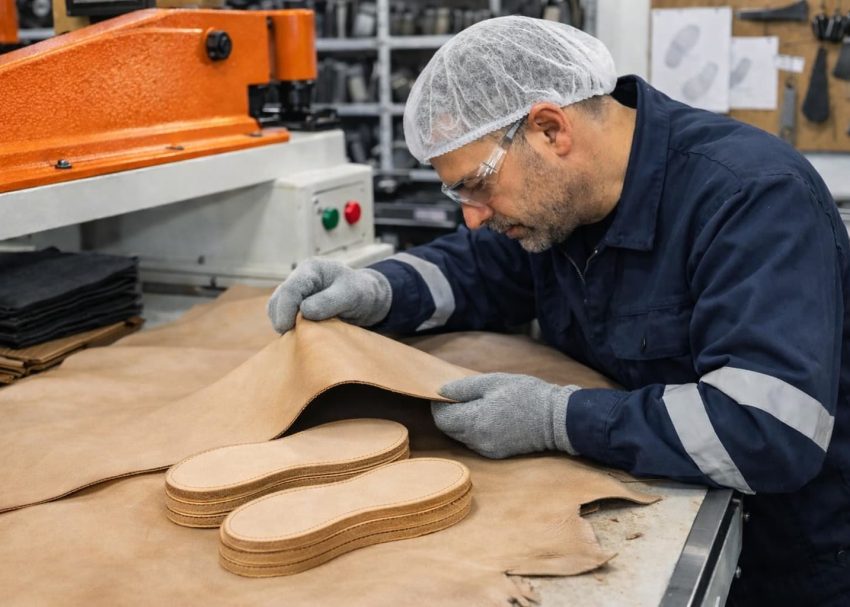
Pattern inconsistency appears when impression spacing changes around the outsole or when wheel teeth fail to contact the surface evenly.
Possible Causes
- Damaged wheel teeth
- Leather thickness variation
- Machine vibration
- Operator interruption
Corrective Actions
- Replace damaged wheel.
- Improve material inspection.
- Check machine stability.
- Maintain continuous movement.
Pattern Misalignment
Misalignment is one of the most noticeable cosmetic defects in premium footwear. Decorative impressions that drift away from the intended guide line immediately reduce the handcrafted appearance.
Possible Causes
- Incorrect positioning
- Guide misalignment
- Improper outsole handling
Corrective Actions
- Improve fixture alignment.
- Train operators.
- Use visual guide marks.
Quality Inspection of Wheeled Outsoles
Quality inspection should be carried out immediately after wheeling to identify defects before subsequent finishing operations. Since edge painting and polishing can partially mask defects, early inspection significantly reduces rework costs.
Inspectors should compare each outsole with the approved master sample under standardized lighting conditions. Attention should be given to impression depth, spacing, alignment, edge cleanliness, and overall decorative appearance.
For premium brands, cosmetic acceptance standards are often stricter than dimensional tolerances because decorative quality directly influences customer perception.
Inspection Checklist
- Uniform decorative impressions
- Correct pattern spacing
- No burn marks
- Proper alignment
- Smooth rolling continuity
- Clean leather surface
- No scratches or dents
- Approved decorative appearance
Process Control Checklist
Maintaining consistent wheeling quality depends on controlling every variable rather than correcting defects afterward. A preventive approach improves efficiency and reduces cosmetic rejection.
| Process Stage | Control Requirement |
|---|---|
| Leather Inspection | Clean, defect-free surface |
| Wheel Selection | Correct profile installed |
| Temperature | Within approved range |
| Pressure | Uniform throughout operation |
| Rolling Speed | Continuous and steady |
| Alignment | Follow designated guide line |
| Final Inspection | Compare with approved sample |

Conclusion
Decorative wheeling is one of the defining characteristics of premium leather footwear. Although it does not contribute to the structural performance of the shoe, it significantly enhances craftsmanship, visual appeal, and perceived product quality. A precisely executed wheeling pattern reflects the attention to detail expected in high-end footwear manufacturing and reinforces a brand’s commitment to excellence.
Consistent wheeling quality depends on controlling several process variables, including wheel temperature, rolling pressure, alignment, operating speed, and wheel condition.
Furthermore, standardized operating procedures, routine equipment maintenance, and regular quality inspections help manufacturers achieve uniform decorative impressions across every production batch.
As footwear consumers increasingly value craftsmanship and premium finishing, decorative wheeling remains an essential operation for manufacturers producing luxury dress shoes, heritage boots, and handcrafted leather footwear.
In the next article, we will explore Painting Operations in Outsole Process, covering edge painting methods, paint selection, application techniques, drying parameters, common defects, and quality control practices that give premium leather footwear its refined finished appearance.

Frequently Asked Questions (FAQs)
Wheeling is a decorative finishing process that embosses stitch-like impressions along the leather outsole edge to create a premium handcrafted appearance. It enhances aesthetics rather than structural strength.
No. Wheeling is purely decorative. It does not improve bonding strength, stitching strength, or the mechanical durability of the outsole.
Wheeling is most commonly found on premium leather dress shoes, Goodyear welted footwear, Blake stitched shoes, luxury boots, and bespoke footwear.
Burn marks typically result from excessive wheel temperature, slow rolling speed, prolonged contact with the leather surface, or poor temperature control.
Correct temperature allows the leather surface to emboss cleanly. Temperatures that are too low produce shallow impressions, while excessive heat can scorch or glaze the leather.
Replacement depends on production volume and wear. Wheels should be changed when tooth profiles become rounded or when decorative impressions lose sharpness and consistency.
Pattern misalignment and uneven impression depth are among the most common defects. These usually result from inconsistent operator technique, incorrect alignment, or worn tooling.