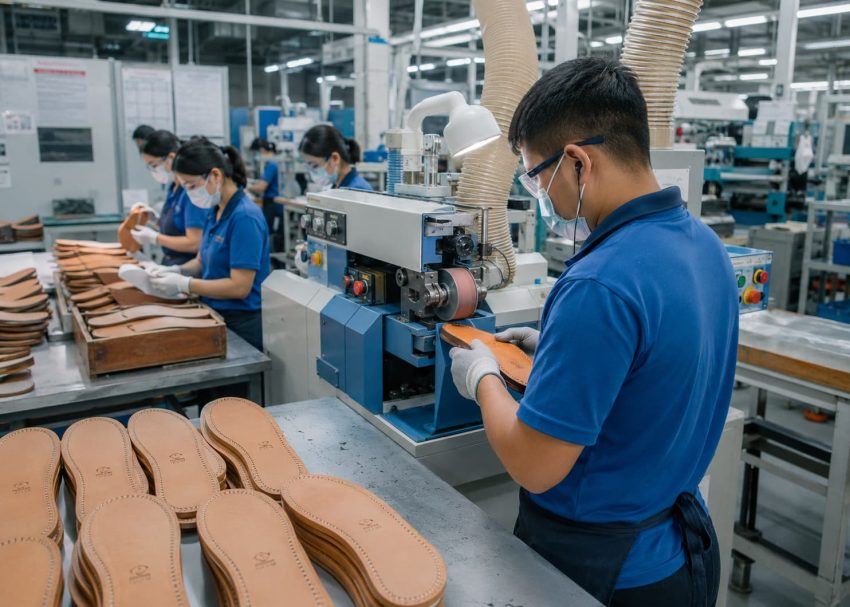
Snuffing Operations in Outsole Process: Outsole (Stock Fitting) Assembly Series
In the previous article, Splitting and Levelling in Outsole Process, we explained how leather outsoles are brought to a uniform thickness before entering the finishing stage. Although thickness consistency is essential, premium leather outsoles also require a uniform surface to achieve high-quality coloring and appearance.
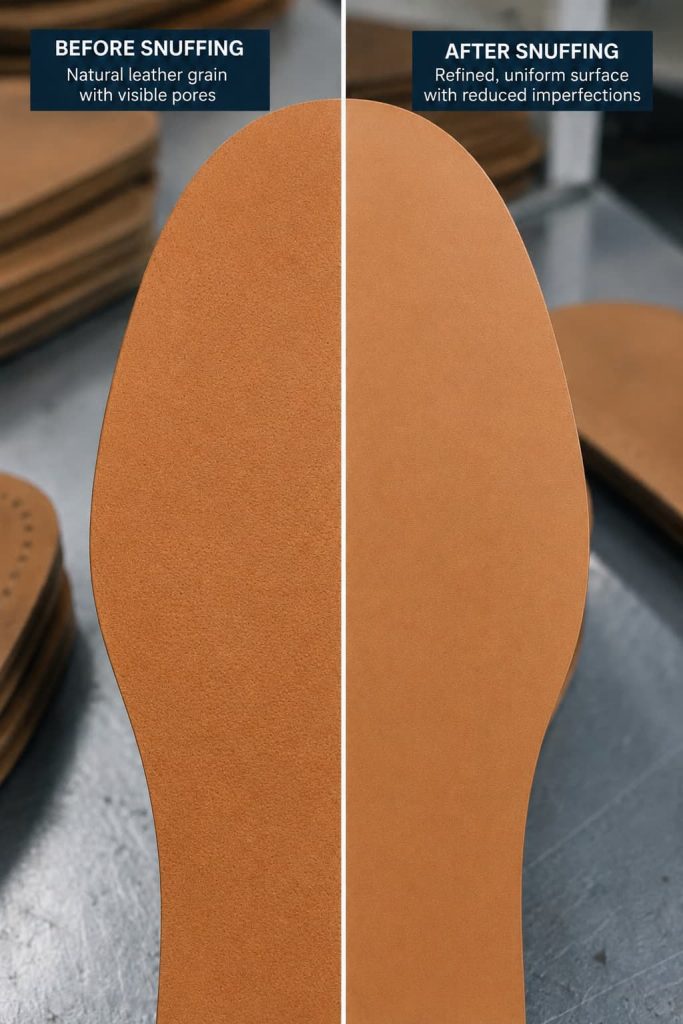
This is where snuffing becomes an important preparation process. Snuffing is a controlled abrasion operation that lightly removes part of the leather grain using fine abrasives. The objective is not to reduce thickness but to create a smoother, cleaner, and more consistent surface for dyeing and finishing.
When performed correctly, snuffing improves dye absorption, minimizes natural leather variations, conceals minor surface imperfections, and produces the premium appearance expected in quality footwear. However, excessive abrasion can permanently damage the leather grain. Therefore, machine settings, abrasive selection, and operator skill are equally important.
This article explains the complete snuffing process, recommended abrasive grits, machine types, quality controls, and common defects followed by modern footwear manufacturers.

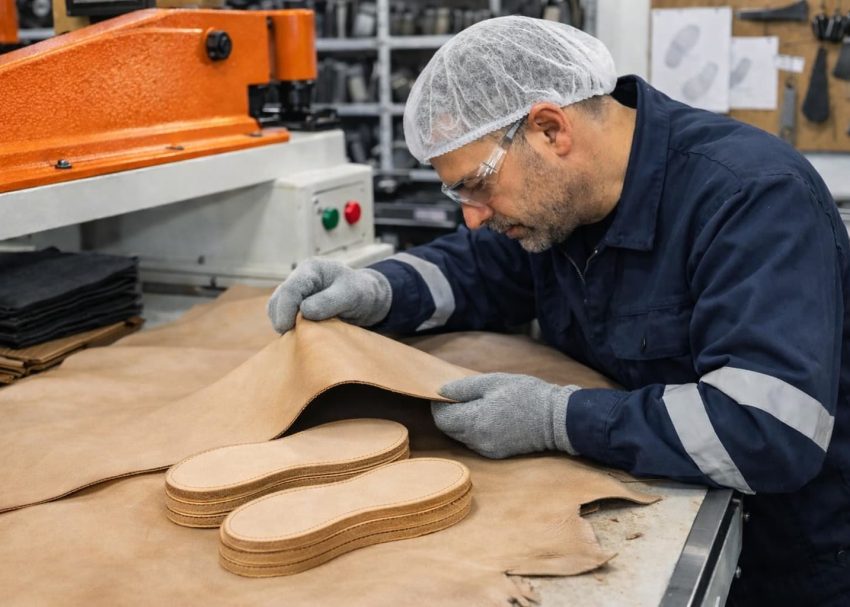
What is Snuffing?
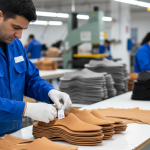
Snuffing is a precision surface-finishing process used primarily on genuine leather outsoles before bottom coloring or decorative finishing. Fine abrasive belts, emery papers, or finishing wheels gently abrade only the outermost grain layer without affecting the outsole dimensions.
Unlike roughing, which improves adhesive bonding, snuffing is performed to enhance appearance. It creates a more uniform leather texture, allowing dyes to penetrate evenly and resulting in better color consistency. Most premium formal shoes, luxury leather footwear, and handcrafted leather outsoles undergo snuffing before coloring.
Key Control Points
- Inspect every production batch under standard lighting.
- Remove only the minimum grain required.
- Maintain consistent machine pressure.
- Use suitable abrasive grit.
Expert Tip: Use daylight-balanced LED lighting during inspection to detect subtle surface variations before coloring.


Why is Snuffing Important?
Although only a microscopic layer of leather is removed, snuffing has a significant influence on the final product.
The process:
- Improves dye penetration into the leather.
- Produces more uniform bottom coloring.
- Conceals minor grain imperfections.
- Creates a smooth, premium surface finish.
- Reduces shade variation between production batches.
- Minimizes finishing rework and rejection.
Without proper snuffing, the outsole may develop blotchy coloring, uneven texture, or visible grain defects that become more noticeable after finishing.
Key Control Points
- Verify surface consistency before coloring.
- Compare with approved reference samples.
- Reject heavily damaged leather before snuffing.
- Record inspection results for traceability.
Expert Tip: Store abrasive belts in a clean, dry area to maintain their cutting performance.

Abrasive Materials and Recommended Grit Selection
Choosing the correct abrasive grit is the most important factor in achieving a consistent surface finish. A grit that is too coarse may scratch or weaken the leather, while an excessively fine grit may not sufficiently prepare the surface for dyeing. The table below shows commonly used grit ranges in leather outsole manufacturing.
| Grit Size | Typical Application | Surface Finish |
|---|---|---|
| 120–180 | Heavy stock removal, correcting major surface irregularities (rarely used for premium outsole snuffing) | Rough |
| 220–240 | Initial surface preparation on corrected-grain leather or rough leather surfaces | Medium |
| 280–320 | Standard snuffing for most leather outsoles before coloring | Uniform matte finish |
| 360–400 | Premium leather surface refinement with minimal material removal | Smooth finish |
| 500–600 | Luxury formal footwear requiring fine cosmetic preparation | Very smooth finish |
| 800 | Light finishing before decorative dyeing or polishing | Satin finish |
| 1000–1200 | Ultra-fine polishing and cosmetic blending on premium leather; generally used as the final finishing stage rather than for primary snuffing | Silk-like finish |
Factory Note: Most footwear factories performing standard snuffing use 280–400 grit abrasive belts. Grits above 600 are generally reserved for luxury or handcrafted leather products where exceptional surface appearance is required.
Common abrasive materials include:
- Fine emery paper
- Aluminium oxide abrasive belts
- Silicon carbide abrasive belts
- Non-woven abrasive pads
- Surface-finishing wheels
Key Control Points
- Select grit according to leather grade.
- Replace worn abrasive belts promptly.
- Avoid mixing abrasive grades on the same production order.
- Conduct trial samples before mass production.
Expert Tip: Avoid mixing abrasive grit sizes within the same production batch.

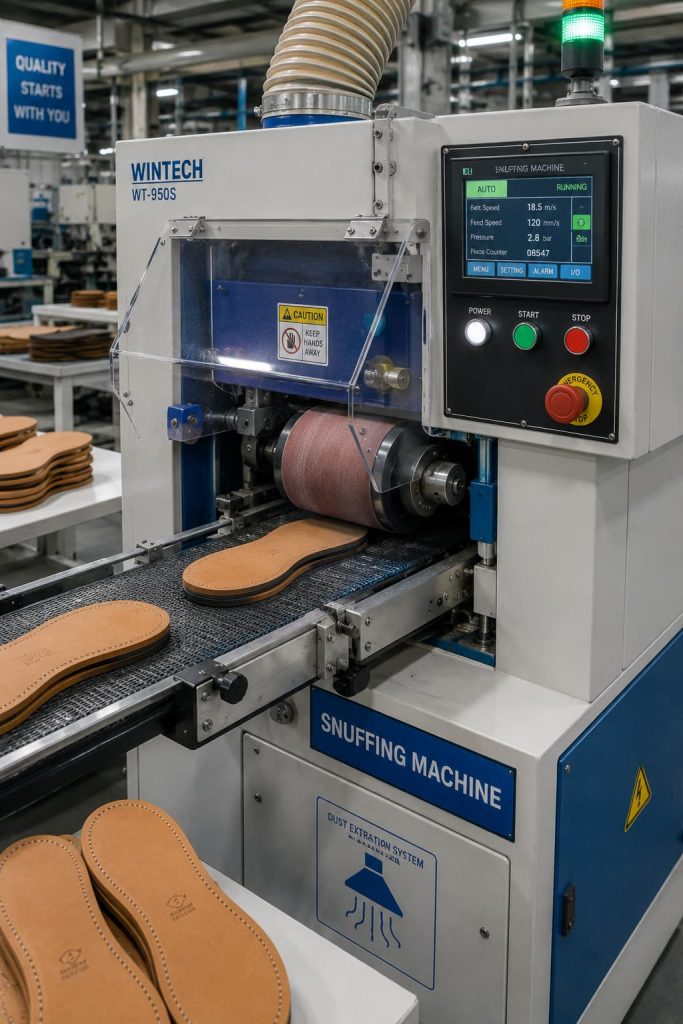
Snuffing Machines Used in Footwear Factories
Machine selection depends on production volume and the required finish.
Manual Snuffing
Used mainly by luxury or handmade footwear manufacturers. Operators use fine emery sheets or abrasive pads for maximum control.
Rotary Finishing Machine
Uses abrasive wheels instead of belts. It is suitable for curved outsole profiles and decorative edge finishing.
Belt Snuffing Machine
The most common industrial solution. A rotating abrasive belt provides uniform abrasion and high production efficiency. Variable speed controls help maintain consistent quality.
Oscillating Finishing Machine
An oscillating motion reduces directional sanding marks and produces a more uniform cosmetic finish, making it ideal for premium leather outsoles. All modern machines should include an effective dust extraction system to remove leather particles, improve visibility, and protect operator health.
Key Control Points
- Check belt alignment before production.
- Ensure dust extraction is functioning.
- Calibrate machine pressure regularly.
- Replace damaged abrasive belts immediately.
Expert Tip: Run a sample after every belt replacement to confirm the desired surface finish.

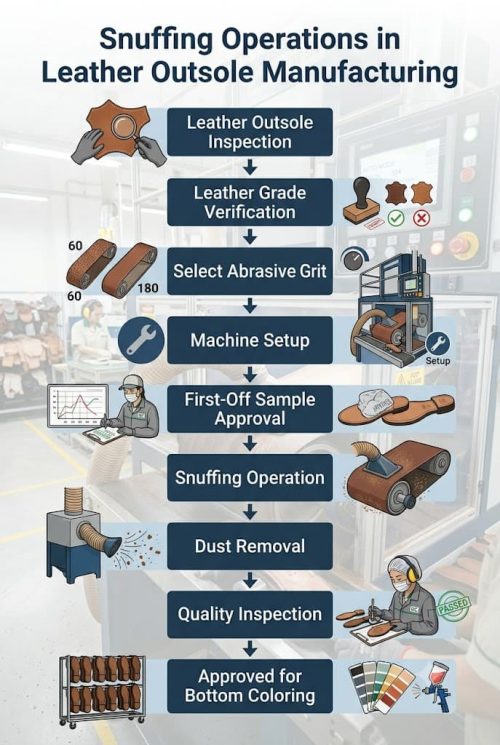
Step-by-Step Snuffing Process
The snuffing operation follows a standardized workflow to achieve consistent results.
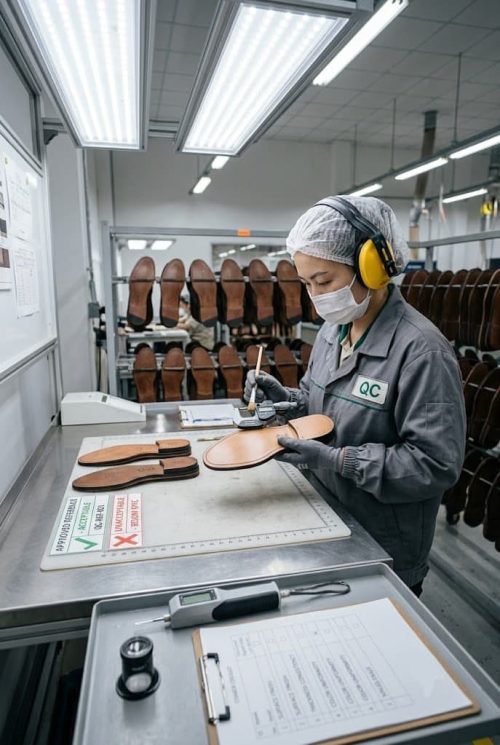
- Inspect the leather outsole for grain defects, thickness consistency, and cleanliness.
- Select the correct abrasive grit according to leather type and required finish.
- Set machine parameters, including belt speed, pressure, and feed rate.
- Perform trial samples and obtain first-off approval from quality control.
- Snuff the outsole using uniform pressure and consistent feed speed.
- Remove leather dust through an extraction system and clean the surface.
- Inspect the finished outsole under standardized lighting for texture, scratches, and surface consistency.
- Transfer approved outsoles to the bottom coloring process.
Maintaining consistent pressure and avoiding repeated passes are essential. Excessive abrasion can permanently damage the grain layer and reduce the value of premium leather.
Key Control Points
- Inspect surfaces throughout production.
- Approve first-off samples before mass production.
- Maintain constant feed speed.
- Avoid excessive pressure.
Pro Tip: Clean leather dust frequently because accumulated dust can reduce abrasive efficiency and affect inspection accuracy.

Common Defects During Snuffing and Their Prevention
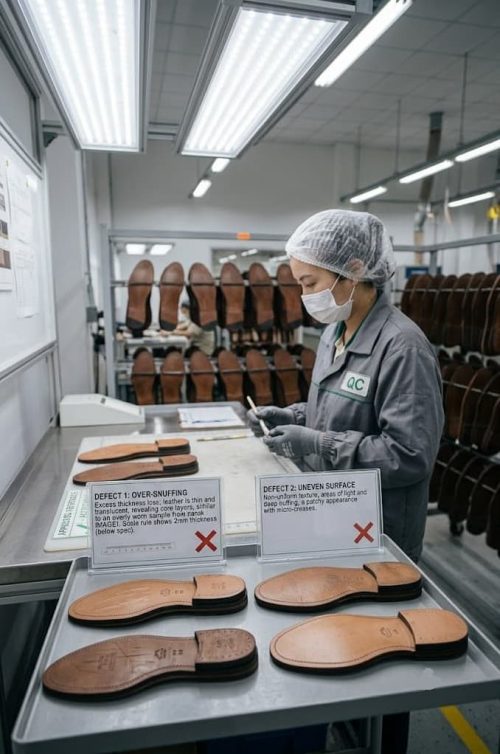
Even though snuffing is a controlled surface-finishing process, poor machine settings, worn abrasives, or inconsistent handling can create defects that become more noticeable after bottom coloring. Early detection and corrective action help reduce scrap, rework, and customer complaints.
| Defect | Likely Cause | Prevention |
|---|---|---|
| Over-Snuffing | Excessive pressure, coarse grit, repeated passes | Use the recommended grit, maintain consistent pressure, and avoid unnecessary reworking. |
| Uneven Surface | Uneven belt wear, incorrect feed speed, inconsistent operator handling | Replace worn belts, calibrate the machine regularly, and maintain a steady feed rate. |
| Excess Material Removal | Coarse abrasive or prolonged contact with the belt | Select the correct grit and monitor material removal during first-off inspection. |
| Surface Scratches | Damaged abrasive belt, trapped dust or foreign particles | Keep machines clean and replace damaged abrasives immediately. |
| Poor Dye Absorption | Incomplete snuffing or inconsistent surface preparation | Ensure uniform abrasion before transferring the outsole to the coloring process. |
Key Control Points
- Record recurring defects to support continuous improvement.
- Inspect abrasive belts before every shift.
- Stop production if unusual surface defects appear.
- Compare production samples with the approved master sample.
Pro Tip: Maintain approved reference samples for every outsole style to ensure consistency between production lots.


Best Practices for Consistent Snuffing Quality
High-quality leather outsoles are achieved through standardized processes rather than operator experience alone. Successful factories establish clear operating procedures and monitor every production batch.
Some recommended practices include:
- Group similar leather grades before production.
- Use approved abrasive grit for each leather type.
- Perform first-off inspection before mass production.
- Replace abrasive belts according to machine hours instead of waiting for visible wear.
- Maintain effective dust extraction to improve both product quality and workplace safety.
- Record machine settings for repeat production orders.
- Train operators to recognize early signs of over-snuffing and uneven abrasion.
- Schedule preventive maintenance for rollers, bearings, and pressure mechanisms.


Conclusion
Snuffing is a small but essential operation in leather outsole manufacturing.
By lightly refining the leather grain, it prepares the surface for uniform dye absorption, improves color consistency, and enhances the premium appearance of finished footwear. Although only a minimal amount of material is removed, the process has a significant impact on the final product.
Consistent results depend on selecting the correct abrasive grit, maintaining proper machine settings, inspecting production regularly, and following standardized operating procedures. When these controls are applied effectively, manufacturers can reduce defects, improve productivity, and deliver leather outsoles that meet the high quality standards expected in today’s footwear industry.
Continue Reading the Series
The next article in the Outsole (Stock Fitting) Assembly Series is: Bottom Coloring in Outsole Process: Outsole (Stock Fitting) Assembly Series
Frequently Asked Questions (FAQs)
Snuffing prepares the leather surface for coloring by improving dye absorption, creating a more uniform texture, and reducing the visibility of minor natural grain imperfections.
No. Snuffing is primarily used for genuine leather outsoles. Synthetic materials such as TPU, TPR, PU, PVC, EVA, and rubber generally do not require this process.
Most footwear factories use 280–400 grit abrasives for standard snuffing. Premium leather products may require 500–600 grit, while 1000–1200 grit is typically reserved for ultra-fine cosmetic finishing.
Over-snuffing removes too much of the leather grain, leading to surface damage, reduced durability, uneven appearance, and poor finishing quality. In many cases, the outsole cannot be fully recovered.
Replacement depends on machine usage, leather type, and production volume. Many factories replace belts based on operating hours and surface quality rather than waiting for visible wear.
Dust extraction removes leather particles, improves operator visibility, extends abrasive life, reduces contamination before coloring, and provides a cleaner and safer working environment.
Posts you make Like

Troubleshooting Adhesive Bond Failures in Footwear Manufacturing…