Smart Cutting Machines in Footwear Manufacturing: AI-Powered Digital Cutting Guide
The footwear industry has always been highly competitive, but the challenges facing manufacturers today are greater than ever before. Brands demand shorter development cycles, frequent style changes, improved quality consistency, reduced material waste, and greater sustainability. At the same time, rising labor costs and increasing pressure on profit margins are forcing factories to seek smarter and more efficient manufacturing solutions.
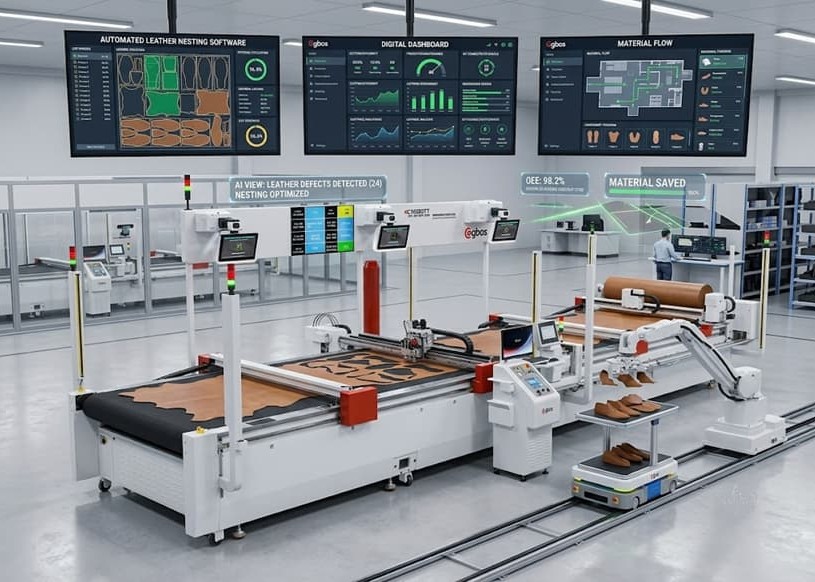
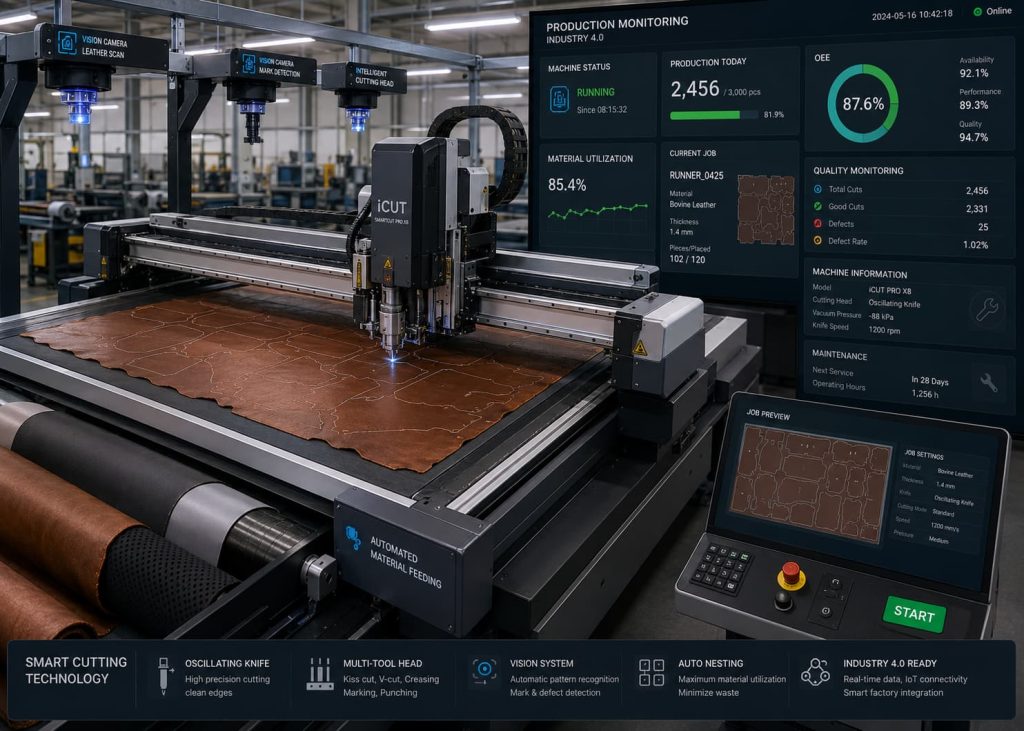
One of the most significant technological advancements supporting this transformation is the adoption of Smart Cutting Machines. Unlike conventional cutting equipment, modern smart cutting systems combine artificial intelligence (AI), machine vision, digital leather scanning, intelligent nesting software, automated cutting technology, and Industry 4.0 connectivity into a single integrated platform.
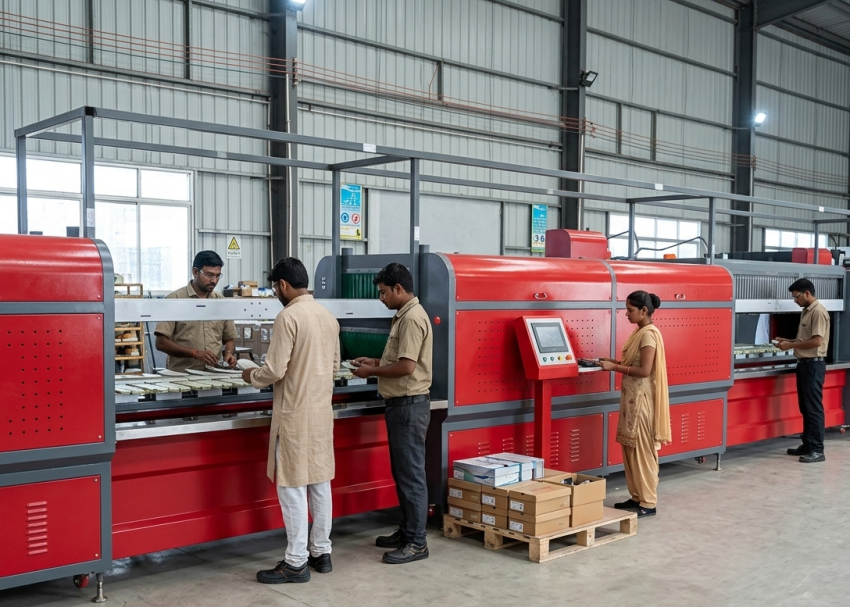
For many years, footwear factories relied on steel-rule dies and manual material planning to cut leather, synthetic materials, mesh, foam, and reinforcement components. While these methods remain common, they present several limitations, particularly when factories handle multiple styles, frequent design revisions, and smaller production runs. Every style change requires new dies, additional storage space, and extra lead time. Material utilization often depends heavily on operator skill, and traceability is limited.
Smart cutting technology addresses these challenges by creating a digital cutting environment where materials are scanned, analyzed, optimized, and cut with minimal manual intervention. As a result, factories can improve material utilization, reduce operational costs, accelerate development timelines, and increase manufacturing flexibility.

The Evolution of Footwear Cutting Technology
The journey from manual cutting to intelligent cutting reflects the broader evolution of footwear manufacturing itself. Each generation of cutting technology has focused on improving productivity, accuracy, and cost efficiency.
In the early days of footwear production, cutting was entirely manual. Skilled operators used knives and templates to cut leather and upper materials. The quality of the finished components depended heavily on the experience of the cutter. While this method offered flexibility, it was labor-intensive and difficult to standardize.
As production volumes increased, steel-rule die cutting became the industry standard. Dies improved consistency and significantly increased production speed. For decades, die cutting enabled footwear factories to meet growing global demand while maintaining acceptable quality levels.
However, die cutting introduced its own challenges. Every component required a dedicated die. New styles required new tooling investments. Die storage, maintenance, and replacement became ongoing operational costs. Furthermore, the increasing popularity of customized products and shorter product life cycles reduced the efficiency advantages that die cutting once provided.
The next stage of evolution introduced computer-controlled digital cutting systems. These machines eliminated the need for physical dies and allowed factories to cut directly from digital patterns. This represented a major step toward flexible manufacturing.
Key Points
- Manual cutting depended heavily on operator skill.
- Die cutting improved productivity but increased tooling costs.
- Digital cutting eliminated physical dies.
- Smart cutting integrates AI and automation.
- Modern factories increasingly view cutting as a digital process rather than a mechanical operation.
Expert Tip: Factories producing more than 20 to 30 new styles per month often experience significant operational benefits when transitioning from traditional die cutting to smart cutting systems.

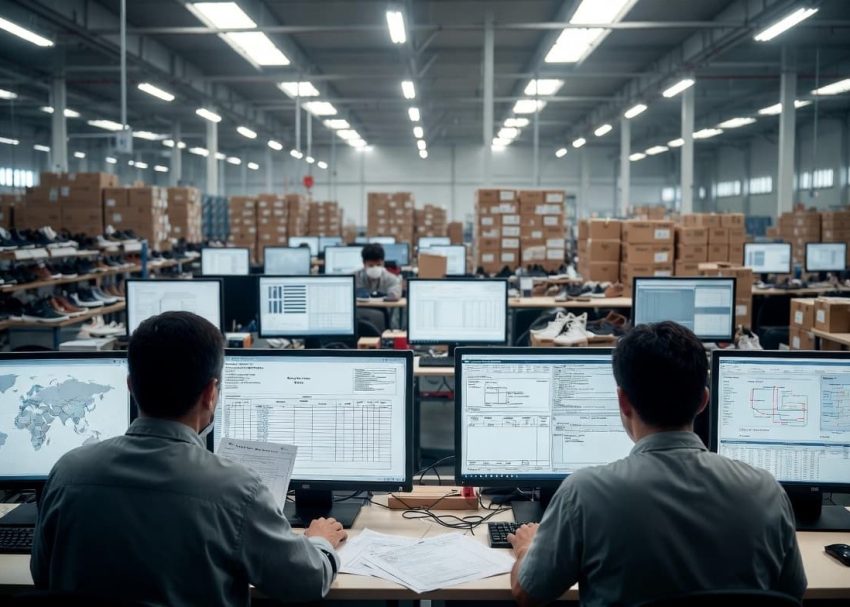
Understanding Smart Cutting Machines
A Smart Cutting Machine is best described as an intelligent manufacturing system rather than a conventional cutting machine. It combines advanced software, sensors, cameras, and automated cutting tools to optimize the entire cutting process.
Unlike traditional systems that simply execute programmed cutting paths, smart cutting systems continuously analyze material characteristics, production requirements, and quality parameters before making cutting decisions. These machines are capable of identifying defects, recognizing material boundaries, optimizing nesting layouts, and generating real-time production data.
The technology is particularly valuable because material costs represent one of the largest expenses in footwear manufacturing. Even small improvements in material utilization can generate substantial annual savings.
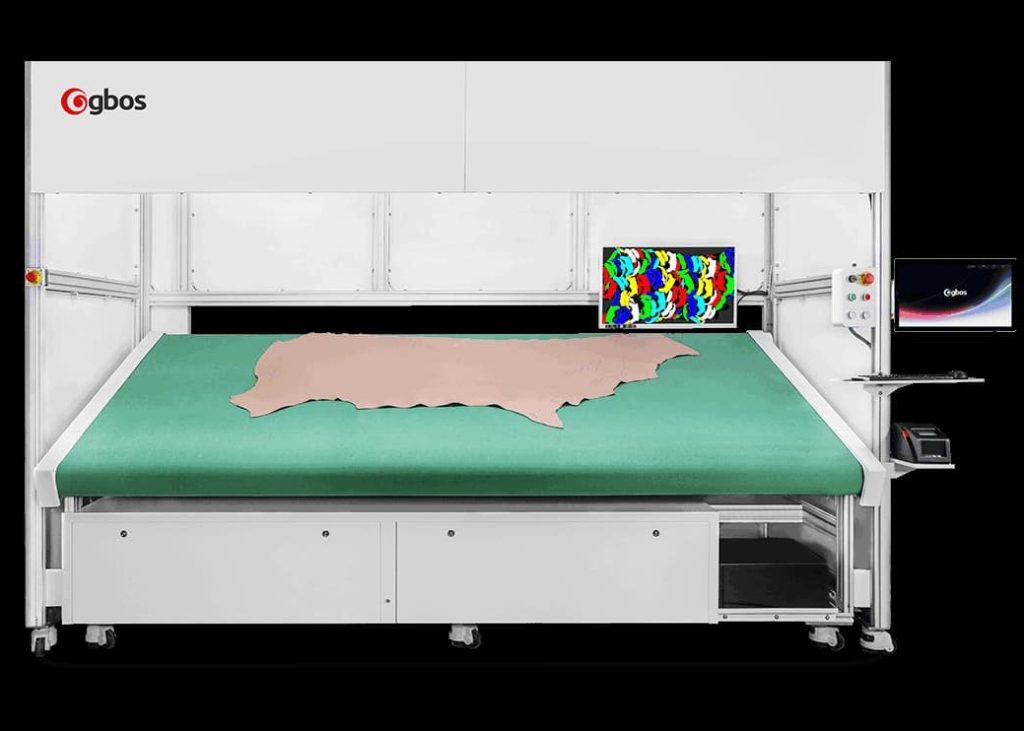
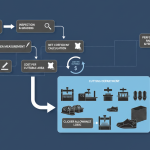
A typical smart cutting environment begins with material digitization. Leather hides or roll materials are scanned and converted into digital representations. AI software then analyzes the material, identifies usable zones, recognizes defects, and generates optimized nesting layouts. The cutting machine receives these instructions and executes highly accurate cutting operations.
Key Points
- Smart cutting combines hardware and software.
- AI assists material optimization.
- Digital workflows improve traceability.
- Material utilization is significantly improved.
- Industry 4.0 integration becomes possible.
Pro Tip: When evaluating a smart cutting machine, focus not only on cutting speed but also on nesting efficiency, software capabilities, and system integration options.

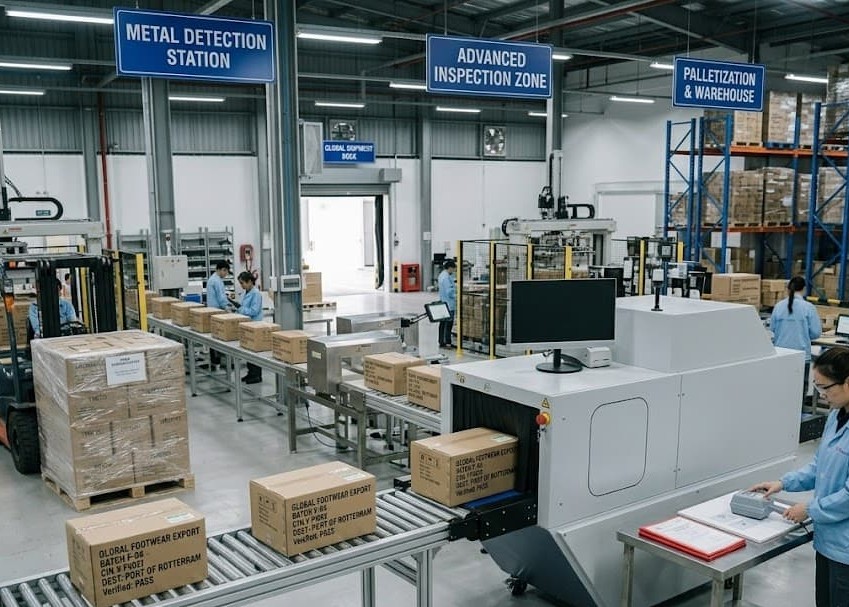
Core Technologies Driving Smart Cutting Systems
The performance of a smart cutting machine depends on several advanced technologies working together. Each technology contributes to higher productivity, better material utilization, and improved quality consistency.
AI Vision Recognition
Artificial intelligence has become one of the most powerful tools in modern footwear manufacturing. Vision recognition systems use cameras and image-processing algorithms to analyze materials before cutting begins.
These systems can identify material boundaries, recognize printed patterns, locate logos, detect defects, and align cutting paths automatically. This reduces the dependence on manual positioning and minimizes the risk of cutting errors. For engineered mesh, printed fabrics, and decorative upper materials, vision recognition technology provides exceptional value because even small alignment errors can result in rejected components.
Key Points
- Automatic pattern recognition
- Improved alignment accuracy
- Reduced cutting errors
- Less operator intervention
- Enhanced product quality
Pro Tip: Vision systems are particularly beneficial when cutting patterned mesh and printed upper materials where alignment accuracy directly impacts product appearance.
Digital Imaging and CCD Cameras
High-resolution CCD cameras serve as the eyes of the smart cutting system. These cameras capture detailed images of materials and provide critical information to nesting software.
The quality of digital imaging directly influences the effectiveness of material optimization. High-resolution scanning allows the software to identify usable areas, avoid defects, and maximize cutting efficiency. Accurate imaging is especially important when processing leather because every hide contains unique characteristics that must be considered during cutting.
Key Points
- High-resolution material imaging
- Better nesting accuracy
- Improved defect identification
- Enhanced traceability
- Consistent cutting performance
Pro Tip: Routine camera calibration ensures consistent scanning accuracy and nesting performance.
Posts you make Like

Troubleshooting Adhesive Bond Failures in Footwear Manufacturing…
Oscillating Knife Technology
Most smart cutting systems use high-speed oscillating knives instead of steel-rule dies. The knife vibrates rapidly while following digitally generated cutting paths. This technology provides exceptional flexibility because new styles can be introduced immediately without requiring physical tooling.
Oscillating knife systems can process a wide variety of materials including leather, synthetic leather, mesh, foam, textiles, TPU components, and reinforcement materials.
For factories producing diverse product portfolios, this flexibility significantly reduces development time and operational complexity.
Key Points
- No die investment required
- Fast style changes
- High cutting precision
- Reduced tooling management
- Increased production flexibility
Pro Tip: Proper blade selection and maintenance are critical for achieving consistent cutting quality across different material types.

Automated Material Feeding
Automated feeding systems ensure consistent material positioning and movement throughout the cutting process. Traditional manual feeding often introduces variations that affect cutting accuracy and productivity. Automated systems eliminate these inconsistencies while reducing operator workload. Advanced feeding systems use sensors to monitor material position continuously and adjust feed rates automatically.
The result is smoother production flow and improved overall equipment efficiency.
Key Points
- Improved material control
- Reduced manual handling
- Higher productivity
- Better cutting accuracy
- Enhanced process stability
Pro Tip: Consistent material tension is one of the most important factors influencing cutting accuracy.

Real-Time Production Monitoring
One of the defining characteristics of smart cutting systems is their ability to generate and analyze production data. Managers can monitor: Material utilization, Cutting efficiency, Production output, Machine downtime, Operator performance.
This visibility allows factories to identify inefficiencies quickly and implement corrective actions before productivity is affected. Data-driven decision making is becoming increasingly important as footwear manufacturers pursue operational excellence and continuous improvement.
Key Points
- Real-time visibility
- Better decision making
- Improved resource planning
- Faster problem resolution
- Enhanced productivity
Pro Tip: The most successful factories use production data not only for reporting but also for proactive process optimization.
Leather Processing Workflow Using Smart Cutting Technology
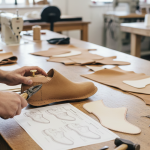
Leather remains one of the most valuable and challenging materials used in footwear manufacturing. Unlike synthetic materials, every hide is unique. Variations in shape, grain structure, thickness, stretch characteristics, and defect distribution require careful planning before cutting begins.
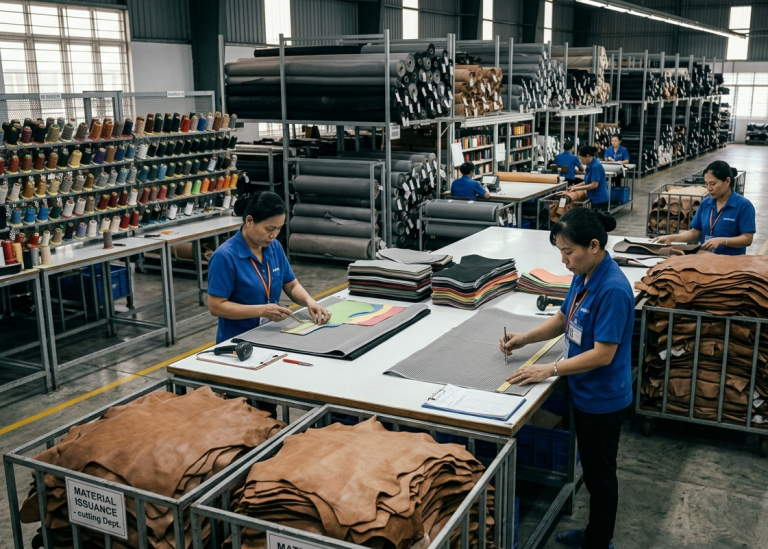
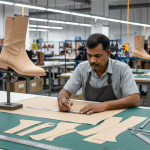
Traditional leather cutting relies heavily on operator experience. Skilled cutters must evaluate each hide, identify defects, determine usable areas, and arrange components manually. While experienced operators can achieve good results, performance often varies significantly between individuals.
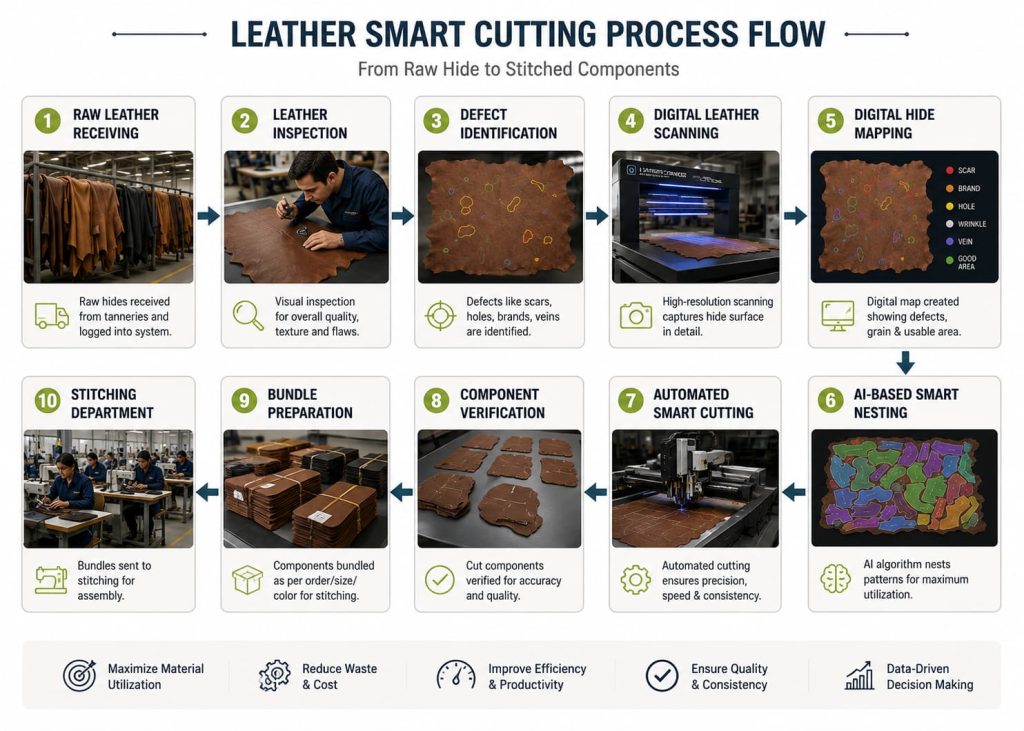
Smart cutting technology introduces a more consistent and data-driven approach. The process begins with leather inspection, followed by digital scanning and intelligent nesting. Once the optimal layout is generated, the cutting machine executes highly accurate cutting operations while avoiding identified defects.
The digital workflow improves utilization, consistency, traceability, and production planning.
Leather Inspection and Defect Evaluation
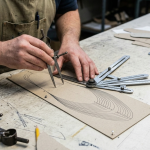
Leather inspection remains one of the most important steps in the smart cutting workflow. Every hide contains natural characteristics that influence component placement. Defects such as scars, tick marks, holes, wrinkles, loose grain, vein marks, and color variations must be identified before nesting begins.
In traditional operations, inspectors manually mark these areas using chalk or stickers. Modern smart cutting environments digitize this process by creating electronic defect maps that can be analyzed by nesting software.
This digital approach provides greater consistency while reducing dependence on individual operator judgment. By accurately identifying defect locations, factories can ensure that critical components such as vamp sections and visible upper parts are placed in the highest-quality areas of the hide.
Key Points
- Early defect detection improves quality.
- Digital mapping improves consistency.
- Better component placement reduces rework.
- Quality grading becomes more objective.
- Material utilization improves significantly.
Pro Tip: Digital defect mapping typically produces more consistent results than manual marking because defect information can be standardized across operators.

Digital Leather Scanning: Creating a Digital Hide Map
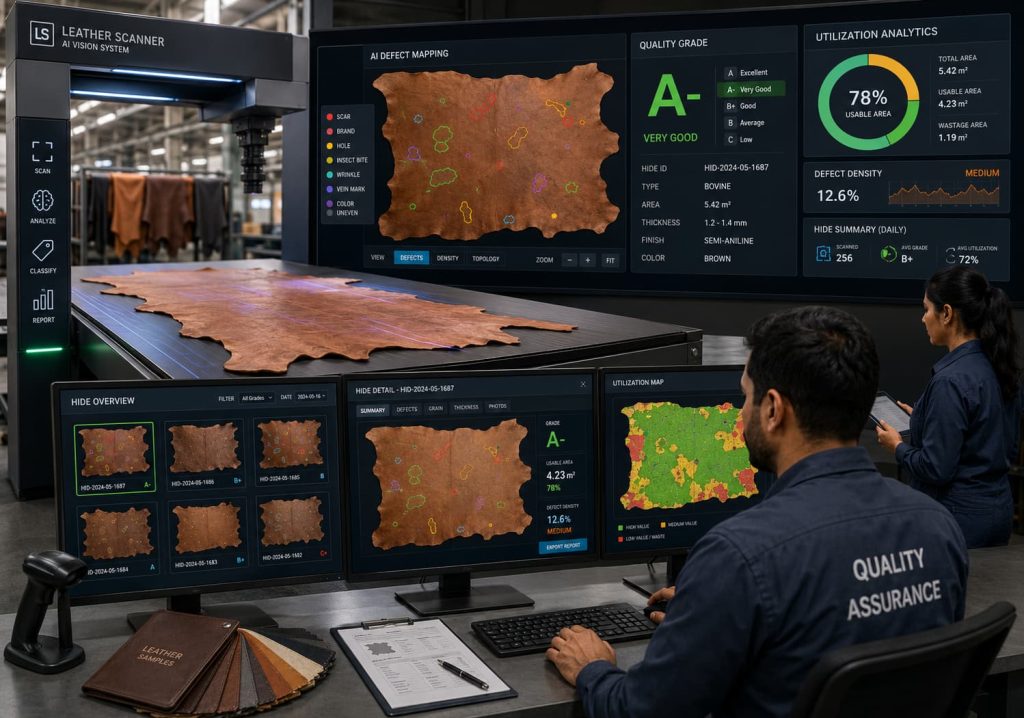
After leather inspection and defect evaluation, the next critical stage in the smart cutting workflow is digital leather scanning. This process converts a physical leather hide into a high-resolution digital image that can be analyzed by intelligent nesting software.
Traditionally, leather cutters relied on visual assessment and experience to determine how components should be arranged on a hide. While skilled operators can achieve good results, manual planning often varies from person to person. Digital scanning eliminates much of this variation by providing accurate and standardized material information.
Modern leather scanners capture the complete shape of the hide, its usable area, defect locations, grain direction, and other important characteristics. The scanned image becomes a digital hide map that serves as the foundation for all subsequent optimization activities.
The accuracy of this digital map is extremely important. Any error in scanning can affect nesting quality, material utilization, and cutting precision. For this reason, advanced smart cutting systems use high-resolution imaging technology capable of capturing detailed information about every hide.
One of the biggest advantages of digital scanning is traceability. Factories can store hide data electronically and retrieve it whenever needed. This allows manufacturers to monitor leather utilization trends, analyze quality performance, and continuously improve cutting efficiency.
For premium leather footwear, where material costs are significant, digital scanning often becomes one of the most valuable contributors to cost reduction.
Key Points
- Converts leather into digital data.
- Creates accurate hide maps.
- Supports intelligent nesting.
- Improves traceability.
- Enhances material planning.
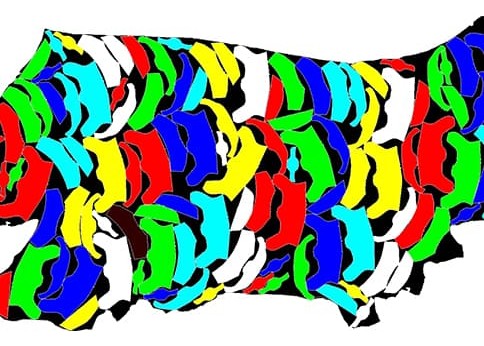
Pro Tip: The effectiveness of intelligent nesting depends heavily on scanning accuracy. High-quality scanners generally deliver better material utilization and more consistent results
AI-Powered Smart Nesting: Maximizing Leather Utilization
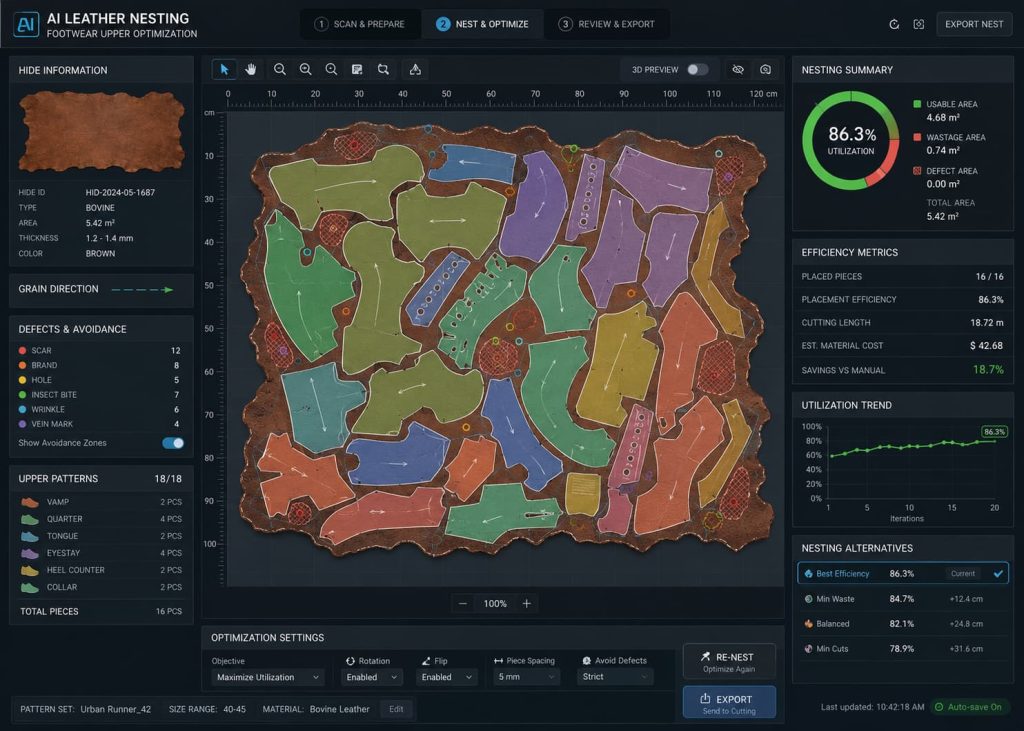
Once the hide has been digitized, the nesting process begins. Nesting refers to the arrangement of footwear components on the material surface to achieve maximum utilization while maintaining quality requirements.
In traditional cutting rooms, nesting often depends on operator experience. Skilled planners manually position patterns while attempting to avoid defects and maintain grain direction. Although effective, this process is time-consuming and difficult to standardize.
AI-powered nesting software transforms this activity into a highly optimized digital process. The software analyzes hundreds or even thousands of possible pattern arrangements within seconds. It evaluates component size, shape, grain direction, stretch characteristics, quality zones, defect locations, and production priorities before selecting the optimal layout. The objective is not simply to fit as many components as possible onto the hide.
The software must also ensure that quality-critical parts are positioned in the best areas of the leather while maintaining appearance consistency and performance requirements.
Key Points
- Maximizes material utilization.
- Avoids defects automatically.
- Maintains grain direction.
- Reduces planning time.
- Improves profitability.
Pro Tip: Leather utilization improvements of just 2–3% can often justify a significant portion of the smart cutting system investment.
Smart Cutting Execution: From Digital Layout to Finished Components
After the nesting layout has been approved, the digital file is transferred directly to the smart cutting machine. This stage represents the culmination of the entire digital workflow. Every decision regarding material quality, defect avoidance, grain direction, and component placement has already been incorporated into the cutting program.
The machine follows the optimized cutting path using high-speed oscillating knives or other cutting technologies depending on the material type. Unlike traditional die cutting, smart cutting systems can immediately switch from one style to another without changing tooling. This flexibility is especially valuable for factories producing multiple brands, short production runs, and customized footwear products.
The cutting process is continuously monitored by sensors and control systems. Production data is collected in real time and can be integrated directly into factory management platforms. Because the entire process is digital, component accuracy is highly consistent. This improves downstream operations such as stitching, lasting, and assembly while reducing rework and quality issues. Another important advantage is production agility.
Design modifications can be implemented almost instantly by updating digital files rather than manufacturing new dies.
Key Points
- Eliminates die dependency.
- Improves cutting consistency.
- Supports rapid style changes.
- Enhances quality control.
- Accelerates product development.
Pro Tip: The greatest productivity gains are often achieved when smart cutting systems are integrated with digital pattern engineering and automated material handling.
Smart Cutting Workflow for Synthetic Materials
While leather remains one of the most complex materials to process, synthetic materials present their own opportunities for optimization. Materials such as PU, microfiber, engineered mesh, knitted uppers, textiles, and foam are commonly supplied in roll form. Their dimensions and characteristics are generally more consistent than leather, making them ideal candidates for automated processing.
The workflow typically begins with material inspection and automatic feeding. Vision systems identify material edges, printed patterns, logos, or alignment markers before nesting software generates the optimal cutting layout.
Once the layout is approved, the cutting machine processes the material with minimal operator intervention. Components are automatically sorted and prepared for stitching operations. Because synthetic materials have predictable dimensions, nesting efficiency is often higher than with leather. This allows factories to achieve excellent utilization rates while maintaining high production speeds.
Key Points
- Suitable for roll materials.
- Higher nesting efficiency.
- Faster processing speeds.
- Reduced labor requirements.
- Improved production flow.
Pro Tip: Factories processing large volumes of synthetic materials often achieve faster ROI than leather operations because nesting efficiency can be optimized more easily.
Traditional Die Cutting vs Smart Cutting Machines
The transition from die cutting to smart cutting represents a fundamental shift in manufacturing philosophy. Traditional die cutting remains effective for very large production volumes with stable product designs. However, today’s footwear market increasingly demands flexibility, rapid style changes, and shorter lead times.
Smart cutting systems are specifically designed to address these requirements.
| Parameter | Traditional Die Cutting | Smart Cutting |
|---|---|---|
| Tooling Requirement | High | None |
| Style Change Time | Slow | Immediate |
| Material Utilization | Moderate | High |
| Labor Dependency | High | Lower |
| Development Speed | Slower | Faster |
| Traceability | Limited | Excellent |
| Industry 4.0 Integration | Minimal | Extensive |
| Sustainability | Moderate | High |
For factories producing a wide variety of products, smart cutting often delivers superior long-term value despite the higher initial investment.
Key Points
- Greater flexibility.
- Better utilization.
- Faster development.
- Improved traceability.
- Stronger Industry 4.0 compatibility.
Pro Tip: When evaluating technology investments, consider total lifecycle costs rather than machine purchase price alone.
Benefits of Smart Cutting Machines
The growing popularity of smart cutting systems is driven by their ability to deliver measurable improvements across multiple areas of factory performance. Material savings are often the most visible benefit. Intelligent nesting reduces waste and maximizes utilization, particularly when processing expensive leather materials.
Labor productivity also improves because many manual activities become automated. Operators spend less time on material planning, pattern arrangement, and cutting preparation. Quality consistency improves through standardized digital processes. Components are cut according to precise specifications, reducing dimensional variation and improving downstream assembly performance.
Production flexibility increases dramatically because new styles can be introduced without creating new tooling. Sustainability performance improves as waste generation decreases and material consumption becomes more efficient.
Key Points
- Reduced material waste.
- Lower labor costs.
- Better quality consistency.
- Faster response to customer demands.
- Improved sustainability.
Pro Tip: Many factories discover that operational flexibility becomes as valuable as material savings after implementation.
Industry 4.0 Integration and Smart Factory Connectivity
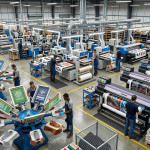
Modern footwear factories are increasingly adopting Industry 4.0 principles to improve efficiency and competitiveness. Smart cutting systems play a central role in this transformation because they generate large amounts of valuable production data.
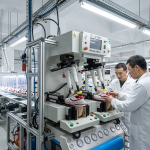
When integrated with ERP and MES platforms, cutting operations become fully visible across the organization. Managers can monitor utilization rates, machine efficiency, production output, material consumption, and maintenance performance in real time. Predictive maintenance systems can analyze equipment conditions and identify potential issues before failures occur. This reduces downtime and improves overall equipment effectiveness.
Cloud-based analytics platforms further enhance visibility by enabling centralized performance monitoring across multiple factories. As footwear manufacturing becomes increasingly data-driven, the ability to collect and analyze production information will become a major competitive advantage.
Key Points
- Real-time visibility.
- Improved planning.
- Better resource utilization.
- Predictive maintenance.
- Enhanced decision-making.
Pro Tip: Data generated by smart cutting systems can often reveal improvement opportunities that are not visible through traditional management methods.
ROI Analysis: Is Smart Cutting Worth the Investment?
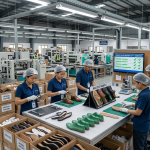
One of the most common questions asked by factory managers is whether smart cutting technology can justify its investment cost. The answer depends on several factors including production volume, material mix, style complexity, and current utilization rates.
For small factories, the primary benefits often come from eliminating die costs and improving flexibility. Medium-sized factories typically benefit from material savings, labor reduction, and faster product development.
Large footwear manufacturers processing millions of pairs annually often experience substantial financial gains through improved leather utilization alone. ROI calculations should consider: Material savings, Labor savings, Reduced die costs, Productivity improvements, Quality improvements, Inventory reduction, Faster development cycles. In many cases, payback periods range between two and five years depending on operating conditions.
Key Points
- Long-term benefits often exceed expectations.
- Material savings drive ROI.
- Productivity improvements add value.
- Reduced tooling costs support payback.
- Flexibility improves competitiveness.
Pro Tip: The true value of smart cutting often extends beyond direct cost savings because it improves responsiveness, agility, and customer satisfaction.
Future Trends in Smart Cutting Technology
The next generation of smart cutting systems will be even more intelligent, connected, and autonomous. Artificial intelligence will continue improving nesting efficiency through machine learning and predictive analytics. Digital twins will enable virtual simulation of cutting operations before production begins.
Robotic material handling systems will further reduce manual intervention, while cloud-based manufacturing platforms will support global production visibility. Sustainability will remain a major driver of innovation as manufacturers seek to reduce waste, improve resource efficiency, and meet increasingly demanding environmental requirements.
The cutting room of the future will likely operate as a fully connected digital ecosystem where machines, software, and operators collaborate seamlessly to optimize performance.
Key Points
- Higher operational efficiency.
- More AI integration.
- Greater automation.
- Better sustainability.
- Enhanced traceability.
Pro Tip: Factories investing in digital cutting today are building the foundation for future autonomous manufacturing environments.
Conclusion
Smart cutting machines are transforming footwear manufacturing by combining digital intelligence with advanced automation. Through leather scanning, AI-powered nesting, defect mapping, automated cutting, and Industry 4.0 integration, these systems enable manufacturers to achieve higher material utilization, improved quality, reduced costs, and greater production flexibility.
As footwear brands continue demanding shorter lead times, greater customization, and higher sustainability standards, smart cutting technology is becoming an essential component of modern manufacturing strategy. Factories that successfully embrace these technologies will be better positioned to improve profitability, strengthen competitiveness, and support long-term digital transformation initiatives.
Rather than viewing smart cutting as a simple equipment upgrade, manufacturers should consider it a strategic investment in the future of footwear production.
Frequently Asked Questions (FAQs)
What is a smart cutting machine?
A smart cutting machine combines digital scanning, AI nesting, vision systems, and automated cutting technologies to optimize material utilization and production efficiency.
How does smart cutting improve leather utilization?
The system scans hides, identifies defects, and automatically generates optimized nesting layouts that maximize usable material.
Can smart cutting replace traditional die cutting?
In many applications, yes. Smart cutting eliminates tooling requirements and provides greater flexibility for style changes.
Which materials can be processed?
Leather, synthetic leather, PU, microfiber, textiles, mesh, foam, knitted uppers, and technical fabrics.
Is smart cutting suitable for small factories?
Yes. Small factories often benefit from reduced die costs, faster development, and greater flexibility.
What is intelligent nesting?
Intelligent nesting uses software algorithms to arrange components for maximum material utilization while maintaining quality requirements.
How does Industry 4.0 benefit cutting operations?
Industry 4.0 enables real-time monitoring, predictive maintenance, improved traceability, and data-driven decision-making.
What is the biggest benefit of smart cutting technology?
For most footwear manufacturers, the biggest benefit is improved material utilization combined with increased production flexibility.