Milling and Digging in Outsole Process: Outsole (Stock Fitting) Assembly Series
In our previous blog, Burnishing, Brushing and Polishing in Outsole Process: Outsole (Stock Fitting) Assembly, we discussed how finishing operations improve the appearance and surface quality of outsole components before they proceed to assembly or packing.
While those processes focus on surface refinement, milling and digging modify the outsole itself by removing material from specific locations with high precision.
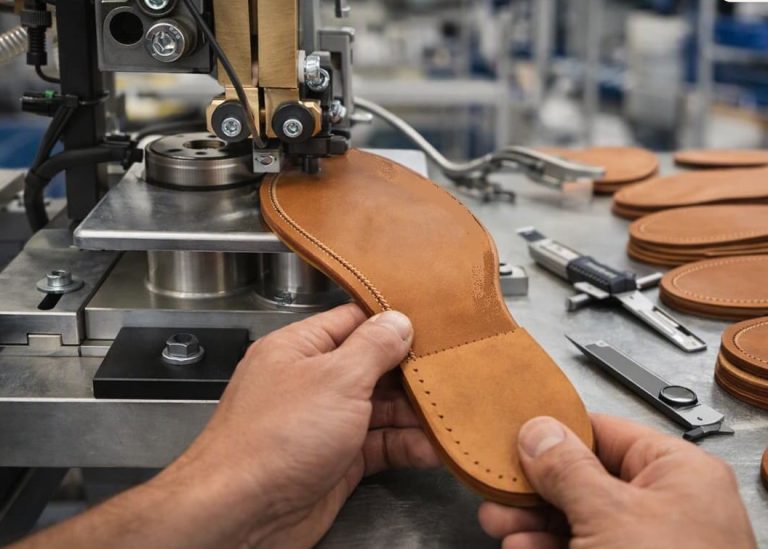
Milling, also known as digging in many footwear factories, is widely used when manufacturing leather blockers, leather outsoles, synthetic blockers, and multi-component outsole constructions. Instead of removing material from the entire outsole, factories machine only selected areas to create cavities, reduce thickness, prepare locations for inserts, or improve component fitment.
Today, most medium and large footwear manufacturers rely on CNC-controlled milling systems because they deliver excellent dimensional accuracy, repeatability, and production efficiency. Proper milling not only simplifies downstream assembly but also reduces rework, improves bonding quality, and supports lightweight outsole designs.
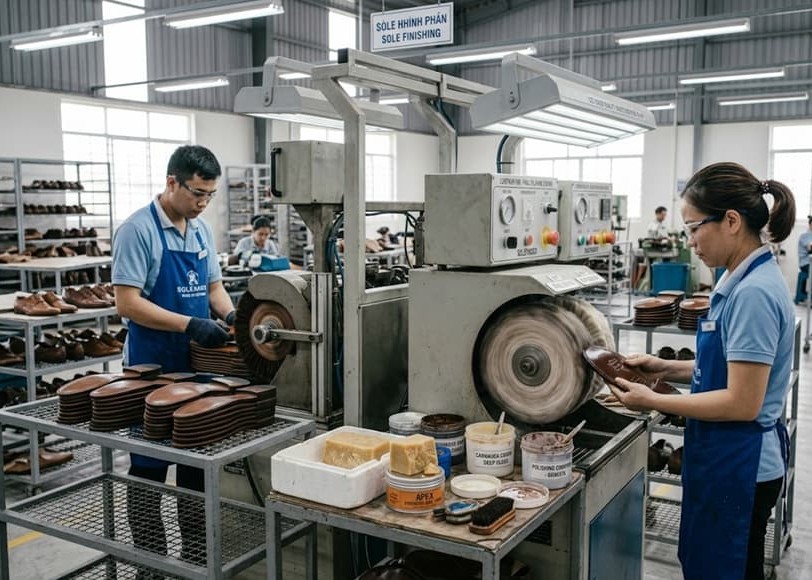
Understanding Milling and Digging Operations
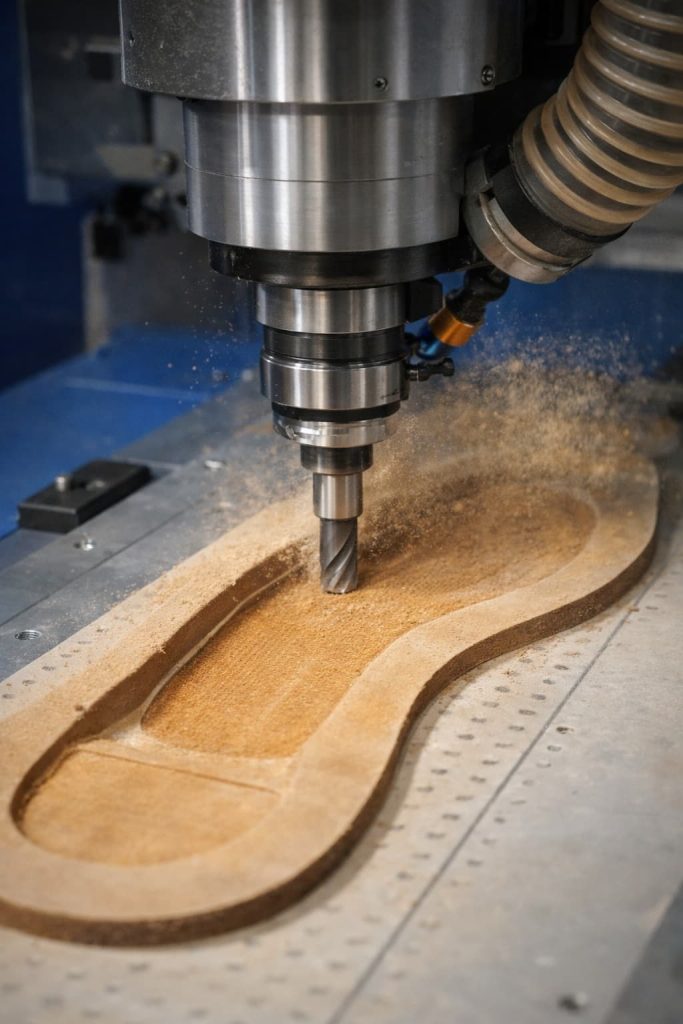
Milling is a controlled machining process that removes material from predetermined areas of an outsole component using rotating cutting tools. Depending on factory terminology, the same operation may also be called digging, particularly when producing leather soles and blockers.
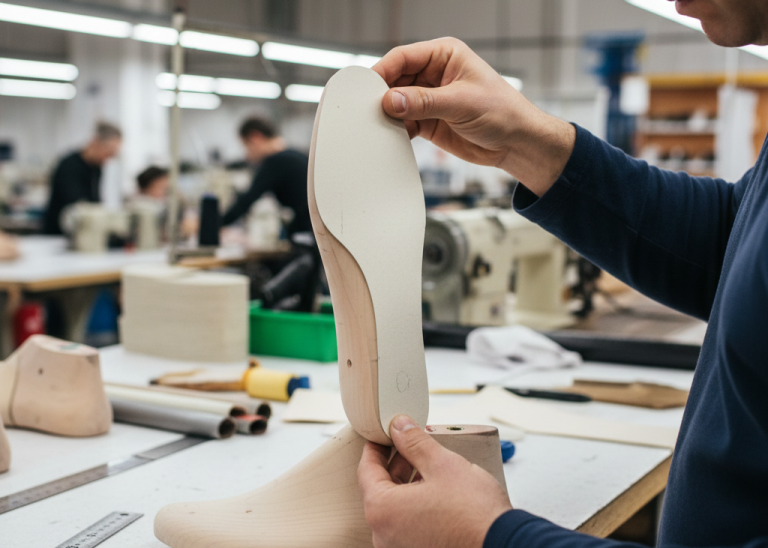
Unlike roughing or sanding, milling changes the component’s dimensions according to engineering drawings. Material is removed only where required, allowing manufacturers to create pockets, recesses, channels, heel seats, or thickness reductions without affecting the rest of the outsole.
The operation is commonly performed on – Leather blockers, Leather Outsoles, Synthetic Blockers, EVA outsole components, Rubber outsole Parts & TPU / PU components
Precision is the primary objective. Even a small variation in milling depth can affect insert fit, adhesive performance, moulding quality, or final shoe appearance. Therefore, factories combine CNC programming, dedicated fixtures, and routine dimensional inspections to achieve consistent results throughout production.
Key Control Points
- Verify the latest engineering drawing before machining.
- Confirm the approved CNC program is selected.
- Measure milling depth during first-piece inspection.
- Remove machining dust before the next operation.
Expert Tip: Maintain a preventive maintenance schedule based on machine operating hours rather than calendar dates.
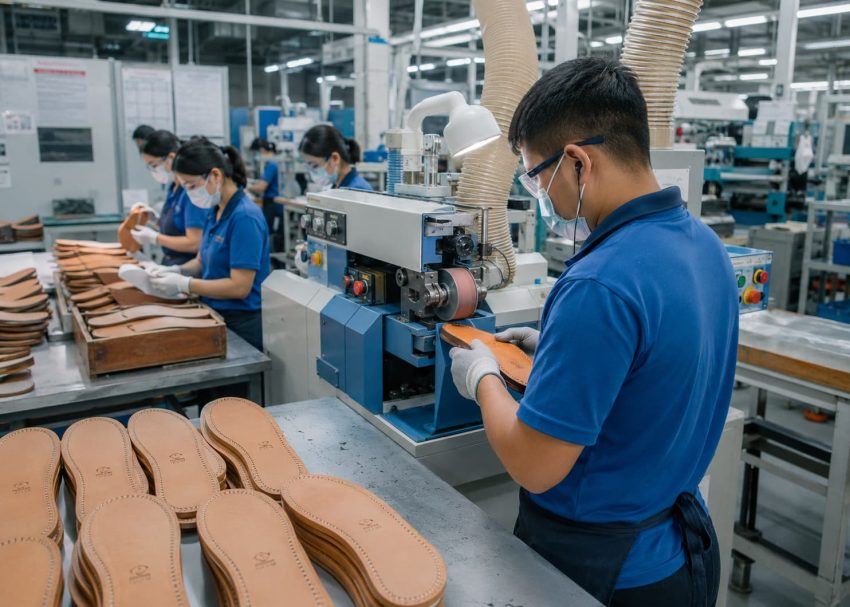
Why Milling Is Essential in Outsole Manufacturing
Modern footwear rarely consists of a single-piece outsole. Many constructions include midsoles, heel blocks, decorative inserts, shanks, cushioning systems, or reinforcement components that must fit together accurately.
Milling creates the required space for these parts while maintaining the outsole’s overall strength and appearance. Another important benefit is weight reduction. Instead of increasing outsole thickness, engineers remove unnecessary material from selected areas to produce lighter footwear without compromising durability. This approach is widely used in sports, outdoor, and casual footwear.
Milling also improves production efficiency. Accurate machining reduces manual trimming, simplifies component positioning during assembly, and minimizes adhesive-related issues caused by uneven surfaces
Key Control Points
- Follow approved machining dimensions.
- Inspect cavity size using calibrated gauges.
- Monitor cutter wear throughout production.
- Approve the first machined sample before bulk production.
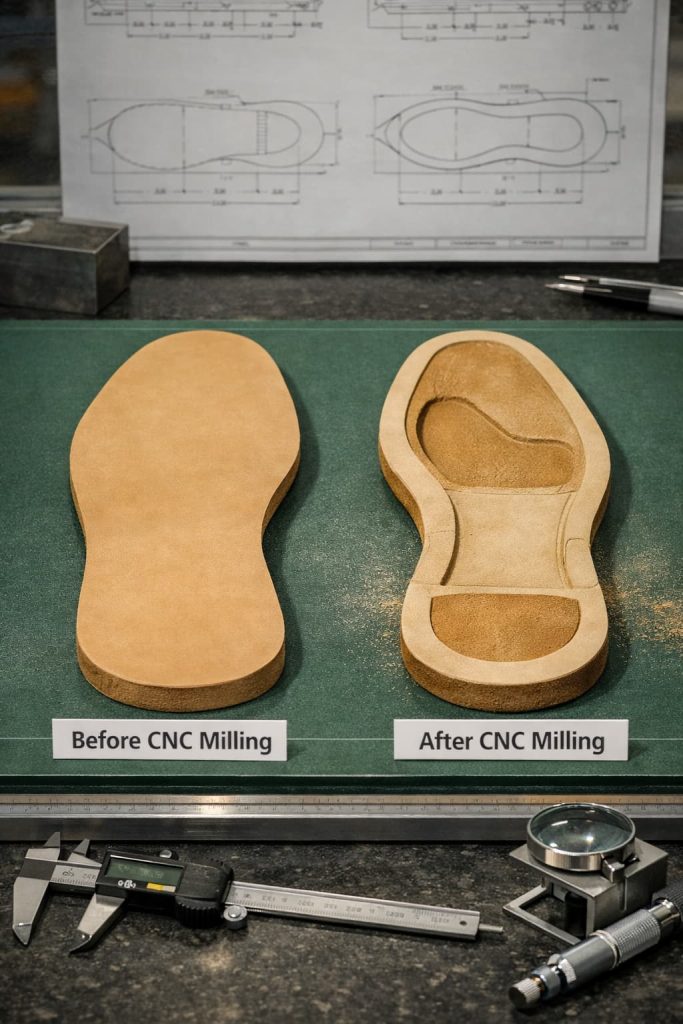
Expert Tip: Store master samples at every milling workstation for quick visual comparison.
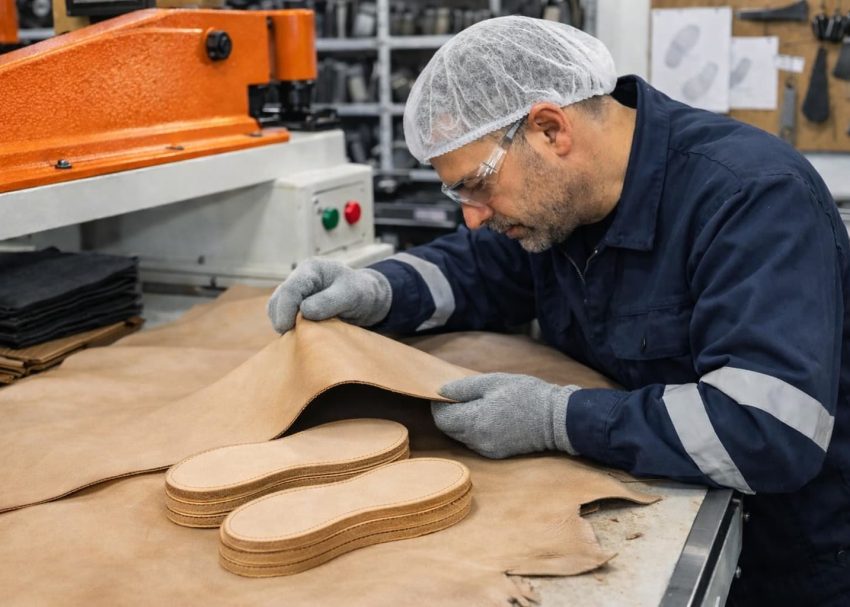
CNC Milling Machine
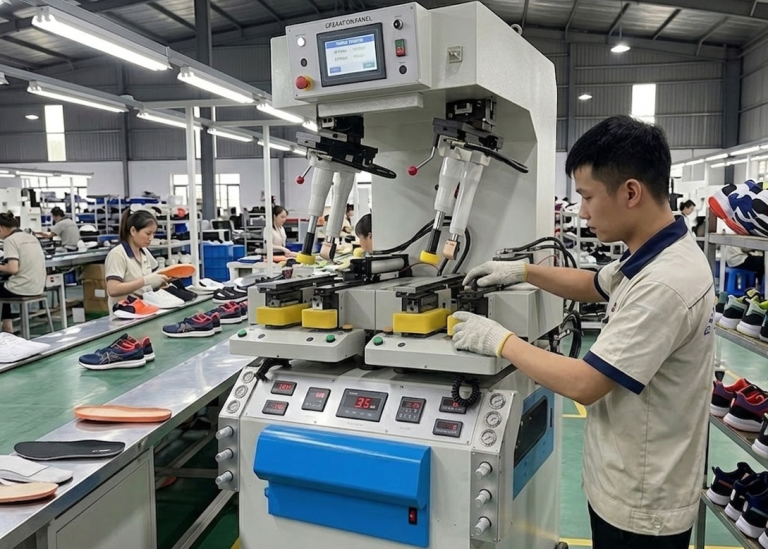
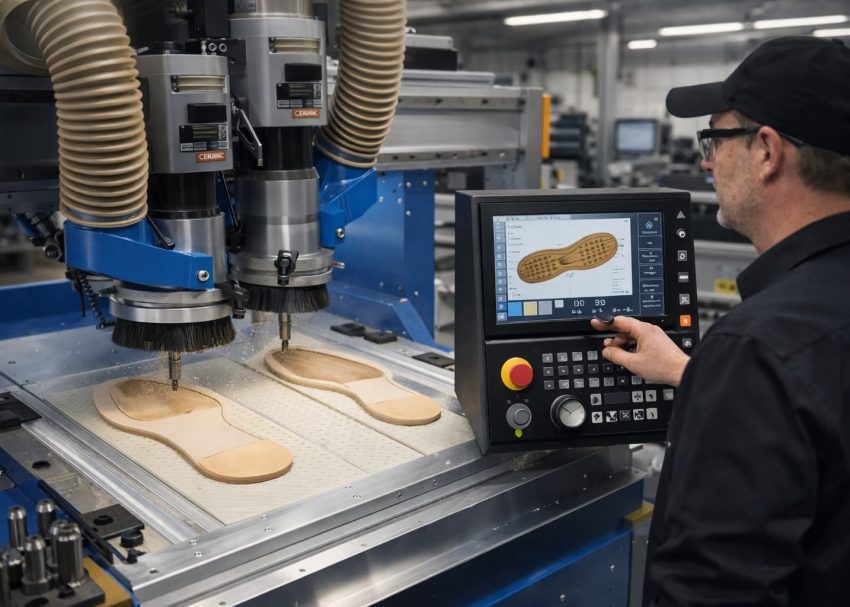
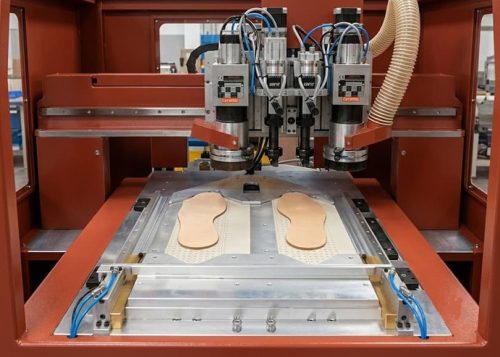
The CNC milling machine is the most common equipment used for precision outsole machining. It removes material according to programmed tool paths, ensuring that every component is machined to identical dimensions.
Because the process is automated, production remains highly consistent even during large manufacturing batches. CNC milling machines are suitable for leather, synthetic, EVA, PU, and rubber outsole components requiring precise cavities or thickness reductions. Typical Applications – Injection mould preparation, Heel seat machining, Cavity creation, Thickness reduction, Decorative recesses
Key Control Points
- Verify CNC program revision.
- Check cutter condition before production.
- Inspect first-piece dimensions.
- Monitor spindle performance during operation.
Expert Tip: Standardize machining parameters for each outsole material to improve consistency.
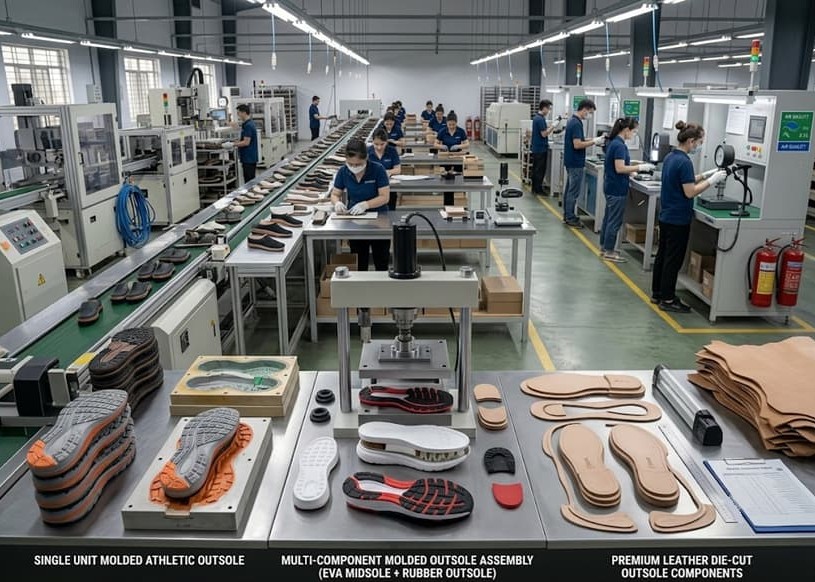
Milling and Digging Process in Footwear Factories
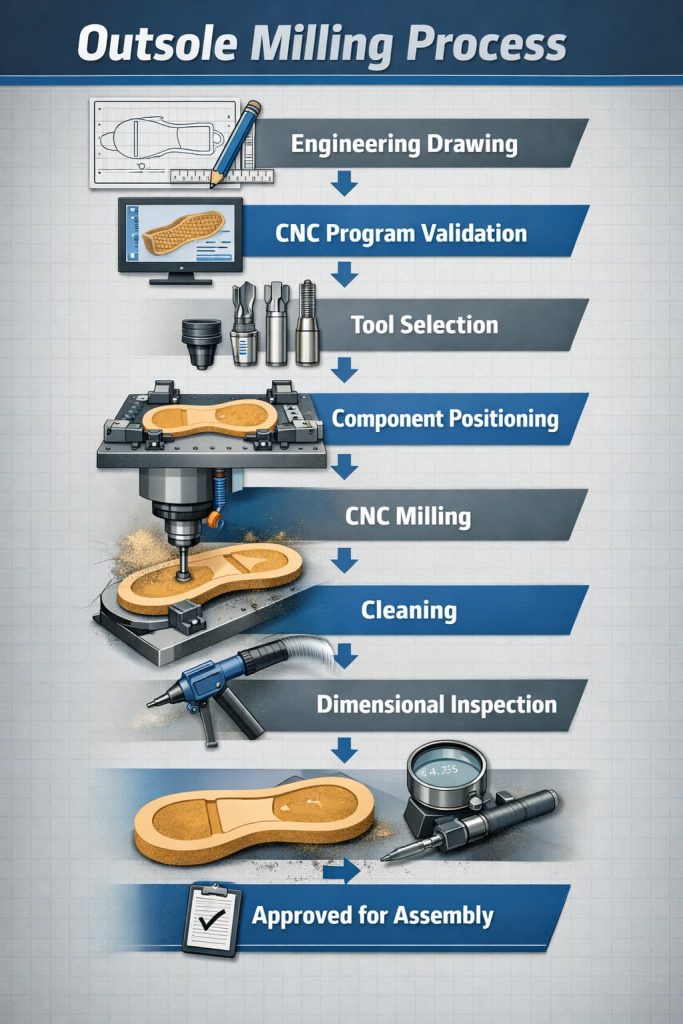
A successful milling operation depends on accurate programming, proper tooling, stable component positioning, and continuous quality verification. Although machine automation has reduced operator dependency, each production stage still requires careful monitoring to achieve consistent results.
Engineering Preparation and CNC Programming
The process starts by reviewing the latest engineering drawing and loading the approved CNC program. Production engineers verify machining dimensions, cutter paths, feed rates, spindle speeds, and tooling specifications before machining begins.
Many factories perform a dry run without material to confirm the program and prevent costly machining errors.
Tool Selection and Machine Setup
The cutter must match both the outsole material and the required machining profile. Carbide end mills are commonly used because they provide high wear resistance and maintain dimensional accuracy during long production runs.
After tool installation, operators calibrate tool length, spindle position, and machine offsets before loading production components.
Expert Tip: Introduce barcode-controlled CNC program selection to eliminate operator loading errors.
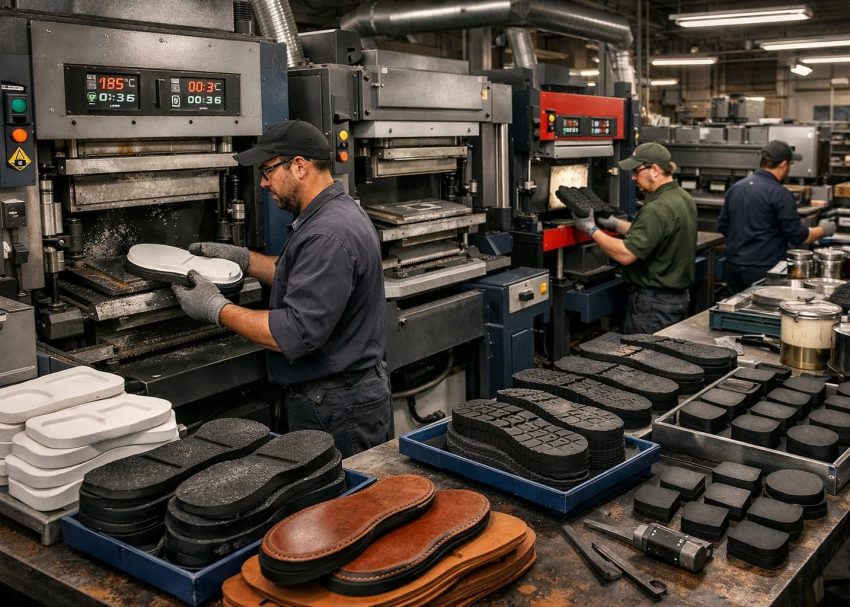
Component Positioning and Milling
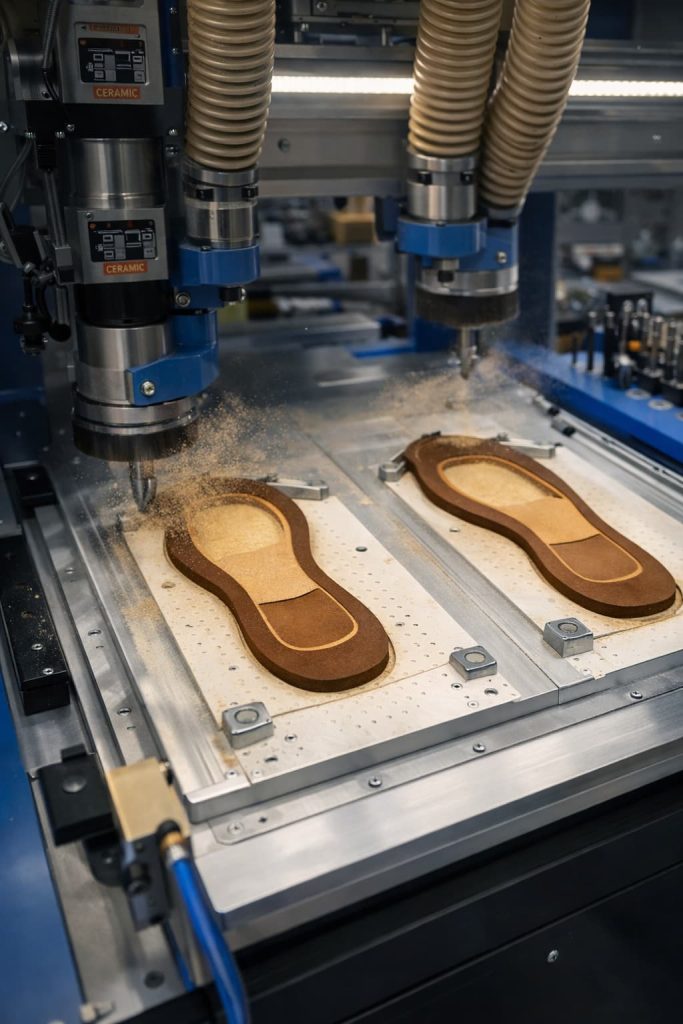
The outsole or blocker is placed in a dedicated fixture that prevents movement during machining.Once positioning is confirmed, the CNC machine removes material according to the programmed tool path. Depending on the outsole design, the machine may create pockets, heel seats, channels, or thickness reductions in a single machining cycle. After machining, loose chips and dust are removed before inspection.
Final Inspection
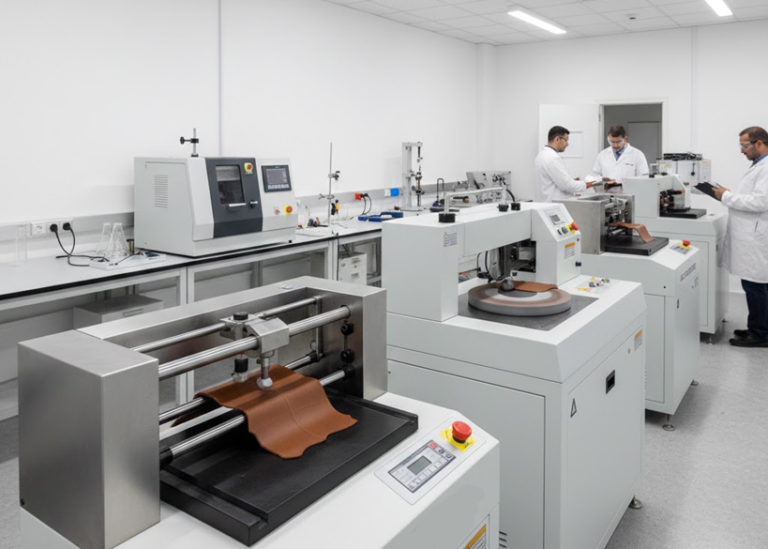
Every production batch should begin with a first-piece inspection. Quality inspectors verify cavity dimensions, milling depth, remaining thickness, and overall appearance using calibrated measuring equipment.
Periodic inspections continue throughout production to detect cutter wear or machine deviations before they affect product quality.
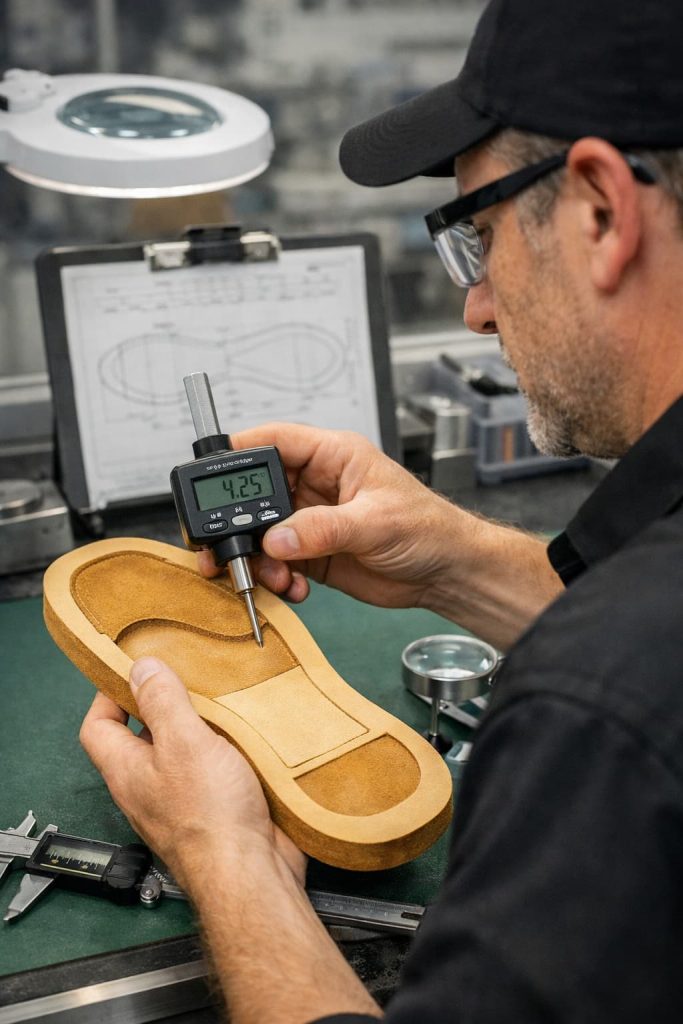
Expert Tip: Review cutter performance after every production lot to optimize tool life.
Industrial Applications of Milling and Digging
Although milling follows the same machining principle, its application varies according to outsole construction and footwear design.
Injection Mould Preparation
Some outsole components require machined seating surfaces before entering injection or over-moulding operations. Accurate milling improves alignment and minimizes dimensional variation during moulding.
Insert Accommodation
Many premium shoes contain TPU inserts, decorative plates, shanks, or cushioning units. Milling creates accurately sized recesses that allow these components to fit securely without affecting outsole appearance.
Weight Reduction
Engineers often remove material from non-critical areas to reduce outsole weight while maintaining structural strength. This technique improves wearer comfort without compromising durability.
Component Fitment
Modern outsole constructions frequently combine multiple components. Accurate milling ensures that midsoles, heel blocks, decorative parts, and reinforcement components fit precisely during assembly, reducing manual adjustment and improving bonding quality.
Expert Tip: Audit fixture condition regularly to prevent positioning inaccuracies.
Common Milling and Digging Defects
Even with CNC-controlled equipment, machining defects can occur if tooling, programming, or setup are not properly controlled.
| Defect | Possible Causes | Corrective Action |
|---|---|---|
| Excessive material removal | Incorrect program or tool offset | Revalidate CNC program and recalibrate machine |
| Uneven milling depth | Worn cutter or unstable fixture | Replace cutter and inspect fixture |
| Surface damage | Incorrect spindle speed or feed rate | Optimize machining parameters |
| Incorrect cavity dimensions | Wrong tool diameter or positioning error | Verify tooling and fixture alignment |


Process Quality Control
Consistent quality requires more than first-piece approval. Production teams should monitor the milling process throughout each manufacturing batch to maintain dimensional accuracy and reduce rework.
Routine quality activities include:
- First-piece approval
- In-process dimensional inspection
- Cutter wear monitoring
- Fixture verification
- CNC program validation
- Final batch inspection
- Preventive machine maintenance
Factories that combine these activities with Statistical Process Control (SPC) often achieve higher process capability and lower rejection rates.
Key Control Points
- Use calibrated measuring instruments.
- Inspect components at planned intervals.
- Record all inspection data.
- Replace worn cutters before defects occur.

Conclusion
Milling and digging are precision machining operations that play an important role in modern outsole manufacturing. By removing material only where required, manufacturers can improve insert fitment, reduce component weight, prepare moulding surfaces, and achieve consistent assembly quality.
Although CNC technology provides excellent accuracy, successful production still depends on proper programming, tooling, fixture design, and routine quality inspection. When these factors are effectively controlled, milling contributes to lower rejection rates, faster assembly, and improved product performance.
Continue Learning
In the next article of TheFootwearEdge – Outsole (Stock Fitting) Assembly Series, we will explore Outsole Moulding Operations in Outsole Process, covering compression moulding, injection moulding, transfer moulding, mould design, process controls, defects, troubleshooting, and factory best practices. This topic builds naturally on milling because accurately machined components often proceed directly to moulding or become part of complex multi-component outsole systems.
Frequently Asked Questions (FAQs)
Both terms describe the controlled removal of material from specific areas of an outsole. “Digging” is commonly used in footwear factories, while “milling” is the technical machining term.
Leather, synthetic blockers, EVA, PU, TPU, and certain rubber outsole components can all be machined using suitable tooling.
CNC machines provide higher accuracy, repeatability, faster production, and consistent quality across large production batches.
Uneven milling depth caused by worn cutters, incorrect tool offsets, or unstable fixtures.
Quality inspectors typically use calibrated digital depth gauges, vernier calipers, or dedicated inspection gauges according to factory standards.
Yes. Engineers remove material from non-critical areas to reduce weight while maintaining structural strength.
Proper fixtures prevent component movement during machining, ensuring consistent cavity dimensions and precise component fitment.
Posts you make Like

Troubleshooting Adhesive Bond Failures in Footwear Manufacturing…