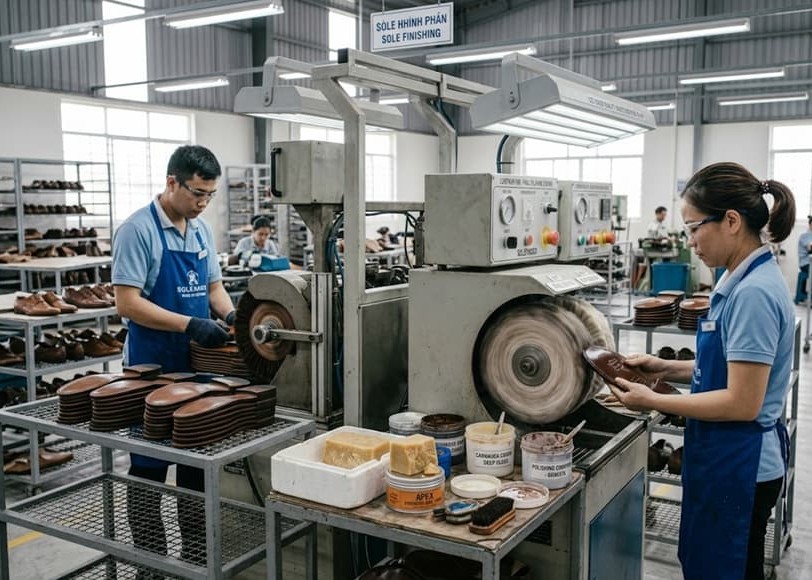
Burnishing, Brushing and Polishing in Outsole Process: Outsole (Stock Fitting) Assembly Series
In the previous article, Bottom Coloring in Outsole Process: Outsole (Stock Fitting) Assembly Series, we discussed how leather outsoles receive their final edge and bottom color to achieve the required shade, consistency, and visual appeal.
Although coloring significantly improves appearance, it is not the final finishing operation for premium leather outsoles.
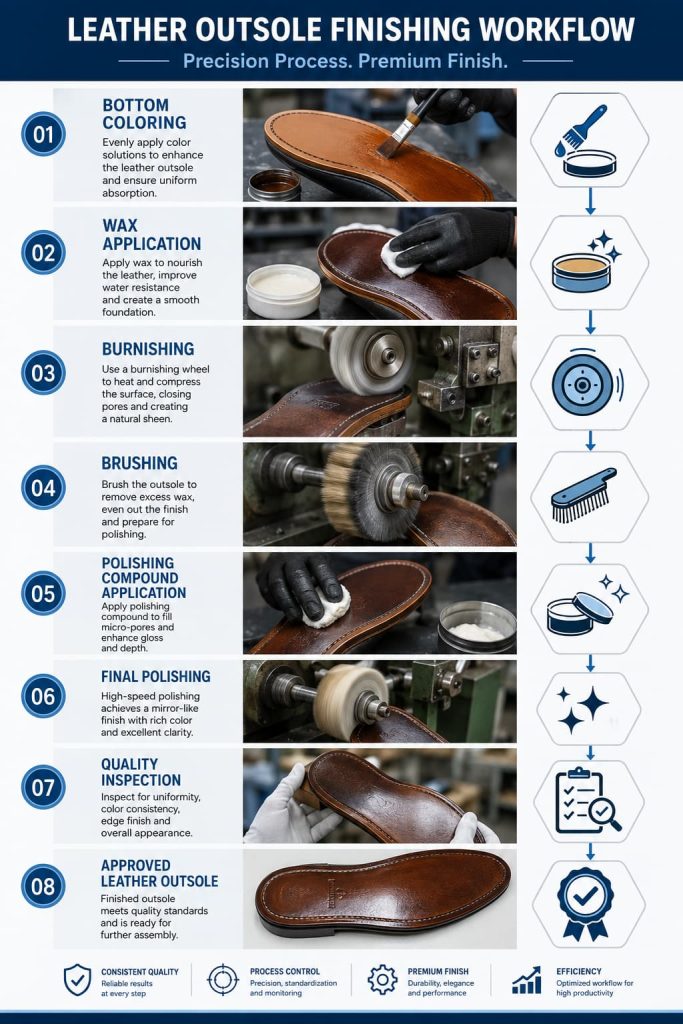
The next stage focuses on enhancing both appearance and surface quality through burnishing, brushing, and polishing. These finishing operations refine the leather surface, improve color depth, create a smooth feel, and develop the premium shine expected in high-quality footwear. While these processes primarily improve aesthetics, they also contribute to consistent product presentation and help manufacturers achieve a uniform finish across production batches.
Luxury footwear manufacturers often perform several finishing cycles using different waxes, creams, polishing compounds, and brush types. Each stage gradually builds a richer finish without damaging the leather surface. Consequently, the outsole develops a balanced combination of smoothness, gloss, and natural leather character that reflects high manufacturing standards.

Understanding Burnishing in Leather Outsole Manufacturing
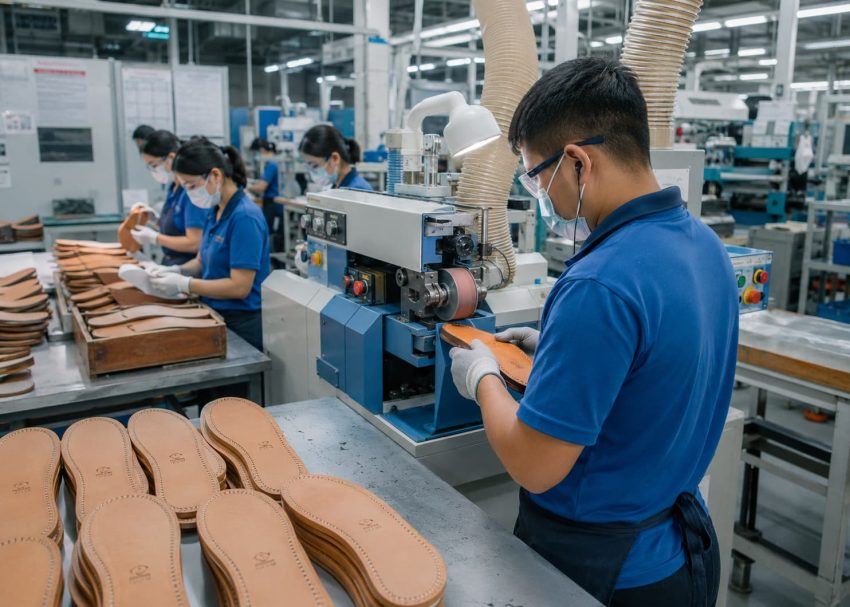
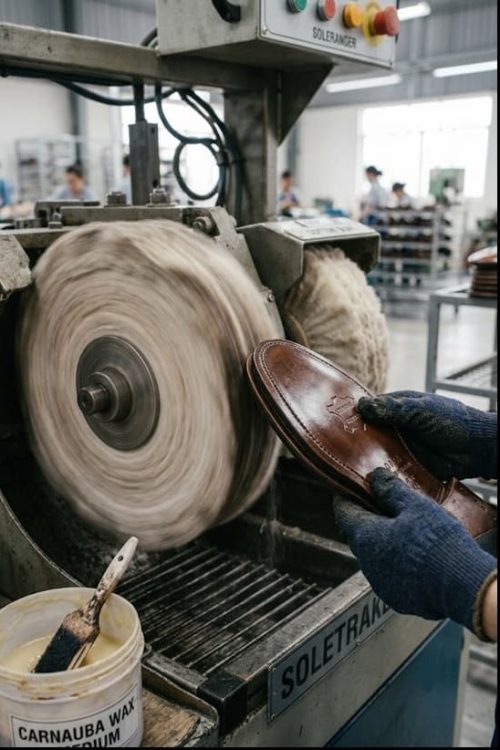
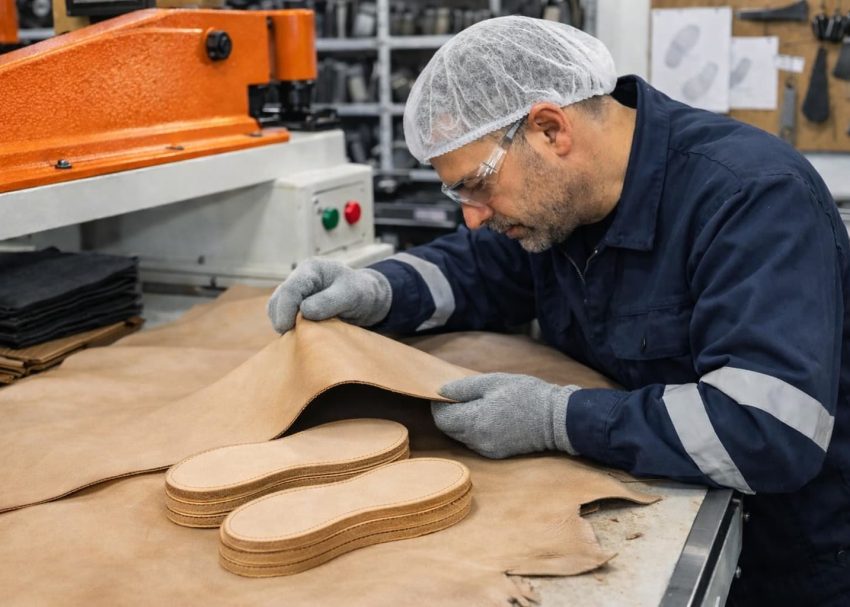
After the outsole has been cut, prepared, stitched, finished, and colored, manufacturers begin the burnishing operation to improve its overall appearance. Burnishing is a controlled friction process that compresses the leather fibers while gently heating the surface. This action produces a smoother, denser, and more refined finish without removing the natural characteristics of the leather. Unlike sanding or buffing, burnishing is not intended to remove material. Instead, it reorganizes the leather surface and distributes finishing compounds more evenly.
As the leather fibers become compacted, the outsole develops a richer texture and improved color depth. The resulting finish becomes an ideal foundation for subsequent brushing and polishing operations.
Depending on the footwear category, burnishing may be applied only to the outsole edge or extended to selected portions of the bottom surface. Premium dress shoes, Goodyear welted footwear, hand-crafted leather shoes, and luxury formal footwear commonly receive more extensive burnishing because visual presentation is an important selling feature.
Key Control Points
- Maintain consistent wheel pressure throughout production.
- Prevent excessive surface temperature.
- Ensure uniform contact across the entire finishing area.
- Inspect every outsole for consistent sheen before moving to the next operation.
Expert Tip: Always perform burnishing after the coloring layer has completely stabilized.

Materials Used During Burnishing and Polishing
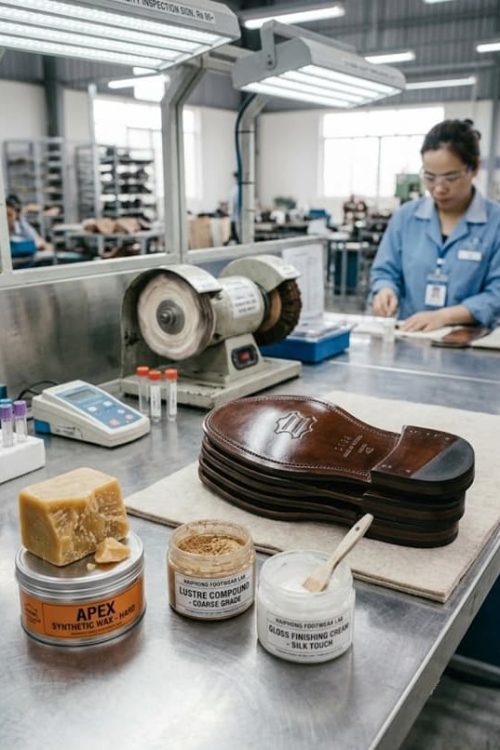
The quality of the finished outsole depends not only on machine settings but also on the finishing materials selected. Each polishing compound serves a specific purpose during the finishing sequence. Therefore, factories choose materials according to leather type, required gloss level, footwear category, and customer specifications.
High-end footwear manufacturers often combine several finishing materials in multiple stages rather than relying on a single polishing compound. As a result, the leather develops greater depth, smoother texture, and a more luxurious appearance.
Natural Waxes
Natural waxes remain one of the most widely used finishing materials for premium leather footwear. Carnauba wax, beeswax, and similar natural waxes create a rich surface finish while preserving the authentic appearance of leather.
These waxes penetrate the leather surface moderately and form a thin protective layer that enhances gloss without producing an artificial shine. Because natural waxes respond well to friction-generated heat, they are particularly suitable for burnishing operations.
Key Control Points
- Apply thin and uniform wax layers.
- Avoid excessive wax accumulation.
- Allow proper distribution during burnishing.
- Verify consistent shine across production batches.
Expert Tip: Replace polishing wheels before excessive wear affects gloss consistency.
Synthetic Waxes
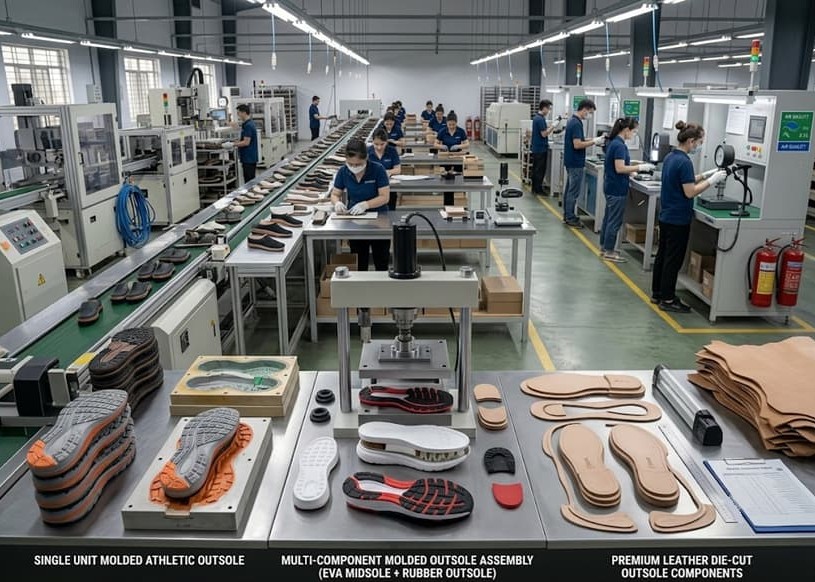
Synthetic waxes provide greater consistency for large-scale industrial production. Unlike natural waxes, they offer predictable melting characteristics, improved durability, and stable gloss performance under controlled factory conditions. Many factories use synthetic waxes when producing formal shoes, safety footwear, or commercial leather footwear requiring consistent appearance across thousands of pairs.
These materials also simplify automated finishing because they respond uniformly to machine settings. Some formulations include additives that improve water resistance, abrasion resistance, and long-term appearance retention. Consequently, synthetic waxes are common in high-volume manufacturing environments where repeatability is critical.
Key Control Points
- Match wax type with leather specification.
- Monitor application quantity carefully.
- Prevent contamination between wax grades.
- Store finishing materials under recommended temperatures.
Expert Tip: Maintain separate polishing compounds for light-colored and dark-colored leather.
Polishing Compounds
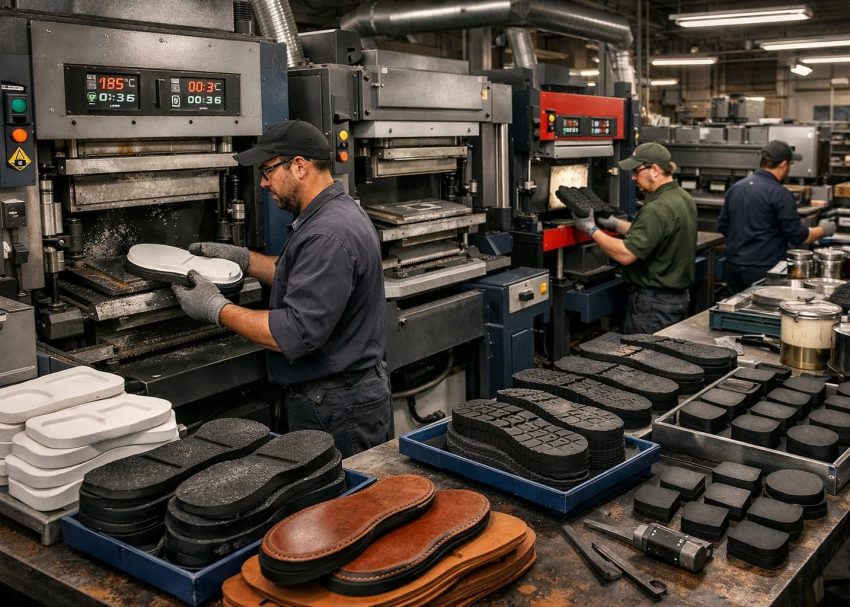
Polishing compounds enhance surface smoothness while increasing gloss and visual depth. Depending on the required finish, factories may use solid compounds, cream-based formulations, paste compounds, or liquid polishing agents. These materials help eliminate minor surface dullness after coloring and burnishing. They also improve reflection consistency by filling microscopic surface irregularities without masking the natural grain of the leather.
Premium footwear factories frequently apply polishing compounds in several light coats rather than one heavy application. This gradual process allows better control of gloss development while reducing the risk of streaking or uneven finish. The choice of polishing compound also depends on whether the desired appearance is matte, semi-gloss, or high gloss. Therefore, finishing departments usually maintain several approved compound formulations for different product categories.
Key Control Points
- Apply the correct compound for each leather type.
- Maintain clean polishing wheels.
- Avoid excessive compound buildup.
- Inspect gloss consistency under standardized lighting.
Expert Tip: Keep finishing materials free from dust and contaminants.
Finishing Creams
Finishing creams represent the final enhancement stage for many premium leather outsoles. Unlike waxes, these creams contain conditioning agents together with pigments and polishing ingredients that enrich color while improving surface appearance. The creams penetrate the upper leather layer and provide additional depth without creating excessive surface buildup. Furthermore, they help blend minor color variations produced during earlier finishing operations.
Manufacturers often use finishing creams immediately before the final polishing stage to achieve the luxurious appearance associated with premium leather footwear. When properly applied, the outsole develops a smooth, balanced finish with excellent visual consistency. However, excessive cream application can reduce gloss uniformity and attract dust during production. Therefore, factories establish strict application standards and regularly train operators to maintain consistent finishing quality.
Key Control Points
- Apply only approved finishing creams.
- Use minimal quantities for each outsole.
- Allow even distribution before polishing.
- Confirm final appearance after complete drying.
Pro Tip:
Regularly calibrate polishing machine speed to maintain consistent surface friction.
Standardize burnishing procedures through approved work instructions rather than operator judgment alone.

Brushing: Developing Uniform Surface Appearance
Following burnishing, leather outsoles move to the brushing stage. Although brushing may appear to be a simple cleaning operation, it plays a significant role in developing the final visual quality of the outsole. The brushing process distributes waxes evenly, removes excess finishing materials, smooths minor surface irregularities, and gradually builds the desired sheen before the final polishing stage.
Unlike burnishing, which relies on controlled friction to compress leather fibers, brushing focuses on refining the finished surface. As rotating brushes move across the outsole, they level the wax layer, eliminate loose particles, and enhance the natural grain of the leather. Consequently, the outsole develops a more consistent appearance without creating an artificial finish.
The brushing process may be repeated several times depending on the customer’s finish specification. Luxury footwear manufacturers frequently use multiple brushing stages with different brush materials to achieve exceptional color depth and uniform gloss. Conversely, standard commercial footwear may require only one brushing cycle before final polishing.
Key Control Points
- Maintain consistent brush pressure across the outsole.
- Remove loose wax before the polishing stage.
- Keep brush surfaces clean throughout production.
- Inspect the outsole under standard lighting after brushing.
Expert Tip: Always use standardized master samples when evaluating gloss and color consistency.

Horsehair Brushes
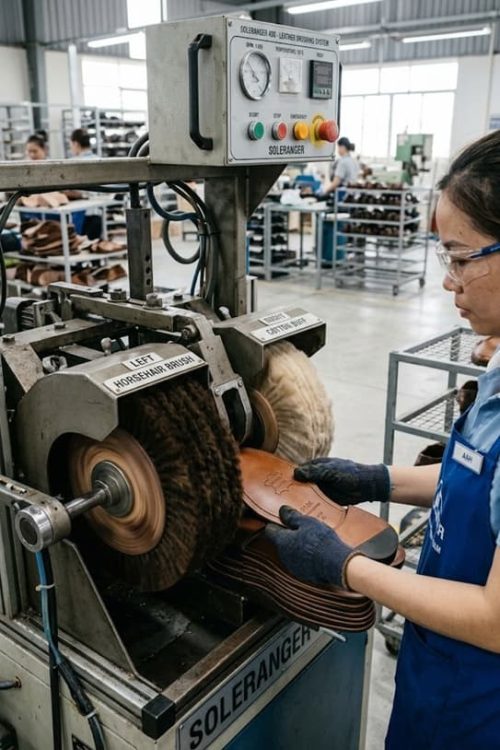
Horsehair brushes remain the preferred choice for premium leather footwear because of their soft, flexible natural fibers. These brushes generate gentle friction that enhances shine without scratching or damaging delicate leather surfaces. During operation, horsehair fibers distribute natural and synthetic waxes evenly while preserving the leather’s natural texture.
The fine fibers also reach curved edges and stitched areas more effectively than many synthetic alternatives, resulting in a uniform finish across the entire outsole.
Luxury footwear manufacturers frequently dedicate separate horsehair brushes to specific wax colors. This practice minimizes the risk of color transfer and helps maintain consistent product quality throughout production. Although horsehair brushes have a longer service life when properly maintained, they gradually lose flexibility after extended use. Therefore, regular inspection and scheduled replacement are essential for achieving stable finishing results.
Key Control Points
- Use dedicated brushes for different wax colors.
- Remove accumulated wax after every production shift.
- Replace worn brushes before fiber deformation occurs.
- Store brushes in clean, dry conditions.
Expert Tip: Replace polishing brushes according to preventive maintenance schedules instead of waiting for visible wear.


Cotton Brushes
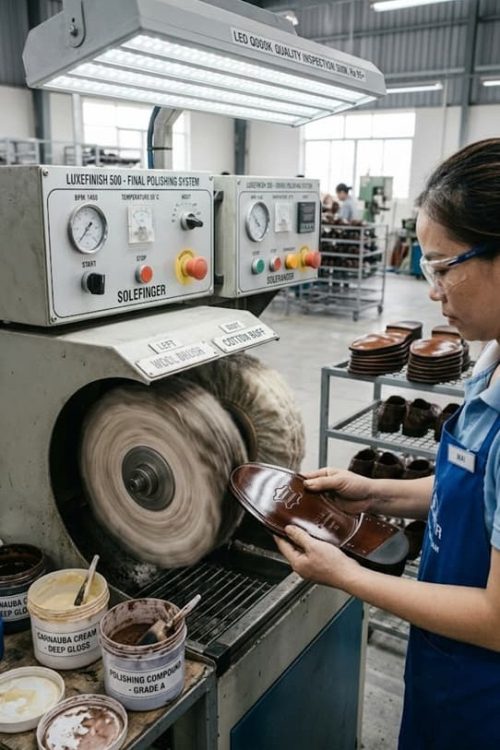
Cotton brushes are widely used during intermediate and final polishing operations because they provide controlled friction while producing a smooth, balanced finish. Their tightly packed cotton layers allow polishing compounds to spread evenly over the leather surface without generating excessive heat. Many automated polishing machines use cotton buffing wheels operating at carefully controlled rotational speeds.
As the wheel rotates, it gently blends wax layers and polishing compounds, creating a uniform satin or semi-gloss finish suitable for a wide range of leather footwear.
Cotton brushes also offer excellent versatility. Depending on machine speed and polishing compound selection, the same brush can produce different gloss levels for formal shoes, casual footwear, or premium dress shoes.
Routine maintenance is essential because cotton fibers gradually become saturated with wax residues. Excess buildup can reduce polishing efficiency and create inconsistent surface appearance. Therefore, factories regularly clean or replace cotton polishing wheels according to preventive maintenance schedules.
Key Control Points
- Monitor cotton wheel wear regularly.
- Prevent excessive wax accumulation.
- Verify wheel balance before production.
- Replace damaged polishing wheels immediately.
Expert Tip: Separate polishing stations for black and brown leather to prevent color contamination.
Wool Brushes
Wool brushes are commonly reserved for the final polishing stage where maximum gloss and visual depth are required. Their soft, dense fibers generate very fine friction, allowing the finishing compounds to develop a deep, luxurious shine while preserving the natural characteristics of the leather.
Premium footwear manufacturers frequently use wool brushes after several earlier finishing stages. By this point, the leather has already received coloring, burnishing, brushing, and wax application. The wool brush refines these previous operations and produces the high-quality finish expected in luxury leather footwear.
Since wool generates minimal abrasion, it is particularly suitable for high-value leather products requiring superior cosmetic appearance. Nevertheless, machine speed and contact pressure must remain carefully controlled to prevent overheating or excessive wax softening. Factories generally dedicate wool brushes exclusively to final finishing operations to avoid contamination from earlier polishing compounds.
Key Control Points
- Reserve wool brushes for final finishing.
- Maintain moderate rotational speed.
- Avoid excessive contact pressure.
- Inspect brushes for contamination before use.
Expert Tip: Record machine speed, polishing time, and finishing materials for every production batch.
Polishing: Creating the Final Premium Finish
Polishing is the final surface-finishing operation before the outsole proceeds to inspection and packing. At this stage, all previous finishing processes work together to produce a smooth, uniform, and visually attractive leather outsole that reflects premium manufacturing standards.
During polishing, operators apply carefully selected polishing compounds or finishing creams while rotating brushes generate controlled friction. This combination develops the desired gloss level and enriches the color depth without concealing the natural beauty of the leather.
Some premium footwear manufacturers perform multiple polishing cycles using progressively finer compounds. Each stage gradually improves surface clarity, producing a refined finish rather than an excessively glossy appearance. This layered approach allows the outsole to retain its authentic leather character while achieving excellent presentation.
Key Control Points
- Maintain approved polishing time for each outsole.
- Use only approved polishing compounds.
- Monitor surface temperature continuously.
- Verify final gloss before quality inspection.
Expert Tip: Clean polishing machines at the end of each shift to maintain stable product quality.
Benefits of Burnishing, Brushing and Polishing
These finishing operations provide far more than cosmetic improvement. When properly controlled, they enhance both product presentation and manufacturing consistency, helping footwear brands meet premium quality expectations.
Improved Luster
Controlled finishing develops a uniform shine that highlights the leather’s natural characteristics. Instead of creating an artificial appearance, the process produces a balanced luster that reflects high-quality craftsmanship.
Enhanced Color Depth
Burnishing and polishing help waxes and finishing compounds blend uniformly into the leather surface. As a result, colors appear richer, deeper, and more consistent without obscuring the leather’s natural grain.
Premium Appearance
A well-finished outsole significantly improves the overall visual appeal of the shoe. Smooth edges, uniform color, and controlled gloss contribute to a product that immediately conveys quality and attention to detail.
Better Surface Smoothness
Repeated finishing operations reduce minor surface irregularities while creating a pleasant tactile feel. A smoother outsole not only enhances appearance but also reflects stable manufacturing control.
Expert Tip: Establish approved master samples for every leather color and finish level.
Key Process Control Parameters
Burnishing, brushing, and polishing are finishing operations where small process variations can create noticeable differences in the final product. Therefore, footwear factories establish standard operating parameters and routinely monitor them throughout production. Consistent process control helps ensure that every outsole leaving the finishing department meets the approved quality standard regardless of production volume or operator.
Routine monitoring also minimizes product variation, reduces rework, and improves manufacturing efficiency. The following control parameters are among the most important for achieving consistent leather outsole finishing.
Surface Temperature Control
During burnishing and polishing, friction between the rotating wheel and leather outsole generates heat. While a moderate temperature softens waxes and helps them spread uniformly, excessive heat can damage both the leather and the applied finishing materials.
High temperatures may darken leather unexpectedly, soften adhesives around stitched areas, distort edge coloring, or leave glossy burn marks. Conversely, insufficient heat prevents waxes from flowing properly, resulting in a dull and uneven appearance.
Modern finishing machines maintain stable wheel speeds to minimize unnecessary temperature variation. However, operators should still monitor contact time and pressure because both directly influence heat generation.
Key Control Points
- Avoid prolonged wheel contact.
- Maintain approved machine speed.
- Monitor heat buildup during continuous production.
- Stop production immediately if overheating marks appear.
Expert Tip: Replace polishing wheels according to preventive maintenance schedules rather than waiting for visible defects.
Wax Quantity Control
The amount of wax applied has a direct impact on the final appearance of the outsole. Both insufficient and excessive wax application can reduce finishing quality. A thin, uniform wax layer allows brushing and polishing operations to gradually build gloss while maintaining the leather’s natural appearance.
Excess wax, however, may create streaks, uneven shine, residue accumulation, and dust attraction during handling. For this reason, experienced operators apply wax in multiple light coats rather than one heavy application. Automated systems may also use calibrated dispensing devices to improve consistency between production batches.
Key Control Points
- Apply thin, even wax layers.
- Remove excess wax before polishing.
- Clean polishing wheels regularly.
- Compare wax coverage with approved reference samples.
Expert Tip: Rotate polishing brushes regularly to maintain uniform wear.
Shine Consistency
One of the primary objectives of finishing is to achieve a uniform gloss across every outsole in the production batch. Customers immediately notice differences in shine, making gloss consistency an important quality indicator.
Shine depends on several factors working together, including leather quality, coloring consistency, wax selection, brush condition, polishing compound, machine speed, and operator technique. Consequently, factories evaluate gloss after every major finishing stage rather than waiting until final inspection.
Key Control Points
- Use standard inspection lighting.
- Compare against approved master samples.
- Replace worn polishing brushes promptly.
- Maintain identical machine settings for similar products.
Expert Tip: Never mix different polishing compounds on the same wheel unless specifically approved.
Defect Inspection
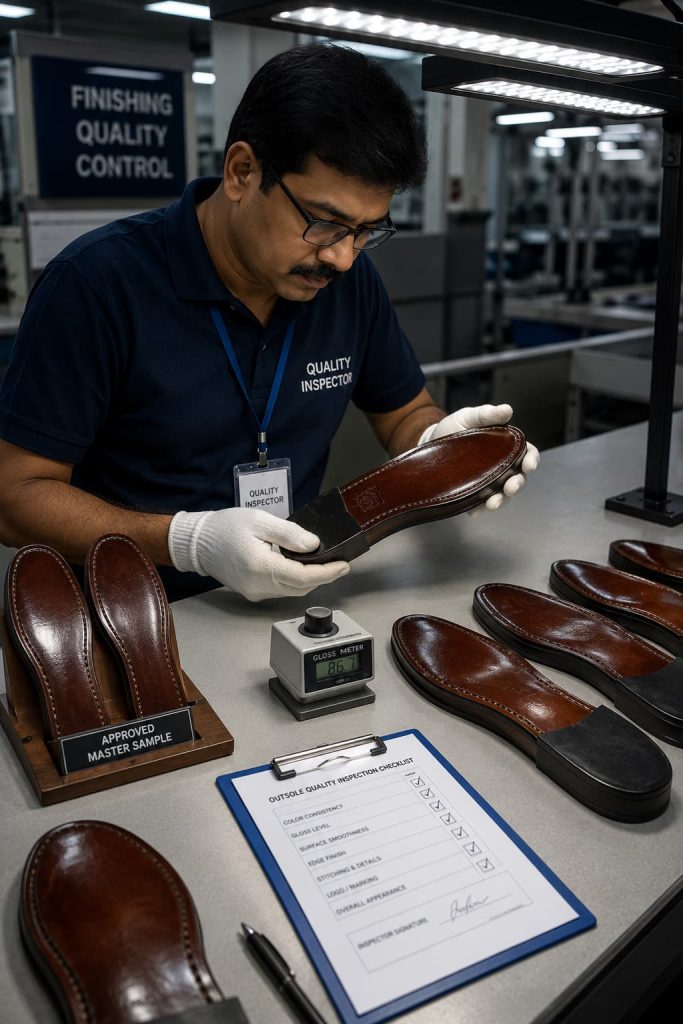
The final inspection after polishing verifies that the outsole meets both cosmetic and functional quality requirements. Inspectors examine every outsole under controlled lighting to identify surface defects before the assembly process continues.
Typical inspection focuses on gloss uniformity, color consistency, surface smoothness, edge appearance, and cleanliness. Operators also check for polishing residue, scratches, contamination, burn marks, and incomplete finishing.
Key Control Points
- Inspect under standardized LED lighting.
- Verify both appearance and surface feel.
- Remove polishing residue before packing.
- Segregate non-conforming products immediately.
Expert Tip: Keep finishing materials in sealed containers to prevent contamination and drying.
Common Finishing Defects and Corrective Actions
Even with well-controlled production, finishing defects can occur due to machine settings, material variation, or operator error. Early identification allows corrective action before large production quantities are affected.
| Defect | Possible Cause | Corrective Action |
|---|---|---|
| Uneven shine | Unequal brush pressure | Standardize operator technique and machine settings |
| Wax streaks | Excess wax application | Apply thinner coats and clean polishing wheels |
| Burn marks | Excessive friction or heat | Reduce wheel pressure and contact time |
| Dull appearance | Insufficient polishing | Increase polishing cycle within approved limits |
| Surface scratches | Worn or contaminated brushes | Replace or clean brushes immediately |
| Color variation | Uneven wax distribution | Improve wax application and brushing sequence |
| Residual polishing compound | Inadequate final brushing | Perform additional cleaning brush cycle |
| Dust contamination | Poor housekeeping | Improve cleaning frequency and material storage |
Expert Tip: Standardize inspection lighting throughout the finishing department to reduce operator variation.

Quality Inspection Checklist
Quality inspection should confirm that every outsole complies with the approved product specification before it proceeds to the next manufacturing stage.
Appearance
- Uniform gloss across the entire outsole.
- Consistent edge finish.
- Rich and even color depth.
- No dull patches.
Surface Quality
- Smooth leather texture.
- No scratches or abrasions.
- No burn marks.
- No polishing residue.
Material Condition
- Wax evenly distributed.
- Finishing cream fully blended.
- No contamination.
- Natural leather grain remains visible.
Production Consistency
- Matches approved master sample.
- Uniform finish throughout production batch.
- Correct customer gloss specification achieved.
- Traceability maintained through production records.
Expert Tip:
Record finishing parameters during every production run for continuous process improvement.
Conduct periodic operator skill evaluations to maintain consistent finishing quality.
Conclusion
Burnishing, brushing, and polishing represent the final craftsmanship stage of leather outsole finishing. Although these operations do not change the outsole’s structural performance, they significantly influence the product’s visual quality, perceived value, and customer satisfaction.
By carefully controlling friction, wax application, brush selection, polishing compounds, and inspection standards, footwear manufacturers can consistently produce premium leather outsoles with excellent gloss, smoothness, and color depth. Furthermore, standardized operating procedures, preventive machine maintenance, and operator training help minimize finishing defects while improving production efficiency.
In the next article of TheFootwearEdge – Outsole (Stock Fitting) Assembly Series, we will explore: Milling and Digging Operations in Outsole Process: Outsole (Stock Fitting) Assembly Series. The next blog explains how milling and digging create precise recesses, grooves, and cavities that support stitching, welt construction, channel formation, and outsole attachment while maintaining dimensional accuracy and production consistency.
Posts you make Like

Troubleshooting Adhesive Bond Failures in Footwear Manufacturing…
Frequently Asked Questions (FAQs)
Bottom coloring establishes the required color, while burnishing and polishing refine the surface, enhance gloss, improve color depth, and create the premium appearance expected in quality leather footwear.
Burnishing primarily compresses leather fibers using controlled friction to smooth the surface. Polishing follows by applying waxes or finishing compounds to develop the final gloss and visual appeal.
Horsehair brushes are widely preferred because they provide gentle friction, distribute wax evenly, and preserve the leather’s natural grain without scratching the surface.
Excessive friction generates heat that may darken leather, soften wax excessively, or create burn marks. Maintaining controlled temperature ensures a uniform finish without damaging the outsole.
Yes. Too much wax can create streaks, attract dust, reduce gloss consistency, and require additional rework. Multiple thin applications generally produce superior results.
Factories inspect under standardized LED lighting using approved master samples while checking gloss consistency, color uniformity, smoothness, residue, scratches, and overall appearance.
Luxury dress shoes, Goodyear welted footwear, premium formal shoes, and handcrafted leather footwear commonly undergo several polishing stages to achieve exceptional visual quality.