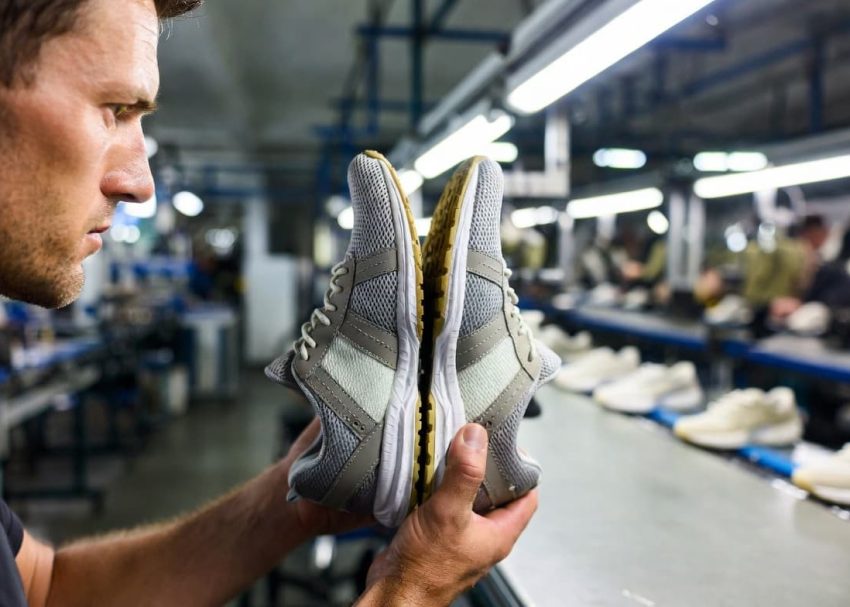
Stage inspection (Finishing) in Footwear Manufacturing – Full Shoe Assembly Series
By the time a shoe reaches the end of the assembly department, it has already undergone numerous critical operations including lasting, bottom preparation, cementing, outsole attachment, pressing, cooling, ageing, and de-lasting. Each of these processes contributes to the structural integrity, appearance, and overall performance of the finished product. However, completing the assembly sequence does not automatically guarantee that every pair meets the required quality standards.
Before footwear can move into finishing operations, manufacturers must confirm that the assembly process has achieved the intended results. Outsole positioning must be accurate, bonding must be continuous around the entire perimeter, upper materials must retain their designed shape, and the product must be free from cosmetic defects that could affect customer acceptance.
This verification takes place during Stage Inspection, one of the most important quality checkpoints in footwear manufacturing. Positioned immediately after de-lasting, this inspection acts as the final evaluation of the assembled shoe before additional value-adding finishing activities begin.
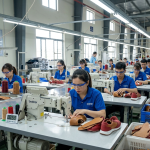
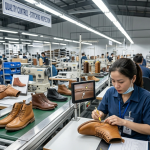
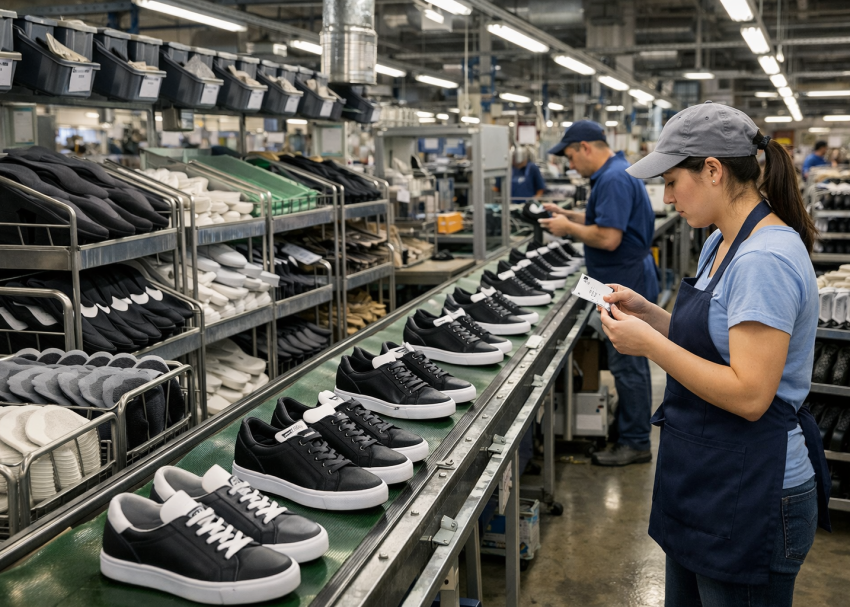
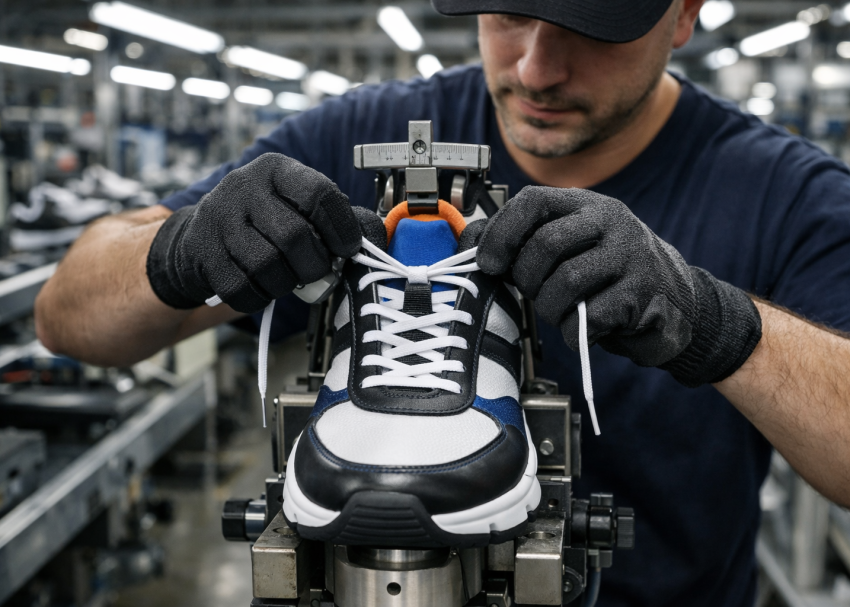
During stage inspection, trained quality personnel perform a detailed visual and tactile assessment of every pair. They examine outsole alignment, bonding integrity, shape retention, surface cleanliness, workmanship quality, and overall product appearance. Any defect identified at this point can be corrected before the shoe progresses further through production, where repairs become more costly and less efficient.
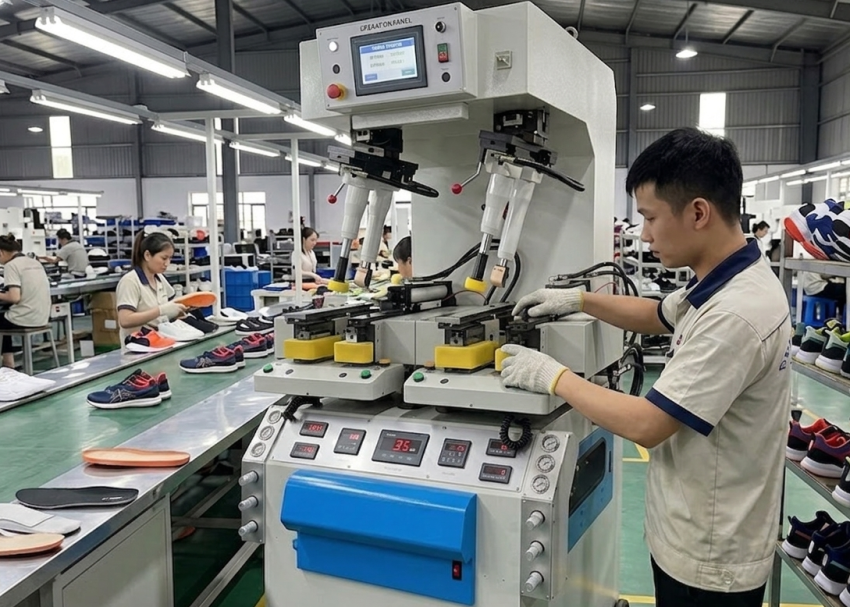
The Role of Stage Inspection in the Assembly Department
Within a footwear factory, stage inspection functions as the bridge between assembly and finishing. By the time the shoe reaches this checkpoint, all major construction activities have already been completed. The outsole has been attached, the bonding process has been activated and pressed, the shoe has been de-lasted, and the product has achieved its near-final appearance.
The primary objective of this inspection is to determine whether the shoe is structurally and cosmetically acceptable before additional value is added through finishing operations.
From a manufacturing perspective, stage inspection serves several purposes simultaneously. First, it prevents defective products from progressing further into production. Second, it provides immediate feedback to assembly operators and supervisors. Third, it protects production efficiency by identifying defects when rework is still practical and cost-effective.
Many factories consider stage inspection the final opportunity to detect bonding-related problems before the shoe reaches the customer.
Once finishing operations begin, certain defects become harder to detect because cleaning chemicals, polishing compounds, and finishing materials may temporarily hide visible quality issues.
Key Control Points
- 100% pair inspection
- Standardized inspection criteria
- Immediate segregation of defective pairs
- Real-time feedback to production
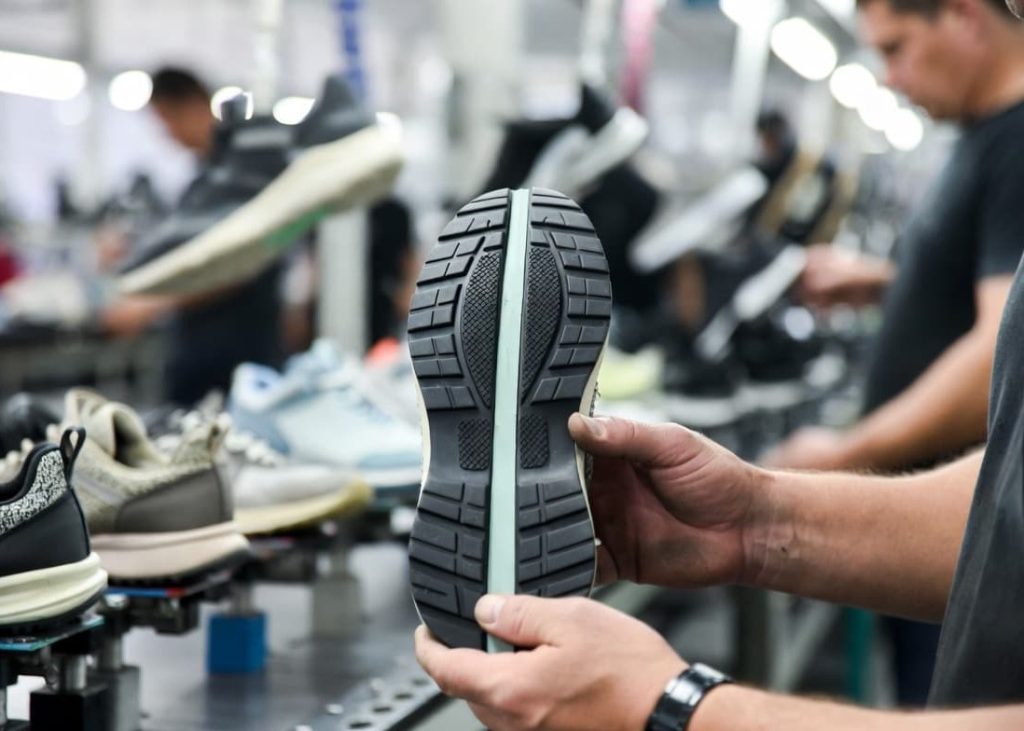
Expert Tip: Use approved golden samples throughout the shift.
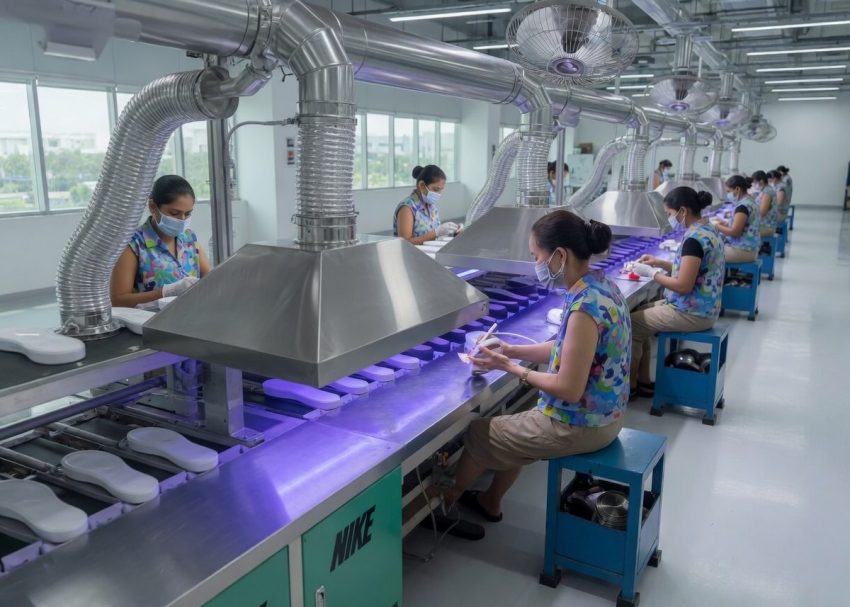
Inspection Station Setup and Environmental Requirements
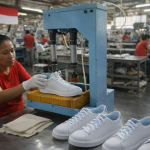
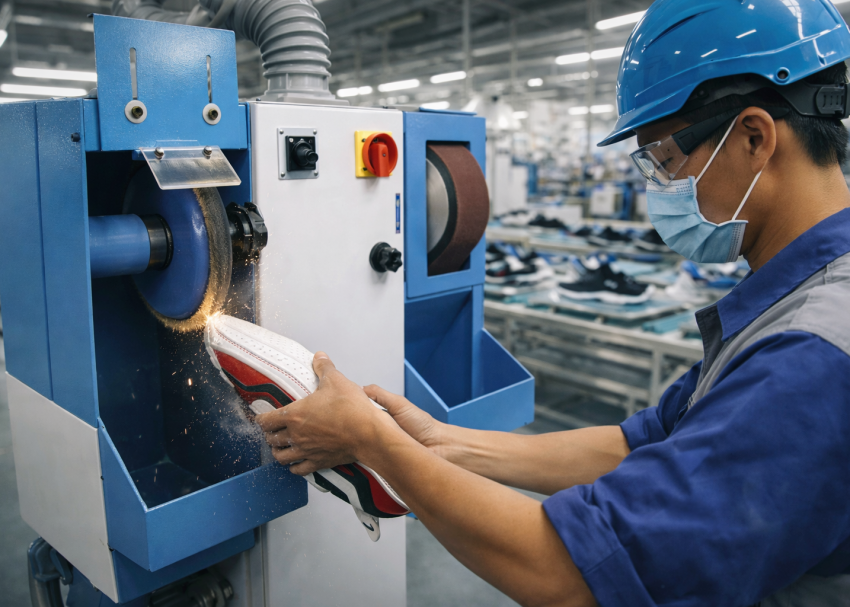
The effectiveness of stage inspection depends heavily on the environment in which the inspection takes place. Even highly experienced inspectors cannot consistently identify defects if the workstation conditions are inadequate. Most footwear factories position stage inspection immediately after cooling and de-lasting operations. This location allows inspectors to evaluate the shoe after all assembly stresses have stabilized but before finishing activities begin.
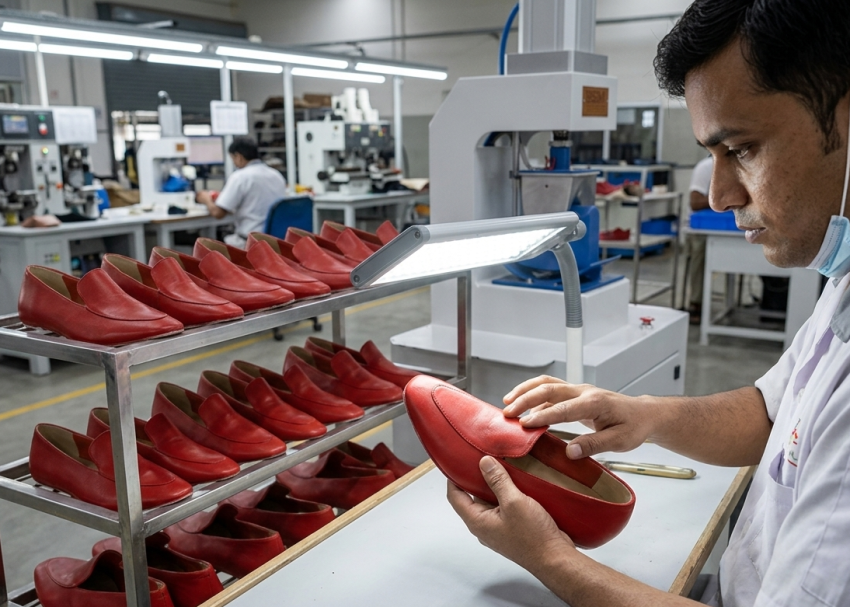
Lighting is one of the most important factors affecting inspection quality. Insufficient lighting often causes adhesive stains, wrinkles, scratches, and surface contamination to go unnoticed. For this reason, modern factories install high-intensity LED lighting systems designed specifically for visual inspection activities. The workstation itself should provide adequate space for inspectors to rotate and examine the shoe from multiple angles. Inspectors must be able to view the shoe from the front, rear, lateral side, medial side, top, and bottom without obstruction.
Many premium footwear manufacturers also use defect sample boards positioned directly at the inspection station. These visual references help inspectors maintain consistency and reduce subjective judgment. Another important consideration is inspector fatigue. Since stage inspection involves repetitive visual concentration, ergonomic workstation design plays a significant role in maintaining accuracy throughout the shift.
Key Control Points
- Standardized LED lighting
- Ergonomic workstation design
- Approved defect sample references
- Clean inspection environment
Pro Tip: Rotate inspectors to reduce fatigue.
Outsole Alignment Verification
One of the first areas evaluated during stage inspection is outsole alignment. Although the outsole may appear correctly attached at first glance, even small positioning errors can create significant cosmetic and functional issues. Inspectors carefully evaluate whether the outsole is centered relative to the upper. They compare the outsole position against factory reference marks and visually assess symmetry between the left and right shoes.
Alignment problems often originate during sole attachment. If the upper shifts slightly while entering the press machine or if the operator positions the sole incorrectly, the final assembly may become unbalanced. The consequences of poor alignment extend beyond appearance. Uneven sole positioning can affect gait, stability, wear patterns, and customer perception of quality.
Inspectors typically assess alignment from several perspectives. The front view reveals toe centering issues. The rear view highlights heel alignment problems. Side views expose uneven overhang conditions. Meanwhile, bottom inspection confirms overall outsole positioning. For athletic footwear and premium fashion products, alignment tolerances are often extremely tight because customers can easily identify asymmetrical products.
Key Control Points
- Toe center alignment
- Heel positioning accuracy
- Sidewall symmetry
- Left-right pair consistency
Pro Tip: Audit inspector accuracy regularly.
Bond Integrity and Adhesion Evaluation
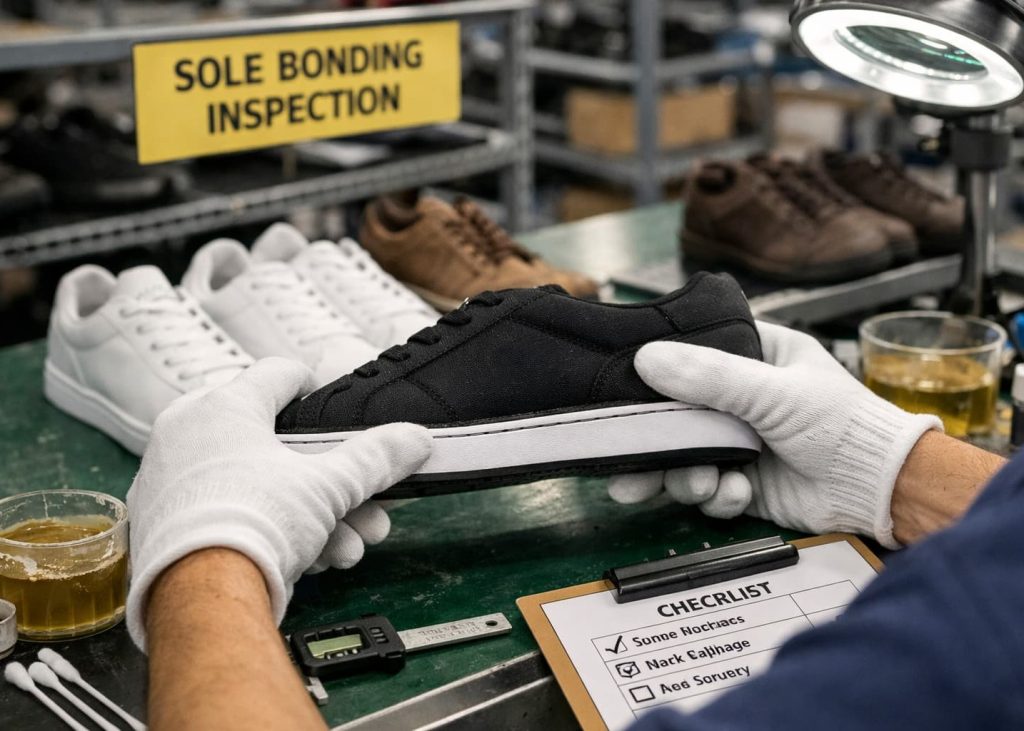
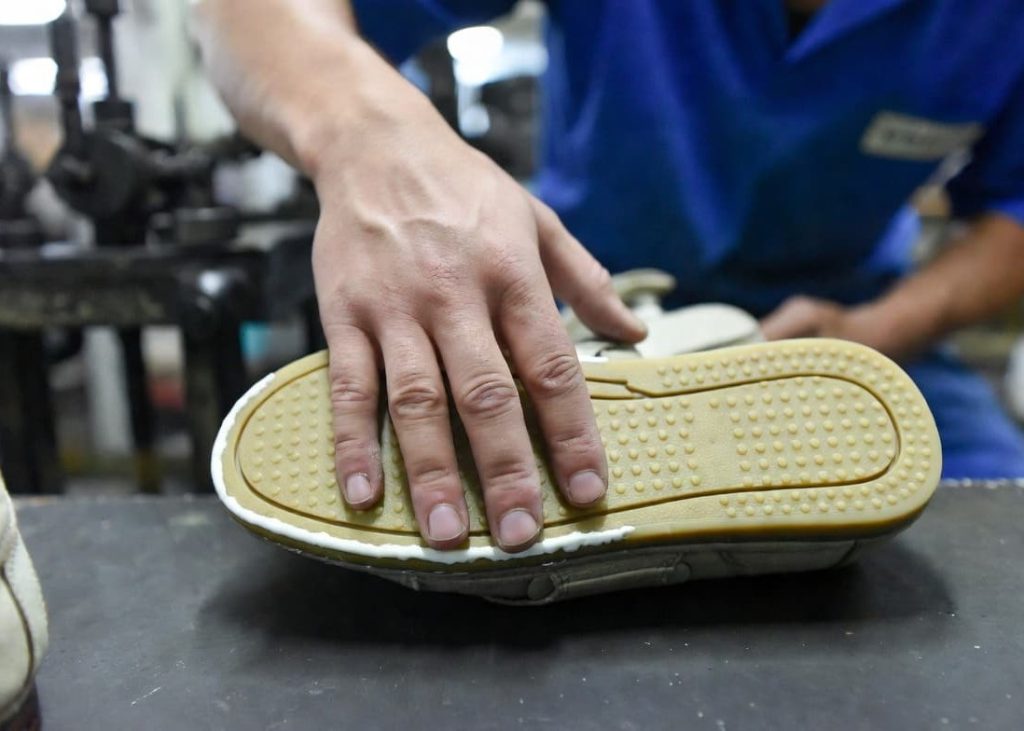
Bond quality represents the most critical structural inspection performed during stage inspection. Regardless of how attractive a shoe appears, inadequate bonding will eventually result in product failure. Inspectors systematically examine the complete bonding perimeter. Using both visual observation and tactile pressure, they check whether the outsole remains securely attached to the upper without gaps, lifting, or separation.
Particular attention is given to high-flex areas such as the toe bend region and forefoot sidewalls. These locations experience significant stress during normal wear and therefore present the highest risk for premature bond failure. Many bonding defects originate much earlier in the assembly process. Improper adhesive application, insufficient drying time, contamination, poor heat activation, and inadequate pressing pressure can all contribute to weak adhesion.
The purpose of stage inspection is not only to detect existing defects but also to identify early warning signs of future failure. Small edge openings that appear insignificant during inspection may eventually develop into complete sole separation during customer use.
Key Control Points
- Full perimeter bond inspection
- Toe flex zone evaluation
- Edge lifting detection
- Immediate segregation of bond failures
Pro Tip: Track top recurring defects daily.
Cosmetic Appearance and Surface Quality Assessment
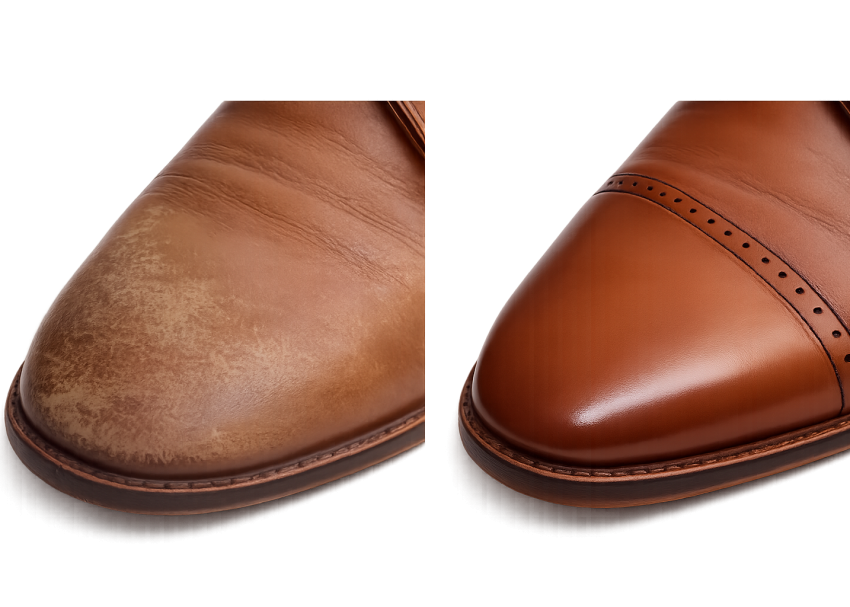
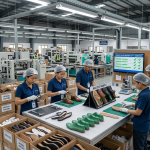
Beyond structural quality, stage inspection also evaluates the overall appearance of the shoe. Modern consumers expect footwear products to exhibit a clean, consistent, and premium appearance. Inspectors therefore examine every visible surface for cosmetic defects. The upper, outsole, foxing area, collar, heel, and toe sections all receive detailed evaluation.
Adhesive contamination remains one of the most common defects identified during this process. Excess cement may appear as smears, stains, overflow marks, or residue along the bonding line. Similarly, dust accumulation, fingerprints, scratches, handling marks, and material scuffs can significantly reduce product presentation quality.
Different materials require different inspection approaches. White materials often reveal contamination easily, while darker materials may conceal stains but show scratches more clearly.
Suede and nubuck materials require especially careful examination because surface damage can be difficult to repair. Inspectors must balance speed with accuracy while maintaining consistent quality standards throughout the production shift.
Key Control Points
- Adhesive residue inspection
- Surface cleanliness verification
- Scratch and scuff detection
- Material appearance consistency
Pro Tip: Never inspect shoes before adequate cooling.

Shape Retention and Dimensional Stability Evaluation
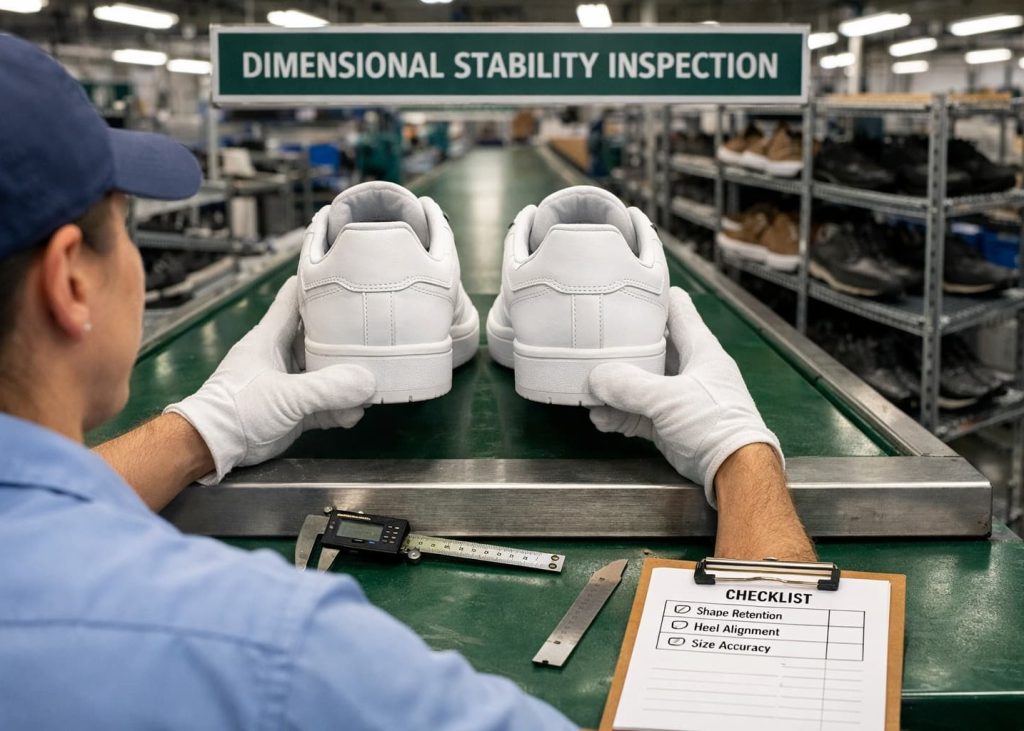
After de-lasting, the shoe must maintain the shape originally created during the lasting process. This requirement makes shape retention one of the most important inspection criteria. A properly manufactured shoe should retain its intended silhouette without collapsing, twisting, or deforming.
Inspectors compare the left and right shoes side by side while evaluating toe shape, vamp profile, heel positioning, collar height, and overall symmetry. Shape instability often indicates upstream process problems. Insufficient cooling, weak toe puff activation, inadequate counter performance, or excessive material relaxation may all contribute to deformation.
In some cases, the shoe may initially appear acceptable but gradually lose shape during storage. Therefore, inspectors are trained to identify subtle warning signs that indicate potential dimensional instability.
The ability to maintain consistent shape directly influences consumer perception of quality and brand value. Consequently, premium footwear manufacturers apply strict standards for shape retention throughout production.
Key Control Points
- Toe shape consistency
- Heel verticality
- Pair symmetry
- Dimensional stability
Pro Tip: Standardize defect classification criteria.
Rework Management and Defect Segregation
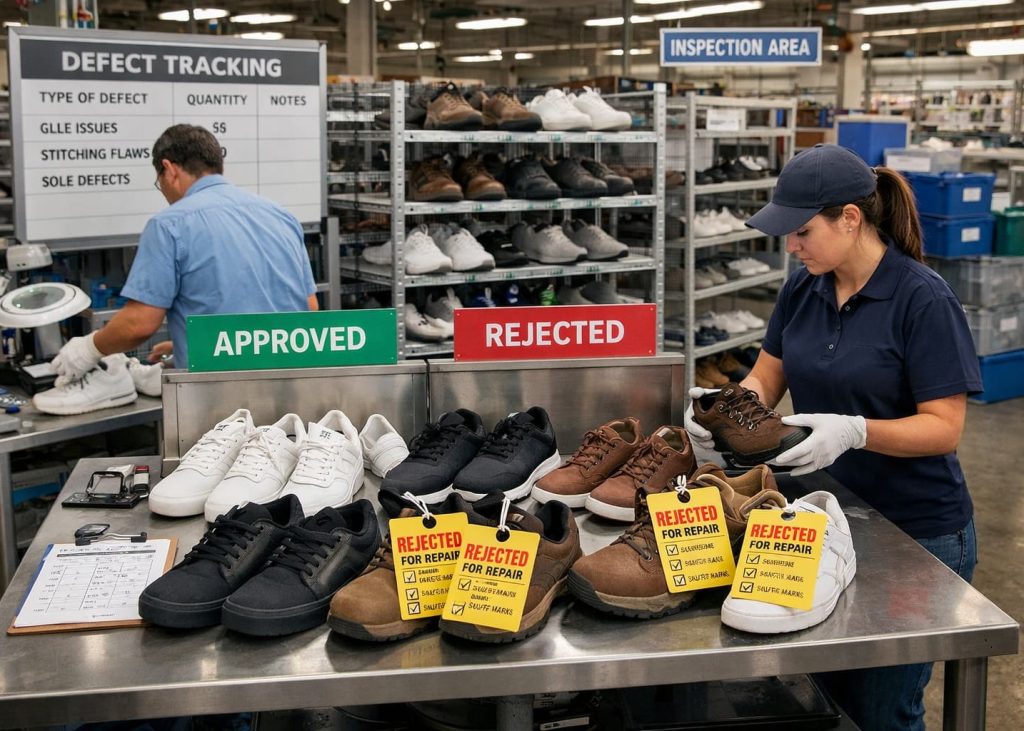
A major responsibility of stage inspection is controlling the flow of defective products. When inspectors identify non-conforming footwear, immediate segregation becomes essential. Without proper segregation procedures, defective products can accidentally re-enter normal production flow and eventually reach customers.
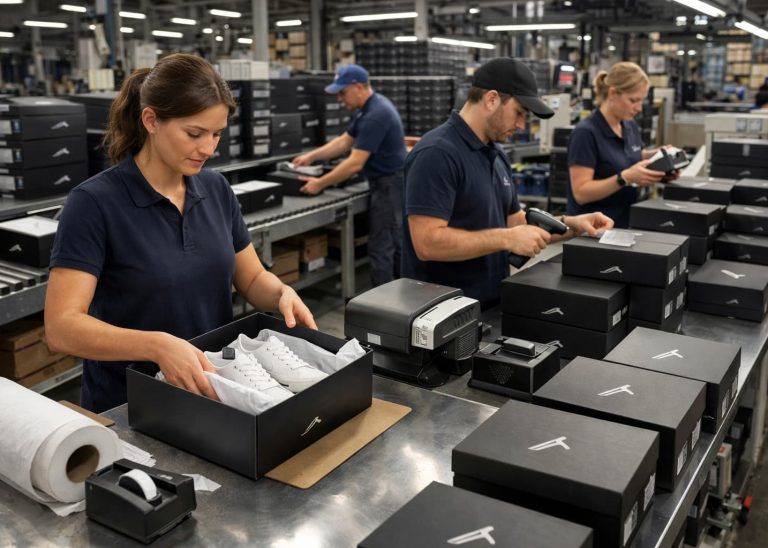
Most factories use color-coded tags, barcode systems to identify rejected pairs. These systems provide clear visibility regarding defect type, inspection status, and required corrective action. Effective rework management also generates valuable quality data. By tracking defect frequency and root causes, factories can identify recurring process weaknesses and implement targeted improvements.
Consequently, stage inspection serves not only as a quality gate but also as an important source of manufacturing intelligence.
Key Control Points
- Immediate defect tagging
- Separate rework storage areas
- Accurate defect recording
- Daily trend analysis
Pro Tip: Conduct cross-verification between inspectors.
Conclusion
Stage Inspection is the final quality gate that protects the integrity of the entire footwear assembly process. By verifying outsole alignment, bond integrity, cosmetic appearance, dimensional stability, and workmanship quality, this operation ensures that only acceptable products move forward into finishing.
A strong stage inspection system reduces rework costs, improves production efficiency, supports brand compliance, and protects customer satisfaction. More importantly, it provides valuable feedback that helps manufacturers continuously improve assembly performance.
In the next article of the Full Shoe Assembly Series, we will examine Heel Nailing in Footwear Manufacturing, a critical finishing operation used to secure heel components, improve structural durability, and achieve final product stability.
Pro Tip: Use digital defect tracking whenever possible.
Frequently Asked Questions – FAQs
Why is stage inspection important in footwear manufacturing?
Stage inspection prevents defective shoes from entering finishing operations and ensures assembly quality before final processing.
What defects are commonly identified during stage inspection?
Common defects include open bonding, outsole misalignment, adhesive overflow, wrinkles, press marks, and shape deformation.
Why is tactile inspection important during assembly inspection?
Tactile inspection helps identify hidden bonding weakness, structural instability, and internal defects not visible externally.
What happens to rejected shoes after inspection?
Rejected shoes receive rework tags and move into designated repair or rejection areas for corrective action.
How do factories improve inspection consistency?
Factories use standardized lighting, approved defect samples, inspector training, and periodic quality audits.
Why must inspection occur after de-lasting?
Inspection after de-lasting allows accurate evaluation of final shoe shape, bonding integrity, and dimensional stability.
Can automated systems replace manual stage inspection?
Automation supports inspection efficiency, but skilled manual inspection remains essential for cosmetic and tactile evaluation.