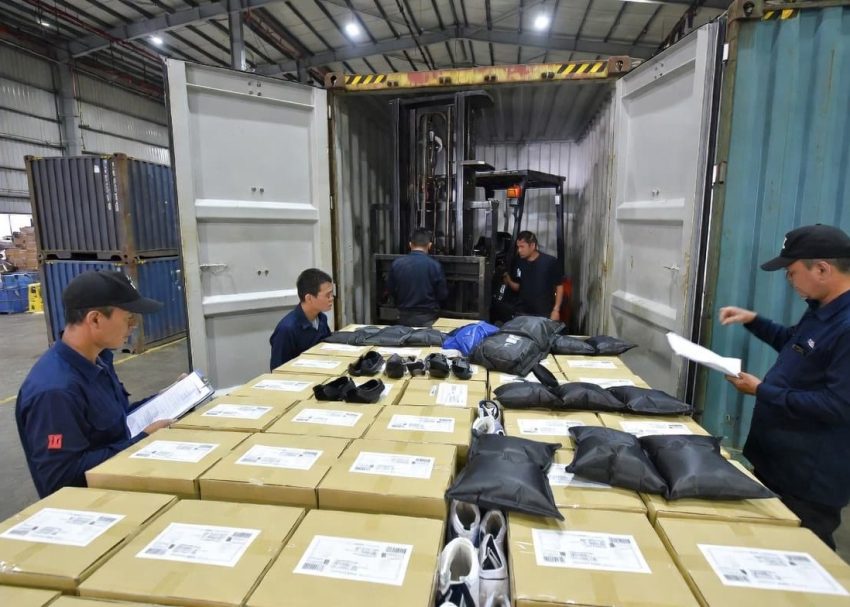
Container Stuffing in Footwear Manufacturing – Full Shoe Assembly Series
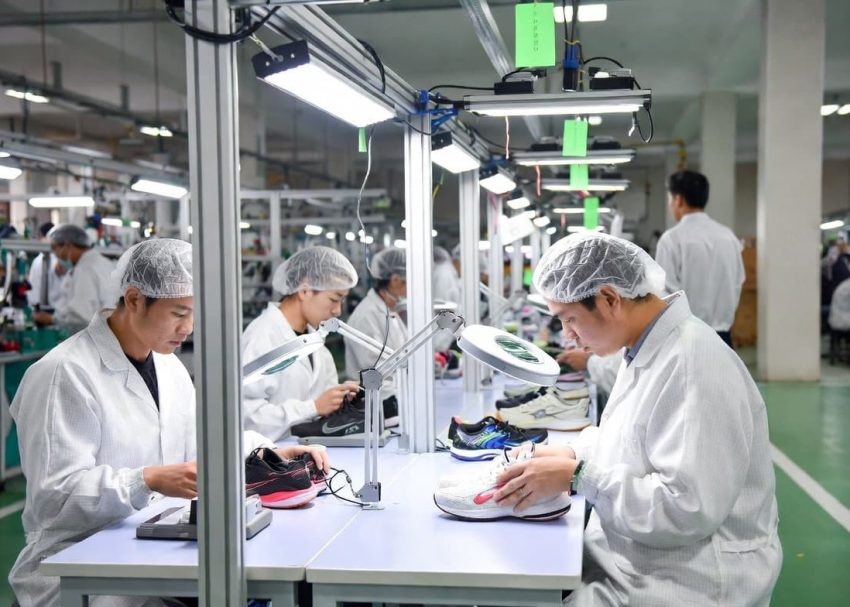
A finished footwear shipment may represent several weeks of manufacturing activity involving material preparation, stitching, assembly, quality inspections, finishing operations, packing, and export coordination. By the time cartons reach the warehouse loading area, significant resources have already been invested to ensure that every pair meets customer expectations. However, product quality is not fully protected until those cartons safely complete their journey to the customer.
Many footwear professionals focus heavily on production efficiency and quality control inside the factory, yet transportation-related damage remains a common cause of customer complaints worldwide. Carton collapse, moisture exposure, cargo movement, damaged shoe boxes, and packaging deformation can occur even when manufacturing quality is excellent. In many cases, the root cause is not production but improper container loading.
A typical export container may travel thousands of kilometers by truck, pass through multiple ports, spend weeks aboard an ocean vessel, and experience repeated handling before reaching a distribution center. Throughout this journey, the cargo is subjected to vibration, acceleration forces, stacking pressure, temperature changes, and humidity fluctuations. Without proper loading and stabilization, these conditions can gradually damage both packaging and products.
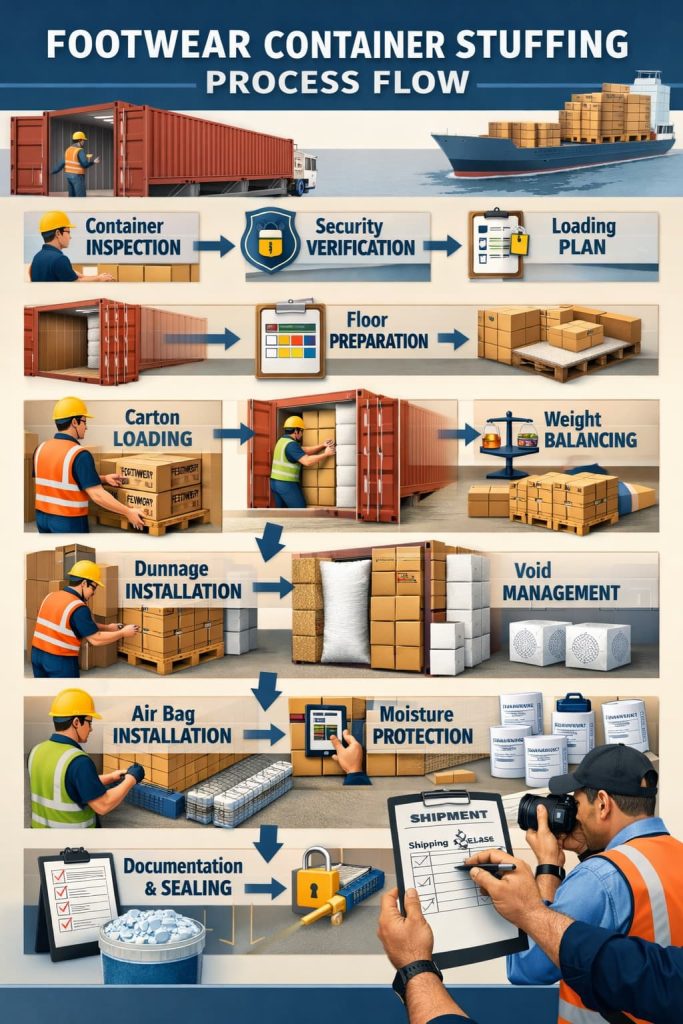
For this reason, container stuffing has become a highly structured operation within modern footwear manufacturing. What was once considered a basic warehouse activity is now managed through detailed loading plans, security inspections, moisture-control measures, cargo stabilization systems, and extensive documentation requirements. Global brands, logistics providers, customs authorities, and insurance companies all expect manufacturers to demonstrate that shipments have been prepared to withstand the realities of international transportation.

The Role of Container Stuffing in Footwear Exports
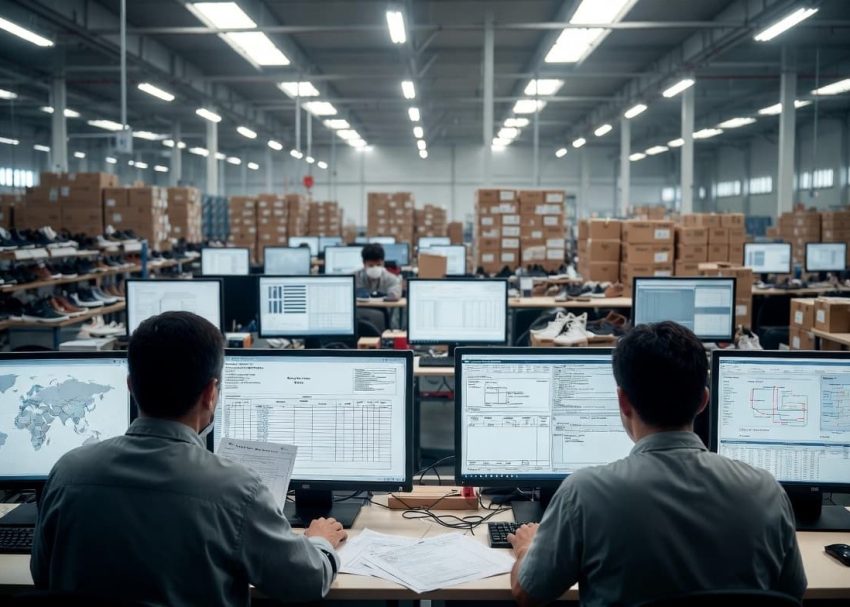
Container stuffing represents the final factory-controlled activity before finished footwear enters the international supply chain. Once the container doors are closed and sealed, the factory no longer has direct control over how the shipment is handled. Consequently, the quality of the stuffing operation directly influences the condition of the products when they arrive at their destination.
Footwear shipments differ from many industrial products because they typically consist of lightweight cartons stacked in large quantities. Although individual cartons may appear strong, they are exposed to continuous stress throughout transportation. Road vibration, sudden braking, rough handling, vessel movement, and stacking pressure can all generate forces capable of damaging cargo if it has not been properly secured.
Therefore, container stuffing should not be viewed merely as a warehouse activity. Instead, it should be considered an extension of quality assurance. Just as factories carefully control stitching quality, lasting accuracy, adhesive bonding, and final inspection standards, they must also control transportation-related risks. A shipment that leaves the factory in excellent condition but arrives damaged still represents a quality failure from the customer’s perspective. Modern footwear manufacturers use detailed loading plans to create stable cargo structures inside containers.
The objective is not simply to maximize available space. Instead, logistics teams seek to balance space utilization, weight distribution, carton protection, and transportation stability. Proper loading ensures that cartons behave as a unified structure capable of resisting movement throughout the entire logistics journey.
Container stuffing also has a significant financial impact. Freight costs continue to rise globally, making container utilization increasingly important. Efficient loading allows factories to maximize shipment volume while maintaining safety and quality standards. Even small improvements in loading efficiency can generate substantial annual savings for high-volume footwear exporters.
Key Control Points
- Confirm shipment readiness before loading.
- Use approved stuffing procedures.
- Balance utilization with cargo stability.
- Maintain complete loading records.
Expert Tip: Always perform flashlight leak testing before approving a container.

Container Arrival and Pre-Stuffing Inspection
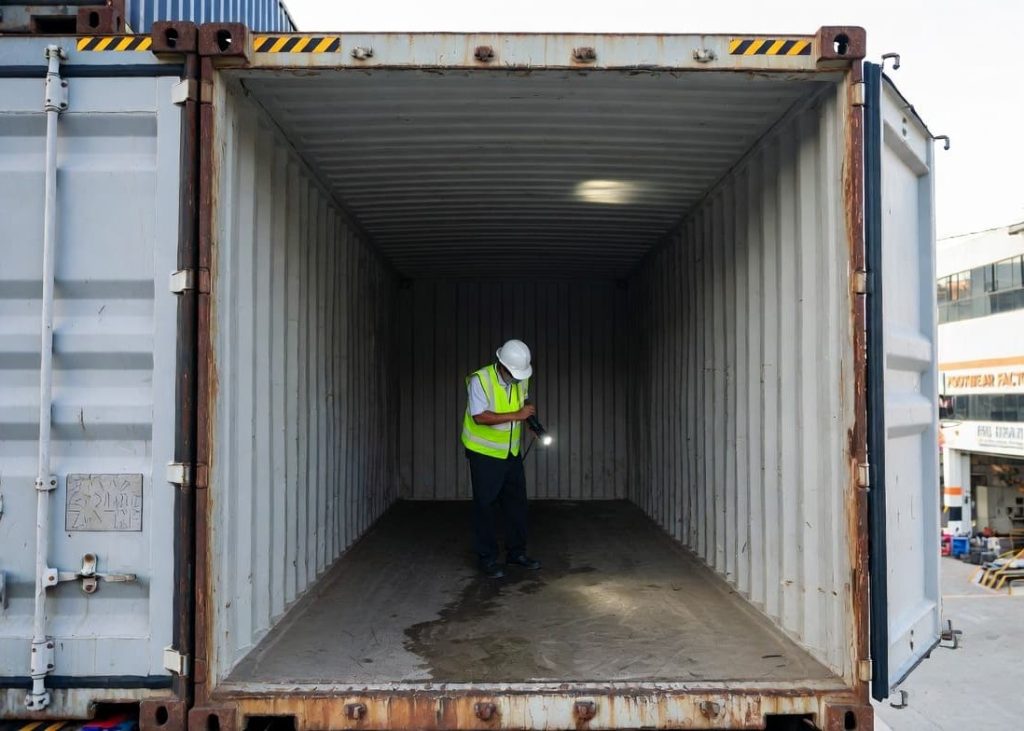
Every successful stuffing operation begins with a thorough inspection of the empty container. Regardless of how carefully products are packed, a damaged or contaminated container can compromise the entire shipment. Therefore, footwear factories treat container inspection as a critical quality control activity rather than a routine logistics task.
Upon arrival at the factory, logistics personnel first verify the container number against booking documentation. This step ensures that the correct equipment has been assigned to the shipment and that all transportation records remain accurate. Once identification has been confirmed, inspectors begin a detailed examination of the container’s structural condition.
The inspection covers all major components, including the roof, side walls, floorboards, doors, locking bars, corner posts, and ventilation openings. Personnel carefully check for dents, cracks, holes, corrosion, water stains, loose fittings, and evidence of previous damage. Even a small defect can become a significant problem during ocean transportation, where containers are exposed to heavy rain, sea spray, and changing environmental conditions.
Special attention is given to the container floor. Footwear cartons are often loaded directly onto the floor surface, making cleanliness and structural integrity essential. Inspectors look for broken boards, exposed nails, splinters, oil contamination, chemical residues, and moisture accumulation. Any condition capable of damaging cartons or affecting product quality must be addressed before loading begins. One of the most common inspection methods is the flashlight test. During this procedure, one employee enters the container while another shines a light around the exterior.
Any visible light penetration indicates potential leakage points. If water can enter through these openings during transportation, the risk of carton damage and mold development increases significantly.
Key Control Points
- Verify container identification number.
- Inspect roof, walls, floor, and doors.
- Perform leak detection testing.
- Reject contaminated or damaged containers.
Pro Tip: Never assume that a visually clean container is suitable for footwear shipments. Always perform odor inspections because cartons can absorb smells during long transportation periods, leading to customer complaints after delivery.

C-TPAT Security and Container Integrity Verification
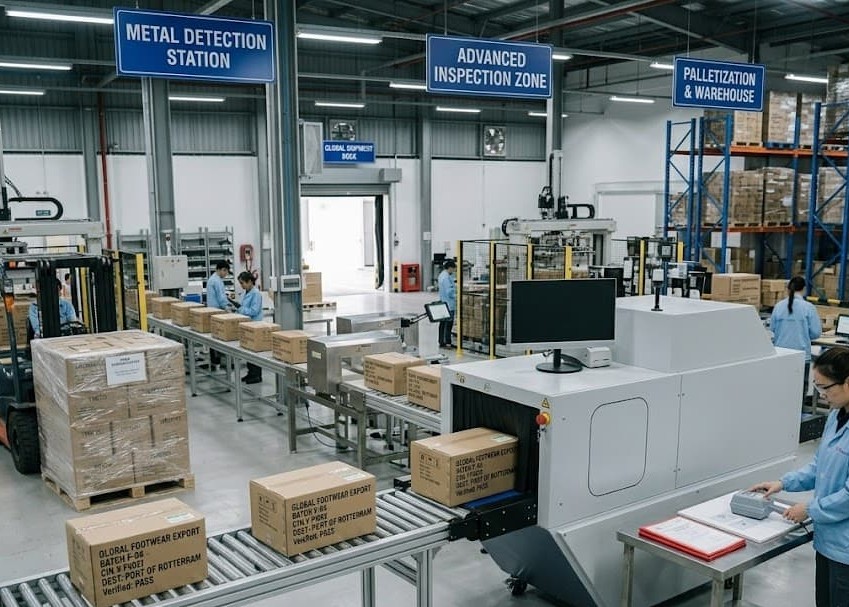
In addition to quality protection, modern footwear shipments must comply with increasingly strict security requirements. Global brands, customs authorities, and logistics providers expect factories to demonstrate that export shipments remain protected against tampering, smuggling, theft, and unauthorized access throughout the transportation process.
One of the most widely recognized security programs is the Customs Trade Partnership Against Terrorism. Many footwear brands require suppliers to follow security procedures aligned with C-TPAT standards before export shipments can be released.
The objective of container integrity verification is to confirm that the container structure has not been altered, damaged, or compromised in a manner that could create security risks. Before loading begins, trained personnel conduct systematic inspections covering all critical container components.
Factories commonly use a seven-point inspection process that evaluates the front wall, left side wall, right side wall, floor, ceiling, doors, and external undercarriage. Inspectors look for hidden compartments, unauthorized modifications, damaged structural components, and signs of tampering. Any irregularity requires immediate investigation before loading authorization can be granted.
Key Control Points
- Complete container security inspection.
- Verify container integrity.
- Restrict access to loading areas.
- Maintain security documentation.
Pro Tip: Conduct odor inspections in addition to visual inspections.

Loading Plan Preparation and Container Optimization
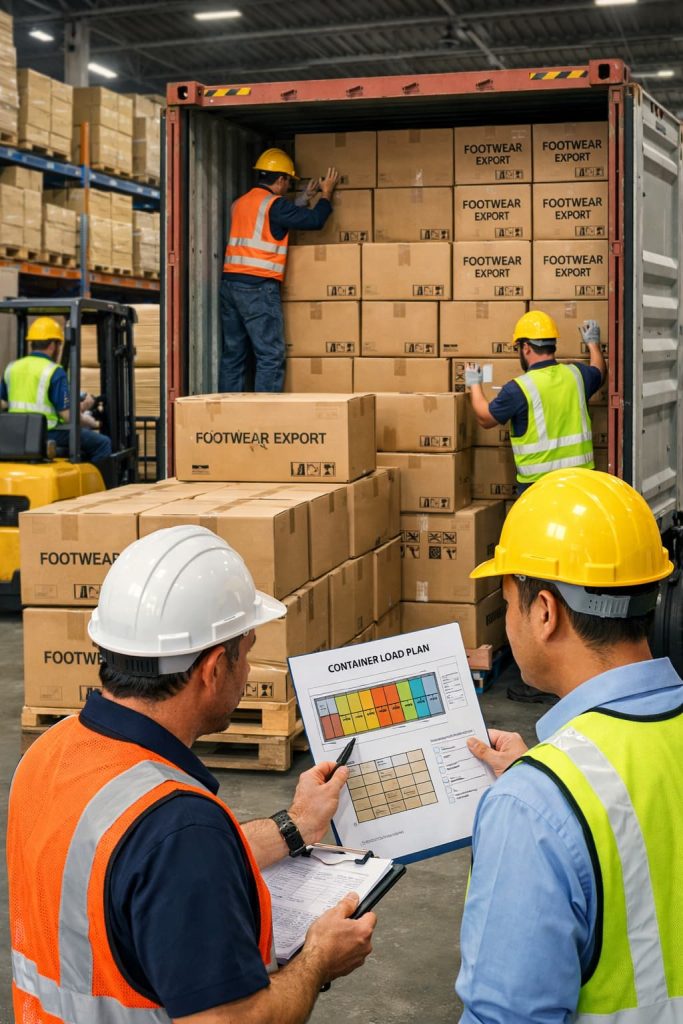
Successful container stuffing begins long before the first carton enters the container. In modern footwear factories, loading activities are guided by detailed plans developed through careful analysis of shipment characteristics, transportation requirements, and customer expectations.
The loading plan serves as a roadmap for the entire stuffing operation. It determines how cartons will be arranged, how weight will be distributed, where stabilization materials will be installed, and how available space will be utilized. Without proper planning, loading teams often encounter instability issues, inefficient space usage, and increased damage risks.
Preparation begins with a review of shipment data. Logistics personnel analyze carton dimensions, shipment quantities, gross weights, destination requirements, and container specifications. Because footwear factories frequently ship multiple styles, sizes, and purchase orders within the same container, planning becomes essential for maintaining organization and accessibility.
Many large manufacturers now utilize specialized container optimization software. These systems calculate the most efficient loading arrangement while considering carton dimensions, weight distribution, stacking limitations, and transportation stability. Software-generated loading patterns help reduce trial-and-error decision-making and improve overall consistency.
Key Control Points
- Confirm shipment dimensions and weights.
- Review container specifications.
- Optimize utilization and stability.
- Approve loading plan before stuffing.
Pro Tip: Verify actual carton weights rather than relying solely on carton count.

Container Floor Preparation and Moisture Prevention
Before loading begins, the container interior must be prepared to provide a safe environment for the shipment. Although this stage often receives less attention than loading itself, it plays a critical role in protecting footwear products from physical and environmental damage.
The first step involves cleaning and inspecting the floor area. Personnel remove dust, debris, loose materials, packaging remnants, and any foreign objects that could damage cartons. Even small pieces of debris can puncture packaging or create uneven stacking conditions once the load is in place.
After cleaning, inspectors evaluate the floor for signs of moisture. Water stains, damp surfaces, or excessive humidity may indicate previous leakage or condensation problems. Because footwear cartons are highly sensitive to moisture exposure, any evidence of water intrusion must be investigated before loading proceeds.
Moisture control has become increasingly important in footwear exports due to the phenomenon known as container rain. During long ocean voyages, temperature differences between day and night can create condensation inside the container. Water droplets form on interior surfaces and eventually fall onto cartons. Over several weeks of transportation, this moisture can cause carton deterioration, mold development, odor issues, and product damage.
To reduce these risks, many footwear manufacturers install desiccants and moisture absorbers before loading begins. These materials capture excess humidity and help maintain a more stable environment inside the container. Some high-value shipments also utilize protective liners and specialized humidity-control systems.
Key Control Points
- Clean container thoroughly.
- Verify floor dryness.
- Install moisture protection systems.
- Document preparation activities.
Pro Tip: Follow carton compression limits during stacking.

Carton Loading Sequence Management
Once the container has been inspected, approved, and prepared for loading, the stuffing team begins transferring finished footwear cartons into the container according to a predetermined sequence. At first glance, loading sequence may appear to be a simple operational detail. However, experienced logistics professionals understand that loading order directly influences cargo stability, product protection, unloading efficiency, and transportation safety.
In footwear manufacturing, shipments often contain multiple styles, colorways, size runs, purchase orders, and customer destinations. Consequently, cartons cannot simply be loaded in any available space. Logistics teams must carefully organize the loading process to ensure that products remain accessible, stable, and properly supported throughout transportation.
Loading lighter cartons first may create compression problems because heavier cartons placed on top can crush packaging during transit. Therefore, proper sequencing helps distribute loads more effectively and protects carton integrity.
Many footwear factories also use shipment prioritization when determining loading order. Cartons intended for the same customer, distribution center, or purchase order are grouped together whenever possible. This approach simplifies receiving operations at destination warehouses and reduces unloading complexity. In some cases, customers specifically require designated loading arrangements to support downstream logistics activities.
Key Control Points
- Follow approved loading sequence.
- Position heavy cartons first.
- Maintain shipment segregation.
- Monitor loading progress continuously.
Pro Tip: Eliminate large void spaces before installing stabilization materials.
Load Distribution and Weight Balancing
Among all container stuffing activities, weight distribution is one of the most critical factors influencing transportation safety. Even when cartons are loaded neatly and efficiently, poor weight distribution can create significant risks throughout the logistics journey.
Every container has structural limitations designed to support specific load patterns. If excessive weight is concentrated in one section, transportation stability may be compromised. Trucks, trailers, containers, and cargo structures all experience additional stress when loads are not distributed properly. Consequently, footwear factories must carefully calculate and monitor weight placement during stuffing operations.
The primary objective is to maintain a balanced center of gravity throughout the container. Ideally, weight should be distributed evenly from front to rear and from side to side. When weight concentrations develop in isolated areas, cargo movement becomes more likely during transportation. Sudden braking, acceleration, road vibration, and vessel motion can amplify these effects and increase the risk of damage.
Uneven loading can also create compliance issues. Transportation regulations often establish axle load limitations for trucks and chassis. If weight distribution calculations are ignored, the shipment may exceed legal limits even when the total container weight remains within acceptable parameters. Such violations can result in transportation delays, fines, and operational disruptions.
Key Control Points
- Maintain balanced weight distribution.
- Control center of gravity.
- Respect axle load restrictions.
- Verify actual loading conditions.
Pro Tip: Never rely solely on carton count when balancing a container. Two sections containing the same number of cartons may have significantly different weights depending on the footwear category being shipped.
Carton Stacking and Compression Management
After loading sequence and weight distribution have been established, attention shifts to carton stacking. This stage determines how effectively the cargo structure will resist compression forces during transportation.
Although export cartons are designed to withstand stacking pressure, every packaging system has limits. When cartons are stacked beyond their compression capability, deformation occurs. Initially, the damage may appear minor. However, during long transportation cycles, vibration and continuous pressure often worsen the situation, resulting in collapsed cartons and damaged product packaging.
Footwear manufacturers therefore establish specific stacking standards based on carton construction, product weight, packaging design, and customer requirements. Stronger cartons may support higher stacking heights, while premium retail packaging often requires more conservative limits to preserve presentation quality.
Proper stacking begins with alignment. Cartons must be positioned vertically so that compression forces travel directly through the strongest portions of the packaging structure. Misaligned stacks create uneven pressure distribution and increase the likelihood of collapse. Supervisors routinely inspect stacking quality throughout the stuffing operation to ensure compliance with approved standards.
Key Control Points
- Follow approved stacking limits.
- Maintain vertical alignment.
- Monitor compression risks.
- Verify stability continuously.
Pro Tip: Use air bags as reinforcement, not as a replacement for proper loading.
Void Space Management and Cargo Stabilization
One of the most common causes of transportation damage is uncontrolled cargo movement inside the container. Even a carefully stacked shipment can become unstable if excessive empty space remains between cargo sections. Consequently, void space management is a fundamental element of professional container stuffing.
During transportation, containers experience forces from multiple directions. Trucks accelerate, brake, and turn. Vessels roll and pitch in response to sea conditions. Cranes lift containers repeatedly during port operations. Each movement generates energy that can cause cargo to shift if adequate stabilization measures are not in place.
Empty spaces create opportunities for this movement to occur. When cartons slide into void areas, the cargo structure can gradually lose stability. As movement increases, compression damage, carton collapse, and product deformation become more likely. Therefore, logistics teams actively work to minimize unnecessary gaps throughout the loading process.
Void management begins during loading plan preparation. Container optimization software helps identify areas where unused space may develop. Supervisors then adjust loading patterns to improve cargo density while maintaining accessibility and stability. The objective is to create a tightly integrated cargo structure capable of resisting transportation forces.
Key Control Points
- Minimize unnecessary gaps.
- Stabilize unavoidable void areas.
- Monitor cargo movement risks.
- Verify stability before sealing.
Pro Tip: Install humidity data loggers for moisture-sensitive shipments.
Dunnage and Blocking Material Installation
When empty spaces cannot be eliminated through loading patterns alone, logistics teams use dunnage and blocking materials to reinforce cargo stability. These materials act as protective structures that absorb movement forces and prevent cartons from shifting during transportation.
Dunnage refers to materials placed between cargo sections, container walls, or void areas to improve stability. In footwear manufacturing, common dunnage materials include corrugated fillers, honeycomb boards, reinforced paper structures, timber blocking, foam protection systems, and specialized cargo support panels.
The selection of dunnage materials depends on shipment characteristics and customer requirements. Lightweight footwear shipments may only require corrugated stabilization materials, while high-value exports or mixed-load containers may utilize more robust support systems. Regardless of the material used, the objective remains the same: maintaining cargo integrity throughout transportation.
Installation procedures must be carefully controlled. Poorly positioned dunnage can become ineffective during transit and may even contribute to cargo instability. Therefore, supervisors verify placement locations and ensure that support materials remain securely positioned before container closure.
Blocking materials perform a related function. Rather than filling gaps, blocking systems physically restrict cargo movement by creating barriers against shifting forces. These barriers are particularly useful near container doors, where cargo movement during transportation can create safety hazards when containers are opened at destination.
Key Control Points
- Use approved dunnage materials.
- Install blocking systems correctly.
- Protect vulnerable cargo zones.
- Verify effectiveness before sealing.
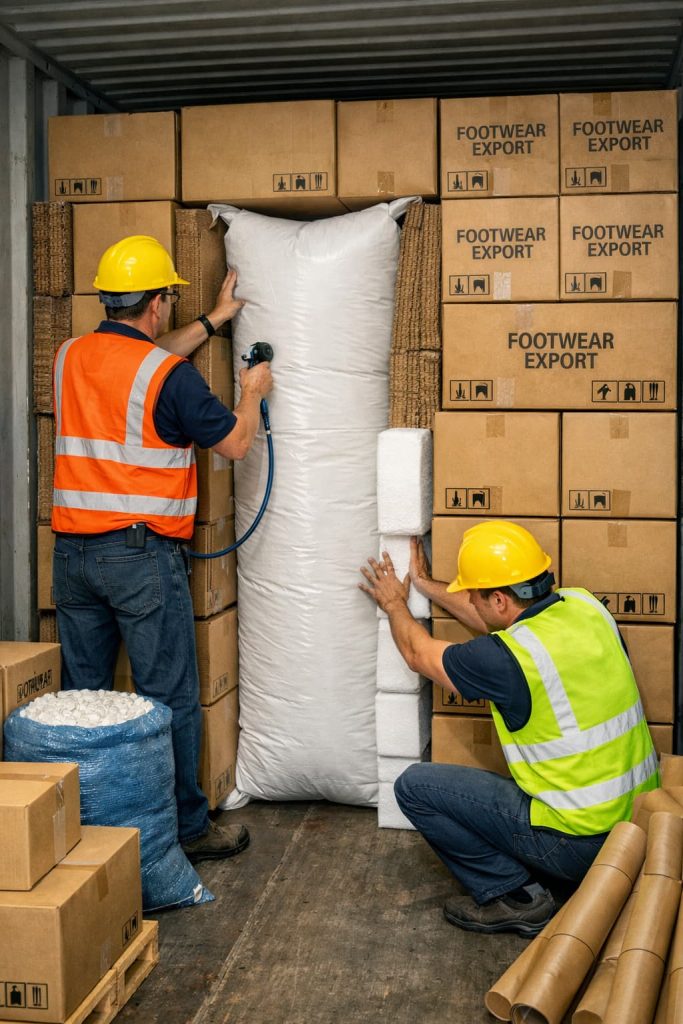
Pro Tip: Many transportation damage investigations reveal that cartons were stacked correctly but stabilization materials were either missing or incorrectly installed. Always audit dunnage placement before container closure.
Air Bags and Advanced Cargo Securing Systems
As footwear supply chains have become increasingly global, cargo stabilization requirements have become more demanding. While proper stacking, weight balancing, and dunnage installation provide a strong foundation for cargo protection, additional securing systems are often necessary to prevent movement during long transportation cycles. One of the most widely used solutions is the inflatable dunnage air bag.
Dunnage air bags are installed in spaces between cargo sections after loading has been completed. Once positioned, the bags are inflated to create controlled pressure against adjacent cargo structures. This pressure helps prevent lateral movement and absorbs forces generated during transportation.
The effectiveness of air bags is particularly important during ocean freight operations. Containers experience continuous movement caused by vessel rolling, pitching, acceleration, deceleration, and wave impact. These forces are transferred directly to the cargo inside the container. Without adequate stabilization, cartons can gradually shift, creating instability and increasing the risk of damage.
Footwear shipments often contain lightweight cartons that are more susceptible to movement than heavier industrial products. Consequently, many factories use air bags as an additional layer of protection. The bags help maintain cargo alignment and prevent individual sections from separating during transit.
However, air bags should never be viewed as a substitute for proper loading practices. Their primary function is to enhance an already stable cargo structure. If cartons have been loaded incorrectly, inflated bags alone cannot compensate for poor stacking or inadequate weight distribution. Therefore, experienced logistics teams always focus on building a stable load before installing supplemental securing systems.
Key Control Points
- Install air bags in designated locations.
- Verify inflation pressure.
- Use approved securing systems.
- Inspect installation before sealing.
Pro Tip: Perform independent post-loading audits whenever possible.
Moisture Monitoring and Environmental Protection
Physical stability is only one aspect of shipment protection. Environmental conditions inside a container can also influence product quality, especially during long international transportation routes. For footwear manufacturers, moisture control remains one of the most important considerations during container stuffing.
Footwear products contain a variety of materials that may react negatively to excessive humidity. Leather, textiles, adhesives, paper packaging, and cardboard cartons can all be affected by prolonged exposure to moisture. Consequently, factories implement multiple layers of environmental protection before containers are released.
One of the most common threats is container condensation, often referred to as container rain. This phenomenon occurs when temperature fluctuations create differences between internal and external conditions. Moisture contained in the air condenses on interior container surfaces and eventually forms water droplets. These droplets can fall directly onto cartons and packaging materials.
The risk increases significantly during ocean transportation because containers pass through multiple climate zones. A shipment departing from a tropical region may encounter cooler environments during transit, creating ideal conditions for condensation development. Since footwear shipments often remain sealed for several weeks, even small amounts of moisture can accumulate over time.
A shipment departing from a tropical region may encounter cooler environments during transit, creating ideal conditions for condensation development. Since footwear shipments often remain sealed for several weeks, even small amounts of moisture can accumulate over time.
To address these risks, factories install desiccants and moisture absorbers before loading begins. These products capture excess humidity and help maintain a more stable environment inside the container. Depending on shipment value and customer requirements, dozens of desiccant units may be installed throughout a single container.
Key Control Points
- Install desiccants and moisture absorbers.
- Protect moisture-sensitive products.
- Use humidity monitoring devices when required.
- Verify environmental protection measures.
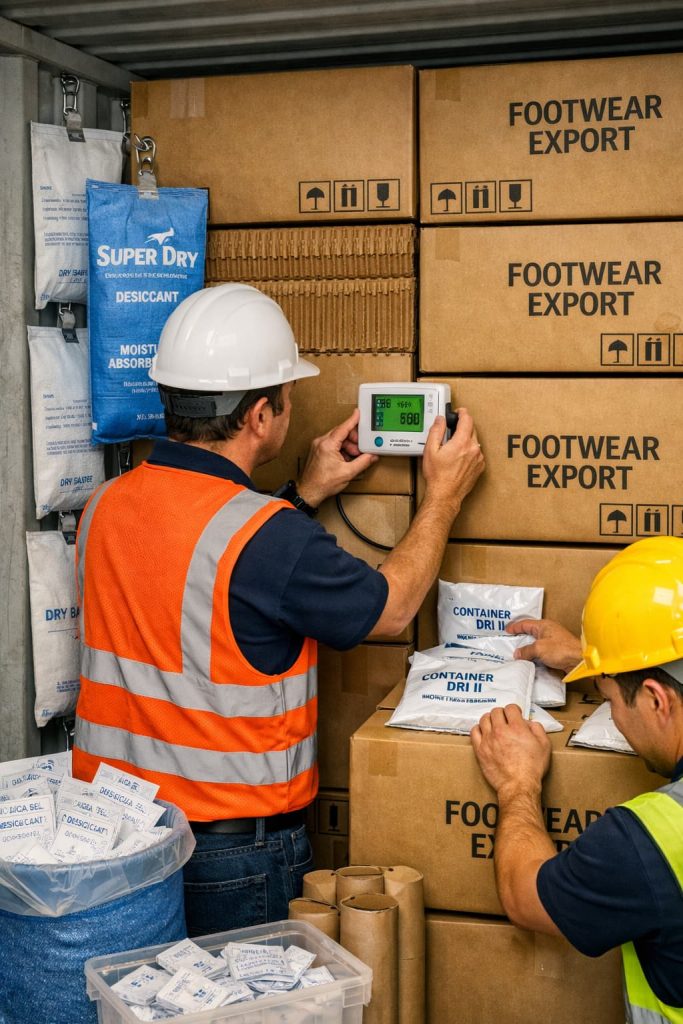
Pro Tip: For high-value footwear shipments, install humidity data loggers near the front, middle, and rear sections of the container. Multiple monitoring locations provide a more accurate picture of environmental conditions during transit.

Photographic Documentation and Final Container Sealing
Once loading and stabilization activities have been completed, the stuffing operation enters its documentation and security phase. At this stage, factories create a permanent record of the shipment condition before the container leaves the facility.
Photographic documentation has become a standard requirement across the footwear industry. Global brands, freight forwarders, insurance providers, and customers increasingly expect visual evidence demonstrating that proper loading procedures were followed. These records provide valuable protection if disputes arise later regarding cargo condition or transportation damage.
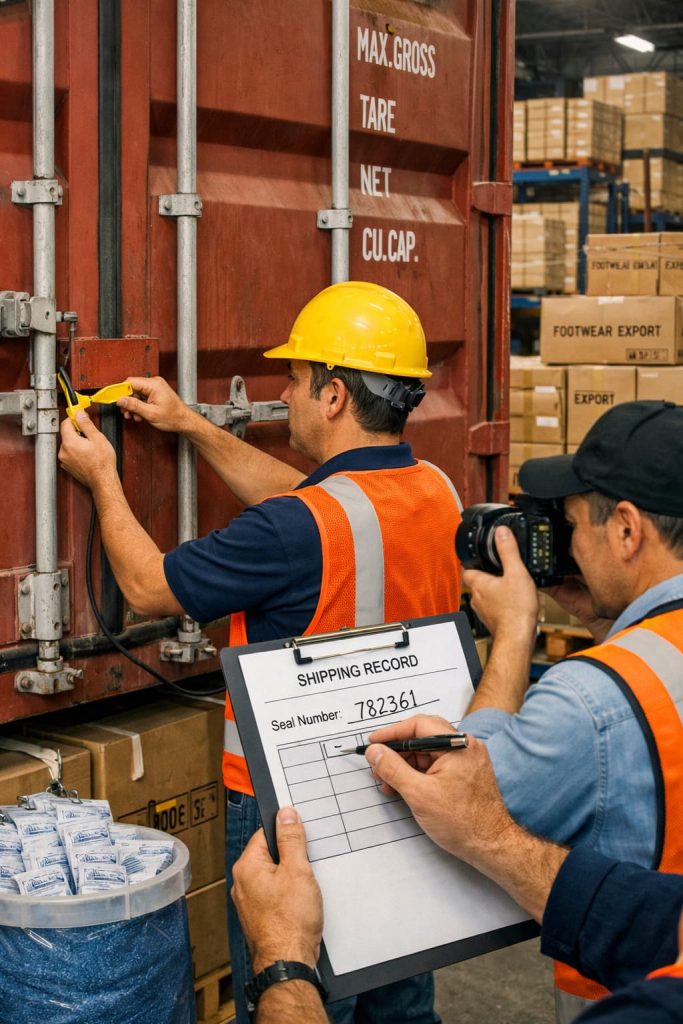
Documentation typically begins with photographs of the empty container before loading starts. These images confirm that the container was clean, dry, and structurally acceptable. Additional photographs are captured throughout the stuffing process to document loading progress, stacking quality, stabilization measures, and overall cargo condition.
Before the container doors are closed, supervisors usually photograph the final loading arrangement. These images show how cartons were positioned, how void spaces were managed, and where stabilization materials were installed. Such evidence is particularly valuable when investigating transportation-related damage claims.
After documentation is completed, the container is prepared for final sealing. Security seals serve as the primary protection against unauthorized access during transportation. Each seal contains a unique identification number that is recorded in shipping documentation and logistics systems.
Key Control Points
- Photograph container before loading.
- Document loading progress.
- Verify seal installation.
- Match seal records with shipping documents.
Post-Loading Audit and Shipment Release
Even after loading, stabilization, documentation, and sealing have been completed, one final verification stage remains. Before the container leaves the factory, a comprehensive post-loading audit is conducted to confirm compliance with all operational, quality, and security requirements.
The post-loading audit serves as the final opportunity to identify and correct issues before the shipment enters the transportation network. Once the container departs, corrective actions become significantly more difficult and expensive. Therefore, experienced footwear manufacturers treat this review as a critical control point.
Auditors begin by confirming that the stuffing operation followed the approved loading plan. They verify carton placement, stacking quality, stabilization measures, and overall cargo condition. Any deviation from approved procedures must be investigated before shipment release.
Security controls are reviewed once again during this stage. Auditors confirm container identification details, verify seal integrity, and ensure that documentation records are complete and accurate. These checks help maintain compliance with customer requirements and international security standards.
Environmental protection measures are also evaluated. Moisture control systems, desiccant installations, and monitoring devices are checked to ensure that they remain properly positioned after loading activities have been completed.
Documentation review forms another important part of the audit process. Inspectors verify photographs, loading records, inspection checklists, seal documentation, and shipping paperwork. Accurate documentation reduces the likelihood of customs delays and supports future investigations if quality concerns arise.
Key Control Points
- Complete final audit checklist.
- Verify cargo stability.
- Confirm documentation accuracy.
- Approve shipment release.
Pro Tip: Independent post-loading audits often identify issues overlooked by the stuffing team. Whenever possible, assign the final audit to personnel who were not directly involved in the loading operation.

Conclusion
Container stuffing represents the final physical safeguard within the footwear manufacturing process. Although production, quality inspections, packing operations, and documentation controls receive significant attention, the effectiveness of these activities can be compromised if shipments are not properly protected during transportation.
Modern footwear exports travel through complex logistics networks involving trucks, container yards, ports, vessels, customs facilities, warehouses, and distribution centers. Throughout this journey, products are exposed to vibration, impacts, stacking pressure, temperature fluctuations, humidity changes, and handling by multiple parties. Consequently, container stuffing has evolved into a highly controlled process designed to minimize these risks.
With this article, we conclude the Full Shoe Assembly Series on TheFootwearEdge. Throughout this series, we have followed the complete journey of a shoe from assembly operations through inspection, finishing, packing, documentation, and export preparation.
In the upcoming series, we will begin exploring Outsole / Stock Fitting Assembly Operations, examining the machinery, materials, process controls, quality requirements, and production techniques involved in transforming outsole components into finished footwear assemblies.
Frequently Asked Questions (FAQs)
What is container stuffing in footwear manufacturing?
- Container stuffing is the process of loading, securing, protecting, documenting, and sealing finished footwear shipments inside export containers for transportation.
Why is container inspection important before loading?
- It ensures the container is structurally sound.
- It prevents moisture ingress.
- It eliminates contamination risks.
- It protects product quality during transit.
What is container rain?
- Container rain is condensation that forms inside a container because of temperature and humidity fluctuations during transportation.
Why are desiccants used in footwear shipments?
- To absorb excess moisture.
- To reduce mold risk.
- To protect cartons and packaging.
- To maintain product quality.
What is the purpose of dunnage materials?
- To stabilize cargo.
- To fill void spaces.
- To absorb transportation forces.
- To prevent carton movement.
Why are air bags installed inside containers?
- To reduce lateral cargo movement.
- To improve shipment stability.
- To absorb vibration forces.
- To enhance transportation protection.
What is checked during a post-loading audit?
- Cargo stability.
- Documentation accuracy.
- Security seal integrity.
- Environmental protection measures.
- Compliance with loading standards.
Why is photographic documentation required?
- To maintain shipment traceability.
- To verify loading quality.
- To support insurance claims.
- To provide customer compliance records.