Upper Accessories Fixing in Footwear Manufacturing – Stitching Process Series
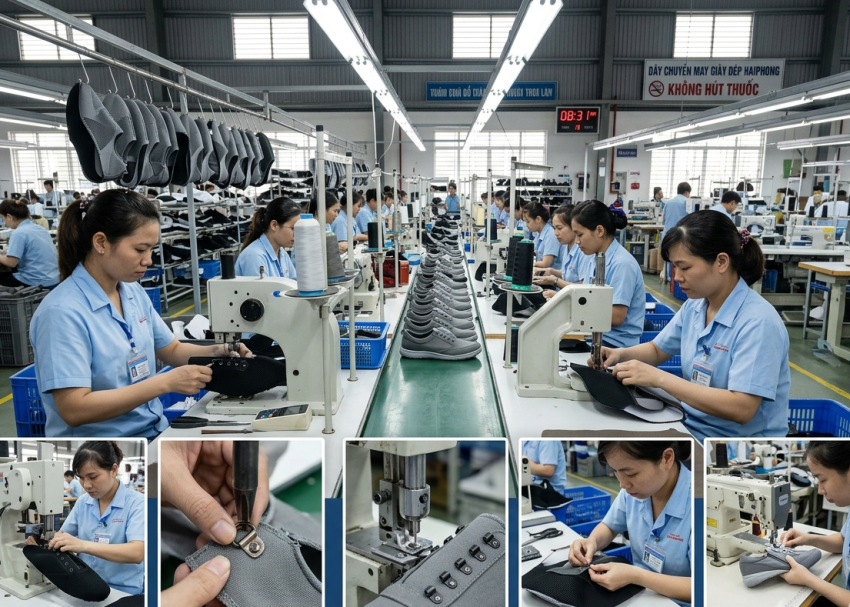
Upper accessories fixing is a controlled operation where functional and decorative components are attached to the upper using mechanical fastening or stitching methods. These components directly influence durability, fit performance, and product aesthetics. Therefore, standardized processes, correct machine selection, and strict quality control are essential for consistent output in mass production.
1. Eyelets, D-Rings, and Speed Hooks Fixing
This operation involves fixing metal or synthetic components that support lacing systems. These accessories improve lace durability, ease of use, and structural strength in high-stress zones.
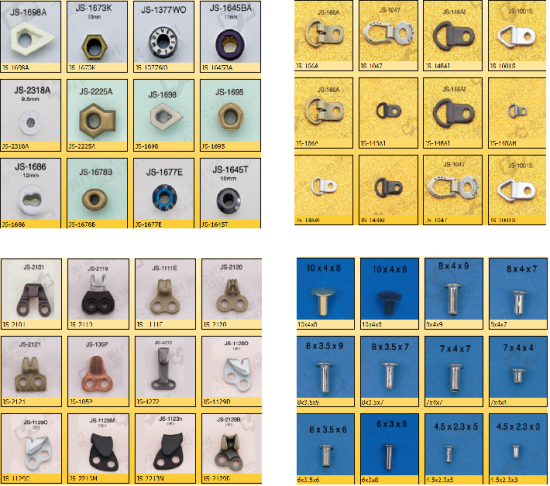
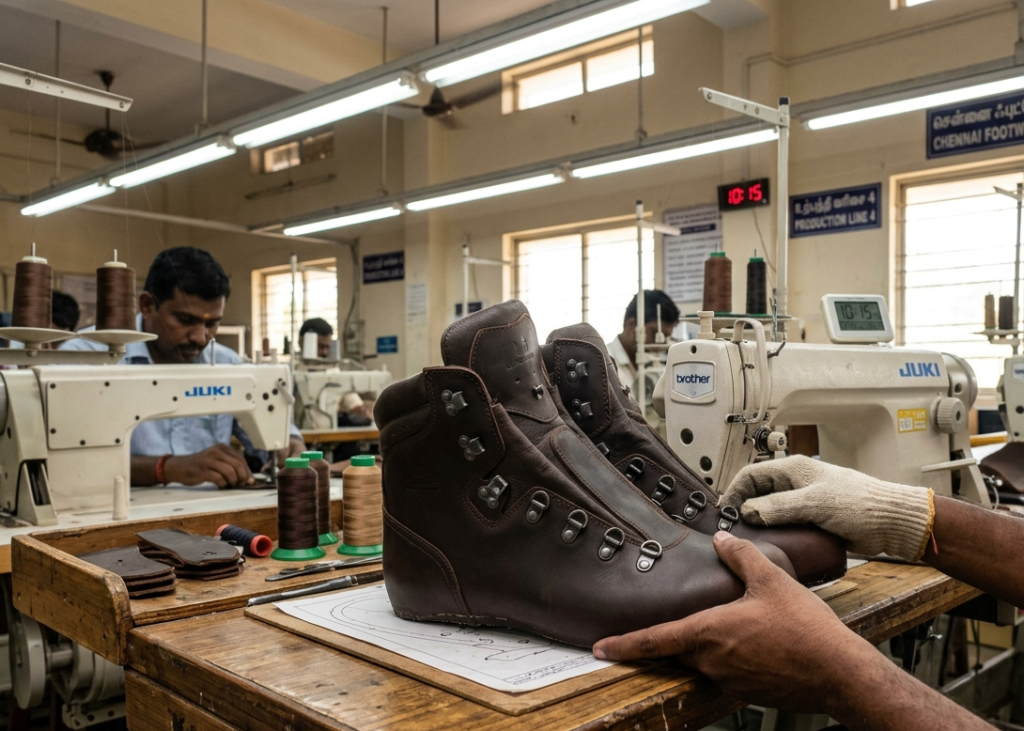
Eyelets are inserted into pre-punched holes to reinforce lace openings. In contrast, D-rings and speed hooks (also called ski hooks) are externally mounted components that allow faster lacing and improved adjustability, especially in boots and outdoor footwear. Two primary types of eyelets are used:
- Open Eyelets: Visible metal rings used in sports and casual footwear for durability
- Blind Eyelets: Concealed or semi-hidden eyelets used in formal or premium footwear for better aesthetics
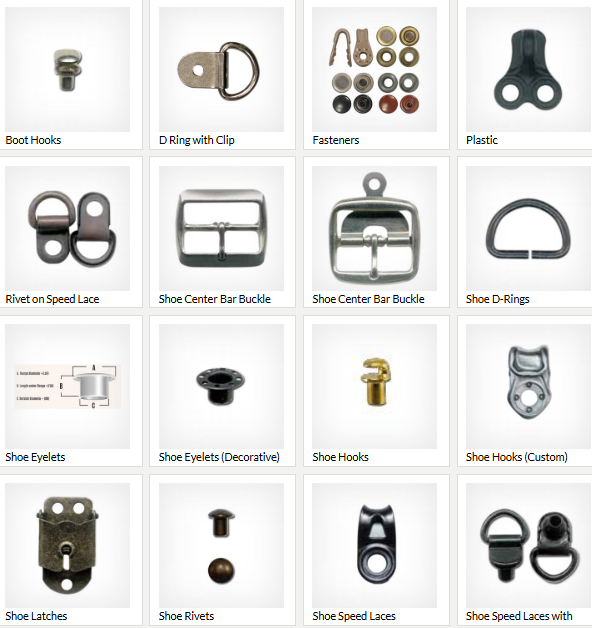
- D-Rings: Loop-shaped metal components used for flexible lace movement
- Speed Hooks (Ski Hooks): Open hook structures that allow quick lace locking and release
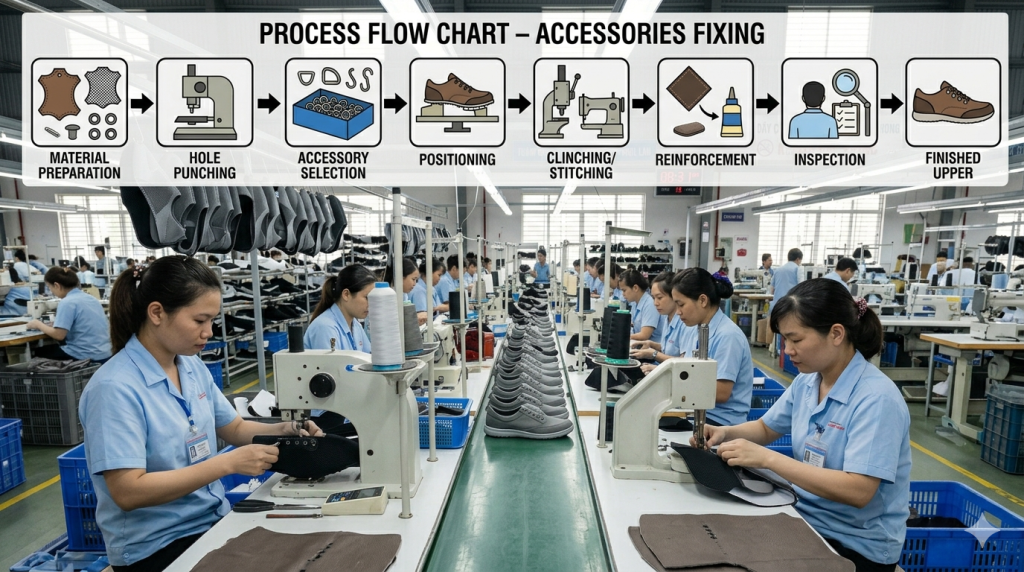
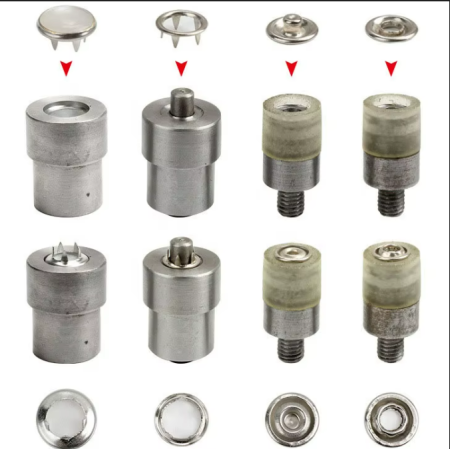
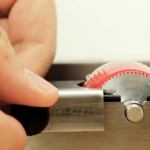
The fixing process involves hole punching (if required), positioning, and clinching using press or pneumatic machines. Proper pressure ensures secure locking without damaging the upper.
From a quality standpoint, these accessories undergo standard tests (covered in your accessories testing blog), including pull-out strength, corrosion resistance, and coating durability.
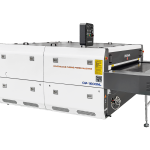
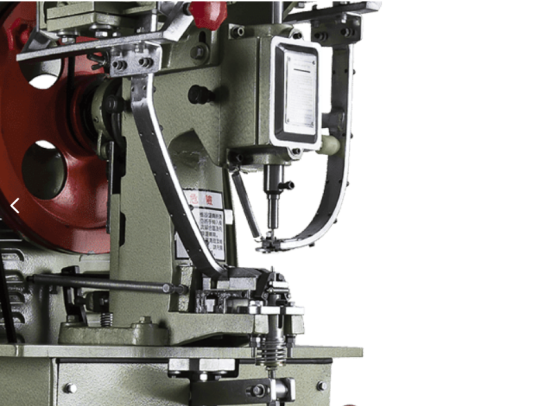
Machines Used for Clinching
- Manual eyeleting/fastening machines
- Pneumatic clinching machines
- Automatic feeding eyelet machines
- Multi-head fastening systems for high productivity
Key Control Points:
- Ensure correct accessory type selection (eyelet, D-ring, hook)
- Maintain precise alignment with pattern marking
- Control clinching pressure to avoid deformation
- Verify backside locking and smooth edges
Pro Tip : Always match accessory length (eyelet/rivet) with total material thickness.
2. Rivet Fixing Process
Rivet fixing involves attaching metal or plastic rivets to reinforce joints or add decorative value. These are commonly used in strap connections, lace supports, and branding elements. This process enhances mechanical strength in areas where stitching alone may not be sufficient. Additionally, rivets contribute to product styling in casual and fashion footwear.
Rivets are inserted into pre-punched holes and fixed using press machines. The process requires proper alignment of all layers before applying controlled pressure to lock the rivet securely. Incorrect fixing can lead to loose rivets, cracks, or sharp edges, affecting both durability and safety.
Key Control Points:
- Select correct rivet size based on material thickness
- Maintain proper alignment before pressing
- Control pressure to avoid cracking or deformation
- Inspect backside clinching quality
Pro Tip : Use coated or stainless accessories for better corrosion resistance.
3. Zipper Fixing Process
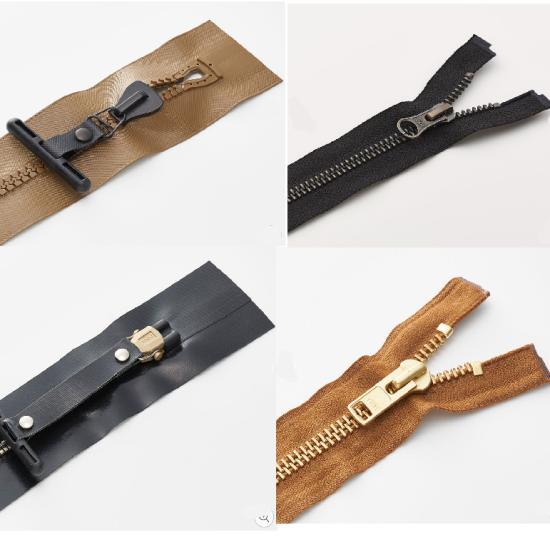
Zipper fixing involves attaching zippers to uppers to provide functional opening and closing. This is commonly used in boots, safety footwear, and certain fashion styles. This process requires high accuracy because zipper alignment directly impacts usability. Even slight misalignment can result in jamming or uneven closure.
The zipper is first positioned and temporarily secured. Then, it is stitched using appropriate machines while maintaining uniform seam allowance and stitch density. Both ends of the zipper must be reinforced to prevent detachment during repeated use.
Key Control Points:
- Maintain accurate zipper alignment
- Ensure uniform stitching and seam allowance
- Reinforce both zipper ends
- Test smooth movement after fixing
Pro Tip : Avoid rigid accessories in flex zones to maintain comfort.
4. Trims and Decorative Accessories Fixing
This operation includes attaching functional and decorative elements such as buckles, Velcro straps, lace loops, branding patches, and ornaments. These accessories enhance aesthetics and usability. However, improper fixing can affect comfort and flexibility.
Depending on the accessory type, fixing methods include stitching, riveting, adhesive bonding, or combined techniques. Proper positioning and secure attachment are critical to ensure durability and wearer comfort.
Key Control Points:
- Ensure correct placement as per design
- Avoid discomfort or pressure points
- Select appropriate fixing method
- Verify attachment strength
Pro Tip : Standardize accessory positioning using jigs or templates.
5. Common Defects in Accessories Fixing
Accessories fixing defects affect both functionality and appearance. Common issues include misalignment, loose fixing, sharp edges, poor clinching, and malfunctioning components.
These defects usually occur due to incorrect machine settings, poor material preparation, or operator errors. Early detection through inline inspection helps reduce rejection rates and ensures consistent quality.
Key Control Points:
- Inspect positioning and alignment
- Check fixing strength and security
- Ensure smooth finishing without sharp edges
- Conduct functional checks
Pro Tip : Use visual standard boards for operator reference.
6. Quality Inspection and Control
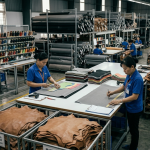
Quality inspection ensures that all accessories meet required standards before final assembly. Checks are performed at inline and end-line stages. Inspectors evaluate alignment, fixing strength, finishing quality, and functionality.
Mechanical tests such as pull strength and corrosion resistance are also conducted for critical accessories. A structured inspection system improves consistency and reduces customer complaints.
Key Control Points:
- Perform 100% inspection for critical accessories
- Conduct pull and functional tests
- Use standard inspection checklists
- Record and analyze defects
Courtesy: BSM India
Pro Tip : Analyze defect trends weekly for process improvement.
Frequently Asked Questions – FAQs
1. What is the difference between eyelets and speed hooks?
Eyelets are closed rings, while speed hooks allow quick lace locking and release.
2. Where are D-rings used in footwear?
They are used in boots and outdoor footwear for flexible lace movement.
3. Why is clinching pressure important?
It ensures secure fixing without damaging the upper material.
4. What tests are done for accessories?
Pull-out strength, corrosion resistance, and durability tests.
5. What causes accessories to loosen?
Incorrect pressure, wrong size selection, or poor material compatibility.
6. Which accessories require reinforcement?
Hooks, D-rings, and high-stress lace areas.

Explore other Stitching Process Series
- Stitching Process in Footwear Manufacturing: From Cutting to Closing Assembly in Shoe Production
- Component Marking After Cutting/Clicking–Stitching Process Series
- Component Embroidery in Footwear Manufacturing–Stitching Process Series
- Component Splitting in Footwear Manufacturing–Stitching Process Series
- Reinforcement (Backers & Tapes) Process in Footwear Manufacturing – Stitching Process Series
- Component Printing in Footwear Manufacturing – Stitching Process Series
- Nosew Application in Footwear Manufacturing – Stitching Process Series
- Component Folding in Footwear Manufacturing – Stitching Process Series
- Stitching Assembly Process in Upper Manufacturing (Part 1)– Stitching Process Series
- Stitching Assembly Defects, Line Balancing & Productivity (Part 2)– Stitching Process Series
Refer to our Blog on Test for Eyelets and Trims – Footwear Manufacturing Physical Test: Leather, Textile