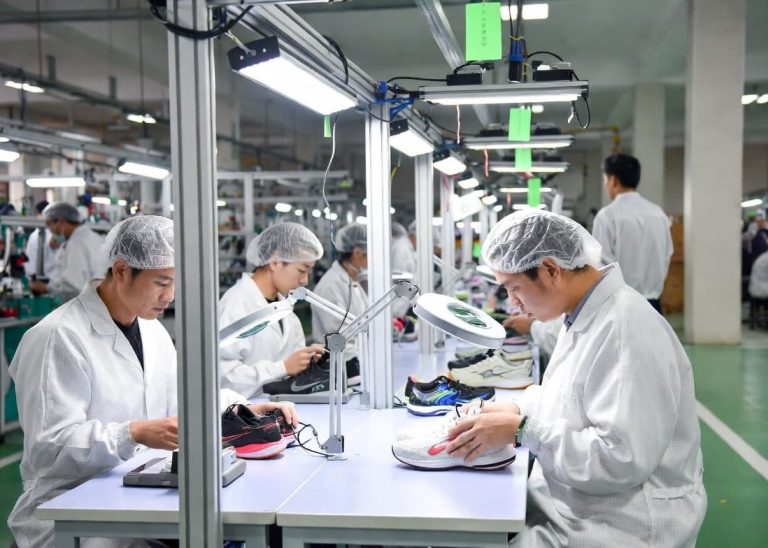

The Insole: The Hidden Foundation That Holds a Shoe Together
Understanding Insole Construction, Materials, Types and Their Role in Footwear Manufacturing
Introduction
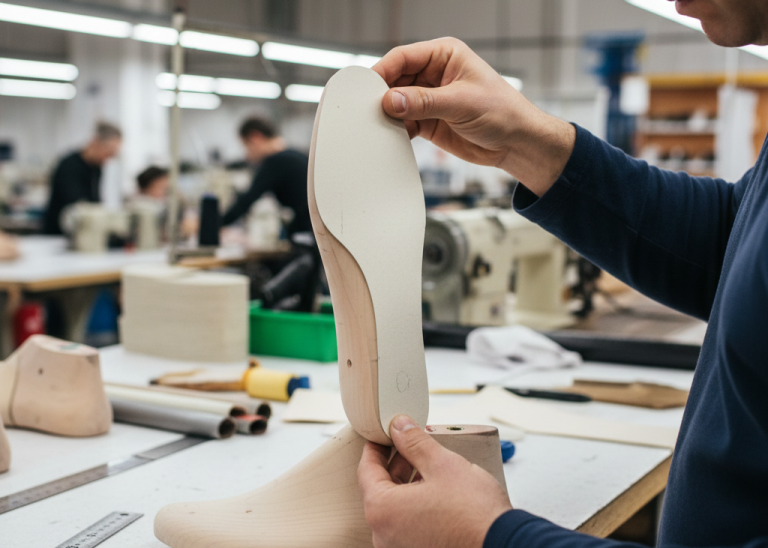
An insole is an internal structural component that forms the foundation of a shoe construction. In simple terms, it acts as a carrier between the upper and the bottom assembly.
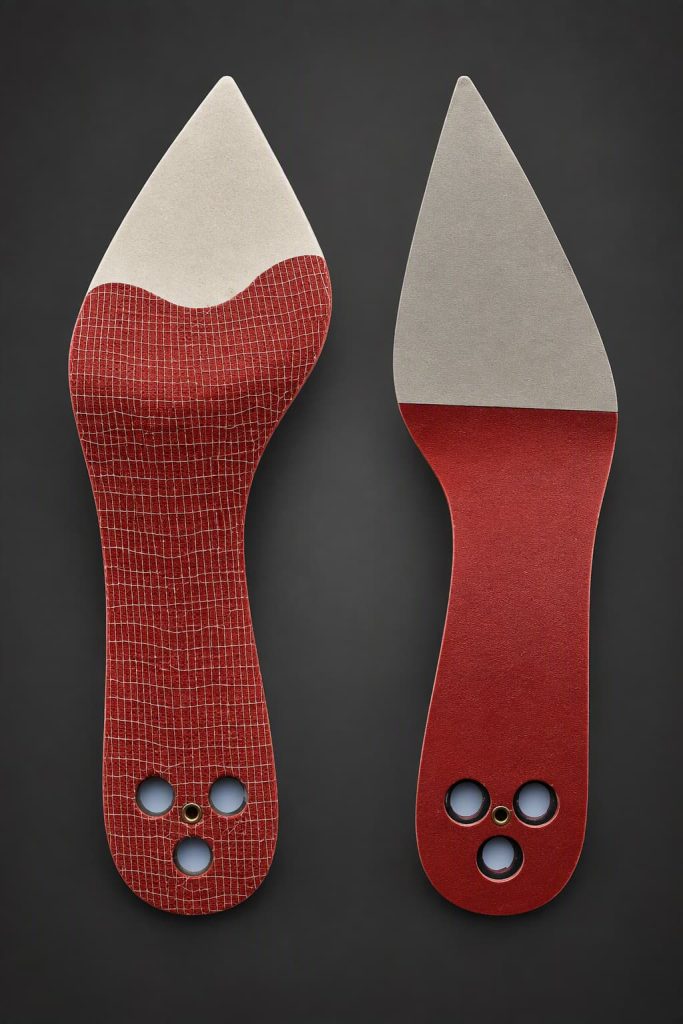
In addition, the insole can provide the required stiffness, dimensional stability and fastening support. For example, footwear that uses heel nails, pins or screws requires an insole with suitable holding strength. Therefore, an insole does much more than provide a surface inside the shoe. It forms part of the shoe’s structural system.
Important Terminology
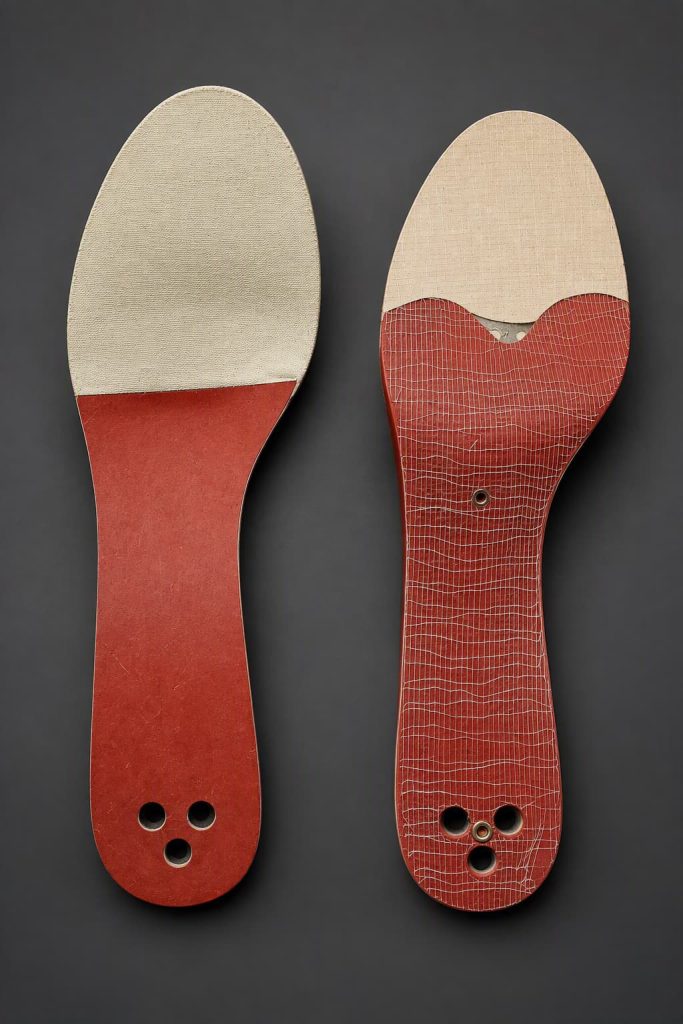
In this article, insole refers primarily to the structural component used in footwear construction. It should not automatically be confused with the sockliner, footbed or removable comfort insole.
What is a Insole?
The insole performs several important functions during footwear manufacturing and wear. First, it provides a stable base for attaching and shaping the upper. Second, it helps transfer loads between the upper and bottom construction.
Third, it can provide the required support for nails, pins, screws or other fastening systems.
Furthermore, the insole contributes to the overall stability of the footwear. Its stiffness, thickness, density and dimensional stability can affect how the shoe behaves during lasting and subsequent use.
For example, heel construction often requires reliable nail or screw holding. Therefore, manufacturers must select an insole material with suitable physical properties rather than choosing it only by thickness or appearance.
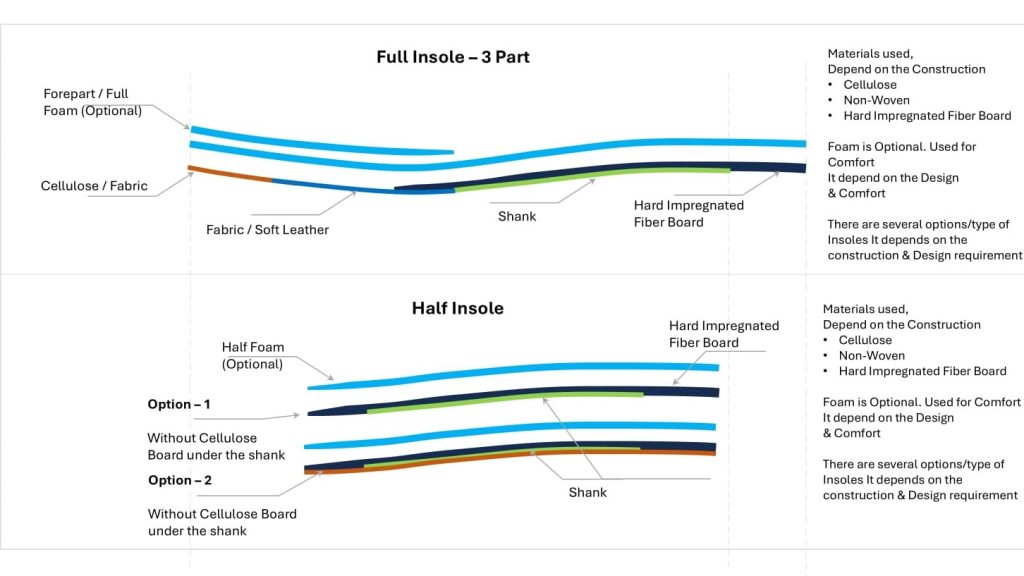
Why is the Insole Important?
Upper Carrier
The insole provides the foundation that holds the lasted upper.
Structural Bridge
It connects the upper assembly with the outsole or bottom construction.
Stability
Its material and construction influence shoe stability during wear.
In constructions using heel nails, pins or screws, the insole must provide sufficient mechanical holding strength.
How are Insoles Classified?
Manufacturers can classify insoles in several ways. The most useful classifications include:
Consequently, one insole can belong to several categories at the same time. For example, a molded thermoplastic insole can also function as a structural insole for a specific footwear construction.
Different Insole Construction
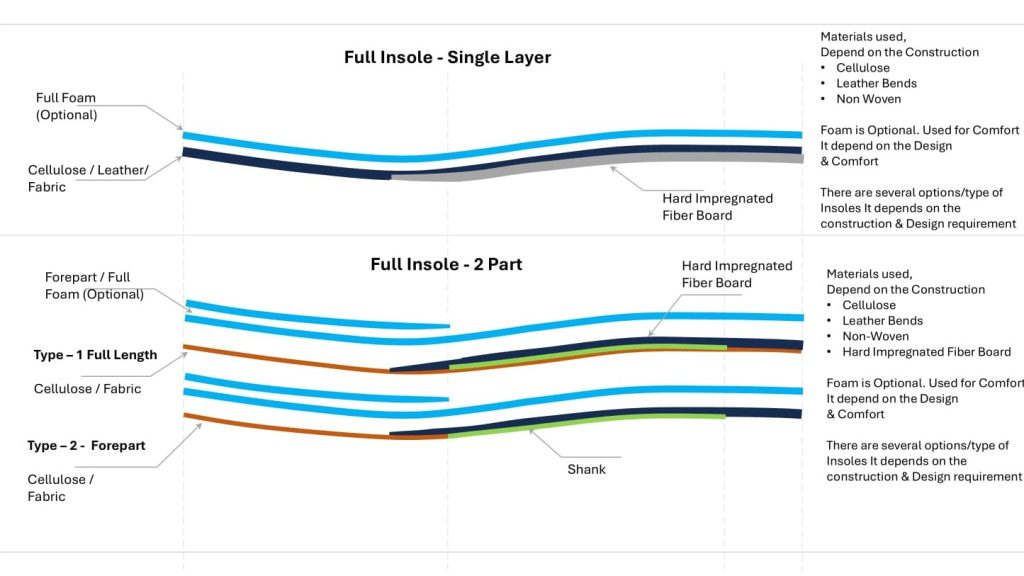
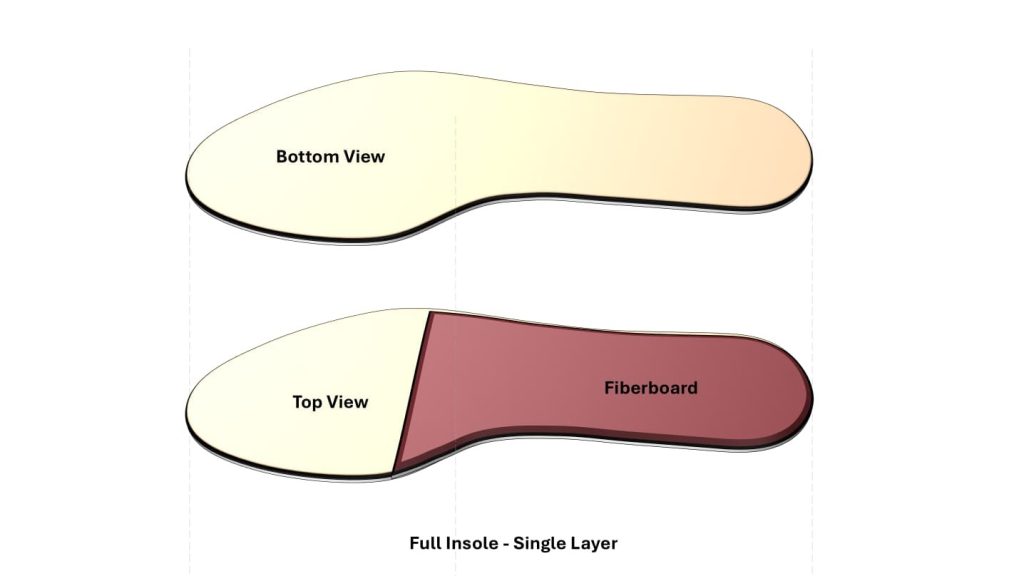
Full Insole – Single Layer
A full insole uses one main structural layer that extends throughout the shoe length.
Manufacturers may select cellulose or fiberboard for structured footwear, while leather can suit traditional or premium footwear. Nonwoven and textile materials can provide a more flexible construction, construction Like Strobel.
In some designs, manufacturers add foam or another layer above the structural insole to improve comfort. However, that comfort layer does not necessarily replace the structural function of the insole.
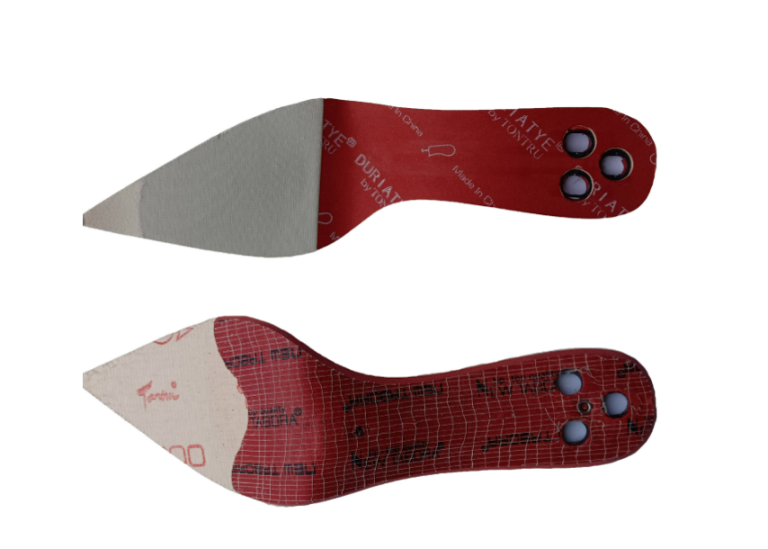
Full Insole – Two-Part
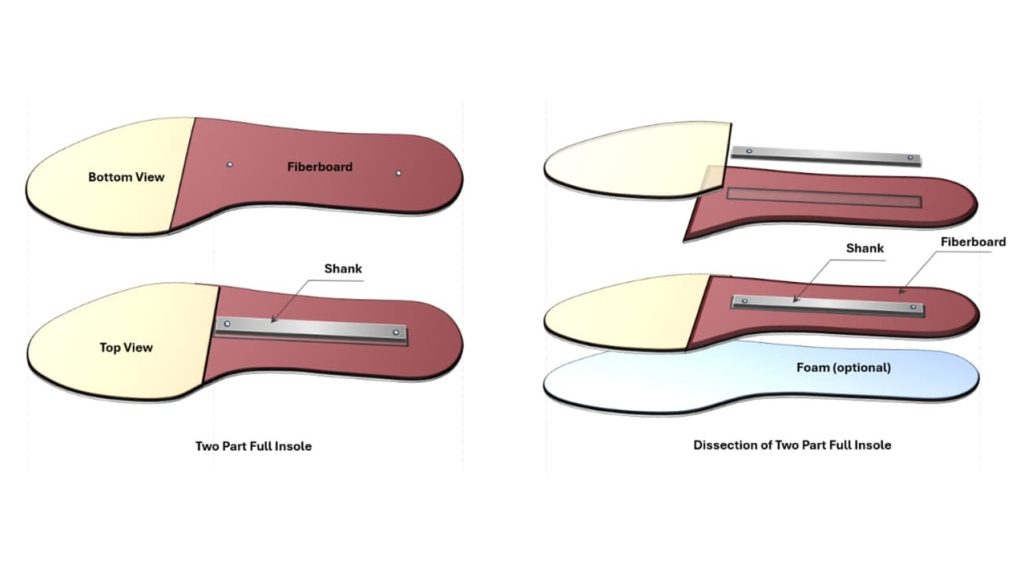
A two-part insole divides the construction into two functional sections. For example, the forepart can use a flexible material, while the rear and waist area can use harder, impregnated fiberboard. This arrangement provides flexibility toward the forefoot while maintaining greater stability around the heel and waist.
Alternatively, manufacturers can produce the forepart and rear/waist as separate components. The exact arrangement depends on the footwear construction and the required performance. Therefore, a two-part design can balance flexibility, stability and manufacturing requirements.
Full Insole – Three-Part
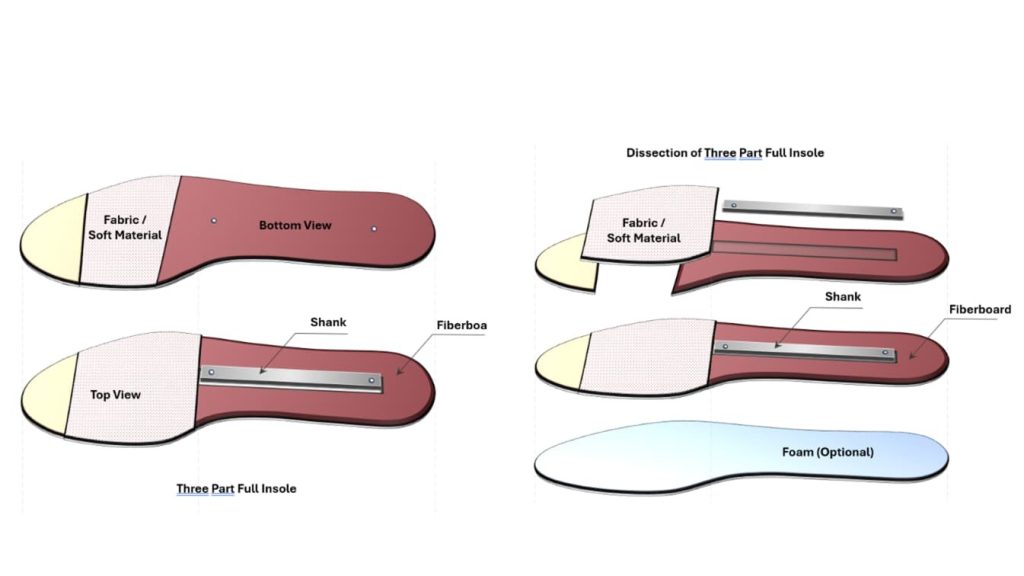
A three-part insole can divide the structure into toe, mid-forepart and backpart.
The toe section can provide stability during lasting. Meanwhile, the mid-forepart can use a more flexible textile, thin leather or nonwoven material. Finally, the backpart can use a harder fiberboard to provide additional structural support.
This arrangement represents one possible construction rather than a universal standard. Manufacturers can change the materials, dimensions and component boundaries according to the shoe design.
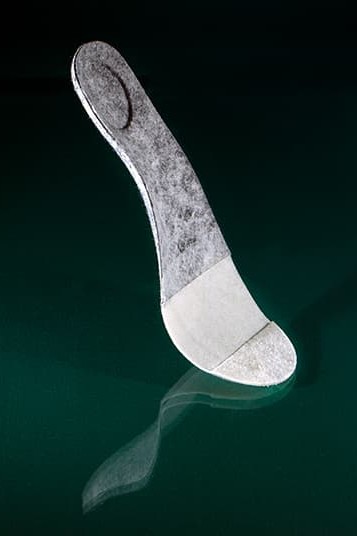
Half Insole
Some Constructions like Moccasin and Flexible Shoe construction required structural support at the Back part and Heel Region. So, Insole is designed in such a way that it fulfills its purpose.
Molded Insole
Some insoles are molded to match the last profile rather than remaining as a flat sheet.
This can be particularly important when using materials such as:
- Cellulose or fiberboard
- Hardboard-type materials
- Molded ABS
- Thermoplastic materials
- Other moldable structural materials
The insole is formed to follow the required last geometry, helping it fit accurately within the footwear construction.
Molding can also provide controlled three-dimensional geometry around the heel, waist and forepart.
Insole with Shank Reinforcement
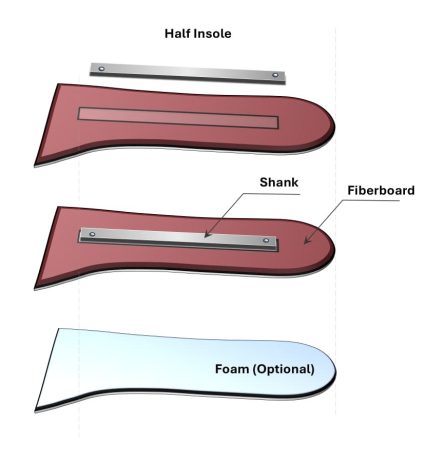
A shank reinforces the waist area and controls the transition between the flexible forepart and the heel.
Possible materials include steel, fiber-reinforced materials, thermoplastics and composites. However, a shank is not required in every footwear construction.
It may be riveted or attached to the insole, while some designs place the required reinforcement in the midsole or outsole.
Flat outsole constructions or designs with a sufficiently stable/filled arch may not require a separate shank.
Therefore:
Shank requirement = outsole construction + footwear geometry + functional requirement.
Refer to the Shank Article : Shoe Shanks Explained: Types, Materials, Manufacturing & Their Essential Role in Footwear Design
Insoles by Material
Different materials provide different combinations of physical and manufacturing properties.
Material | Typical characteristics |
|---|---|
Flexible, durable and traditionally used in quality footwear | |
Leatherboard | Consistent sheet construction and controlled stiffness |
Cellulose/Fiberboard | Available in different stiffness and density levels |
Hard-impregnated Fiberboard | Higher structural stability and strength |
Nonwoven | Flexible and suitable for various lightweight constructions |
EVA | Lightweight and suitable for cushioning-oriented applications |
PU | Useful for cushioning and molded constructions |
ABS/Thermoplastics | Can provide molded, rigid structural forms |
Cork | Lightweight and formable for selected applications |
Composite materials | Can be engineered for specific strength and weight requirements |
This list is not exhaustive. Insole materials continue to vary according to footwear construction, manufacturing technology and design requirements.
Important Insole Physical Properties
What Physical Properties Should an Insole Have?
The correct material is not selected simply because it is strong or economical. Its physical properties must match the footwear construction.
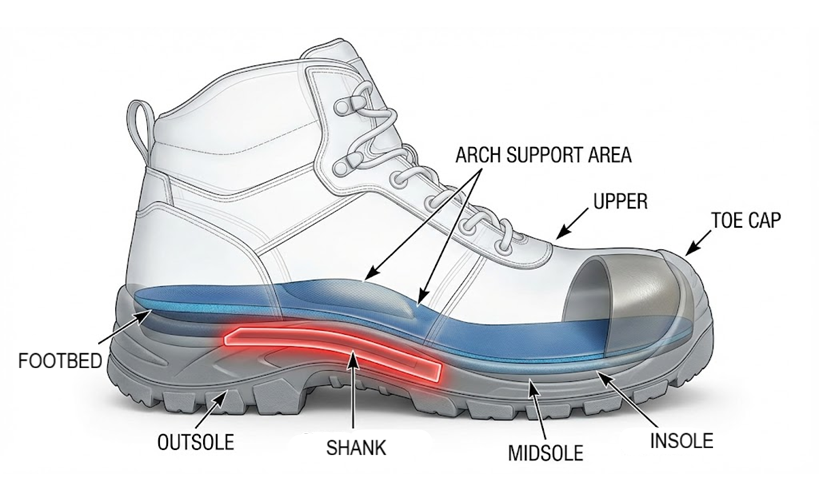
Insole vs Sockliner Vs Footbed
Component | Primary role |
|---|---|
Insole | Structural foundation that holds/supports the upper |
Sockliner | Layer directly beneath the foot |
Footbed | Comfort/support component beneath the foot |
Midsole | Cushioning/structural layer |
Bottom component contacting the ground |
In boots, sandals and some comfort footwear, the structural insole may be completely covered by a sock, footbed or other comfort layer.
Insole Selection
The insole should be selected as part of the complete footwear construction. Consider:
Manufacturing Accuracy
The insole should accurately correspond to the intended last profile. Pay particular attention to:
Beveling/skiving can be important where the insole needs to fit correctly within the outsole cavity or bottom construction.
Final Thoughts
The Insole Is the Structural Carrier of the Shoe
The insole is much more than a layer beneath the foot. It holds the upper, connects the upper with the bottom construction and contributes to stability during wear. Its construction may be single-layer, two-part, three-part, molded, laminated, Strobel or another specialized arrangement. The correct choice depends on:
Construction + Last + Upper + Bottom + Fastening + Physical Properties + End Use
There is no universal “best” insole. The correct insole is the one whose material, geometry and physical properties are compatible with the complete footwear construction.