Computer Stitching in Footwear Manufacturing: Technology, Process, Applications & Production Benefits
Computer stitching in footwear manufacturing has transformed many footwear sewing operations by bringing programmable control, repeatability, and greater accuracy to processes that traditionally depended heavily on operator skill. Instead of manually guiding every stitch line, a computer-controlled stitching machine can follow a predefined stitching path and reproduce the same operation across multiple footwear components.
This technology is particularly valuable when footwear designs contain repetitive stitching, decorative patterns, logos, accurately positioned seam lines, or complex stitch paths. However, successful computer stitching is not determined by the machine alone. Pattern engineering, material selection, component positioning, Jigs, Pallets, fixtures, thread, needle selection, programming, and machine settings all contribute to the final result.
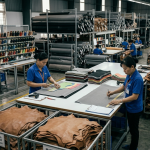
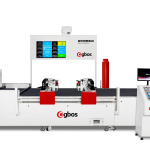
What Is Computer Stitching in Footwear Manufacturing?
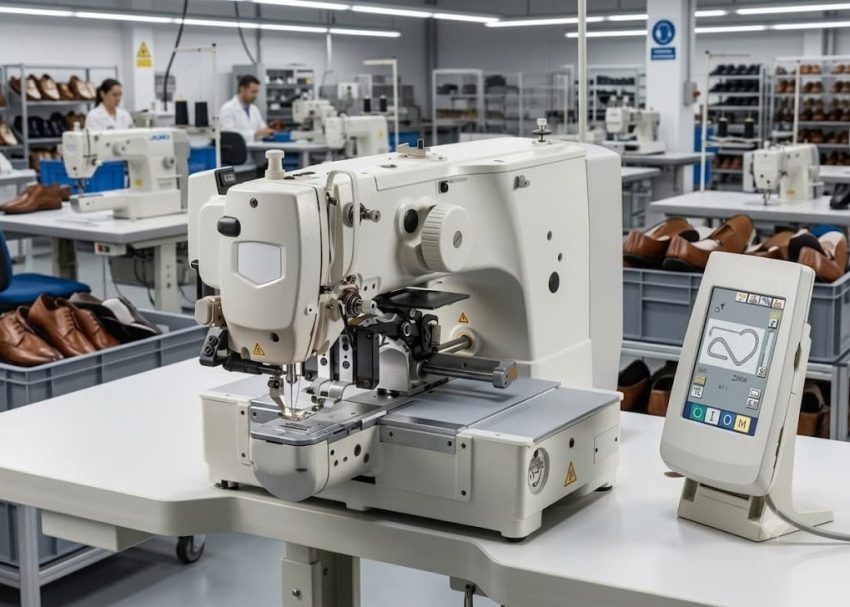
Computer stitching refers to stitching equipment in which the movement of the workpiece is controlled through programmed digital instructions. The machine follows a predetermined stitch path rather than relying entirely on an operator’s hand movement.
The basic concept is similar to other forms of programmable manufacturing: a desired stitching geometry is converted into machine instructions, the footwear component is positioned accurately, and the machine executes the programmed operation.
Depending on the machine and application, computer-controlled stitching can be used for straight seams, curved stitching, decorative patterns, logos, straps, panels, and other footwear components. The major objective is not simply automation. It is to achieve consistent stitching geometry and repeatable production quality.
Expert Tip :
Standardize approved stitching parameters.
Validate every new stitching program.
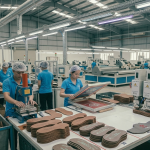
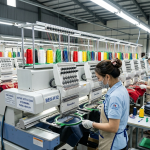
How Does Computer Stitching Work?
A typical computer stitching operation begins with the preparation of the footwear component and the development of the required stitch path.
The stitching path may originate from the footwear design and pattern-development process. Once the required geometry is established, it is converted into a program that the stitching machine can understand.
During production, the component is positioned using a Pallet / fixture, template, clamp, or other locating system. Correct positioning is critical because the machine can accurately follow its program only when the component itself is correctly located.
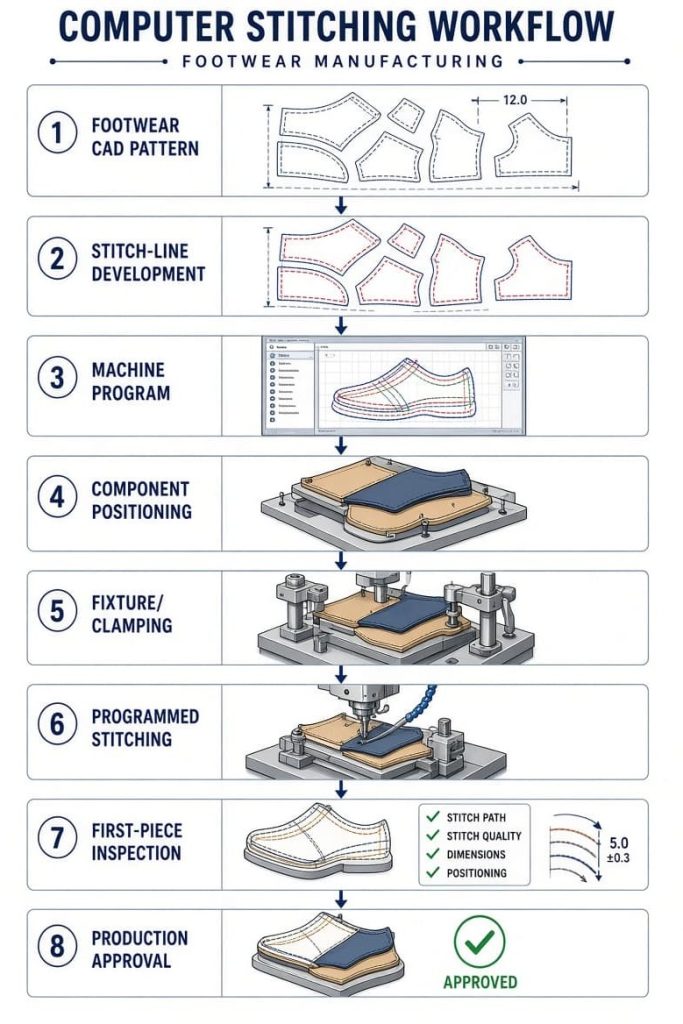
The general process is:
- Develop the footwear component and stitch-line geometry.
- Create or transfer the machine stitching program.
- Select suitable needle and thread specifications.
- Set stitch length, tension, speed, and other parameters.
- Position the component accurately.
- Clamp or hold the component securely.
- Run the programmed stitching operation.
- Inspect the first component.
- Correct machine, program, or positioning issues if required.
- Release the approved process for production.
This makes program validation and first-piece approval important steps before large-scale production.
Pro Tip :
Conduct trials using actual production materials.
Develop suitable fixtures and locating systems.
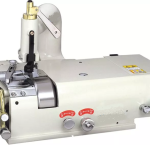
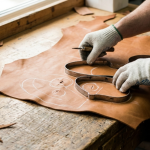
Main Components of a Computer Stitching System
Although machine configurations differ between manufacturers, a computer stitching system generally consists of several important elements.
Computer or Controller
The controller stores and manages the stitching program. It determines how the machine should move and where stitches should be produced.
Stitching Head
The stitching head performs the actual sewing operation. Needle movement, thread handling, presser-foot action, and related mechanisms must work correctly to achieve consistent stitches.
Movement System
A programmable movement mechanism controls the relative movement between the stitching head and the footwear component.
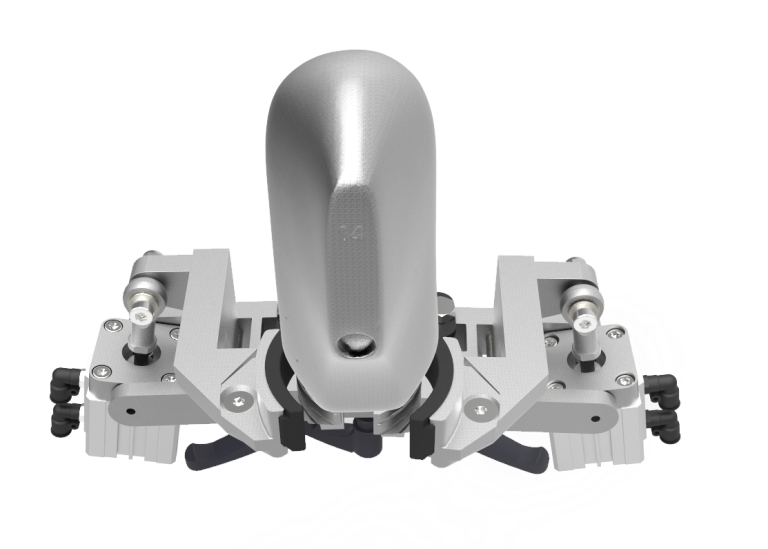
Clamping or Fixture System
The fixture positions and holds the footwear component. This is particularly important for small, flexible, curved, or difficult-to-position components.
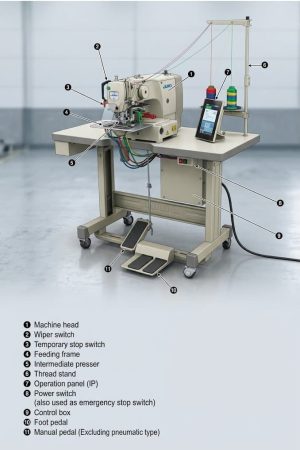
Sensors
Sensors may monitor position, thread conditions, machine movement, or other production parameters depending on the machine configuration.
Programming Interface
The operator or programmer uses the machine interface to load, modify, store, and manage stitching programs.
Pro Tip :
Match needles and threads to the material.
Inspect first-off components carefully.
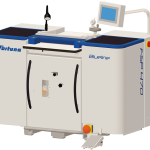
Applications of Computer Stitching in Footwear Manufacturing
Computer stitching is particularly useful for operations where repeatability and accurate stitch positioning are important.
Common applications include:
- Vamp stitching
- Quarter-panel stitching
- Tongue components
- Strap stitching
- Decorative stitching
- Logo and motif stitching
- Sports footwear panels
- Leather footwear components
- Safety footwear components
- Repetitive seam operations
- Complex decorative patterns
Sports and fashion footwear can particularly benefit when the same visual stitching detail must be reproduced across thousands of pairs. Decorative stitching is another important application. Small variations in stitch spacing, curvature, or positioning can become highly visible on premium footwear. Programmable stitching helps reduce such variation.
Pro Tip :
Record approved machine settings.
Maintain stitching machines regularly.
Computer Stitching and Footwear CAD
One of the biggest opportunities is the connection between footwear CAD and computer-controlled manufacturing.
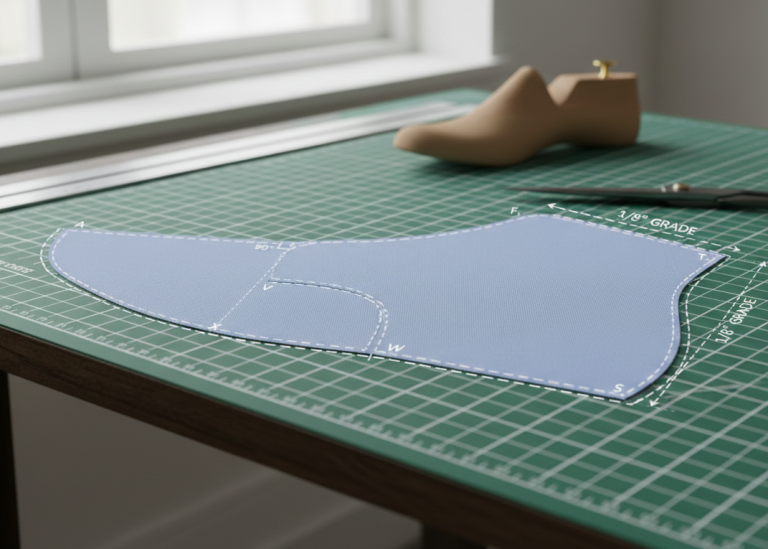
A footwear pattern engineer develops the component geometry and establishes important design details such as seam allowances, reference points, stitch lines, and construction features. These digital elements can become valuable inputs for subsequent manufacturing processes. A properly managed digital workflow can improve:
- Stitch-line consistency
- Pattern modification
- Pattern repeatability
- Prototype development
- Production program preparation
- Communication between development and production
- Reproduction of approved designs
However, CAD geometry should not automatically be treated as a production-ready stitching program. Machine limitations, material behavior, clamping requirements, needle access, stitch direction, and machine movement must also be considered.
Pro Tip :
Monitor fixture wear.
Train operators in machine operation and quality inspection.
Important Stitching Parameters
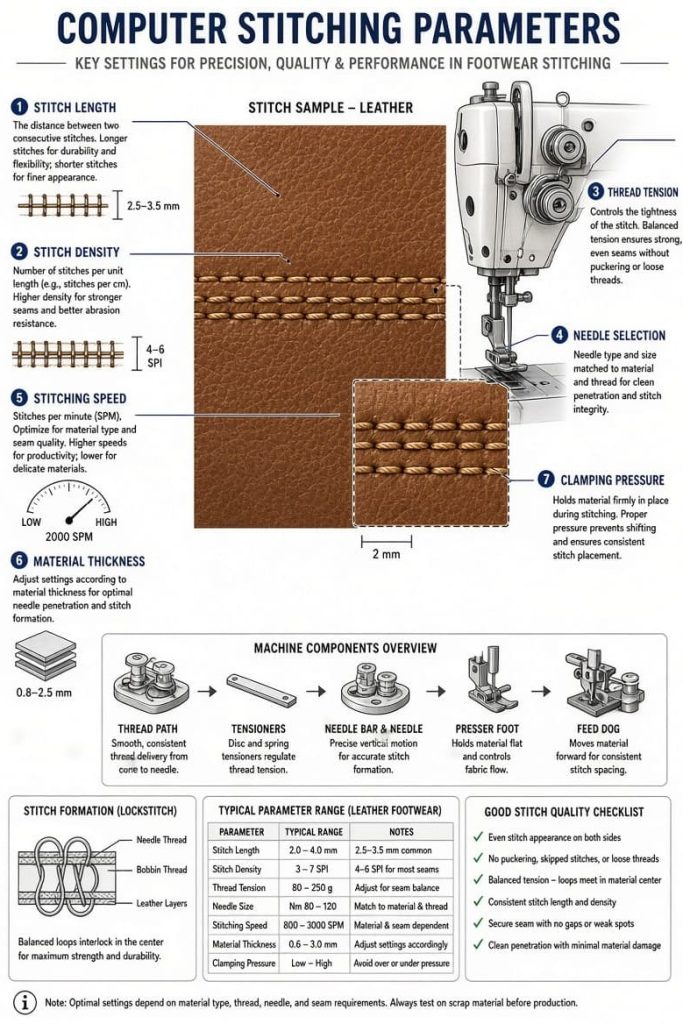
Correct programming alone does not guarantee good stitching. Machine parameters must be matched to the footwear material and construction.
| Parameter | Why It Matters |
|---|---|
| Stitch length | Influences appearance, seam behavior and material perforation |
| Stitch density | Controls visual appearance and concentration of needle penetrations |
| Thread tension | Affects stitch balance, appearance and thread breakage |
| Needle size/type | Must suit the material and thread |
| Thread type | Influences seam appearance and performance |
| Stitching speed | Affects productivity, control and potential thread/needle problems |
| Material thickness | Influences needle penetration and stitch formation |
| Clamping pressure | Helps prevent component movement during stitching |
These parameters should be validated using the actual production material, because two materials with similar appearance can behave very differently during stitching.
Pro Tip :
Maintain controlled versions of stitching programs.
Computer Stitching vs. Manual Stitching
| Factor | Manual Stitching | Computer Stitching |
|---|---|---|
| Operator dependency | High | Lower |
| Stitch-path control | Operator guided | Program controlled |
| Repeatability | Skill dependent | High |
| Complex patterns | More difficult | More suitable |
| Decorative accuracy | Variable | More consistent |
| Initial investment | Lower | Higher |
| Programming requirement | Low | Higher |
| Flexibility for unusual operations | High | Application dependent |
| Production consistency | Can vary | Generally higher |
Computer stitching should therefore not be viewed as a universal replacement for skilled sewing operators. Some footwear constructions still require manual handling because of complex three-dimensional shapes, frequent material manipulation, or construction characteristics that are difficult to automate.
Pro Tip :
Review recurring defects and modify the process where necessary.
Advantages of Computer Stitching
The most important advantage is repeatability. Once a stitching program has been properly developed and validated, the same stitching path can be reproduced repeatedly. Key benefits include:
- Consistent stitch positioning
- Reduced operator-dependent variation
- Improved decorative stitching accuracy
- Better repeatability between production batches
- Reduced rework from positioning errors
- Faster execution of suitable repetitive operations
- Easier reproduction of approved designs
- Improved process standardization
- Potential reduction in training dependency for specific operations
For high-volume production, even small improvements in repeatability can have a significant effect on overall quality.
Limitations and Challenges
Computer stitching also introduces new requirements. The initial investment in machines, programming, fixtures, and training can be significant. A factory must therefore determine whether the expected production volume and quality requirements justify automation.
Material variation is another challenge. Leather can vary in thickness, softness, stretch, grain, and surface characteristics. Textile and synthetic materials can also behave differently from one production lot to another. Key challenges include:
- Requirement for trained technical personnel
- High initial investment
- Program development time
- Fixture requirements
- Material variation
- Component positioning problems
- Machine maintenance
- Programming errors
- Limited suitability for certain operations
Common Computer Stitching Problems and Troubleshooting
| Problem | Possible Causes | Corrective Direction |
|---|---|---|
| Thread breakage | Excessive tension, wrong needle, damaged components, high speed | Check tension, needle, thread and speed |
| Skipped stitches | Needle issue, timing, material movement | Check needle, timing and material holding |
| Uneven stitches | Feeding or clamping variation | Inspect fixture and machine settings |
| Wrong stitch position | Program or positioning error | Check reference points and fixture |
| Material shifting | Poor clamping or fixture design | Improve component holding |
| Material damage | Wrong needle, density or pressure | Revalidate needle and stitching parameters |
| Poor decorative appearance | Incorrect path or stitch settings | Review program and stitch density |
The important point is that troubleshooting should not automatically begin with changing the machine program. The material, fixture, needle, thread and machine condition should also be investigated.
Importance of Fixtures and Component Positioning
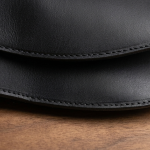
The fixture is an often-overlooked part of automated stitching. A computer-controlled machine may have highly accurate movement, but that accuracy is meaningful only when the footwear component is held in the correct position. A suitable fixture should provide:
- Accurate locating points
- Repeatable component placement
- Adequate material holding
- Easy loading and unloading
- Minimal material deformation
- Consistent component orientation
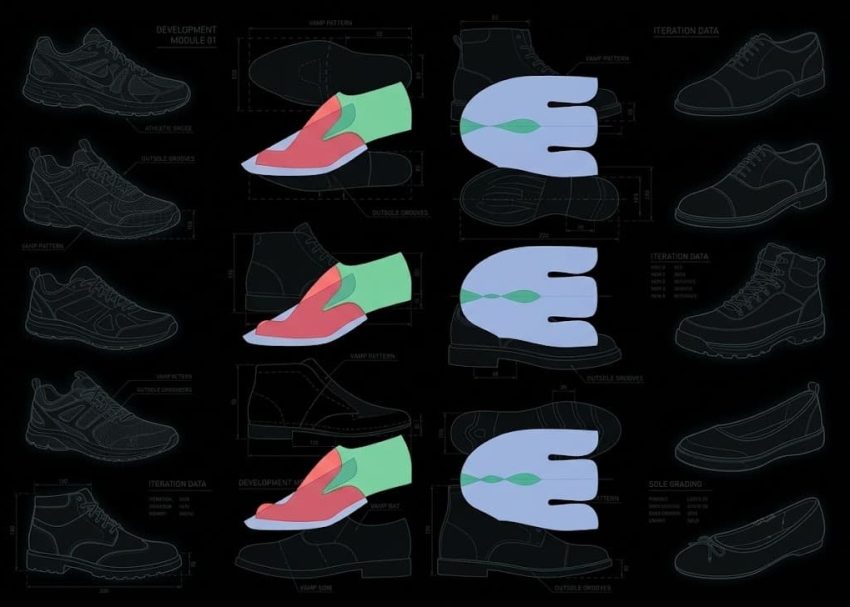
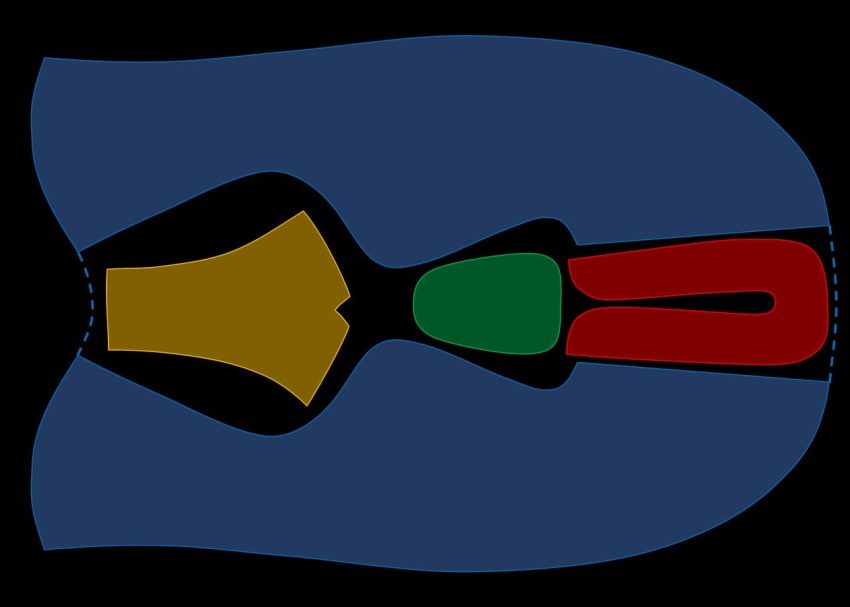
For curved or irregular footwear components, fixture development may require close cooperation between pattern engineering, production engineering, and machine programming teams.
Quality Control in Computer Stitching
Quality control should begin before mass production. A first-off sample should be checked for:
- Stitch-line position
- Stitch length
- Stitch density
- Thread appearance
- Seam alignment
- Start and end points
- Material damage
- Thread tension
- Component deformation
- Overall appearance
The approved machine program and settings should then be documented so that the same process can be reproduced later. This becomes particularly important when styles are produced across different shifts, machines, factories, or production periods.


The Future of Computer Stitching in Footwear
The development of computer stitching is closely connected with the wider movement toward digital footwear manufacturing.
Future production systems are likely to place greater emphasis on digital data, automated machine adjustment, sensors, process monitoring, and integration between footwear design and manufacturing equipment.
The long-term opportunity is not simply to automate one sewing operation. It is to create a connected workflow in which digital pattern engineering, stitching programs, production machinery, quality inspection, and manufacturing data work together. This can help footwear manufacturers move toward greater flexibility and more controlled production.
Conclusion
Computer stitching represents an important step in the modernization of footwear manufacturing. Its real value lies in combining programmable machine movement with accurate pattern engineering, controlled component positioning, suitable materials, and standardized production parameters.
Ultimately, the strongest results come when footwear pattern engineers, production engineers, machine programmers, operators, and quality teams work together to convert a digital design into a stable and repeatable manufacturing process.
FAQs – Frequently Asked Questions
Computer stitching is a programmable stitching process in which a computerized control system guides the stitching operation according to a predefined digital path. It improves repeatability and consistency compared with fully operator-guided stitching.
Depending on machine capability, applications can include vamps, quarters, straps, tongues, decorative panels, logos, sports footwear components, leather components, and other repetitive stitching operations.
The primary advantage is repeatability. Once the program and production setup are validated, the machine can reproduce the same stitch path with considerably less operator-dependent variation.
Not necessarily. Many systems automate the stitching movement, but operators may still be required to load, position, clamp, inspect, and unload footwear components.
Footwear CAD can provide accurate component geometry, stitch-line information, reference points, and design data that can assist in developing machine stitching programs.
Fixtures accurately locate and hold the footwear component. Poor positioning can produce incorrect stitch placement even when the computer-controlled machine itself is operating accurately.
Not in every footwear operation. Computer stitching is highly suitable for repetitive and programmable operations, while complex three-dimensional or highly flexible constructions may still benefit from skilled manual sewing.
The pattern engineer helps establish accurate component geometry, stitch lines, construction details, and reference information. This provides an important foundation for developing a reliable automated stitching process.