Fit of High Boots: Key Areas That Control Comfort and Foot Entry
Footwear Manufacturing Insights
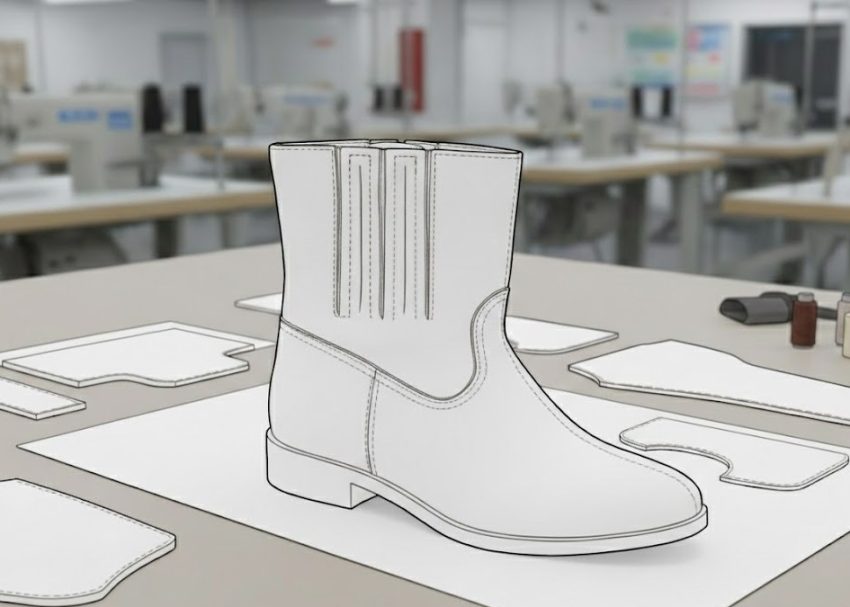
High boots require a careful balance between easy foot entry, secure fit, and wearing comfort. Unlike low footwear, the extended boot shaft introduces additional fitting requirements around the calf and lower leg. A boot that is too tight can be difficult to put on and uncomfortable during wear, while excessive looseness can reduce support and create poor appearance.


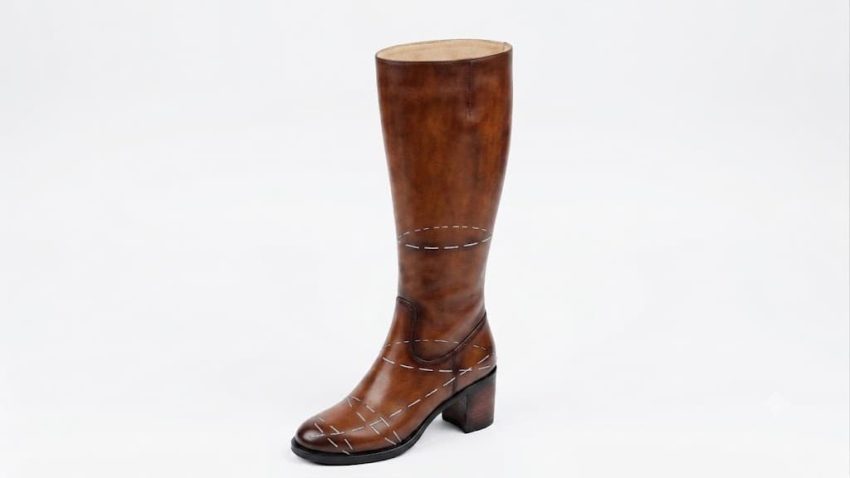
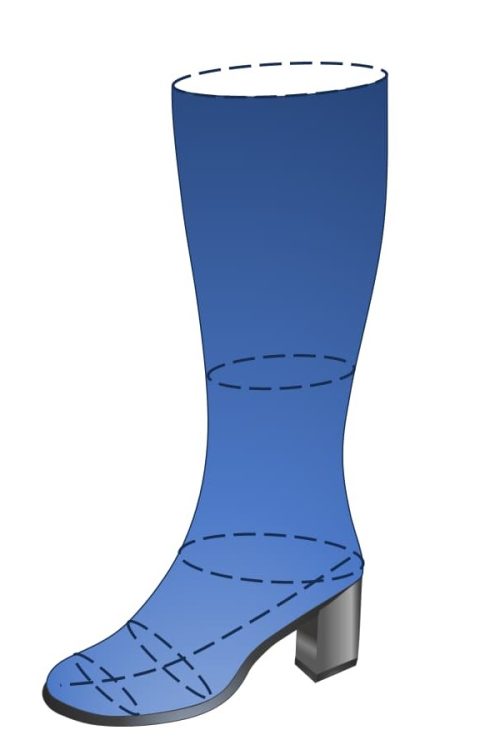
The illustrated fit guide highlights the most important fitting zones that should be considered during boot design and pattern development. These areas work together to determine whether the finished boot provides a comfortable and functional fit.
Boot Opening / Calf
The top opening must allow the foot and leg to enter without excessive resistance. Its circumference should also suit the intended calf size and boot style. An opening that is too narrow can make foot entry difficult, while one that is too large may cause poor leg retention.
Calf and Shaft Fit
The shaft should follow the general shape of the lower leg without creating excessive pressure. Proper allowance is particularly important where the leg changes from the fuller calf area toward the ankle.
Ankle Area
The ankle transition is a critical fitting point. The boot should hold the ankle securely while allowing normal movement. Excessive tightness in this region can create pressure and discomfort.
Instep and Vamp
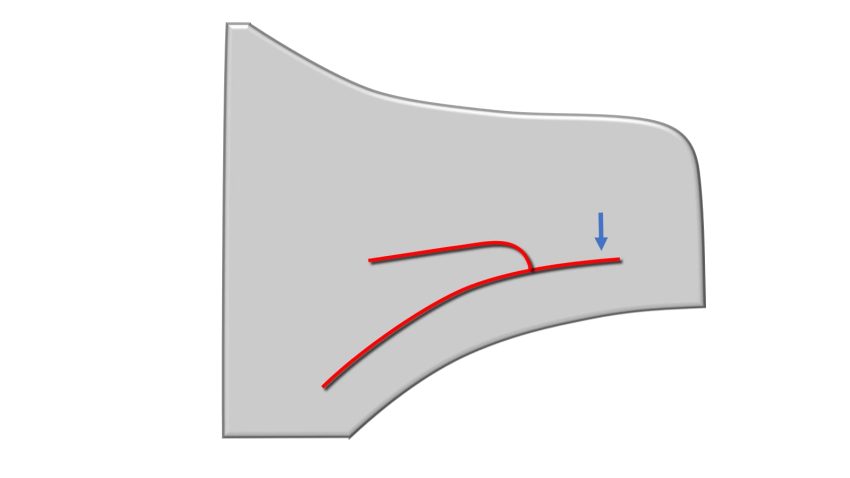
The instep must provide sufficient volume for foot entry and movement. The vamp should conform to the foot without excessive compression. This area is especially important when the boot has limited opening or no conventional lacing system.
Forefoot and Toe Area
The forefoot requires enough width and length for natural toe movement. The toe area should not restrict the foot, particularly when the boot is worn for extended periods.

Technical Takeaways
- Overall fit: Check comfort in both standing and walking positions.
- Opening: Balance easy entry with secure leg retention.
- Calf: Match shaft circumference to the intended leg shape.
- Ankle: Provide support without pressure points.
- Instep: Allow adequate volume for foot entry.
- Vamp: Follow the foot shape without excessive compression.
- Toe box: Maintain sufficient length and forefoot width.

Design Insight
For high boots, fit is not controlled by one measurement alone. Opening circumference, calf shape, ankle girth, instep height, vamp volume, and forefoot dimensions must work together. A successful boot design therefore combines easy entry with controlled fit and freedom from discomfort.