Chilling in Footwear Manufacturing – Full Shoe Assembly Series
After outsole attachment and pressing, a shoe may appear fully assembled and ready for the next production stage. However, beneath the surface, the adhesive system and footwear materials are still undergoing important stabilization processes. Heat introduced during adhesive activation and pressing remains trapped within the outsole, upper assembly, and bonding interface, creating a temporary state where the shoe is particularly sensitive to movement and deformation.
If this residual heat is not removed in a controlled manner, several quality issues can develop. The outsole may gradually shift from its intended position, adhesive creep can occur along the bond line, and dimensional changes may affect the final shape of the footwear. Even a well-executed pressing operation can suffer from reduced bonding consistency if thermal stabilization is overlooked.
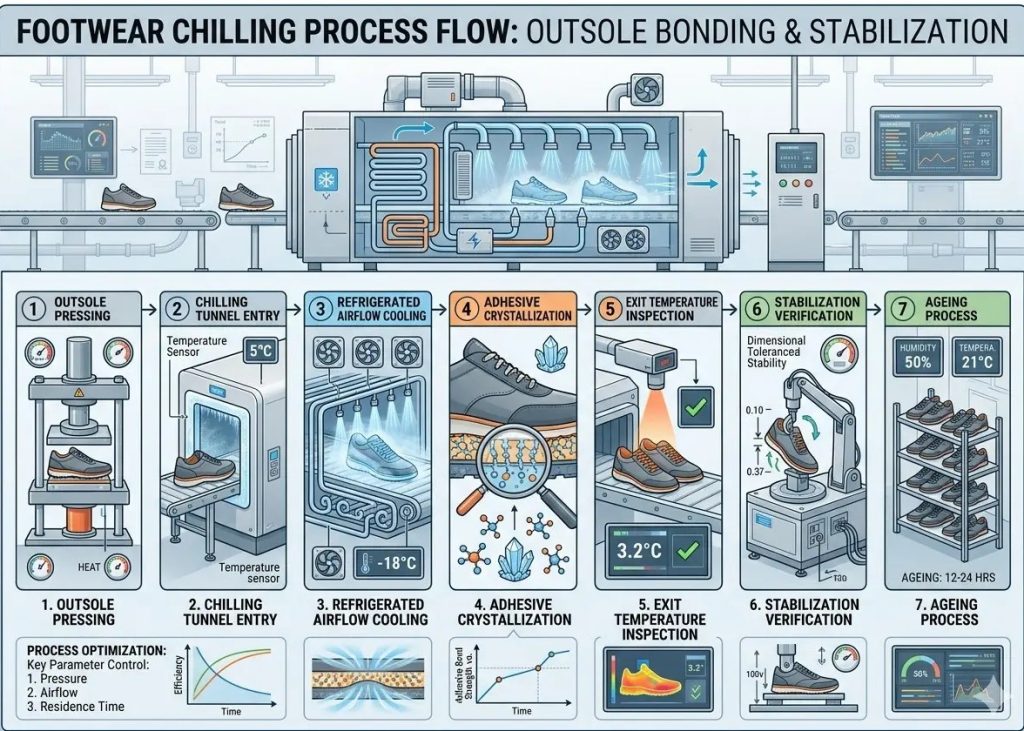
To prevent these problems, footwear manufacturers use chilling tunnels immediately after pressing. By rapidly cooling the assembled shoe under controlled conditions, the chilling process helps stabilize the adhesive bond, preserve the shoe’s intended geometry, and reduce the risk of post-press distortion. More importantly, it prepares the footwear for subsequent ageing, inspection, and handling operations while maintaining the quality achieved during earlier assembly stages.
Although chilling is often viewed as a simple cooling step, it plays a vital role in ensuring bond reliability, dimensional stability, and overall product consistency. For this reason, modern footwear factories treat chilling as a critical process control point within the full shoe assembly operation.
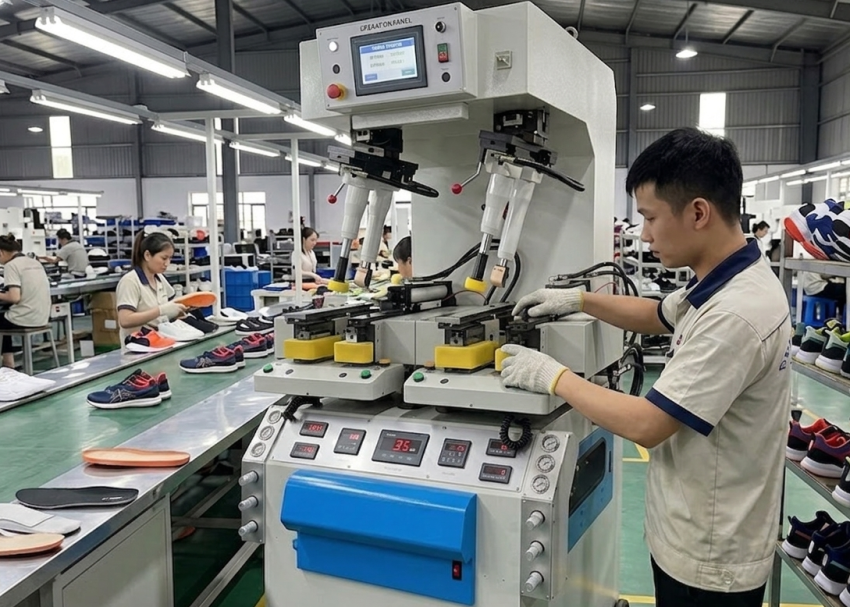
Understanding the Role of Chilling in Full Shoe Assembly
Following outsole attachment, the footwear assembly enters a transitional stage where the adhesive bond is neither fully stabilized nor completely resistant to mechanical movement.
During activation, adhesives are heated to increase tack and bonding capability. During pressing, pressure forces the activated surfaces into intimate contact. However, even after pressing is complete, adhesive molecules continue undergoing physical stabilization and structural reorganization.
At the same time, materials used throughout the shoe assembly remain thermally expanded. Rubber compounds, EVA midsoles, TPU components, synthetic uppers, leather materials, foam inserts, and textile reinforcements all react differently to heat.
Without controlled cooling, these materials may contract unevenly. Such contraction can introduce stress into the bond line and create dimensional changes that only become visible later during ageing, inspection, or customer use. The chilling process removes heat in a controlled manner so that all assembly components stabilize before the shoe proceeds to the next stage of production.
Key Control Points
- Ensure immediate transfer from pressing to chilling
- Avoid unnecessary handling before chilling
- Maintain validated tunnel temperature
- Verify exit shoe stabilization temperature
Expert Tip: Integrate chilling tunnel data directly into the SCADA system for real-time process monitoring.
Chilling Tunnel Equipment and System Design
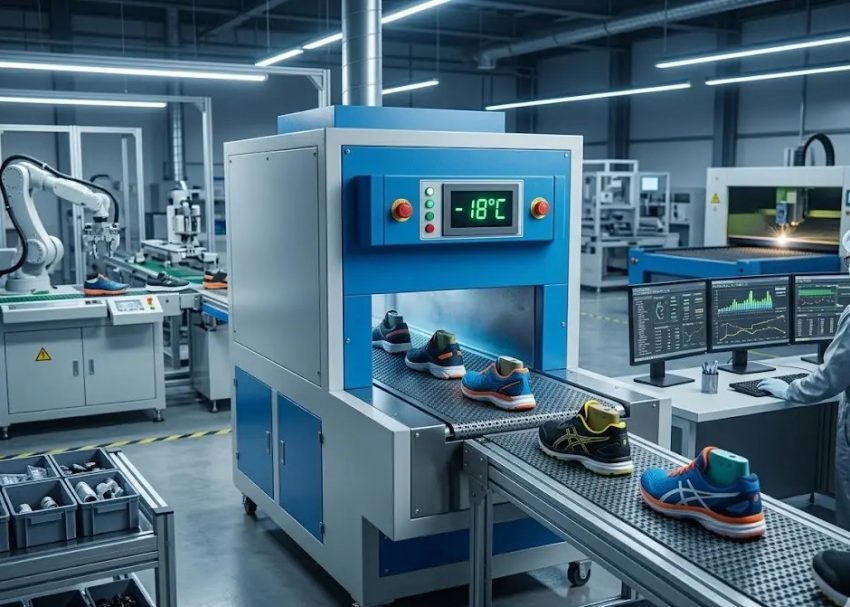
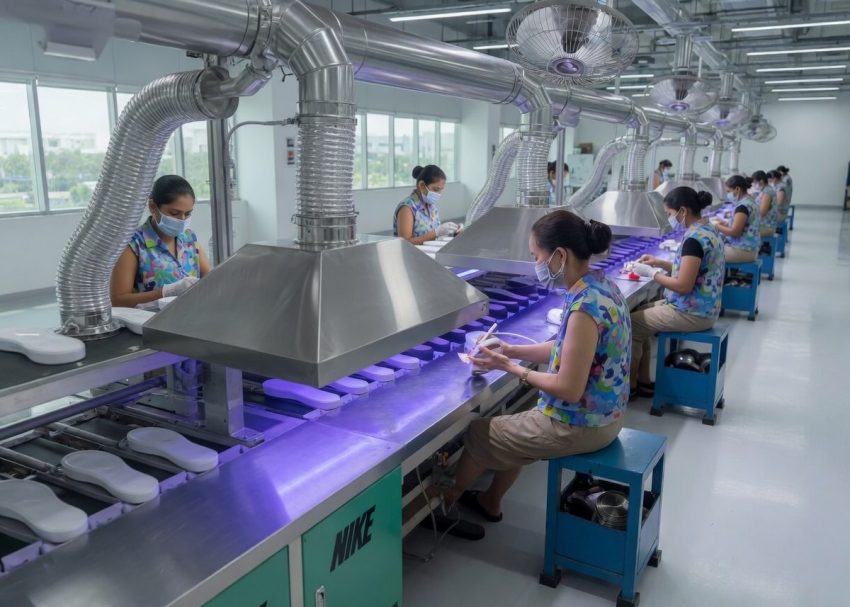
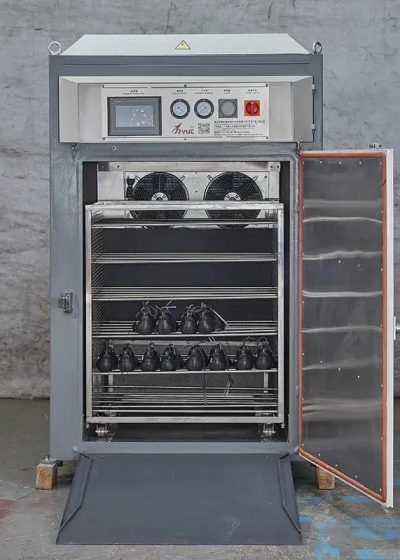
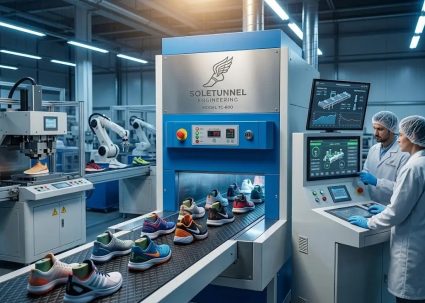
The chilling operation is performed inside a refrigerated tunnel specifically designed for footwear production. Although equipment designs vary among manufacturers, the fundamental objective remains the same: achieve consistent cooling of every shoe passing through the production line.
A chilling tunnel typically consists of an insulated enclosure containing a conveyor system and refrigeration equipment. Cold air circulates throughout the tunnel while footwear moves continuously from the entrance to the exit.
As the shoes travel through the tunnel, thermal energy is removed from the adhesive layer and surrounding materials. The cooling process must be uniform because localized temperature differences can result in uneven stabilization.
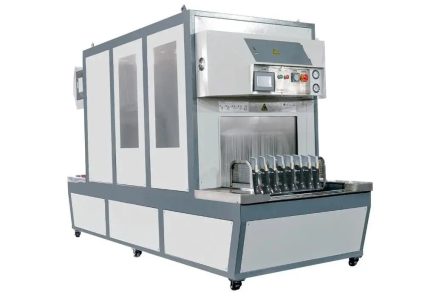
Modern footwear factories increasingly rely on automated chilling systems integrated directly into assembly lines. These systems eliminate operator variation while ensuring repeatable process performance. The tunnel length, cooling capacity, airflow design, and conveyor speed are selected according to production volume and product requirements.
Factories producing lightweight canvas footwear may require relatively short chilling tunnels. In contrast, facilities manufacturing safety footwear, hiking boots, or thick athletic shoes often require longer tunnels because these products retain heat for extended periods.
Typical Chilling Tunnel Components
- Refrigeration unit
- Insulated tunnel chamber
- Air circulation blowers
- Cooling evaporators
- Conveyor system
- Temperature sensors
- PLC controls
- SCADA interface
- Alarm systems
- Data recording devices
Key Control Points
- Ensure uniform airflow distribution
- Verify refrigeration efficiency
- Maintain insulation integrity
- Prevent conveyor interruptions
Pro Tip: Automatically divert footwear exposed to temperature excursions for extended ageing and re-inspection
Heat Removal and Thermal Stabilization Mechanisms
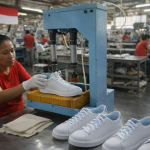
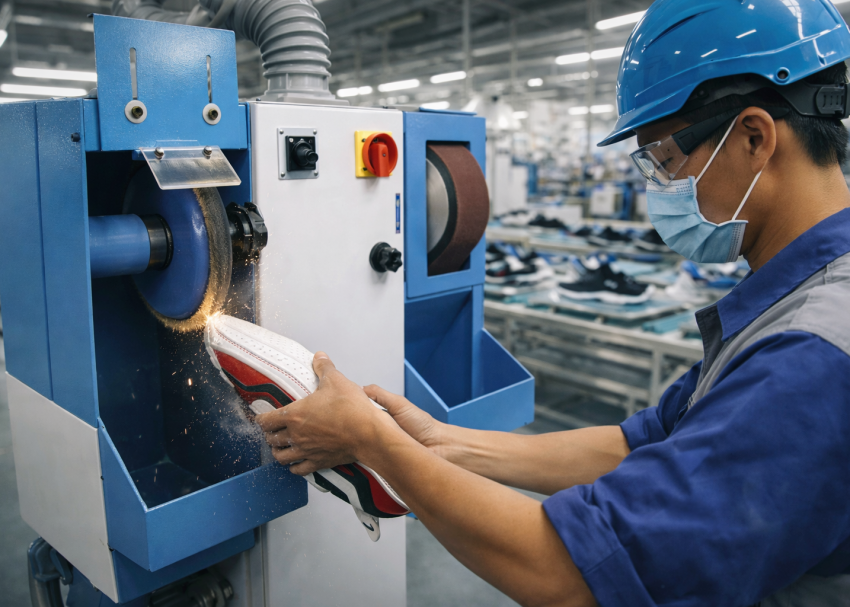
The effectiveness of chilling depends on how efficiently heat is removed from the footwear assembly. When shoes enter the chilling tunnel, temperature differences exist throughout the product. The outsole may be warmer than the upper. The adhesive layer may retain more heat than surrounding materials. Thick midsoles often cool more slowly than thin constructions.
As chilled air circulates around the shoe, heat transfers from the warmer assembly components to the cooler surrounding air. This process gradually reduces internal temperatures until stabilization is achieved.
The rate of heat removal must be carefully controlled. Excessively rapid cooling may create thermal shock in certain materials. Conversely, slow cooling can prolong adhesive instability and increase the risk of bond movement. Engineers therefore establish cooling profiles based on material characteristics and adhesive requirements.
Athletic footwear with large EVA midsoles often requires different cooling conditions than vulcanized footwear or cemented leather shoes. Consequently, chilling parameters must always be validated for each product category. The goal is not simply to achieve the lowest possible temperature. The goal is to achieve controlled stabilization while preserving material performance and bond integrity.
Key Control Points
- Validate cooling profiles for each product family
- Avoid thermal shock conditions
- Monitor cooling uniformity
- Revalidate parameters when materials change
Pro Tip: Use thermal imaging cameras to identify uneven cooling zones.
Adhesive Stabilization and Bond Crystallization
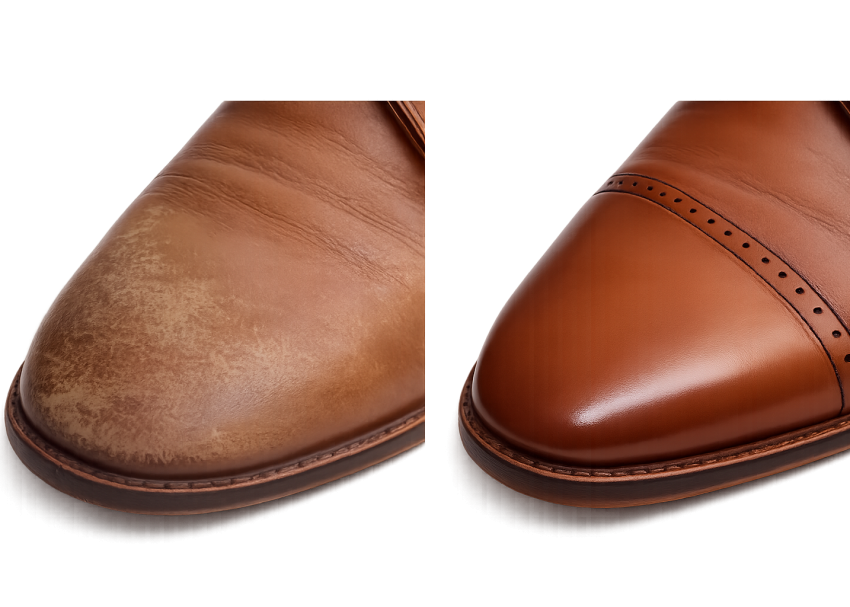
The most critical technical function of chilling involves adhesive stabilization. During activation, adhesive systems become highly reactive. Molecular movement increases, allowing effective surface wetting and bond formation. However, the adhesive remains susceptible to movement immediately after pressing.
As cooling progresses, molecular activity decreases and the adhesive structure becomes increasingly stable. This stabilization process is frequently described as bond crystallization or bond locking.
When chilling is properly controlled, the adhesive develops the rigidity required to resist outsole movement and dimensional change. The bond line becomes more resistant to stress while maintaining the flexibility required for footwear performance. Different adhesive technologies respond differently during chilling.
Solvent-based systems rely on cooling and solvent evaporation. Reactive polyurethane adhesives continue chemical curing after chilling. Hot-melt systems require rapid thermal stabilization. Water-based systems depend on proper drying and cooling balance.
Key Control Points
- Match chilling conditions to adhesive specifications
- Verify stabilization through testing
- Monitor bond-line consistency
- Revalidate after adhesive changes
Pro Tip: Validate chilling conditions separately for athletic, casual, and safety footwear.
Conveyor Dwell Time Management
Dwell time is one of the most important variables in the chilling process. Dwell time refers to the total period that footwear remains inside the cooling tunnel. This parameter determines how much heat can be removed before the shoe exits the system.
If dwell time is insufficient, residual heat remains trapped within the assembly. The shoe may appear stable initially but continue experiencing dimensional changes later. If dwell time is excessive, production efficiency decreases unnecessarily and some materials may be exposed to colder conditions than required.
The challenge for manufacturing engineers is identifying the optimum dwell time that balances stabilization and productivity. Several factors influence dwell time requirements. Footwear with thick rubber outsoles retains heat longer than footwear with thin sheet soles. High-density EVA midsoles cool differently from polyurethane components.
Leather footwear responds differently from synthetic constructions. Ideal Dwell time range between 1 to 6 Minutes depend upon the type of materials and construction.
Key Control Points
- Validate dwell time for every style family
- Monitor production speed changes
- Ensure adequate stabilization before exit
- Reassess dwell time during seasonal changes
Pro Tip: Conduct seasonal process reviews because ambient conditions affect cooling performance.
Temperature Control and Monitoring
Temperature control represents the foundation of chilling process performance. Every footwear factory establishes validated temperature ranges based on adhesive specifications, material characteristics, and production requirements.
Maintaining temperature within these limits ensures predictable cooling behavior and consistent stabilization. If tunnel temperatures become too high, cooling efficiency decreases and adhesive stabilization may be incomplete.
If temperatures become excessively low, material brittleness, condensation, or thermal shock may occur.Therefore, temperature control must be continuous rather than periodic. Modern chilling tunnels use digital monitoring systems that provide real-time feedback regarding tunnel performance.
Many facilities divide tunnels into multiple cooling zones. This design allows more precise control of temperature distribution and improves overall process stability. Ideally between 0 to – 5 Centigrade is Maintained depending on the type of materials and constructions
Key Control Points
- Continuously monitor tunnel temperature
- Conduct routine temperature mapping
- Calibrate sensors regularly
- Investigate temperature deviations immediately
Pro Tip: Link chilling records with outsole pressing data for complete traceability.
Exit Shoe Temperature Verification
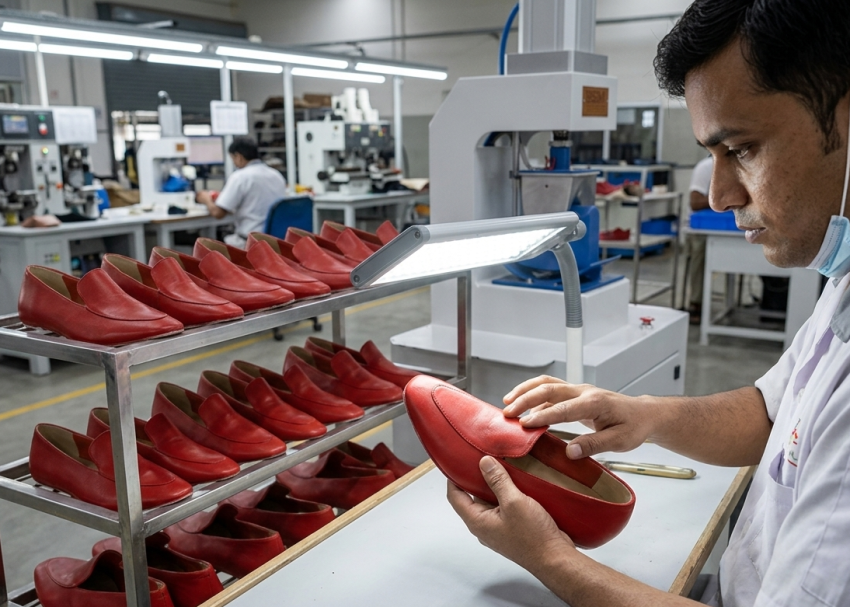
Tunnel temperature alone does not guarantee stabilization. For this reason, leading footwear manufacturers increasingly monitor the temperature of the shoe itself as it exits the chilling tunnel. Exit temperature verification provides direct evidence that sufficient cooling has occurred.
This approach is particularly valuable because different footwear styles retain heat differently. Two shoes exposed to identical tunnel conditions may exit at different temperatures due to variations in mass, materials, and construction.
Infrared thermometers, thermal imaging systems, and automated sensors are commonly used to measure exit temperatures. Quality teams establish acceptable temperature limits based on validated process studies. Ideally, the Exit temperature may range between 10 – 15 C on Surface of the Shoe.
Key Control Points
- Define acceptable exit temperatures
- Use calibrated measuring equipment
- Monitor representative samples
- Record results for traceability
Pro Tip: Never increase conveyor speed without revalidating exit shoe temperature.
Structural Stabilization and Shape Retention
Beyond adhesive performance, chilling plays a major role in maintaining footwear geometry. The lasting process establishes the intended shape of the shoe. Pressing operations then secure the outsole while the assembly remains under thermal influence.
As materials cool, they naturally seek dimensional equilibrium. If cooling occurs unevenly, shape distortion may develop. Toe spring angles may change. Sidewalls may shift. Upper panels may relax unevenly.
These dimensional changes can affect both aesthetics and fit. Proper chilling minimizes these risks by stabilizing the footwear before further handling occurs. Factories producing performance footwear pay particular attention to structural stabilization because dimensional consistency directly influences product performance and consumer perception.
Key Control Points
- Prevent premature stacking
- Verify dimensional consistency
- Monitor shape retention
- Control airflow uniformity
Pro Tip: Include chilling performance in preventive maintenance audits.

SCADA Integration and Smart Manufacturing Control
Modern footwear factories increasingly integrate chilling systems into SCADA1 and Industry 4.02 platforms. Instead of treating chilling as an isolated process, manufacturers now collect real-time production data to improve control and traceability.
Integrated systems monitor, Tunnel temperature, Conveyor speed, Dwell time, Exit temperature, Alarm events, Production batches, Machine status. As highlighted in the Full Shoe Assembly pillar process, SCADA integration allows automatic identification of process excursions.
When temperatures move outside approved limits, affected pairs can be diverted automatically for additional ageing and re-inspection.
This capability prevents unstable products from progressing through the manufacturing system.
Key Control Points
- Establish automatic alarm limits
- Maintain data integrity
- Review process trends regularly
- Link chilling data with quality records
Common Chilling Defects and Their Causes
Although chilling appears straightforward, poor process control can create significant quality problems. The most common defects include sole lifting, bond creep, outsole movement, dimensional distortion, and inconsistent appearance.
Many of these issues originate from inadequate cooling, excessive tunnel temperatures, insufficient dwell time, or uneven airflow distribution. Because defects may not appear immediately, chilling failures can remain hidden until ageing, inspection, shipment, or customer use.
Consequently, chilling must be treated as a critical quality-control process rather than a simple cooling operation. Common Defects like Sole Edge Lifting, Sole edge lifting, Bond creep, Outsole displacement, Upper distortion, Sidewall opening, Shape inconsistency, Condensation marks, Midsole deformation.
Key Control Points
- Trend defects by production line
- Investigate recurring quality issues
- Validate tunnel performance regularly
- Perform thermal mapping studies
Conclusion
Chilling is far more than a simple cooling operation. It is a critical stabilization stage that protects the quality achieved during outsole pressing and prepares footwear for ageing, inspection, and final shipment. By controlling tunnel temperature, airflow, dwell time, and exit shoe temperature, manufacturers ensure that adhesive bonds stabilize correctly and that footwear geometry remains consistent.
As footwear factories continue adopting automation and Industry 4.0 technologies, chilling systems are becoming increasingly integrated into digital quality-management frameworks. This evolution enables higher process reliability, improved traceability, and faster identification of production issues.
In the next blog of the Full Shoe Assembly Series, we will explore Ageing in Footwear Manufacturing, where controlled resting periods allow adhesive systems to complete stabilization before final inspection and packing.
Frequently Asked Questions – FAQs
- Why is chilling required after outsole pressing?
- Stabilizes adhesive bonding
- Prevents outsole movement
- Locks shoe geometry
- Reduces post-press defects
- What is a chilling tunnel?
- Refrigerated conveyor system
- Provides controlled cooling
- Stabilizes footwear assembly
- Supports bond development
- What is dwell time?
- Time spent inside tunnel
- Controls cooling exposure
- Influences stabilization quality
- Why monitor exit shoe temperature?
- Confirms actual stabilization
- Detects insufficient cooling
- Supports quality control
- Can excessive cooling create defects?
- Yes
- May cause condensation
- Can create brittleness
- May affect material performance
- How does SCADA improve chilling?
- Real-time monitoring
- Automatic alarms
- Traceability
- Data-driven quality control
- Which footwear requires longer chilling?
- High-mass constructions
- Safety footwear
- Hiking bootsThick athletic shoes
- SCADA, which stands for Supervisory Control and Data Acquisition, is a control system used in industrial processes. It combines hardware and software to enable real-time monitoring, control, and optimization of processes in various industries such as manufacturing, oil and gas, and utilities. ↩︎
- Industry 4.0 refers to the fourth industrial revolution, characterized by the integration of digital, smart, and connected technologies into manufacturing and industrial processes. ↩︎