Heel Nailing Operations in Outsole Process: Outsole (Stock Fitting) Assembly Series
In the previous blog, Stage Inspection II – Assembly Inspection Operations in Outsole Process, we covered inspection of the assembled outsole/stock fitting components before the shoe proceeds to the next operation.
Heel nailing is another important operation within this stage for footwear constructions that require additional mechanical reinforcement. However, heel nailing at the outsole or stock fitting stage is different from heel nailing performed on the complete shoe.
The basic principle remains the same, but the nailing height and nail pattern must change because the complete shoe includes additional thickness from the insole, upper, and other internal components. Therefore, using the same settings and nail pattern from Full Shoe Assembly can create serious interference or structural problems.
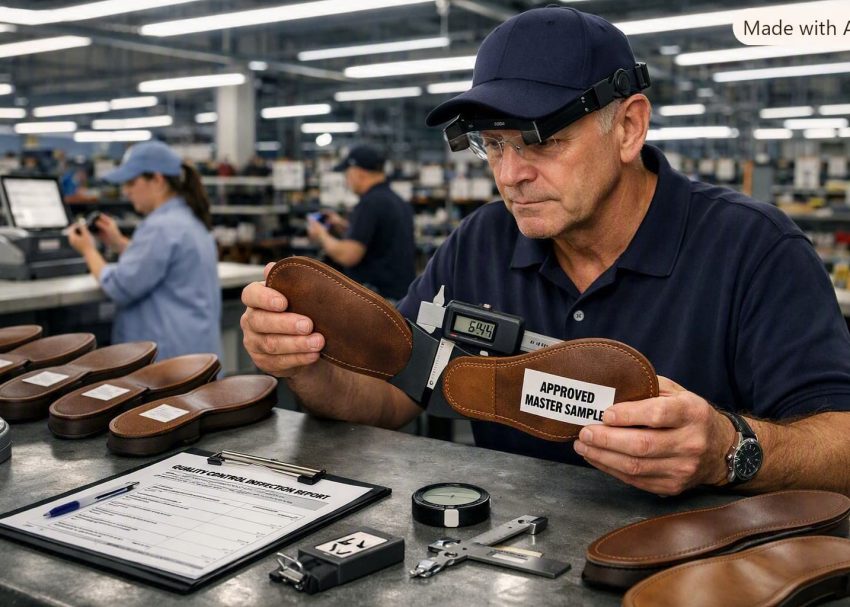
Heel Nailing at the Stock Fitting Stage
Heel nailing secures the heel structure mechanically by driving approved nails through the outsole/heel assembly into the heel component. It normally complements adhesive bonding and provides additional mechanical holding strength. At the Stock Fitting stage, the shoe does not yet contain the complete upper and insole thickness that exists during Full Shoe Assembly heel nailing. Consequently, the required nail or screw driving height is lower.
This difference is critical. If the machine retains the Full Shoe Assembly height, the nail can penetrate too deeply and potentially damage components or create an incorrect fastening position. The operator therefore sets the machine according to the Stock Fitting heel construction, rather than copying the Full Shoe Assembly machine setting.
Key Control Points
- Use Stock Fitting-specific nail height.
- Confirm heel and outsole construction before setup.
- Use the approved nail specification.
- Approve the first pair before bulk production.
Expert Tip: Maintain separate men’s and women’s heel nailing bases.
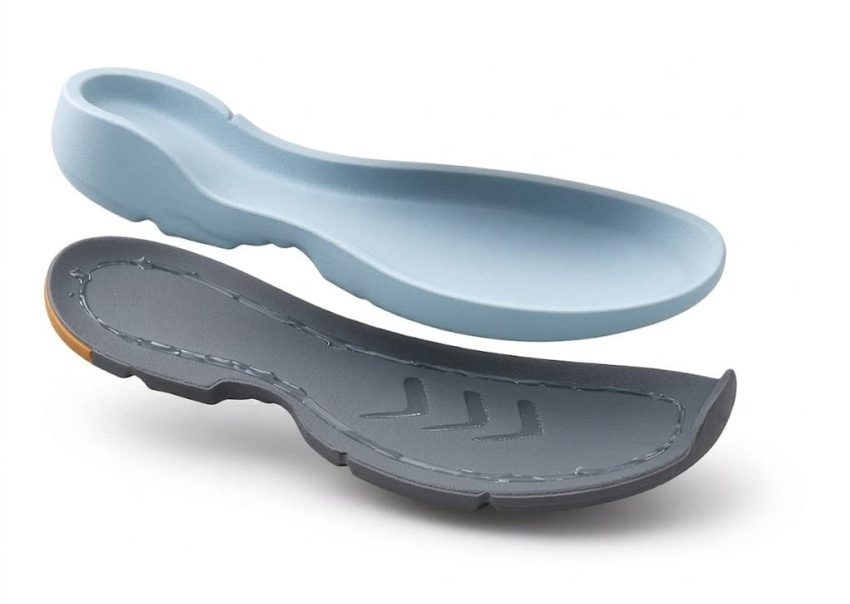
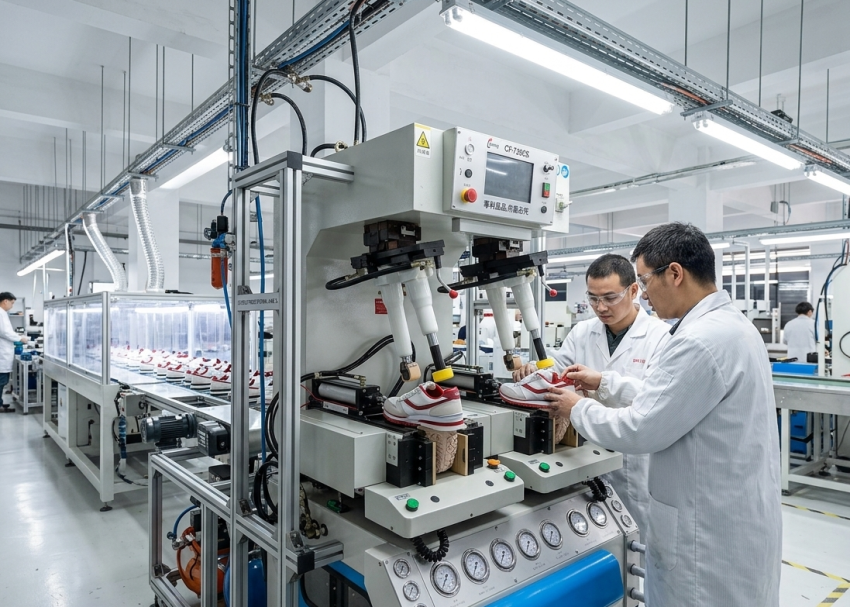
Heel Nailing Base for Men’s and Women’s Footwear
The heel nailing base or fixture supports and positions the heel during nail insertion. As in Full Shoe Assembly, men’s and women’s footwear require different heel nailing bases because their heel dimensions, shapes, heights, and bottom configurations can differ significantly. The correct base keeps the heel stable and maintains the intended relationship between the heel, outsole, and nailing mechanism.
For women’s footwear, particularly higher or shaped heels, the fixture must accommodate the specific heel geometry without creating excessive pressure or instability. Men’s footwear generally uses a different support geometry because the heel construction and dimensions are different. Factories should therefore maintain separate approved bases or dedicated interchangeable fixtures for men’s and women’s constructions. The base should also match the specific heel design where required.
Key Control Points
- Use the correct men’s or women’s heel nailing base.
- Confirm fixture compatibility during style changeover.
- Check heel stability before nail insertion.
- Inspect worn or damaged bases regularly.
Expert Tip: Develop Stock Fitting and Full Shoe Assembly nail patterns together.
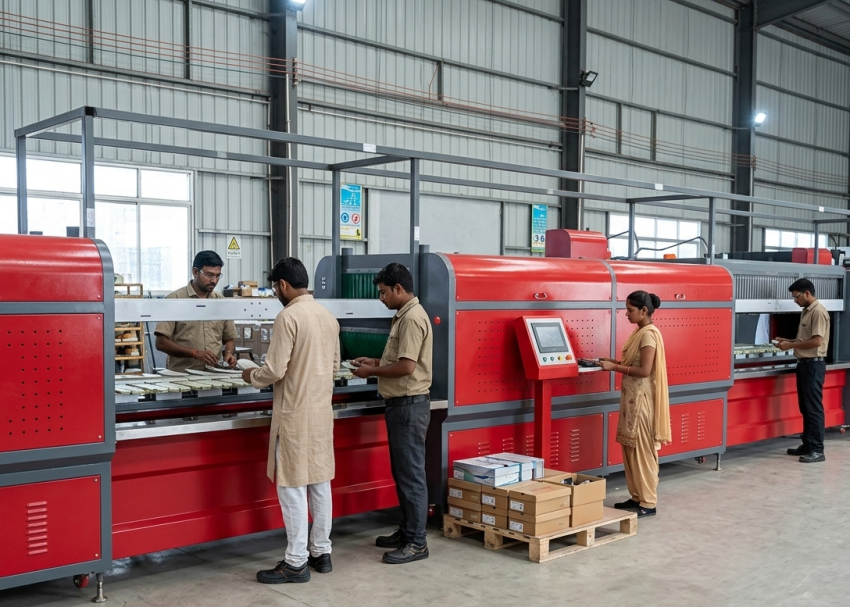
Heel Nailing Height at Stock Fitting
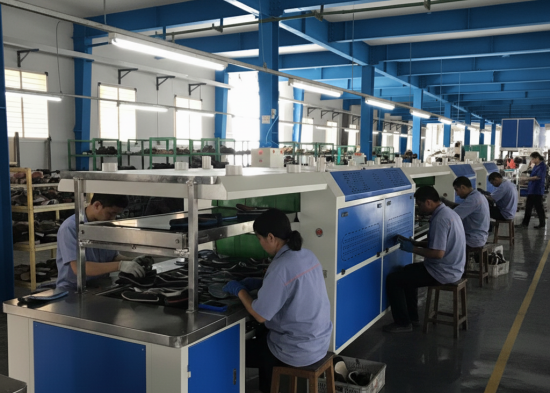
The most important difference between Full Shoe Assembly and Stock Fitting heel nailing is nailing height. During Full Shoe Assembly, the nail passes through a completed shoe construction that includes the insole and upper thickness. At Stock Fitting, those layers are not present in the same way. Therefore, the nail-driving height must be reduced accordingly.
This does not simply mean reducing the machine setting by a fixed amount for every style. The actual setting depends on outsole thickness, heel construction, heel seat, nail length, and the specific Stock Fitting configuration. During development, technicians should establish the correct height through a trial piece. The sample should then be sectioned to confirm that the nail reaches the intended heel structure without excessive penetration. Once approved, the setting should become part of the style-specific machine setup sheet.
Expert Tip: Mark both nail patterns on development samples to identify intersections.

Heel Nailing Pattern and Nail Position
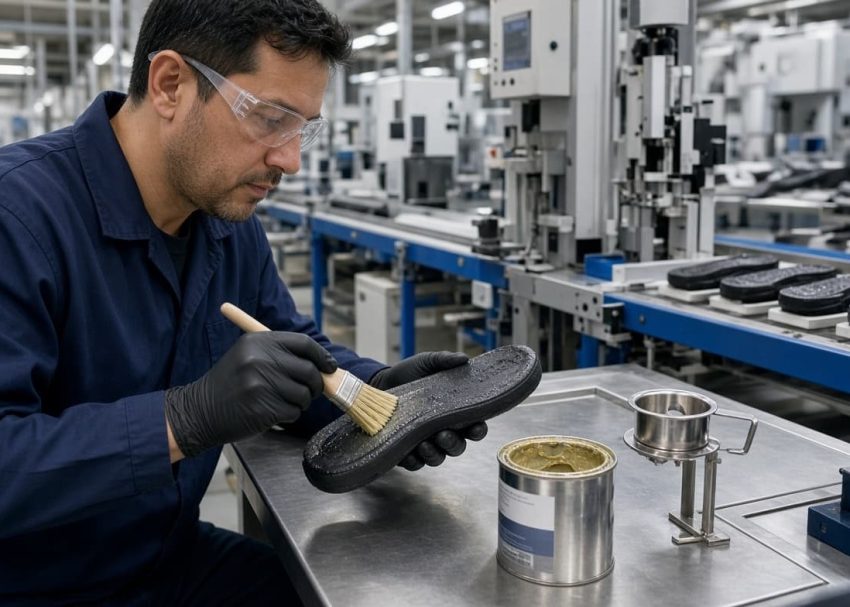
The heel nailing pattern at Stock Fitting must be different from the Full Shoe Assembly pattern. This is one of the most important controls in the process. Both operations may mechanically reinforce the same heel structure, but their nail positions should not overlap.
If a Stock Fitting nail is positioned directly over an existing or planned Full Shoe Assembly nail, the second nail can encounter the first fastener. This may cause nail bending, incomplete penetration, machine overload, incorrect holding strength, or damage to the heel structure.
Therefore, product development must define the Stock Fitting nail pattern separately. The pattern should provide sufficient mechanical reinforcement while deliberately avoiding the Full Shoe Assembly nail locations. The two patterns should be checked together during development rather than independently. A simple drawing or heel-bottom marking template can identify potential intersections before production starts.
Key Control Points
- Use a separate Stock Fitting nail pattern.
- Avoid intersection with Full Shoe Assembly nails.
- Validate both patterns together during development.
- Use style-specific positioning guides.
Expert Tip: Section the first approved pair to verify actual penetration.

Nail Position and Heel Alignment
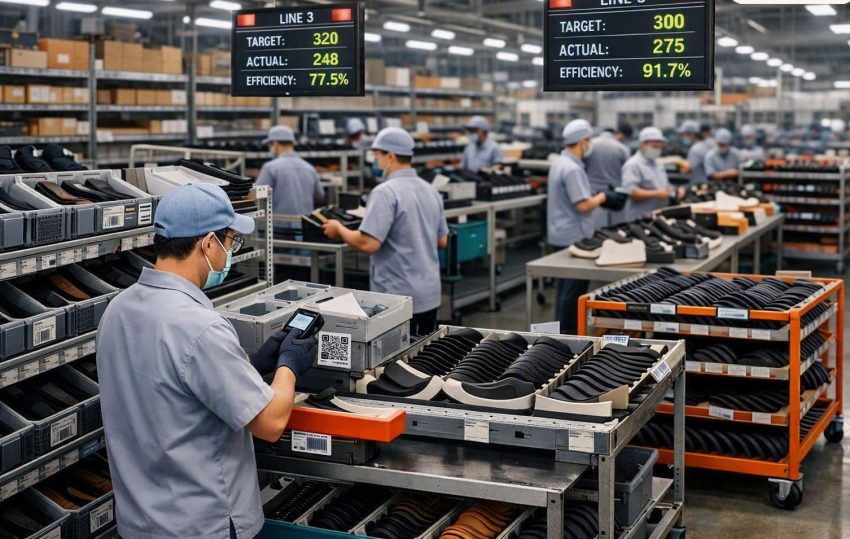
Accurate positioning ensures that every nail enters the intended part of the heel. The heel must sit firmly against the correct base before the machine cycle begins. The operator should check heel centring, outsole position, and the orientation of the heel pattern. A small positional error can shift several nails simultaneously and create interference with the Full Shoe Assembly pattern.
After nailing, inspectors should verify the heel from the bottom and side to confirm correct positioning and seating. For new constructions, destructive sectioning provides the most reliable confirmation because some nail-position defects cannot be detected visually.
Key Control Points
- Centre the heel correctly on the base.
- Verify the Stock Fitting pattern before production.
- Check for nail interference.
- Conduct periodic sectioning of samples.
Expert Tip: Keep style-specific height, base, and pattern information in the machine setup sheet.
Quality Control for Stock Fitting Heel Nailing
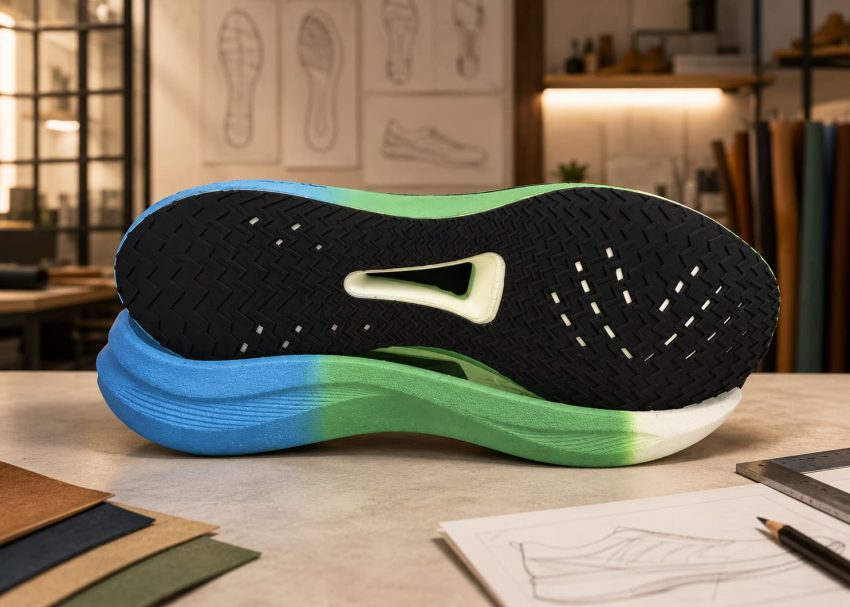
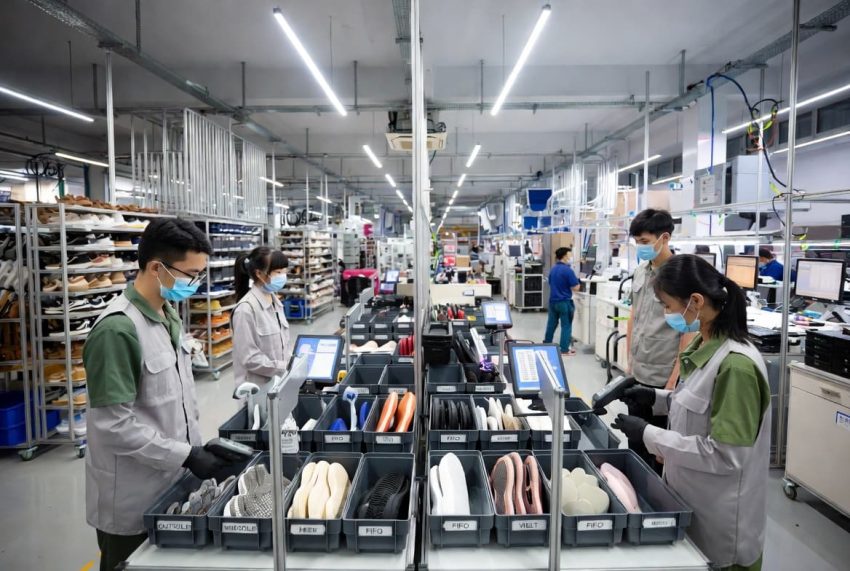
Stock Fitting heel nailing requires control of four primary parameters: nailing height, base selection, nail pattern, and nail position. The factory should establish first-piece approval whenever there is a change in heel style, nail specification, base, or machine setup. Quality personnel should also compare the Stock Fitting nail pattern against the Full Shoe Assembly pattern during product development.
The objective is not simply to achieve strong heel fastening. The process must also ensure that the subsequent Full Shoe Assembly operation can complete its own nailing without interference. This makes coordination between Stock Fitting Engineering and Full Shoe Assembly Engineering particularly important.
Key Control Points
- Verify height and penetration.
- Confirm correct base.
- Confirm non-intersecting nail patterns.
- Maintain approved setup records.
Expert Tip:
Treat nail-pattern interference as a development issue, not only a production issue.
Check fixtures after repeated production because base wear can affect nail position.
Machines Used
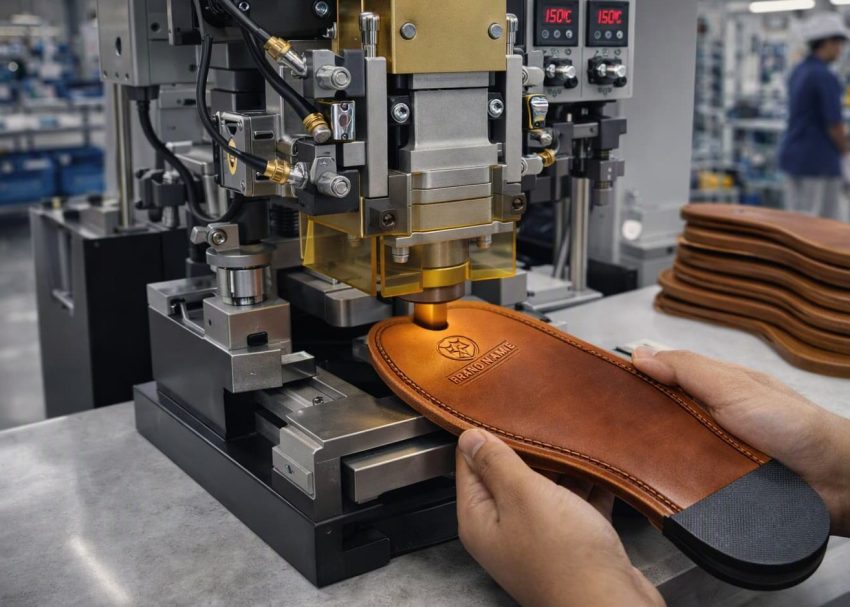
Automatic Heel Nailing Machine
Used for consistent nail positioning and controlled nail insertion in medium- and high-volume production.
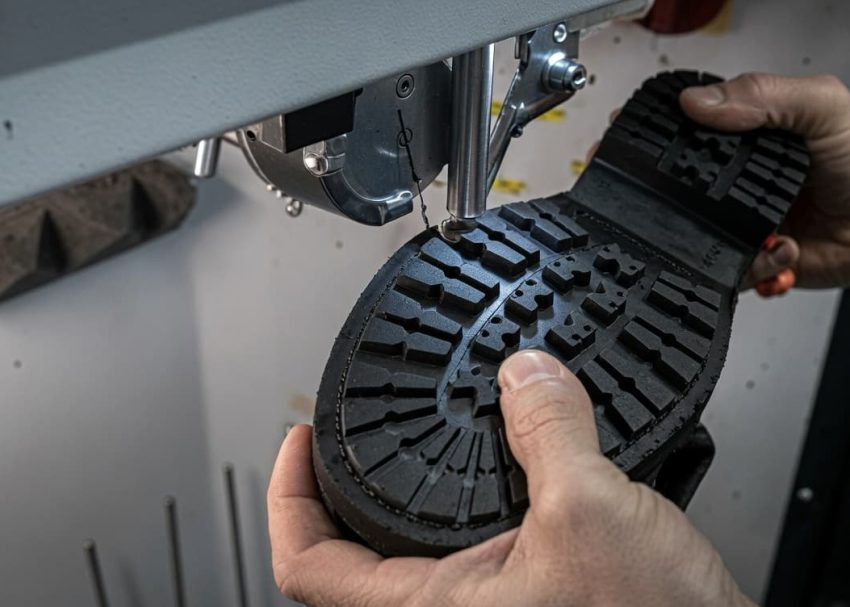
Buttress Nailing Machine
Specialised equipment designed to insert buttress nails into heel constructions with controlled positioning and driving force.
For Stock Fitting, the important machine considerations are adjustable nailing height, interchangeable men’s/women’s bases, accurate positioning fixtures, controlled driving force, and repeatable nail patterns.

Conclusion
Heel nailing during Outsole/Stock Fitting provides mechanical reinforcement, but the process cannot simply copy the heel nailing method used in Full Shoe Assembly. The key differences are lower nailing height, separate men’s and women’s heel nailing bases, and a dedicated nail pattern that must not intersect with the Full Shoe Assembly pattern.
In the next blog, we will cover Edge Scouring Operations in Outsole Process, including surface preparation, equipment, process controls, and quality requirements.
Frequently Asked Questions (FAQs)
Because the Stock Fitting assembly does not include the same insole and upper thickness present during Full Shoe Assembly.
No. The Stock Fitting pattern should be independently developed to avoid interference with subsequent Full Shoe Assembly nailing.
Heel geometry, dimensions, and construction can differ significantly, requiring different support and positioning fixtures.
The second nail can hit the first nail, causing bending, incomplete penetration, machine problems, or heel damage.
Through development trials and sectioning of approved samples, considering the actual heel and outsole construction.
Depending on the defect, the outsole may be repaired, reworked, accepted under an approved concession, or rejected.
Inspection prevents defective products from reaching later operations, reduces rework and provides production data for corrective and preventive actions.