Transfer Foil Operations in Outsole Process: Outsole (Stock Fitting) Assembly Series
In the previous blog, Kitting Operations in Outsole Process, we discussed how paints enhance outsole appearance by adding decorative colors, branding, and protective finishes. Painting provides flexibility for creating attractive outsole designs while maintaining production efficiency.
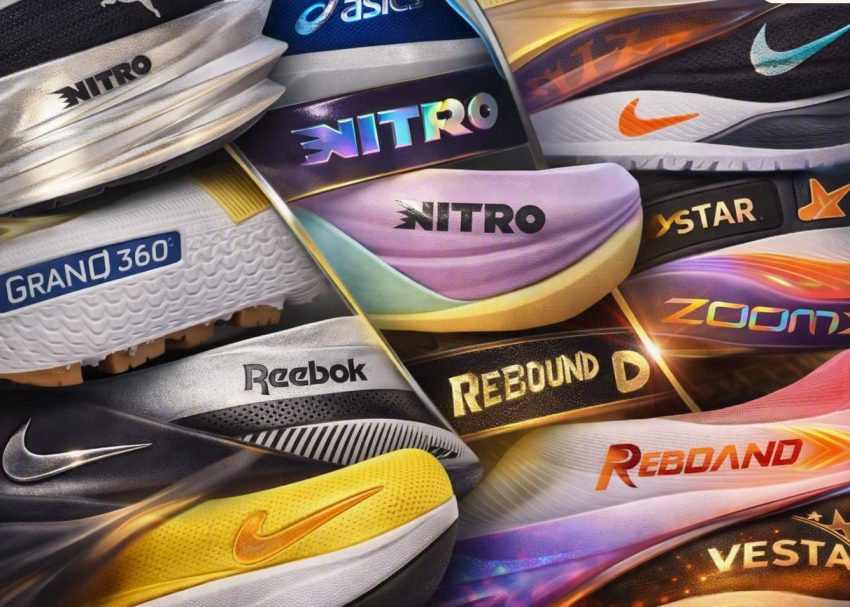
The next decorative operation in outsole manufacturing is Transfer Foil Operations. Instead of applying liquid coatings, this process transfers pre-designed metallic foils, decorative films, logos, textures, or branding elements directly onto the outsole surface. Consequently, manufacturers can achieve premium visual effects with excellent consistency while keeping production costs under control.
Transfer foil technology has become increasingly popular in sports footwear, casual footwear, fashion shoes, safety footwear, and premium branded products. Furthermore, modern transfer systems allow manufacturers to produce high-quality decorative finishes without adding significant weight or increasing production complexity.
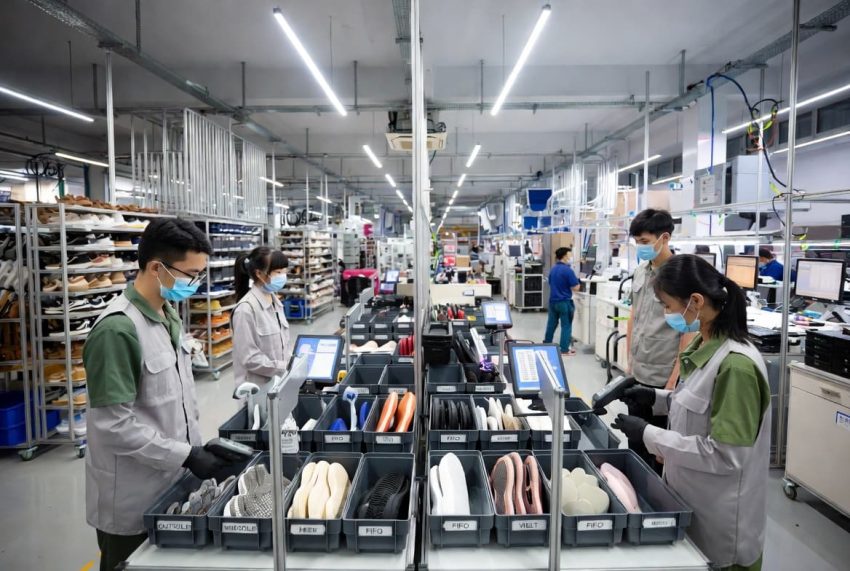
Understanding Transfer Foil Operations
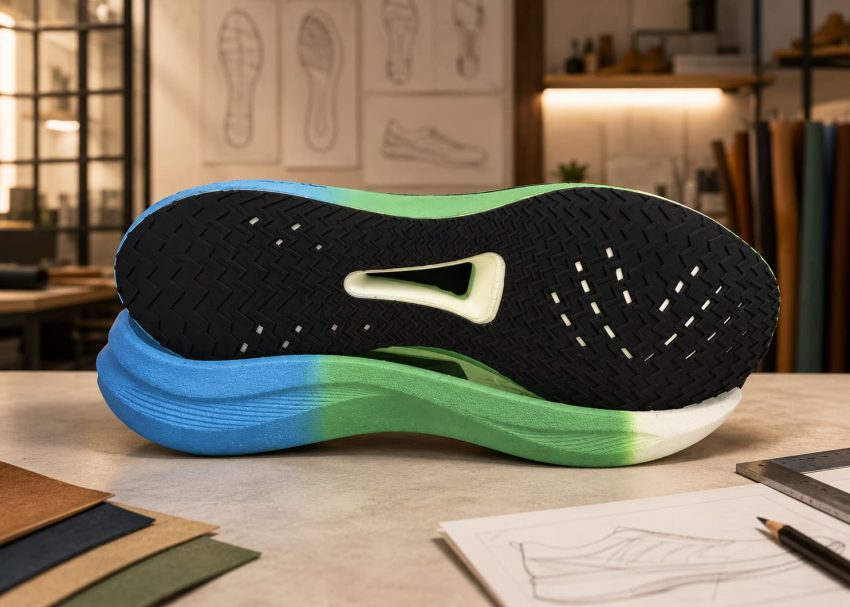
Transfer foil operation is a decorative finishing process in which a specially coated transfer foil or decorative film is bonded onto the outsole surface using controlled pressure, temperature, or a combination of both. The transferred layer may contain metallic pigments, printed graphics, embossed textures, reflective effects, or brand logos.
Unlike painting, where liquid coatings remain on the surface, transfer foil technology transfers only the required decorative layer while the carrier film is removed after pressing. As a result, the finished outsole displays sharp graphics, uniform metallic effects, and excellent visual appeal.
The process is commonly used on:
- Rubber outsoles
- TPU outsoles
- TPR outsoles
- EVA components
- PU outsole inserts
- Decorative outsole plates
- Heel inserts
- Brand logo panels
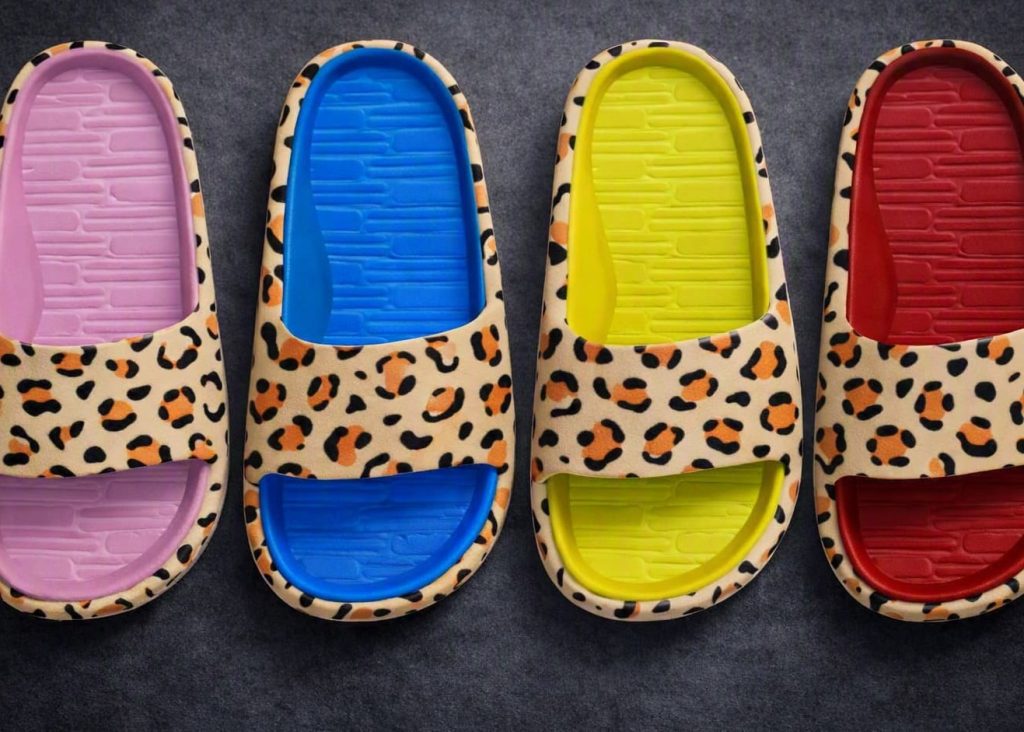
Depending on the outsole material and design requirements, manufacturers select one of several transfer methods to achieve the desired finish.
Key Control Points
- Verify outsole material compatibility before production.
- Use approved transfer foil specified by the design team.
- Inspect outsole surfaces for contamination before transfer.
- Store transfer foils in a clean, dry, temperature-controlled area.
Expert Tip:
Always conduct a trial transfer after changing foil suppliers.
Allow heated outsoles to cool before peeling the carrier film to improve transfer quality.
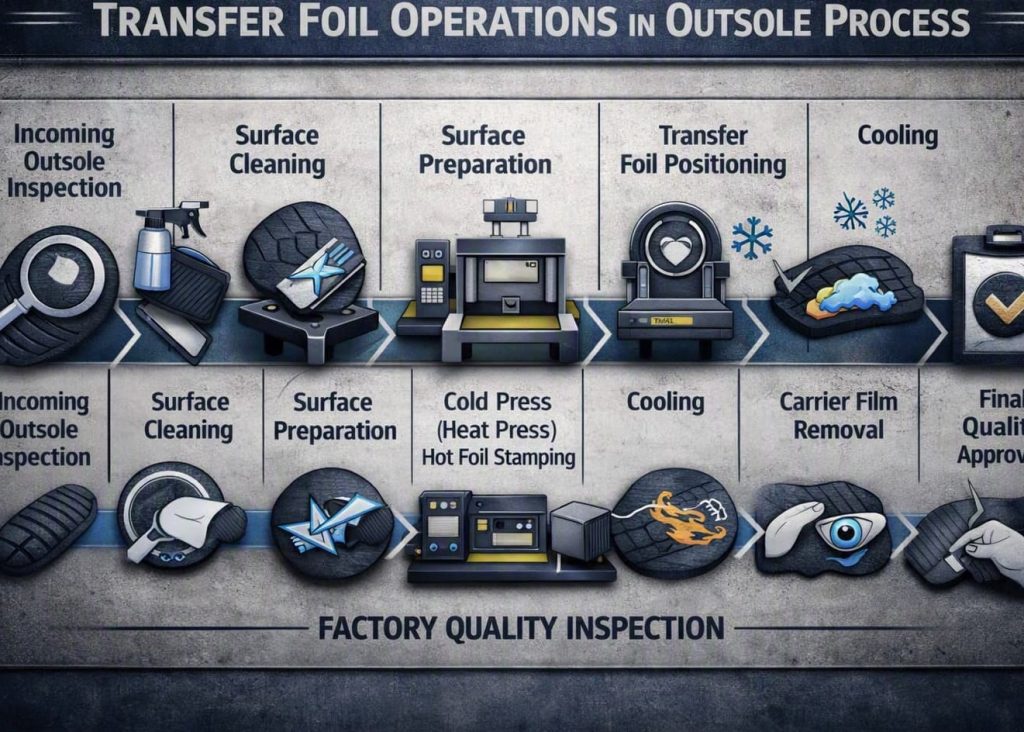
Transfer Foil Process Flow
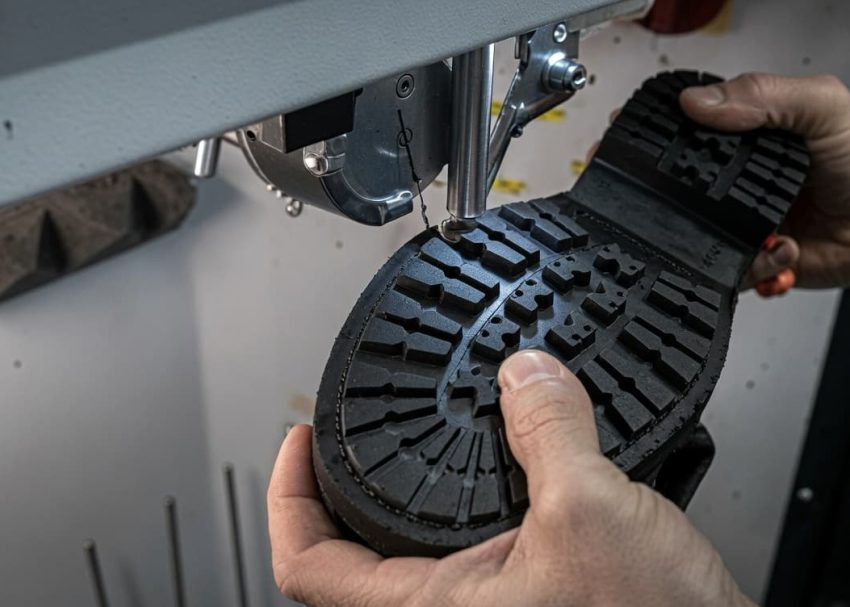
A standardized process ensures consistent decorative quality throughout production. Typical production sequence:
Outsole Inspection → Surface Cleaning → Surface Preparation → Transfer Foil Positioning → Pressing Operation → Cooling (if required) → Carrier Film Removal → Visual Inspection → Adhesion Testing → Final Approval
Each stage directly affects the appearance and durability of the transferred decoration. Therefore, skipping any preparation step often results in poor adhesion or visual defects.
Key Control Points
- Follow the approved production parameters for each outsole material.
- Confirm correct artwork orientation before pressing.
- Maintain clean tooling throughout production.
- Perform first-piece approval before mass production.
Expert Tip:
Use positioning guides or fixtures for repeatable logo placement.
Clean heat press platens regularly to prevent marks on decorative films.
Cold Press Transfer
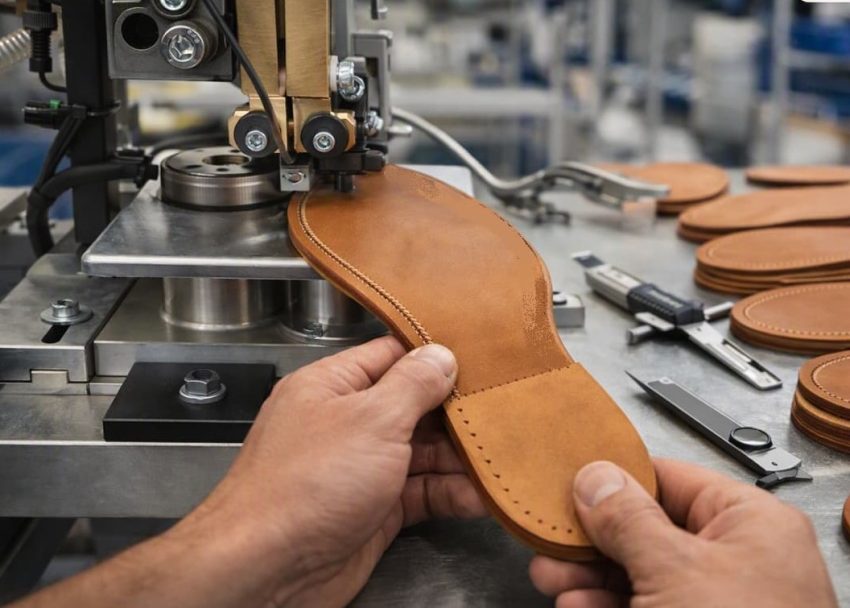
Cold press transfer is a decorative application method in which transfer foil adheres to the outsole surface through pressure without applying significant heat. This method is mainly used for pressure-sensitive transfer films and specialized adhesive-coated decorative foils.
Since excessive heat is avoided, cold press transfer is particularly suitable for temperature-sensitive materials that may deform during hot processing. Moreover, it allows factories to decorate certain outsole components without affecting dimensional stability.
During production, operators accurately position the transfer foil over the outsole. A press machine then applies uniform pressure for a specified dwell time. Once bonding is complete, the carrier film is carefully removed, leaving the decorative layer attached to the outsole. Cold press transfer is widely used for:
- Printed decorative graphics
- Reflective films
- Brand labels
- Certain flexible TPU decorations
- Lightweight fashion footwear
- Children’s footwear components
Advantages
- Lower energy consumption
- No thermal distortion
- Simple equipment
- Faster setup
- Suitable for sensitive materials
- Good dimensional stability
Although the process appears simple, pressure consistency and surface cleanliness remain critical for achieving high-quality results.
Key Control Points
- Maintain uniform pressing pressure.
- Ensure the outsole surface is completely clean.
- Prevent movement during pressing.
- Inspect adhesion immediately after transfer.
Expert Tip:
Replace worn press pads regularly to maintain even pressure distribution.
Perform hourly first-off inspections to detect parameter drift before defects increase.
Heat Press Transfer
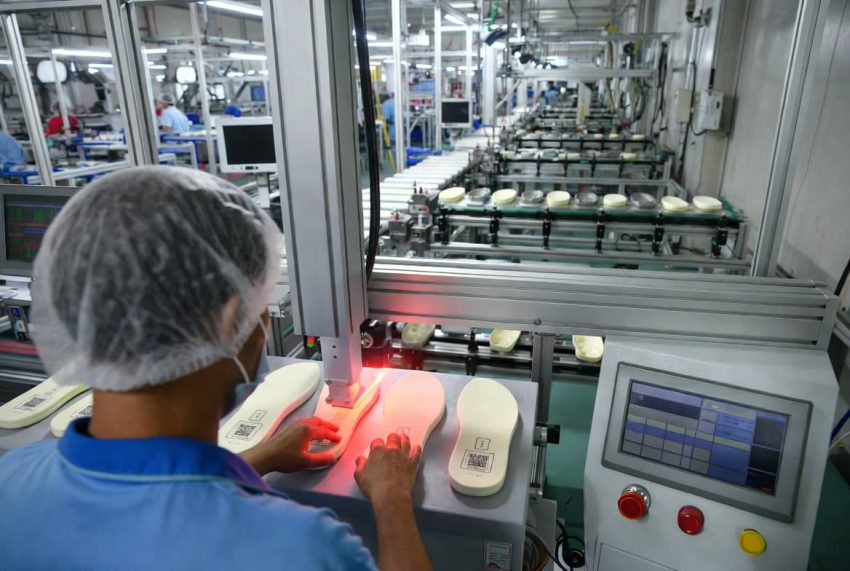
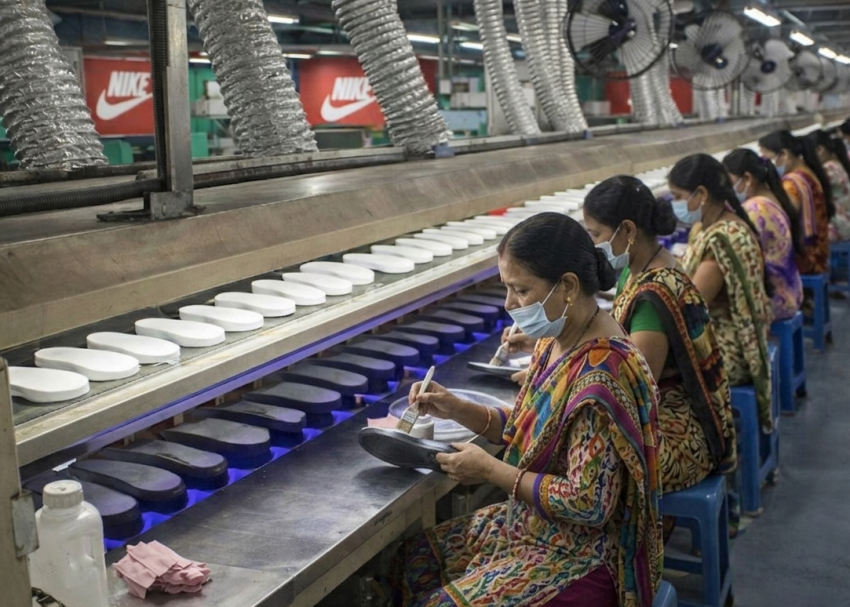
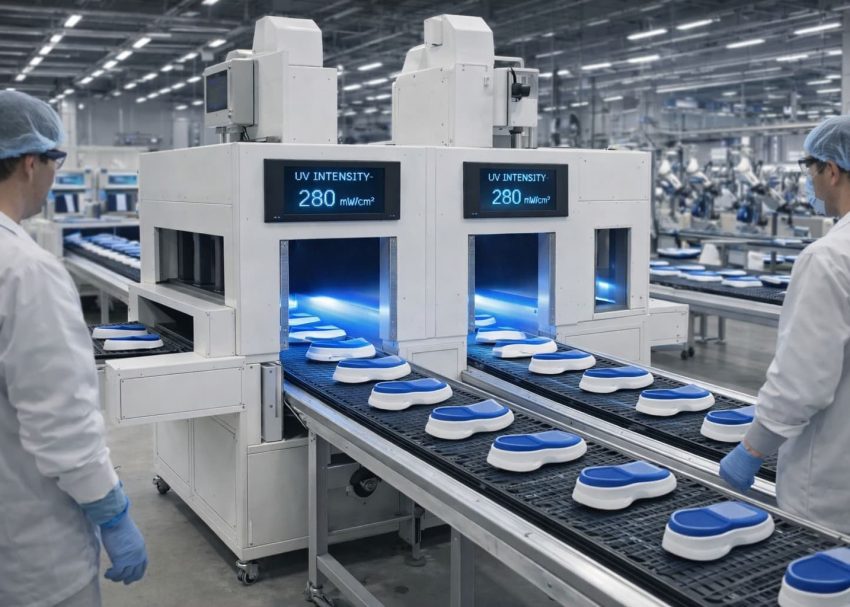
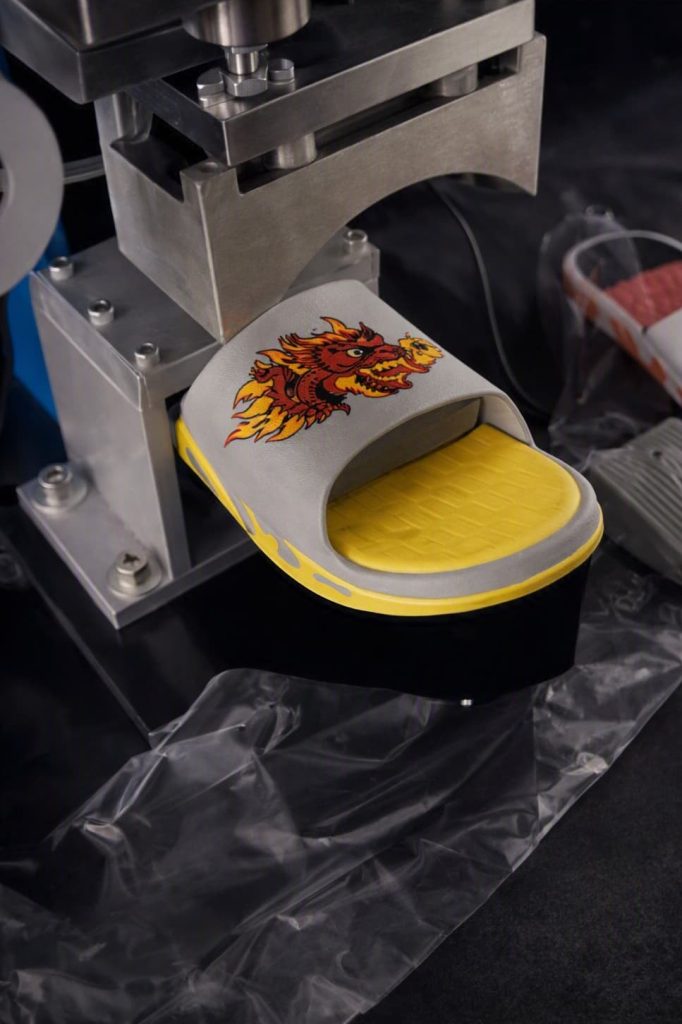
Heat press transfer combines controlled temperature and pressure to activate the adhesive layer on the transfer foil before bonding it to the outsole surface. This is the most widely used transfer method in modern footwear factories because it offers excellent adhesion, high production consistency, and compatibility with many outsole materials.
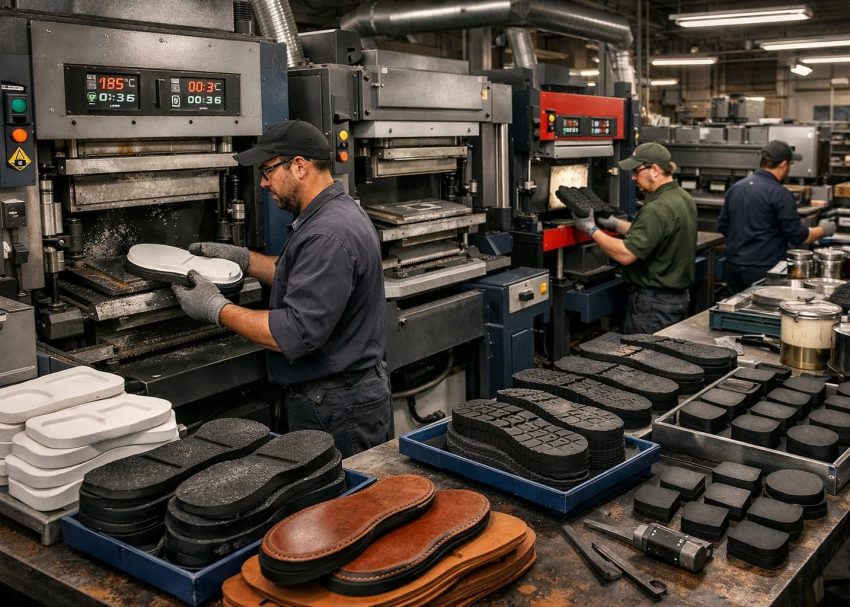
The process begins by placing the transfer foil accurately over the designated location on the outsole. The assembly is then positioned inside a heat press machine, where the upper platen applies a predetermined temperature, pressure, and dwell time. Heat softens or activates the adhesive coating on the foil, allowing it to bond firmly with the outsole. After a short cooling period, the carrier film is peeled away, revealing a clean and sharply defined decorative finish.
Heat press transfer is suitable for:
- Metallic brand logos
- Decorative stripes
- Fashion graphics
- Premium branding
- TPU outsoles
- Rubber outsoles
- EVA decorative inserts
- Sports footwear branding
Because different outsole materials respond differently to heat, production engineers must establish validated process parameters during trial runs. Excessive temperature can damage the outsole or discolor the foil, while insufficient heat may result in incomplete transfer or poor adhesion.
Advantages
- Strong and durable adhesion
- Excellent decorative quality
- Suitable for mass production
- Consistent logo appearance
- Wide material compatibility
- High repeatability
Key Control Points
- Monitor platen temperature continuously.
- Validate pressure settings before production.
- Control pressing time for every material.
- Verify adhesion through routine quality testing.
Expert Tip:
Avoid touching adhesive surfaces with bare hands to prevent contamination.
Record approved temperature, pressure, and dwell time for every outsole material.
Hot Foil Stamping
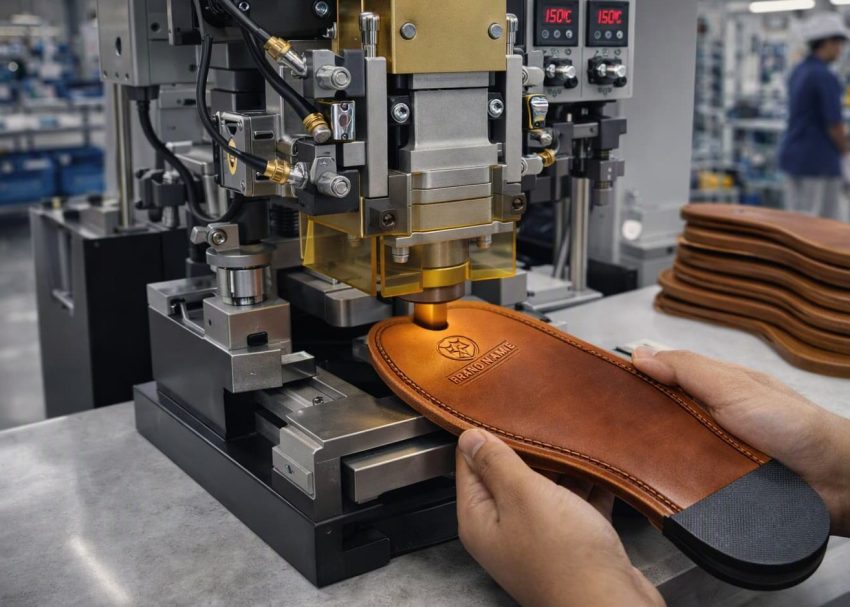
Hot foil stamping is one of the most widely used decorative techniques for applying premium branding and metallic finishes to footwear outsoles. Unlike standard heat transfer, this process uses a heated engraved die to transfer a thin metallic or pigmented foil onto a specific area of the outsole. The combination of heat, pressure, and dwell time activates the foil adhesive, leaving a permanent decorative layer while the carrier film is removed.
Footwear manufacturers commonly use hot foil stamping for brand logos, model numbers, size markings, decorative borders, premium graphics, and metallic accents. Since the engraved die determines the final design, the process produces sharp edges, excellent repeatability, and a professional appearance.
During production, the outsole is accurately positioned in a dedicated fixture. The transfer foil is placed between the heated die and the outsole surface. After the machine completes the pressing cycle, the carrier film is peeled away, leaving only the decorative layer bonded to the outsole.
Advantages
- Premium metallic appearance
- Excellent logo definition
- Durable decorative finish
- High production consistency
- Suitable for premium footwear collections
- Excellent branding quality
Key Control Points
- Maintain die temperature within the approved range.
- Inspect engraving surfaces for wear or contamination.
- Replace damaged foils immediately.
- Verify logo position during first-piece approval.
Expert Tip:
Store transfer foils flat to prevent curling before production.
Always use production-approved positioning jigs for repeatable logo placement.
Decorative Film Transfer
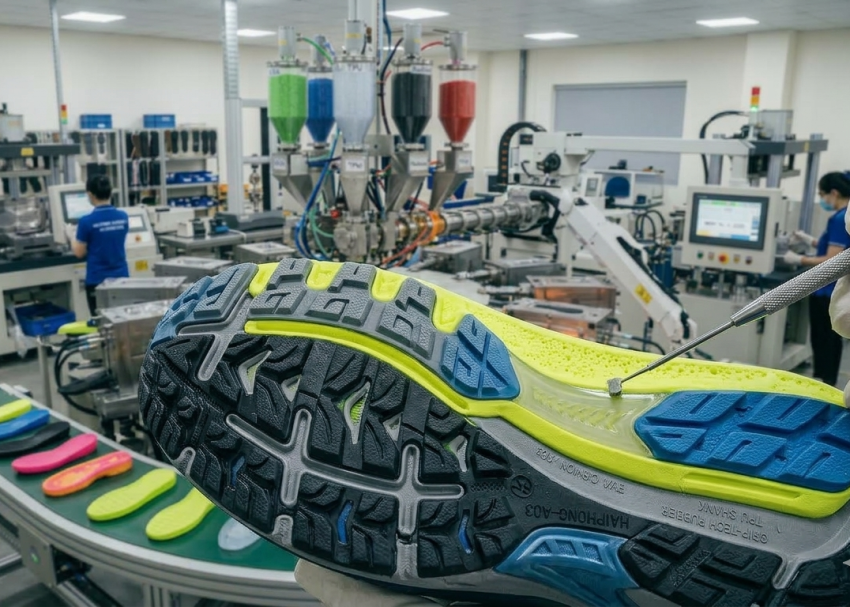
Decorative film transfer applies pre-printed or specially designed films to outsole components, allowing manufacturers to achieve complex colors, textures, carbon-fiber effects, camouflage patterns, wood grain finishes, geometric designs, or customized graphics that are difficult to produce using conventional painting. Modern decorative films are available in numerous finishes, including:
- Matte
- Gloss
- Metallic
- Carbon fiber
- Reflective
- Wood texture
- Marble effect
- Gradient colors
- Digital printed graphics
The selected decorative film is positioned over the prepared outsole and bonded using heat or pressure depending on the film specification. After cooling, the carrier layer is removed while the decorative layer remains permanently attached. Decorative film transfer has become increasingly popular because it enables manufacturers to produce visually attractive footwear without investing in expensive multi-color moulds.
Moreover, design changes require only a new film rather than modifications to mould tooling, reducing development costs and lead times.
Advantages
- Unlimited decorative possibilities
- Fast design changes
- Excellent color consistency
- Lower tooling investment
- Suitable for customized products
- High-quality fashion appearance
Key Control Points
- Inspect every batch for color consistency.
- Store decorative films under controlled humidity.
- Prevent dust contamination before application.
- Align printed graphics precisely.
Expert Tip:
Replace worn silicone pads before they create uneven pressure.
Conduct adhesion testing whenever a new foil supplier or material batch is introduced.
Benefits of Transfer Foil Operations
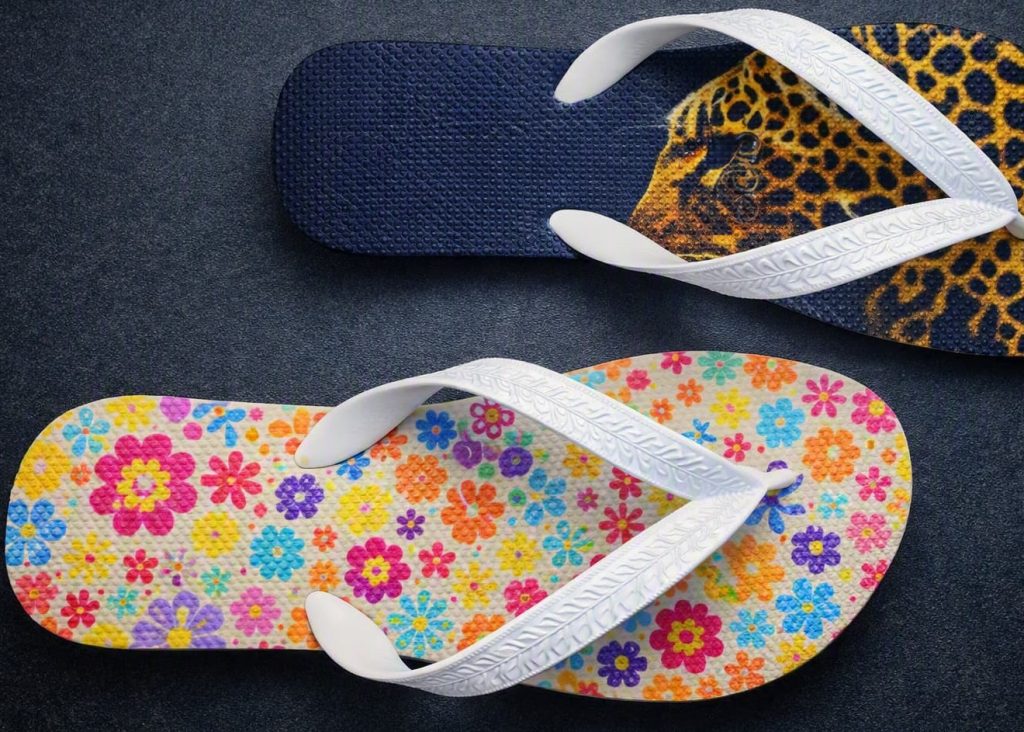
Transfer foil technology has become a preferred decorative process because it combines premium appearance with efficient production. Compared with traditional decoration methods, transfer foils provide greater design flexibility while maintaining consistent quality across high-volume manufacturing.
One of the biggest advantages is the ability to create luxury visual effects without increasing outsole weight or requiring complex mould modifications. Consequently, footwear brands can refresh seasonal collections quickly while controlling manufacturing costs.
Manufacturers also benefit from improved production consistency because decorative elements are transferred from pre-engineered films rather than manually painted. As a result, every outsole maintains uniform branding, color, and positioning. Major production benefits include:
- Premium product appearance
- Strong brand identity
- Metallic and reflective effects
- Excellent design flexibility
- Reduced decoration costs
- Faster product development
- Consistent production quality
- Wide material compatibility
- Lower mould investment
- Suitable for mass production
Key Control Points
- Record approved process settings for every style.
- Select transfer foil based on outsole material.
- Validate production parameters before mass production.
- Monitor adhesion throughout production.
Expert Tip: Develop a parameter matrix for every outsole material and foil type.
Common Transfer Foil Defects
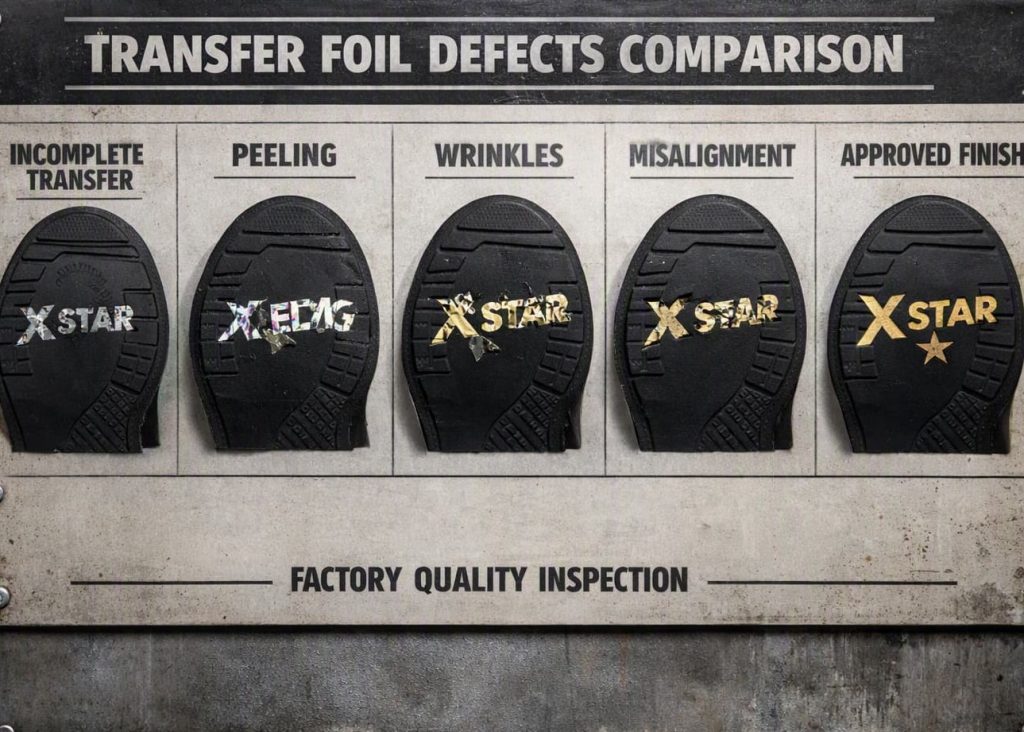
Although transfer foil operations are highly reliable, improper process control can produce cosmetic defects that reduce product quality and customer acceptance. Most problems originate from incorrect temperature, pressure, surface preparation, or inaccurate foil positioning. Understanding these defects enables production teams to identify root causes quickly and implement effective corrective actions.
Incomplete Transfer
Some portions of the decorative layer fail to bond with the outsole, leaving missing graphics or uneven metallic coverage.
Typical Causes
- Low temperature
- Insufficient pressure
- Short pressing time
- Contaminated surface
- Poor-quality foil
Corrective Actions
- Replace defective transfer foil.
- Increase process temperature within approved limits.
- Verify press pressure.
- Clean outsole surfaces thoroughly.
Peeling
The decorative layer separates from the outsole after handling, flexing, or customer use.
Typical Causes
- Weak adhesive activation
- Poor surface preparation
- Incompatible foil
- Premature carrier removal
Corrective Actions
- Improve surface cleaning.
- Optimize pressing parameters.
- Allow sufficient cooling before peeling.
- Perform adhesion testing regularly.
Expert Tip: Use Statistical Process Control (SPC) to monitor critical process variables in high-volume production.
Wrinkles
Wrinkles or air pockets develop during transfer, creating an uneven decorative appearance.
Typical Causes
- Misaligned foil
- Uneven pressure
- Curled transfer film
- Excessive movement during pressing
Corrective Actions
- Maintain flat foil positioning.
- Replace worn pressure pads.
- Improve fixture stability.
- Store films correctly.
Misalignment
The transferred logo or graphic is positioned incorrectly relative to the outsole design.
Typical Causes
- Incorrect positioning fixture
- Operator error
- Component movement
- Inaccurate tooling
Corrective Actions
- Use precision locating fixtures.
- Train operators.
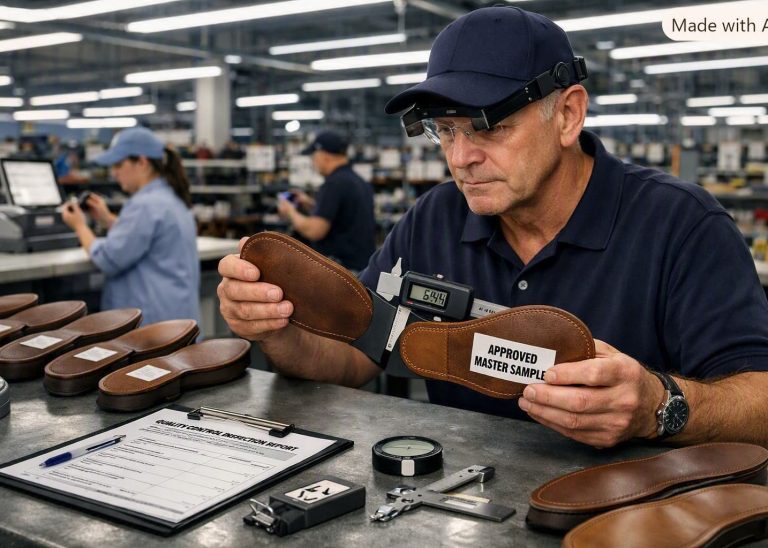
- Verify alignment during first-piece inspection.
- Inspect fixture wear regularly.
Key Control Points
- Stop production whenever repeated defects appear.
- Inspect the first production pieces every shift.
- Perform adhesion tests at scheduled intervals.
- Replace damaged transfer films immediately.
Expert Tip: Protect unused transfer foils from direct sunlight, excessive heat, and humidity.

Process Control Parameters for Consistent Quality
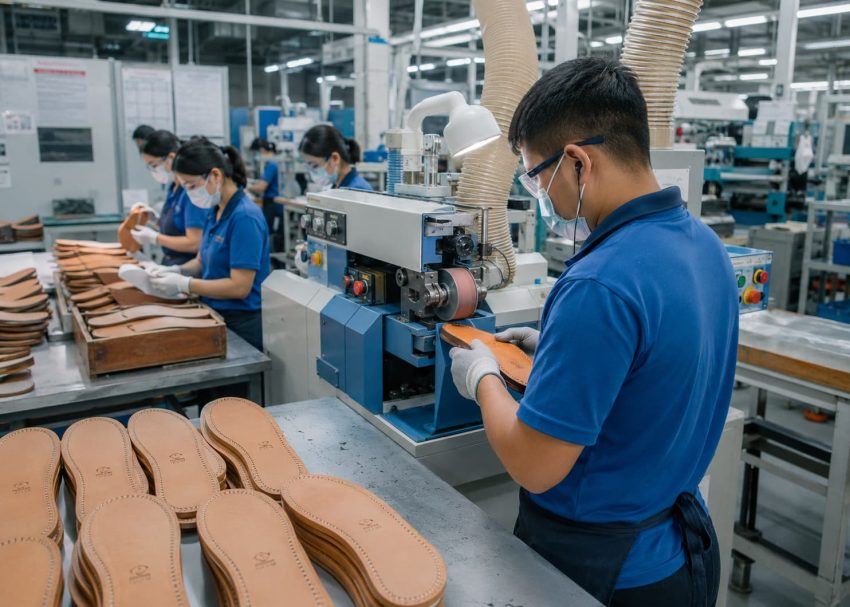
Successful transfer foil operations depend on maintaining stable production parameters throughout every manufacturing batch. Even small variations can affect decoration quality, adhesion strength, and appearance. Production engineers should establish validated process windows during product development and monitor them continuously during mass production. Critical process parameters include:
- Surface cleanliness
- Outsole moisture condition
- Foil storage environment
- Temperature consistency
- Pressure uniformity
- Pressing time
- Cooling time
- Carrier film removal method
- Fixture accuracy
- Operator handling practices
Routine process audits, first-piece approvals, and hourly quality inspections help prevent defects before they reach downstream assembly operations.
Key Control Points
- Standardize machine settings for every outsole style.
- Calibrate temperature and pressure controls regularly.
- Maintain preventive maintenance schedules.
- Document all approved production parameters.
Expert Tip: Introduce periodic peel adhesion tests during production instead of relying solely on visual inspection

Conclusion
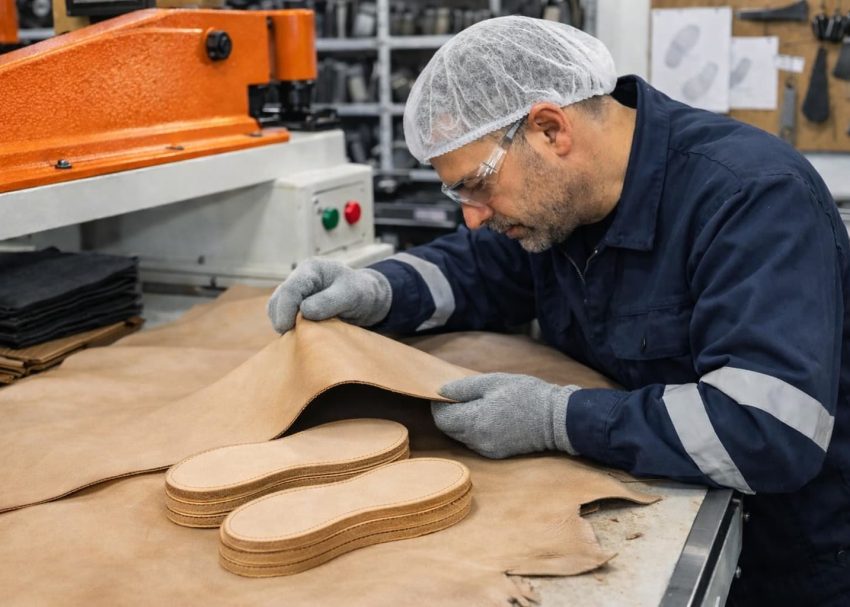
Transfer foil operations have become an essential decorative process in modern outsole manufacturing. Whether manufacturers apply cold press transfer, heat press transfer, hot foil stamping, or decorative film transfer, each method delivers attractive branding and premium visual effects while maintaining efficient production.
In the next blog of TheFootwearEdge – Outsole (Stock Fitting) Assembly Series, we will explore “Feeding Operation in Outsole Process“, where we will discuss machine setup, production parameters, operator techniques, troubleshooting methods, and quality inspection procedures used during actual factory production.
Frequently Asked Questions (FAQs)
Transfer foil operation is a decorative process that applies logos, metallic finishes, textures, or graphics onto outsole components using controlled pressure, heat, or both.
Transfer foil can be applied to rubber, TPU, TPR, EVA, PU, and selected composite outsole materials, provided compatible foils and process parameters are used.
Cold press transfer relies mainly on pressure-sensitive adhesive without significant heating, whereas heat press transfer activates the adhesive using controlled temperature and pressure for stronger bonding.
Peeling usually results from poor surface cleaning, insufficient heat, incorrect pressure, incompatible foil, or inadequate adhesive activation.
Quality inspectors evaluate logo alignment, complete transfer, surface appearance, adhesion strength, wrinkle-free finish, and resistance to peeling or abrasion.
Transfer foil is widely used in sports footwear, fashion footwear, luxury shoes, safety footwear, casual footwear, leather products, and automotive trim industries.
The critical parameters include surface preparation, foil quality, pressing temperature, pressure, dwell time, cooling time, alignment accuracy, and adhesion verification.