Primary Cement Coating Operations in Outsole Process: Outsole (Stock Fitting) Assembly Series
After Priming Operations in Outsole Process, the next important stage in the Outsole (Stock Fitting) Assembly Series is Primary Cement Coating.
Priming prepares the outsole surface for bonding, but primer alone does not create the final adhesive bond. Primary cement coating adds the first adhesive film over the prepared surface and establishes the foundation for the subsequent bonding stages.
The adhesive must match the outsole and upper materials. Depending on the construction, factories may use PU, neoprene, water-based, or reactive adhesive systems. Therefore, operators must control adhesive viscosity, coating thickness, coverage, drying, and environmental conditions. A consistent primary coating helps reduce weak bonding areas, sole separation, rework, and customer complaints.

Primary Cement Coating
Primary cement coating is the first adhesive layer applied after surface preparation and primer application.
The process creates a continuous adhesive film that anchors to the prepared substrate and prepares the component for subsequent cementing and activation.
The operator must first confirm that the primer has dried correctly. The bonding surface should remain clean and free from dust, oil, moisture, loose particles, and fingerprints.
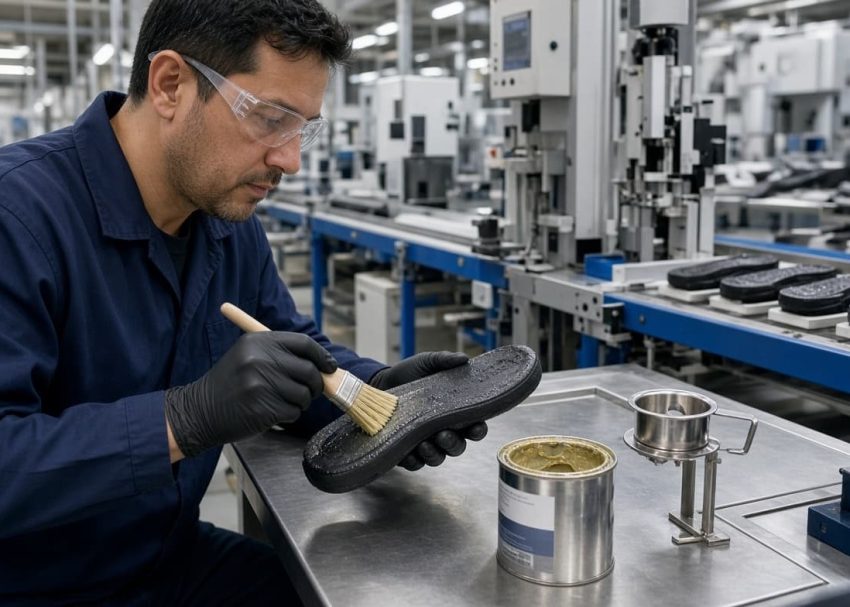
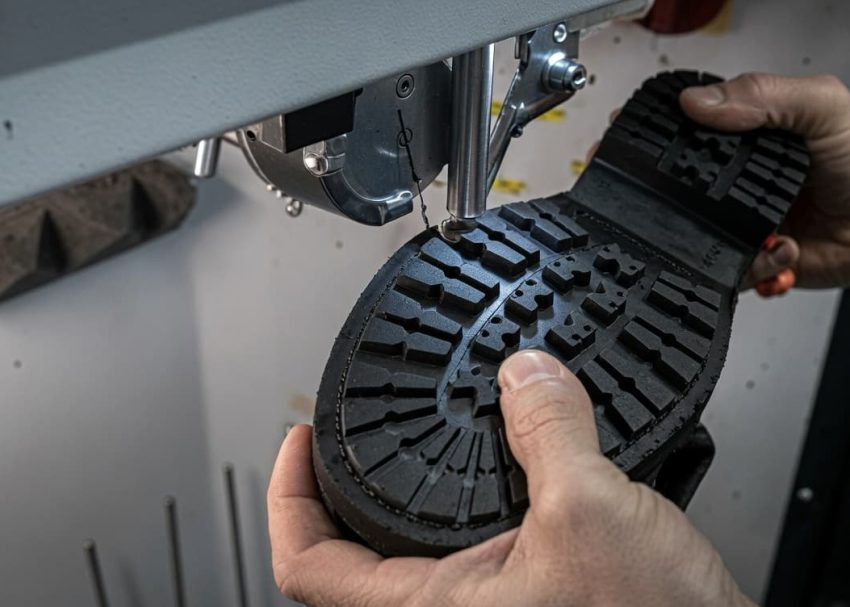
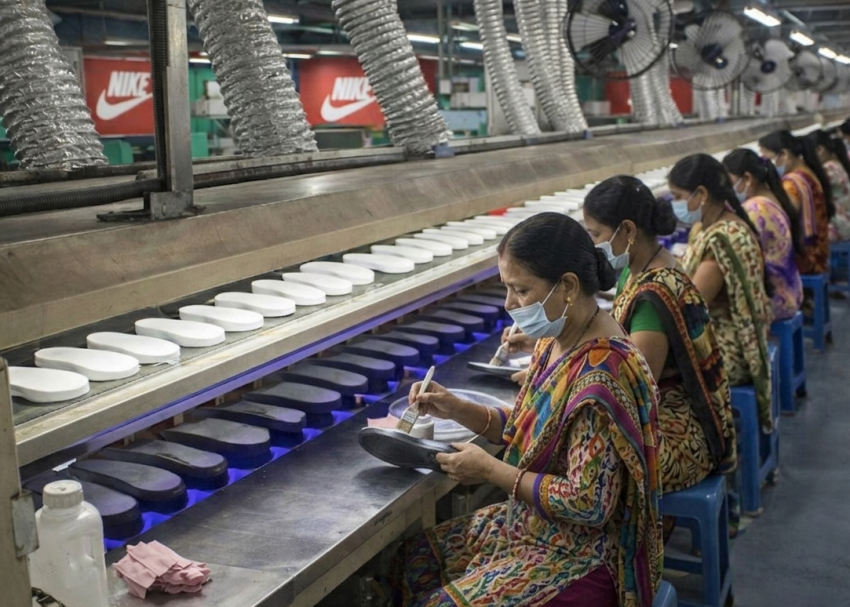
The adhesive is then mixed and checked for the specified viscosity. Operators apply the cement using a brush, roller, spray system, or automated equipment depending on production requirements. The objective is not to apply maximum adhesive. Instead, the objective is to create a uniform film with sufficient coverage and controlled thickness.
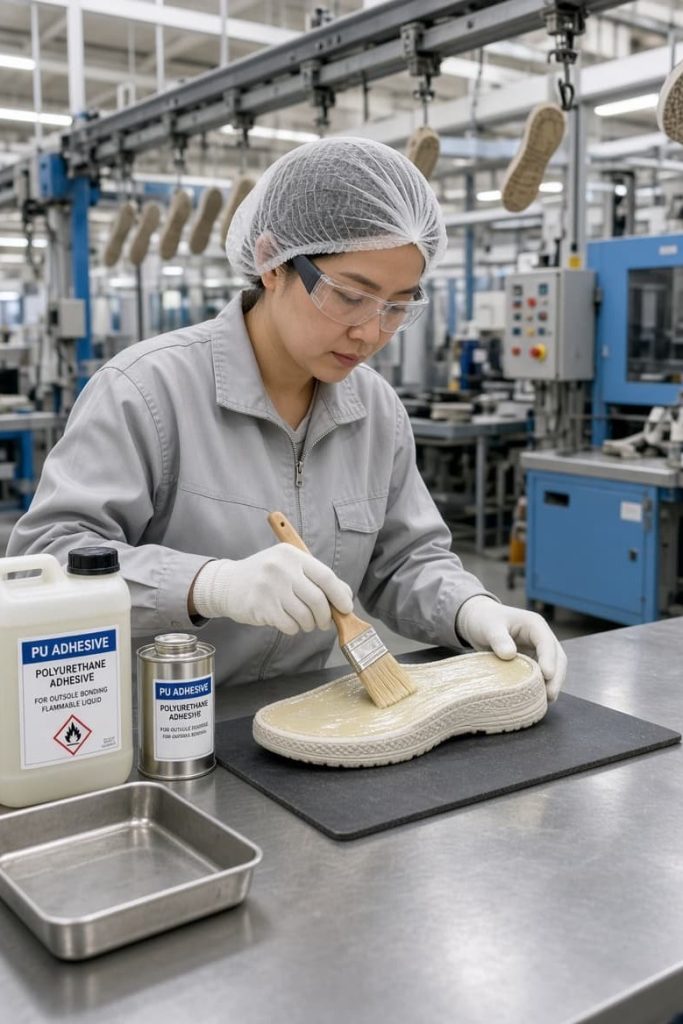
Expert Tip:
Label mixed adhesive with mixing time and pot-life information.
Use dedicated application tools for different adhesive systems.
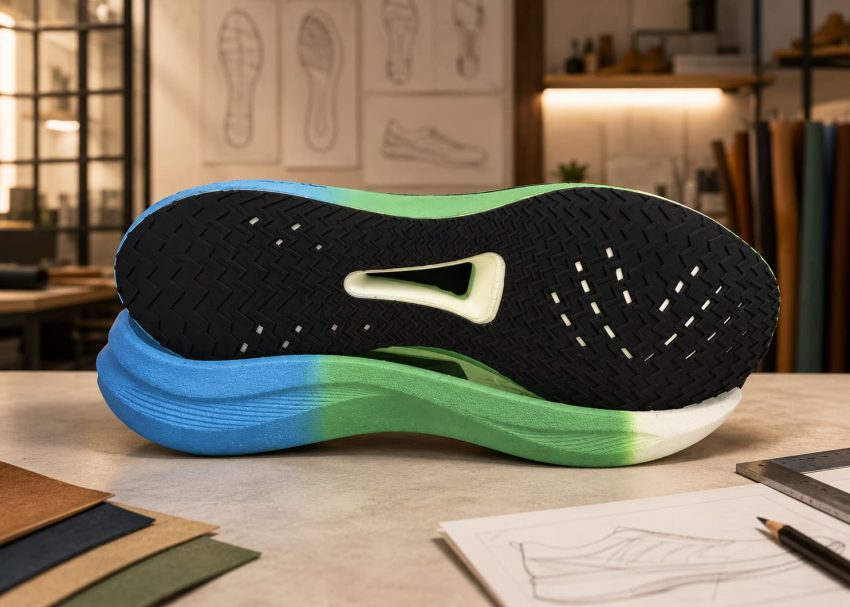
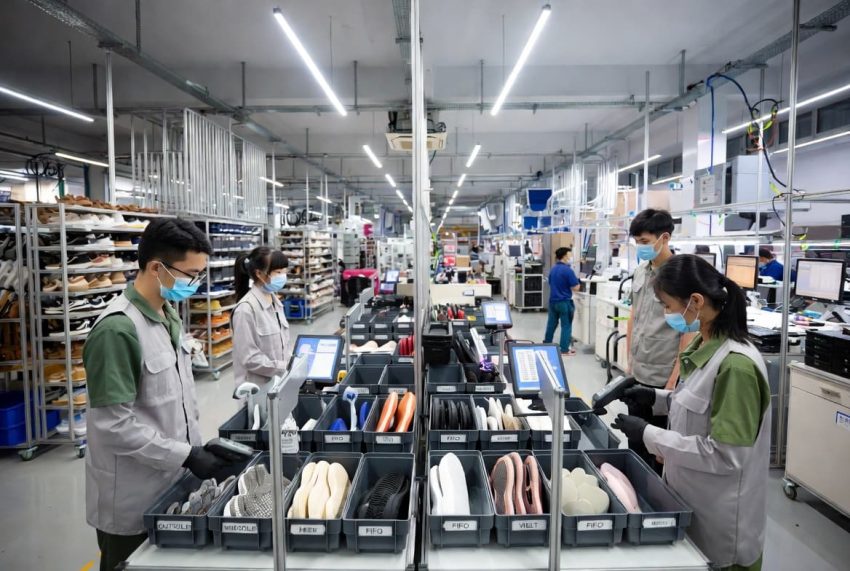
Common Adhesive Types
PU Adhesive
Polyurethane adhesive is widely used because it provides strong and flexible bonds across many footwear materials. It works effectively with leather, PU, EVA, TPU, microfiber, and selected rubber compounds when the correct surface treatment is used.
Factories often use PU systems for sports, safety, casual, and outdoor footwear. Some systems require a curing agent to improve heat, hydrolysis, and ageing resistance.
Key Control Points
- Follow the specified mixing ratio.
- Control pot life.
- Maintain correct viscosity.
- Store adhesive according to supplier requirements.
Neoprene Adhesive
Neoprene adhesive provides good initial tack and fast drying. It remains useful for selected leather, fabric, rubber, cork, and synthetic footwear applications.
However, factories should verify material compatibility and heat resistance before production because demanding footwear constructions may require higher-performance adhesive systems.
Key Control Points
- Apply a thin, uniform film.
- Allow sufficient solvent evaporation.
- Maintain proper ventilation.
- Follow supplier drying requirements.
Expert Tip:
Monitor adhesive consumption per production lot.
Keep adhesive containers closed when not in use.
Water-Based Adhesive
Water-based adhesive systems reduce VOC emissions and can provide reliable bonding when factories control drying conditions properly.
Because water evaporation controls film formation, temperature, humidity, airflow, and drying time become particularly important. These systems are commonly considered for leather, textile, lifestyle, and selected sports footwear.
Key Control Points
- Control temperature and humidity.
- Allow complete drying.
- Prevent condensation.
- Confirm material compatibility.
Reactive Adhesive Systems
Reactive adhesive systems provide high-performance bonding for applications requiring excellent heat, moisture, and fatigue resistance. They are commonly used for sports, safety, hiking, and industrial footwear.
Because chemical curing begins after mixing, operators must control the mixing ratio and pot life carefully.
Key Control Points
- Follow the approved mixing ratio.
- Record mixing time.
- Monitor pot life.
- Never use expired adhesive.
Expert Tip:
Separate cementing areas from roughing and buffing operations.
Maintain traceability of adhesive batches and curing agents.
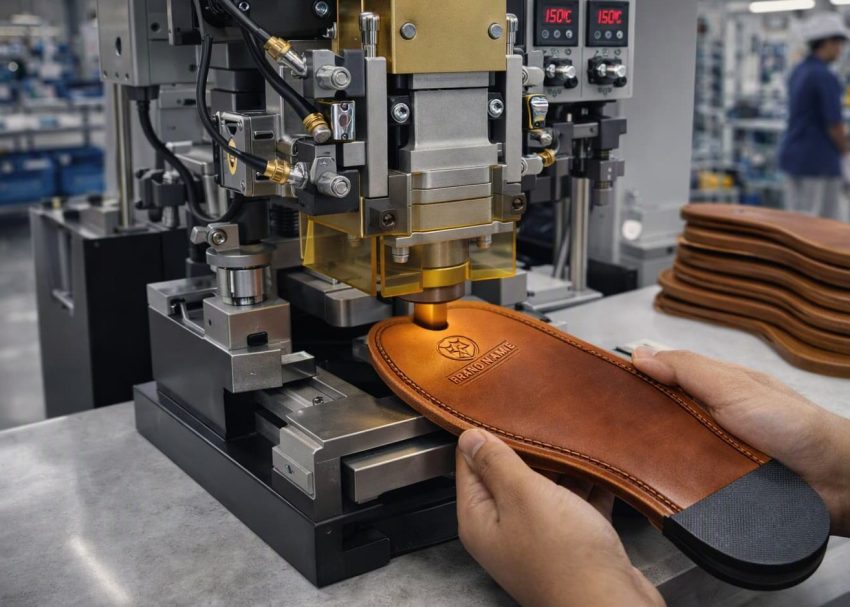
Primary Cement Application Process
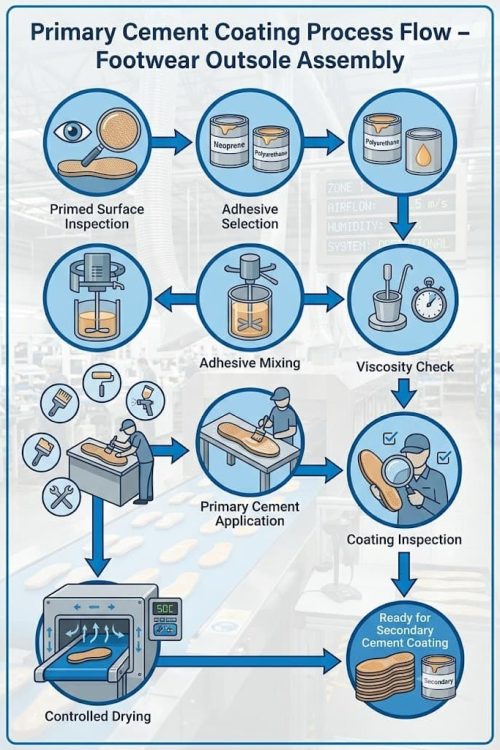
The process begins with a final inspection of the primed component. Once the surface passes inspection, the operator prepares the adhesive and checks its viscosity. The adhesive is then applied evenly across the complete bonding area.
Brush application gives operators good control over curved and complicated outsole shapes, while rollers and spray systems provide greater consistency for high-volume production.
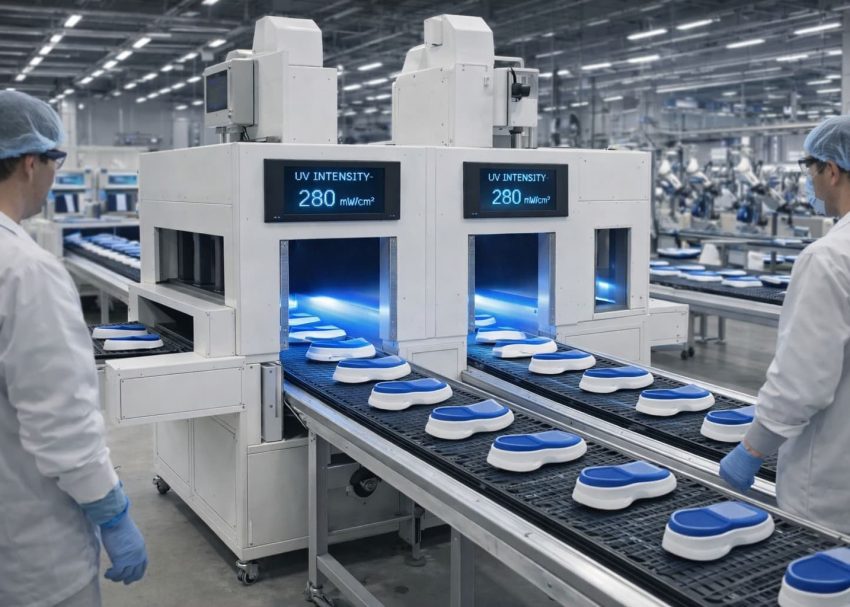
After application, the coated component moves to the controlled drying area. The drying time must follow the adhesive specification because insufficient drying can trap solvent or moisture, while excessive drying can reduce the adhesive’s ability to react during later activation.
Process Sequence
Primed Surface → Surface Inspection → Adhesive Mixing → Viscosity Check → Primary Cement Application → Coating Inspection → Controlled Drying → Secondary Cement Coating
Key Control Points
- Cover the complete bonding area.
- Avoid thick adhesive accumulation.
- Maintain consistent application speed.
- Follow specified drying conditions.
Expert Tip:
Use peel or bond-strength testing to validate process performance.
Maintain traceability of adhesive batches and curing agents.
Use peel or bond-strength testing to validate process performance.
Adhesive Coating Thickness and Viscosity
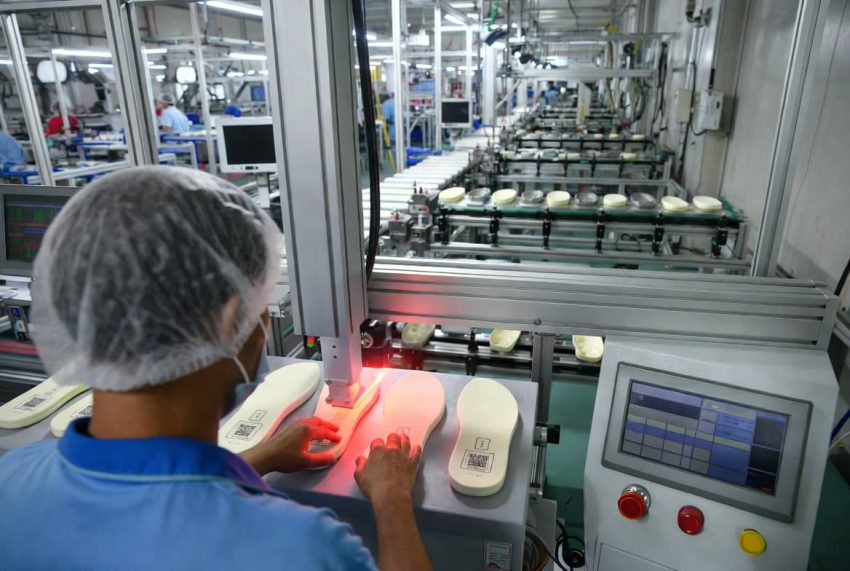
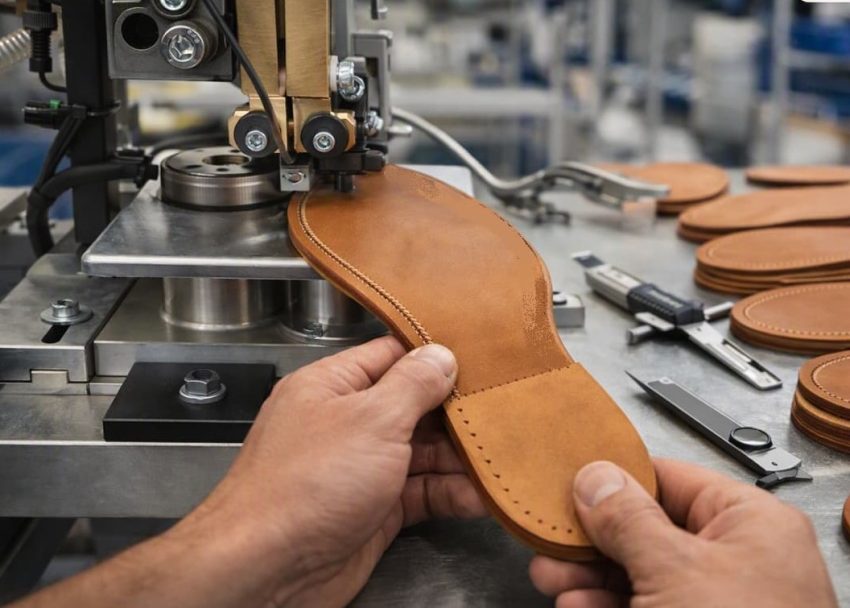
Coating thickness directly influences bonding performance. Insufficient coating can create dry or weak areas, while excessive coating can cause slow drying, solvent entrapment, bubbling, and poor activation. Therefore, factories should establish coating standards based on adhesive type and material combination. Periodic coating-weight or visual checks can help maintain consistency between operators and shifts.
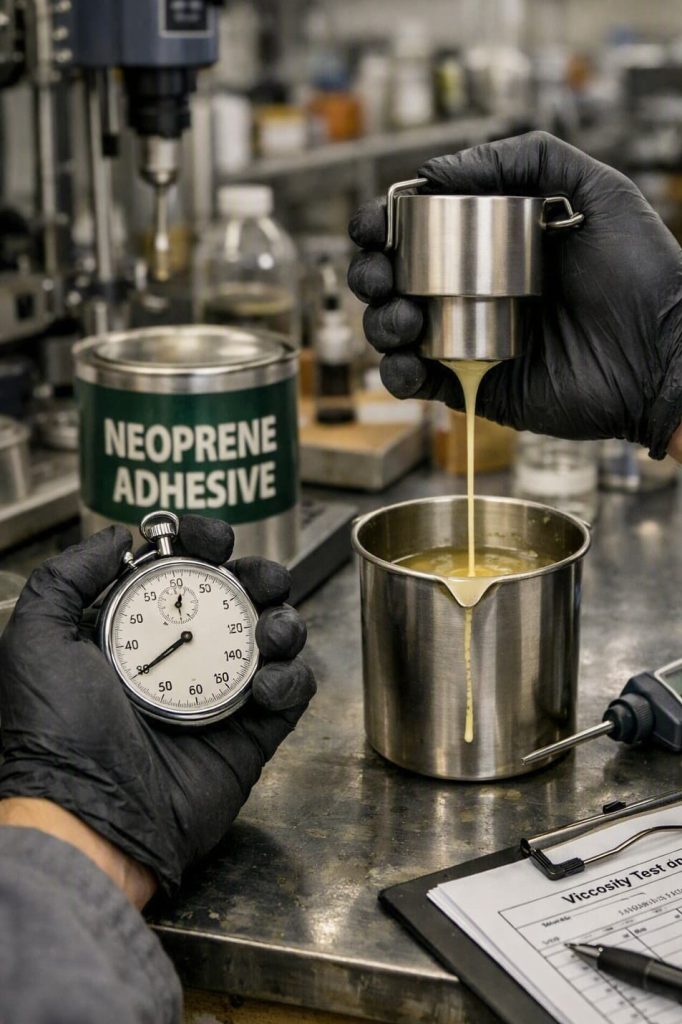
Viscosity also requires continuous monitoring. Solvent evaporation gradually increases viscosity during production, which can change the way the adhesive spreads. Operators should measure viscosity at defined intervals and use only approved thinner when adjustment is required.
Key Control Points
- Maintain the approved coating thickness.
- Check viscosity throughout production.
- Keep adhesive containers closed.
- Record viscosity and adjustment activities.
Expert Tip:
Check adhesive viscosity at defined intervals instead of relying only on appearance.
Label mixed adhesive with mixing time and pot-life information.
Environmental and Workplace Controls
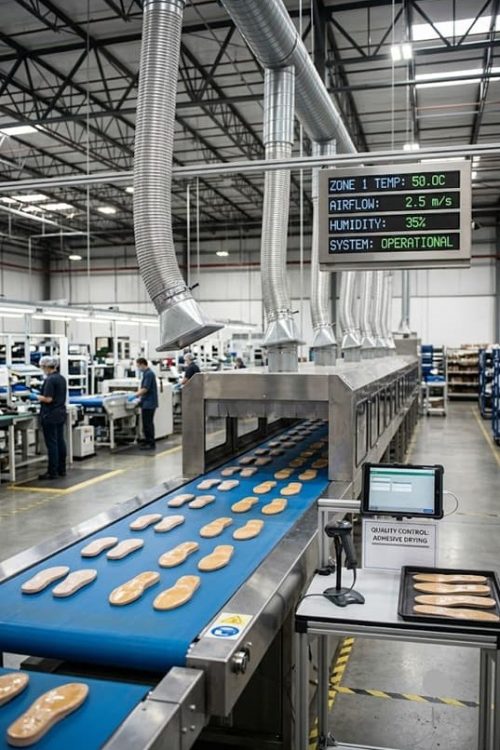
Environmental conditions strongly influence cementing performance. Temperature, humidity, ventilation, and airborne contamination can all affect adhesive drying and film formation. High humidity can slow drying, while excessive temperature can accelerate solvent evaporation and shorten working time. Dust from roughing and buffing operations can also contaminate wet adhesive.
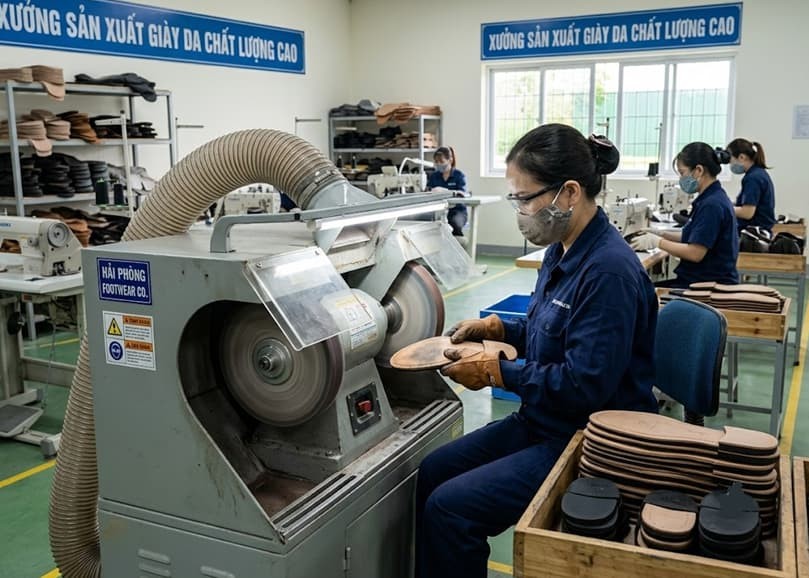
For this reason, factories should separate cementing areas from major dust-generating operations and maintain controlled ventilation.
Key Control Points
- Monitor temperature and humidity.
- Keep cementing areas clean.
- Control airflow around coated components.
- Prevent dust contamination.
Expert Tip:
Use dedicated application tools for different adhesive systems.
Monitor adhesive consumption per production lot.
Common Primary Cement Coating Defects
Poor primary cement application usually results from incorrect coating quantity, poor viscosity control, contamination, or inadequate drying.
- Insufficient Coating: Creates weak bonding or localized separation.
- Excessive Coating: Causes slow drying, solvent retention, bubbling, or poor activation.
- Uneven Coverage: Creates inconsistent bond strength across the outsole.
- Contamination: Dust, oil, moisture, or fingerprints interfere with adhesive bonding.
- Poor Drying: Prevents the adhesive film from reaching the required condition for subsequent operations.
Expert Tip:
Keep adhesive containers closed when not in use.
Separate cementing areas from roughing and buffing operations.

Conclusion
Primary cement coating establishes the first adhesive layer after priming and therefore plays a critical role in outsole bonding performance.
Consistent results depend on four fundamentals: correct adhesive selection, controlled viscosity, uniform coating, and proper drying. In addition, factories must control contamination, environmental conditions, equipment condition, and operator technique.
The next stage in this series is Secondary Cement Coating Operations in Outsole Process, where we will examine the second adhesive layer, its relationship with the primary coating, flash-off control, activation requirements, and preparation for final outsole bonding.
Frequently Asked Questions (FAQs)
Primary cement coating is the first adhesive layer applied after primer treatment to establish the foundation for final outsole bonding.
PU adhesive is widely used because of its strength, flexibility, and compatibility with many footwear materials.
Correct viscosity ensures uniform spreading, controlled coating thickness, and consistent adhesive performance.
Excess adhesive can cause slow drying, solvent retention, bubbling, and poor activation.
Yes. Water-based systems can provide reliable performance when drying, humidity, temperature, and material compatibility are properly controlled.
Common defects include insufficient coating, excessive coating, uneven coverage, contamination, incorrect viscosity, and poor drying.
Factories should standardize adhesive selection, viscosity, coating quantity, drying conditions, application technique, and regular bond testing.