Grooving and Channeling Operations in Outsole Process: Outsole (Stock Fitting) Assembly Series
In thIn the previous blog, Stamping and Identification Marking Operations in Outsole Process: Outsole (Stock Fitting) Assembly Series, we explored how manufacturers permanently mark outsoles with size information, production codes, logos, and traceability details. Those markings help factories maintain product identification throughout manufacturing while supporting quality control and inventory management.
Once identification marking is complete, many premium outsoles require another precision machining operation before they move to finishing or assembly. This operation is grooving and channeling, where accurately controlled recesses are machined into the outsole surface for decorative styling, outsole stitching, or specific construction requirements.
Although a groove may appear to be a simple decorative line, it directly affects both the appearance and functionality of the finished footwear. Consistent groove depth, accurate alignment, and clean cutting ensure attractive aesthetics while also providing adequate space for stitching or construction features. Consequently, footwear manufacturers rely on specialized grooving machines and well-maintained cutting tools to achieve repeatable, factory-quality results.
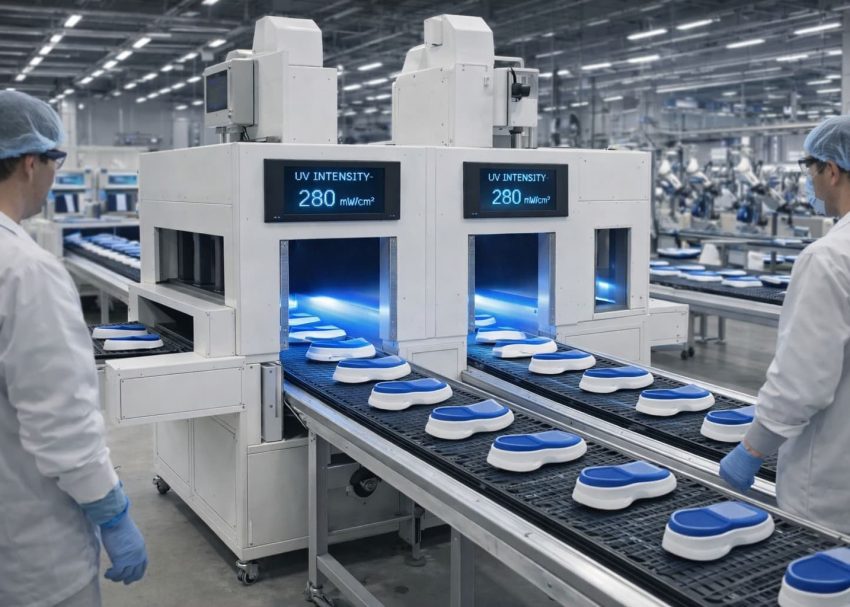
What are Grooving and Channeling Operations?
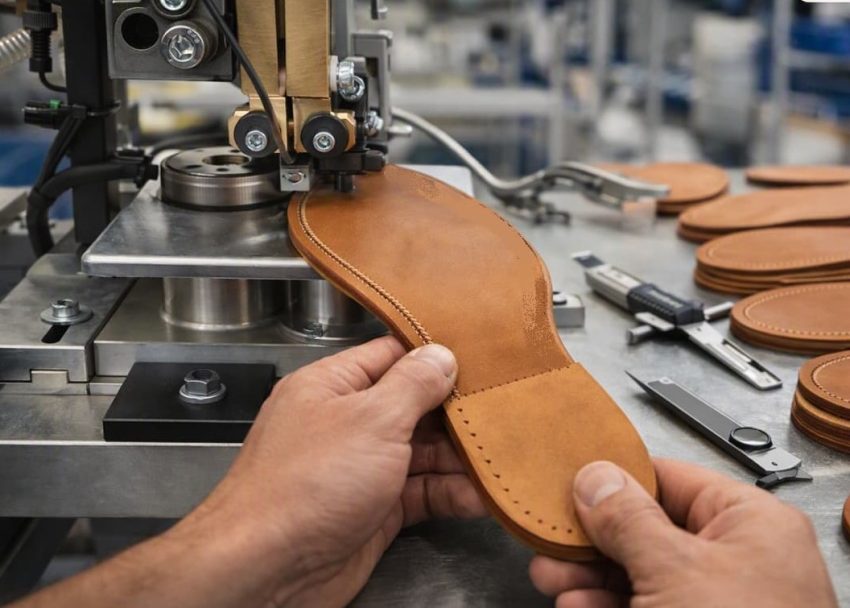
Grooving and channeling are precision machining operations that create recessed lines or channels on the outsole surface according to the shoe design and construction method. These recesses are produced using specially designed rotary cutters, grooving knives, or profiling tools that remove a controlled amount of material while maintaining uniform width and depth throughout the cutting path.
Although both terms are frequently used together, they may serve slightly different purposes depending on the footwear construction.
A groove generally refers to a narrow recessed line produced mainly for decorative appearance, improved flexibility, or as a guide for outsole stitching. Decorative grooves are common in leather dress shoes, formal footwear, boots, and premium casual shoes because they enhance the visual profile of the sole.
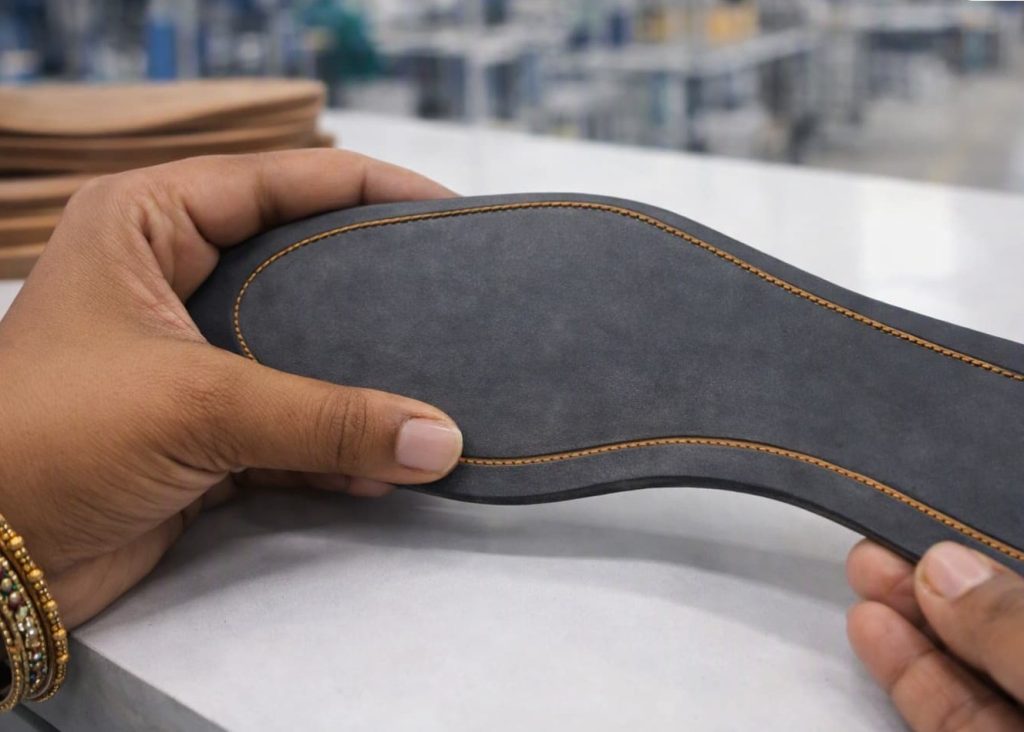
A channel, on the other hand, is usually wider or specially designed to accommodate stitching, hide stitch threads, or support particular outsole construction methods. In stitched leather outsoles, the channel protects the stitching from direct abrasion during walking, thereby improving durability and maintaining a cleaner appearance.
Unlike roughing or milling operations that prepare bonding surfaces, grooving removes only the material required for the specified design while preserving the overall strength and thickness of the outsole.
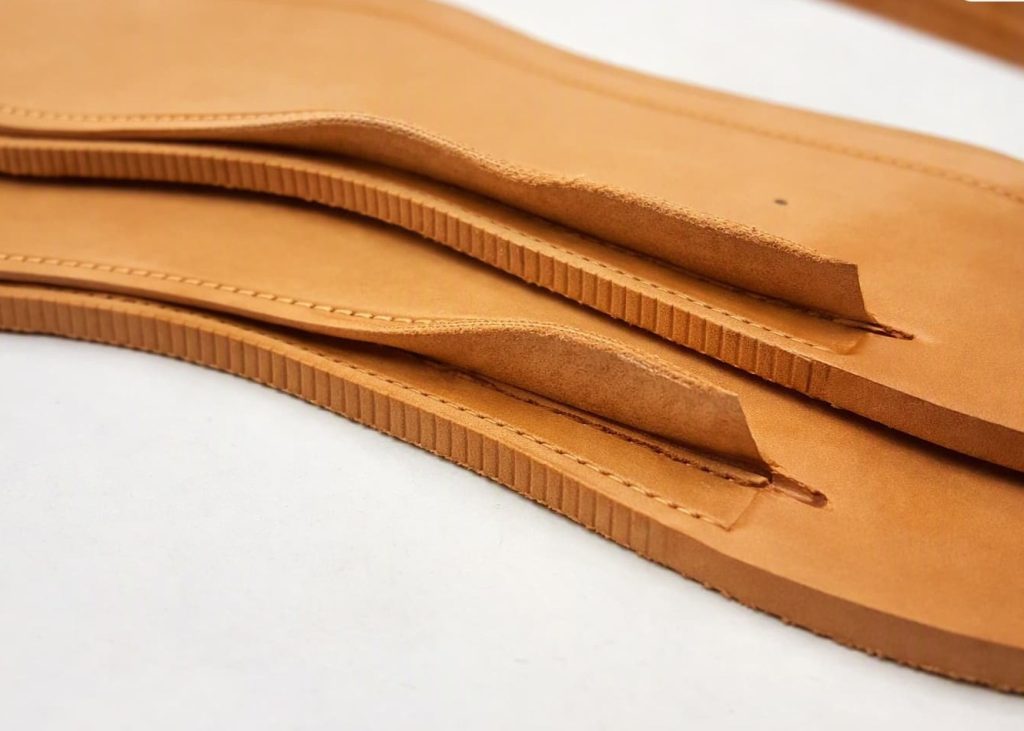
Typical Groove Dimensions
Actual dimensions depend on customer specifications, outsole thickness, construction method, and footwear category. However, typical factory values include:
| Parameter | Typical Value |
|---|---|
| Groove Width | Approximately 1.5 mm |
| Groove Depth | Approximately 1.5 mm |
| Tolerance | As per design specification |
| Profile | U-shaped or V-shaped depending on cutter |
Premium leather footwear often requires tighter dimensional tolerances because even minor variations become highly visible after finishing and polishing.
Key Control Points
- Maintain specified groove width and depth throughout the entire profile.
- Use the correct cutter profile according to design drawings.
- Verify groove position before machining production lots.
- Prevent excessive material removal that weakens the outsole.
Expert Tip: Replace cutters before noticeable wear appears. Dull tools create torn edges, inconsistent groove depth, and poor surface finish.
Why Grooving and Channeling are Important
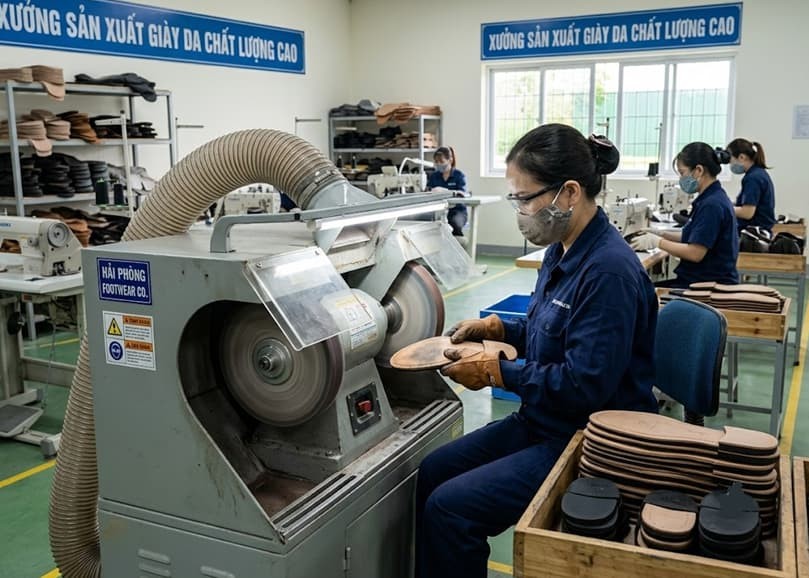
Although grooving removes only a small amount of material, it has a significant influence on both product quality and footwear construction. A properly machined groove enhances the appearance of the outsole while ensuring subsequent assembly operations can be completed accurately.
In premium leather footwear, outsole stitching often follows precisely machined channels. If the groove depth varies or the cutter deviates from the intended path, stitching quality immediately suffers. Uneven stitch placement becomes highly visible, reducing the overall appearance of an otherwise premium product.
Grooving also contributes to design consistency. Luxury footwear brands frequently specify decorative groove patterns that distinguish one collection from another. Since these details are immediately noticeable, manufacturers must reproduce every groove accurately across all production sizes.
From a manufacturing perspective, machining the groove before stitching improves productivity because operators can follow a predefined cutting path rather than manually estimating stitch locations. Consequently, assembly becomes faster while maintaining higher consistency. In addition, accurately machined channels help protect recessed stitches from direct contact with the ground. This protection reduces thread wear during walking and extends the service life of stitched outsole constructions. Finally, properly executed grooves simplify subsequent finishing operations such as edge coloring, waxing, polishing, and inspection because the decorative features already match the approved design.
Key Benefits
- Increases perceived product value.
- Enhances outsole appearance.
- Supports decorative design features.
- Provides accurate guide for stitching.
- Protects recessed stitching from abrasion.
- Improves manufacturing consistency.
- Reduces assembly variation.
- Maintains premium product quality.
Expert Tip: Perform first-piece approval for every size. Minor dimensional changes between outsole sizes can affect groove alignment.
Types of Grooves Used in Footwear Outsoles
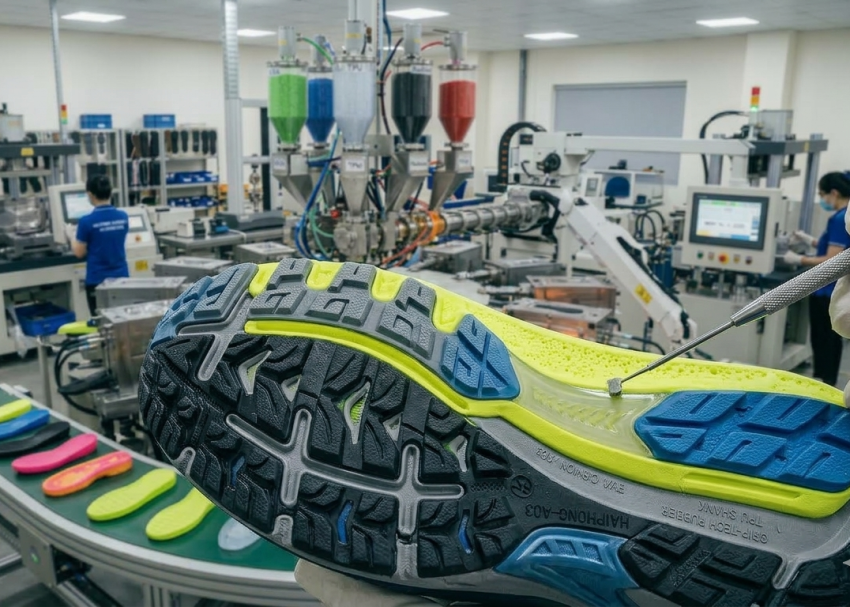
Not every groove serves the same purpose. Depending on footwear construction, material, and brand requirements, manufacturers select different groove profiles to achieve functional performance as well as visual appeal.
Decorative Grooves
Decorative grooves are created primarily to enhance the visual appearance of the outsole. They add depth, definition, and premium styling without affecting the structural integrity of the sole. These grooves are widely used in leather formal footwear, luxury casual shoes, and handcrafted products where aesthetics play an important role.
The cutter follows a programmed or template-guided profile to maintain a consistent decorative line around the outsole perimeter or across selected design areas. Because these grooves remain visible after finishing, clean cutting and uniform dimensions are essential.
Stitching Channels
Stitching channels are among the most common functional grooves found in premium leather footwear. They provide a controlled recess that guides outsole stitching while protecting the thread below the walking surface. Depending on the construction method, the channel may remain open or be closed after stitching to conceal the thread completely. This technique produces a clean outsole appearance while significantly improving stitch durability.
Functional Construction Grooves
Certain outsole constructions require grooves that improve component positioning or facilitate later assembly operations. These grooves may help locate inserts, define assembly areas, or create clearance for adjoining components without affecting the overall outsole profile.
Unlike decorative grooves, these features are primarily engineering-driven and are controlled according to technical drawings rather than visual appearance alone.
Flexibility Grooves
Some footwear categories incorporate shallow grooves to improve outsole flexibility during walking. These grooves allow controlled bending in selected areas while maintaining sufficient strength throughout the remaining outsole structure.
Although flexibility grooves are more common in molded rubber or EVA soles, similar design principles are occasionally applied to leather or composite outsoles depending on product requirements.
Key Control Points
- Confirm groove type before production begins.
- Match cutter profile with approved technical drawings.
- Verify groove location against the outsole template.
- Inspect the first production pieces before mass manufacturing.
Expert Tip: Secure the outsole firmly during machining. Movement during cutting is one of the primary causes of misaligned grooves and irregular profiles.
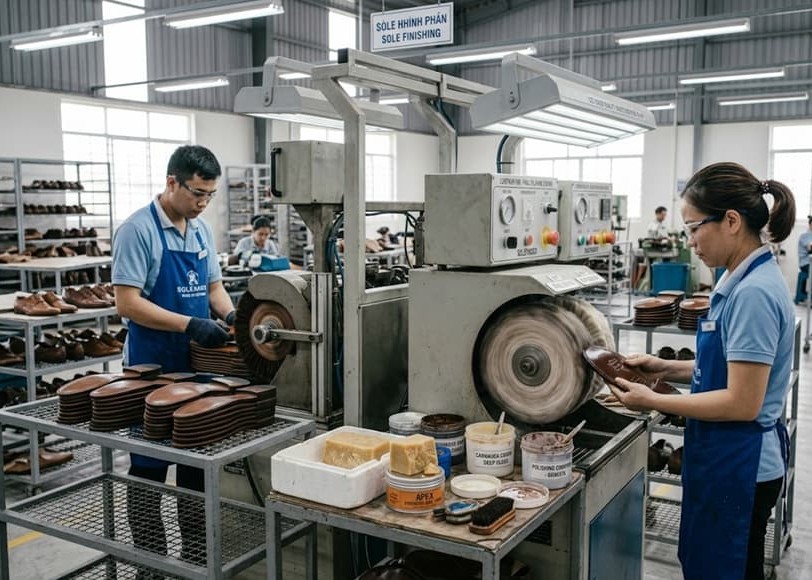
Groove Design Considerations
Before machining begins, engineers define the groove geometry according to footwear construction, material properties, and customer specifications. A well-designed groove balances aesthetics with functionality while ensuring the remaining outsole retains adequate strength.
The first consideration is groove position. Decorative grooves must align precisely with the outsole contour, whereas stitching channels must follow the intended stitch path without deviation. Even a slight offset can become noticeable after assembly.
The second consideration is groove depth. If the groove is too shallow, stitching may remain exposed, reducing protection and affecting appearance. Conversely, an excessively deep groove weakens the outsole and may lead to tearing during later manufacturing processes.
Groove width must correspond to the cutter size and the intended application. Decorative grooves generally use narrower profiles, while stitching channels require sufficient space to accommodate thread and needle penetration without damaging the surrounding material.
Material characteristics also influence groove design. Vegetable-tanned leather, rubber, TPR, TPU, and composite outsole materials respond differently to cutting forces. Therefore, cutter geometry, spindle speed, and feed rate are adjusted according to material hardness and density to achieve clean, burr-free machining.
Finally, manufacturers consider downstream processes such as stitching, waxing, polishing, and finishing. A groove designed with these subsequent operations in mind reduces production difficulties and improves overall manufacturing efficiency.
Key Control Points
- Ensure groove geometry supports the intended construction method.
- Verify groove dimensions against approved technical specifications.
- Select tooling suitable for the outsole material.
- Maintain adequate remaining outsole thickness.
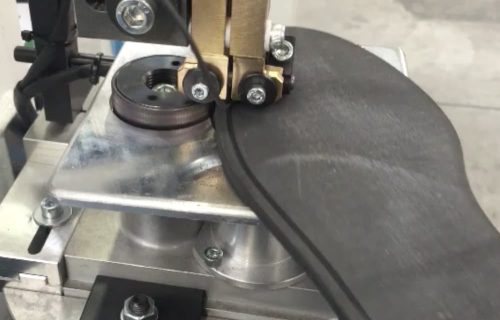
Expert Tip: Standardize machine settings for each outsole material. Maintaining documented spindle speeds and feed rates improves repeatability across production batches.

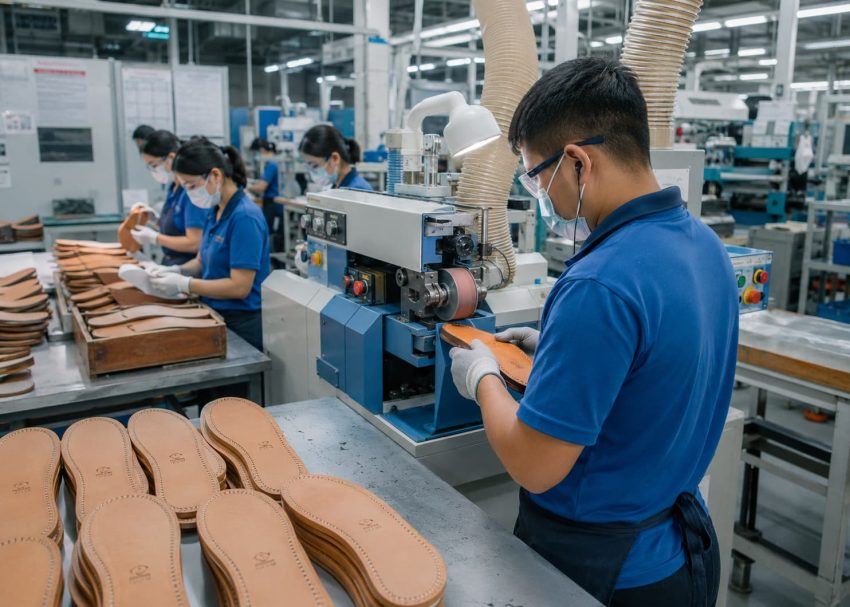
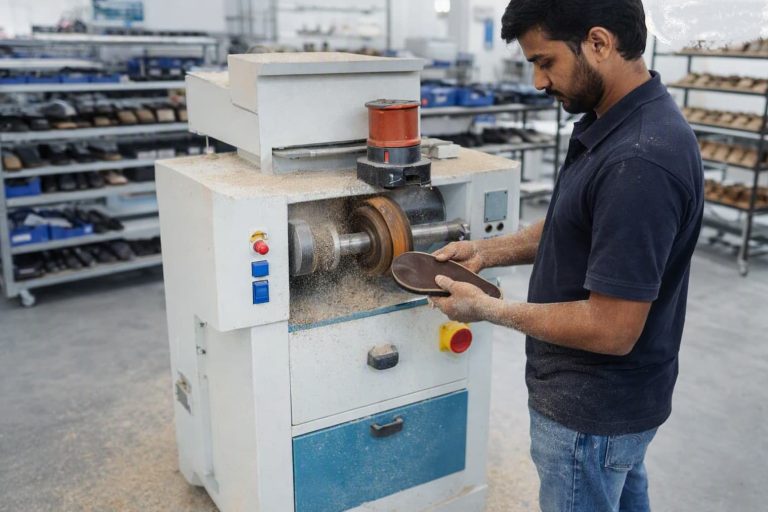
Manual Grooving Machine
Manual grooving machines are commonly found in small and medium-sized footwear factories, especially those producing leather formal shoes in moderate production quantities.
The operator manually guides the outsole against a rotating cutter while controlling the feed speed and maintaining alignment with the marked groove path. Although the equipment is relatively simple, achieving consistent quality depends heavily on operator skill and experience.
These machines offer flexibility because operators can quickly adapt to different outsole styles without extensive programming. However, they require continuous attention to prevent deviations in groove position or depth.
Typical Applications
- Leather formal shoes
- Handmade footwear
- Small production batches
- Prototype development
- Custom-made footwear
Advantages
- Low investment cost
- Simple maintenance
- Flexible for multiple styles
- Suitable for small production runs
Limitations
- Operator-dependent quality
- Lower productivity
- Greater dimensional variation
- Increased fatigue during long production runs
Key Control Points
- Verify cutter alignment before every shift.
- Maintain steady feeding speed.
- Inspect groove depth frequently.
- Replace worn cutters immediately.
Expert Tip: Keep separate cutter sets for leather, rubber, TPU, and TPR. Different materials dull cutting edges at different rates and require optimized tool geometry.
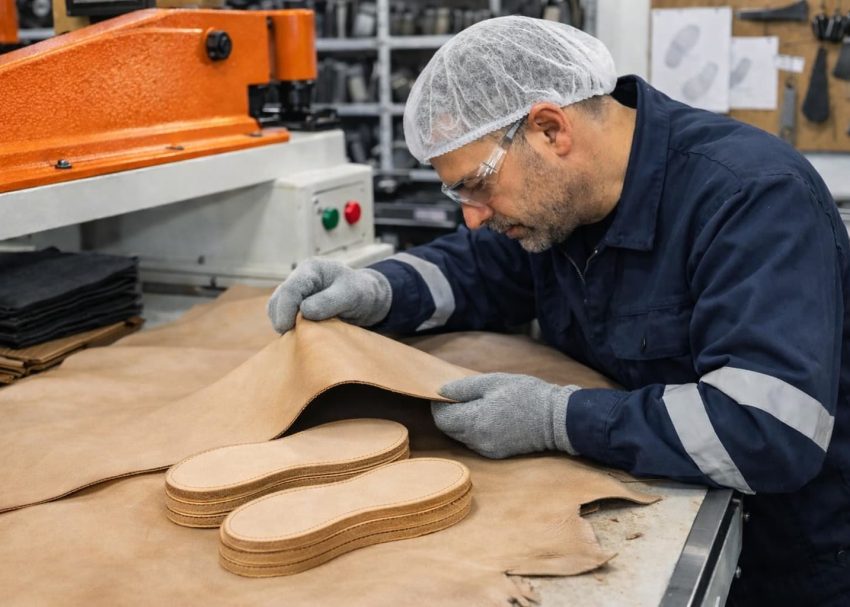
Template-Guided Grooving Machine
Many footwear factories use template-guided grooving machines because they combine high productivity with excellent dimensional consistency.
In this system, the outsole follows a precisely manufactured aluminum or steel template. A guide roller or cam mechanism traces the template profile while the rotating cutter simultaneously machines the groove. This arrangement minimizes operator influence and produces nearly identical groove geometry across large production batches.
Template-guided machines are particularly effective when manufacturing multiple sizes because each size has its dedicated template, ensuring repeatable accuracy.
Typical Applications
- Leather outsole production
- Premium dress shoes
- Stitching channel preparation
- Decorative perimeter grooves
Advantages
- Excellent repeatability
- High production speed
- Consistent groove profile
- Reduced operator variation
Limitations
- Separate template required for every size
- Template maintenance required
- Less flexible for design modifications
Key Control Points
- Inspect templates for wear.
- Ensure guide roller moves smoothly.
- Verify template installation.
- Confirm groove alignment on first-piece inspection.
Expert Tip: Never delay cutter replacement to maximize tool life. The cost of rejected premium outsoles is usually much higher than the cost of a new cutter.
CNC Grooving Machine
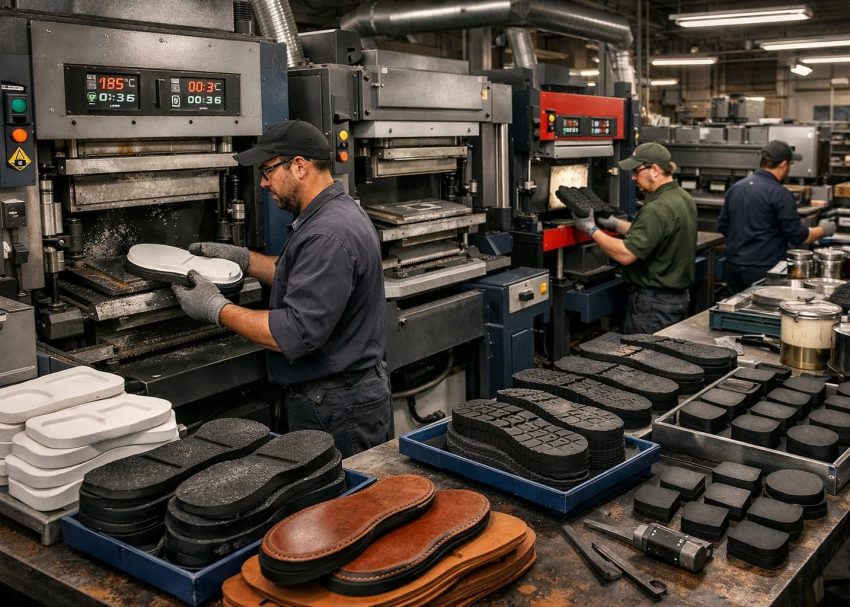
High-volume footwear manufacturers increasingly use CNC grooving machines for precision machining and automated production.
The outsole is securely clamped while programmed tool paths guide the cutter according to CAD data. CNC control ensures highly accurate groove positioning, consistent depth, and excellent repeatability across thousands of production pairs.
These systems are especially suitable for premium brands requiring strict dimensional control and complex groove patterns.
Typical Applications
- Luxury footwear
- High-volume production
- Complex decorative patterns
- Multi-channel outsole designs
Advantages
- Exceptional precision
- High repeatability
- Minimal operator influence
- Complex profile capability
- Digital program storage
Limitations
- Higher capital investment
- Skilled programming required
- Longer setup for new designs
Key Control Points
- Verify CNC program before production.
- Check tool offsets.
- Perform first-piece dimensional inspection.
- Monitor cutter wear automatically where possible.
Expert Tip: Standardize groove inspection frequency. Checking one outsole every 25–50 pairs helps identify process drift before large quantities are affected.
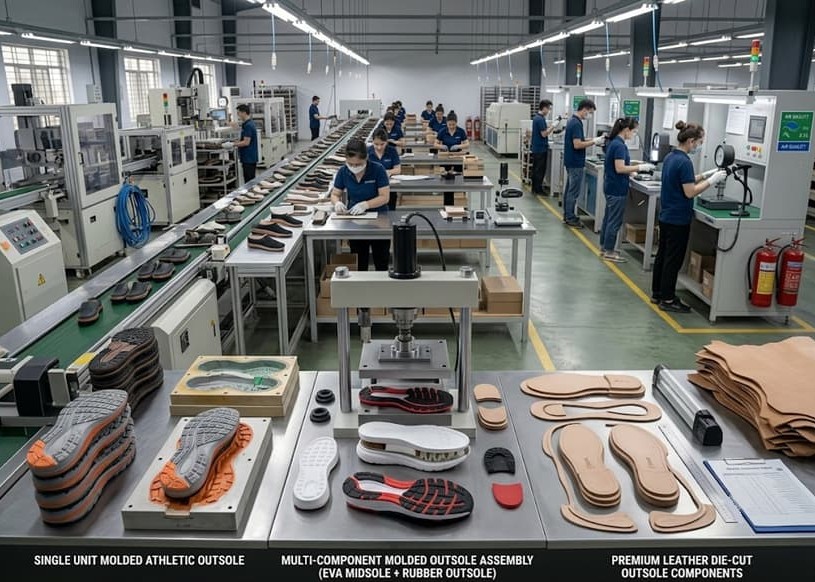
Applications of Grooving and Channeling
Although decorative appearance is the most visible result, grooves perform several important engineering functions across different footwear categories.
Leather Dress Shoes
Premium leather shoes frequently incorporate stitching channels around the outsole perimeter. The groove protects lock stitches from abrasion while providing the elegant appearance expected in formal footwear.
Goodyear Welted Footwear
Goodyear welt construction often requires precisely machined stitching channels.
These grooves ensure uniform stitch placement and improve long-term durability.
Blake Stitch Construction
Blake-stitched shoes also utilize accurately positioned grooves to accommodate outsole stitching while maintaining an attractive finished appearance.
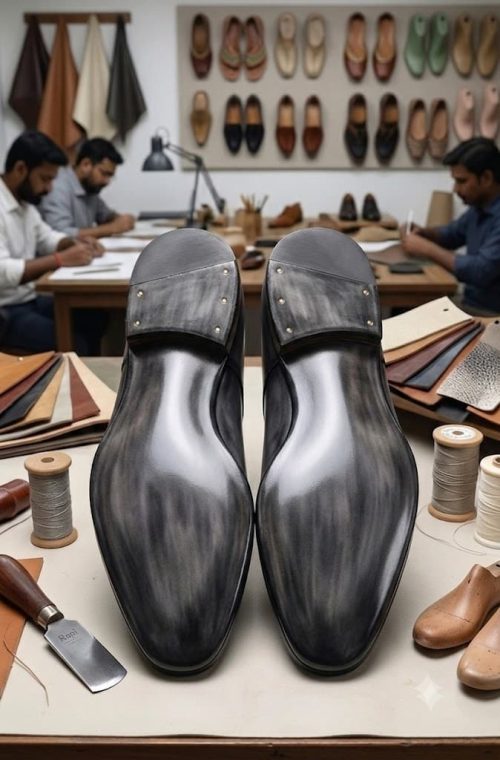
Premium Casual Footwear
Manufacturers often add decorative grooves that create visual depth and emphasize premium craftsmanship without affecting structural strength.
Fashion Footwear
Modern fashion footwear frequently incorporates decorative channel patterns as brand-specific design elements. These grooves may have no structural function but contribute significantly to product aesthetics.
Key Control Points
- Maintain consistent appearance across production batches.
- Follow approved design drawings.
- Match groove geometry with construction method.
- Verify groove location before stitching.
Expert Tip: Store templates carefully. Even slight damage or deformation can produce consistent misalignment across an entire production batch.

Common Defects During Grooving Operations
Despite being a relatively simple machining process, grooving can produce several quality issues if machine settings, tooling, or operator practices are not properly controlled.
Uneven Groove Depth
Causes
- Worn cutter
- Incorrect depth adjustment
- Machine vibration
- Inconsistent feeding speed
Prevention
- Replace cutters regularly.
- Calibrate depth settings.
- Secure outsole firmly.
- Maintain uniform feed rate.
Groove Misalignment
Causes
- Incorrect template positioning
- Operator error
- Loose guide mechanism
Prevention
- Verify templates before production.
- Inspect guide rollers.
- Perform first-piece approval.
Surface Tearing
Causes
- Dull cutting tools
- Poor leather quality
- Excessive cutting force
Prevention
- Maintain sharp cutters.
- Optimize cutting speed.
- Reduce feed pressure.
Tool Marks
Causes
- Damaged cutter
- Machine vibration
- Excessive spindle runout
Prevention
- Inspect cutter condition.
- Maintain machine bearings.
- Balance rotating tools.
Burr Formation
Causes
- Incorrect cutter geometry
- Improper spindle speed
- Material characteristics
Prevention
- Clean grooves after machining.
- Use correct cutter profile.
- Optimize machining parameters.
Inspection and Quality Control
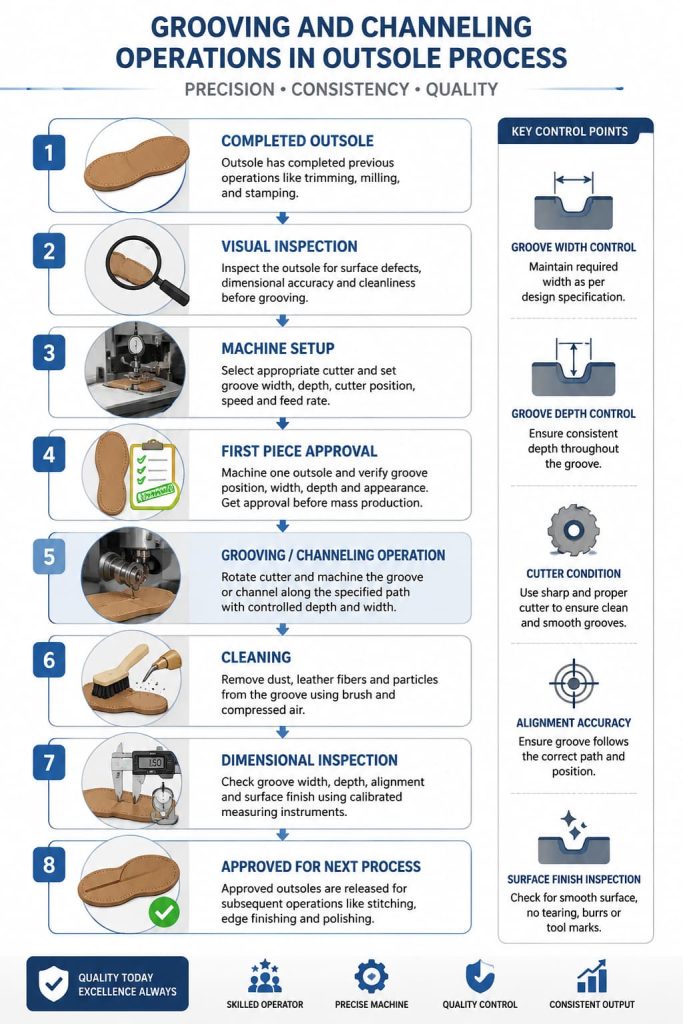
Quality inspection begins immediately after the first production piece and continues throughout the manufacturing batch. Operators conduct routine visual inspections while quality inspectors periodically verify groove dimensions using calibrated measuring equipment.
Critical inspection parameters include groove width, depth, alignment, continuity, surface finish, and compliance with customer specifications. Special attention is given to stitching channels because even minor dimensional variations may affect subsequent assembly operations.
In addition to dimensional checks, inspectors verify that grooves remain free from burrs, torn fibers, cutter marks, and foreign particles. Clean, well-defined grooves improve both appearance and the efficiency of downstream stitching, polishing, and finishing processes.
Routine monitoring of cutter wear and machine calibration also forms an essential part of process quality control. Preventive maintenance minimizes variation and helps ensure consistent production quality throughout long manufacturing runs.
Key Control Points
- Inspect first-piece dimensions before batch production.
- Measure groove width and depth using calibrated gauges.
- Monitor cutter wear during production.
- Reject outsoles showing torn surfaces, misalignment, or excessive dimensional variation.
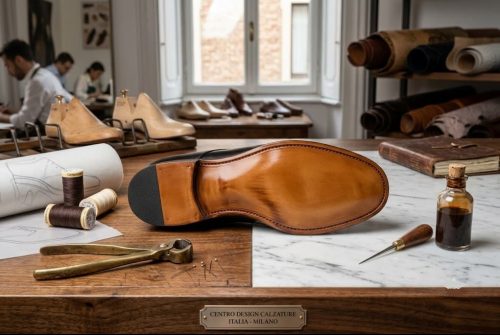
Troubleshooting Guide
| Problem | Possible Cause | Recommended Solution |
|---|---|---|
| Uneven groove depth | Worn cutter | Replace cutter |
| Groove off-center | Incorrect template alignment | Reset template position |
| Rough groove surface | Dull cutter | Sharpen or replace tool |
| Burr formation | Incorrect cutting speed | Optimize spindle speed |
| Torn leather fibers | Excessive feed rate | Reduce feed speed |
| Visible chatter marks | Machine vibration | Inspect spindle and bearings |
| Inconsistent groove width | Loose guide mechanism | Tighten guide assembly |
| Stitch channel too shallow | Incorrect depth adjustment | Recalibrate cutter depth |

Conclusion
Grooving and channeling may remove only a small amount of outsole material, yet they have a significant impact on both footwear performance and appearance. Whether the objective is to create decorative design lines, prepare protected stitching channels, or support specific construction methods, every groove must meet strict dimensional and visual requirements.
Achieving consistent results depends on selecting the appropriate machine, maintaining sharp cutting tools, following standardized operating procedures, and implementing rigorous quality inspections throughout production.
When these factors are carefully controlled, manufacturers can consistently produce premium-quality outsoles that satisfy both functional requirements and brand expectations.
As footwear designs continue to evolve, CNC machining and automated grooving technologies are enabling manufacturers to produce increasingly complex patterns while maintaining high productivity and repeatable quality.
Nevertheless, the fundamentals remain unchanged: precise tooling, skilled process control, and disciplined quality assurance are the foundation of successful grooving and channeling operations.
In the next blog, we will explore Embossing Operations in Outsole Process: Outsole (Stock Fitting) Assembly Series, where we will examine how manufacturers create permanent logos, decorative textures, branding elements, and functional surface patterns using heated dies and embossing presses.
Frequently Asked Questions (FAQs)
A groove is generally a narrow recessed line used for decoration or flexibility, whereas a channel is primarily designed to accommodate and protect outsole stitching or meet specific construction requirements.
Although dimensions vary by design, premium leather footwear commonly uses grooves approximately 1.5 mm wide and 1.5 mm deep, subject to customer specifications.
Grooving can be performed on leather, rubber, TPR, TPU, EVA, and certain composite outsole materials using appropriate tooling and machine settings.
Proper groove depth ensures adequate space for stitching or decorative features without weakening the outsole or affecting its structural integrity.
Common defects include uneven depth, misalignment, torn surfaces, cutter marks, burr formation, and inconsistent groove width.
CNC grooving machines and CNC multi-function outsole machining centers provide the highest precision, repeatability, and productivity for large-scale manufacturing.
Replacement intervals depend on outsole material, production volume, and tool quality. Most factories replace cutters before visible wear affects groove quality to maintain consistent production standards.