Reinforcement (Backers & Tapes) Process in Footwear Manufacturing – Stitching Process Series
Reinforcement is a critical engineering stage in footwear upper manufacturing that directly influences durability, dimensional stability, and seam strength. It is applied strategically in high-stress zones such as eyelets, seams, topline, and structural areas of the upper.
Without proper reinforcement, uppers stretch, seams fail, eyelet zones tear, and overall product performance reduces significantly. Therefore, reinforcement is not just an additional layer—it is a controlled process involving material selection, adhesive systems, and precise fusing conditions.
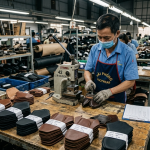
Reinforcement Material Selection (Backers & Adhesive Systems)
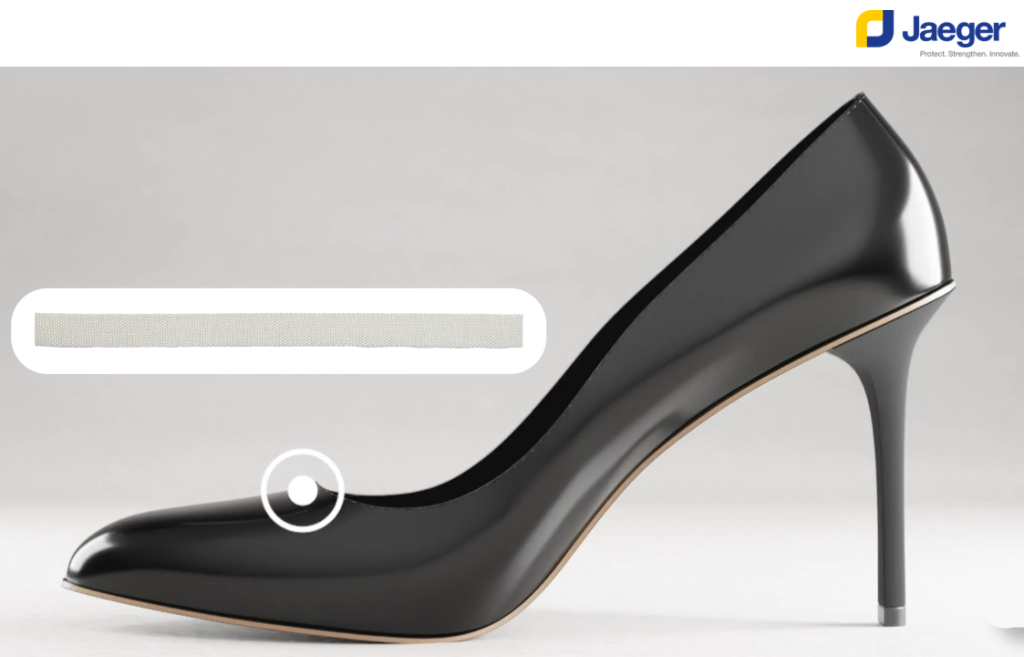
Reinforcement materials are selected based on required strength, flexibility, and compatibility with upper materials such as leather, synthetic, mesh, or knit. These materials are always supported by adhesive systems that control bonding performance and process efficiency.
This selection is critical because the adhesive layer determines how well the reinforcement integrates with the upper. Even a high-quality backing material can fail if the adhesive system is not suitable for the application.
In factory practice, reinforcement materials are sourced with pre-coated adhesive layers or coated internally depending on production requirements. The development team finalizes the material–adhesive combination during sampling.
EVA-based coatings are generally used where flexibility and softness are required. PU coatings provide a balanced combination of flexibility and bonding strength, making them suitable for performance footwear. PA (polyamide) coatings offer stronger bonding and higher rigidity, typically used in areas requiring structural stability. Self-adhesive (pressure-sensitive) layers are mainly used for positioning convenience rather than load-bearing applications.
Key Control Points:
- Match adhesive system with upper material and product category
- Maintain consistency of coating thickness and quality
- Control activation parameters based on adhesive type
- Avoid mixing incompatible adhesive systems
Pro Tip : Validate bonding strength after cooling, not immediately after fusing
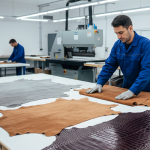
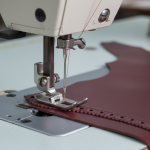
Woven & Non-Woven Backing Materials
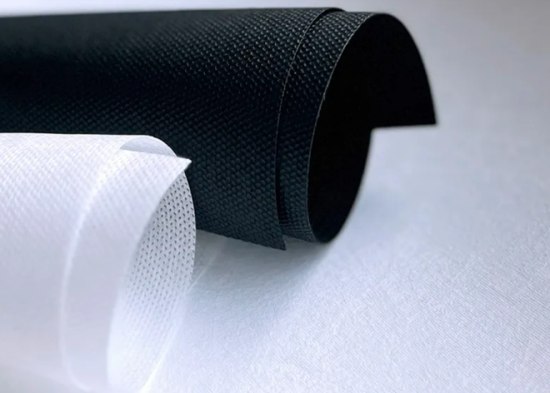
Woven and non-woven materials are widely used as backing layers to stabilize upper and lining components. They improve stitch holding strength and prevent excessive stretching during stitching and lasting.
This becomes especially important in modern footwear where uppers are made from lightweight materials such as mesh and knit, which lack inherent structural strength. Without backing, these materials deform easily and affect final shoe shape.
In production, backing materials are bonded to the reverse side of the upper using heat or adhesive lamination. Woven fabrics provide directional strength and are suitable for high-stress zones, while non-woven materials offer uniform thickness and cost efficiency.
Material selection also considers breathability, especially for leather uppers, where moisture management is critical.
Key Control Points:
- Maintain correct grain direction for woven materials
- Ensure wrinkle-free bonding during lamination
- Avoid shrinkage under heat activation
- Match backing stiffness with upper flexibility
Pro Tip : Use crimping backers for flexible and curved upper areas
Crimping Backers – Flexible Reinforcement for Contoured Areas
Crimping backers are specially engineered reinforcement materials that have a textured or crimped structure, allowing them to expand and contract with the upper material. Unlike standard flat backers, they do not resist deformation; instead, they move with the upper.
This makes them highly effective in areas where the upper undergoes continuous flexing or shaping, such as curved panels, vamp areas, and knit or mesh constructions. Standard backers may restrict movement and cause wrinkling or stress concentration, whereas crimping backers maintain reinforcement without compromising flexibility.
In factory execution, crimping backers are applied similar to regular backers but require careful handling to maintain their structure during bonding. Excessive heat or pressure may flatten the crimp structure, reducing effectiveness.
They are commonly used in performance footwear, especially where lightweight construction and flexibility are critical.
Applications:
- Knit and mesh uppers requiring stretch compatibility
- Curved upper panels (vamp and quarters)
- Lightweight sports footwear
- Areas prone to wrinkling under standard reinforcement
Key Control Points:
- Avoid excessive pressure during fusing
- Maintain crimp structure after bonding
- Match elasticity with upper material
- Ensure uniform bonding without flattening
Pro Tip : Prefer braided tapes for high-stress zones
Backer Application Process – Adhesive Control & Fusing Parameters
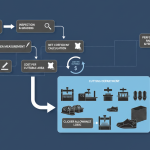
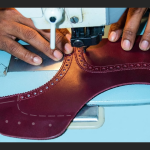
Backers are applied in stitching zones such as eyelets, vamp, quarters, and seam areas to provide structural support and prevent tearing. The effectiveness of backer application depends heavily on adhesive activation and bonding uniformity. Poor bonding results in peeling, wrinkling, or uneven stiffness during stitching.
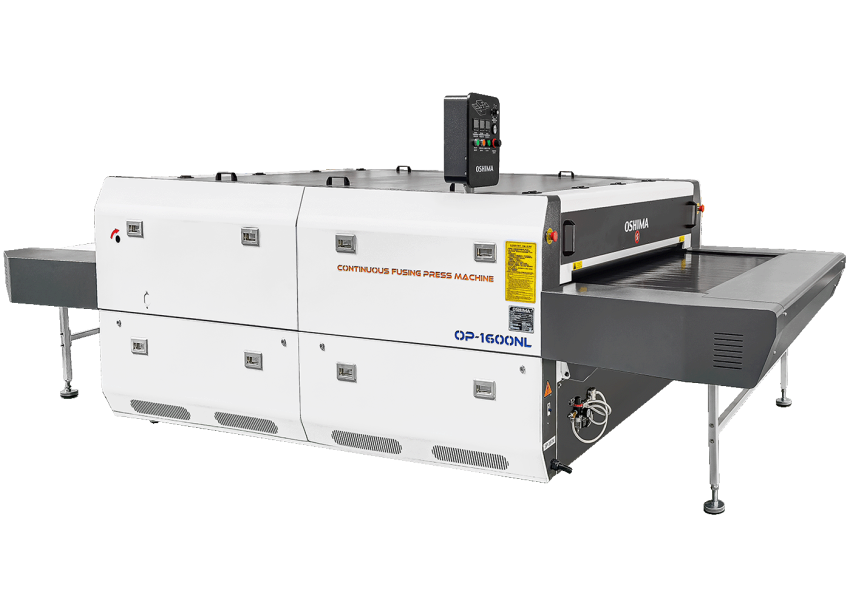
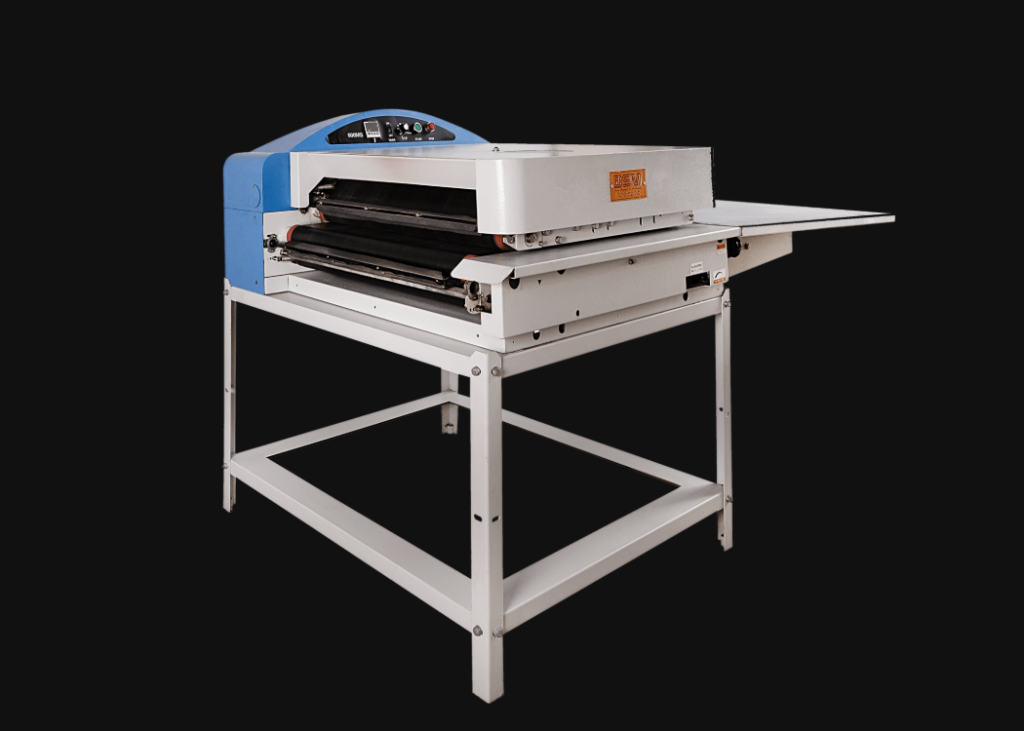
In factory execution, pre-coated backers are positioned accurately on the reverse side of the upper. Heat and pressure are then applied to activate the adhesive layer and achieve proper bonding.Fusing parameters must be carefully controlled. Low temperature results in weak bonding, while excessive heat may cause shrinkage or surface damage.
Typical Fusing Parameters (Backers):
- Temperature: 110°C – 150°C
- Pressure: 2 – 4 bar
- Time: 8 – 15 seconds
These values vary depending on material type, thickness, and adhesive system.
Key Control Points:
- Ensure precise alignment before fusing
- Maintain uniform heat and pressure distribution
- Avoid adhesive marks on upper surface
- Verify bonding strength after cooling
Pro Tip : Avoid excessive reinforcement in lightweight uppers
Eyelet Reinforcement Materials
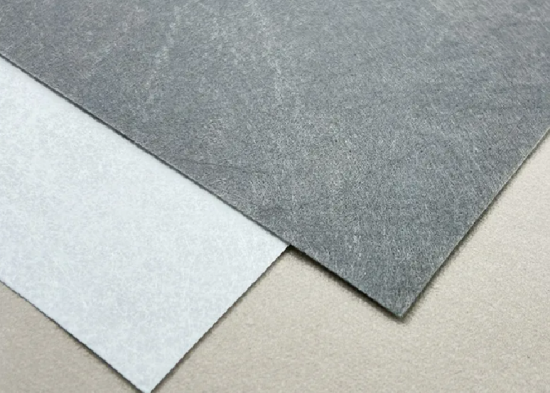
Eyelet zones are subjected to repeated tensile stress during lacing. Reinforcement in this area is essential to prevent tearing and maintain structural integrity.
In practice, localized reinforcement patches are applied behind the eyelet area before punching or stitching. The reinforcement must provide sufficient strength without adding bulk that could affect eyelet formation.
Non-woven sheets are commonly used for general applications due to their uniform structure. TPU films are preferred where invisible reinforcement is required, especially in modern lightweight designs. Synthetic leather and fiber-based materials are used in heavier or fashion footwear.
Accurate positioning is critical because misalignment affects eyelet placement and lace functionality.
Key Control Points:
- Ensure accurate positioning with eyelet layout
- Avoid excessive thickness affecting punching quality
- Maintain strong bonding under repeated stress
- Prevent visible marking on upper surface
Pro Tip : Standardize fusing parameters across production lines
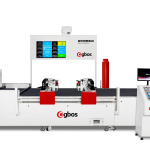
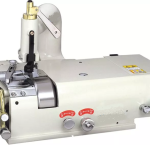
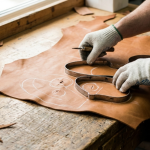
Reinforcement for Leather Uppers
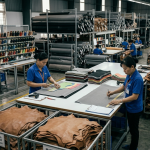
Leather uppers require a controlled reinforcement approach due to their natural structure and premium finish. While leather has inherent strength, it tends to stretch over time in stress zones.
Reinforcement in leather must support the structure without affecting flexibility, breathability, or appearance. Improper reinforcement may result in stiffness, discomfort, or visible defects.
In factory practice, cotton-based woven fabrics and non-woven materials are commonly used for backing. EVA foam may be applied in areas requiring cushioning, while lightweight reinforcements are preferred to maintain comfort.
Adhesive selection is critical, as certain adhesives can stain or damage the leather surface.
Key Control Points:
- Use breathable reinforcement materials
- Avoid adhesive staining on leather grain
- Maintain compatibility with leather flexibility
- Prevent over-stiffening of upper
Pro Tip : Calibrate heat press machines daily
Reinforcement Tapes – Braided & Non-Braided Applications
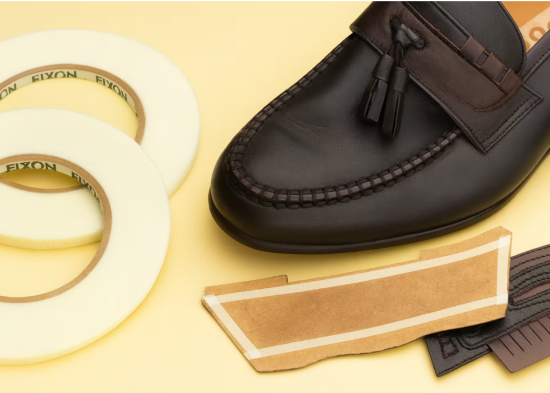
Reinforcement tapes are used to provide localized strength in areas such as seams, topline, collars, and eyelet rows. They allow targeted reinforcement without increasing overall bulk.
Braided tapes are constructed using interlaced yarns, which distribute stress evenly and provide high tensile strength. These tapes are commonly used in high-stress areas such as topline stitch-through constructions, where durability is critical. In such cases, non-adhesive braided tapes are preferred, as stitching provides the primary strength.
Non-braided tapes include woven or film-based tapes that offer controlled reinforcement with lower thickness. These are suitable for lightweight footwear where minimal bulk is required.
Adhesive-coated tapes are used for faster application and positioning, while non-adhesive tapes rely on stitching for long-term durability.
Key Control Points:
- Align tape along stress direction
- Avoid twisting or uneven placement
- Ensure adequate bonding or stitching strength
- Prevent tape visibility on upper surface
Expert Insight: Train operators on adhesive behavior and activation
Reinforcement Sheets – Full Area Structural Support
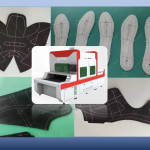
Reinforcement sheets are used where uniform support is required across larger areas such as vamp, quarter, and structural zones of the upper. Unlike tapes, sheets provide consistent stiffness across the entire surface, ensuring dimensional stability during stitching and lasting.
These sheets may be non-woven, foam-laminated, or resin-coated depending on the application. Coating systems include thermoplastic, PU, or latex-based adhesives. In production, sheets are die-cut as per pattern and bonded using controlled heat and pressure. Uniform bonding is critical to avoid weak zones or delamination.
Typical Fusing Parameters (Sheets):
- Temperature: 115°C – 155°C
- Pressure: 2.5 – 5 bar
- Time: 10 – 18 seconds
Key Control Points:
- Maintain uniform thickness across sheet
- Ensure accurate die cutting
- Avoid air bubbles during bonding
- Match stiffness with product requirement
Expert Insight: Conduct regular peel strength testing
Adhesive Application for Reinforcement
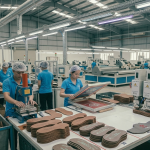
Adhesives are used when reinforcement materials are not pre-coated. They ensure bonding between upper and reinforcement layers. Application methods include brushing, spraying, and roller coating. The adhesive must reach the correct tack stage before bonding to ensure proper adhesion.
Improper adhesive application results in defects such as delamination, stiffness variation, and visible surface marks.
Key Control Points:
- Ensure proper drying before bonding
- Apply uniform adhesive layer
- Maintain correct open time
- Avoid excess adhesive application
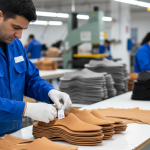
Heat Activation, Pressing & Cooling
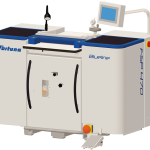
Heat activation is used to activate adhesive coatings and soften reinforcement materials for bonding. Pressing ensures proper contact between layers, while cooling stabilizes the structure.
This combined process is critical for achieving consistent bonding and dimensional stability. Any variation in temperature, pressure, or cooling time can lead to defects.
Key Control Points:
- Ensure complete cooling before handling
- Maintain consistent temperature across machines
- Apply uniform pressure during pressing
- Avoid overheating upper materials
Inspection & Quality Check
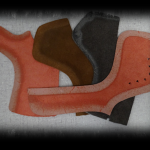
Inspection ensures that reinforcement is applied correctly before components move to stitching operations. Early detection of defects prevents downstream rejection.
Inspectors evaluate bonding strength, alignment, stiffness consistency, and visual appearance. Random peel tests are also conducted to verify bonding quality.
Key Control Points:
- Ensure no visible defects
- Check bonding strength manually
- Inspect for wrinkles or bubbles
- Verify correct positioning
Global Suppliers – Reinforcement Materials
Freudenberg Performance Materials
Website: https://www.freudenberg-pm.com
Freudenberg specializes in high-performance non-woven materials used for upper backing and reinforcement. Known for durability, uniform structure, and sustainable innovations across footwear and technical textile industries.
San Fang Chemical
Website: https://www.sanfang.com
San Fang is a leading supplier of synthetic leather and reinforcement materials. Strong presence in athletic footwear, offering stable quality and large-scale supply capability.
Teijin Limited
Website: https://www.teijin.com
Teijin supplies high-performance fibers and composites used in reinforcement tapes and structural materials. Known for innovation in lightweight and high-strength applications.
Wilhelm Textil GmbH
Website: Wilhelm Gmbh
Wilhelm specializes in reinforcement textiles including backing fabrics and technical tapes. Known for precision-engineered materials used in high-quality European footwear manufacturing.
FIXON
Website: Fixon India
Fixon is a global supplier of reinforcement components including counters, toe puff, and backers. Strong presence in athletic footwear with focus on innovation and consistent material performance.
Jaeger Components
Website: https://www.jaeger-ttc.com
Jaeger supplies technical reinforcement materials including backers, stiffeners, and tapes. Known for high-quality engineered solutions used in premium and performance footwear segments.
Frequently Asked Questions – FAQs
1. What is reinforcement in footwear manufacturing?
Reinforcement is the process of strengthening upper components using backers, tapes, and sheets to improve durability and stability.
2. Why are backers used?
Backers improve stitch strength and prevent tearing in high-stress areas.
3. What is the role of reinforcement tapes?
They provide localized strength without adding bulk.
4. Why is adhesive selection important?
It determines bonding strength, flexibility, and process efficiency.
5. What causes reinforcement failure?
Incorrect material selection, poor bonding, or improper fusing conditions.
6. Why is cooling important after fusing?
Cooling stabilizes bonding and prevents deformation.
Explore other Stitching Process Series
- Stitching Process in Footwear Manufacturing: From Cutting to Closing Assembly in Shoe Production
- Cut Component inspection after cutting/clicking – Stitching Process Series
- Cut Component Pairing & Match Marking After Cutting / Clicking-Stitching Process Series
- Cut Component Stamping After Cutting / Clicking – Stitching Process Series
- Component Marking After Cutting/Clicking–Stitching Process Series
- Component Branding in Footwear Manufacturing–Stitching Process Series
- Component Embroidery in Footwear Manufacturing–Stitching Process Series
- Component Skiving in Footwear Manufacturing–Stitching Process Series
- Component Splitting in Footwear Manufacturing–Stitching Process Series