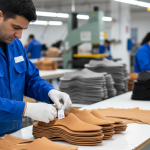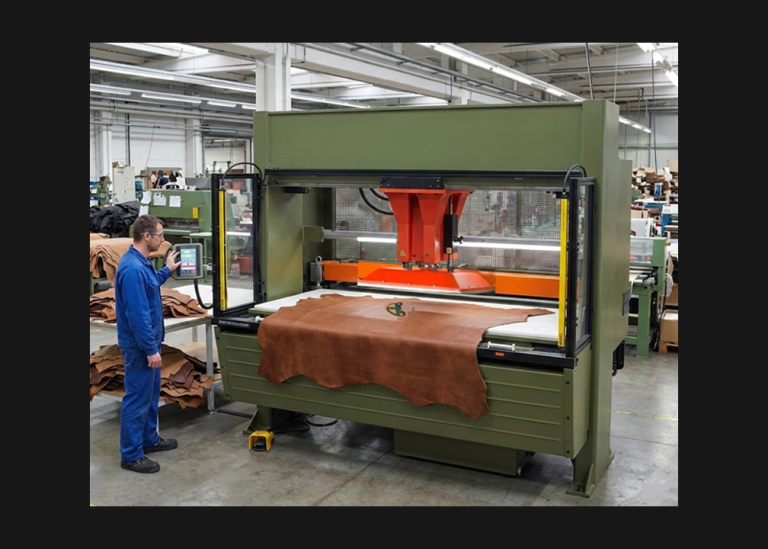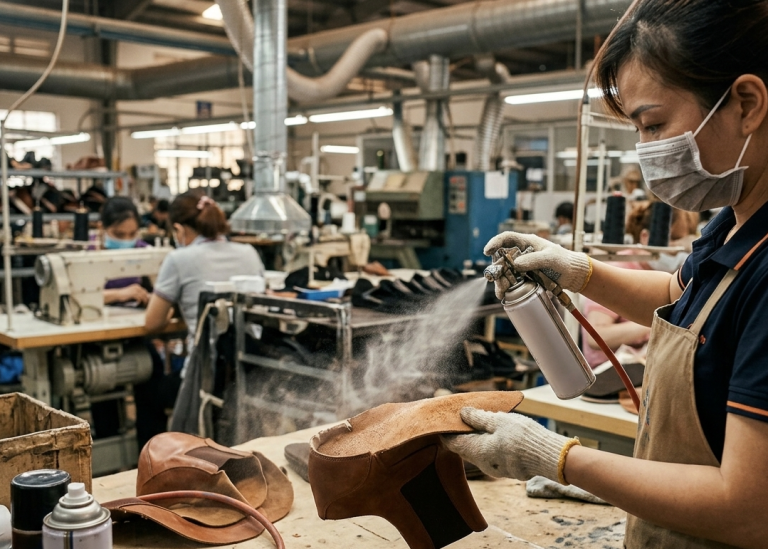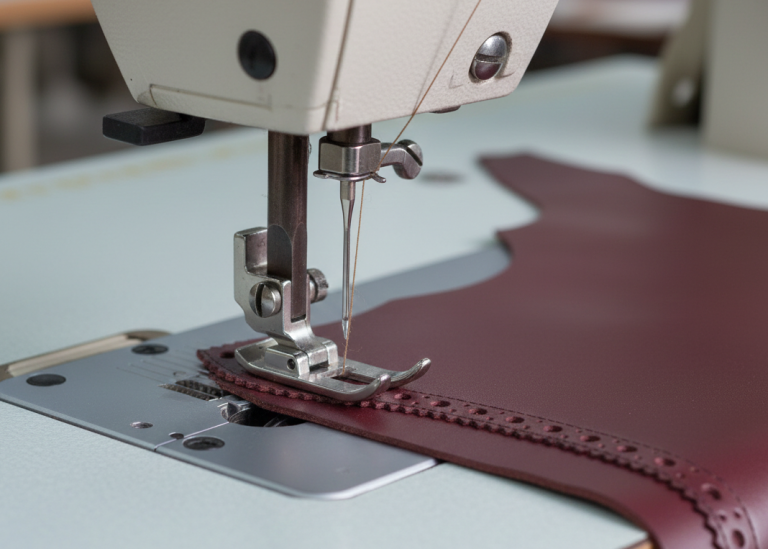
Component Embroidery in Footwear Manufacturing–Stitching Process Series
Component embroidery is a specialized value-add process used in footwear manufacturing to enhance aesthetics, branding, and functional reinforcement on upper components. It is widely applied across sports, casual, and lifestyle footwear categories where visual identity and precision detailing are critical.
Embroidery Types Used in Footwear Components
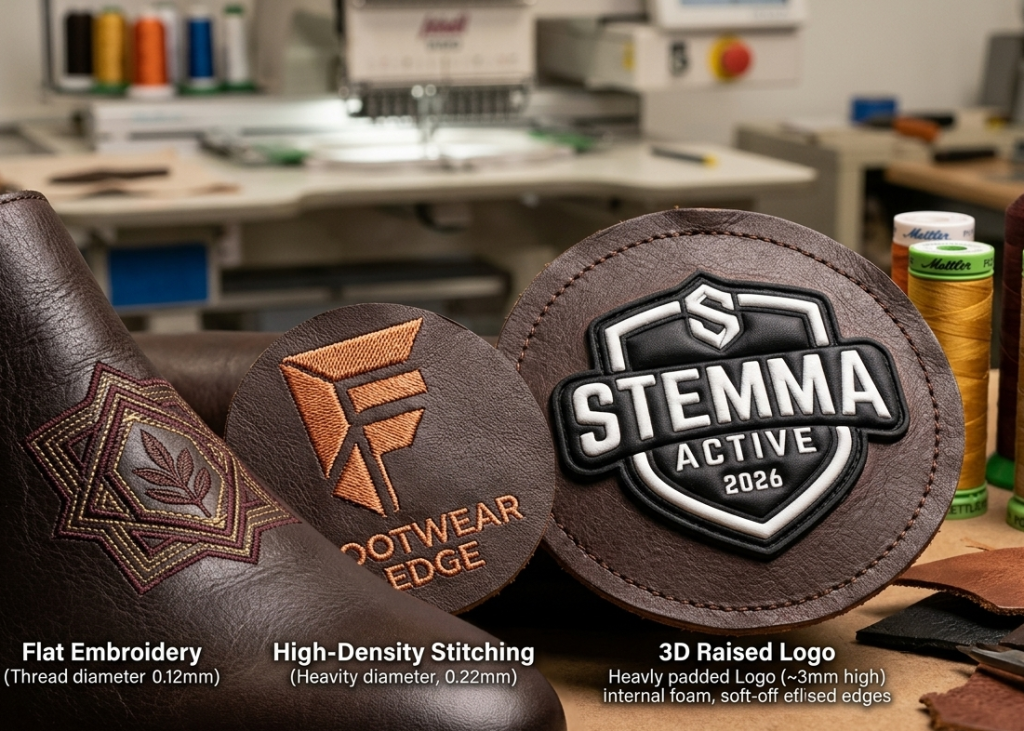
Embroidery in footwear involves different stitch formations and design styles applied on cut components before stitching assembly. The selection depends on design requirements, material type, and production feasibility.
Flat embroidery is the most common type, where stitches lie smoothly on the surface, ensuring clean and consistent design visibility. On the other hand, high-density embroidery increases stitch count to create bold, textured visuals. Furthermore, 3D or raised embroidery uses foam or multiple stitch layers to achieve a raised effect, often seen in logos. Additionally, applique embroidery combines fabric overlays stitched onto the base material, creating contrast and layered design aesthetics.
From a production perspective, each type requires specific machine settings, thread selection, and digitization accuracy to maintain consistency across bulk production.
Key Control Points:
- Ensure stitch density matches material strength
- Select correct needle size based on material thickness
- Validate thread type (polyester/nylon) for durability
- Confirm design scalability for bulk production
Pro Tip : Standardize machine settings by material category
Materials Suitable for Component Embroidery
Embroidery can be applied to a wide range of footwear upper materials, provided the material can withstand needle penetration and stitch tension without distortion.
Leather requires controlled stitching to avoid tearing or visible needle marks, especially in softer grades. Synthetic materials like PU and microfiber are more stable but require heat and tension control to prevent surface damage. Mesh and textile uppers are commonly used for embroidery due to their flexibility, but they require proper backing support to avoid puckering.
Additionally, laminated or coated materials need careful evaluation because embroidery may damage the top layer or affect adhesion properties.
Key Control Points:
- Use backing material for thin or stretch fabrics
- Check needle penetration impact on coated surfaces
- Maintain tension control to avoid distortion
- Pre-test embroidery on each material batch
Pro Tip : Maintain needle change frequency (every 8–10 hours production)
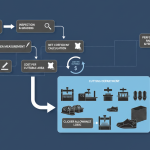
Embroidery Digitizing Process
Digitizing converts design artwork into machine-readable stitch data, which directly controls embroidery quality and consistency.
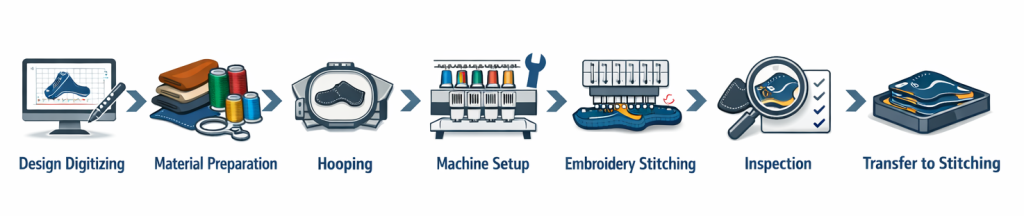
The process begins with design input, where logos or patterns are converted into stitch paths using specialized software. Then, stitch types (satin, fill, run stitch) are assigned based on design requirements. Proper sequencing ensures efficient machine operation and minimizes thread breaks. Additionally, parameters such as stitch density, direction, and underlay are optimized to maintain shape stability.
A well-digitized file ensures smooth production, minimal thread breakage, and consistent output across multiple machines.
Key Control Points:
- Optimize stitch direction to reduce distortion
- Maintain balanced stitch density
- Sequence design for minimum thread changes
- Validate digitized file through sample run
Pro Tip : Use thread lubrication for high-speed machines
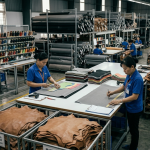
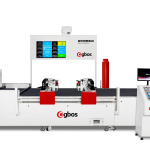
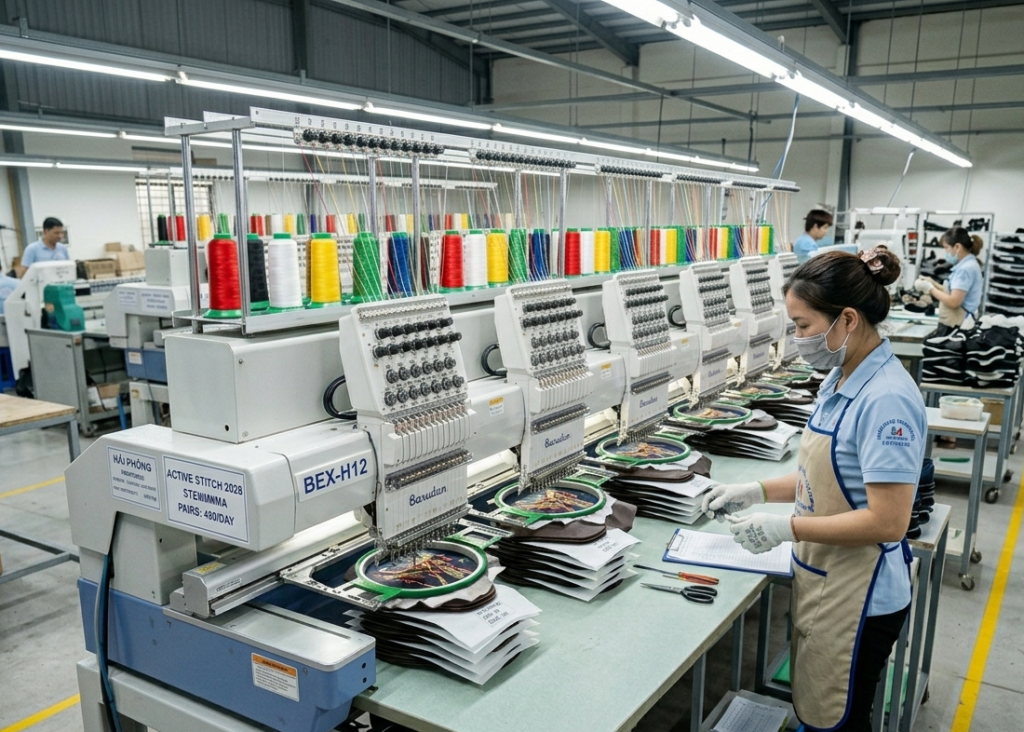
Embroidery Machine Setup and Operation
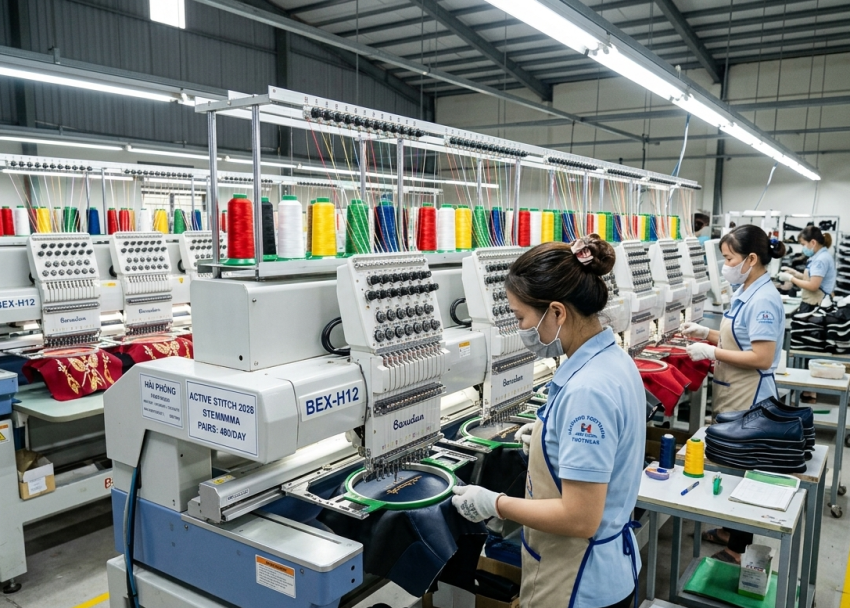
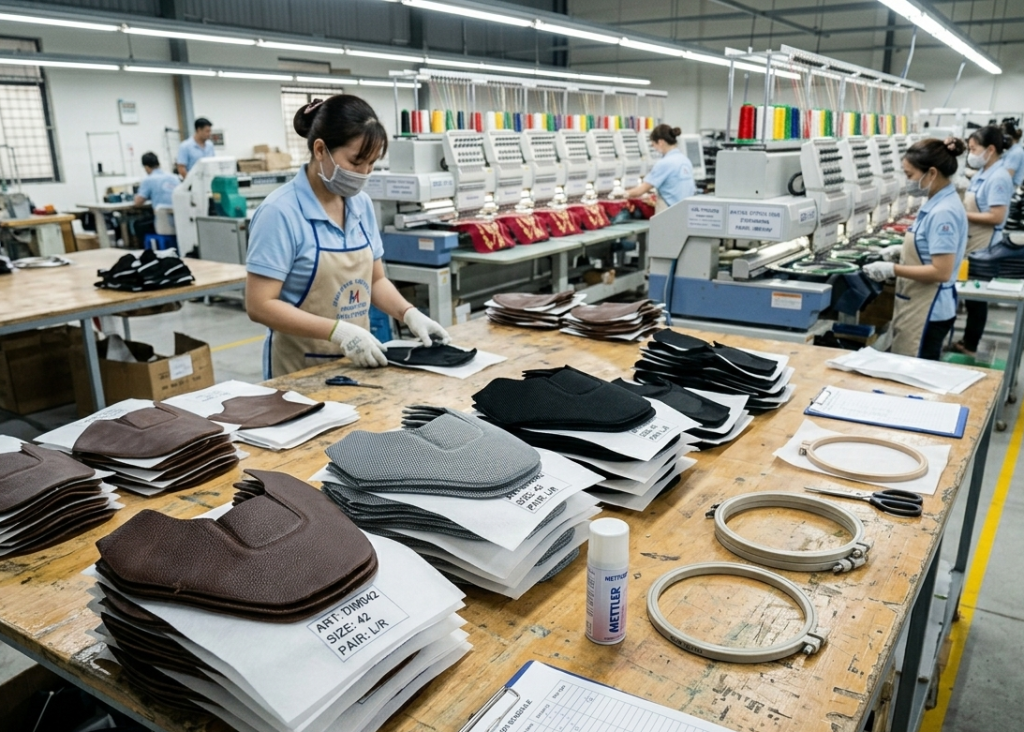
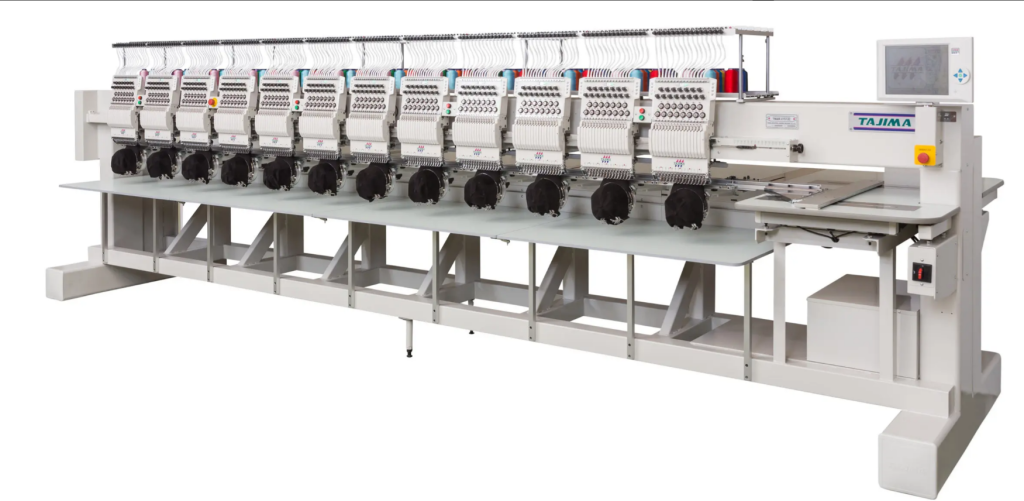
Embroidery machines used in footwear factories are typically multi-head computerized systems designed for high-volume production.
The setup process starts with hooping the component along with backing material to ensure stability during stitching. Then, threads are loaded according to design requirements, and machine parameters such as speed, tension, and stitch count are configured. Operators must ensure correct alignment of the component to avoid design misplacement.
During operation, machines run automated stitching cycles, but continuous monitoring is required to detect thread breaks, needle issues, or alignment deviations.
Key Control Points:
- Ensure proper hooping without wrinkles
- Maintain correct thread tension settings
- Align component accurately before stitching
- Monitor machine for thread breakage
Pro Tip : Avoid maximum speed for complex designs
Embroidery Placement and Alignment on Components
Accurate placement of embroidery on footwear components is critical for maintaining design consistency and brand identity.
Placement is usually guided by marking references or templates provided during the cutting or marking process. Components must be positioned precisely in the embroidery frame to ensure uniformity across left and right pairs. Any deviation can result in rejection or rework.
Additionally, alignment becomes more critical in multi-component designs where embroidery must match across panels during final assembly.
Key Control Points:
- Use positioning templates or laser guides
- Verify left-right symmetry alignment
- Maintain consistent placement across sizes
- Cross-check placement with design specifications
Expert Insight: Maintain spare parts inventory for critical machines
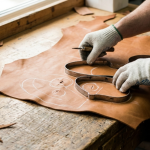
Quality Inspection in Embroidery Process
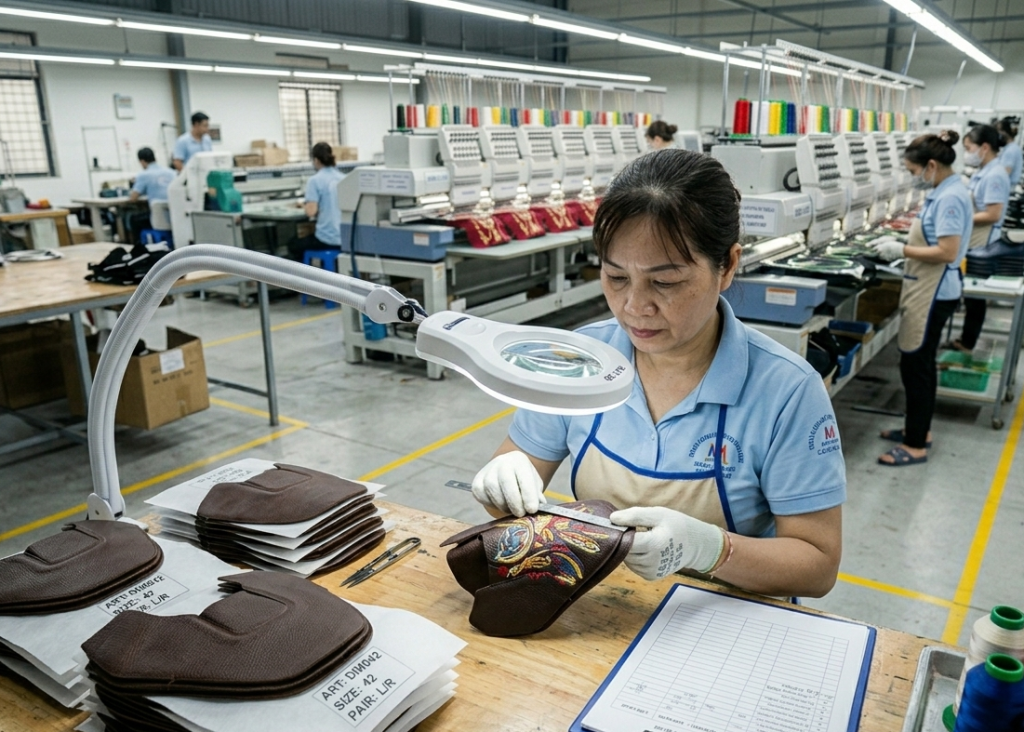
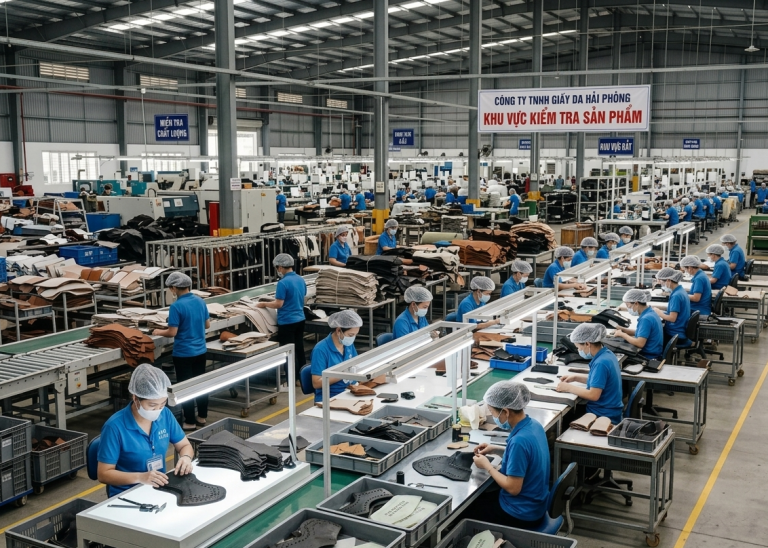
Inspection ensures that embroidered components meet design and quality standards before moving to stitching assembly.
The inspection process includes checking stitch consistency, thread color accuracy, design alignment, and surface quality. Defects such as thread breaks, loose stitches, puckering, or distortion must be identified and corrected immediately. Additionally, operators must verify that embroidery does not damage the base material.
Inline inspection during production helps reduce bulk rejection and ensures smooth downstream processing.
Key Control Points:
- Check for thread breakage and loose stitches
- Inspect design alignment and symmetry
- Identify fabric puckering or distortion
- Ensure color consistency as per standard
Expert Insight: Calibrate tension systems weekly
Common Defects and Their Impact
Incorrect marking directly affects stitching quality and final product appearance. Common defects include:
- Misaligned stitch lines
- Incorrect seam allowance
- Invisible or faded markings
- Double or overlapping lines
These defects lead to rework, rejection, and productivity loss. Therefore, marking accuracy must be controlled strictly.
Key Control Points
- Conduct inline inspection after marking
- Reject defective markings immediately
- Maintain operator accountability
- Track defect trends for improvement
Expert Insight: Digitize designs considering material behavior
Common Defects in Footwear Embroidery
Embroidery defects can impact both aesthetics and durability, making early detection and control essential.
Puckering occurs due to improper tension or lack of backing support. Thread breakage is often caused by incorrect machine settings or poor-quality thread. Misalignment results from incorrect hooping or positioning errors. Additionally, needle damage can create visible holes or weaken the material.
Understanding root causes helps in implementing corrective actions and maintaining consistent production quality.
Key Control Points:
- Adjust tension to prevent puckering
- Use high-quality threads to reduce breakage
- Ensure accurate hooping and alignment
- Replace worn needles regularly
Expert Insight:
Use SPC (
Integration of Embroidery with Stitching Process
Embroidery is completed before stitching assembly, making it a critical pre-stitching operation in footwear manufacturing.
After embroidery, components are inspected and transferred to the stitching section. Proper handling is required to prevent damage to embroidered areas. Additionally, embroidery should not interfere with seam allowances or stitching lines during assembly.
Coordination between embroidery and stitching teams ensures smooth workflow and avoids production delays.
Key Control Points:
- Maintain proper handling to avoid damage
- Ensure embroidery does not overlap seam areas
- Coordinate with stitching team for compatibility
- Verify components before dispatch to stitching
Expert Insight: Track machine efficiency per shift for improvement
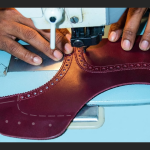
Embroidery Machine Specifications, Materials Handling & Technical Setup
Industrial embroidery performance depends on machine configuration, material compatibility, and correct selection of needles and threads. Proper technical understanding ensures productivity and quality consistency.
Machine Configuration and Capacity
Modern embroidery machines are available in single-head and multi-head configurations. Multi-head machines significantly improve productivity by running identical designs simultaneously.
Typically, machines range from 1 head (sampling) to 12–56 heads (mass production). Needle configurations usually vary from 9 to 15 needles per head, allowing multiple thread colors without manual change.
Production speed ranges from 600 to 1,200 stitches per minute (SPM) depending on machine model and material type. However, actual operating speed is often optimized lower (700–900 SPM) to maintain quality and reduce thread breakage.
Machine Efficiency and Production Output
Efficiency depends on machine uptime, design complexity, and operator skill. Multi-head machines can achieve 80–90% efficiency in stable production environments.
Factors affecting efficiency include thread breakage frequency, design stitch count, machine maintenance, and material handling. Automated thread trimming and color change features improve cycle time.
Material Handling and Machine Adaptability
Different materials require different machine settings, but separate machines are generally NOT required. Instead, adjustments are made in:
- Needle type
- Thread tension
- Speed
- Backing material
However, for heavy leather or technical materials, factories may prefer dedicated machines with stronger needle penetration capability and reinforced components.
Needles Used in Footwear Embroidery
Needle selection is critical for avoiding damage and ensuring clean stitch formation.
Common needle types include:
- Sharp point needles – for woven fabrics and synthetics
- Ballpoint needles – for knitted or mesh materials
- Leather needles (cutting point) – for genuine leather
Needle sizes typically range from #65 to #90, selected based on material thickness and thread type.
Threads Used in Footwear Embroidery
Thread selection directly impacts durability, appearance, and production efficiency. Common thread types:
- Polyester thread – most widely used due to strength and colorfastness
- Nylon thread – high strength, used for heavy-duty applications
- Rayon thread – better shine, used for premium aesthetics
- Specialty threads – metallic, reflective, UV-resistant for sports footwear
Additionally, bonded threads may be used for improved abrasion resistance in high-stress areas.
Special Considerations for Footwear Embroidery
Footwear components undergo bending, abrasion, and environmental exposure. Therefore, embroidery must meet higher durability standards compared to garments. Special practices include:
- Use of backing and topping materials to stabilize fabric
- Reinforced stitching for high-stress zones
- Avoiding embroidery in flex zones of uppers
- Heat and moisture resistance validation
Key Control Points:
- Match needle type with material to avoid damage
- Optimize machine speed based on stitch density
- Use high-quality threads to reduce breakage
- Maintain consistent backing material selection
Some Global Embroidery Machine Suppliers
Industrial embroidery machines used in footwear manufacturing are dominated by globally established brands. Country of origin often indicates engineering strength, durability standards, and after-sales ecosystem.
Tajima Industries Ltd. (Japan)
Tajima is a Japan-based global leader in industrial embroidery machines, known for precision engineering, high-speed performance, and automation. Widely used in large-scale footwear factories for consistent output. https://www.tajima.com
Barudan Co., Ltd. (Japan)
Barudan, headquartered in Japan, manufactures robust embroidery machines with excellent stitch quality and durability. Preferred for complex designs and long production runs in premium footwear manufacturing. https://www.barudan.co.jp
ZSK Stickmaschinen GmbH (Germany)
ZSK is a German manufacturer specializing in advanced and technical embroidery machines. Known for modular systems and innovation, suitable for high-precision and specialized footwear applications. https://www.zsk.de
SWF – SunStar Precision (South Korea)
SWF from South Korea produces high-speed, cost-effective embroidery machines. Popular in Asian footwear factories due to user-friendly operation and reliable performance in bulk production environments. https://www.sunstar.co.kr
HappyJapan Inc. (Japan)
HappyJapan is a Japanese company offering compact and reliable embroidery machines. Known for stable stitching performance, suitable for mid-scale footwear production and flexible design requirements. https://www.happyjpn.com
Brother Industries Ltd. (Japan)
Brother, a Japan-based multinational, provides computerized embroidery machines with strong software integration. Their systems deliver precision and ease of use across industrial and commercial applications. https://www.brother-usa.com
Ricoma International Corporation (USA)
Ricoma, based in the USA, offers affordable embroidery machines with global distribution. Widely adopted by small to mid-scale footwear manufacturers seeking cost-effective production solutions. https://www.ricoma.com
Feiya Group (China)
Feiya is a China-based large-scale embroidery machine manufacturer. Known for multi-head machines at competitive pricing, increasingly used in mass footwear production across Asia. http://www.feiya.com
Dahao (China – Control Systems Provider)
Dahao, headquartered in China, develops embroidery machine control systems used by multiple OEM manufacturers. Recognized for stable control technology and efficient machine performance. http://www.dahaotech.com
Promaker / Highland Embroidery (China)
Promaker (Highland brand), based in China, supplies industrial embroidery machines globally. Known for cost-efficient solutions and wide adoption in bulk footwear production setups. https://www.highlandemb.com
Frequently Asked Questions – FAQs
1. Can embroidery be done on all footwear materials?
No, materials must withstand needle penetration without damage.
2. What is the most common embroidery issue?
Puckering due to improper tension or lack of backing.
3. Why is digitizing important?
It ensures consistent stitch quality and reduces machine errors.
4. When is embroidery done in the process?
Before stitching assembly.
5. How to avoid thread breakage?
Use correct tension, quality thread, and proper machine settings.
6. Is embroidery suitable for mass production?
Yes, with multi-head machines and standardized processes.

Explore other Stitching Process Series
- Stitching Process in Footwear Manufacturing: From Cutting to Closing Assembly in Shoe Production
- Cutting/Clicking in Footwear Stitching – Stitching Process Series
- Cut Component inspection after cutting/clicking – Stitching Process Series
- Cut Component Pairing & Match Marking After Cutting / Clicking-Stitching Process Series
- Cut Component Stamping After Cutting / Clicking – Stitching Process Series
- Cut Component Bundling After Cutting/Clicking-Stitching Process Series
- Component Marking After Cutting/Clicking–Stitching Process Series
- Component Branding in Footwear Manufacturing–Stitching Process Series