Feeding to Assembly Line Operations in Outsole Process: Outsole (Stock Fitting) Assembly Series
In the previous blog, Kitting Operations in Outsole Process, we discussed how all required outsole components are collected, verified, and organized into complete production kits before manufacturing begins. Once each kit is approved, the next critical step is feeding it to the assembly line.
Although this activity may seem like simple material movement, it directly influences production efficiency, line balancing, inventory control, and product quality. An organized feeding system ensures that every workstation receives the correct outsole kit in the required quantity and production sequence. Consequently, operators can focus on assembly instead of waiting for materials or searching for missing components.
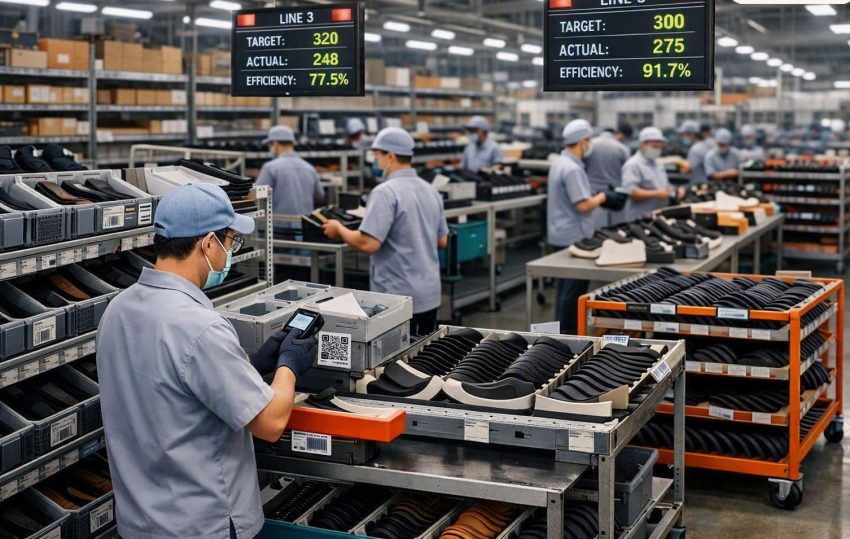
Modern footwear factories increasingly replace large batch transportation with lean feeding systems that support continuous production flow. Whether using trolleys, flow racks, assembly carts, or scheduled replenishment, the objective remains the same—deliver the right materials to the right place at the right time while minimizing waste.
Feeding to the Assembly Line
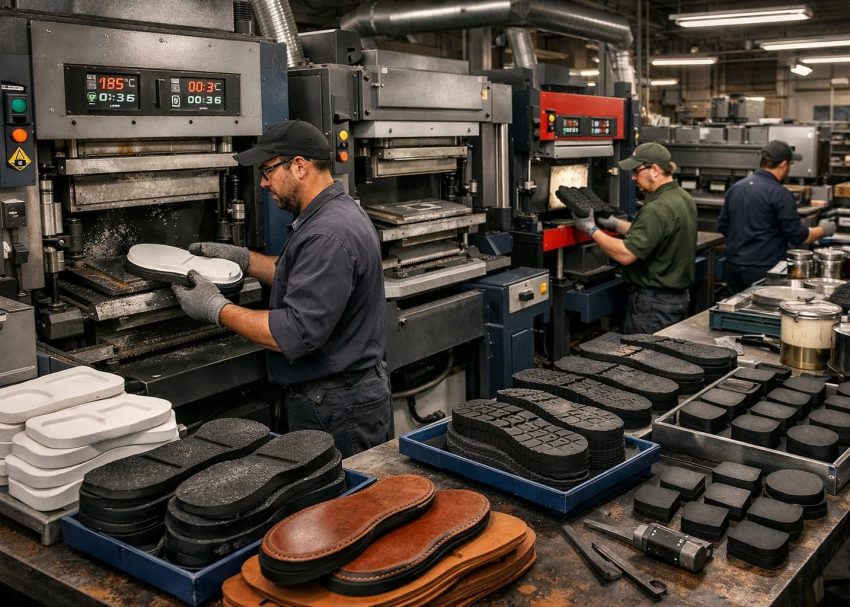
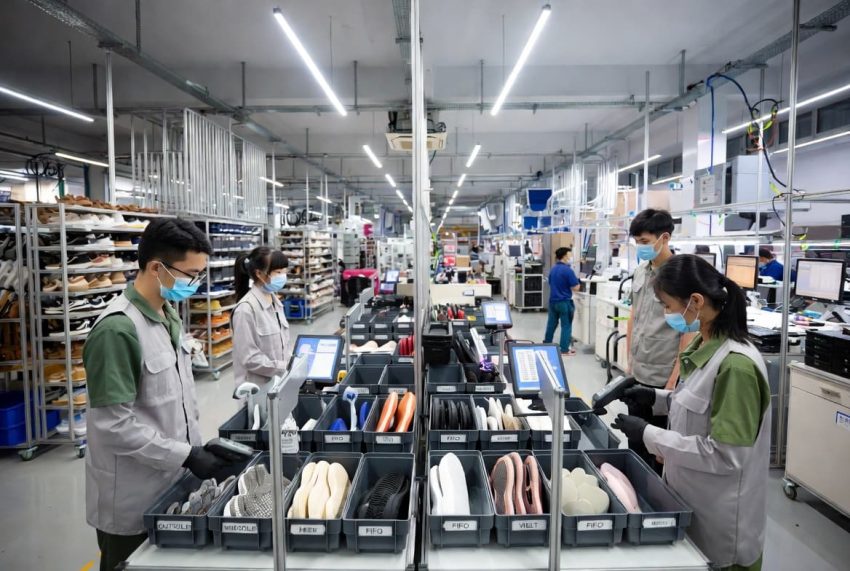
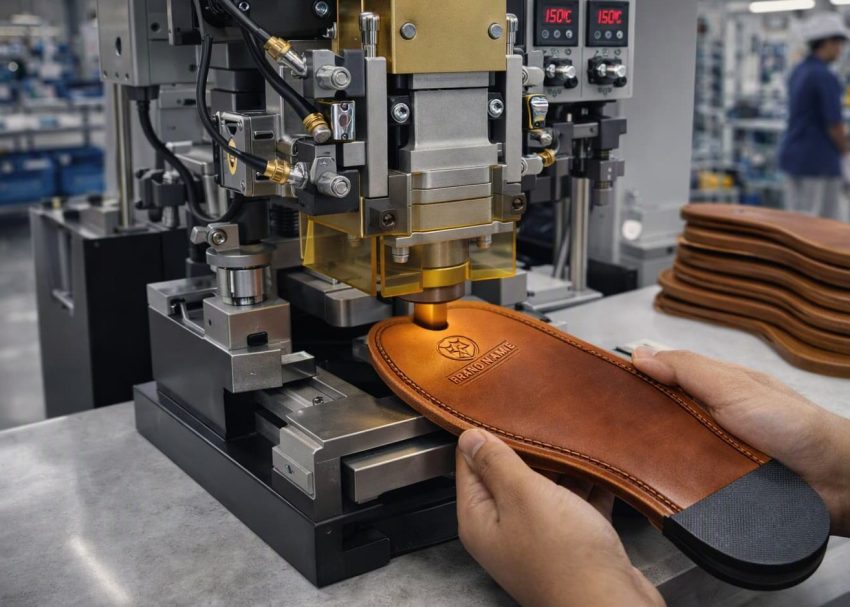
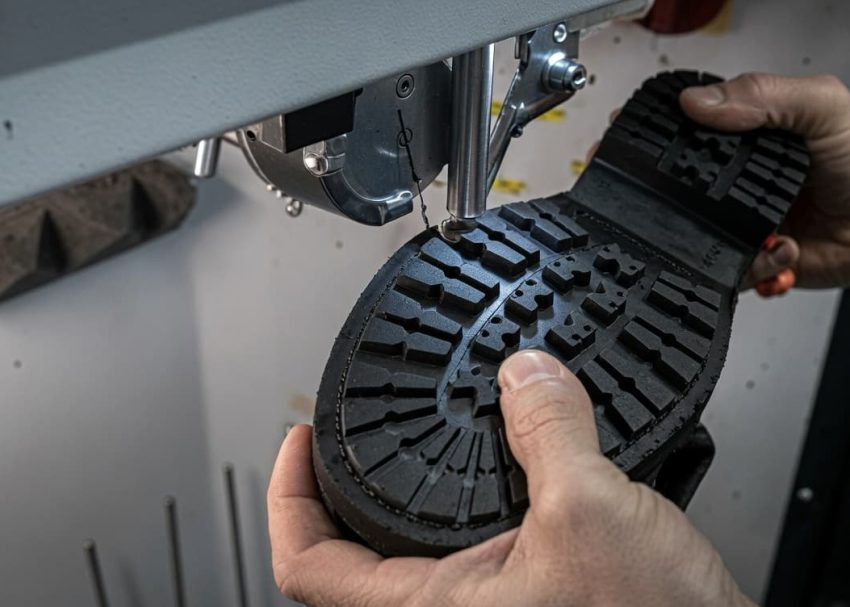
After stock fitting prepares complete outsole kits, they are transferred to the designated assembly line according to the daily production schedule. Each kit normally contains all components required to manufacture one outsole pair, including outsoles, Midsoles, accessories, shanks, and supporting production documents where applicable.
The feeding operation forms the connection between material preparation and production. Therefore, its efficiency directly affects assembly output, operator productivity, and inventory accuracy. Delayed or incorrect deliveries can interrupt production, increase work-in-progress (WIP), and create unnecessary handling.
To avoid these issues, factories establish standardized feeding procedures. Material handlers verify the production order, quantity, size range, and destination before transporting each kit. They also ensure that materials remain protected from dust, moisture, deformation, and accidental damage during movement.
Instead of delivering several hours of production at once, lean manufacturing encourages smaller and more frequent replenishment cycles. This approach keeps only the required quantity beside the production line, reduces floor congestion, and improves responsiveness to production schedule changes.
Expert Tip: Standardize feeding routes to reduce transportation time.
Common Feeding Methods
The choice of feeding method depends on factory size, production volume, available floor space, and automation level. Regardless of the system used, the objective is to maintain continuous material flow while minimizing handling time and production interruptions.
Trolleys
Trolleys remain the most common feeding method in footwear factories because they are economical, flexible, and easy to operate. Material handlers load completed outsole kits onto multi-level trolleys and transport them directly from the stock fitting area to the assembly line.
Clearly identified shelves help separate production orders, while lockable wheels improve safety during loading and unloading. Daily inspection of trolley condition is essential to prevent equipment-related delays.
Key Control Points
- Arrange kits according to production sequence.
- Secure materials during transportation.
- Maintain clear identification labels.
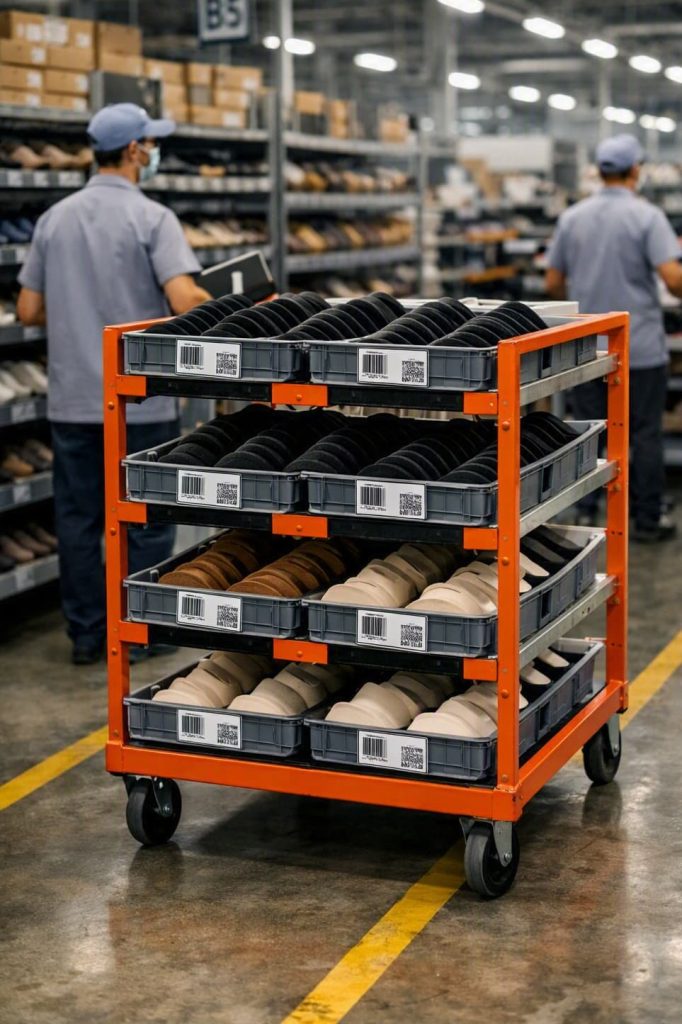
Expert Tip: Use barcode or QR-code labels to improve material accuracy.
Flow Racks
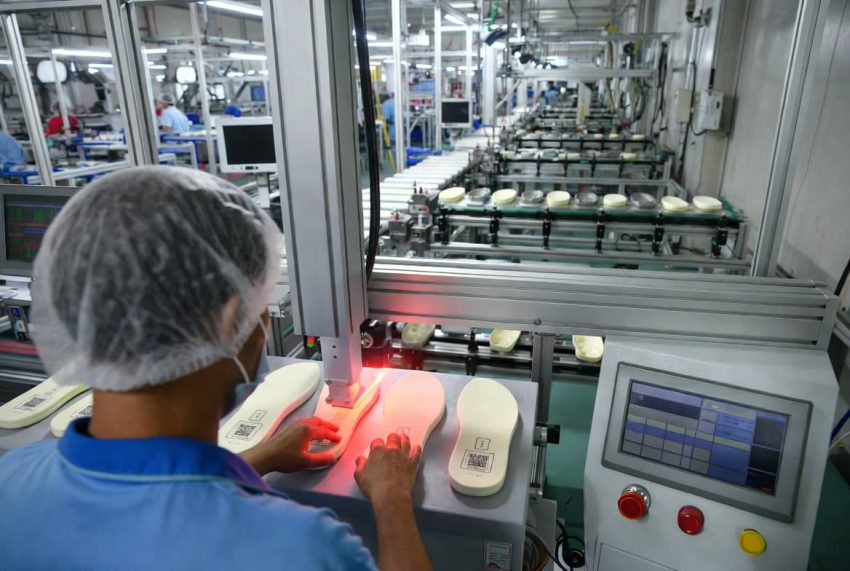
Flow racks support lean manufacturing by allowing materials to move through gravity-fed roller tracks. Feeding personnel replenish materials from the rear, while assembly operators remove them from the front.
This arrangement naturally supports First-In, First-Out (FIFO) and minimizes unnecessary operator movement.
Flow racks also improve inventory visibility because supervisors can immediately identify shortages or replenishment requirements. They are particularly effective for high-volume outsole assembly lines with repetitive production.
Key Control Points
- Load materials from the rear only.
- Remove materials from the front.
- Keep roller tracks clean and unobstructed.
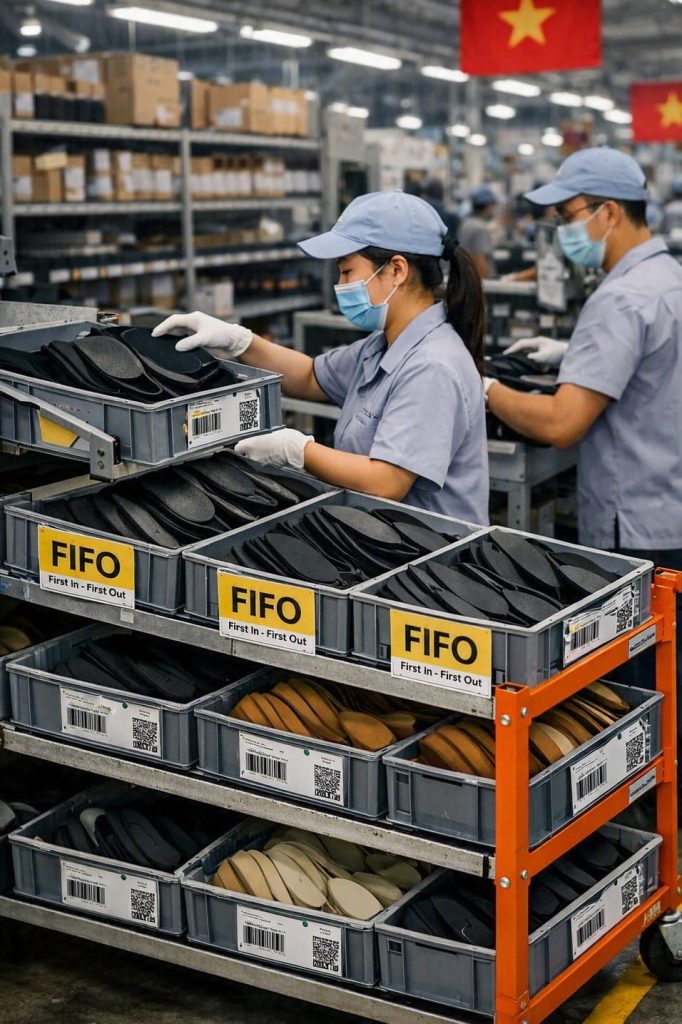
Expert Tip: Schedule replenishment based on hourly production instead of shift quantities.
Assembly Carts
Assembly carts are designed to deliver outsole kits directly to individual workstations. Unlike standard trolleys, these carts are organized specifically for the production line and contain dedicated compartments for outsole components, accessories, production cards, and inspection documents. This organized layout enables operators to access materials quickly without interrupting the assembly process.
Many footwear factories use assembly carts as part of a lean manufacturing system. Instead of loading an entire shift’s materials, feeding personnel replenish carts at fixed intervals based on the actual production rate. Consequently, inventory beside the line remains low while production continues without interruption.
Assembly carts also improve workplace ergonomics. Components remain within easy reach, reducing unnecessary bending, stretching, and walking. In addition, standardized compartment layouts simplify operator training and minimize the risk of material mix-ups.
Key Control Points
- Arrange materials in standardized locations.
- Verify production order before replenishment.
- Inspect cart wheels and locking mechanisms daily.
- Keep carts clean and clearly identified.
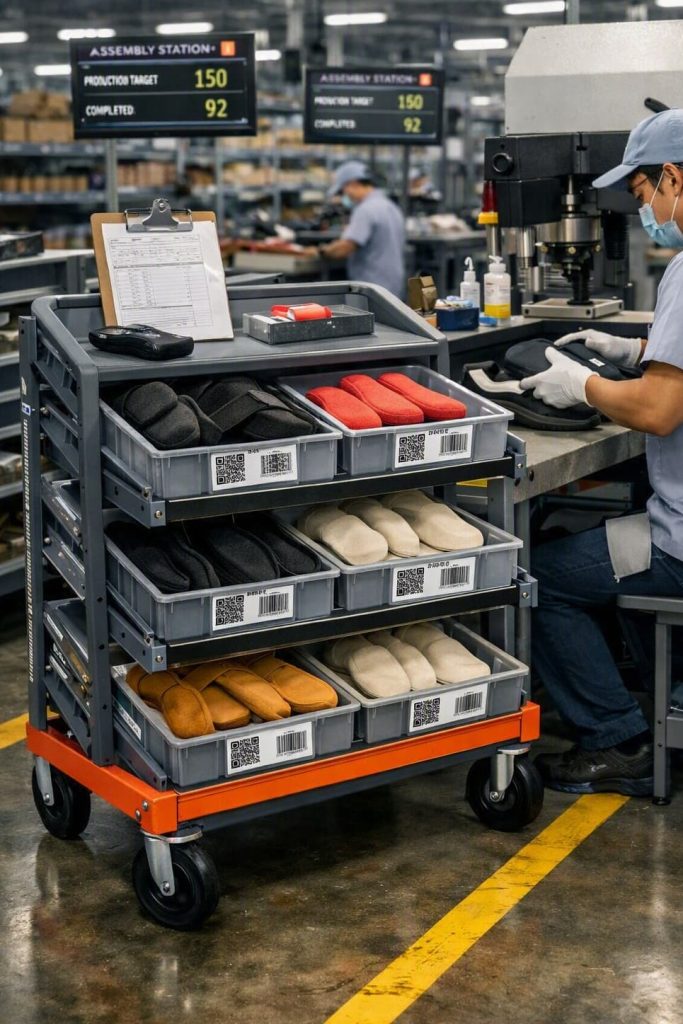
Expert Tip: Keep workstations free from excess inventory to support lean manufacturing.
Lean Feeding Systems
Lean feeding systems focus on delivering the right material, in the right quantity, at the right time. Instead of transporting large production batches, materials are supplied in smaller quantities according to actual consumption.
This approach reduces work-in-progress (WIP), improves inventory control, and supports continuous production flow.
Many modern footwear factories implement scheduled milk-run systems, where dedicated material handlers follow fixed routes at predetermined intervals. During each cycle, they replenish components, collect empty containers, and verify production requirements without disrupting assembly operators.
Lean feeding also provides greater flexibility. If customer priorities or production schedules change, only a small quantity of material requires adjustment, reducing waste and preventing obsolete inventory.Key Control Points
- Replenish materials according to production demand.
- Maintain fixed feeding schedules.
- Remove empty containers immediately.
- Monitor Kanban or replenishment signals continuously.
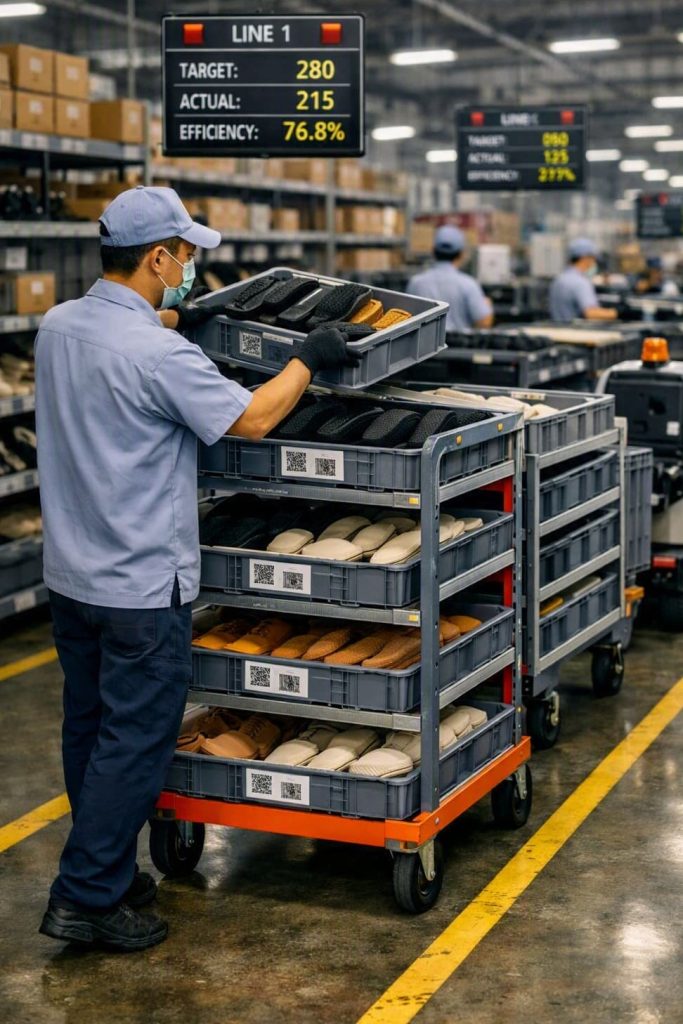
Expert Tip:
Use visual floor markings to define feeding routes and improve safety.
Measure feeding performance using KPIs such as delivery accuracy and replenishment time.
Maintaining the Correct Feeding Sequence
The feeding sequence is just as important as the materials themselves. Every outsole kit must arrive at the assembly line in the same order defined by the production schedule. Incorrect sequencing may result in line stoppages, mixed production orders, or assembly errors.
To maintain consistency, factories use production cards, barcode labels, QR codes, or Manufacturing Execution Systems (MES) to identify each kit. Material handlers verify these identifiers before dispatch, ensuring that the correct size, style, and production order reach the designated workstation.
Whenever production priorities change, supervisors should immediately update feeding instructions to avoid delivering outdated or incorrect kits.
Key Control Points
- Follow the approved production schedule.
- Verify barcode or QR code before dispatch.
- Communicate schedule changes promptly.
- Remove obsolete kits from the feeding area.
Expert Tip:
Introduce barcode scanning to improve inventory accuracy and traceability.
Train material handlers on production priorities and quality requirements.
Protecting Materials During Feeding
Proper material protection prevents quality defects before assembly begins. Outsole components can become contaminated by dust, moisture, oil, or physical damage during transportation if they are not handled correctly.
Material handlers should avoid excessive stacking, secure components during transport, and use clean trolleys or assembly carts. Dedicated transportation routes further reduce the risk of collisions with forklifts or other moving equipment.
Environmental conditions also require attention. Rubber, EVA, and adhesive-related materials should be protected from direct sunlight, excessive heat, and high humidity to preserve their physical properties.
Key Control Points
- Prevent contamination from dust and oil.
- Avoid overloading transportation equipment.
- Use designated material handling routes.
- Store materials under suitable environmental conditions.
Expert Tip: Conduct weekly audits of feeding equipment and procedures.
FIFO Compliance and Production Traceability
First-In, First-Out (FIFO) ensures that older approved materials are consumed before newer production lots. Maintaining FIFO throughout the feeding process prevents material ageing, improves inventory rotation, and supports consistent product quality.
Equally important is production traceability. Every outsole kit should carry clear identification, including production order, model, size range, color, material lot number, inspection status, and destination workstation. Barcode or QR-code systems simplify real-time tracking and make it easier to investigate quality issues if they occur.
Key Control Points
- Feed older approved materials first.
- Clearly identify every production kit.
- Record material movement accurately.
- Audit FIFO compliance regularly.
Expert Tip: Encourage regular communication between production planning, warehouse, and assembly teams
Conclusion
Feeding to the assembly line is a critical link between stock fitting and outsole assembly. A well-organized feeding system ensures that every production kit reaches the correct workstation in the right quantity and sequence, allowing operators to maintain continuous production without unnecessary delays.
In the next blog, Priming Operations in Outsole Process: Outsole (Stock Fitting) Assembly Series, we will examine how surface priming enhances adhesive bonding, the different primer types used for outsole materials, application methods, drying requirements, and quality control practices before outsole attachment.
Frequently Asked Questions (FAQs)
It is the process of transferring prepared outsole kits from the stock fitting area to the assembly line in the correct quantity, sequence, and time to support uninterrupted production.
Lean feeding reduces work-in-progress (WIP), improves inventory control, minimizes material handling, and allows faster response to production schedule changes.
The choice depends on production volume and factory layout. Trolleys are ideal for flexible operations, while flow racks and lean feeding systems are better suited for high-volume production.
FIFO ensures older approved materials are consumed before newer ones, preventing material ageing, reducing waste, and maintaining consistent product quality.
Factories use production cards, barcodes, QR codes, or Manufacturing Execution Systems (MES) to record every material movement and link each outsole kit to its production order.
Typical issues include delivering the wrong production order, violating FIFO, poor material protection, delayed replenishment, and inaccurate kit identification.
Important KPIs include:
Material delivery accuracy
Replenishment cycle time
Line stoppages due to material shortages
FIFO compliance
Material damage rate
Feeding productivity
Inventory accuracy