Padding Operations in Outsole Process: Outsole (Stock Fitting) Assembly Series
In the previous blog, Edge Coloring and Waxing Operations in Outsole Process, we covered how coloring and waxing establish the required edge appearance and protection. The next important finishing stage is padding.
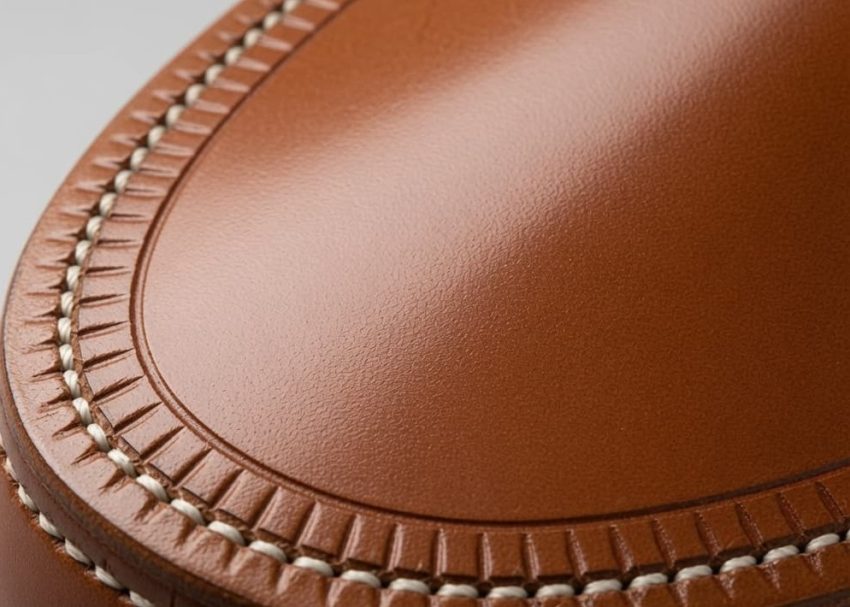
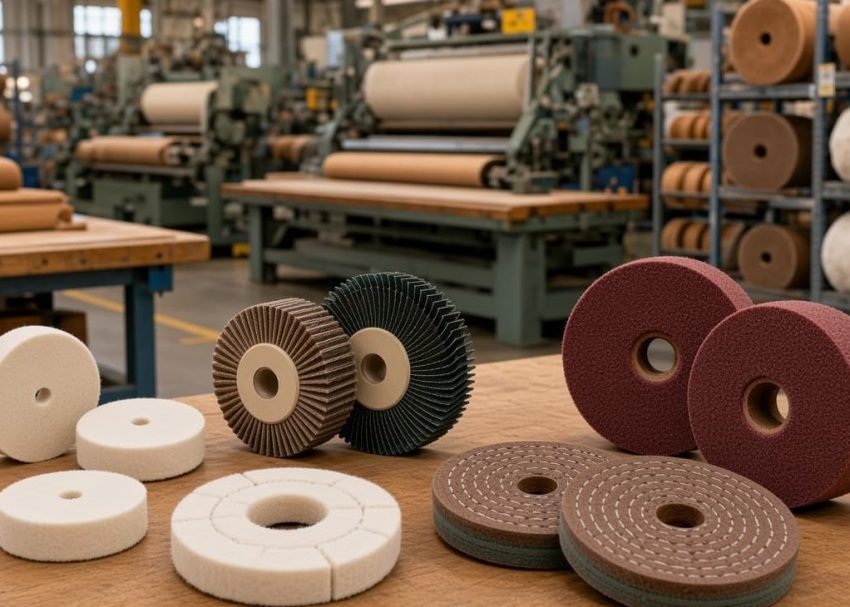
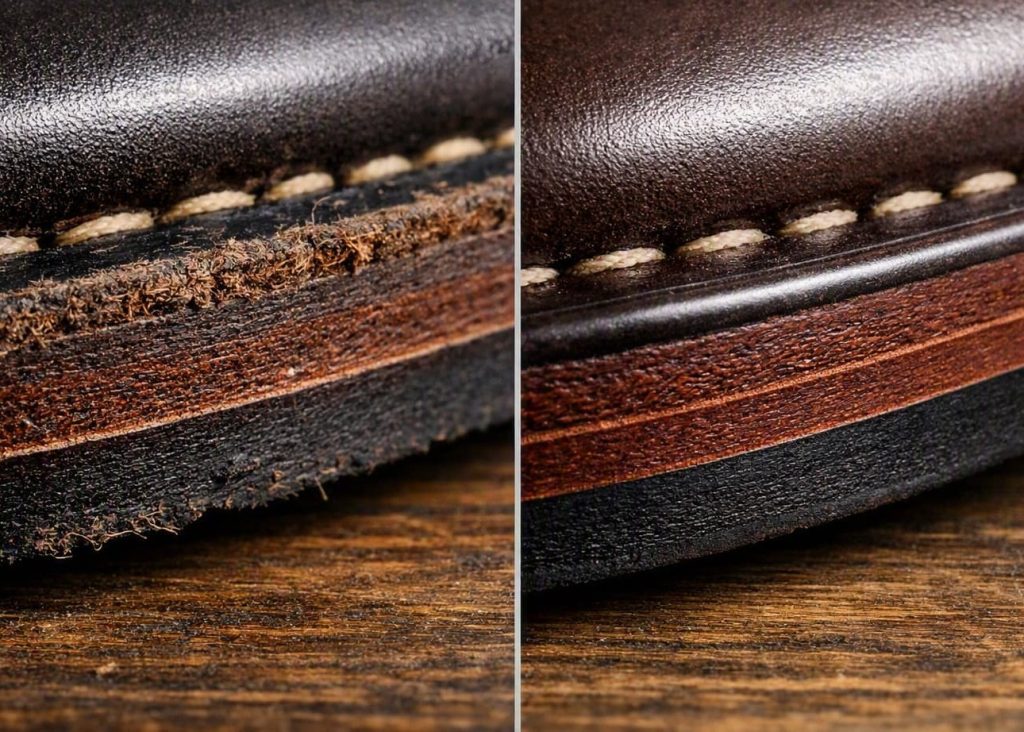
Padding mechanically compresses and smooths the leather edge using leather, felt, or cotton wheels. As a result, loose fibres become compact, the surface becomes smoother, and the edge develops the refined appearance expected in premium leather footwear.
Padding Operations
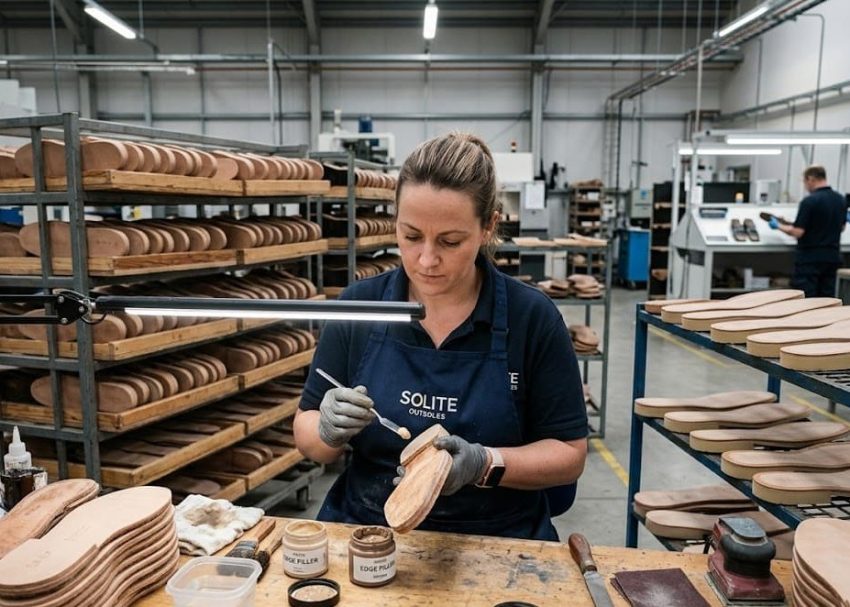
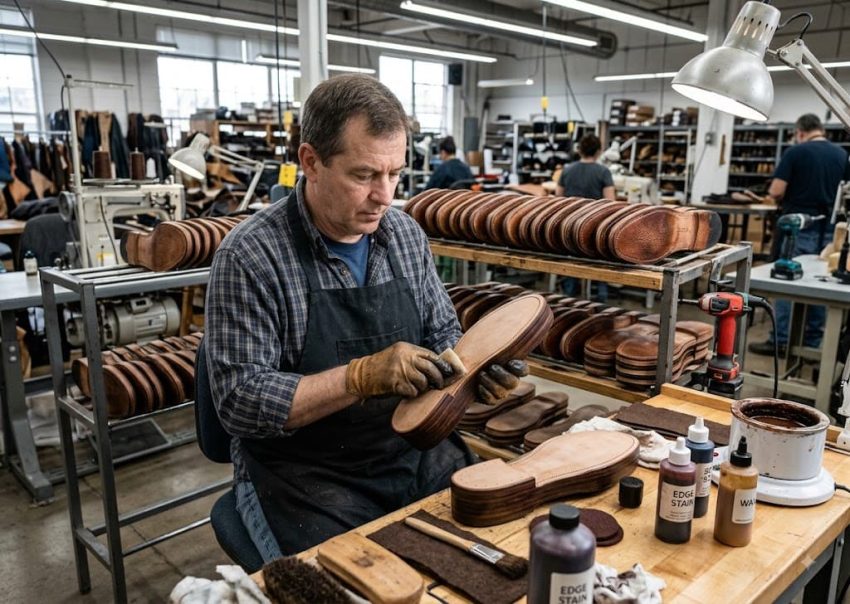
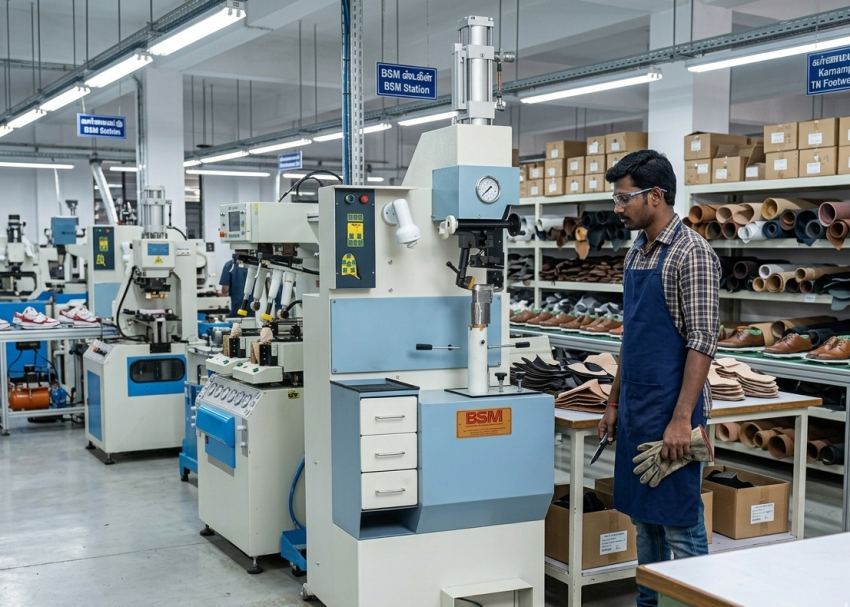
Padding is a finishing operation normally carried out after edge coloring and waxing. A rotating wheel contacts the outsole edge under controlled pressure and friction. Unlike grinding, padding does not primarily remove material. Instead, it compresses and seals surface fibres while helping distribute wax uniformly
Therefore, wheel condition, pressure, speed, and operator movement directly affect the final appearance.
Key Control Points
- Use clean and properly conditioned wheels.
- Maintain uniform pressure and movement.
- Avoid excessive heat generation.
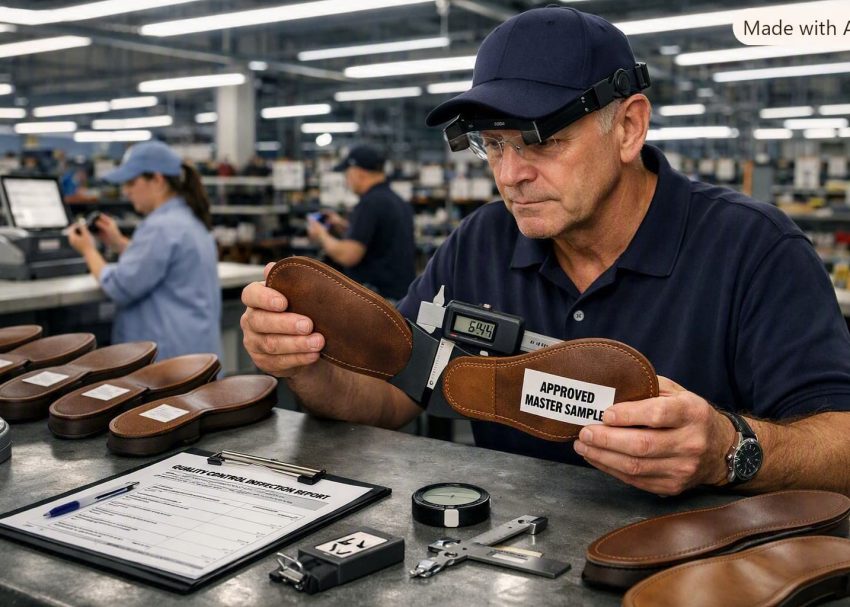
- Check the finish against an approved sample.
Expert Tip:
Maintain consistency: Standardized settings reduce differences between operators and shifts.
Leather Wheel Padding
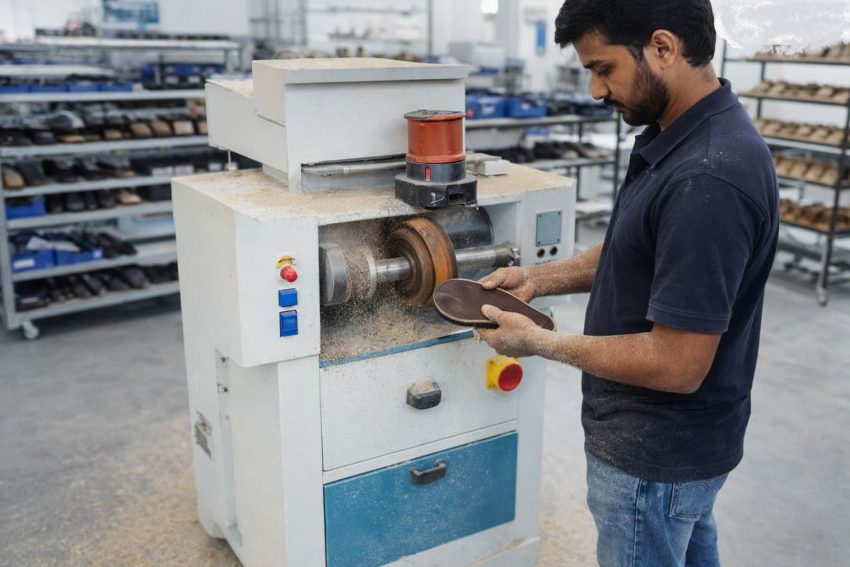
Leather wheels provide firm but slightly flexible contact and are particularly suitable for premium leather outsoles.
The wheel compresses exposed fibres and produces a smooth, natural finish while retaining the character of the leather.
Operators should move the outsole continuously across the wheel.
Holding one area against the wheel for too long can generate excessive friction and cause overheating or uneven gloss.
Key Control Points
- Maintain correct wheel condition.
- Avoid excessive contact time.
- Use separate wheels where colour contamination is possible.
- Inspect the edge after padding.
Expert Tip:
Use master samples: Keep an approved outsole sample at the workstation for direct comparison.
Felt and Cotton Wheel Padding
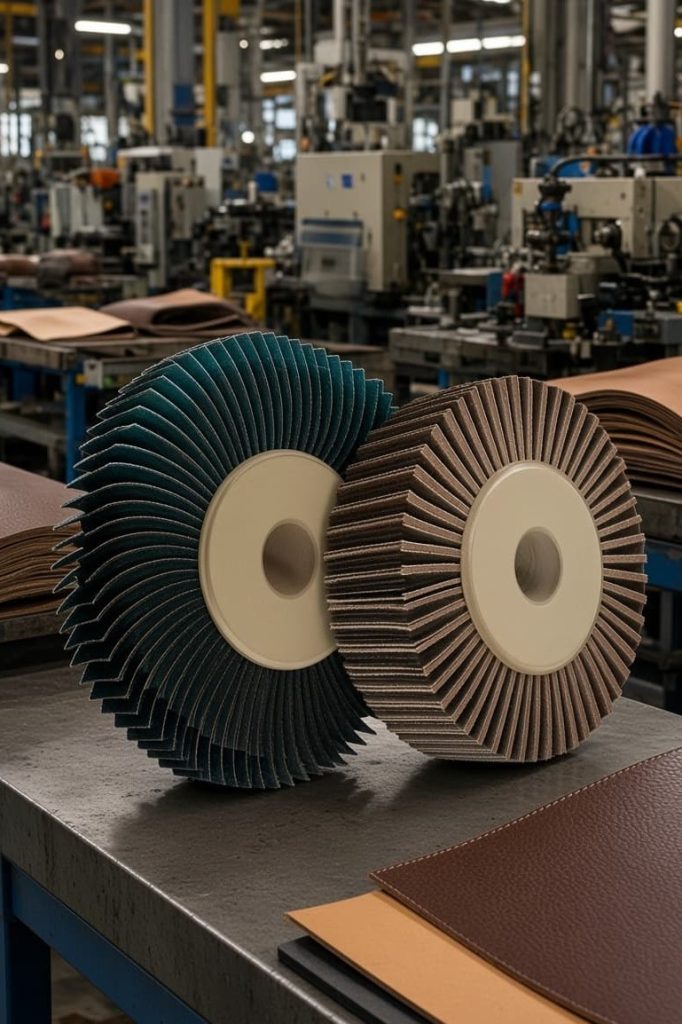
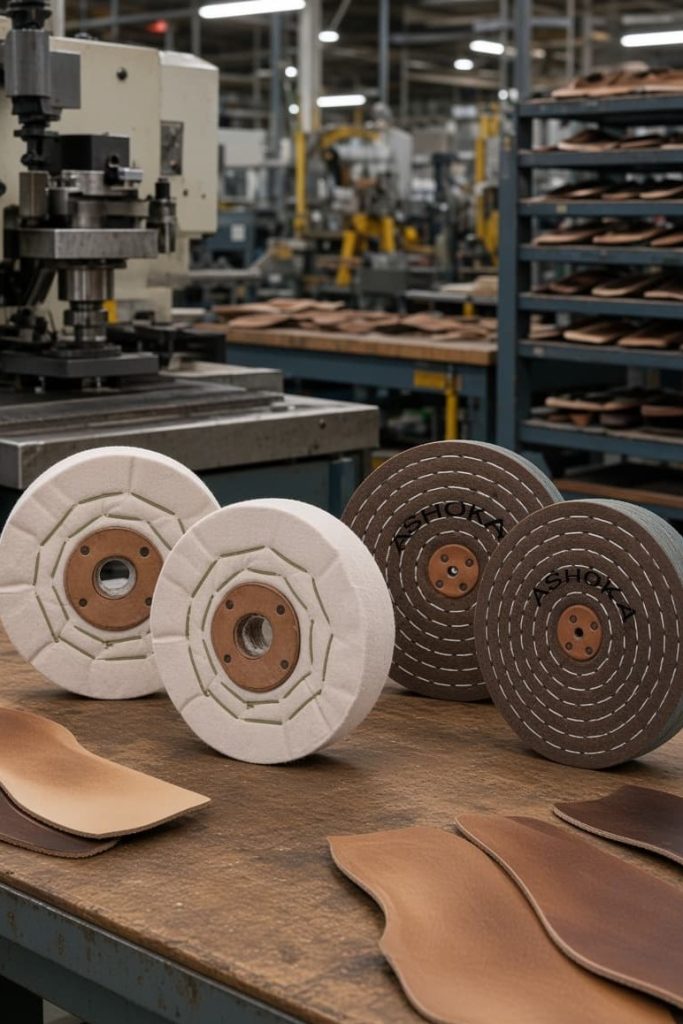
Hard felt wheels provide more uniform contact and are useful when factories require consistent production results. They can refine the edge after waxing and help distribute surface wax evenly.
Cotton wheels provide a softer final polishing action. Consequently, they are often used to improve smoothness and natural gloss after leather or felt padding. However, contaminated cotton can transfer wax, colour, or dust to another outsole.
Key Control Points
- Select wheel hardness according to the required finish.
- Keep wheels clean during production.
- Control pressure to avoid flattening edge details.
- Replace worn wheels when finish consistency drops.
Expert Tip:
Control heat: If the edge becomes unusually hot, reduce pressure or contact time immediately.
Edge Sealing and Surface Refinement
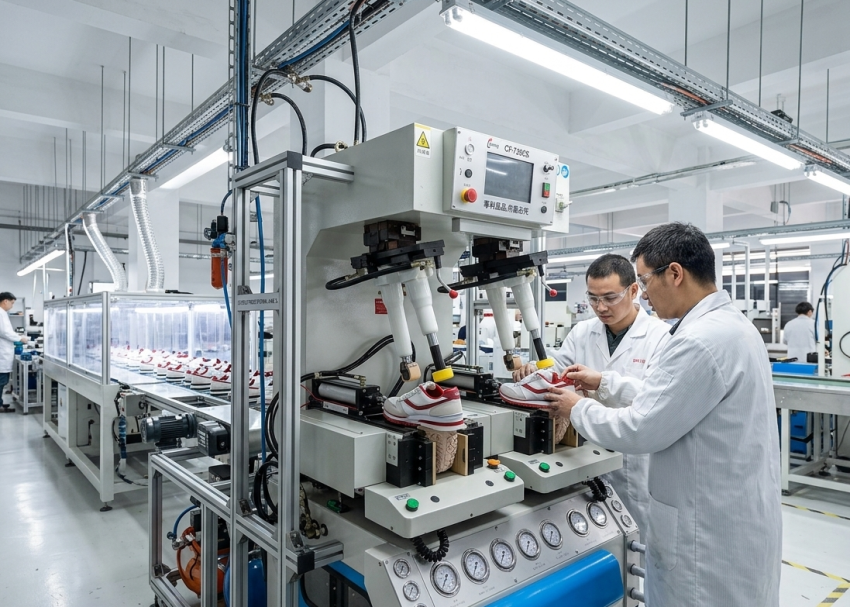
Leather edges contain fine exposed fibres after cutting, trimming, and roughing. Padding compresses these fibres into a denser surface. This improves edge smoothness and reduces the tendency of loose fibres to collect dirt or moisture.
At the same time, controlled friction refines minor surface marks and helps produce uniform gloss. However, excessive pressure can create burn marks, flatten decorative details, or produce inconsistent shine. Therefore, operators should use steady movement and controlled contact rather than relying on heavy pressure to obtain faster results.
Key Control Points
- Check complete edge coverage.
- Prevent overheating.
- Maintain consistent operator movement.
- Compare gloss and smoothness with the approved standard.
Expert Tip:
Separate wheels: Dedicated wheels help prevent colour and wax contamination.
Common Padding Defects
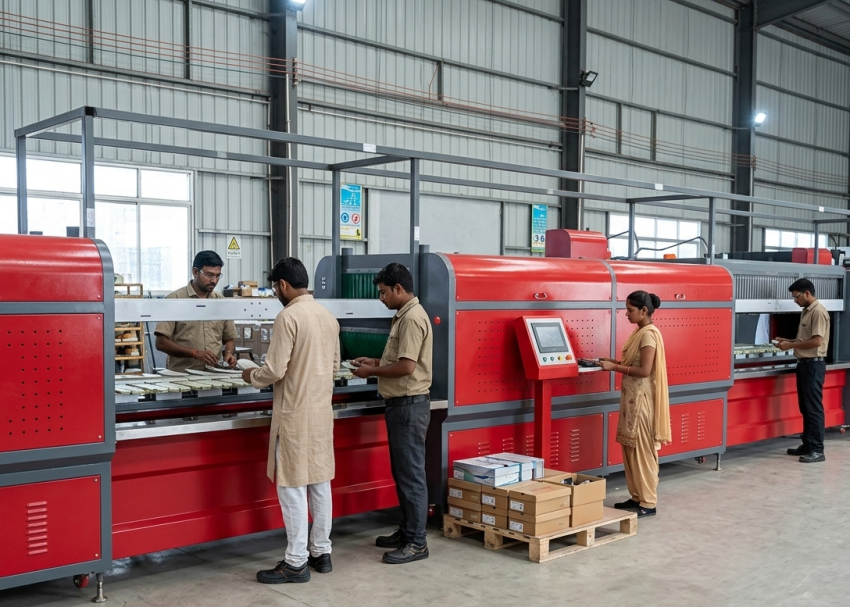
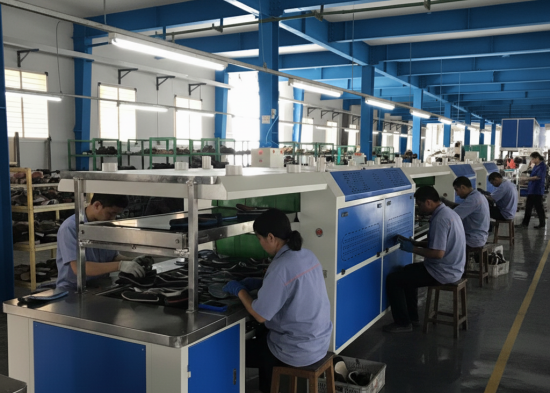
Typical defects include uneven gloss, burn marks, visible fibres, wax smearing, and colour contamination. These problems usually result from incorrect pressure, worn or dirty wheels, excessive contact time, or poor wheel segregation.
Factories can reduce defects by standardizing machine settings, maintaining wheels regularly, and training operators to control pressure and movement.
Key Control Points
- Record approved operating settings.
- Clean wheels at defined intervals.
- Separate wheels for incompatible colours.
- Inspect first-off and periodic production samples.
Conclusion
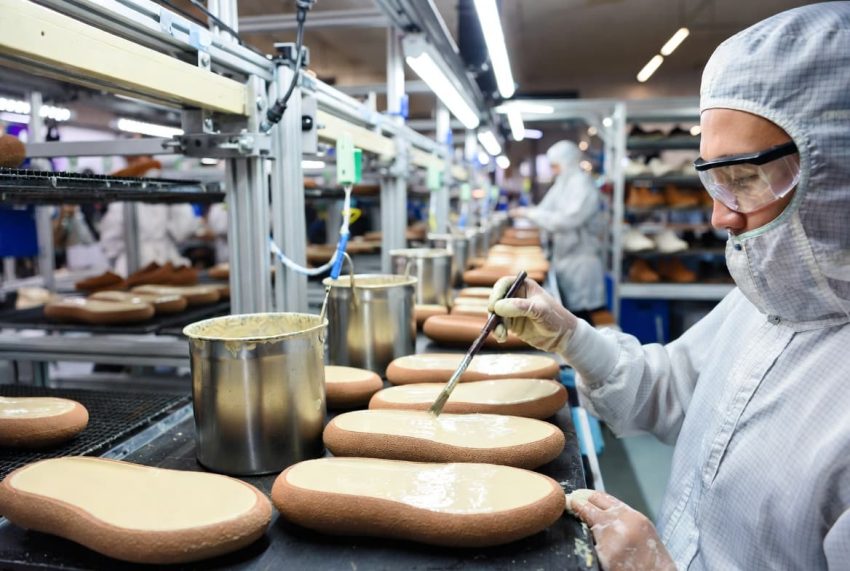
Padding is a relatively short operation, but it has a major influence on the final appearance of a leather outsole. Controlled pressure and correct wheel selection compress fibres, improve smoothness, and create the refined finish associated with premium footwear.
The next article, Repairing and Cleaning Operations in Outsole Process, covering cleaning, minor repairs, finishing corrections and final preparation before packing


Frequently Asked Questions (FAQs)
Padding compresses leather edge fibres using rotating leather, felt, or cotton wheels to create a smooth, sealed finish.
Leather wheels are particularly suitable for premium leather because they provide firm compression while maintaining a natural finish.
Felt wheels provide uniform contact and help achieve consistent surface refinement during production.
Cotton wheels provide softer final polishing and help improve smoothness and natural gloss.
Excessive pressure, friction, speed, or prolonged contact can generate heat and cause burn marks.
Use dedicated wheels for different colours and maintain proper wheel cleaning and segregation.
Inspect the edge for fibre sealing, smoothness, uniform gloss, colour consistency, burn marks, and contamination.