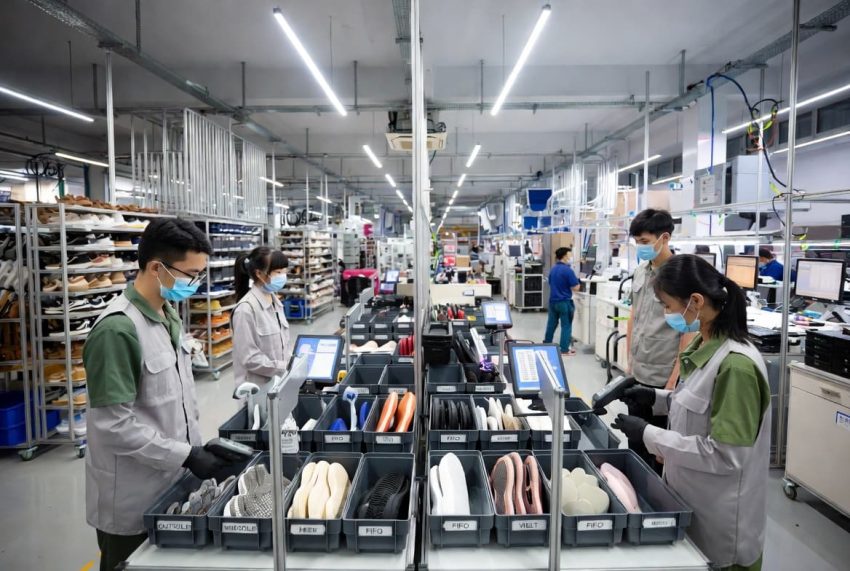
Kitting Operations in Outsole Process: Outsole (Stock Fitting) Assembly Series
In the previous blog, Painting Operations in Outsole Process, we explored how decorative foil enhances the appearance and value of footwear components before assembly. Once decorative processes are completed and approved, the next step is Kitting Operations, where all outsole components are collected, verified, and organized before entering the assembly line.
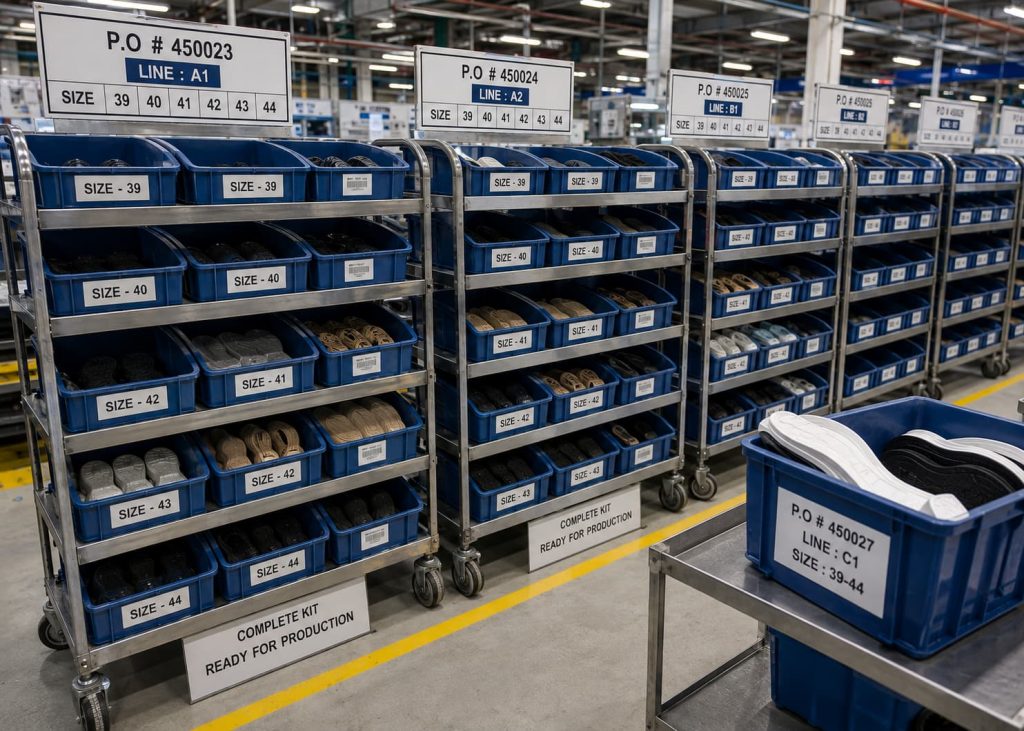
Kitting is one of the most important preparation activities in footwear manufacturing. Instead of sending individual components separately, factories prepare complete production kits containing all the required parts for a specific shoe style, size range, and purchase order. Proper kitting ensures that assembly operators receive the correct materials at the right time, eliminating production delays and reducing assembly errors. Modern footwear factories integrate kitting with ERP systems, barcode scanning, and lean manufacturing principles to improve inventory accuracy, traceability, and production efficiency.
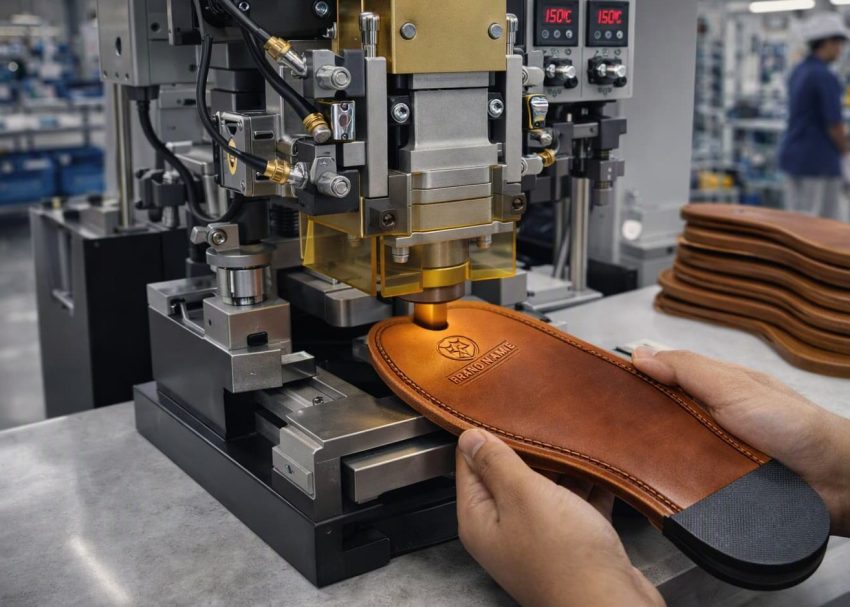
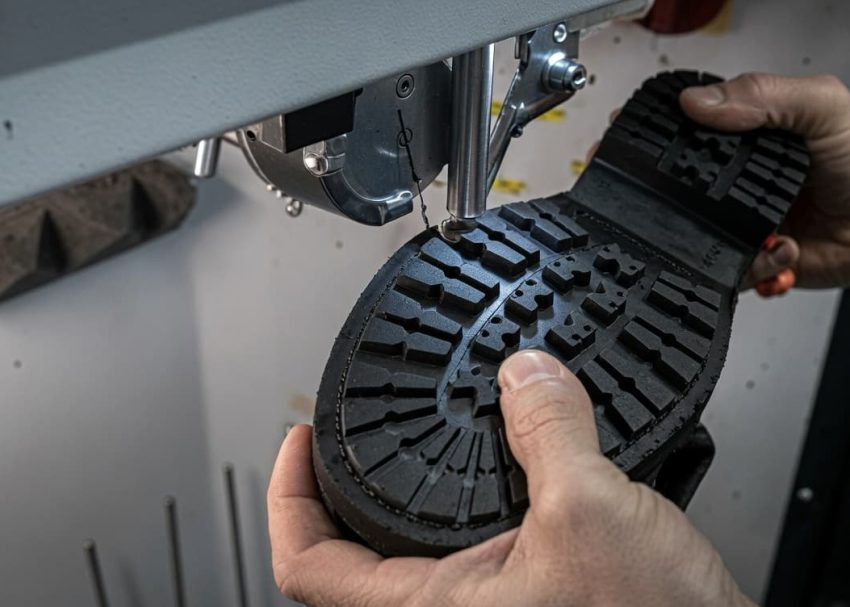
What is Kitting Operations?
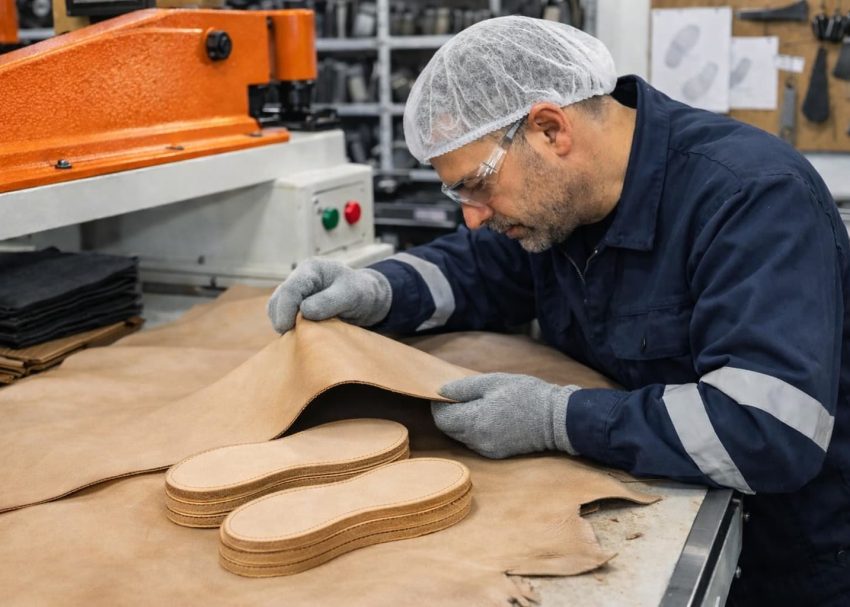
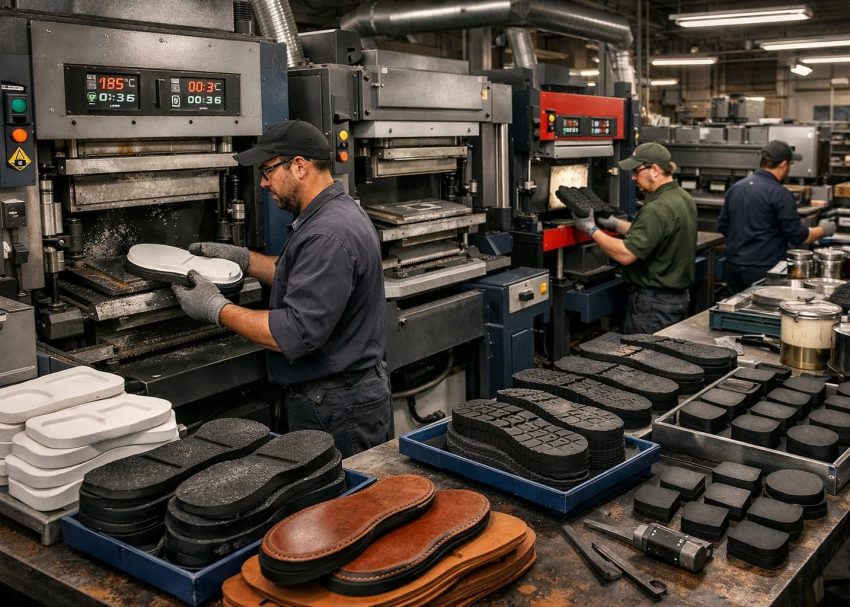
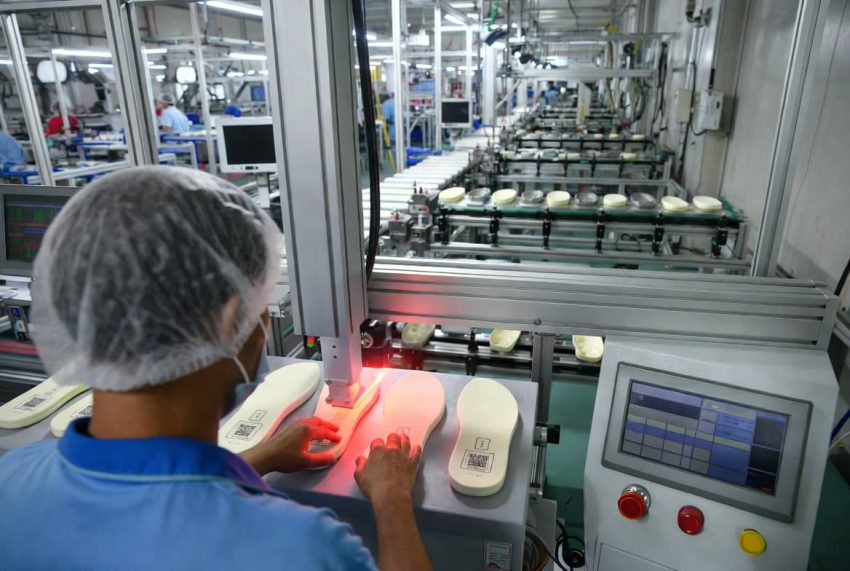
Kitting is the process of collecting, inspecting, and organizing all components required for outsole assembly into complete production-ready kits. These kits are prepared according to the approved Bill of Materials (BOM), purchase order (PO), shoe size, color, and production schedule.
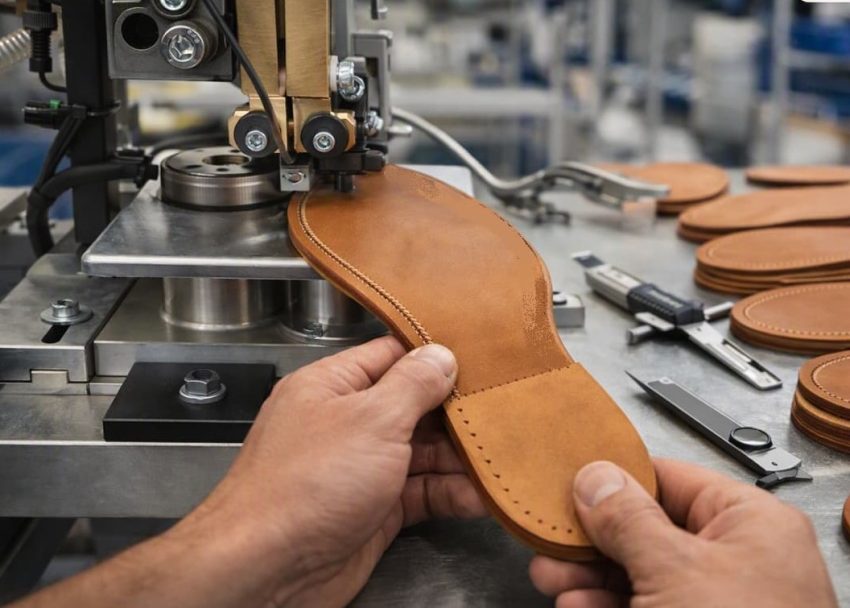
Depending on the footwear construction, a kit may contain: Outsole, Midsole, Heel, Shank, Welt, Wedge, Decorative inserts, Logos or accessories. Since these components often come from different production departments or suppliers, kitting ensures they are available together before assembly begins.
This organized approach reduces operator waiting time, improves workflow, and supports uninterrupted production.
Key Control Points
- Verify components against the approved BOM.
- Separate kits by purchase order and size.
- Prevent mixing of colors or production batches.
- Label every kit for complete traceability.
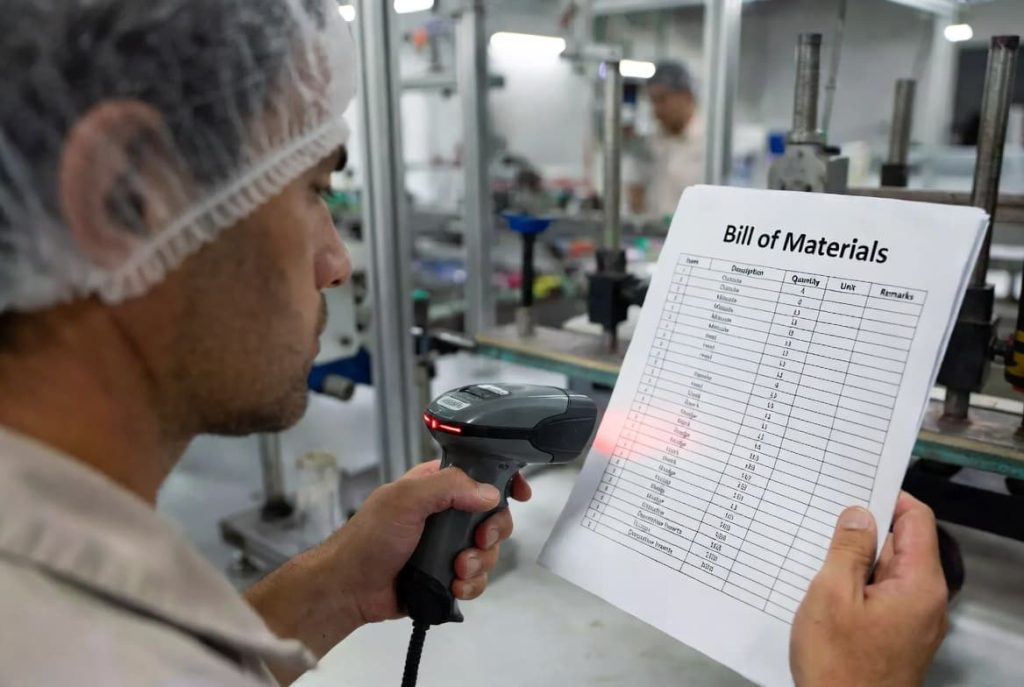
Expert Tip:
Always prepare kits using the latest approved Bill of Materials.
Use barcode labels for every production kit.
Benefits of Kitting Operations
An efficient kitting system directly improves productivity and quality. By preparing complete kits before assembly, operators can focus entirely on production rather than searching for missing components. Major benefits include:
- Higher assembly productivity.
- Reduced component shortages.
- Fewer assembly errors.
- Better inventory control.
- Faster line feeding.
- Improved traceability.
- Lower work-in-progress inventory.
- Support for Lean and Just-in-Time (JIT) manufacturing.
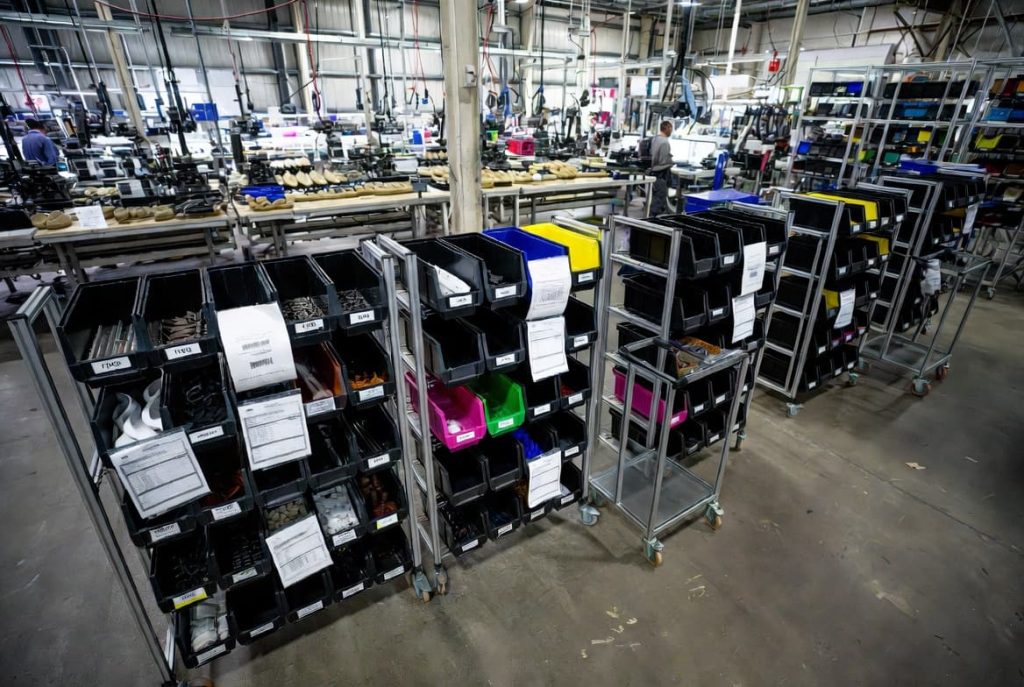
Kitting also improves communication between the warehouse, production planning, quality, and assembly departments, ensuring smoother material flow throughout the factory.
Key Control Points
- Prepare kits according to the production schedule.
- Follow FIFO (First-In, First-Out) inventory practices.
- Monitor shortages before releasing kits.
- Maintain accurate production records.
Expert Tip:
Separate kits by purchase order rather than component type.
Implement a double-verification system before dispatch.
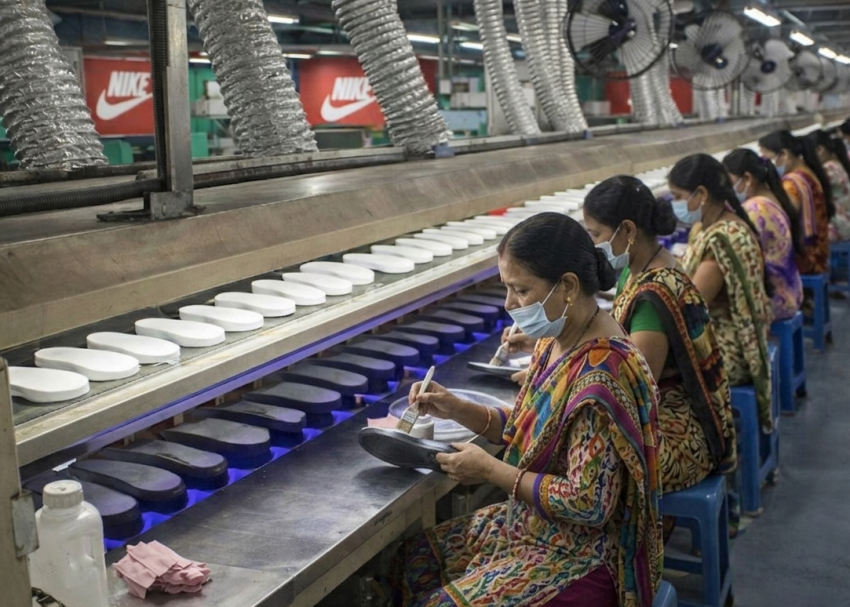

Kitting Process Workflow
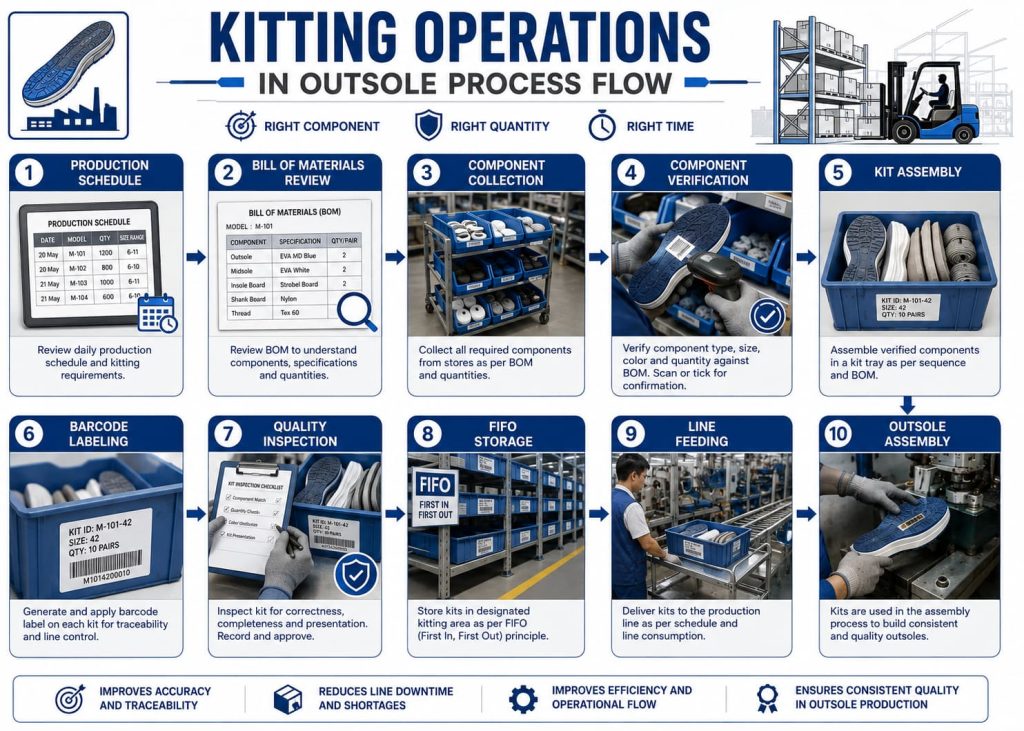
A standard kitting process follows a structured sequence to ensure every kit is complete and accurate.
- Receive Production Schedule – PPC issues the daily production plan with style, color, size, and quantity.
- Review Bill of Materials – Verify all required components listed in the approved BOM.
- Collect Components – Retrieve parts from warehouses, molding, printing, or supplier locations.
- Inspect Components – Check size, quantity, color, appearance, and batch details.
- Assemble the Kit – Organize components according to the purchase order or production batch.
- Label the Kit – Add PO number, style, size, quantity, and barcode for traceability.
- Transfer to Assembly Line – Dispatch complete kits based on production priorities.
Following a standardized workflow reduces handling errors and ensures materials reach production on time.
Key Control Points
- Confirm size and color before packing.
- Verify quantities carefully.
- Use barcode identification whenever possible.
- Dispatch only complete kits.
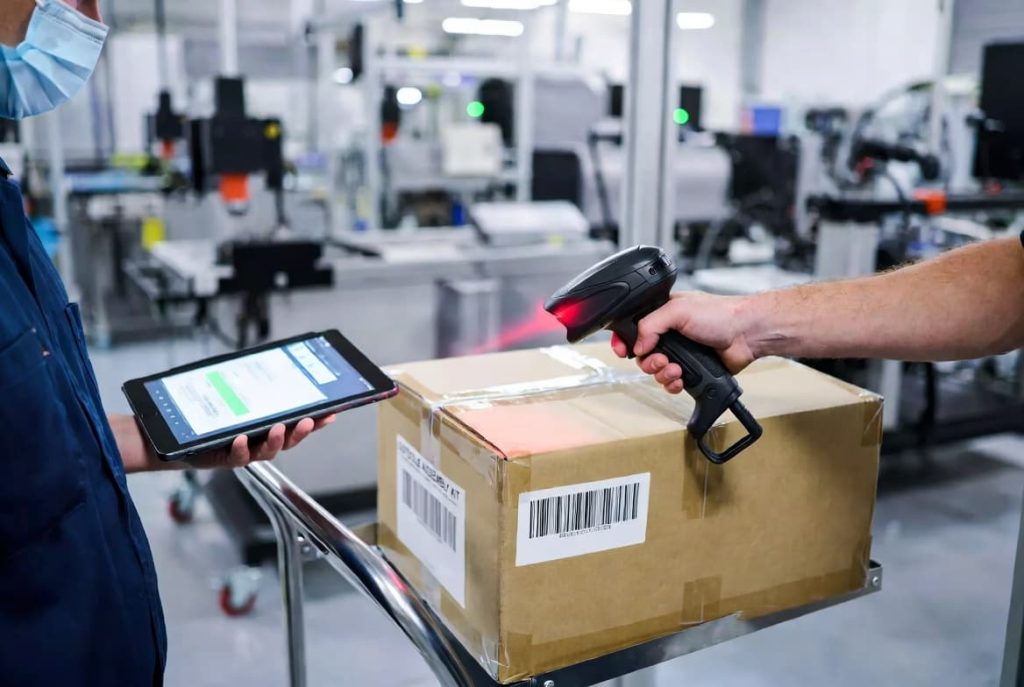
Expert Tip: Standardize reusable bins and mobile trolleys.

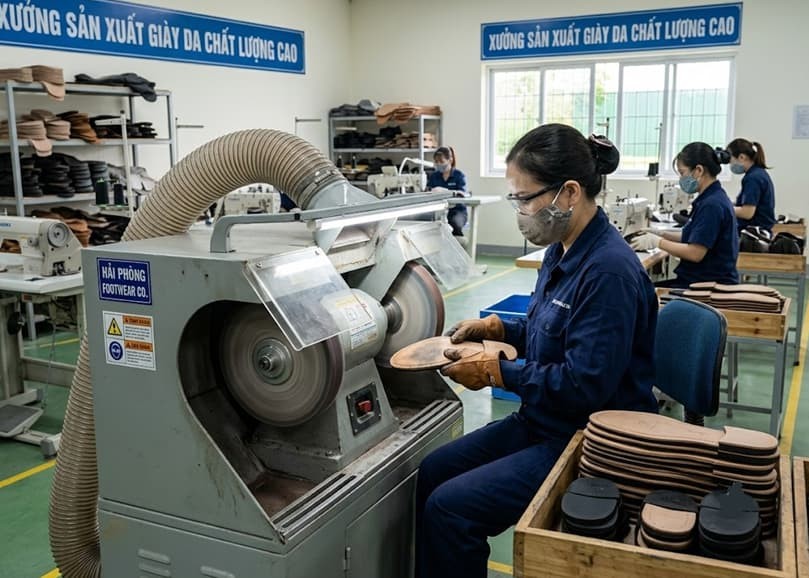
Common Kitting Errors and Prevention
Even small mistakes during kitting can interrupt production or create defective footwear.
Incorrect Size Mixing
Different sizes packed together may lead to assembly defects. Use size-coded bins and barcode verification.
Missing Components
Forgotten inserts, shanks, or heels can stop production. Follow a BOM checklist before releasing kits.
Wrong Color Combination
Mixing color batches affects product appearance. Inspect components under standard lighting and separate batches.
Purchase Order Mixing
Combining components from different customer orders creates traceability problems. Keep PO-specific storage and labeling.
Quantity Errors
Manual counting mistakes cause shortages or excess inventory. Double-check counts or use electronic counting systems.
Expert Tip: Monitor KPIs such as kitting accuracy, shortages, and on-time delivery.
Quality Control and Lean Manufacturing
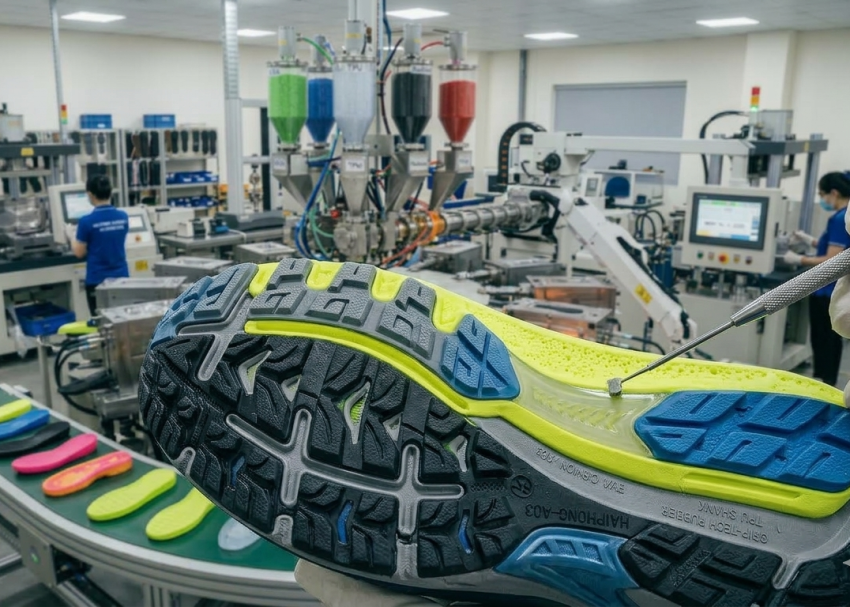
Quality control begins during kitting rather than at final inspection. Every component should be verified for size, appearance, quantity, and traceability before it reaches the assembly line. Modern factories strengthen kitting by adopting Lean Manufacturing tools such as:
- FIFO storage systems
- Barcode and RFID tracking
- Kanban replenishment
- Visual management boards
- Digital work instructions
- Standardized work procedures
These practices reduce waste, improve inventory accuracy, and ensure continuous material flow with minimal downtime.
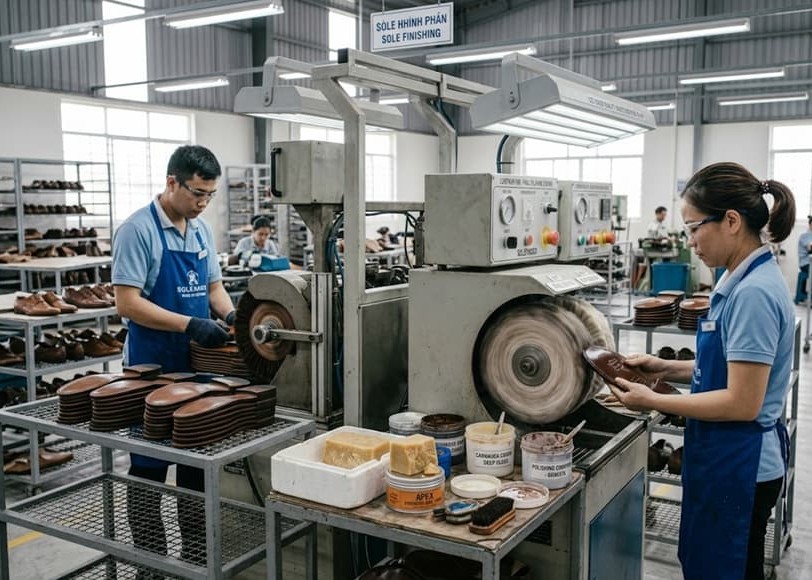
Expert Tip: Conduct regular operator training to maintain consistent standards.

Conclusion
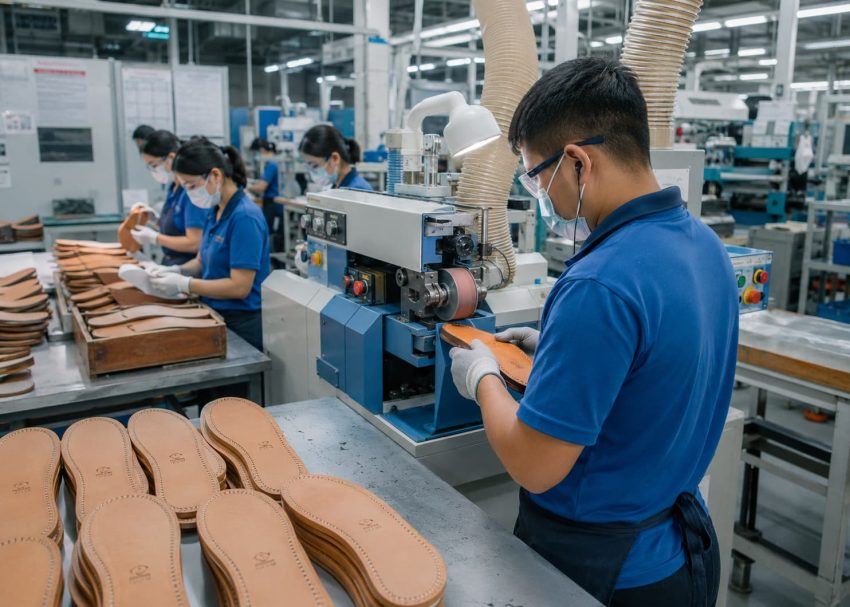
Kitting operations play a vital role in ensuring efficient outsole assembly. By organizing, verifying, and preparing complete production kits before assembly begins, manufacturers reduce production delays, improve quality, and strengthen inventory control. Whether performed manually or supported by digital warehouse systems, effective kitting improves productivity while supporting Lean Manufacturing and Just-in-Time production.
In the next blog of TheFootwearEdge Outsole (Stock Fitting) Assembly Series, we will discuss “Transfer Foil Operations in Outsole Process ,” where prepared kits are delivered efficiently to assembly workstations for continuous production.

Frequently Asked Questions (FAQs)
Kitting is the process of organizing all required outsole assembly components into complete production-ready sets.
It improves productivity, reduces assembly errors, and ensures uninterrupted production.
Outsole, midsole, heel, shank, welt, wedge, decorative inserts, and other accessories listed in the BOM.
It improves inventory accuracy, traceability, and reduces manual errors during component verification
It prepares kits according to the customer’s purchase order size ratio, ensuring accurate production quantities.
By reducing waste, minimizing inventory, improving material flow, and preventing production interruptions.