
Stamping and Identification Marking Operations in Outsole Process: Outsole (Stock Fitting) Assembly Series
In the previous blog, UV Priming for EVA Components Operations in Outsole Process, we discussed how UV treatment improves adhesive performance and how its effectiveness depends on proper timing before assembly. However, once components leave the UV station, manufacturers must still identify every outsole throughout production.
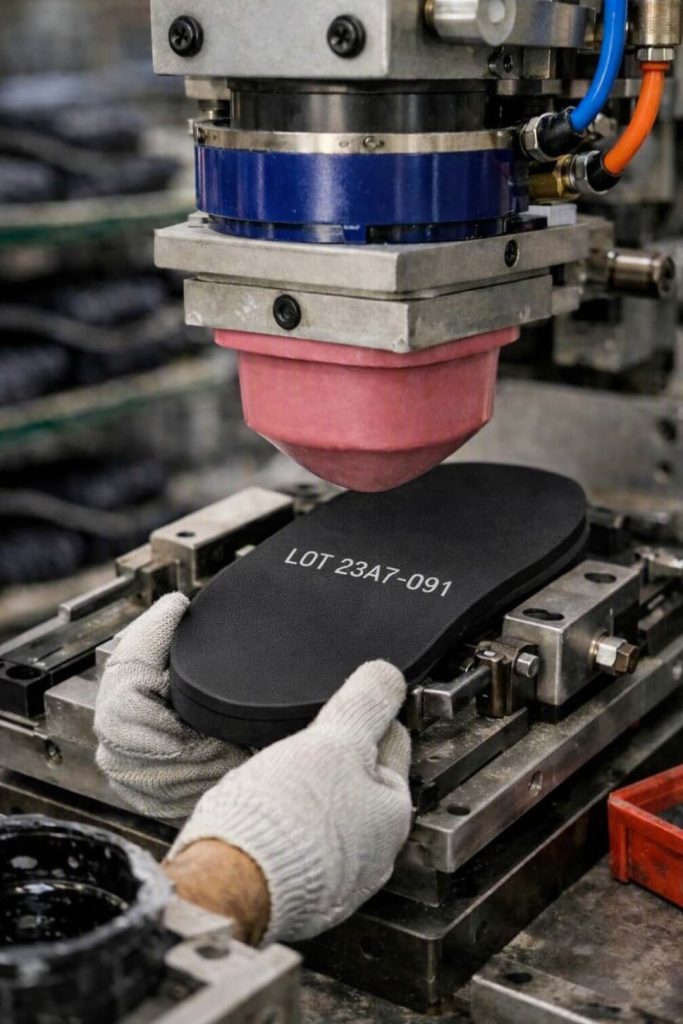
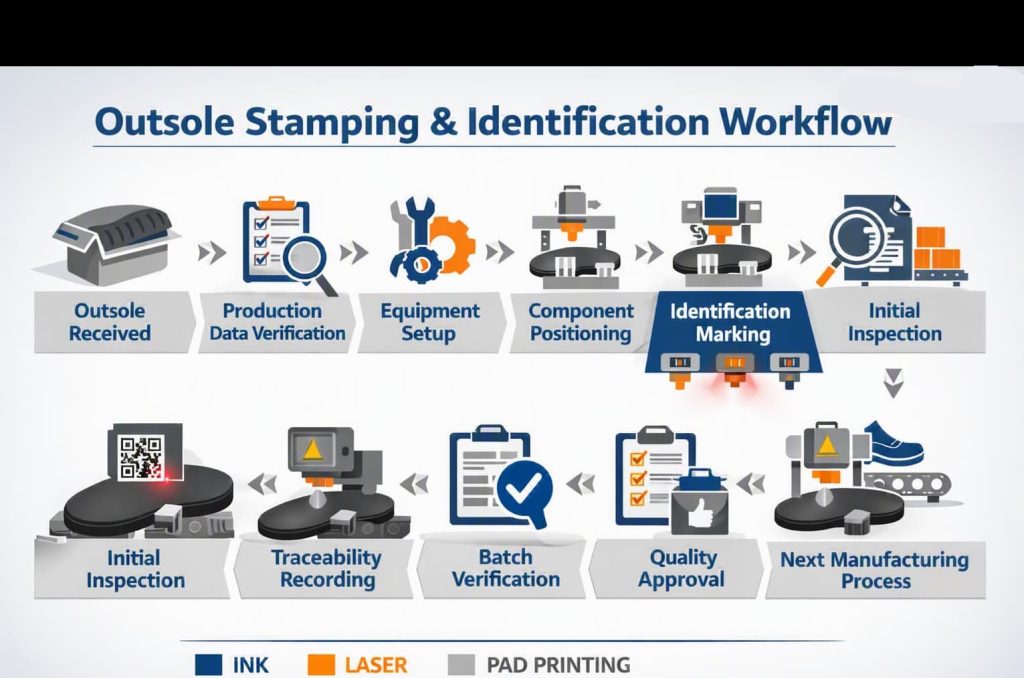
Stamping and identification marking provide this essential traceability. Production dates, batch numbers, mould cavity details, purchase order references, and UV treatment dates enable factories to monitor production, investigate defects, verify process compliance, and support customer quality requirements. Without reliable identification, finding the root cause of quality issues becomes difficult and costly.
This article explains how footwear factories perform stamping and identification marking, the equipment used, quality requirements, and the control methods that ensure complete production traceability.

Why Stamping and Identification Marking Matter in Footwear Manufacturing
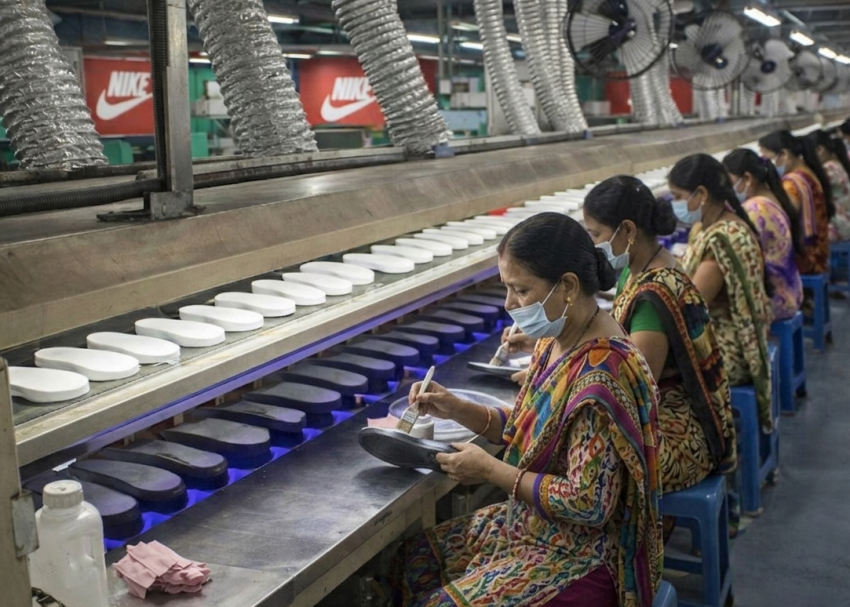
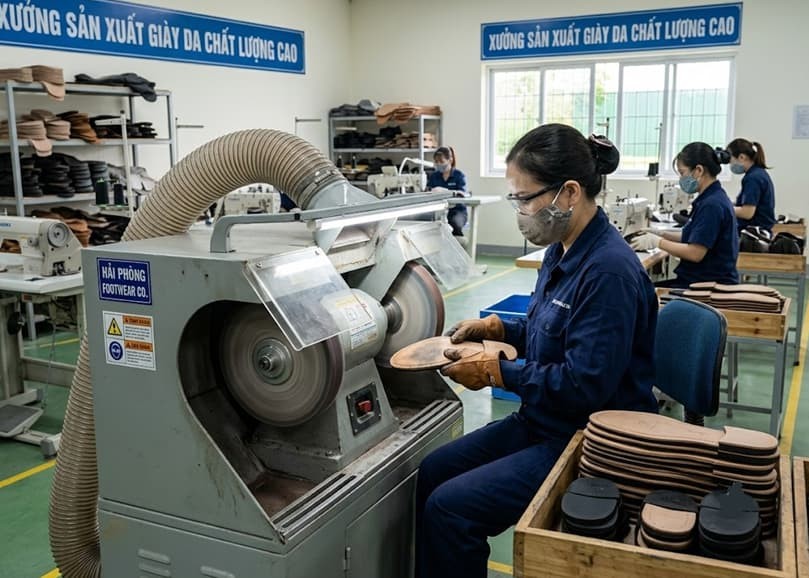
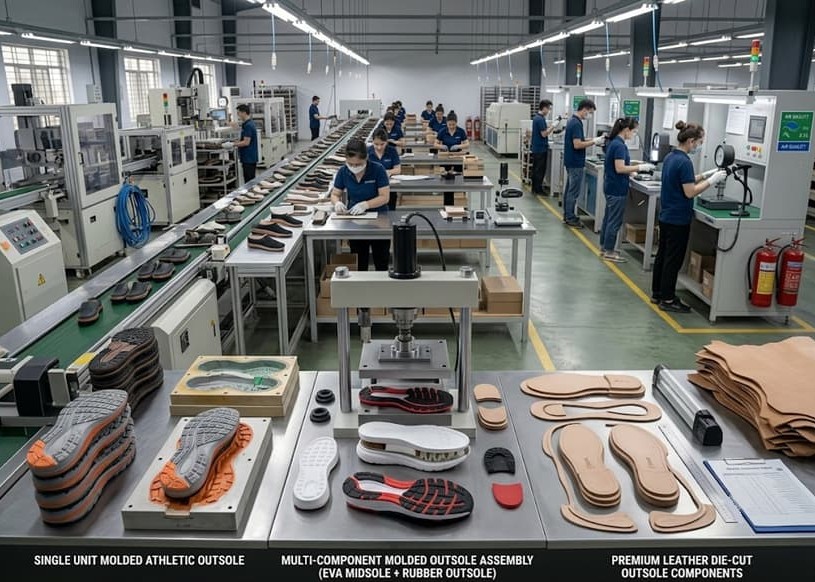
Every outsole passes through multiple manufacturing stages before becoming part of a finished shoe. During this journey, thousands of components from different moulds, materials, colours, production shifts, and customer orders move simultaneously across the factory floor. Without an effective identification system, distinguishing one production batch from another becomes nearly impossible.
Modern footwear manufacturing therefore treats stamping as much more than simply printing numbers onto a component. It establishes the identity of every outsole throughout its manufacturing life cycle. This identity allows production engineers, quality inspectors, warehouse personnel, and customer service teams to retrieve manufacturing information whenever necessary.
When defects occur in production or after shipment, traceability data helps quality teams determine exactly when the component was produced, which machine manufactured it, which mould cavity was used, which production batch supplied the material, and whether any special processing—such as UV priming—was completed within the specified time window.
Many international footwear brands require complete component traceability as part of supplier compliance. Consequently, accurate identification marking has become a standard requirement rather than an optional quality practice.
Key Control Points
- Ensure every outsole receives identification before entering the next production stage.
- Verify that information matches production documentation.
- Maintain clear and permanent marking throughout assembly.
- Prevent missing or duplicate identification records.
Expert Tip:
Standardize marking locations across every outsole style to simplify inspections.
Use contrasting ink colors that remain readable after finishing operations.

Typical Information Included on Outsole Identification Marks
The exact information printed on an outsole depends on the manufacturer’s traceability system, customer requirements, and production complexity. However, most factories include several common identification details that allow every component to be tracked throughout production.
Production Date
The production date indicates when the outsole was manufactured or processed. This information helps production planners monitor inventory age and supports investigations involving ageing-sensitive materials such as adhesives and treated EVA components. For components receiving UV surface treatment, recording the production or treatment date helps operators verify whether the bonding window remains valid before cement application.
Batch Number
The batch number links every outsole to its specific production lot. Since materials are usually manufactured in batches, this reference allows factories to isolate affected products if raw material problems are later identified. Batch numbers significantly reduce the scope of quality investigations because only the affected production lots require inspection instead of the entire production volume.
Purchase Order Number
Many contract footwear manufacturers produce multiple customer orders simultaneously. Printing the purchase order number ensures components remain assigned to the correct customer throughout production. This identification minimizes sorting errors, prevents shipment mix-ups, and improves production planning.
Expert Tip: Replace worn stamps before print quality deteriorates.
Purchase Order Number
Many contract footwear manufacturers produce multiple customer orders simultaneously. Printing the purchase order number ensures components remain assigned to the correct customer throughout production. This identification minimizes sorting errors, prevents shipment mix-ups, and improves production planning.
Mould Cavity Number
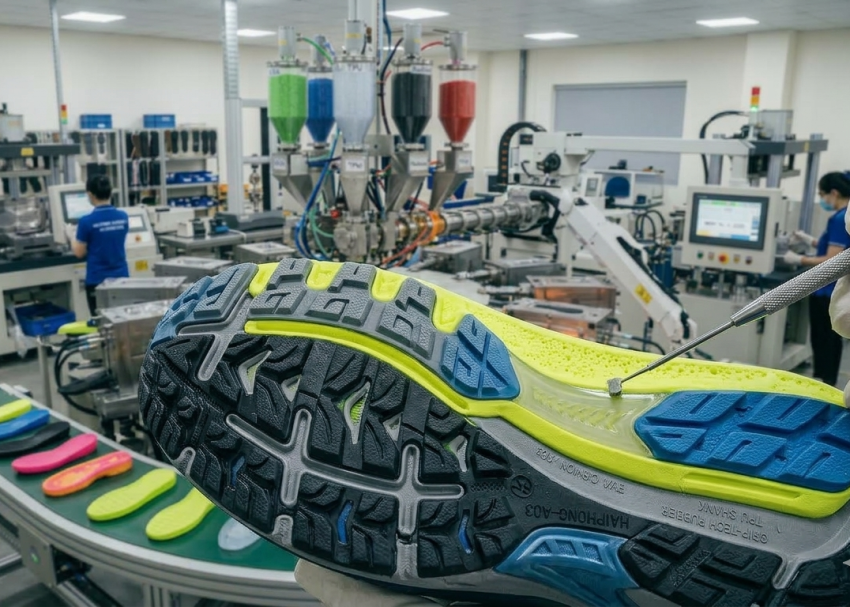
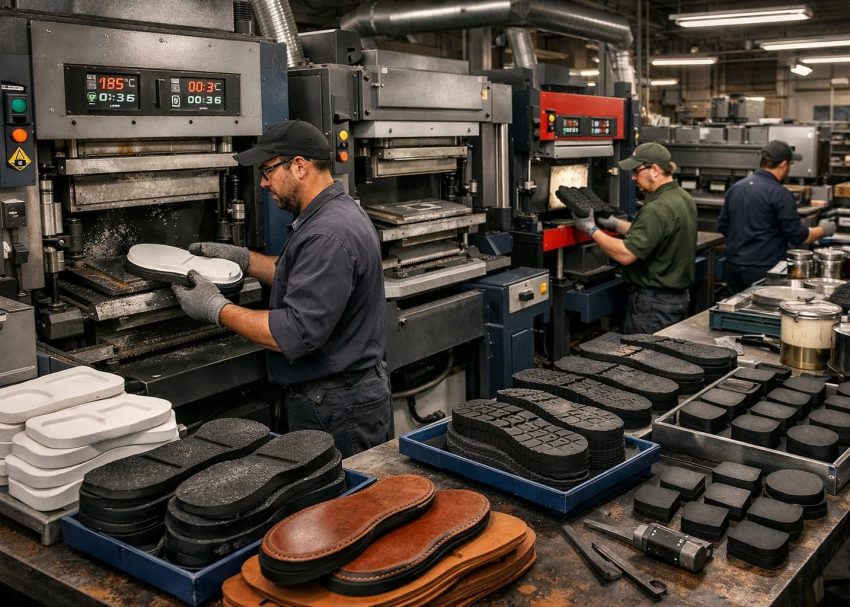
Injection moulds often contain multiple cavities producing several outsoles during each cycle. If one cavity develops wear, damage, or dimensional variation, defects may appear only in components produced from that specific cavity. Recording the mould cavity number enables engineers to quickly identify defective tooling without stopping production unnecessarily.
UV Treatment Date
For EVA and similar materials, many factories stamp the UV treatment date immediately after surface activation. Since UV treatment gradually loses effectiveness over time, operators can verify whether assembly occurs within the approved bonding period. This simple marking significantly improves process control and reduces bonding failures caused by expired surface activation.
This simple marking significantly improves process control and reduces bonding failures caused by expired surface activation.
Additional Factory Information
Depending on production requirements, factories may also include:
- Production shift
- Machine identification number
- Operator code
- Line number
- Material code
- Factory location
- Customer identification code
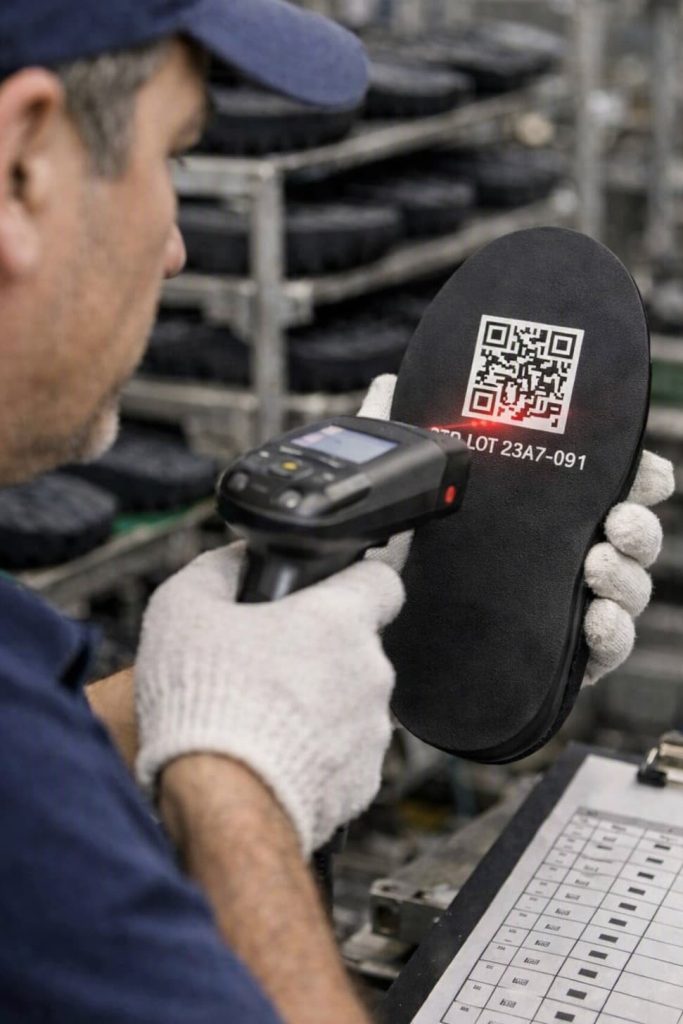
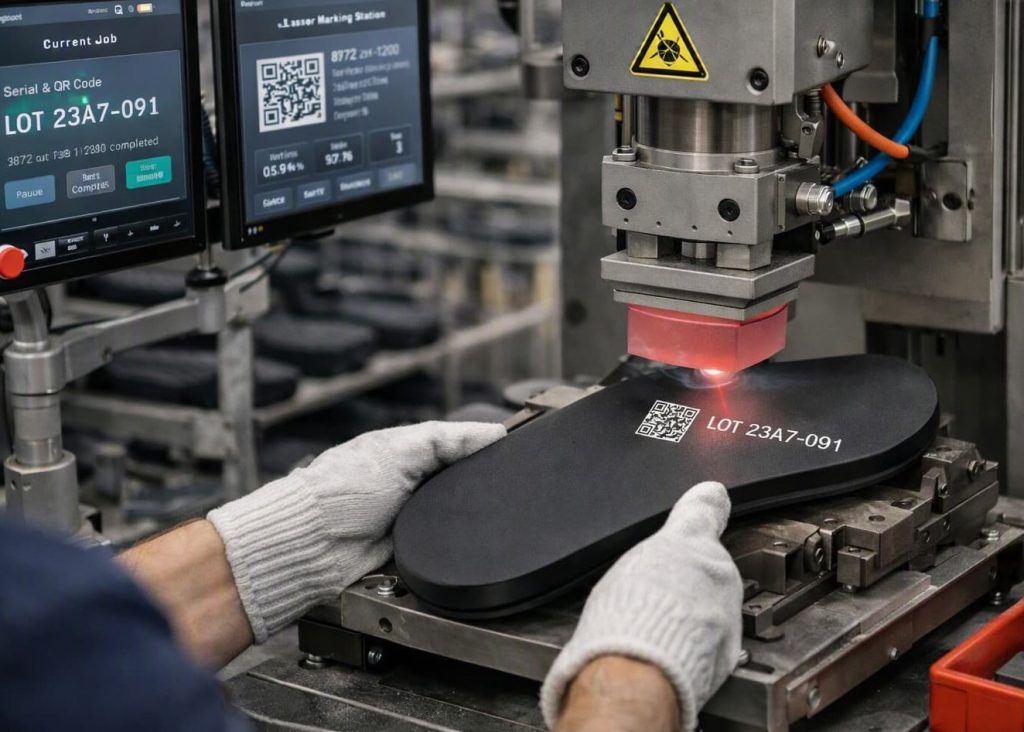
- QR code or barcode
Digital traceability systems increasingly combine conventional printed information with machine-readable identification for automated production tracking.
Key Control Points
- Use standardized identification formats throughout the factory.
- Avoid unnecessary information that complicates reading.
- Confirm all codes correspond to production documentation.
- Protect markings from abrasion during handling.
Expert Tip: Link identification data directly to ERP or MES systems whenever possible.
Common Identification Marking Methods Used in Footwear Factories
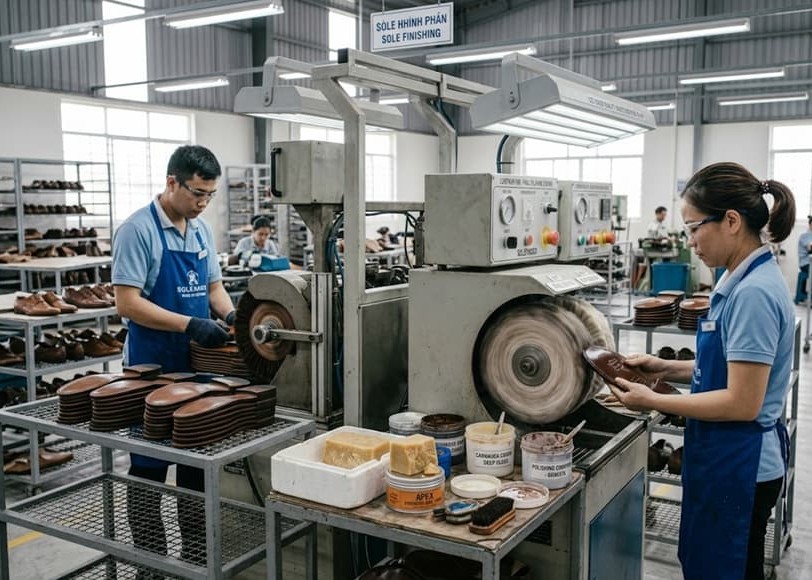
Different outsole materials require different marking technologies. The selected method depends on material properties, production speed, customer requirements, durability expectations, and equipment investment.
Ink Stamping
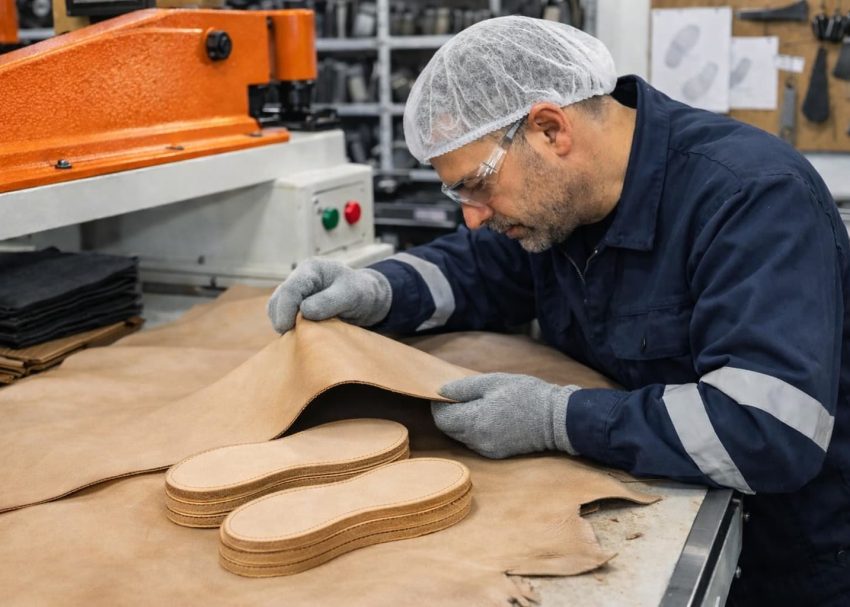
Ink stamping remains one of the most widely used identification methods for rubber, EVA, TPR, TPU, and leather outsoles. Operators use rubber stamps, metal stamps, or automated marking heads with fast-drying industrial inks.
This method offers low investment cost and easy implementation. However, the quality depends heavily on stamp condition, ink consistency, and operator technique. Regular cleaning and replacement of worn stamps are therefore essential.
Pad Printing
Pad printing transfers ink from an etched printing plate onto irregular outsole surfaces using a flexible silicone pad. Because the pad conforms to curved or textured areas, it produces consistent markings on complex outsole geometries. Factories commonly use pad printing when logos, customer information, or detailed identification must remain clear despite uneven surfaces.
Expert Tip: Verify UV treatment dates before adhesive application to prevent expired activation.

Hot Stamping
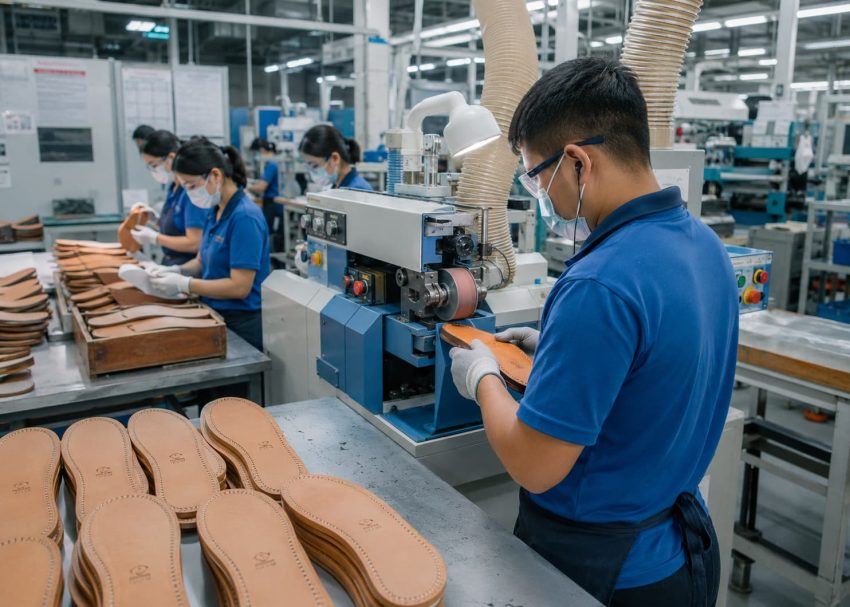
Hot stamping uses heated dies to transfer identification through pressure and temperature. Instead of applying liquid ink, the process embosses or transfers foil onto the component surface. This method produces durable markings that resist abrasion and handling, making it suitable for premium leather soles and high-value footwear.
Laser Marking
Laser marking has become increasingly popular in automated footwear factories. Focused laser beams permanently engrave identification data directly onto the outsole without inks or consumables.
Laser systems provide excellent readability, high production speed, and complete compatibility with digital manufacturing systems. They also reduce consumable costs while supporting automated barcode and QR code generation. Although initial investment is higher, laser marking offers long-term advantages for high-volume production facilities.
Key Control Points
- Select the marking method according to outsole material.
- Verify marking permanence before mass production.
- Maintain equipment calibration for consistent print quality.
- Confirm readability after subsequent manufacturing operations.
Expert Tip: Audit traceability records regularly to ensure every batch can be tracked from raw material to finished footwear.
Common Identification Marking Defects and Their Causes
Identification markings must remain readable until the finished footwear reaches the customer. Poor marking quality reduces traceability and complicates quality investigations. Understanding common defects helps operators identify problems before large batches are affected.
Incomplete Printing
Incomplete characters usually result from:
- Insufficient pressure
- Worn stamp surfaces
- Low ink quantity
- Uneven outsole surface
The defect makes production information difficult to read and may require rework.
Smudged Marking
Excessive ink or premature handling can smear printed information. Typical causes include:
- Wet ink
- Excessive stamping pressure
- Poor drying conditions
- Component movement during printing
Quick-drying industrial inks greatly reduce this problem.
Expert Tip:
Introduce barcode or QR code systems for high-volume production to reduce manual recording errors.
Standardize character size, font, and marking location across all outsole styles.

Incorrect Information
Incorrect batch numbers or production dates represent one of the most serious traceability failures.
Possible causes include:
- Wrong production setup
- Human error
- Failure to update stamps
- Incorrect ERP data
Quality inspectors should verify information at the beginning of every production batch.
Faded Identification
Some inks gradually fade because of friction, chemical exposure, or incompatible outsole materials. Selecting suitable industrial inks and verifying compatibility during process validation minimizes this risk.
Double Stamping
Double impressions usually occur when operators accidentally stamp the component twice or when positioning fixtures allow movement. Although traceability may remain possible, double printing reduces readability and creates an unprofessional appearance.
Expert Tip:
Link stamping equipment directly with ERP or MES software to automate production data updates.
Train operators to perform first-piece verification before every production batch begins.
Quality Inspection and Traceability Verification
Quality inspection extends beyond checking whether numbers are visible. Inspectors must verify that the identification accurately reflects the production records and remains readable throughout manufacturing. Most footwear factories include identification verification as part of in-process quality control rather than waiting until final inspection.
Typical inspection activities include:
- Comparing printed information with production documents.
- Checking character clarity and legibility.
- Confirming marking position follows factory standards.
- Verifying permanence after handling.
- Ensuring no information is missing.
- Reviewing barcode or QR code readability where applicable.
Many manufacturers also conduct random traceability audits. During these audits, inspectors select finished footwear and trace every outsole back to its production batch, mould cavity, material lot, operator, machine, and processing history. These exercises confirm that the factory’s traceability system functions effectively and supports rapid root cause analysis whenever quality concerns arise. A reliable inspection process strengthens customer confidence, simplifies regulatory compliance, and significantly reduces investigation time during product recalls or warranty claims.
Key Control Points
- Verify both readability and information accuracy.
- Conduct first-piece, in-process, and random batch inspections.
- Audit traceability records at scheduled intervals.
- Retain identification records according to customer requirements.
Expert Tip:
Include identification marking in internal quality audits to ensure long-term traceability compliance.
Review recurring traceability issues monthly and implement corrective actions before they affect customer shipments.
Conclusion
Stamping and identification marking may appear to be a minor operation within outsole manufacturing, yet it plays a major role in maintaining production control and product quality. Accurate identification enables manufacturers to trace every outsole back to its production history, helping quality teams investigate defects, isolate affected batches, and implement corrective actions efficiently.
By implementing standardized marking procedures, maintaining equipment properly, and routinely verifying traceability records, manufacturers can significantly improve operational transparency while reducing quality risks throughout the production process.
Next in the Outsole (Stock Fitting) Assembly Series Continue with Grooving and Channeling Operations in Outsole Process, where we explore how precision grooves and channels improve sole flexibility, adhesive bonding, stitch concealment, and overall footwear durability before final outsole attachment.
Expert Tip: Where possible, adopt laser marking for permanent, maintenance-friendly identification in automated production lines.

Frequently Asked Questions (FAQs)
Stamping provides complete product traceability by identifying production dates, batches, mould cavities, purchase orders, and processing history. It enables efficient quality investigations and supports customer compliance requirements.
Typical identification includes production date, batch number, purchase order number, mould cavity number, machine number, operator code, and UV treatment date where applicable.
Industrial inkjet printing and laser marking are commonly preferred because they produce clear, accurate, and consistent identification while integrating easily with automated production systems.
Traceability allows engineers to identify defective batches quickly, isolate production issues, investigate recurring defects, and implement corrective actions without affecting unaffected production lots.
Yes. Many modern factories use QR codes or Data Matrix codes because they store more production data and support automated scanning through ERP and Manufacturing Execution Systems (MES).
Identification should be applied immediately after moulding, trimming, or UV priming—before the outsole proceeds to the next manufacturing operation.
Common defects include incomplete printing, smudged ink, incorrect production data, faded markings, double stamping, and poor print positioning. Routine inspections help prevent these issues.