Bottom Coloring in Outsole Process: Outsole (Stock Fitting) Assembly Series
In the previous blog, Snuffing Operations in Outsole Process, we explored how controlled surface preparation improves outsole appearance and prepares leather or synthetic components for subsequent finishing operations. Once the surface becomes smooth, clean, and free from minor imperfections, the outsole moves to another important aesthetic process—bottom coloring.
Bottom coloring is not merely a decorative operation. It creates a uniform appearance, improves product presentation, supports brand identity, and minimizes visible material variations before final assembly. Premium footwear manufacturers pay particular attention to this process because customers often judge product quality by its visual finish.
This article explains the purpose of bottom coloring, the materials used, factory procedures, quality control requirements, major benefits, and common production defects. Understanding these fundamentals helps footwear manufacturers produce visually consistent outsoles while reducing rejection rates and maintaining customer quality standards.

Understanding Bottom Coloring in Footwear Manufacturing
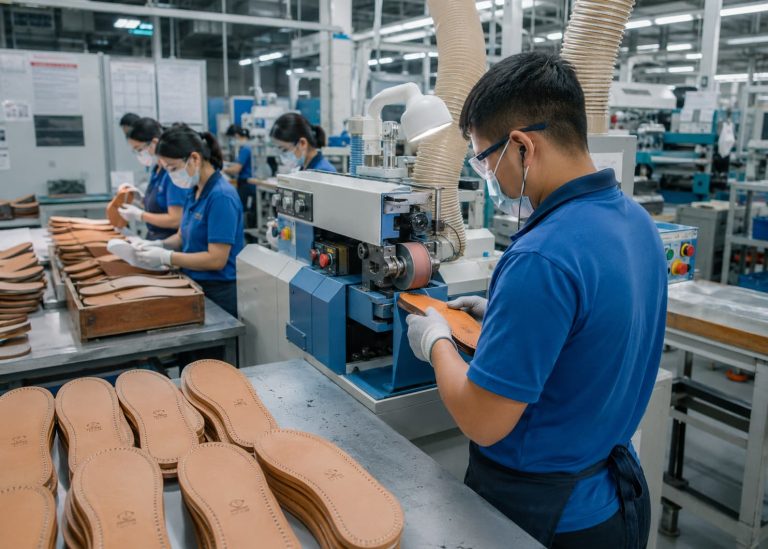
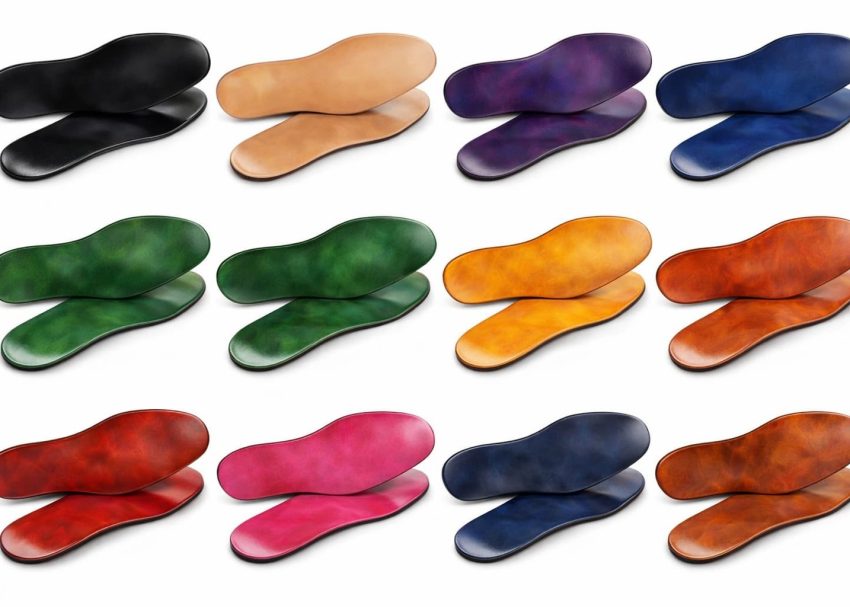
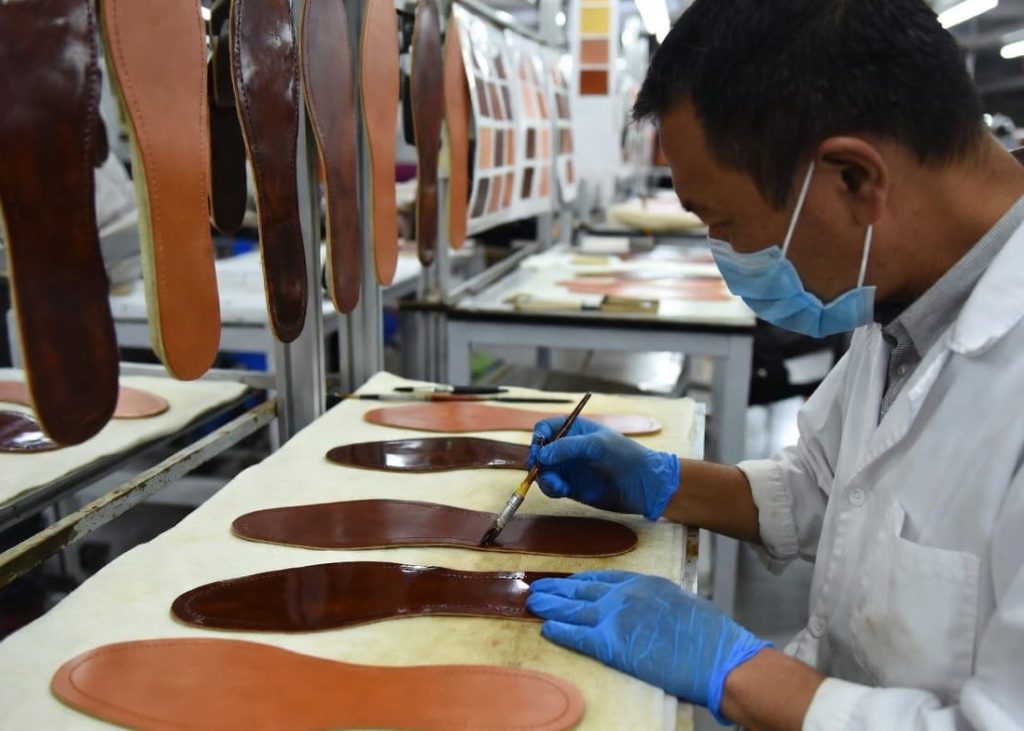
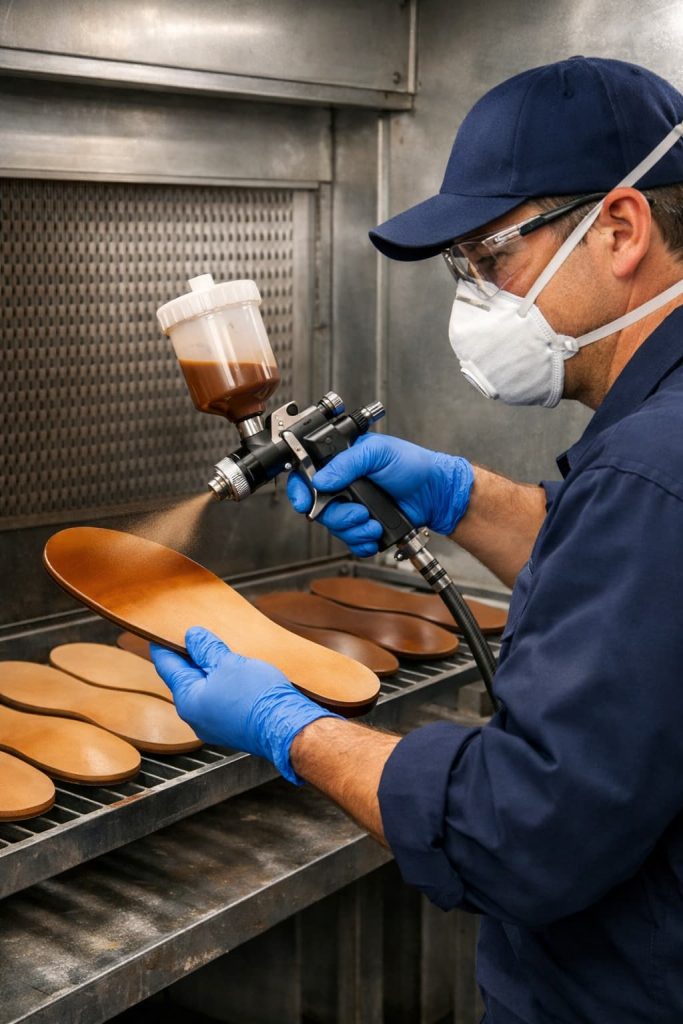
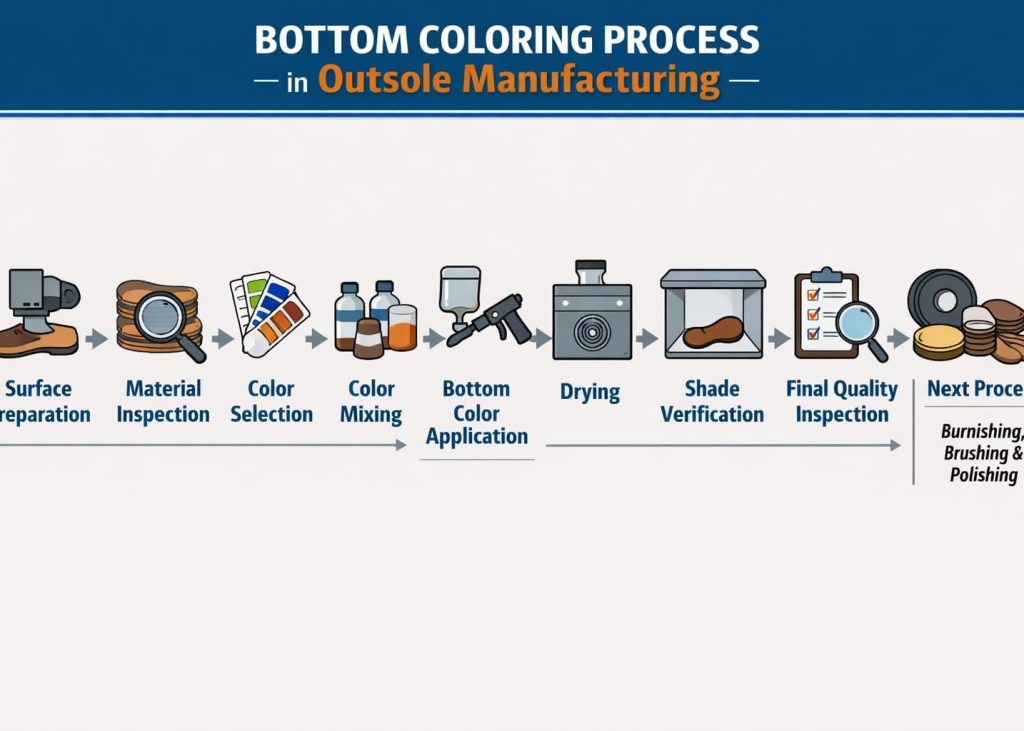
Bottom coloring is a finishing operation in which dyes, pigments, or specialty coatings are applied to the bottom surface of an outsole to achieve the required colour and appearance. The process is commonly used on leather outsoles and selected synthetic materials where an attractive, uniform finish is required.
Besides improving aesthetics, bottom coloring creates visual consistency across production batches. It also highlights decorative outsole patterns, enhances premium product appearance, and supports brand-specific colour requirements. In luxury footwear, distinctive outsole colours often become part of the product’s identity.
Factories perform this operation only after confirming that the outsole surface is clean and suitable for colouring. Approved master samples are used throughout production to ensure every batch matches customer specifications.
Key Control Points
- Approve colour standards before production.
- Verify outsole surface cleanliness.
- Use only approved colouring materials.
- Maintain batch traceability.
Expert Tip:
Stir dyes and pigments thoroughly before every production batch.
Replace contaminated colouring materials immediately.

Coloring Materials Used for Bottom Coloring
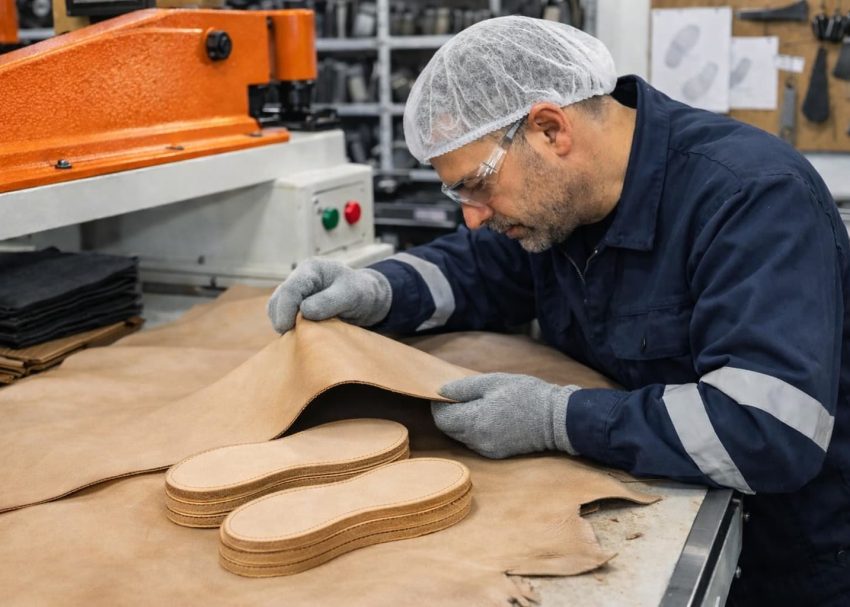
The choice of colouring material depends on outsole material, required finish, and customer specifications. Selecting the correct product improves colour consistency and reduces production defects.
Dyes penetrate leather fibres and produce a natural appearance while preserving the material texture. They are widely used for premium leather outsoles.
Pigments remain on the surface and create an opaque, uniform coating. They are commonly used on synthetic and composite outsoles where consistent coverage is essential.
Edge inks are specially formulated for colouring outsole edges, heels, and exposed side profiles. They improve the overall visual finish and provide sharp colour definition.
Specialty finishes, including gloss, matte, antique, or wax finishes, are applied when specific design effects are required. These finishes enhance product appearance while supporting brand differentiation
Key Control Points
- Mix colouring materials thoroughly.
- Verify colour against approved samples.
- Store materials according to supplier recommendations.
- Avoid contamination during application.
Expert Tip:
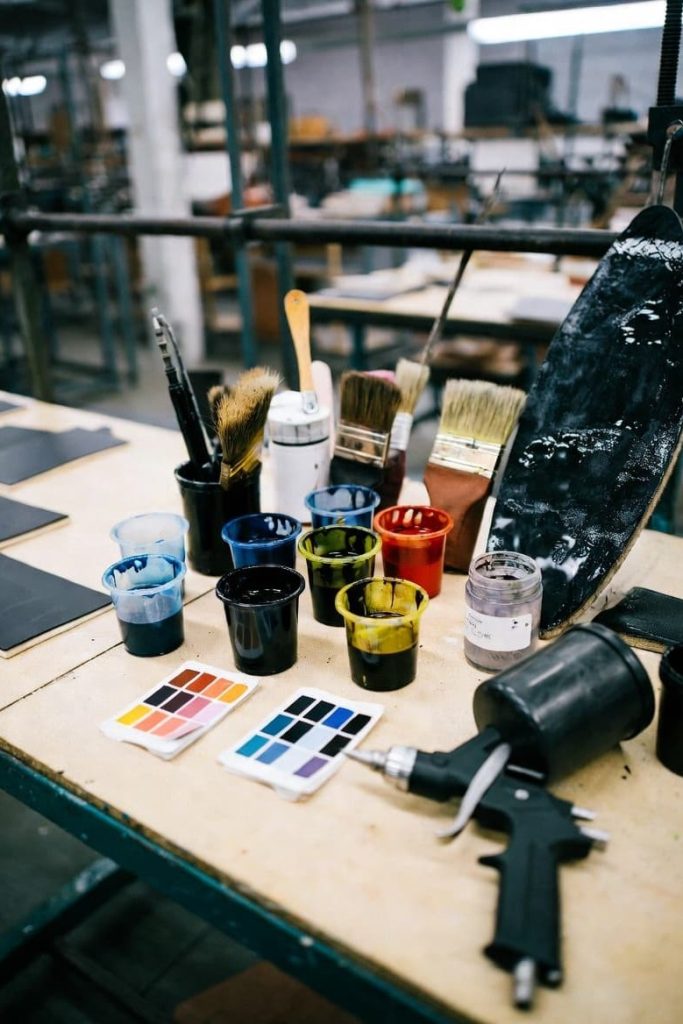
Keep application tools clean throughout the shift.
Control temperature and humidity inside the finishing area.

Benefits of Bottom Coloring
Bottom coloring provides both aesthetic and commercial advantages throughout footwear manufacturing. The most visible benefit is an attractive and professional outsole appearance that improves customer perception.
Consistent colouring also minimizes natural shade differences between outsole materials, allowing manufacturers to maintain uniform production quality across different batches.
Furthermore, carefully selected colours strengthen brand recognition by creating distinctive outsole designs that customers associate with premium products.
Another important advantage is defect masking. Minor cosmetic marks, machining lines, or slight material variations become less noticeable after proper colouring. However, structural defects should never be concealed and must always be corrected before finishing. Ultimately, bottom coloring helps factories achieve higher product acceptance while reducing cosmetic rejection during final inspection.
Key Control Points
- Maintain colour consistency between batches.
- Follow approved customer colour specifications.
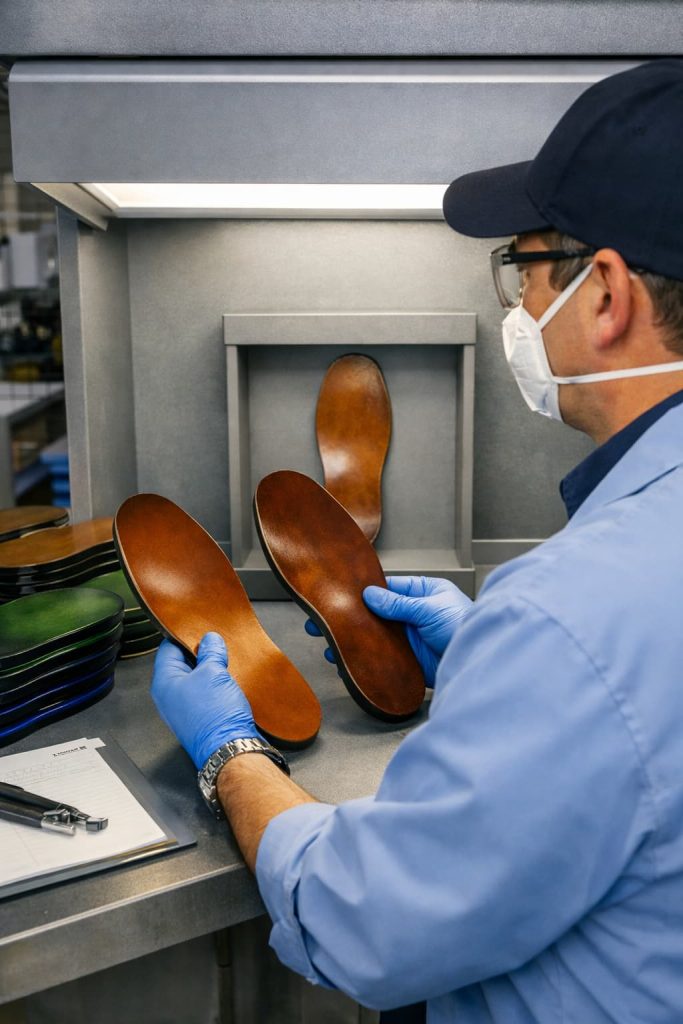
- Verify finished appearance under standard lighting.
- Reject structurally defective components before colouring.
Expert Tip:
Train operators using approved colour standards.
Conduct first-piece approval before mass production.


Common Defects in Bottom Coloring
Although bottom coloring is a relatively straightforward finishing operation, poor process control can produce visible defects that reduce product quality.
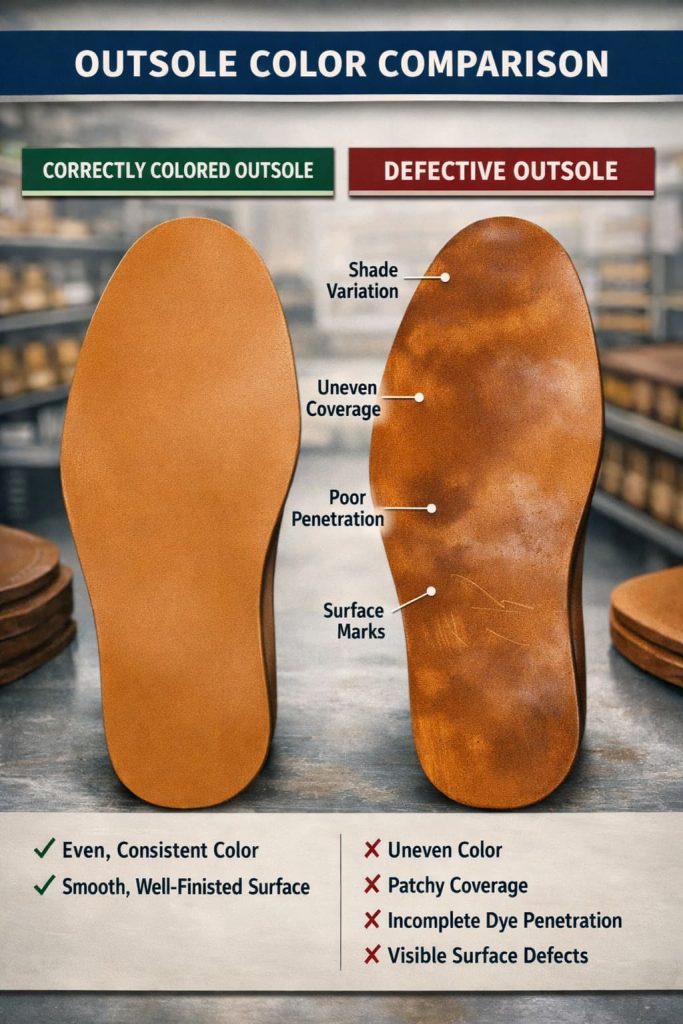
Shade variation occurs when colour mixing, application thickness, or drying conditions vary between batches.
Uneven coverage appears when the colour is applied inconsistently or the surface has not been properly prepared.
Poor penetration is common when leather surfaces contain contaminants or incompatible dye systems are used.
Surface marks such as brush streaks, fingerprints, dust particles, or drying marks reduce visual quality and often require rework.
Most colouring defects originate from inadequate preparation, inconsistent application techniques, or poor process monitoring. Standard operating procedures and regular inspections significantly reduce these problems.
Key Control Points
- Inspect colour uniformity after drying.
- Monitor application thickness.
- Keep work areas clean and dust-free.
- Record defects for process improvement.
Expert Tip: Inspect random samples during production instead of only final inspection.

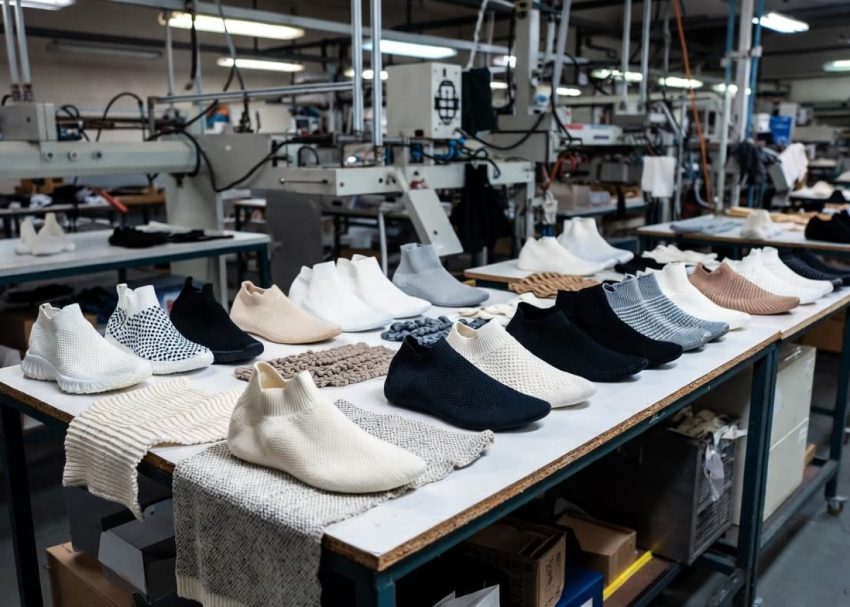
Factory Quality Control for Bottom Coloring
Consistent quality begins before the first outsole is coloured. Factories establish approved master colour samples and compare every production batch against these standards under controlled lighting conditions.
Operators monitor colour formulation, application method, drying time, and environmental conditions throughout production. Samples from each batch are inspected for colour accuracy, coverage, surface appearance, and overall finish before moving to the next operation.
Batch records also improve traceability. If a colour deviation occurs later, production teams can quickly identify the material batch, operator, and colouring conditions, allowing faster corrective action. A disciplined inspection process minimizes customer complaints while maintaining consistent product appearance throughout large production runs.
Key Control Points
- Use approved master colour samples.
- Standardize inspection lighting.
- Verify drying before handling.
- Maintain complete batch records.
Pro Tip: Store finished outsoles carefully to prevent surface damage.
Global Suppliers of Bottom Coloring and Leather Finishing Chemicals
Leading footwear manufacturers rely on specialized chemical suppliers to achieve consistent outsole color, excellent adhesion, and premium surface finishes. The companies below supply dyes, pigments, edge inks, bottom finishes, waxes, and leather finishing systems widely used in global footwear production.
| Supplier | Country | Description |
|---|---|---|
| Kenda Farben S.p.A. | Italy | Global footwear chemical manufacturer offering leather dyes, bottom finishes, edge paints, waxes, polishing creams, and specialty finishing systems. Widely used by premium footwear factories for consistent quality, sustainability, and color performance. |
| Quinn Italiana (ITALFA) | Italy | Italian specialist producing bottom finishes, heel and edge dressings, leather dyes, polishing waxes, gum stains, and decorative finishing products for premium leather footwear manufacturing. |
| Meltonian Shoe Care | USA | Established leather finishing brand supplying leather dyes, cream polishes, waxes, conditioners, and restoration products widely used for premium footwear finishing and refurbishment. |
| Fenice S.p.A. | Italy | Manufactures water-based leather finishing systems, edge paints, pigments, polyurethane coatings, and specialty color solutions for footwear, handbags, and leather goods industries worldwide. |
| STAHL | Netherlands | One of the world’s leading suppliers of leather finishing chemicals, pigments, binders, topcoats, and sustainable coating technologies serving major international footwear manufacturers. |
| TFL Leather Technology | Switzerland | Supplies complete leather finishing solutions including dyes, pigments, binders, waxes, topcoats, and specialty chemicals designed for high-quality footwear manufacturing. |
| Zschimmer & Schwarz | Germany | Develops leather auxiliaries, pigments, finishing agents, and specialty chemicals that improve outsole appearance, production efficiency, and finishing consistency across footwear factories. |
Note
Always validate a new bottom coloring system through laboratory and pilot production trials before full-scale manufacturing. Material compatibility, color consistency, drying performance, and customer approval should be confirmed for every new outsole material and production batch.


Conclusion
Bottom coloring is an essential finishing process that enhances outsole appearance while ensuring consistent product quality. By selecting suitable colouring materials, following standardized application procedures, and implementing strict quality controls, footwear manufacturers can achieve excellent visual consistency with minimal rework.
Although the operation primarily improves aesthetics, it also strengthens brand identity, increases customer satisfaction, and supports efficient factory production.
Next Blog: Burnishing, Brushing and Polishing in Outsole Process: Outsole (Stock Fitting) Assembly Series, where we will explore the final finishing techniques that enhance outsole gloss, smoothness, and premium appearance before inspection and packing.

Frequently Asked Questions (FAQs)
Bottom coloring is primarily used on leather outsoles because dyes penetrate the leather and produce a rich, uniform finish. Certain synthetic and composite outsoles can also be colored using compatible pigments, edge inks, or specialty coatings specified by the material supplier.
Dyes penetrate porous materials such as leather and create a natural appearance without covering the grain. Pigments remain on the surface and provide opaque, uniform coverage, making them more suitable for synthetic outsole materials.
Consistent color ensures every production batch meets customer specifications and maintains brand identity. Even slight shade variations become noticeable after shoe assembly and may lead to product rejection during final inspection.
Typical defects include:
Shade variation
Uneven coverage
Poor penetration
Brush or spray marks
Dust contamination
Fingerprint marks
Drying stains
Most of these defects can be prevented through proper surface preparation, standardized application methods, and controlled drying conditions.
Factories establish approved master color samples, standardize dye formulations, monitor application methods, control drying conditions, and inspect every production batch under standardized lighting before approval.
Bottom coloring primarily enhances appearance rather than structural durability. However, some specialty finishing systems provide limited protection against surface scuffing, moisture, and minor abrasion while improving the overall visual finish.
After bottom coloring is complete and the color has fully dried, the outsole normally proceeds to Burnishing, Brushing, and Polishing, where the final surface finish is refined before inspection and assembly.
Posts you make Like
Troubleshooting Adhesive Bond Failures in Footwear Manufacturing…