Heat Setting in Footwear Manufacturing – Full Shoe Assembly Series
In the previous blog, Intermediate Finishing (Creams / Sprays / Dyes) in Footwear Manufacturing – Full Shoe Assembly Series, we discussed how surface finishing improves cosmetic appearance, shade consistency, and presentation quality after lasting operations. However, appearance improvement alone does not guarantee that the shoe structure will remain stable throughout storage, transportation, and consumer use.
Therefore, the next major operation in the assembly sequence is heat setting. Heat setting is one of the most critical stabilization processes in footwear manufacturing because it permanently locks the lasted upper shape around the shoe last. During lasting, upper materials are stretched aggressively over the toe, vamp, quarter, and heel areas. As a result, the materials retain internal tension and stress. If this stress is not stabilized correctly, the upper will attempt to recover its original shape, which can create wrinkles, toe collapse, poor fitting, and overall shape distortion.
In modern footwear factories, heat setting uses controlled heat circulation to relax stressed fibers while simultaneously activating thermoplastic toe puffs and heel counters. The process ensures that the upper conforms permanently to the intended shoe geometry. Furthermore, proper heat setting improves dimensional stability, upper smoothness, and long-term shape retention.
Today’s footwear factories use tunnel heat setters, cabinet systems, infrared heating units, and humidity-controlled thermal chambers depending on product type, production volume, and upper material construction.
This blog explains the complete industrial heat setting process, machine types, operating parameters, material behavior, process control methods, quality standards, defects, troubleshooting methods, and global machine suppliers used in footwear manufacturing.
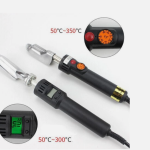
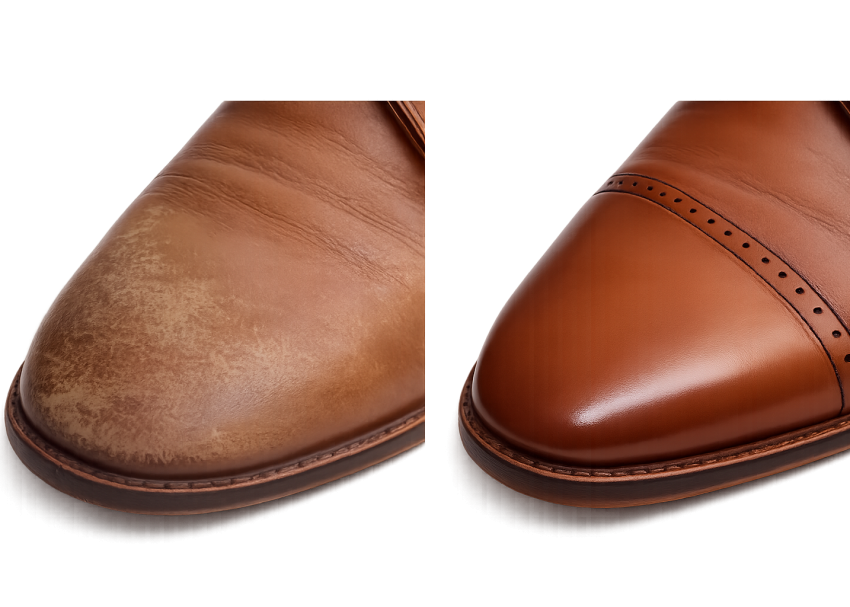
What is Heat Setting in Footwear Manufacturing?
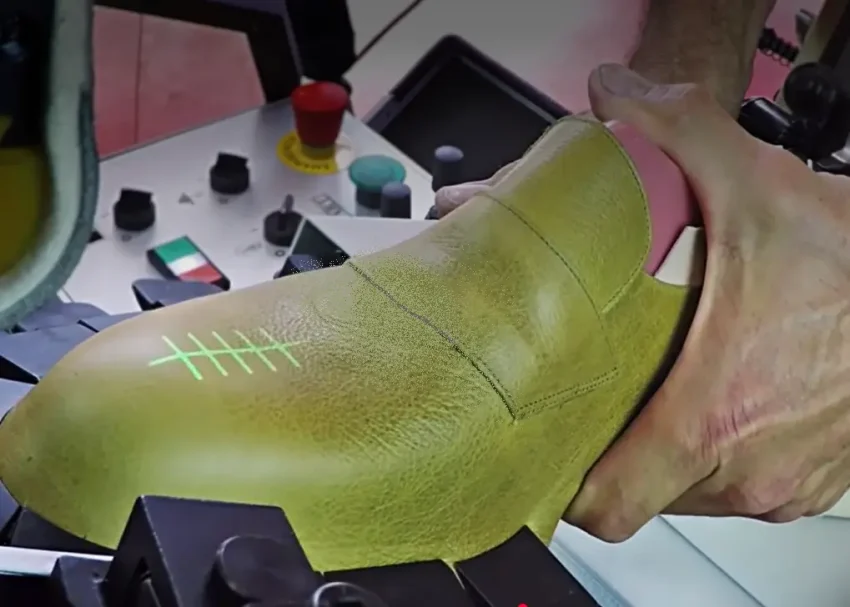
Heat setting is a controlled thermal stabilization process performed after lasting to permanently fix the upper shape around the shoe last. The process uses regulated heat, airflow, and sometimes humidity to relax material stress and activate reinforcement components inside the shoe upper.
During lasting, the upper material experiences severe stretching and tension because the upper must conform tightly to the three-dimensional shape of the last. This stretching affects not only leather and synthetic materials but also internal reinforcement layers, foam laminations, adhesive films, and structural support components. Consequently, the upper stores residual stress after lasting.
Heat setting removes this instability by exposing the lasted shoe to controlled heat for a specific duration. The heat relaxes stressed fibers and softens thermoplastic reinforcement materials such as toe puffs and heel counters. Once the material reaches the required activation temperature, the upper adapts fully to the last shape. During the subsequent cooling stage, the material stabilizes permanently.
This process is especially important for most of the Footwear like, Athletic footwear, Leather footwear, Fashion footwear, Safety shoes, Structured uppers, Thermoplastic reinforcement constructions.
Without proper heat setting, the shoe may gradually lose its intended geometry after last removal or during customer use.
Therefore, heat setting is not simply a heating process. It is a structural stabilization operation that directly affects product quality, fitting consistency, and appearance retention
Key Control Points
- Maintain stable temperature according to upper material
- Ensure uniform airflow circulation inside chamber
- Prevent overheating of synthetic coatings
- Verify full thermoplastic activation
Expert Tip: Use humidity-assisted heat setting for premium leather footwear
Why Heat Setting is Important in Footwear Manufacturing
Heat setting plays a major role in maintaining the structural integrity of the shoe after lasting. Although lasting creates the desired shoe shape mechanically, the upper materials naturally try to return to their original flat condition. Therefore, without thermal stabilization, the shoe cannot maintain lasting accuracy consistently.
One of the most important functions of heat setting is the activation of thermoplastic toe puffs and heel counters. These reinforcement materials require controlled heating to achieve proper stiffness and structural memory. When activated correctly, they provide shape retention, toe support, heel stability, and dimensional consistency.
Heat setting also improves overall upper appearance. During the process, the controlled heat relaxes stretched fibers and smooths tension marks created during lasting. As a result, the upper surface becomes cleaner, smoother, and more symmetrical.
In addition, heat setting improves – Shape memory retention, Dimensional stability, Last conformity, Wrinkle resistance, Structural durability, Upper smoothness, Fitting consistency. Factories producing premium footwear pay particular attention to heat setting because even minor shape variation can affect visual appearance, customer comfort, and brand quality standards.
Furthermore, modern footwear designs use lightweight synthetic materials, knitted uppers, laminated constructions, and engineered textiles. These materials react differently to heat compared to traditional leather. Therefore, process control has become increasingly important in today’s footwear manufacturing environment.
Key Control Points
- Monitor tunnel temperature continuously
- Verify conveyor speed consistency
- Separate parameters by upper material type
- Check toe and heel rigidity after process
Pro Tip: Separate leather and synthetic production parameters
Heat Setting Process Flow in Shoe Manufacturing
The industrial heat setting process follows a carefully controlled sequence to stabilize the lasted upper without damaging upper materials or reinforcement components. Every stage in the process contributes directly to shape retention and structural performance.
After lasting, the shoe remains mounted on the last and moves immediately into the heat setting section. The lasted shoe enters either a conveyorized tunnel system or a cabinet-style heating chamber depending on factory setup and production volume.
Inside the heating chamber, controlled hot air circulates around the entire shoe upper. The heat penetrates through the upper material and reaches internal reinforcement layers including toe puffs, heel counters, foam laminations, and adhesive interfaces. During this stage, thermoplastic materials soften temporarily and adapt completely to the geometry of the last.
At the same time, the upper fibers relax and redistribute internal stress generated during lasting. This relaxation process prevents the upper from recovering toward its original shape after last removal. Once the required exposure time is completed, the shoe moves into the cooling stage. Cooling is equally important because it stabilizes the activated thermoplastic materials and permanently locks the upper shape around the last.
Factories normally optimize the process based on, Upper material type, Shoe construction, Reinforcement material, Production speed, Last shape complexity, Ambient factory conditions.
A properly controlled heat setting process ensures that every shoe maintains consistent geometry throughout storage, shipping, and consumer wear.
Key Control Points
- Maintain proper dwell time
- Ensure full heat penetration
- Avoid excessive upper drying
- Stabilize cooling duration
Pro Tip: Validate tunnel temperature using external sensors
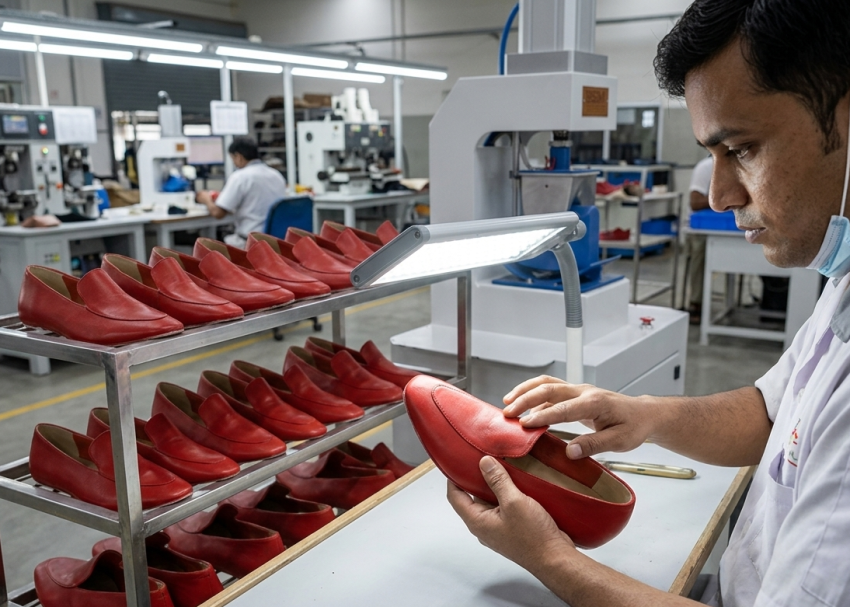
Types of Heat Setting Machines Used in Footwear Factories
Tunnel Heat Setting Machines
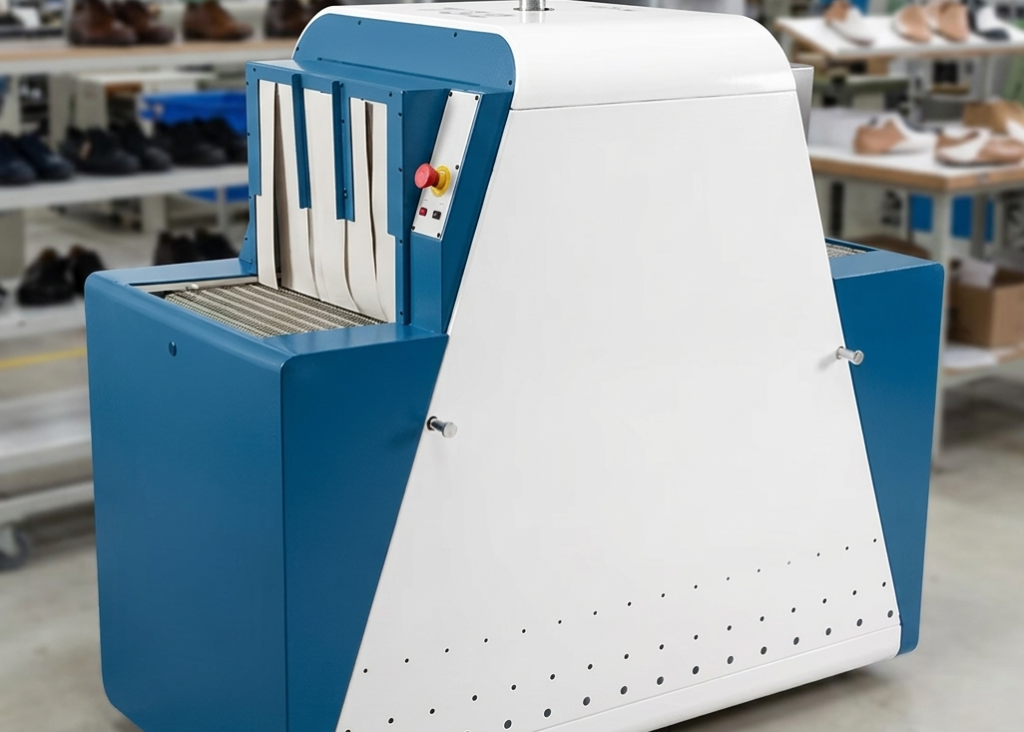
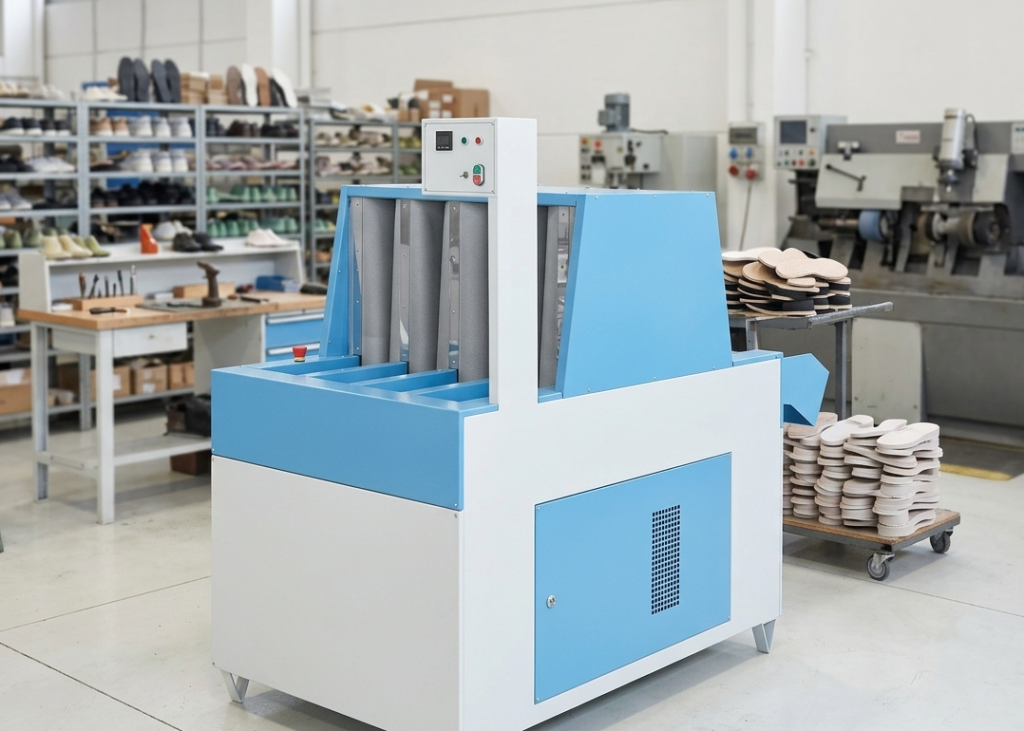
Tunnel heat setting machines are the most widely used systems in modern high-volume footwear factories. These machines operate continuously using conveyor systems that move lasted shoes through multiple controlled heating zones.
The tunnel design allows hot air to circulate evenly around the upper while maintaining stable process conditions throughout production. Advanced tunnel systems use programmable logic controllers, airflow balancing systems, humidity regulation units, and multi-zone temperature control to ensure process consistency.
Tunnel systems are particularly suitable for most of the footwears like, Sports footwear, Safety shoes, Casual footwear, High-volume production lines & Automated assembly operations.
One major advantage of tunnel systems is production stability. Since the shoes move continuously at controlled speed, factories achieve highly repeatable process conditions. Furthermore, automation reduces operator dependency and minimizes process variation between shifts.
However, tunnel systems require proper maintenance. Dirty filters, unstable airflow, or conveyor speed fluctuation can create uneven heat penetration and inconsistent product quality.
Key Control Points
- Calibrate tunnel zones regularly
- Monitor conveyor synchronization
- Clean airflow filters daily
- Verify airflow balance across tunnel width
Pro Tip: Never stack shoes before complete cooling stabilization
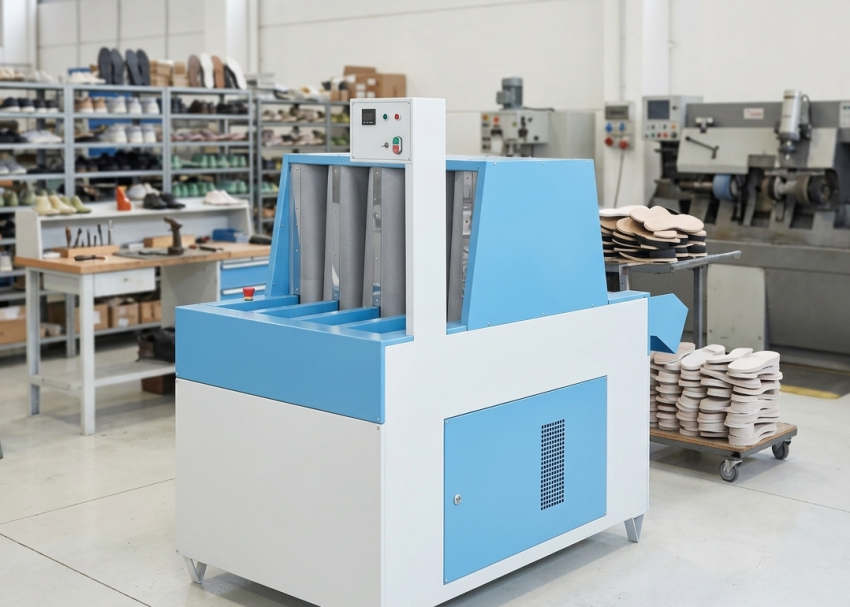
Cabinet Heat Setting Machines
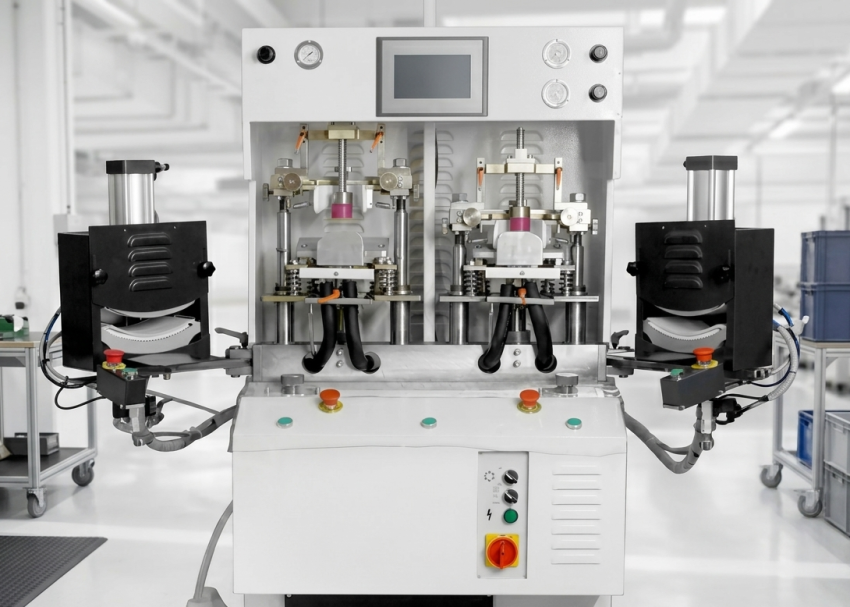
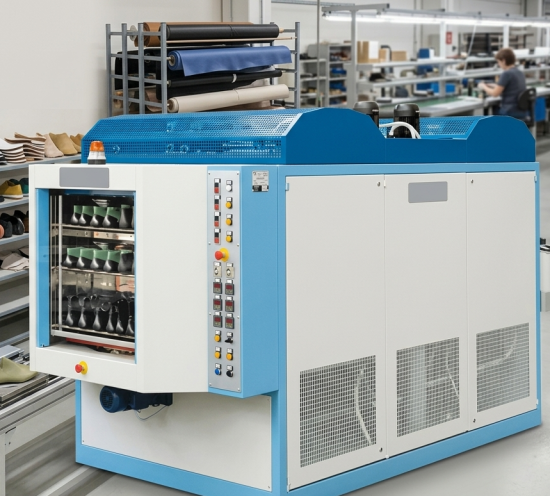
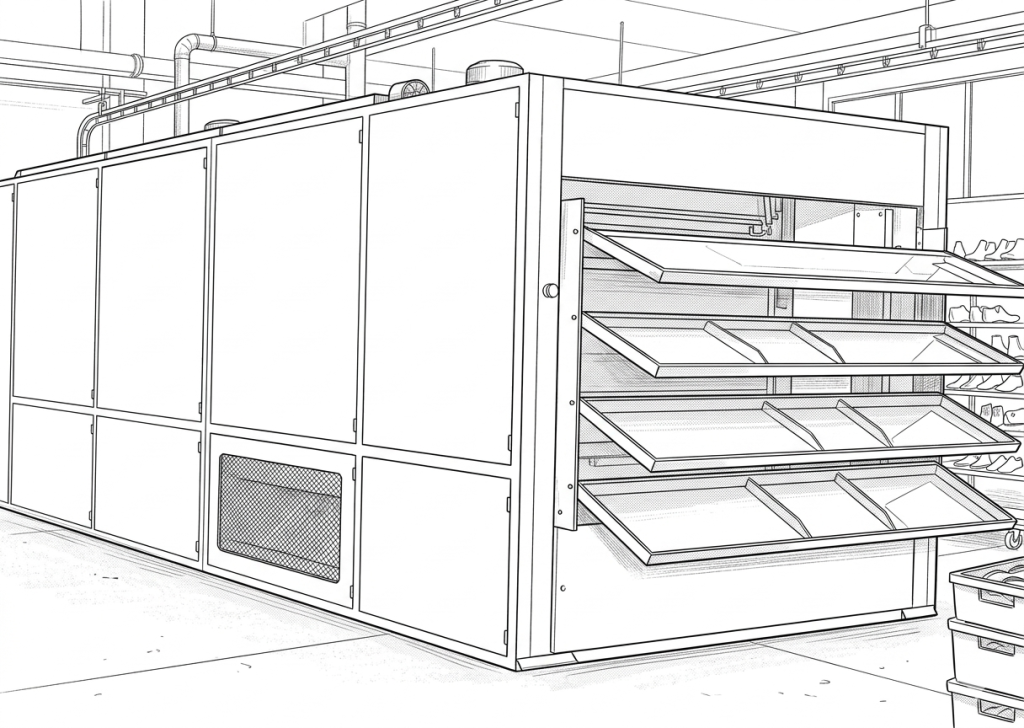
Cabinet heat setting machines operate using batch processing instead of continuous conveyors. Operators load lasted shoes into enclosed heating chambers where the shoes remain for a defined heating cycle.
These systems are widely used in, Leather footwear factories, Development rooms, Sampling sections, Small production environments, Premium fashion footwear operations. Cabinet systems offer greater flexibility because operators can adjust parameters for individual batches. This is especially useful when processing sensitive leather materials or experimental constructions that require careful temperature management.
Compared to tunnel systems, cabinet heat setters have lower productivity. However, they provide better control for smaller production quantities and specialized footwear constructions. The airflow system inside the cabinet must distribute heat uniformly. Otherwise, shoes located near the heating source may receive excessive exposure while others remain under-heated.
Key Control Points
- Monitor internal chamber temperature
- Avoid cabinet overloading
- Maintain internal airflow circulation
- Verify batch heating consistency
Pro Tip: Replace airflow filters regularly for consistent heating

Infrared Heat Setting Systems
Infrared heat setting systems use radiant energy instead of conventional hot air circulation. These systems heat the upper surface rapidly and are commonly used for localized thermal activation applications. Infrared systems are highly effective for activating thermoplastic materials in specific zones such as, Toe puff areas, Heel counter regions, Reinforcement sections, Localized shaping operations.
One of the biggest advantages of infrared systems is energy efficiency. Since the heat transfers directly to the material surface, the response time is much faster than conventional hot air systems. As a result, production speed can improve significantly. However, infrared systems require careful calibration because uneven exposure can damage coatings, create discoloration, or deform sensitive synthetic materials.
Key Control Points
- Check infrared lamp calibration
- Prevent localized overheating
- Verify exposure uniformity
- Monitor sensitive upper materials carefully
Pro Tip: Monitor conveyor speed every production shift
Heat Setting Parameters for Different Upper Materials
Different upper materials react differently to thermal exposure. Therefore, factories cannot use a single parameter setting for all footwear constructions. Material behavior depends on fiber composition, coating type, foam structure, adhesive chemistry, and reinforcement design.
Leather uppers usually require moderate heating combined with controlled humidity because excessive dry heat can remove natural moisture and create surface cracking. Synthetic materials generally require lower temperatures because films and coatings soften rapidly under heat exposure.
Textile and knitted uppers are even more sensitive because lightweight constructions may shrink or distort under aggressive airflow conditions. Factories normally establish validated process windows through laboratory trials, wear testing, and pilot production evaluations. Typical industrial operating ranges include:
- Leather uppers: 100–120°C
- Synthetic uppers: 70–100°C
- Textile uppers: 45–65°C
- Exposure duration: 2–4 minutes
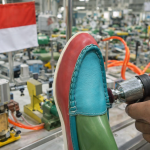
Modern factories increasingly use digital monitoring systems to record, Temperature, Conveyor speed, Exposure time, Airflow velocity, Humidity conditions. This data helps maintain production consistency and supports quality traceability.
Pro Tip: Conduct toe stiffness testing after parameter changes
Common Heat Setting Defects and Troubleshooting
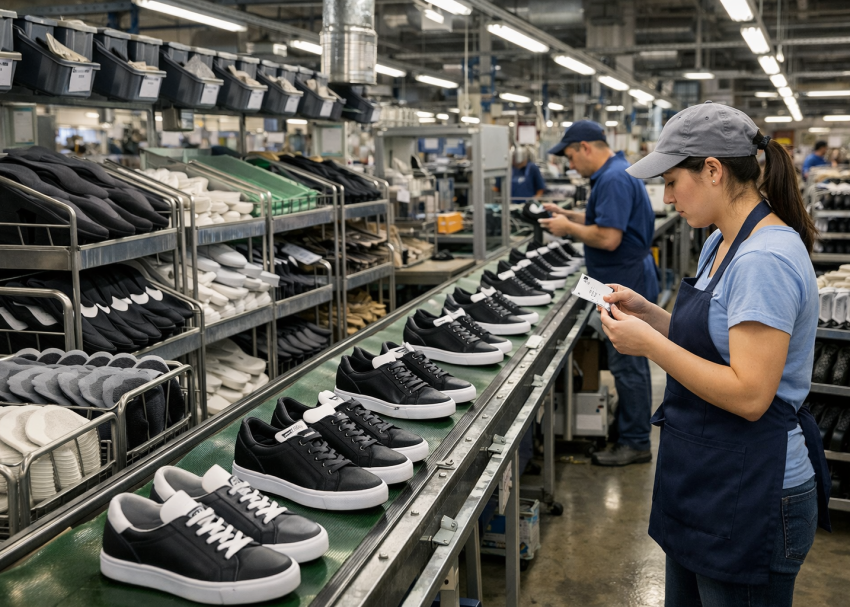
Improper heat setting can create major structural and cosmetic defects that directly affect customer satisfaction and product performance. Therefore, factories monitor the process carefully through inline inspection and process verification systems.
One of the most common problems is upper wrinkling after last removal. This usually occurs when the heat penetration is insufficient or when lasting tension remains unstable. In soft leather and textile uppers, inadequate thermal stabilization allows the material to recover partially toward its original condition.
Toe collapse is another major defect caused by incomplete thermoplastic activation. If the toe puff does not reach the required softening temperature, the toe structure will lose rigidity after cooling. This issue becomes highly visible during storage and retail display.
Heel counter softness creates similar problems in the rearfoot area. Inadequate heat penetration or insufficient exposure time prevents the counter from achieving proper stiffness. As a result, heel shape retention deteriorates significantly.
Factories also experience defects such as, Surface discoloration, Adhesive reactivation marks, Upper shrinkage, Coating damage, Material bubbling, Uneven geometry, Left-right asymmetry.
To minimize these problems, factories establish strict process monitoring systems and preventive maintenance schedules for heat setting equipment.
Key Control Points
- Verify toe stiffness after cooling
- Monitor wrinkle recovery performance
- Check left-right symmetry
- Validate airflow consistency regularly
Pro Tip: Maintain preventive maintenance schedules for heating systems
Quality Inspection Standards for Heat Setting
Heat setting quality inspection focuses on structural stability, dimensional accuracy, and visual consistency. Since the process directly affects shape retention, inspection standards must evaluate both cosmetic appearance and functional stability.
Inspectors normally examine the shoe immediately after cooling because defects become more visible once the upper stabilizes fully. The inspection team checks whether the upper conforms accurately to the last shape and whether the reinforcement areas achieve sufficient rigidity.
Toe shape consistency is one of the most important inspection criteria because minor variation becomes highly visible during retail presentation. Heel counter stiffness is equally important because rearfoot deformation affects fitting performance and consumer comfort. Inspectors also evaluate, Surface smoothness, Wrinkle recovery, Sidewall symmetry, Adhesive stability, Last conformity, Upper distortion, Material damage, Left-right matching
Key Control Points
- Inspect immediately after cooling
- Compare left-right geometry carefully
- Verify toe and heel rigidity
- Record recurring defects daily
Conclusion
Heat setting is one of the most important stabilization operations in footwear manufacturing because it permanently locks the upper shape around the last while activating thermoplastic reinforcement components. The process directly affects shape retention, fitting consistency, wrinkle resistance, and overall product appearance.
Modern footwear factories rely heavily on controlled tunnel systems, cabinet heat setters, and infrared technologies to achieve consistent thermal stabilization. However, machine capability alone does not guarantee quality. Successful heat setting depends equally on process control, material understanding, parameter validation, airflow management, and preventive maintenance.
As footwear constructions continue evolving toward lightweight synthetics, engineered textiles, and advanced reinforcement systems, heat setting technology will become even more important in maintaining production consistency and structural performance.
In the next blog, we will continue the Full Shoe Assembly Series with, Stage Inspection – Lasting in Footwear Manufacturing – Full Shoe Assembly Series. This upcoming topic will explain inspection standards, defect identification methods, inline quality systems, audit checkpoints, and process control techniques used during footwear lasting operations.
Frequently Asked Questions – FAQs
What is the main purpose of heat setting in footwear manufacturing?
Heat setting stabilizes the lasted upper shape and activates thermoplastic reinforcement materials such as toe puffs and heel counters.
Why are toe puffs heated during heat setting?
Toe puffs require thermal activation to achieve proper stiffness and shape retention after lasting.
Which machine is most commonly used for heat setting?
Tunnel heat setting machines are the most common systems in large-scale footwear factories.
What happens if heat setting temperature is too high?
Excessive temperature may damage upper coatings, deform materials, weaken adhesives, or create discoloration.
Why is cooling important after heat setting?
Cooling stabilizes the softened thermoplastic materials and permanently locks the final shoe geometry.
Which materials are most sensitive to heat setting?
Synthetic films, coated textiles, knitted uppers, and lightweight laminations are highly sensitive to excessive heat exposure.
What are the most common heat setting defects?
Common defects include toe collapse, heel softness, wrinkles, shrinkage, upper distortion, and uneven geometry.