Edge Coloring and Waxing Operations in Outsole Process: Outsole (Stock Fitting) Assembly Series
In the previous blog, Filler Application Operations in Outsole Process, we discussed how filler creates a smoother and more uniform outsole edge before final finishing. Once the filler has dried and the edge has been properly prepared, the outsole moves to edge coloring and waxing.
Edge coloring gives the outsole its final visual identity. It covers the exposed edge, improves color uniformity, and helps create the appearance specified by the footwear brand. Waxing then enhances the finish by sealing the surface and increasing the required level of luster.
This operation becomes particularly important in premium leather footwear, where customers can easily see the outsole edge. Therefore, poor color coverage, uneven gloss, or wax marks can reduce the perceived quality of an otherwise well-made shoe.
Expert Tip: Keep separate applicators for different colors to prevent contamination.
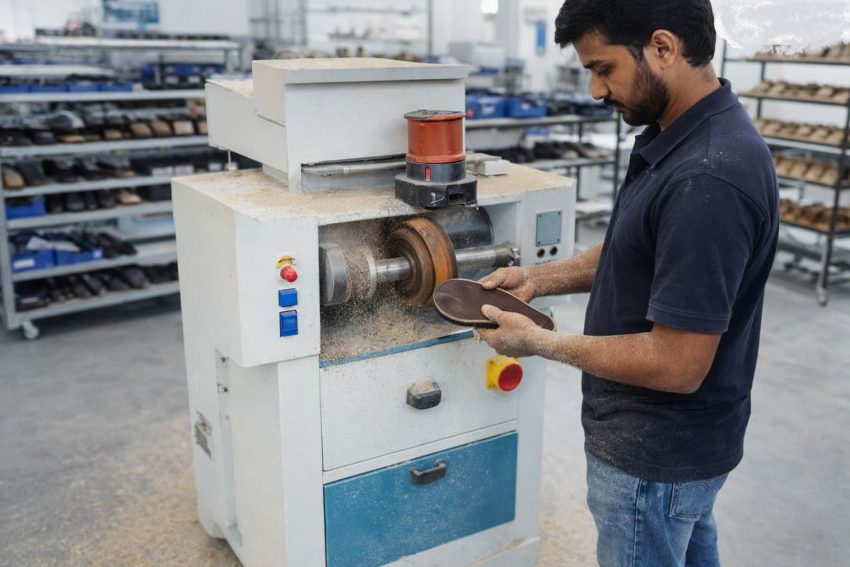
Edge Coloring Operation
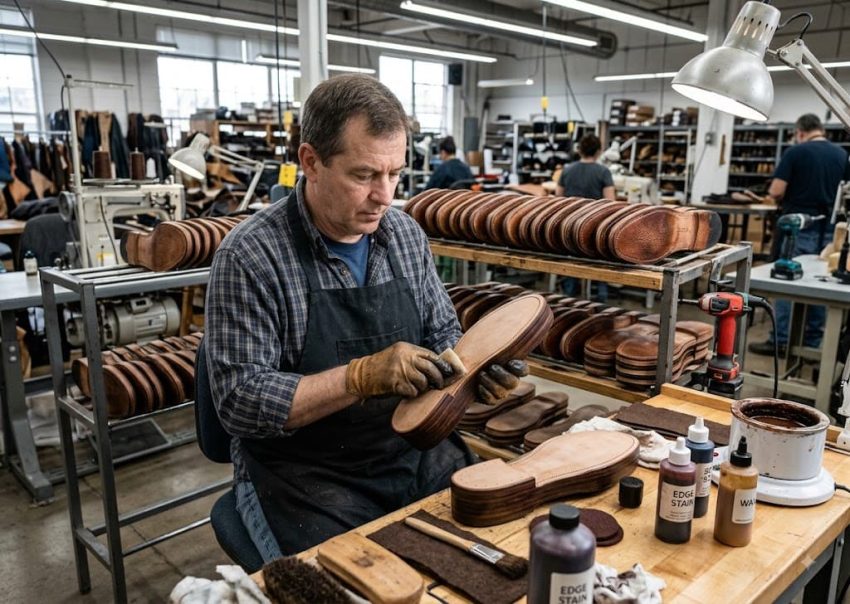
This operation involves applying specially formulated edge inks, pigments, or finishing compounds to the prepared outsole edge. The process covers minor surface variations and provides the required color, shade, and appearance.
Before coloring, the operator must ensure that the edge is clean, dry, and free from sanding dust, loose leather fibers, oil, or other contamination. Otherwise, the color may not adhere properly or may appear uneven.
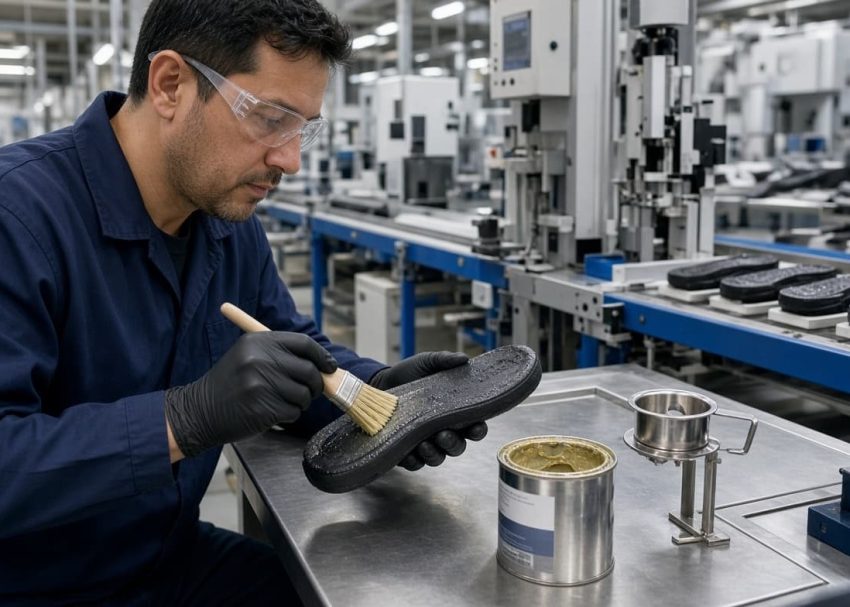
Depending on production volume, factories can apply edge color manually using brushes or applicators, or use mechanical edge-coloring equipment for greater consistency. Premium footwear may require two or more thin coats rather than one heavy coat. Each coat must dry adequately before the next application.
Key Control Points
- Keep the edge completely clean before application.
- Match the approved color standard.
- Apply thin and uniform coats.
- Allow sufficient drying between coats.
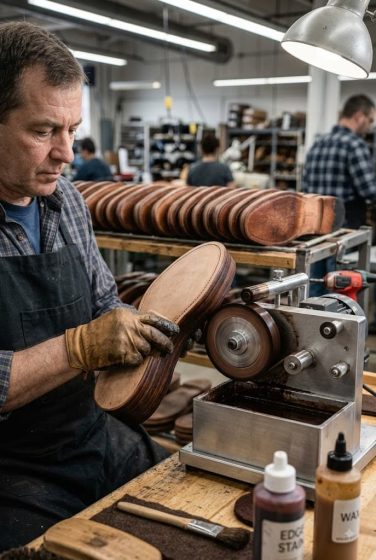
Expert Tip: Never compensate for poor coverage by applying one excessively thick coat.

Materials Used for Edge Coloring
The material selection depends on the outsole material, required appearance, and customer specification. Edge inks provide the primary color, while pigments improve color intensity and coverage. Specialty finishes can create matte, satin, antique, burnished, or high-gloss effects.
For leather outsoles, the finishing material should provide good adhesion, flexibility, abrasion resistance, and acceptable drying characteristics. Poor-quality or incompatible materials may crack, peel, or lose color during handling and wear.
Color preparation also requires attention. Pigments or inks should be mixed properly so that settled material does not create shade variation. Where required, filtering helps remove lumps or contaminants before application.
Key Control Points
- Use only approved edge-coloring materials.
- Mix pigments or inks thoroughly.
- Check material compatibility with the outsole.
- Maintain batch traceability for production control.
Expert Tip: Allow complete drying before waxing.
Edge Waxing Operation
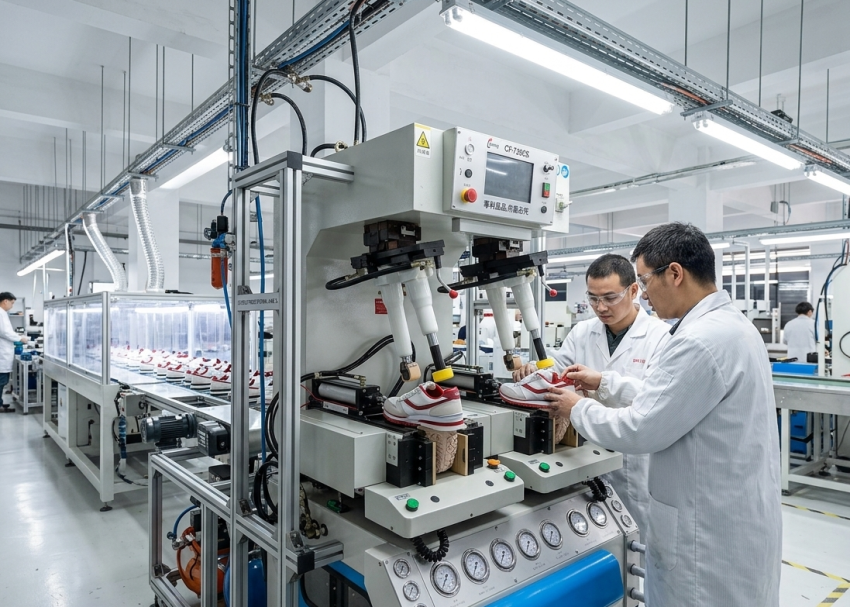
After the colored edge has dried completely, the outsole proceeds to waxing. Waxing applies a thin finishing layer that improves surface appearance, enhances luster, and helps seal the edge.
The wax selected depends on the required finish. Natural waxes, synthetic waxes, or blended systems may be used. Premium footwear often requires a controlled wax finish because excessive wax can create streaks or an uneven appearance.
During the operation, the wax should spread uniformly across the edge. Polishing or burnishing can then develop the required level of gloss. However, excessive pressure, speed, or friction can generate heat and damage the finish.
Key Control Points
- Wax only after the color has dried completely.
- Apply a thin and uniform wax layer.
- Control polishing pressure and speed.
- Avoid excessive heat during burnishing.
Expert Tip: Maintain consistent polishing pressure between operators.
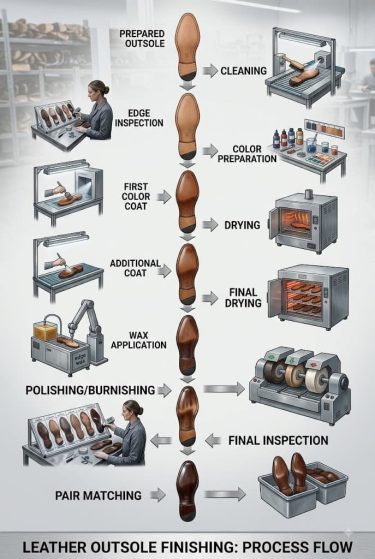
Edge Coloring and Waxing Process Flow
A controlled sequence helps maintain consistent results throughout production:
Prepared Outsole → Cleaning → Edge Inspection → Color Preparation → First Color Coat → Drying → Additional Coat → Final Drying → Wax Application → Polishing/Burnishing → Final Inspection → Pair Matching
The exact number of color coats and finishing stages depends on the outsole material and customer specification. However, factories should avoid unnecessary coating thickness because heavy applications can increase drying time and create cracking, peeling, or uneven finishing.
Expert Tip: Replace contaminated or worn polishing wheels immediately.
Machines and Equipment
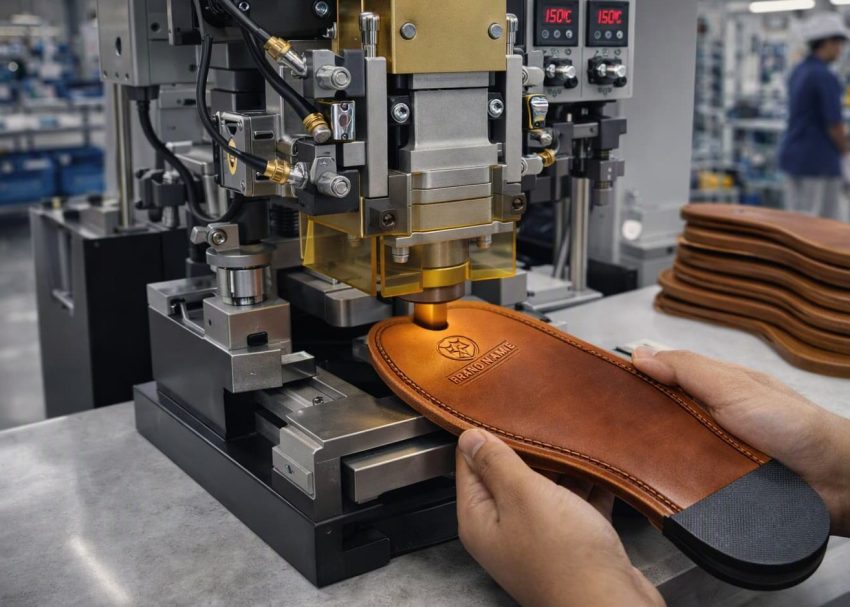
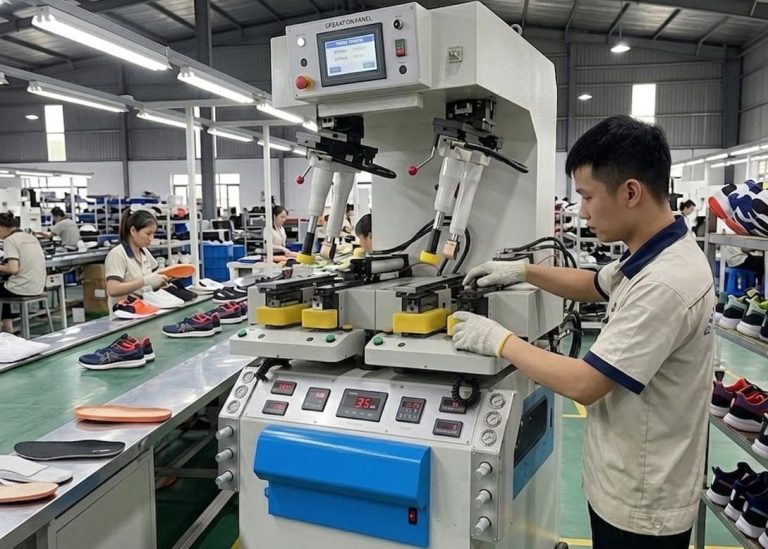
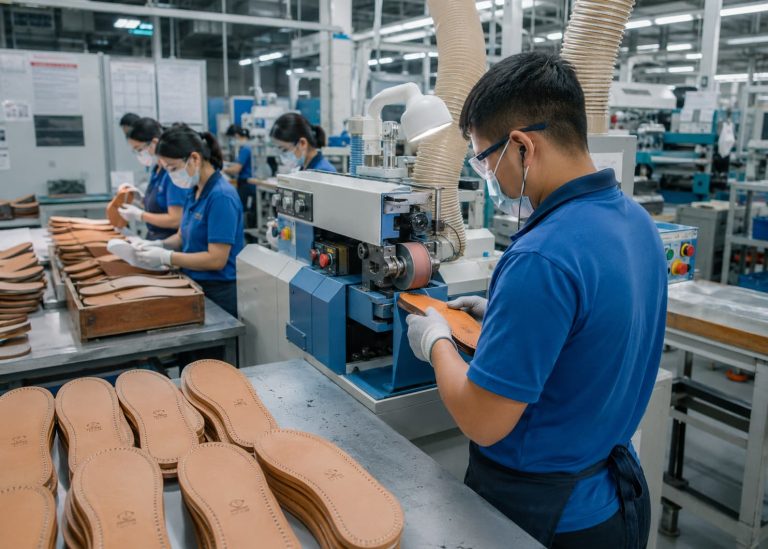
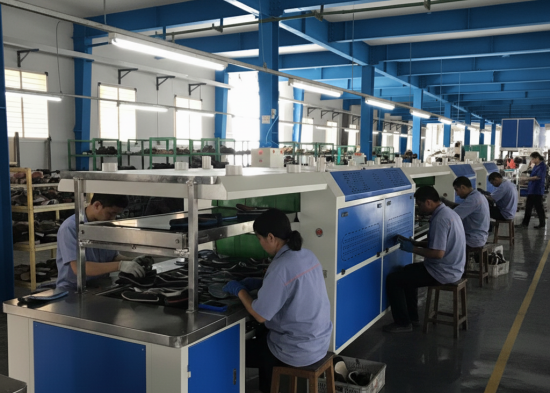
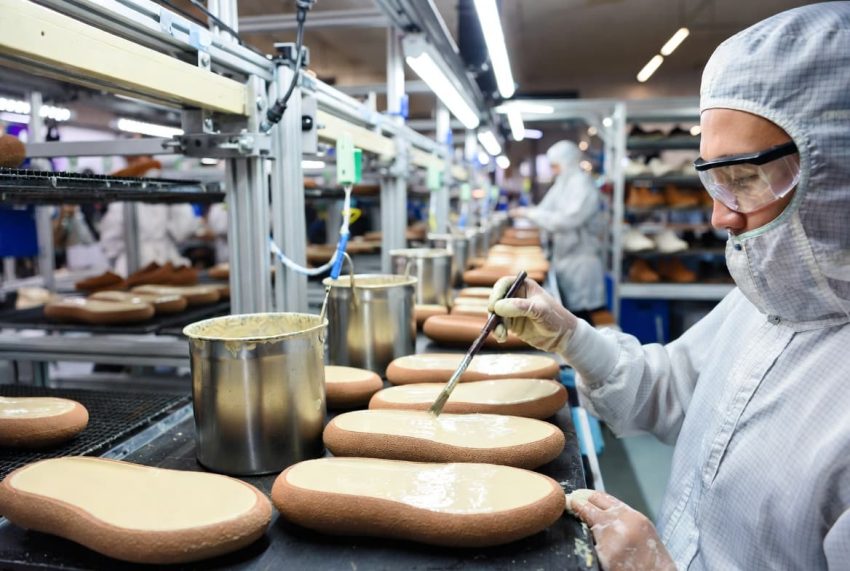
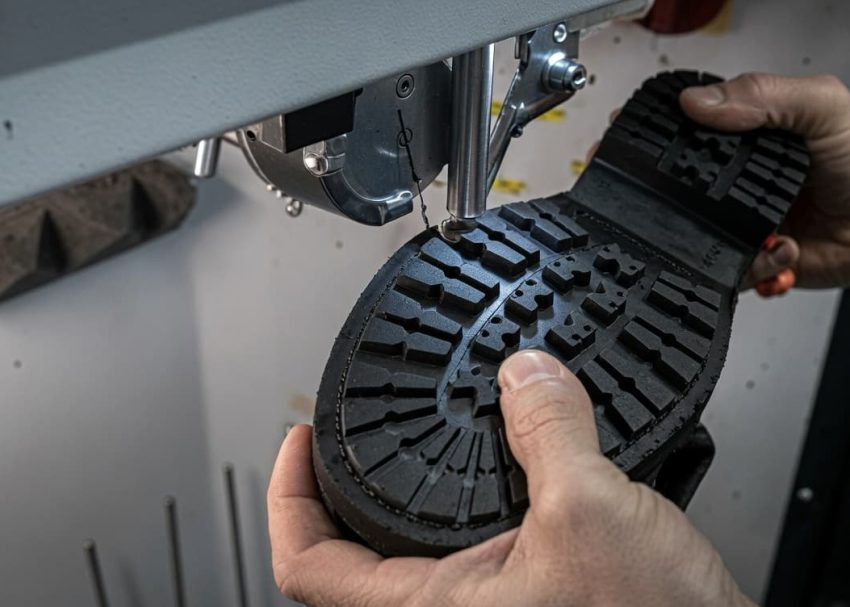
Edge coloring and waxing can be performed manually, semi-automatically, or using dedicated finishing machines. Manual systems use brushes, felt applicators, cloth wheels, and polishing tools. They provide flexibility and are particularly useful for premium or small-batch footwear.
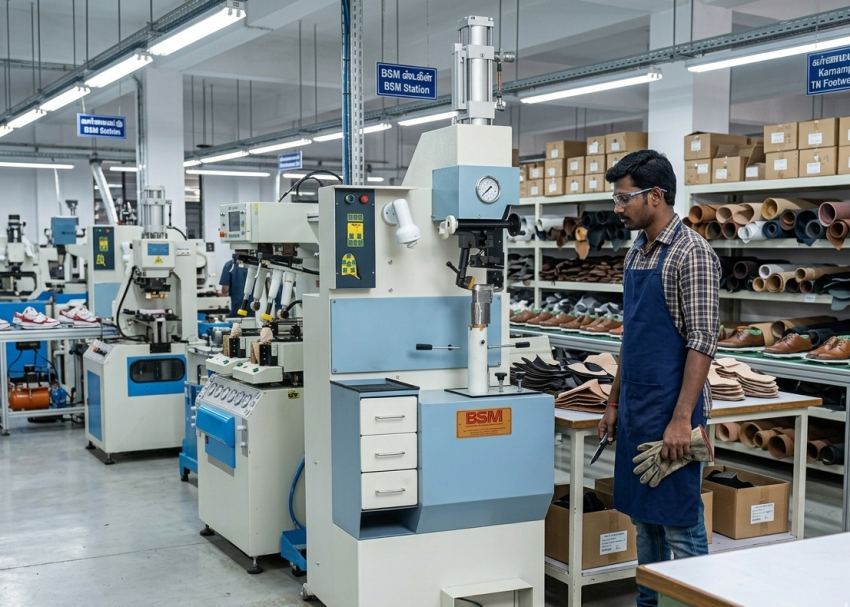
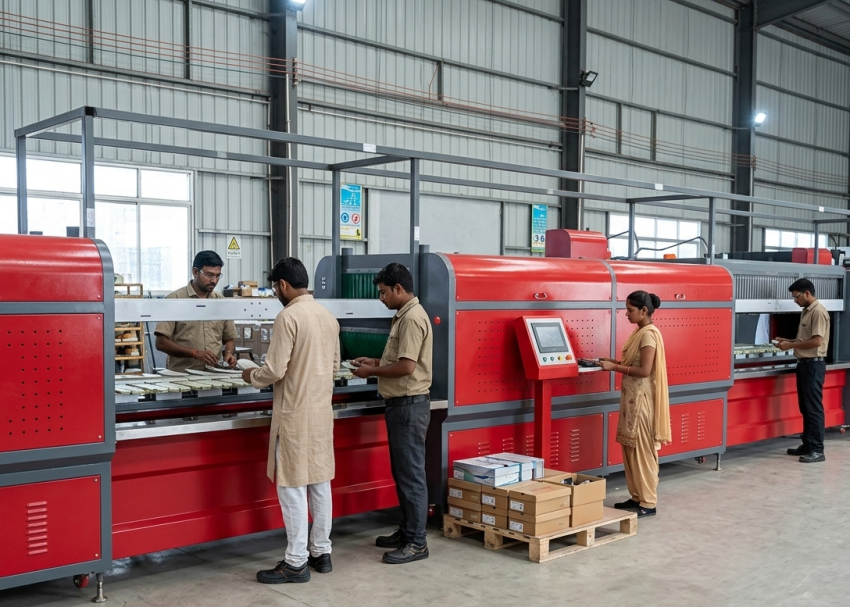
Mechanical systems use rotating application wheels, rollers, brushes, or polishing wheels. They improve production speed and reduce variation between operators. In high-volume factories, specialized finishing machines can integrate coloring, waxing, polishing, or burnishing functions.
Machine settings should be established during production trials and recorded in the style-specific SOP. Operators should also monitor wheel condition because worn or contaminated wheels can produce inconsistent finishing.
Expert Tip: Keep approved color and finish samples at the workstation.

Common Defects and Corrective Actions
Common defects include uneven color, poor coverage, shade variation, peeling, wax streaks, dull finish, excessive gloss, and burn marks.
Uneven color generally results from inconsistent application, inadequate mixing, or poor surface preparation. Peeling may indicate contamination or poor compatibility between the edge material and substrate. Wax streaks usually occur when too much wax is applied or polishing is inconsistent.
Burn marks or excessive gloss can develop when the polishing wheel generates excessive frictional heat. Therefore, operators should control machine speed, pressure, and contact time.
Expert Tip: Inspect edges from different viewing angles because lighting can hide defects.
Final Quality Inspection
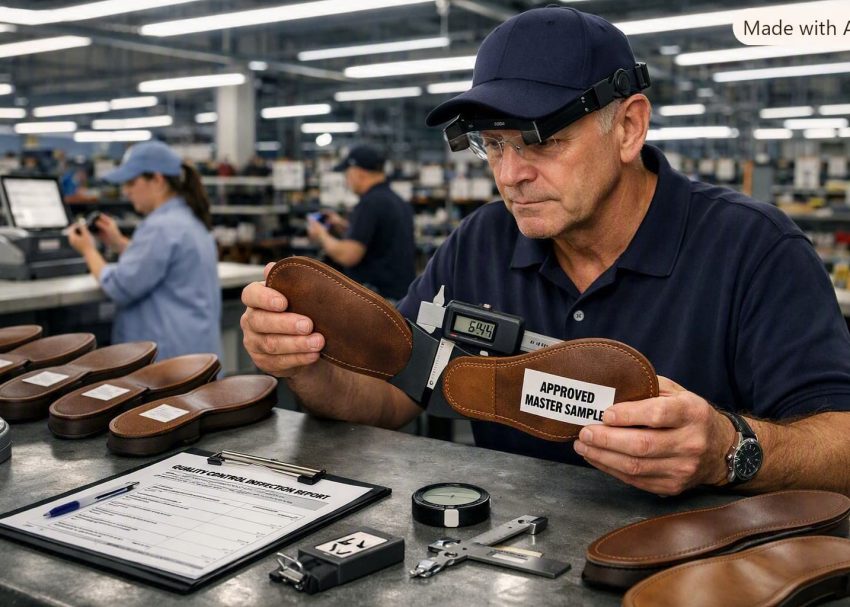
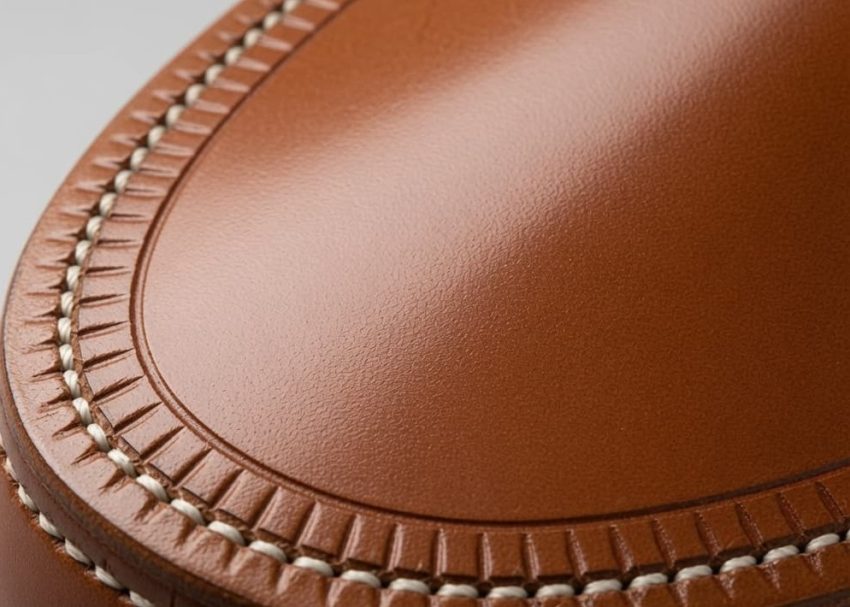
Final inspection confirms that the finished edge meets the approved appearance standard. Inspectors should check the outsole under suitable lighting and compare it with the master sample. The inspection should cover color shade, coverage, smoothness, gloss, wax residue, scratches, exposed fibers, and pair matching.
For premium footwear, 100% visual inspection is generally preferred because even a small cosmetic difference can affect customer perception.
Key Control Points
- Check both outsoles together.
- Use standardized lighting.
- Verify color and gloss against the approved sample.
- Remove defective outsoles before the next operation.
Expert Tip: Record material batches and machine settings for repeat production.
Conclusion
Edge coloring and waxing give the outsole its final visual character before it moves further into the stock fitting assembly process. A controlled process produces consistent color, smooth edges, and the required level of gloss.
In the next blog, we will continue the Outsole (Stock Fitting) Assembly Series with Padding Operations in Outsole Process, focusing on how padding materials are selected, positioned, and controlled to improve footwear comfort and construction quality.
Frequently Asked Questions (FAQs)
It provides a uniform and attractive appearance while covering exposed fibers and minor edge variations.
Waxing enhances the finish, improves luster, and helps seal the colored surface.
The number depends on the outsole material and color system. Multiple thin coats generally provide better control than one heavy coat.
Poor surface preparation, insufficient mixing, inconsistent application, or variation in coating thickness can cause uneven color.
Excessive wax, uneven application, contaminated wheels, or inconsistent polishing can create streaks.
Yes. Manual coloring remains common for premium footwear and smaller production quantities.
Inspect color, coverage, smoothness, gloss, wax residue, scratches, exposed fibers, and left-right pair matching.