Filler Application Operations in Outsole Process: Outsole (Stock Fitting) Assembly Series
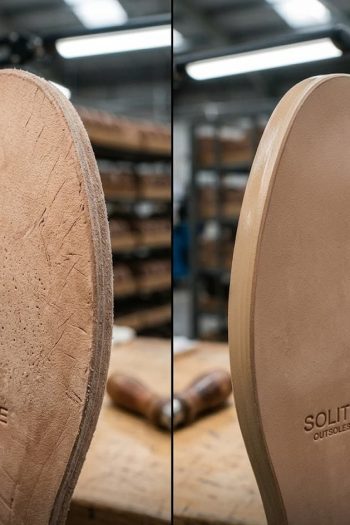
After Edge Scouring Operations in Outsole Process, the outsole edge may still contain small pores, scratches, fibre openings, and minor surface irregularities. These imperfections must be corrected before final colouring, waxing, and polishing.
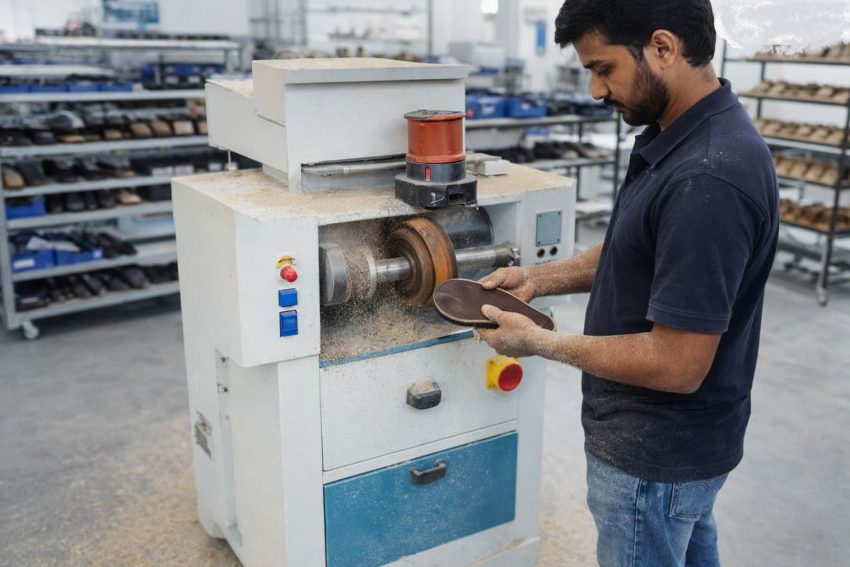
Filler application fills these minor imperfections and creates a more uniform edge surface. Importantly, filler also helps control heat-related edge damage during high-speed emery-wheel operations. When an emery wheel rotates at high speed, friction between the abrasive and exposed leather fibres generates heat. Excessive heat can burn, darken, glaze, or harden the leather edge.
Therefore, filler acts not only as a surface-leveling material but also as an important part of edge-finishing control. By filling open pores and exposed fibres, it reduces unnecessary friction and helps produce a smoother surface for subsequent operations.
Expert Tip: Do not use excessive filler to compensate for poor scouring.
Why Filler Application Is Important
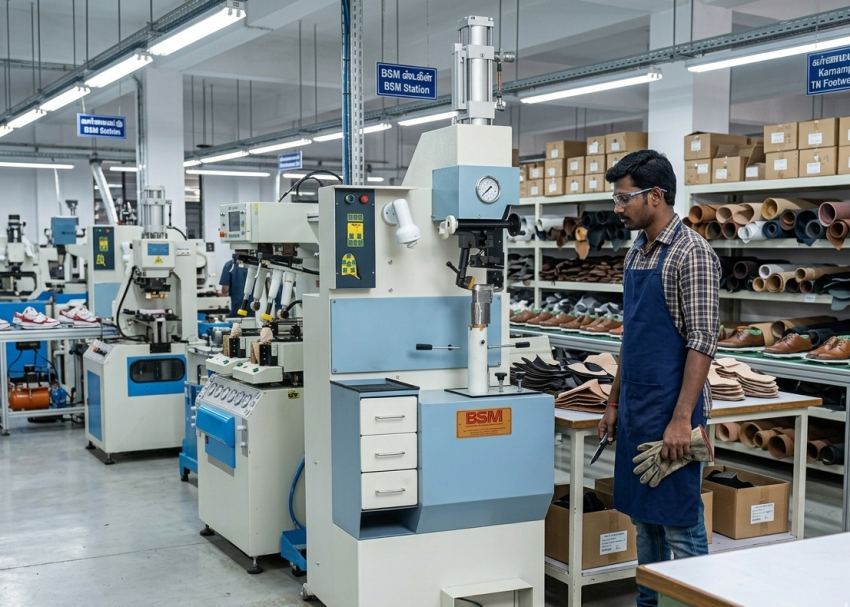
The outsole edge is highly visible on finished footwear. Any pores, scratches, uneven areas, or burned sections can become more noticeable after colouring and polishing. Filler creates a smoother and more uniform surface. Consequently, edge colour spreads more consistently and polishing produces a better appearance.
For leather outsoles, heat control is particularly important. During high-speed emery-wheel scouring, excessive pressure, prolonged contact, or repeated passes can generate high frictional heat. Exposed leather fibres can then become darkened or burned.
A properly filled surface reduces the amount of exposed fibre and provides a more uniform surface for finishing. However, filler should not be considered a substitute for correct machine speed, pressure, abrasive selection, or operator control. It works together with proper scouring parameters to minimise edge burning.
Key Control Points
- Control emery-wheel speed and operator pressure.
- Avoid prolonged contact at one location.
- Keep the abrasive surface in good condition.
- Use filler to correct minor surface irregularities before final finishing.
Expert Tip: Control emery-wheel pressure as carefully as wheel speed.
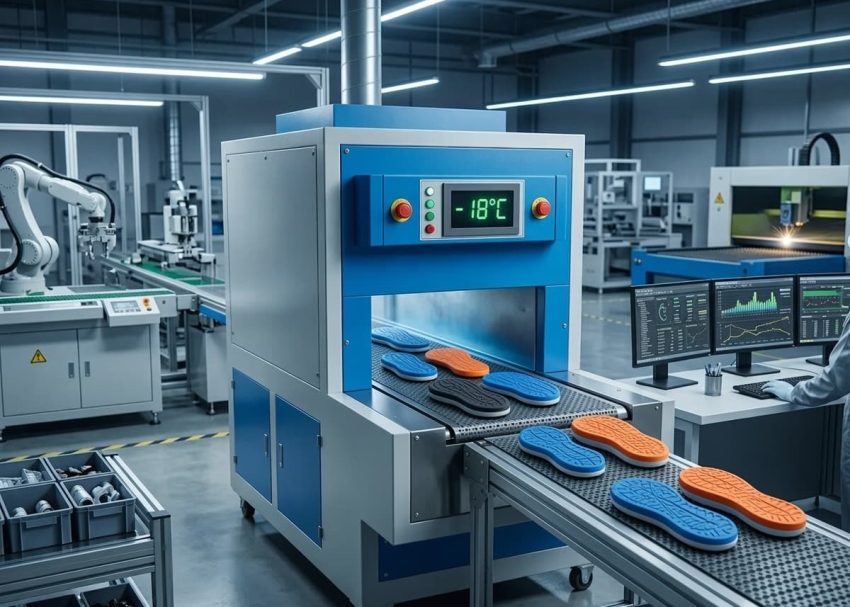
Types of Fillers Used in Outsole Processing
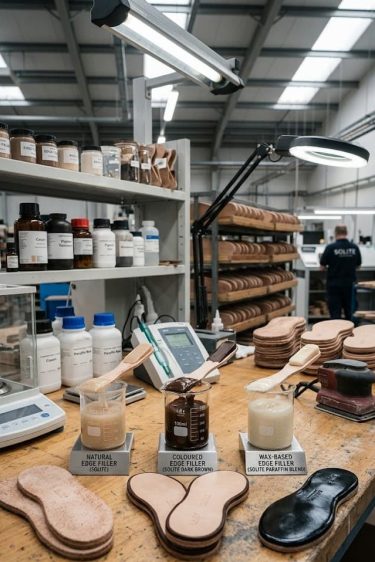
Natural Filler
Natural fillers are commonly used with leather outsoles where maintaining a natural appearance is important. They fill pores and minor irregularities while providing a suitable base for subsequent colouring and polishing.
Coloured Filler
Coloured fillers contain pigments that match the intended edge colour. They help conceal repaired areas and reduce visible shade variation during final colouring.
Wax-Based Filler
Wax-based fillers combine surface filling with improved finishing characteristics. They can provide a smoother surface for polishing and are particularly useful where a refined or high-gloss edge finish is required.
The correct filler depends on leather type, outsole construction, final colour, finishing chemicals, and customer requirements. Always conduct compatibility trials when introducing a new filler.
Key Control Points
- Match filler with the outsole material.
- Match coloured filler with the approved edge shade.
- Check compatibility with subsequent finishing chemicals.
- Avoid mixing incompatible filler systems.
Expert Tip: Replace worn or clogged abrasive wheels because they can increase friction and heat.
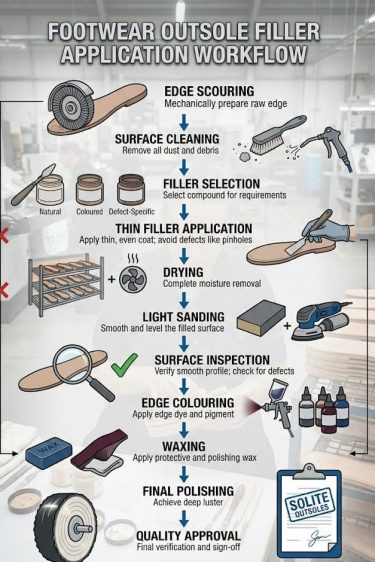
Filler Application Process
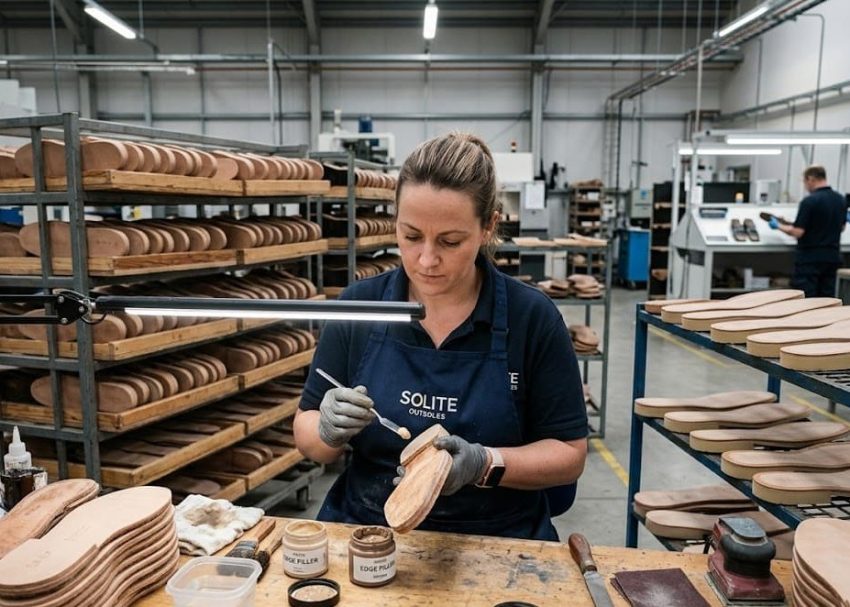
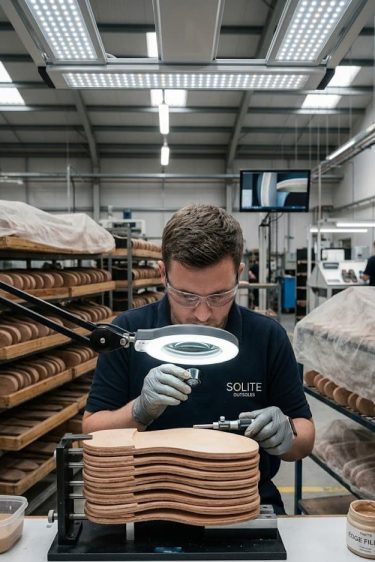
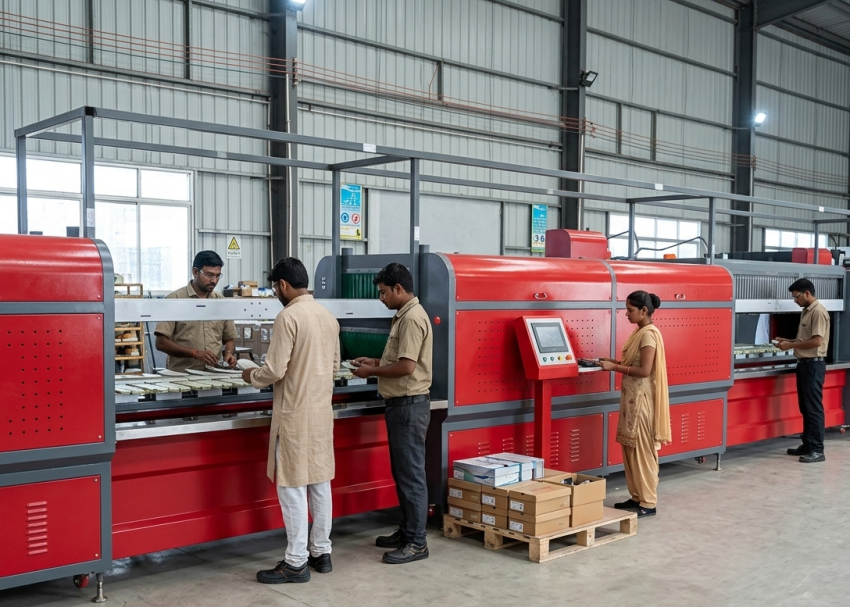
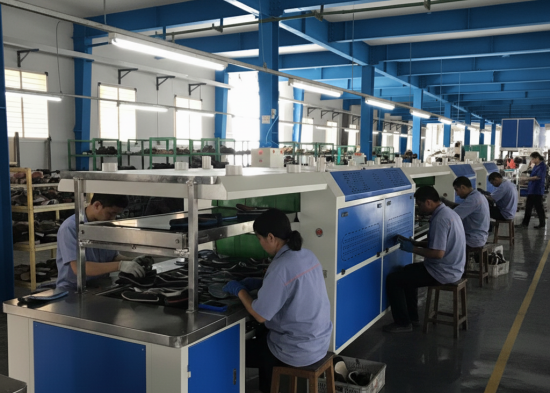
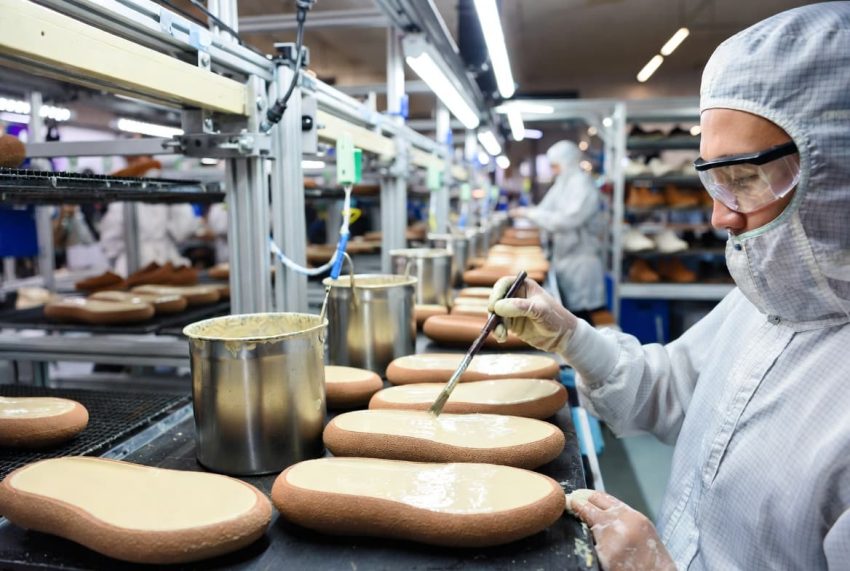
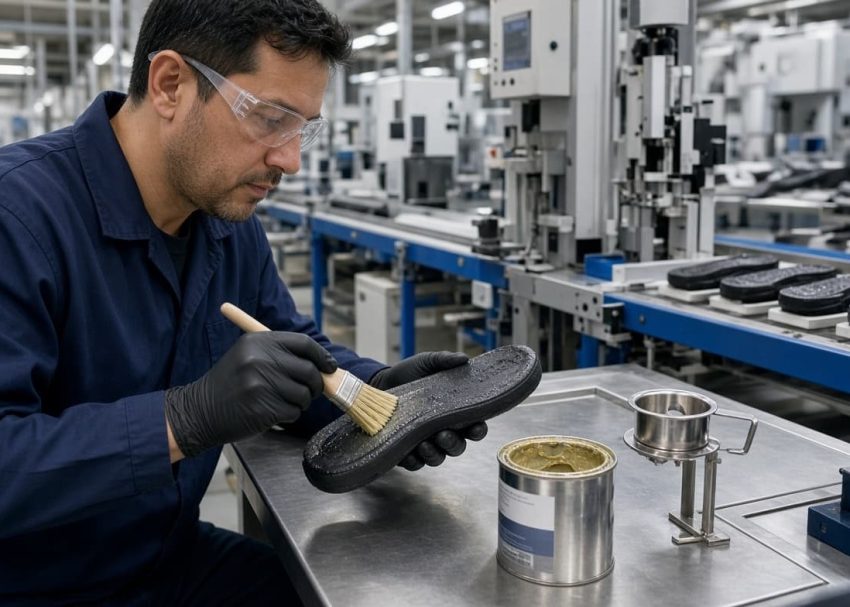
The operator first cleans the scoured edge and removes dust, loose fibres, and contaminants. The filler is then applied using a suitable spatula, brush, pad, or other approved applicator. The operator should apply only enough material to fill the imperfections. Excessive filler increases drying and sanding time and can create an unnatural edge profile.
After application, the outsole must dry or cure according to the filler manufacturer’s specification. Once sufficiently dry, the edge receives light sanding to remove excess filler and blend the repaired areas with the surrounding surface. Finally, the operator inspects the edge under suitable lighting before sending the outsole to the next finishing operation.
Key Control Points
- Clean the edge before application.
- Apply thin, even filler coats.
- Allow sufficient drying time.
- Perform light sanding without changing the edge profile.
Expert Tip: Avoid holding the leather edge continuously against the same section of the wheel.
Common Filler Application Defects
Incorrect filler application can create problems during subsequent colouring and polishing.
- Uneven filler: Usually results from inconsistent application thickness.
- Cracking: Often occurs because of excessive filler thickness or poor filler flexibility.
- Pinholes: May remain when the filler does not properly penetrate surface pores.
- Poor adhesion: Usually indicates contamination, inadequate surface preparation, or incompatible filler.
- Colour variation: Can result from incorrect coloured filler selection.
- Edge burning: Can occur when high-speed emery-wheel friction generates excessive heat, particularly where the leather surface remains exposed. Excessive pressure, repeated passes, unsuitable abrasive condition, or insufficient surface preparation can increase the risk.
Expert Tip: Allow filler to dry completely before sanding.
Quality Control After Filler Application
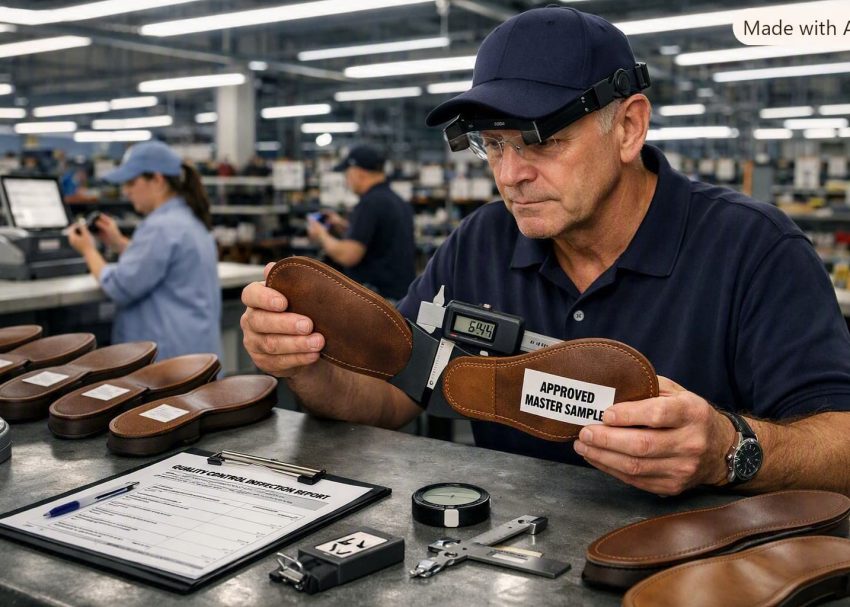
Inspection should confirm that the filler has completely filled the required imperfections and that the edge remains smooth and correctly profiled. Inspectors should check surface smoothness, filler adhesion, drying quality, edge geometry, visible pores, cracks, and colour compatibility.
For leather outsoles, inspectors should also look for early signs of heat damage such as darkened areas, glazed surfaces, hardened fibres, or localised burning. Bright inspection lighting helps identify defects before colouring and waxing.
Key Control Points
- Inspect the complete outsole edge.
- Check for remaining pores and scratches.
- Check for heat-related edge damage.
- Compare against an approved master sample.
Expert Tip: Maintain separate applicators for different filler colours.


Conclusion
Filler application is a relatively small operation, but it has a major influence on outsole edge quality. It fills minor imperfections, improves surface smoothness, supports uniform colouring, and prepares the edge for final polishing.
The objective is simple: create a smooth, uniform and stable outsole edge without damaging the leather through excessive friction or heat.
Next Blog in the Series, Edge Coloring and Waxing Operations in Outsole Process: Outsole (Stock Fitting) Assembly Series.
The next article will cover edge colouring, wax application, polishing, colour consistency, finishing defects, and practical factory controls for achieving a premium outsole edge appearance.
Expert Tip: Record filler type, application method, and drying conditions for critical products.

Frequently Asked Questions (FAQs)
Filler removes small pores, scratches, and uneven areas, creating a smooth surface that allows edge colours to spread evenly and produce a premium finish.
No. Filler is designed to correct minor imperfections only. Proper edge scouring is still required to prepare the surface and achieve the correct edge profile.
The most common types are natural fillers, coloured fillers, and wax-based fillers. The selection depends on outsole material, finishing process, and customer quality requirements.
Insufficient drying may cause filler shrinkage, poor sanding, cracking, colour variation, and reduced adhesion during subsequent finishing operations.
Most premium leather footwear factories perform filler application manually to achieve precise control. Automated equipment mainly supports sanding, polishing, and edge finishing operations after filler application.
Inspectors evaluate surface smoothness, complete filling of imperfections, uniform drying, edge profile consistency, and compatibility with the planned edge colouring system.
After the filler has dried and the surface has been lightly sanded, the outsole proceeds to Edge Coloring and Waxing Operations, where the edge receives its final colour, protection, and aesthetic finish.
Expert Tip: Investigate repeated edge burning at the machine-process level rather than treating every case as a filler problem.