Grounding Shoes Technology: How Earthing Footwear Connects the Human Body to the Earth
Modern footwear protects the feet from harsh terrain, environmental hazards, and mechanical stress. However, conventional shoes also create an unintended side effect: they electrically isolate the human body from the Earth.
Most traditional footwear uses rubber, polyurethane, EVA, or PVC soles. These materials are excellent insulators and therefore block electrical interaction between the body and the ground. As a result, the natural electrical connection that occurs while walking barefoot on soil or grass is interrupted.
Grounding footwear, also known as earthing shoes, has been developed to restore this natural connection.
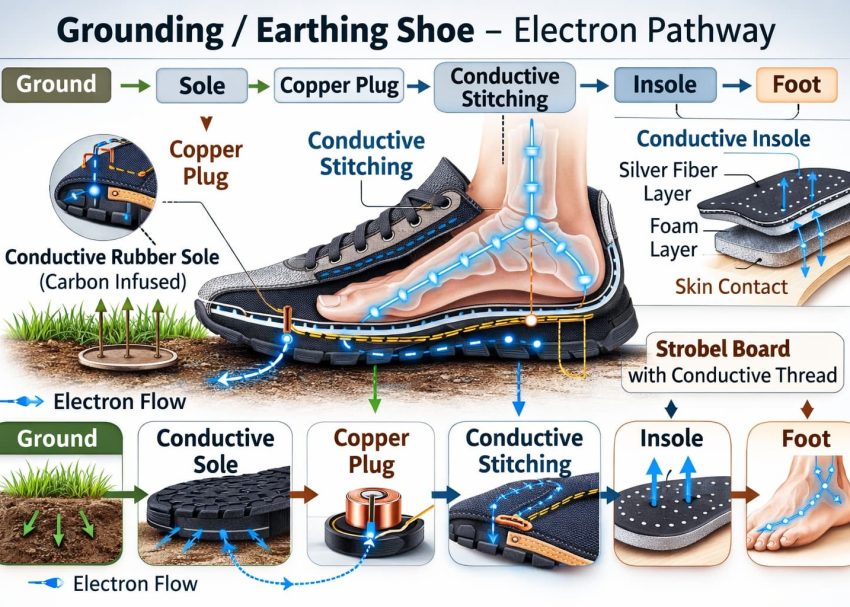
These shoes incorporate conductive materials and engineered pathways that allow electrons from the Earth’s surface to reach the human body while still providing protection and comfort.
Consequently, grounding footwear represents an emerging intersection between footwear engineering, material science, and wellness technology. In recent years, several footwear companies have started developing products that incorporate conductive soles, copper components, and specialized stitching systems to enable this interaction.


What Are Grounding (Earthing) Shoes?
Grounding shoes are footwear designed to allow electrical conductivity between the Earth’s surface and the human body while wearing shoes. When people walk barefoot on natural surfaces such as soil, grass, or sand, the body can exchange electrons with the Earth. This phenomenon is often referred to as earthing or grounding.
However, conventional footwear prevents this electrical exchange because synthetic soles act as electrical insulators. Grounding shoes attempt to restore this connection through conductive pathways integrated into the footwear structure. These pathways typically consist of conductive rubber, copper connectors, conductive stitching, and specialized insoles that allow electrons to move from the ground into the body.
Researchers studying grounding suggest that reconnecting electrically with the Earth may influence physiological processes such as inflammation, sleep cycles, and stress response. Nevertheless, the scientific community continues to investigate these effects, and more clinical studies are required for conclusive evidence.
Expert Tip: Some manufacturers also perform wear simulation testing to ensure conductivity remains stable after repeated walking cycles.


Why Traditional Shoes Block Electrical Grounding
Most modern footwear uses polymer materials that are intentionally designed to prevent electrical conduction. Common sole materials include:
- EVA foam
- Polyurethane (PU)
- PVC compounds
- Synthetic rubber
- TPU
These materials are effective for cushioning and durability. However, they act as electrical insulators, which means they prevent electrical interaction with the ground. Therefore, grounding footwear must replace or modify these materials with conductive alternatives while still maintaining performance characteristics such as abrasion resistance and flexibility.
Pro Tip: Uniform dispersion of conductive particles is critical. Poor dispersion can create inconsistent conductivity across the sole.


Key Components of Grounding Shoes
Grounding footwear relies on a continuous conductive pathway from the ground to the wearer’s skin. Several components work together to create this pathway.
Conductive Outsole
The outsole is the part of the shoe that directly touches the ground. Therefore, it plays the most critical role in grounding functionality. Grounding shoes often use specialized materials such as:
- Carbon-infused rubber
- Conductive rubber compounds
- Leather soles
- Copper inserts or plugs
- Conductive polymer materials
Carbon particles added to rubber compounds create microscopic conductive networks, allowing electrons to move through the material.
Typical resistance levels for conductive soles are usually between 10⁴ and 10⁶ ohms. This range allows safe electron transfer without exposing the wearer to electrical hazards.
Skin Contact
Electrical conductivity requires direct contact with the skin. Therefore grounding footwear is typically worn:
- Barefoot
- With conductive silver socks
- With thin natural fiber socks
Thick synthetic socks may block the conductive pathway.
Conductive Internal Pathway
In addition to the outsole, grounding shoes require an internal conductive system that transfers electrons toward the foot.
Manufacturers often use the following technologies:
- Conductive stitching
- Copper rivets inserted through the sole
- Conductive Strobel boards
- Conductive textile loops inside the shoe structure
These elements ensure that electrical conductivity continues from the outsole through the shoe structure.
Conductive Insole or Footbed
To complete the grounding circuit, the conductive pathway must reach the wearer’s skin.
For this reason, grounding shoes often incorporate specialized insoles such as:
Some designs include perforations to allow partial skin contact with conductive layers.
Expert Tip: Footwear engineers must carefully control the carbon loading percentage in rubber compounds. Too little carbon reduces conductivity, while excessive carbon may compromise durability and abrasion resistance.


Surfaces That Enable Grounding
Even if a shoe is conductive, grounding effectiveness depends on the surface being walked on.
Highly Conductive Surfaces
- Soil
- Grass
- Sand
- Natural stone
- Unsealed concrete
Poor Conductive Surfaces
- Asphalt
- Plastic flooring
- Vinyl surfaces
- Rubber floors
As a result, grounding footwear works best in natural outdoor environments.
Pro Tip: Many grounding footwear manufacturers prefer silver-plated nylon thread for conductive stitching because it offers flexibility, durability, and corrosion resistance.
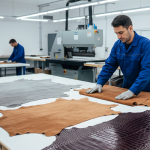

Manufacturing Process of Grounding Footwear
Although grounding shoes contain specialized components, their manufacturing process still follows standard footwear production methods. However, additional engineering is required to maintain electrical continuity.
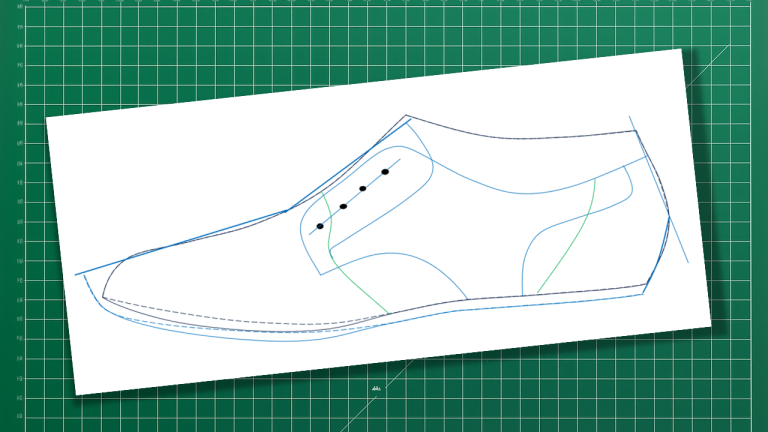
Step 1 – Product Design and Engineering
The development process begins with designing the conductive pathway.
Engineers must determine:
- location of conductive materials
- sole thickness and flexibility
- durability requirements
- skin contact zones
Computer simulation and prototype testing are often used to validate conductivity.
Step 2 – Conductive Rubber Compounding
Outsoles are produced using rubber compounds mixed with conductive additives.
Typical compounding process:
- rubber polymer blending
- carbon particle addition
- filler dispersion
- internal mixing
- sheet preparation
Uniform carbon distribution is critical to ensure consistent conductivity.
Pro Tip: Many manufacturers use silver-plated nylon thread for conductive stitching because it provides both flexibility and corrosion resistance.
Posts you make Like


Troubleshooting Adhesive Bond Failures in Footwear Manufacturing…
Step 3 – Sole Moulding
After compounding, outsoles are manufactured through:
- compression moulding
- injection moulding
- vulcanization processes
In some designs, copper grounding plugs are embedded directly into the sole during moulding.
Step 4 – Installation of Conductive Pathway
Next, internal conductive components are installed. Examples include:
- copper rivets through sole layers
- conductive threads connecting outsole and insole
- conductive Strobel boards
These components create the internal conductive bridge.
Pro Tip: Footwear designers must carefully balance conductivity and durability. Too much conductive filler can weaken the rubber compound and reduce abrasion resistance.
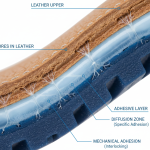

Step 5 – Upper Manufacturing
Upper production generally follows standard footwear processes:
- material cutting
- skiving and reinforcement
- stitching and assembly
Some grounding shoes use conductive textile fibers such as silver or carbon blends.
Step 6 – Final Assembly
During assembly, the upper is attached to the sole using methods such as:
- cemented construction
- Strobel construction
- stitch-down construction
Careful alignment of conductive elements is essential to maintain conductivity.
Step 7 – Electrical Testing
Before shipment, manufacturers test shoes to ensure conductivity. Testing methods include:
- multimeter resistance measurement
- body voltage testing
- continuity testing
If conductivity falls outside acceptable limits, the product must be reworked.

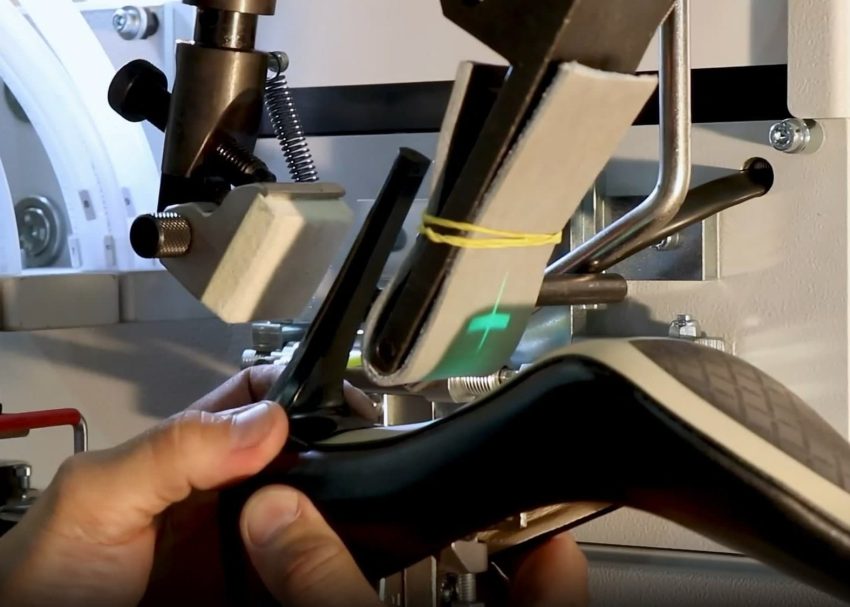
Some Brands Using Grounding (Earthing) Footwear Technology
Although grounding footwear is still a niche segment, several companies have developed shoes using conductive materials and engineered grounding pathways. Below are some of the most recognized brands currently producing grounding footwear.
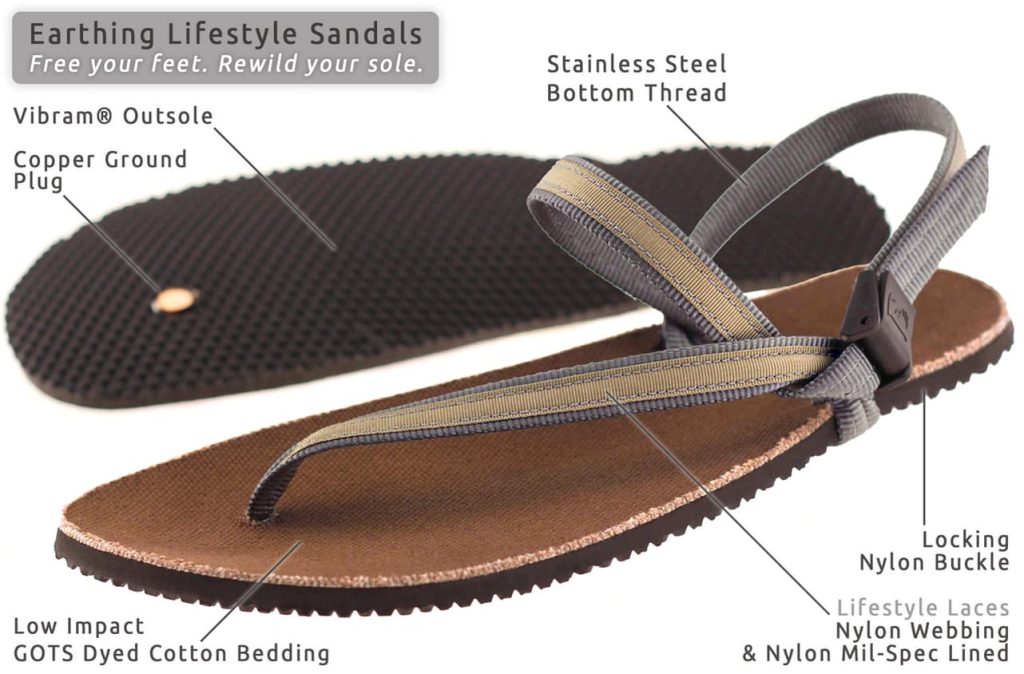
Earth Runners
Earth Runners is one of the best-known grounding footwear companies, originally famous for its grounding sandals and later expanding into sneakers.
Technology Used
Earth Runners developed iON SYNC® grounding technology, which includes:
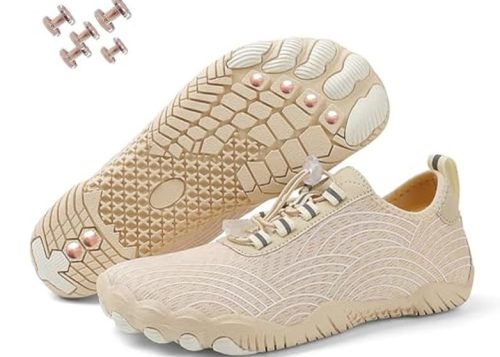
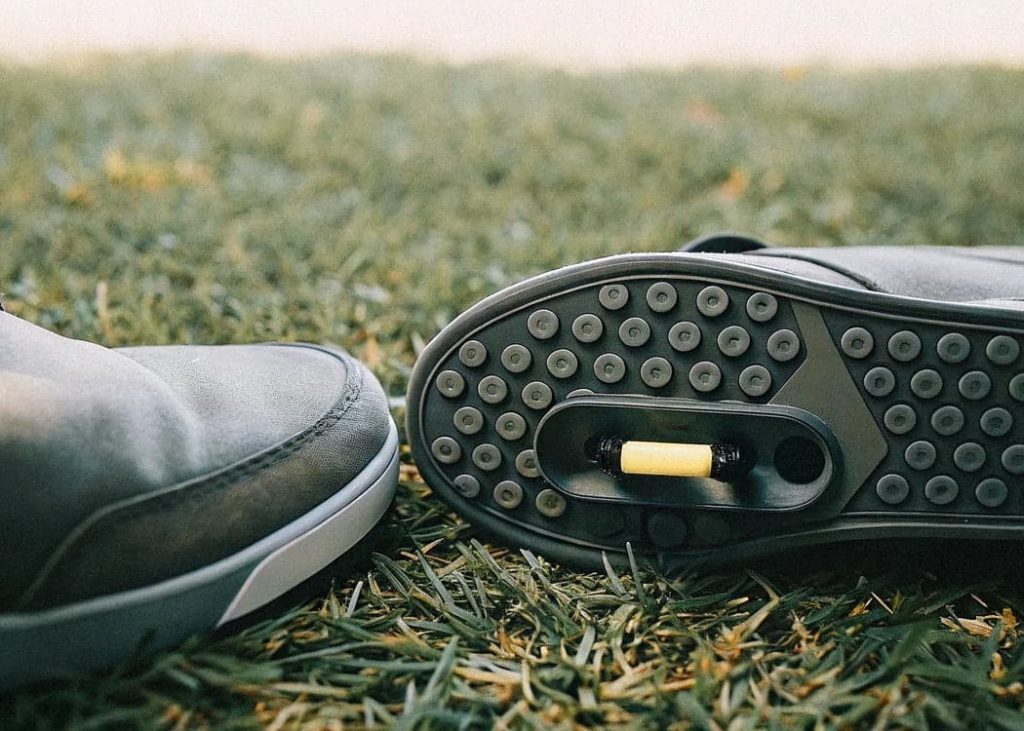
- Copper grounding plug embedded in the outsole
- Conductive stainless-steel thread woven into the laces
- Direct electrical connection between the ground and the wearer
This system allows electrons from the earth to travel through the copper plug and conductive lace structure to reach the foot. Source
Construction Highlights
- Minimalist barefoot design
- Thin zero-drop sole
- Copper rivet grounding system
- Conductive laces connected to the plug
These features are designed to simulate the experience of barefoot grounding while still providing protection and traction.
Groundz
Groundz produces grounding sneakers using carbonized conductive rubber systems combined with internal conductive stitching.
Technology Used
Groundz uses GroundSync™ conductive technology, which includes:
- Carbonized rubber conductive outsole
- Stainless-steel conductive stitching
- Multi-layer conductive structure inside the shoe
This design allows electrons from the ground to pass through the outsole and internal conductive layers to reach the wearer’s foot. Soruce
Construction Highlights
- Carbon-infused conductive rubber soles
- Stainless-steel conductive stitching
- Leather or eco-synthetic uppers
- Barefoot-style flexible design

Harmony 783
Harmony 783 is considered one of the earlier grounding shoe companies and focuses on combining grounding technology with orthopedic support.
Technology Used
Harmony 783 developed Groundworks™ conductive technology, which includes:
- Conductive carbon-rubber outsole
- 99.99% pure silver stitching inside the shoe
- Conductive loop connecting the sole to the insole
This configuration allows electrical conduction from the ground through the shoe structure to the foot. Source
Construction Highlights
- Carbon-rubber conductive soles
- Silver fiber conductive stitching
- Supportive insoles
- Casual lifestyle shoe designs
Rhizal
Rhizal focuses on handcrafted leather grounding footwear.
Technology Used
Rhizal grounding shoes typically use:
- Leather soles combined with copper rivets
- Direct copper contact system for conductivity
Copper rivets placed in the outsole allow electrons to travel directly from the ground to the wearer’s foot. Source
Construction Highlights
- Handmade leather shoes
- Copper rivet grounding plug
- Barefoot-style thin sole
- Natural materials
Ohms Grounding
Ohms Grounding focuses on modern urban sneakers with integrated grounding systems.
Technology Used
Their grounding system includes:
- Conductive rubber outsole with additives
- Conductive Strobel board stitching
- Silver-thread conductive insoles
Together these elements create a continuous conductive pathway from the ground to the wearer’s foot Source
Construction Highlights
- Zero-drop barefoot sole
- Wide toe box design
- Conductive Strobel board
- Silver fiber insole
Current Footwear
Current Footwear developed one of the first grounding golf shoes.
Technology Used
The shoe integrates a pure copper conductor running through the outsole, which bypasses the insulating rubber layer and creates a grounding connection. Source
Construction Highlights
- Copper conductor through outsole
- Performance golf traction system
- Athletic shoe structure with grounding functionality


Flux Footwear – Earth-Link™ Technology
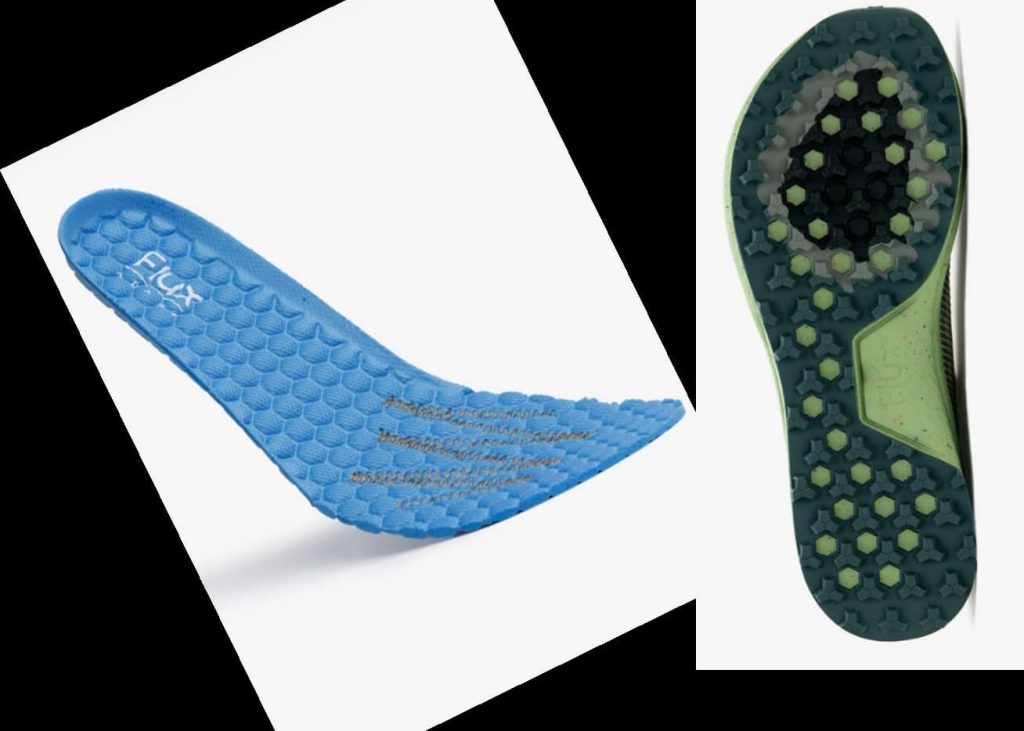
One of the newer companies promoting grounding footwear is Flux Footwear, which markets its conductive system as Earth-Link™ technology. One example model is the Flux Adapt Trail Runner.
How Flux Earth-Link Works
According to the company’s product documentation:
- Conductive carbon-infused rubber outsole
- Conductive textile and stitching through the shoe
- Internal conductive pathway connected to the insole
This configuration allows electrons to move from the ground to the foot when pressure is applied during walking or running. Source. The outsole uses carbon black conductive compounds, since normal rubber is an electrical insulator. Source
Example Materials Used
- Carbon-infused conductive rubber sole
- Conductive glue and textile connection layers
- Conductive stitching connecting outsole to insole
Flux also reports that their shoes have been tested using a multimeter during product development to verify conductivity. Source. However, the company notes that these shoes are not certified for industrial grounding or electrical safety environments. Source
| Brand | Conductive Method | Key Material | Shoe Type |
|---|---|---|---|
| Earth Runners | Copper plug + conductive laces | Copper + stainless steel | Sandals / sneakers |
| Groundz | Carbon conductive rubber | Carbon rubber | Sneakers |
| Harmony 783 | Silver stitching + carbon sole | Silver fiber | Casual shoes |
| Rhizal | Copper rivet + leather sole | Copper + leather | Handmade shoes |
| Ohms Grounding | Conductive Strobel board | Silver thread | Urban sneakers |
| Flux | Earth-Link conductive sole | Carbon rubber | Athletic shoes |


How to Test If Grounding Shoes Actually Work (Multimeter Method)
For footwear engineers and curious consumers, the simplest way to test grounding footwear is by using a multimeter continuity test. This method checks whether electrical conductivity exists between the outsole and the foot contact surface.
Equipment Required
- Digital multimeter
- Ground surface (soil, grass, or concrete)
- The grounding shoe being tested
Step-by-Step Testing Method
Step 1 — Set the Multimeter
Switch the multimeter to: Resistance (Ω) or continuity mode
This allows you to detect electrical flow.
Step 2 — Place One Probe on the Ground
Touch the first probe to a conductive surface such as: Soil, concrete, metal grounding plate.
Avoid insulated surfaces like asphalt or plastic flooring.
Step 3 — Touch the Second Probe to the Insole Contact Area
Place the second probe on:
- conductive insole
- copper grounding rivet
- conductive stitching area
This checks the electrical pathway.
Step 4 — Apply Pressure on the Shoe
Many grounding shoes only become fully conductive when pressure is applied during walking motion.
Some manufacturers recommend pressing on the toe area to simulate the toe-off phase of running when testing conductivity.
Step 5 — Read the Multimeter
If the shoe is conductive, the meter should show: measurable resistance or continuity signal. Typical resistance values in grounding shoes fall between: 10⁴ – 10⁶ ohms. This allows electron transfer while maintaining safety.
Pro Tip: Testing should be performed: on multiple outsole points, after wear testing, under pressure.
This ensures consistent conductivity across the shoe.
Future Innovations in Grounding Footwear
As wellness technology grows, grounding footwear may evolve through advanced materials and smart technologies. Potential developments include:
- graphene conductive rubber
- nano-carbon conductive compounds
- smart shoes measuring electrical interaction with the ground
- integrated wearable health sensors
Therefore grounding footwear may become a new category of performance wellness footwear.
Practical Limitations of Grounding Shoes
Even when shoes are conductive, grounding effectiveness depends heavily on the surface being walked on.
Good Conductive Surfaces
- Soil
- Grass
- Sand
- Natural stone
- Unsealed concrete
Poor Conductive Surfaces
- Asphalt
- Rubber floors
- Vinyl flooring
- Plastic surfaces
Therefore, grounding footwear works best in natural outdoor environments.


Footwear Engineering Perspective
From a footwear manufacturing standpoint, grounding shoes are essentially modified barefoot shoes with added conductive pathways. However, several technical challenges exist:
- Maintaining conductivity while ensuring outsole durability
- Preventing corrosion of copper components
- Maintaining conductivity after outsole wear
- Ensuring consistent electrical pathways in mass production
Therefore, careful material formulation, assembly alignment, and conductivity testing are essential during production.


Conclusion
Grounding footwear represents a unique innovation combining footwear engineering, conductive materials, and wellness concepts.
By integrating conductive soles, internal pathways, and specialized insoles, these shoes attempt to restore electrical contact between the human body and the Earth.
Although research continues to evaluate the health benefits, the technology itself demonstrates an interesting advancement in functional footwear design and material engineering.
For footwear professionals, grounding shoes provide an excellent example of how material science and biomechanical design can create entirely new footwear categories.