Non-Leather Upper Materials in Footwear Manufacturing – Stitching Process Series
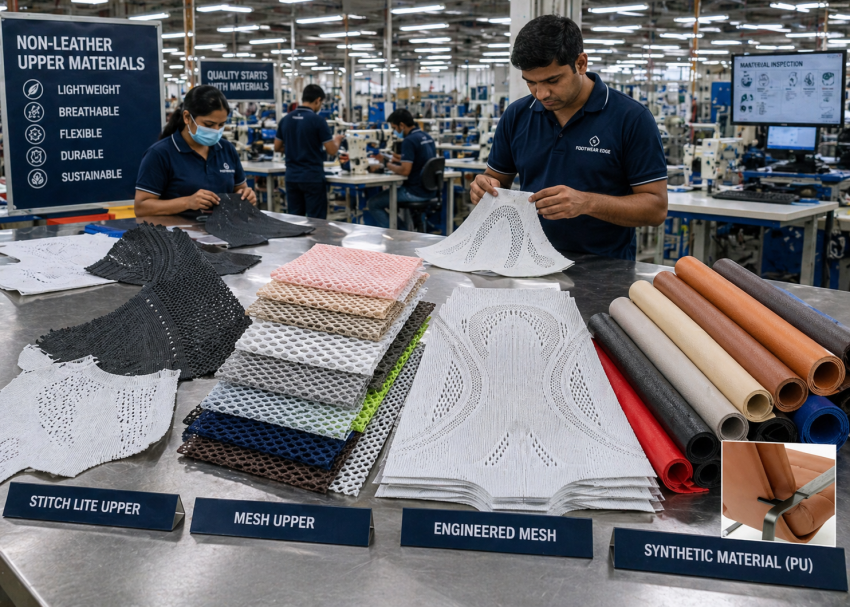
Non-leather upper materials are widely used in modern footwear due to lightweight structure, cost flexibility, and production efficiency. In stitching operations, each material behaves differently in terms of stretch, strength, bonding, and durability, so correct material selection and control are critical for consistent quality.
Knitted Upper (Flat Knit / Circular Knit)
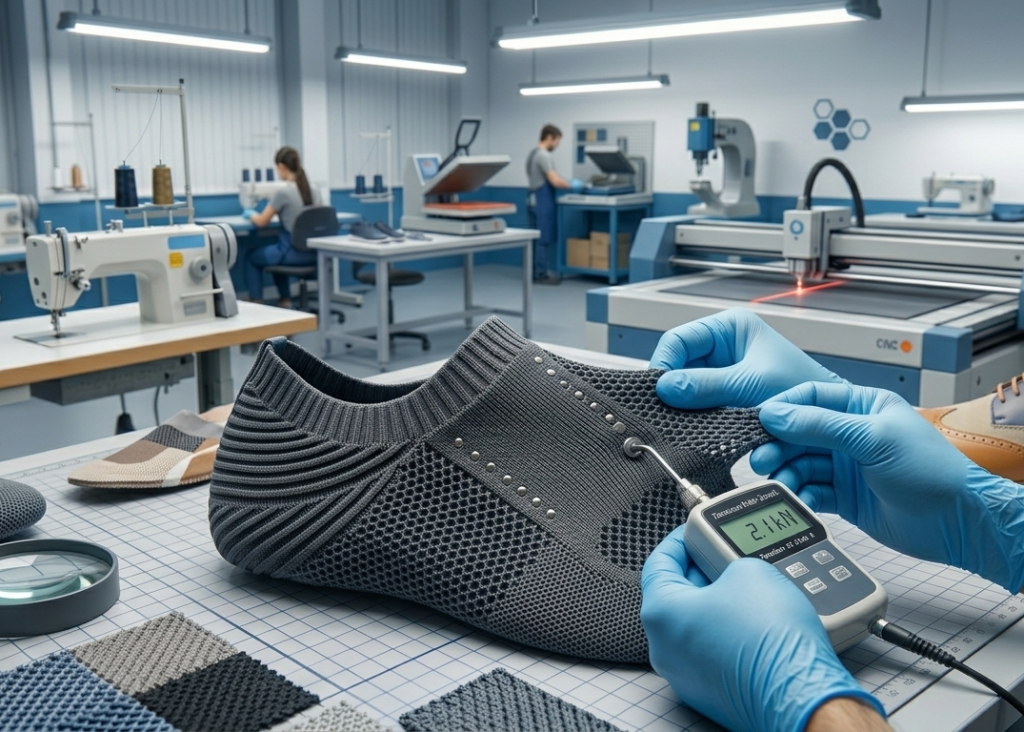
Knitted uppers are produced by interlooping yarns using computerized knitting machines, creating a highly flexible and stretchable structure. In production, these uppers reduce multiple components because functional zones can be built directly into the knit.
From a property standpoint, knitted uppers offer high elasticity, low weight, and moderate breathability, depending on yarn type and density. They provide excellent comfort due to their sock-like fit. However, their structural strength is moderate, and without reinforcement, they cannot maintain shape in high-stress areas.
In factory application, knitted uppers are widely used in running shoes, athleisure, and premium sneakers, where flexibility and comfort are key. Their advantage lies in reduced material wastage, fewer stitching operations, and automation compatibility. However, limitations include shape instability, need for reinforcement, and sensitivity to stitching tension.
Cost-wise, knitted uppers fall in the medium to high range, mainly due to machine investment and yarn cost. However, overall cost can reduce in bulk production due to lower labor input. Durability is moderate, but improves significantly with TPU overlays or hot melt reinforcement. During stitching, operators must control stretch behavior carefully. Excess pulling distorts the upper, while low control leads to misalignment.
During stitching, operators must control stretch behavior carefully. Excess pulling distorts the upper, while low control leads to misalignment.
Key Control Points:
- Control stretch during stitching to maintain shape
- Reinforce toe, vamp, and eyelet zones
- Ensure yarn consistency and GSM control
- Validate bonding compatibility with reinforcement
Expert Tip :
Always combine mesh with synthetic overlays for durability
Select mesh density based on product segment
Mesh Upper (Open Mesh / Sandwich Mesh)
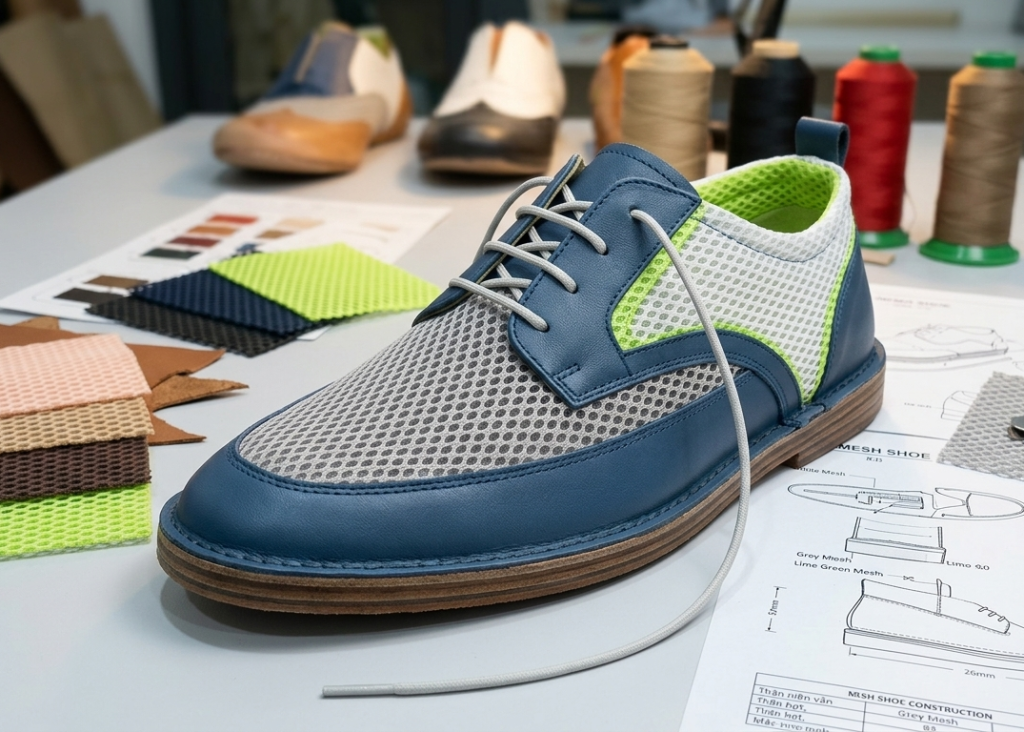
Mesh uppers are made from open-structured textile materials that allow maximum airflow and ventilation. These materials are lightweight and widely used in sports footwear where breathability is critical.
In terms of properties, mesh offers very high air permeability, very low weight, and moderate flexibility, but its strength and abrasion resistance are low. Sandwich mesh improves structure by adding a foam layer, increasing cushioning and thickness.
From a production perspective, mesh is easy to cut and stitch, making it ideal for high-volume, cost-sensitive footwear. Its main advantages include low cost, excellent breathability, and easy processing. However, limitations include low durability, poor water resistance, and high risk of tearing in stress zones.
Mesh is commonly used in sports shoes, walking shoes, and entry-level footwear segments. Cost is generally low, making it suitable for budget products. Durability remains low to moderate, depending on reinforcement and layering.
During stitching, mesh requires careful handling to prevent fraying and distortion. Reinforcement materials are essential to improve performance.
Key Control Points:
- Prevent fraying during cutting and stitching
- Reinforce high-stress zones effectively
- Maintain layer alignment in sandwich mesh
- Monitor consistency in GSM and structure
Pro Tip :
Use sandwich mesh for better structure
Avoid high stitching tension to prevent distortion
Engineered Mesh (Jacquard / Zoned Mesh)
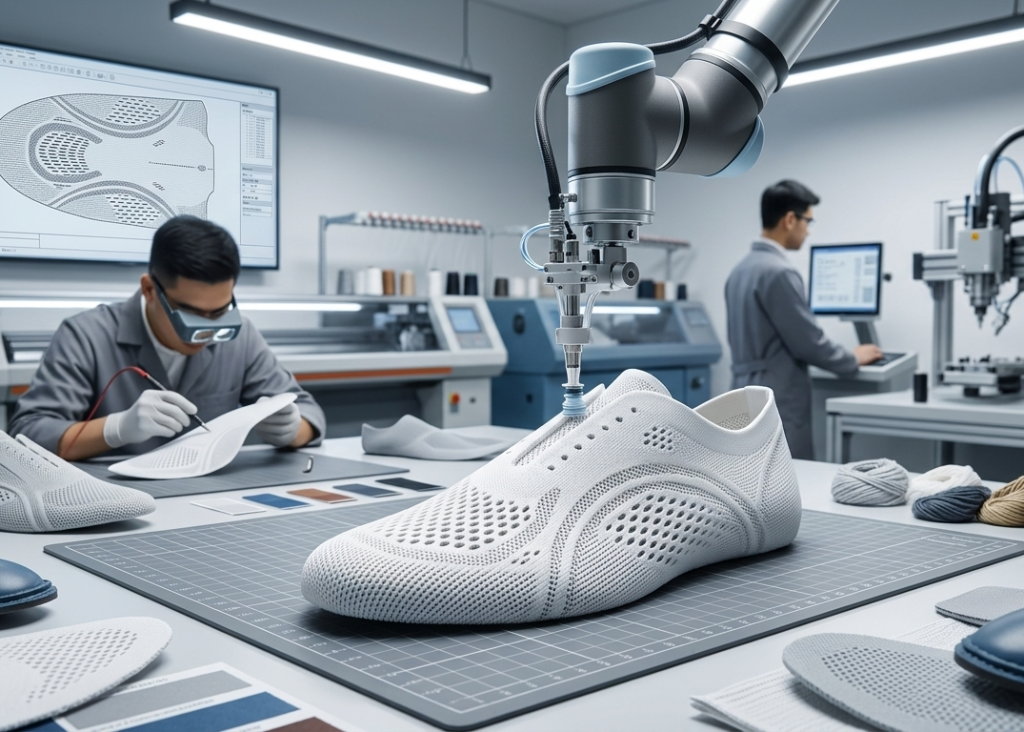
Engineered mesh is an advanced textile where yarn density and pattern are controlled to create functional zones within a single upper. This enables targeted breathability, flexibility, and support. From a property perspective, engineered mesh provides high breathability, controlled flexibility, and improved strength compared to standard mesh. It also offers better aesthetics due to integrated design patterns.
In manufacturing, engineered mesh reduces the need for multiple components, improving efficiency and consistency. Its advantages include optimized performance, reduced material layering, and premium appearance. However, limitations include higher development cost, dependency on advanced machinery, and strict process control requirements.
It is widely used in performance running shoes and premium sports footwear, where both function and design are critical. Cost falls in the medium to high range, depending on complexity.
Durability is higher than standard mesh, due to reinforced zones within the structure. During stitching, alignment is critical. Incorrect positioning can affect both performance and visual appearance.
Key Control Points:
- Maintain correct orientation during cutting
- Align functional zones accurately
- Avoid distortion during stitching
- Verify yarn density and consistency
Pro Tip :
Use microfiber for premium durability requirements
Apply TPU film in high-wear zones
Synthetic Upper Materials (PU / Microfiber / TPU Film)
Synthetic materials are produced using polyurethane or microfiber, often laminated with fabric backing. These materials provide a controlled structure with leather-like appearance. In terms of properties, synthetic uppers offer high strength, good abrasion resistance, moderate flexibility, and low to medium breathability. They also provide good water resistance compared to textile materials.
In production, synthetic materials are widely used in casual footwear, school shoes, and reinforcement panels in sports shoes. Their advantages include consistent quality, ease of processing, and suitability for branding techniques like embossing and printing. Limitations include lower breathability and slightly higher weight compared to mesh or knit.
Cost is typically medium, lower than leather but higher than mesh. Durability is high, especially in high-wear areas. During stitching, synthetic materials are stable but sensitive to heat. Needle temperature must be controlled to prevent surface damage.
Cost is typically medium, lower than leather but higher than mesh. Durability is high, especially in high-wear areas. During stitching, synthetic materials are stable but sensitive to heat. Needle temperature must be controlled to prevent surface damage.
Key Control Points:
- Control needle heat to avoid burn marks
- Ensure lamination quality and bonding strength
- Verify adhesive compatibility
- Maintain uniform thickness
Pro Tip :
Conduct flex testing before production
Control stitching speed to reduce heat impact
Woven Textile Upper
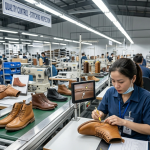
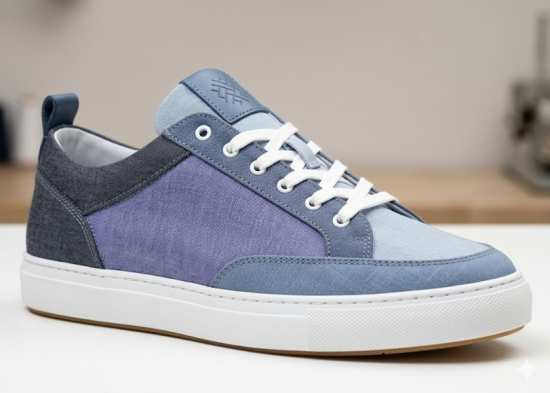
Woven textile uppers are produced by interlacing yarns, resulting in a stable and strong structure with low stretch. Compared to knit, they provide better dimensional stability. From a property standpoint, woven materials offer high strength, moderate breathability, low elasticity, and good abrasion resistance. This makes them suitable for applications requiring durability.
In manufacturing, woven uppers are used in casual, lifestyle, and outdoor footwear. Their advantages include shape stability, clean stitching performance, and durability. However, limitations include reduced flexibility and potential discomfort if not properly designed.
Cost is generally medium, depending on fabric quality. Durability is high, especially under repeated stress. During stitching, woven materials behave consistently but may fray at edges, requiring proper finishing.
Key Control Points:
- Prevent edge fraying during cutting
- Maintain fabric tension during stitching
- Ensure proper pattern engineering
- Apply edge finishing techniques
Pro Tip :
Use non-woven strategically for cost reduction
Combine with mesh for lightweight construction
Non-Woven Materials (Internal Use)
Non-woven materials are made by bonding fibers without weaving or knitting. These are mainly used for lining, backing, and reinforcement layers. In terms of properties, non-woven materials offer low cost, low weight, and easy processing, but low strength and durability. Therefore, they are not suitable for exposed upper areas.
In production, they are used internally to improve structure and reduce cost. Advantages include cost efficiency and easy bonding, while limitations include low abrasion resistance and limited structural strength. Cost is low, making them ideal for hidden components. Durability is low, so usage must be controlled. During processing, bonding quality is critical to avoid delamination.
Key Control Points:
- Ensure strong bonding with adhesives
- Avoid use in high-stress areas
- Maintain uniform thickness
- Validate peel strength
Pro Tip :
Always validate bonding strength
Avoid overheating during lamination
Recycled & Sustainable Materials
Recycled materials, such as recycled polyester, are increasingly used to meet sustainability goals. These materials are processed from post-consumer or industrial waste. From a property perspective, recycled materials offer similar performance to conventional textiles, but may show variation in consistency and color. Therefore, quality control becomes more critical.
In manufacturing, they are used in sports and lifestyle footwear, especially for eco-focused products. Advantages include reduced environmental impact and brand value, while limitations include batch variability and higher validation requirements.
Cost can be medium to high, depending on certification and processing. Durability is generally comparable to standard materials, provided quality is maintained. During stitching, handling is similar to conventional materials, but additional inspection is required.
Key Control Points:
- Verify batch consistency
- Check color fastness and strength
- Ensure certification compliance
- Monitor long-term performance
Pro Tip :
Always test materials under real factory conditions
Material Selection in Factory
Material selection directly influences cost, durability, manufacturability, and product performance. Therefore, factories must evaluate materials based on product segment, target FOB, and production capability.
In practice, selection involves balancing breathability, strength, weight, and cost. For example, high-performance shoes require engineered mesh, while budget footwear uses mesh or synthetic materials.
During development, teams must conduct trials including stitching, bonding, and wear tests to validate performance before bulk production.
Key Control Points:
- Align material with product segment
- Validate stitching and bonding behavior
- Balance cost vs durability
- Conduct pre-production trials
Pro Tip :
Avoid over-specification in low-cost products
Comparison Table (Factory Quick Reference)
| Material | Breathability | Strength | Cost Level | Weight | Durability | Typical Application |
|---|---|---|---|---|---|---|
| Knitted Upper | Medium-High | Medium | Medium-High | Very Low | Moderate | Running / Premium |
| Mesh | Very High | Low | Low | Very Low | Low | Sports / Budget |
| Engineered Mesh | High | Medium-High | Medium-High | Low | High | Performance |
| Synthetic (PU) | Low-Medium | High | Medium | Medium | High | Casual / School |
| Woven Textile | Medium | High | Medium | Low | High | Lifestyle / Outdoor |
| Non-Woven | Low | Low | Low | Very Low | Low | Internal Use |
| Recycled Material | Medium | Medium | Medium | Low | Medium | Sustainable Footwear |
Pro Tip :
Monitor supplier consistency

Frequently Asked Questions – FAQs
1. Which non-leather material is best for sports shoes?
Engineered mesh and knitted uppers are preferred due to breathability and flexibility.
2. Why is mesh not suitable for all footwear types?
Mesh has lower durability and requires reinforcement, making it unsuitable for heavy-duty applications.
3. Are synthetic uppers better than leather?
Synthetic uppers offer consistency and cost benefits, but leather provides premium feel and durability.
4. How do factories control stretch in knitted uppers?
Factories use reinforcement materials and controlled stitching tension.
5. What is the main advantage of engineered mesh?
It combines multiple functions in one material, reducing components and improving performance.
6. Are recycled materials reliable for footwear?
Yes, but they require strict quality checks to ensure consistency.
Pro Tip :
Standardize materials for bulk production
Explore other Stitching Process Series
- Nosew Application in Footwear Manufacturing – Stitching Process Series
- Stitching Assembly Defects, Line Balancing & Productivity (Part 2)– Stitching Process Series
- Cementing in Upper Manufacturing (Stitching Support Process)– Stitching Process Series
- Toe Puff (Box Toe) Attaching Process in Footwear Upper Manufacturing – Stitching Process Series
- Counter Stiffener Attaching in Footwear Upper Manufacturing – Stitching Process Series
- Upper & Lining Lamination in Footwear Upper Manufacturing – Stitching Process Series
- Bottom Stitching (Upper Feather Edge) in Footwear Upper Manufacturing
- Lacing in Footwear Upper Manufacturing – Stitching Process Series
- Cleaning in Footwear Upper Manufacturing – Stitching Process Series
- Upper Final Inspection in Footwear Upper Manufacturing – Stitching Process Series