Outsole Manufacturing Overview: Complete Guide to Stock Fitting and Outsole Assembly in Footwear Manufacturing
Modern footwear protects the feet from harsh terrain, environmental hazards, and mechanical stress. However,The completion of a shoe upper does not create a finished shoe. The shoe becomes functional only after the outsole system is manufactured, assembled, finished, inspected, and prepared for full shoe assembly. Therefore, outsole manufacturing plays a critical role in determining product durability, comfort, flexibility, appearance, and long-term performance.
In our previous blog, we completed the Full Shoe Assembly Series and explored the final operations involved in converting an upper into a finished shoe. However, before a shoe reaches those final assembly stages, a significant amount of work takes place inside the outsole manufacturing department.
It is important to understand that outsole manufacturing is not a single process. Instead, it consists of numerous preparation, assembly, finishing, and inspection operations. The sequence varies depending on construction type, design requirements, materials, and factory production systems.
Historically, footwear factories operated through departmental batch manufacturing. Components moved from one department to another until completion. However, during the last two decades, Lean Manufacturing and Modular Cell Production have transformed footwear factories.
Understanding the Three Basic Types of Outsoles
Before discussing manufacturing operations, it is necessary to understand the primary outsole categories used throughout the footwear industry. Each outsole type follows different preparation methods. However, many manufacturing operations remain common across all categories.
Single Unit Outsole
A single unit outsole is the simplest outsole construction used in footwear manufacturing. The entire outsole is moulded as one complete component and normally proceeds directly to shoe assembly without requiring separate outsole stock fitting operations.
This type of construction is widely used in athletic footwear, casual footwear, sandals, and many injection-moulded products. Since the outsole is manufactured as one piece, assembly complexity is significantly reduced. Manufacturers benefit from lower labour requirements, fewer assembly operations, and improved production efficiency. Additionally, single unit constructions often provide better dimensional consistency because fewer assembled components are involved. This reduces the risk of alignment issues and assembly variation.
Common Materials
- Rubber
- EVA
- TPU
- TPR
- PU
- Phylon
Typical Applications
- Casual footwear
- Running shoes
- Sports shoes
- Sandals
- Slippers
Key Control Points
- Check mould quality consistency
- Verify outsole dimensions
- Inspect flash and mould defects
- Confirm hardness specification
Multiple Moulded Assembled Outsole
Many premium footwear products require multiple moulded components to be assembled together before reaching the shoe assembly stage. These constructions offer greater design flexibility and allow manufacturers to combine different materials for performance, aesthetics, and functionality.
For example, a sports shoe may use a moulded EVA midsole for cushioning and a moulded rubber outsole for traction. Similarly, a dress shoe may incorporate moulded heels, shanks, and decorative welts that are assembled into a complete outsole package. Because multiple components are involved, precision becomes significantly more important. Any mismatch between components can affect assembly quality, product appearance, and bonding performance.
Common Component Combinations
- Moulded Midsole + Moulded Outsole
- Moulded Heel + Outsole
- Heel + Shank + Welt + Outsole
- Wedge + Outsole
- Co-moulded Assemblies
Typical Applications
- Dress footwear
- Fashion footwear
- Outdoor footwear
- Safety footwear
- Premium casual footwear
Key Control Points
- Component compatibility
- Dimensional matching
- Bonding surface preparation
- Assembly alignment accuracy
Multiple Un-Moulded Die-Cut Assembled Outsole
Unlike moulded constructions, this category uses sheet materials that are cut into required shapes before assembly. Leather footwear manufacturers frequently use this construction because it provides excellent aesthetics and allows craftsmen to create sophisticated outsole designs.
Leather bends, synthetic sheets, fibre materials, and rubber sheets are commonly processed through cutting, splitting, finishing, and assembly operations before becoming a finished outsole. Although the manufacturing process is more labour intensive, it offers significant design flexibility and is widely used in premium footwear manufacturing.
Common Materials
- Leather bends
- Synthetic sheets
- Fibre sheets
- Rubber sheets
- Composite boards
Typical Applications
- Handcrafted footwear
- Leather footwear
- Formal shoes
- Premium dress shoes
- Welted constructions
Key Control Points
- Cutting precision
- Thickness consistency
- Material quality
- Grain direction control
Expert Tip: Incoming inspection is significantly cheaper than rejecting finished outsoles.

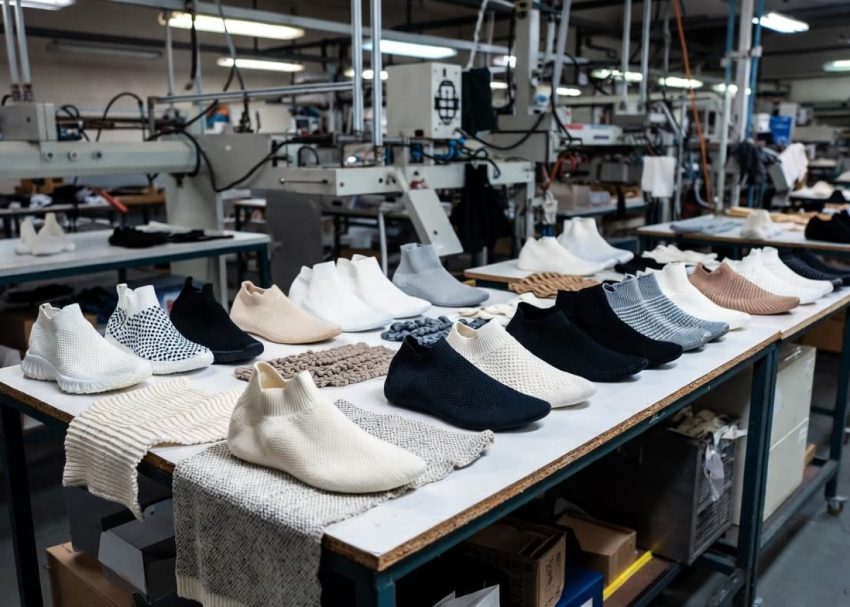
Component Receipt and Incoming Inspection
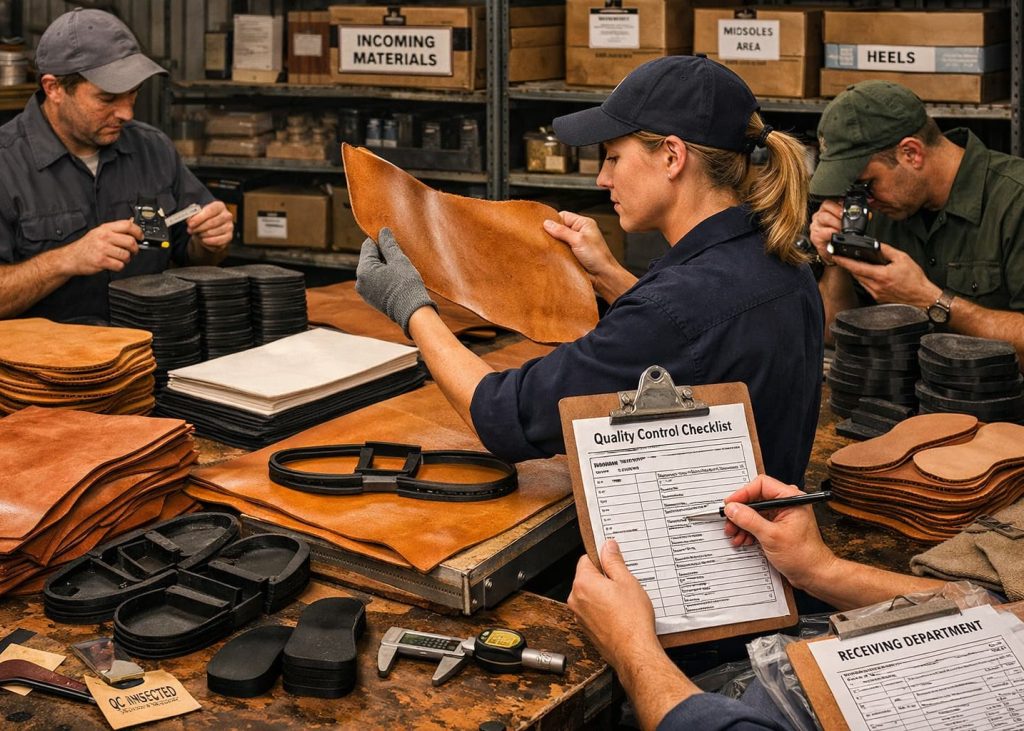
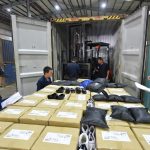
The manufacturing process starts when outsole components arrive at the factory. Materials may originate from internal production departments or external suppliers. Common incoming materials include: Leather bends, Synthetic sheets, Outsoles, Midsoles, Heels, Wedges, Shanks, Welts, Inserts, Veneers, Reinforcement components.
Inspection Activities
- Quantity verification
- Visual inspection
- Dimension verification
- Material specification check
- Supplier document review
Common Defects Found
- Wrong material
- Color variation
- Thickness variation
- Surface defects
- Quantity shortages
Receiving departments must verify both quantity and quality before accepting materials. Any defect escaping this stage can create substantial production losses later.
Key Control Points
- Visual quality inspection
- Quantity verification
- Supplier batch traceability
- Material specification compliance
Pro Tip: Leather thickness variation should always be controlled before cutting.
Cutting Operations for Outsole Components
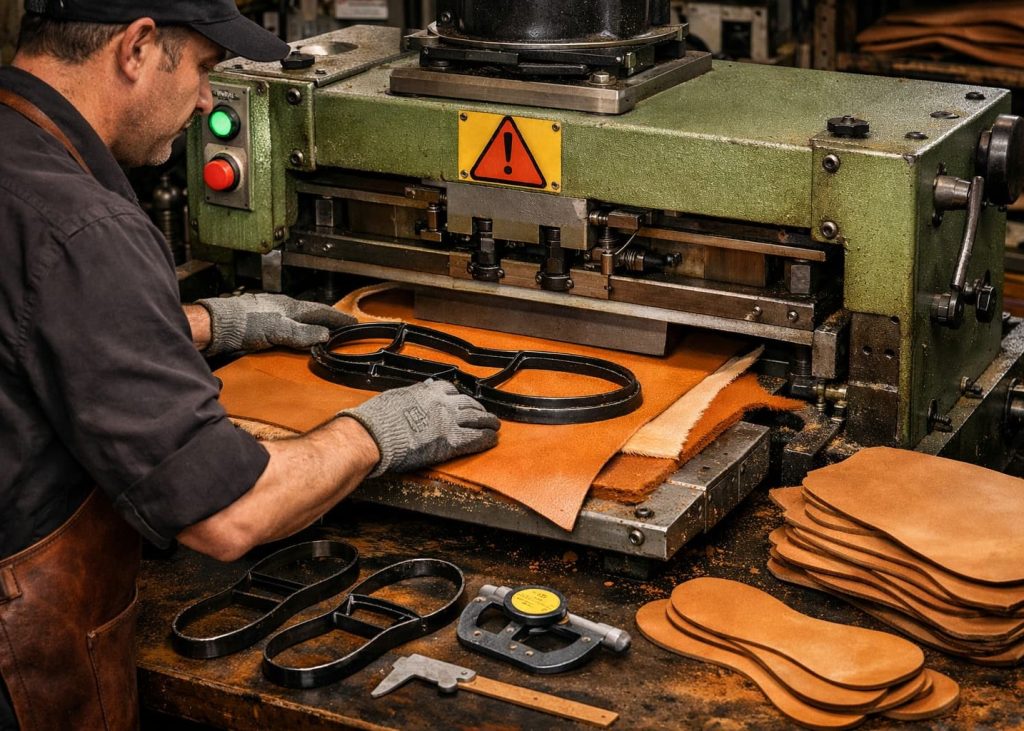
Cutting is the first major preparation operation for many outsole constructions. Leather bends and synthetic sheets must be converted into accurately shaped components before subsequent manufacturing processes can begin. The accuracy achieved during cutting directly influences the success of all downstream operations. Even small dimensional errors can create assembly difficulties, poor appearance, material wastage, and increased rejection rates.
Modern footwear factories use hydraulic cutting presses equipped with precision cutting dies. Proper nesting and cutting planning are also essential because outsole materials often represent a significant percentage of product cost. Consequently, cutting departments focus not only on dimensional accuracy but also on maximizing material utilization.
Machines Used
- Hydraulic cutting press
- Swing arm cutting press
- Traveling head cutting press
- CNC cutting systems
Benefits of Accurate Cutting
- Better assembly fit
- Reduced material waste
- Improved appearance
- Consistent dimensions
Common Defects
- Incomplete cutting
- Undersized components
- Oversized components
- Jagged edges
Key Control Points
- Knife sharpness
- Cutting pressure settings
- Grain direction control
- Size accuracy verification
Expert Tip: Color approval standards should be established before bulk production.


Splitting and Levelling Operations
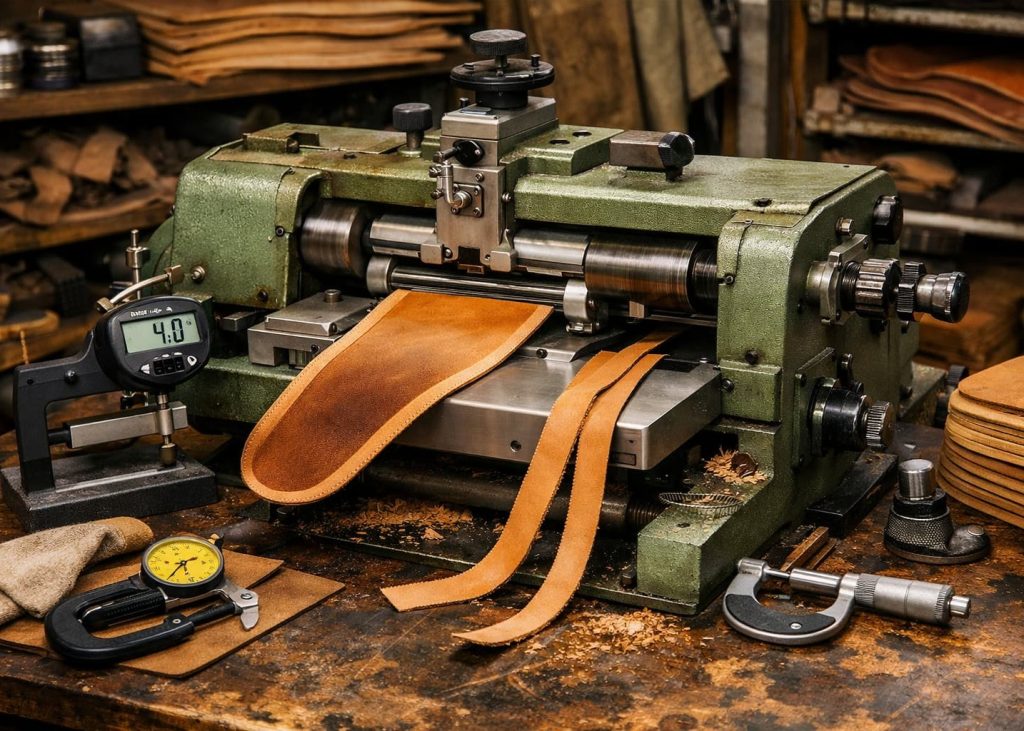
Natural Leather rarely maintains a uniform thickness throughout the hide. Variations occur across different sections due to animal growth characteristics and tanning processes. Therefore, leather bends frequently undergo splitting and levelling operations before entering additional manufacturing stages.
The primary objective is to achieve a consistent thickness throughout the outsole component. Uniform thickness improves moulding quality, assembly precision, bonding performance, and final product appearance.
Without proper levelling, manufacturers may experience visible thickness variation, assembly mismatches, and inconsistent product performance. Modern splitting machines can remove very precise amounts of material while maintaining excellent dimensional consistency.
Machines Used
- Band knife splitting machine
- Precision levelling machine
- Thickness gauge
Benefits
- Consistent thickness
- Improved bonding
- Better assembly accuracy
- Enhanced appearance
Common Defects
- Edge damage
- Knife marks
- Over-splitting
- Thickness variation
Key Control Points
- Thickness verification records
- Thickness tolerance control
- Blade condition
- Material feeding consistency
Pro Tip: Maintain separate inspection criteria for leather and synthetic materials.

Snuffing Operations
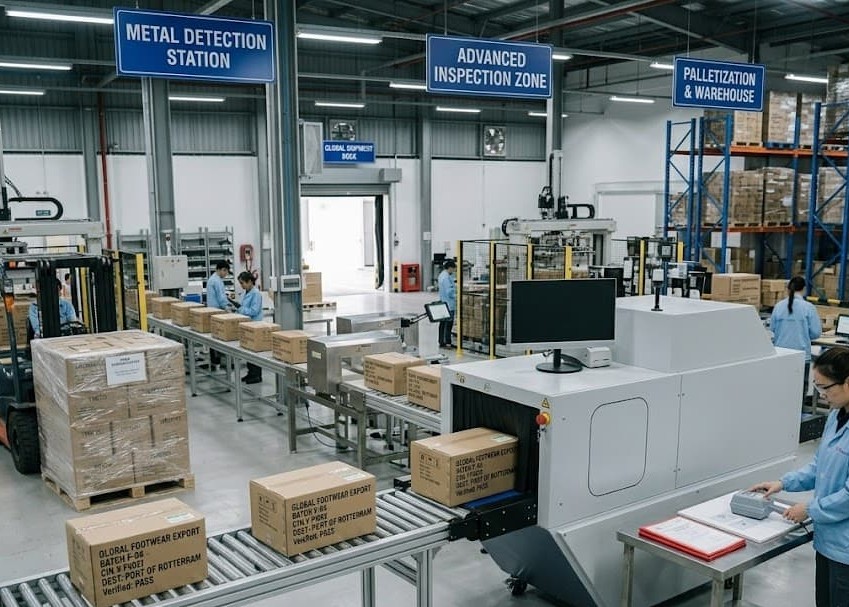
Snuffing is a specialized surface preparation process commonly used on leather outsoles. During this operation, fine abrasive materials lightly remove a portion of the leather grain surface. Although only a very small amount of material is removed, the impact on appearance can be significant.
Snuffing helps dyes penetrate more evenly, improves surface uniformity, conceals minor leather defects, and creates specific aesthetic effects required by footwear designers. As a result, many premium leather outsole manufacturers include snuffing as a standard preparation process. The operation requires careful control because excessive abrasion can damage the leather surface and negatively affect appearance.
Purpose of Snuffing
- Improve dye absorption
- Improve color uniformity
- Conceal minor defects
- Enhance appearance
Materials Used
- Fine emery paper
- Abrasive belts
- Surface finishing wheels
Common Defects
- Surface damage
- Over-snuffing
- Uneven surface
- Excess material removal
Key Control Points
- Uniform abrasion
- Avoid over-snuffing
- Surface consistency
- Defect masking effectiveness
Pro Tip: Record supplier quality performance monthly.
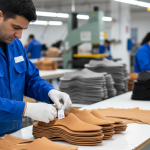
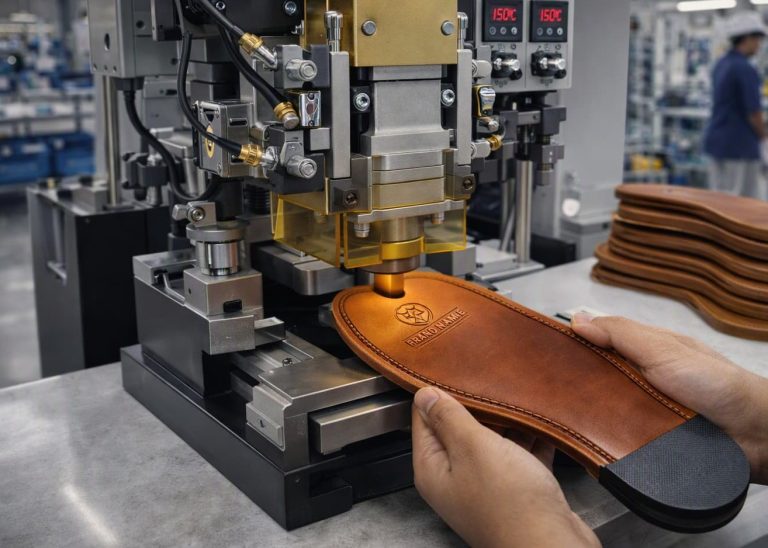
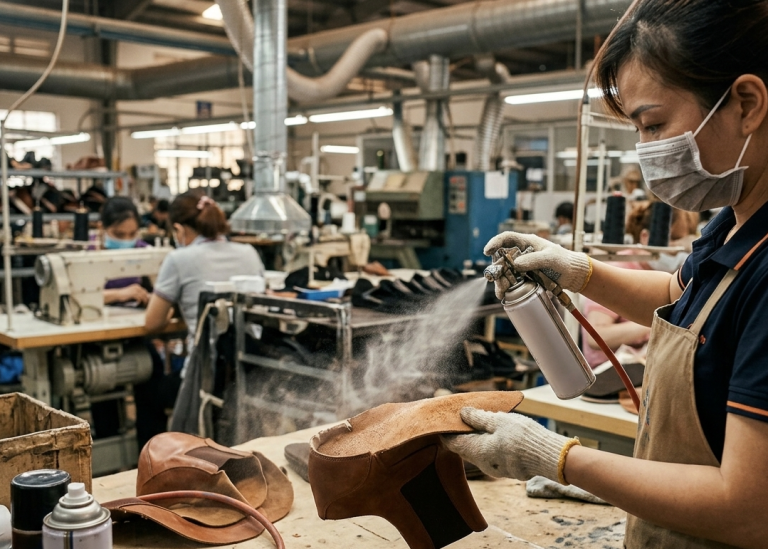
Bottom Coloring Operations
Bottom coloring is performed to improve outsole appearance and create a consistent visual finish. Special dyes and pigments are applied to leather and synthetic outsole materials according to product specifications.
Beyond aesthetics, bottom coloring can also help conceal minor imperfections and improve overall visual consistency. In premium footwear, outsole coloration often becomes a distinctive design feature that enhances brand identity and perceived product value.
Color matching is particularly important because even minor shade differences may become visible after assembly. Consequently, factories establish strict color approval standards before production begins.
Coloring Materials
- Dyes
- Pigments
- Edge inks
- Specialty finishes
Benefits
- Defect masking
- Enhanced appearance
- Improved consistency
- Brand differentiation
Common Defects
- Surface marks
- Shade variation
- Uneven coverage
- Poor penetration
Key Control Points
- Color consistency
- Proper drying
- Pigment penetration
- Shade matching
Posts you make Like

Troubleshooting Adhesive Bond Failures in Footwear Manufacturing…
Burnishing, Brushing and Polishing
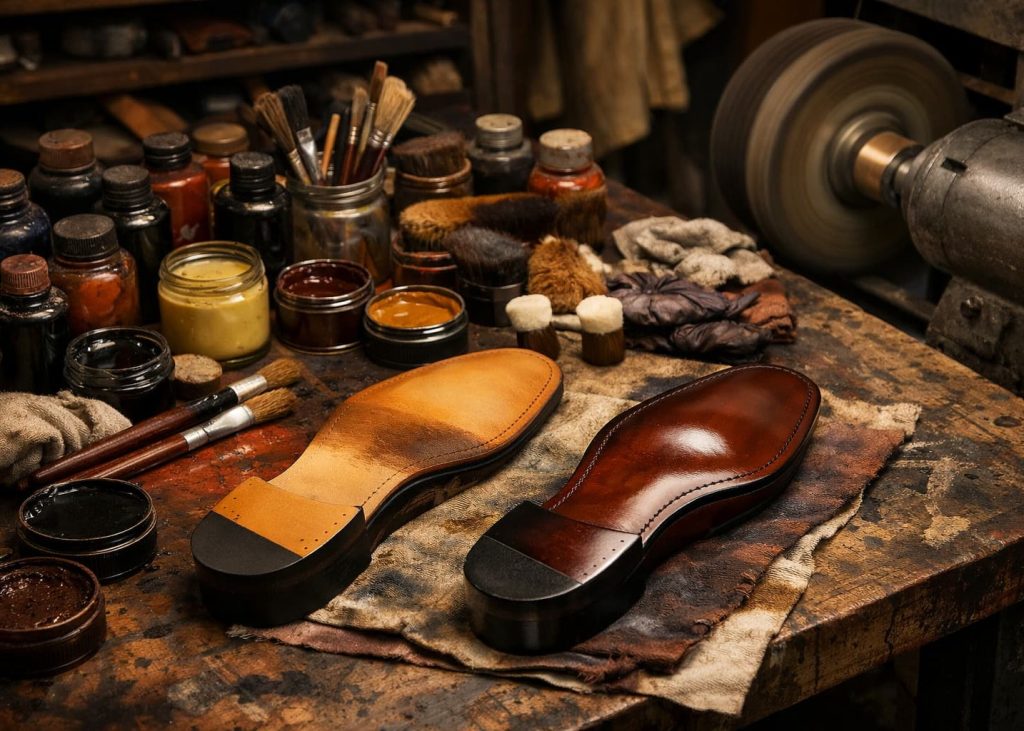
After coloring, many leather outsoles undergo burnishing, brushing, and polishing operations to achieve the required visual appearance. These finishing processes improve smoothness, shine, depth of color, and overall product presentation.
Luxury footwear manufacturers often perform multiple polishing stages using different waxes and brushes to achieve a premium finish. The resulting surface not only looks attractive but also enhances perceived product quality. Because customers often associate shine and finishing quality with craftsmanship, these operations play an important role in premium footwear manufacturing.
Materials Used
- Natural waxes
- Synthetic waxes
- Polishing compounds
- Finishing creams
Brushes Used
- Horsehair brushes
- Cotton brushes
- Wool brushes
Benefits
- Better surface smoothness
- Improved luster
- Premium appearance
- Enhanced color depth
Key Control Points
- Surface temperature control
- Wax application consistency
- Shine uniformity
- Surface defect monitoring