Upper Component Edge Polishing in Footwear Manufacturing – Stitching Process Series
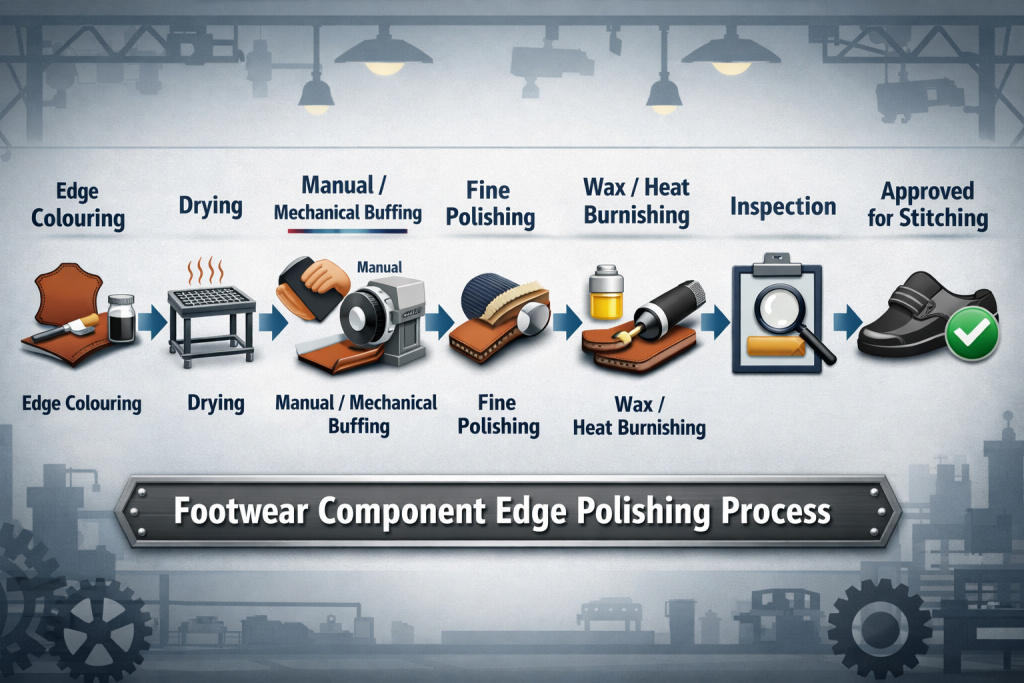
Upper Component edge polishing is a critical finishing stage that directly impacts the visual quality, hand feel, and durability of footwear uppers. After cutting, skiving, trimming, and edge colouring, polishing ensures that edges appear clean, smooth, and premium.
In the previous stage, Upper Component Edge Colouring – Stitching Process Series, edge paint is applied to seal and protect the raw edges. However, colouring alone is not sufficient. Therefore, polishing becomes essential to level the coating, enhance smoothness, and achieve a uniform finish before stitching or final assembly.
Edge Polishing Using Manual Buffing
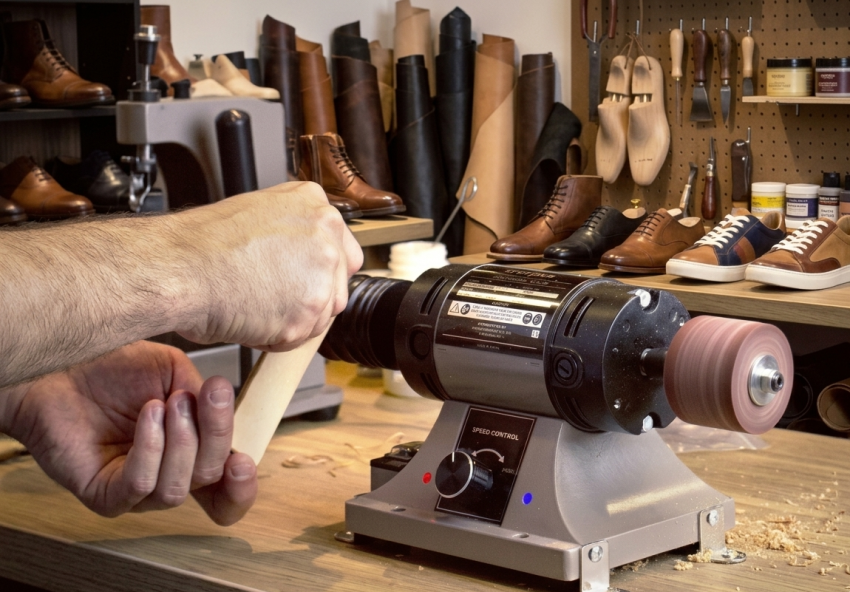
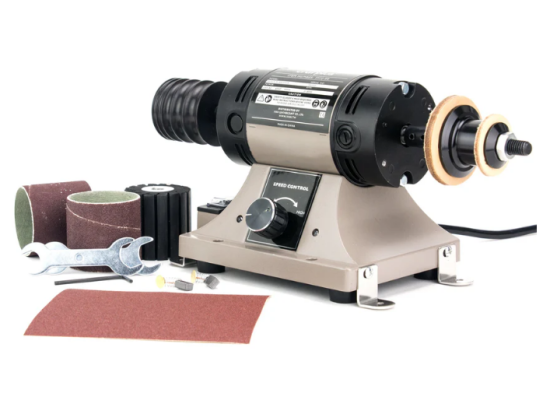
Manual buffing is the most widely used method for polishing edges, especially in leather uppers and small production setups. Operators use sandpaper, cloth wheels, or handheld tools to smooth and refine the edge surface after colouring.
This method plays a key role because it allows precise control over delicate components. As a result, it is suitable for premium leather, thin edges, and complex shapes where machine access is limited.
The process begins after edge colouring and drying. The operator selects appropriate grit sandpaper depending on edge thickness and material type. Initially, coarse grit removes uneven paint buildup. Then, finer grit smoothens the surface. Finally, a cloth or polishing wheel enhances the finish and removes dust.
Key Control Points:
- Ensure complete drying of edge paint before polishing
- Maintain uniform pressure to avoid uneven thickness
- Use correct grit sequence (coarse → fine)
- Clean dust before next operation
Pro Tip : Always match buffing intensity with edge paint thickness; excessive buffing can expose raw edges.
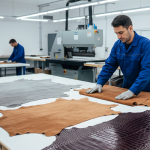
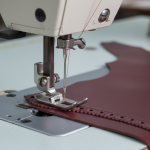
Edge Polishing Using Mechanical Buffing Machines
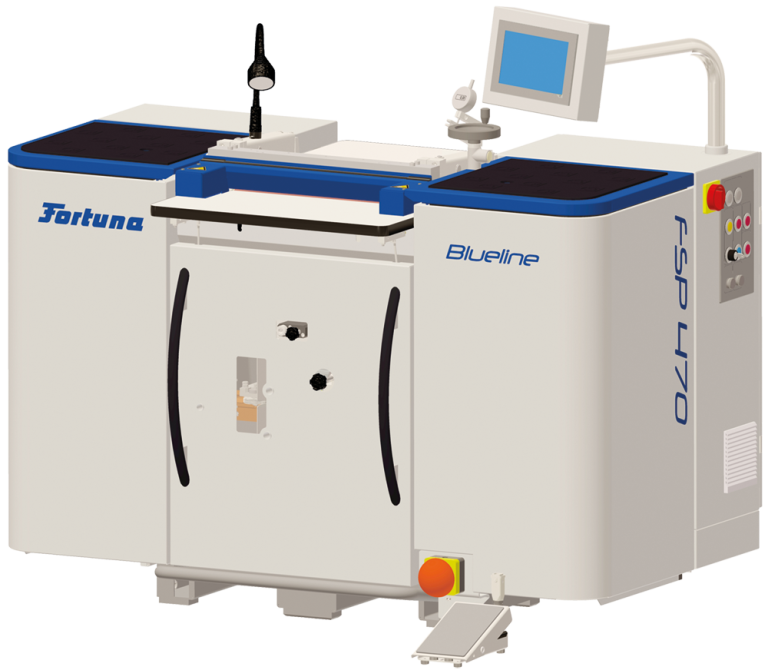
Mechanical buffing machines improve consistency and productivity in medium to large-scale factories. These machines use rotating abrasive wheels or belts to polish edges uniformly.
This method becomes important because manual variation is eliminated. Therefore, factories achieve better repeatability, especially for bulk production of consistent components like quarters, vamps, and straps.
The process starts by setting machine speed and selecting the correct abrasive wheel. The operator feeds the component carefully, ensuring steady contact with the buffing surface. As the wheel rotates, it removes excess paint and smoothens the edge. Subsequently, polishing wheels or soft brushes can be used for final finishing.
Key Control Points:
- Maintain correct RPM based on material type
- Avoid overheating which can damage edge paint
- Ensure proper operator handling angle
- Regularly dress or replace buffing wheels
Pro Tip : For light-colored uppers, use dedicated clean wheels to avoid color contamination.
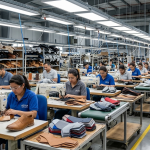
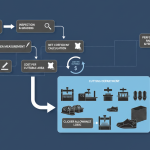
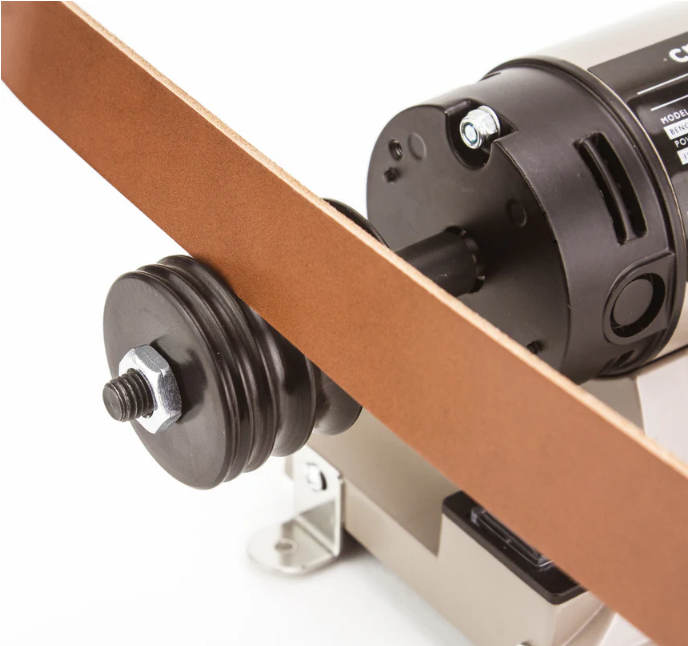
Edge Polishing Using Wax or Chemical Finishing
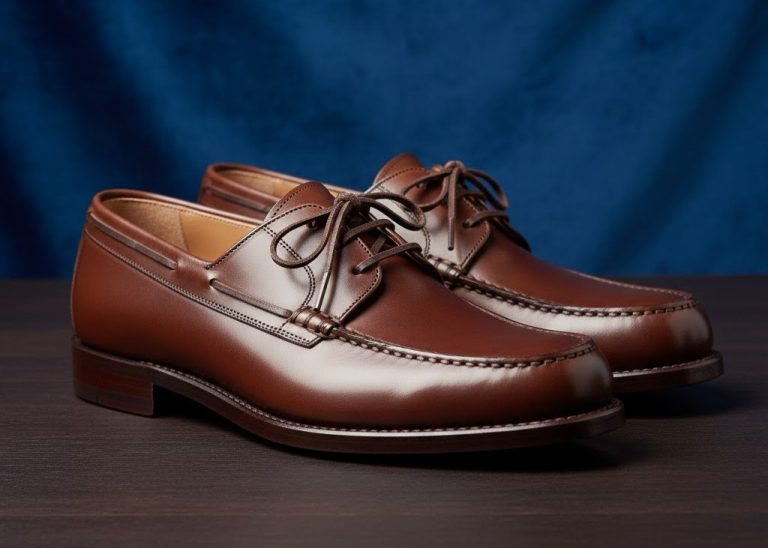
Wax polishing or chemical finishing enhances the aesthetic appeal and provides a sealed, glossy edge. This method is commonly used for formal shoes, leather goods, and premium footwear.
It is important because it improves water resistance and gives a luxury appearance. Additionally, it reduces fibre exposure, especially in natural leather edges.
The process begins after initial buffing. A thin layer of wax or finishing chemical is applied using cloth, brush, or roller. Then, heat or friction is applied to melt and bind the wax into the edge. As a result, the edge becomes smooth, sealed, and slightly glossy.
Key Control Points:
- Apply uniform thin coating of wax
- Control heat application to avoid burning
- Ensure compatibility with edge paint
- Avoid over-polishing which reduces adhesion
Pro Tip : Combine light buffing + burnishing for best results in premium leather edges.
Edge Polishing Using Heat Burnishing
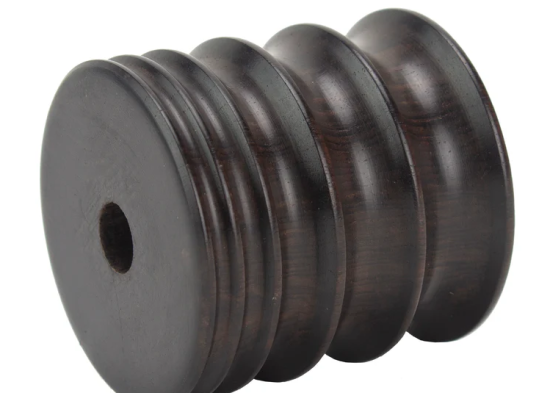
Heat burnishing uses controlled heat and pressure to compress fibres and smoothen edges. This method is highly effective for leather components.
This technique is essential because it creates a naturally sealed edge without heavy coatings. Therefore, it is widely used in high-end leather footwear and sandals.
The process involves passing the edge through a heated tool or roller. Heat softens the fibres, while pressure compresses them into a compact, smooth surface. Subsequently, a polished finish is achieved without excessive material removal.
Key Control Points:
- Maintain optimal temperature settings
- Avoid excessive heat causing blackening
- Ensure consistent pressure application
- Suitable mainly for leather materials
Pro Tip : Always test temperature settings on scrap before bulk production.
Edge Polishing for Synthetic and Textile Components
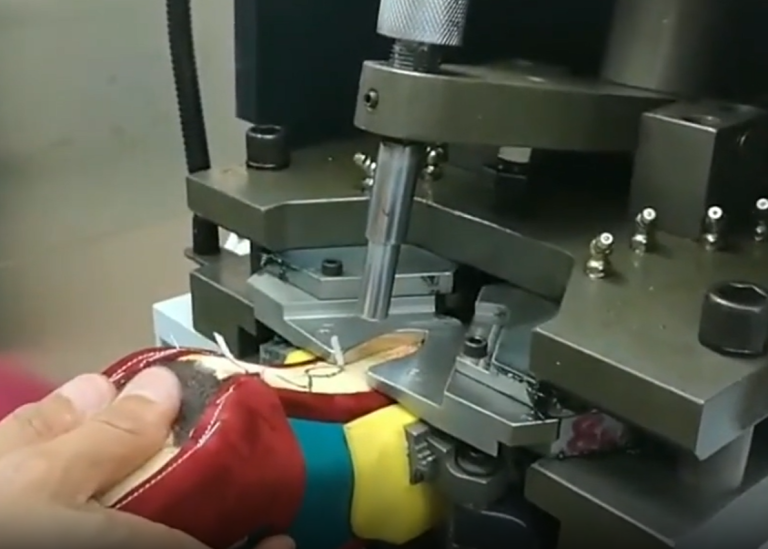
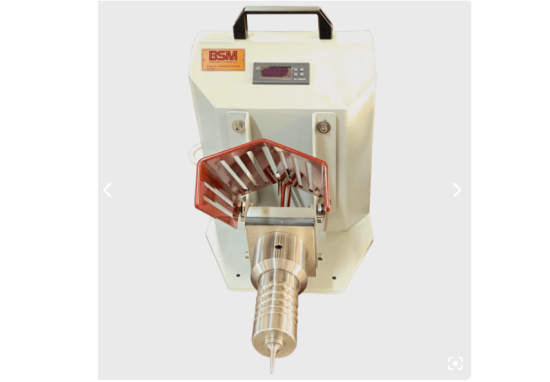
Polishing synthetic and textile edges requires a different approach due to material behavior. Unlike leather, these materials may melt, fray, or deform under friction or heat. This process is important because improper polishing can damage the component permanently. Therefore, controlled techniques must be applied.
The process typically involves light buffing or specialized tools. For synthetic materials, low-speed polishing prevents melting. For textiles, edge sealing methods like heat cutting or coating are preferred before light finishing.
Key Control Points:
- Use low-speed machines for synthetics
- Avoid excessive friction or heat
- Ensure edges are pre-sealed before polishing
- Inspect for fibre fraying
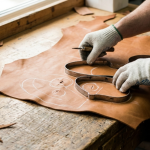
Courtesy : BSM India
Pro Tip : Use standard reference samples to maintain consistent edge quality.
Quality Control in Edge Polishing
Edge polishing quality directly affects product aesthetics, durability, and customer perception. Therefore, strict inspection standards must be maintained. This stage is critical because poor polishing can lead to rough edges, paint peeling, or inconsistent appearance. Moreover, defects at this stage are difficult to correct after stitching.
Inspection begins with visual and tactile checks. Operators verify smoothness, uniformity, and color consistency. Additionally, edges must be free from burns, cracks, or exposed fibres. Random sampling and inline checks ensure process stability.
Key Control Points:
- Check smoothness by touch and visual inspection
- Ensure uniform edge thickness
- Verify no paint peeling or cracking
- Confirm color consistency across pairs
Pro Tip : Implement inline inspection instead of end-line detection to reduce rework.
Integration with Edge Colouring Process
Edge polishing must always follow proper edge colouring preparation. If colouring is poorly executed, polishing will not achieve the desired finish.
Edge colour tends to smudge in suede and similar materials or migrate to lining. Therefore, proper drying and controlled polishing are essential to prevent defects.
A well-controlled sequence ensures:
- Better adhesion of edge paint
- Smooth and premium finish
- Reduced rework and rejection

Frequently Asked Questions – FAQs
1. Why is edge polishing required after edge colouring?
It smoothens uneven paint layers and enhances appearance and durability.
2. Can edge polishing be skipped?
No, skipping leads to rough edges and poor product quality.
3. Which materials require special polishing care?
Synthetics and textiles require controlled polishing to avoid damage.
4. What is the best method for premium leather?
Combination of buffing, wax finishing, and burnishing gives best results.
5. How to avoid edge burning during polishing?
Control speed, pressure, and temperature during the process.
6. What are common defects in edge polishing?
Rough edges, paint peeling, color inconsistency, and fibre exposure.
Explore other Stitching Process Series
- Stitching Process in Footwear Manufacturing: From Cutting to Closing Assembly in Shoe Production
- Cut Component inspection after cutting/clicking – Stitching Process Series
- Cut Component Pairing & Match Marking After Cutting / Clicking-Stitching Process Series
- Cut Component Stamping After Cutting / Clicking – Stitching Process Series
- Component Marking After Cutting/Clicking–Stitching Process Series
- Component Branding in Footwear Manufacturing–Stitching Process Series
- Component Embroidery in Footwear Manufacturing–Stitching Process Series
- Component Skiving in Footwear Manufacturing–Stitching Process Series
- Component Splitting in Footwear Manufacturing–Stitching Process Series
- Reinforcement (Backers & Tapes) Process in Footwear Manufacturing – Stitching Process Series