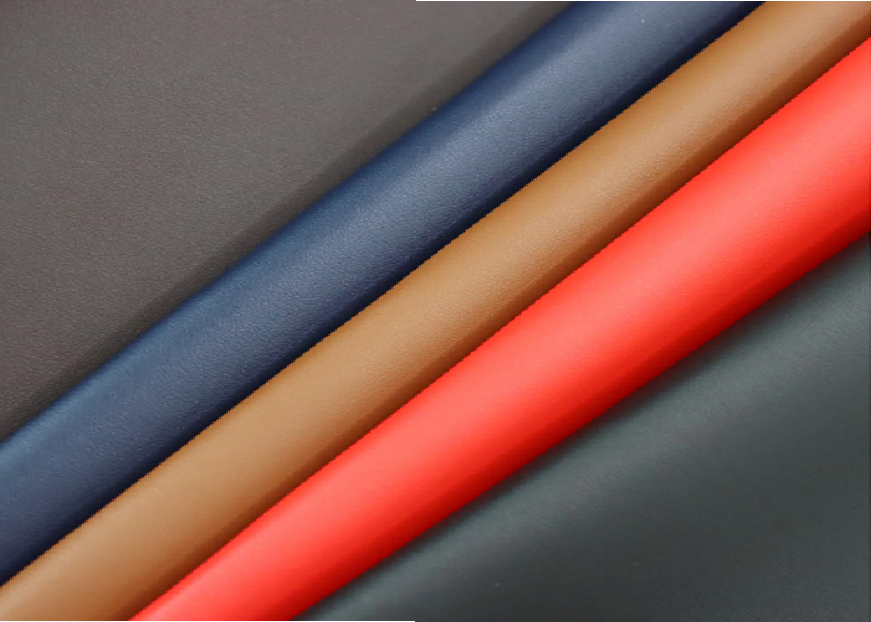
R.C (Reconstituted) Leather in Footwear Industry
R.C leather, also called reconstituted leather or bonded leather, has become an important engineered material in modern footwear manufacturing. Footwear factories increasingly use this material because it improves leather waste utilization while maintaining controlled production consistency. Moreover, manufacturers can produce large material volumes with stable thickness, surface appearance, and coating behavior. Therefore, R.C leather is widely used in fashion footwear, sandals, casual shoes, and cost-sensitive upper constructions.
Unlike full-grain leather, R.C leather does not use a complete animal hide structure. Instead, factories process leather waste fibers with binders, coating chemicals, and reinforcement systems to create sheet-form leather materials. As a result, manufacturers achieve leather-like aesthetics with controlled physical properties suitable for industrial footwear production.
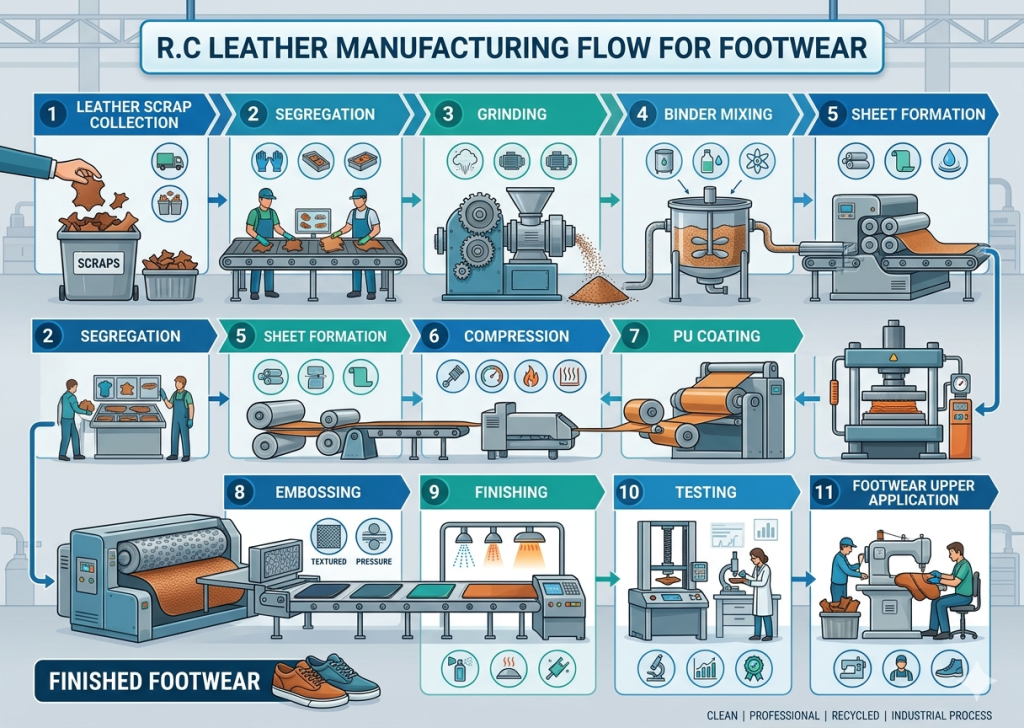
Most footwear-grade R.C leather uses PU coating systems because uncoated reconstituted leather generally cannot withstand upper flexing, abrasion, and environmental exposure consistently. Consequently, modern footwear factories combine leather fiber technology with advanced polyurethane coating systems to improve durability, appearance, and production stability..
Structure and Composition of R.C Leather
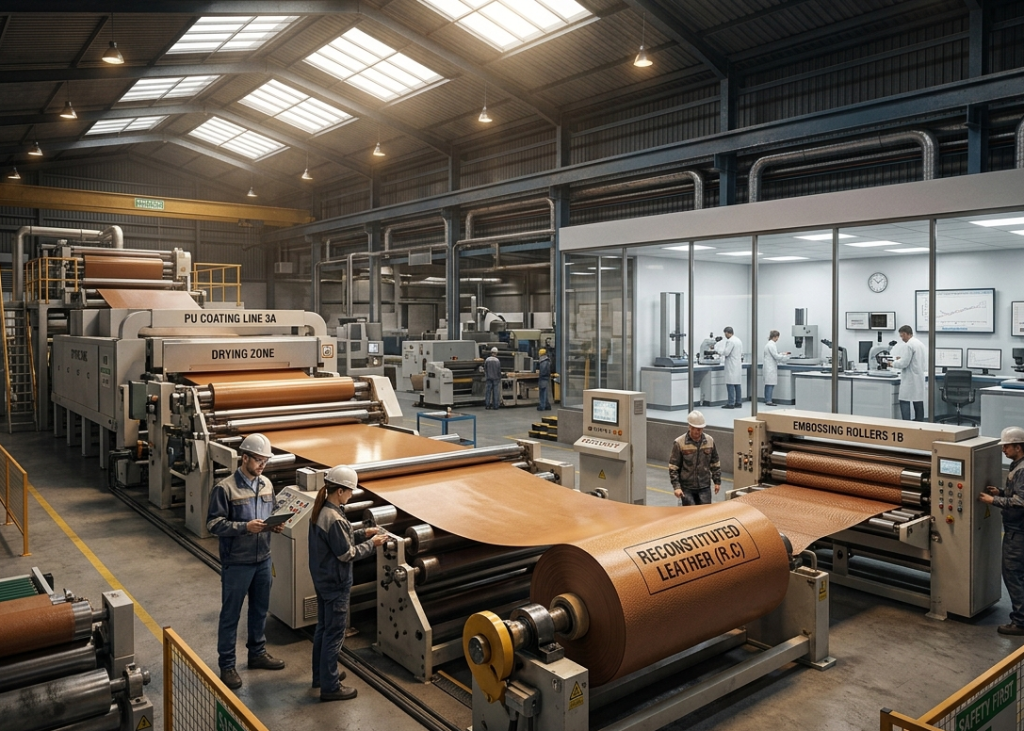
R.C leather consists of recycled leather fibers bonded together using resin systems and surface coatings. Manufacturers first process leather waste into fine fibers before combining them with chemical binders under controlled mixing conditions. Subsequently, factories compress the material into sheet form and apply coating systems for footwear applications.
The internal structure normally includes multiple engineered layers. The base layer contains shredded leather fibers mixed with polyurethane or latex binders. In many cases, manufacturers add reinforcement substrates such as nonwoven fabric or microfiber backing to improve tensile strength and dimensional stability. Finally, factories apply PU or polymer coatings on the top surface to create the required grain finish and performance properties.
This layered construction allows factories to control thickness variation, embossing quality, gloss level, and coating appearance more effectively than natural leather hides. Therefore, manufacturers can achieve improved cutting efficiency and production consistency during footwear upper manufacturing.
Additionally, engineered R.C leather provides more stable roll-based processing because sheet dimensions remain predictable during cutting, stitching, and upper assembly operations.
Key Control Points
- Maintain uniform fiber dispersion throughout the sheet
- Avoid weak bonding zones inside the structure
- Ensure reinforcement layer alignment accuracy
- Control coating penetration depth carefully
Pro Tip :
Blend multiple leather scrap grades for balanced properties
Use magnetic separators before grinding systems
Raw Material Selection and Segregation
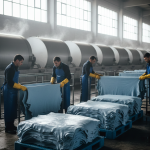
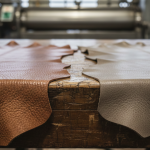
Raw material quality strongly influences the final performance of R.C leather. Therefore, footwear material factories carefully classify leather waste before processing operations begin.
Proper segregation improves bonding efficiency, sheet uniformity, and coating adhesion. Factories generally collect leather waste from:
- Tannery trimming operations
- Buffing dust collection systems
- Split leather processing
- Footwear cutting waste
- Leather sheet offcuts
After collection, workers remove contaminants such as stitching threads, adhesives, metallic particles, dust, and fabric residues. Subsequently, the cleaned leather waste enters shredding and grinding operations.
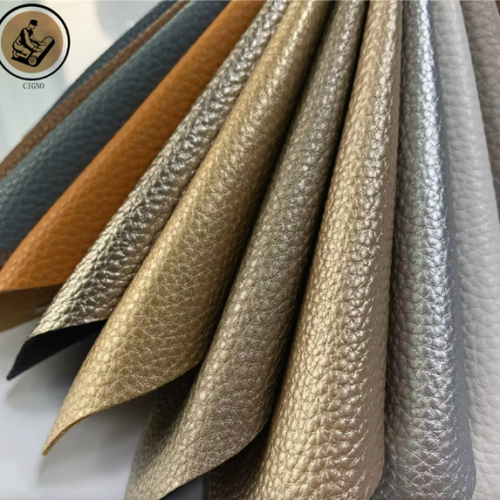
Courtesy: CIGNO
High-quality leather scraps produce stronger fiber networks because natural collagen fibers remain more intact during processing. Consequently, the final R.C leather achieves better tensile strength, embossing quality, and flex resistance. Conversely, poor-quality waste materials increase the risk of delamination, coating inconsistency, and weak mechanical properties.
Moisture control also remains critical during raw material storage. Excessive moisture may create fungal contamination or inconsistent grinding behavior. Therefore, factories maintain controlled warehouse conditions before production begins.
Key Control Points
- Separate chrome and vegetable-tanned scraps properly
- Remove metallic contamination completely
- Maintain stable raw material moisture content
- Avoid oversized leather particles during feeding
Pro Tip :
Store leather waste above floor level to avoid moisture absorption
Implement incoming scrap inspection before production release

Leather Fiber Grinding and Fiberization
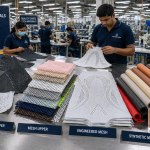
The grinding process converts leather waste into engineered fibers suitable for sheet manufacturing. Factories use industrial hammer mills, granulators, or fiberizing systems to break down leather scraps into controlled particle sizes. This stage directly affects:
- Surface smoothness
- Binder penetration
- Mechanical strength
- Sheet density
- Coating absorption behavior
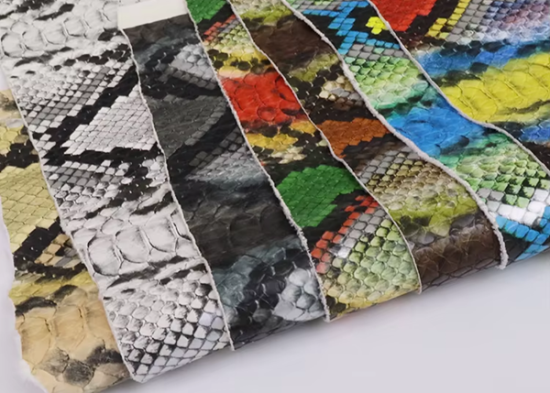
If factories produce excessively coarse fibers, the final material surface becomes rough and difficult to coat uniformly. However, excessive grinding may damage fiber integrity and reduce bonding strength. Therefore, manufacturers carefully balance grinding intensity based on footwear application requirements.
Footwear upper materials generally require medium-fine fiber structures because they must combine flexibility with adequate surface smoothness. Additionally, controlled particle distribution improves embossing performance during finishing operations.
Modern factories also integrate dust extraction systems because airborne leather particles can reduce machine efficiency and affect workplace safety conditions.
Key Control Points
- Maintain stable grinding speed during operation
- Monitor fiber particle size continuously
- Prevent overheating during grinding process
- Use efficient dust extraction systems
Pro Tip:
Use staged binder addition for better fiber wetting
Avoid excessive filler loading in footwear grades


Binder Mixing and Chemical Formulation
After fiber preparation, factories mix leather fibers with binders and chemical additives to create a homogeneous compound.
This stage determines the internal bonding performance and long-term durability of the final R.C leather sheet. Most footwear manufacturers use polyurethane-based binder systems because PU chemistry provides better flexibility and adhesion properties. Some factories also use latex or acrylic systems depending on product category and cost targets. Additional chemicals may include:
- Plasticizers
- Crosslinking agents
- Color pigments
- Fillers
- Processing stabilizers
- Wetting agents
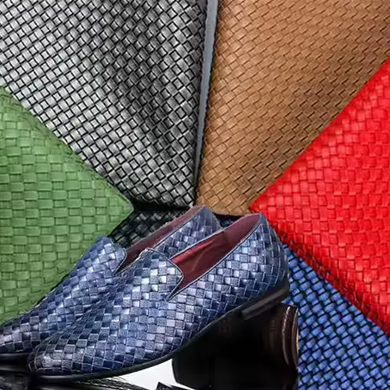
Factories must achieve uniform chemical distribution because poor mixing creates weak internal zones that later cause cracking or delamination. Consequently, many modern production lines use automatic dosing systems and controlled mixing tanks to improve batch consistency.
Water-based binder systems are becoming increasingly important because environmental regulations continue tightening across global footwear manufacturing regions. Therefore, many suppliers now reduce solvent-based chemistry usage to improve sustainability performance.
Key Control Points
- Maintain precise binder-to-fiber ratio
- Monitor compound viscosity regularly
- Prevent chemical segregation during mixing
- Control mixing temperature carefully
Pro Tip:
Perform viscosity checks every production batch
Standardize chemical dosing procedures factory-wide

Sheet Formation and Compression Process
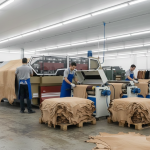
Factories convert the prepared compound into sheet form using calendaring or compression molding systems. During this stage, the leather fiber mixture transforms into a continuous engineered material suitable for footwear applications.
Compression pressure significantly affects the physical characteristics of the final product. Higher compression increases density and smoothness; however, excessive compression may reduce softness and flexibility. Therefore, footwear-grade R.C leather requires balanced pressure settings to maintain both durability and comfort performance.
Some manufacturers integrate reinforcement substrates during sheet formation. Nonwoven fabrics or microfiber backings improve dimensional stability, stitch-holding strength, and lasting performance during footwear upper assembly.
Temperature control also remains important because binder activation depends heavily on thermal conditions. Inconsistent temperatures may create weak bonding zones or thickness variation across the sheet width.
After compression, factories cool the material gradually before coating operations begin. Controlled cooling helps stabilize sheet dimensions and prevents surface deformation.
Key Control Points
- Maintain uniform sheet thickness throughout production
- Monitor compression temperature continuously
- Prevent air entrapment inside the sheet
- Ensure reinforcement substrate alignment accuracy
Pro Tip:
Use softer PU systems for flex-heavy footwear
Apply primer coating before topcoat application

PU Coating Systems for Footwear Uppers
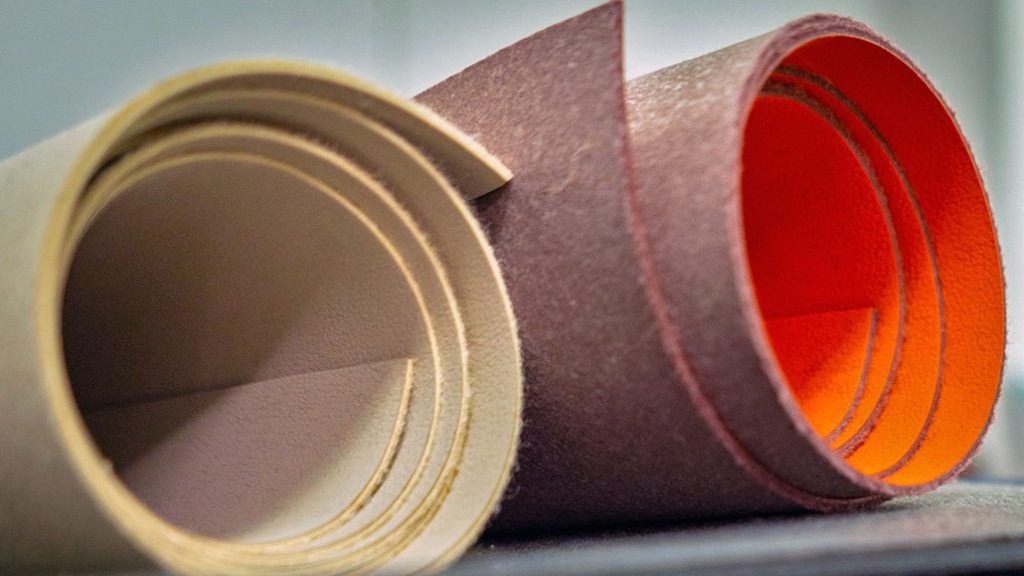
PU coating technology is one of the most important stages in footwear-grade R.C leather manufacturing. Most factories use polyurethane coatings because they significantly improve durability, flex resistance, and surface aesthetics.
Uncoated R.C leather generally cannot withstand upper manufacturing stresses consistently. Therefore, footwear manufacturers apply PU coatings to create protective and functional surface layers. These coatings improve:
- Abrasion resistance
- Flex durability
- Water resistance
- Surface touch feel
- Visual appearance
- Grain retention
Many footwear factories successfully use full-upper R.C leather with PU-coated systems. In such constructions, the PU layer protects the internal leather fiber structure from cracking, peeling, and environmental exposure. Consequently, PU-coated R.C leather performs substantially better than untreated bonded leather.
Factories may apply multiple coating layers depending on performance requirements. Primer layers improve adhesion, while topcoats enhance gloss, softness, or scratch resistance. Water-based PU coatings are increasingly preferred because they reduce VOC emissions and improve environmental compliance.
Key Control Points
- Prevent bubbles and pinholes on the surface
- Control coating thickness precisely
- Maintain proper curing temperature
- Verify coating adhesion strength regularly
Pro Tip:
Optimize curing cycles for hydrolysis resistance
Use multilayer coating systems for premium uppers

Embossing and Surface Grain Development
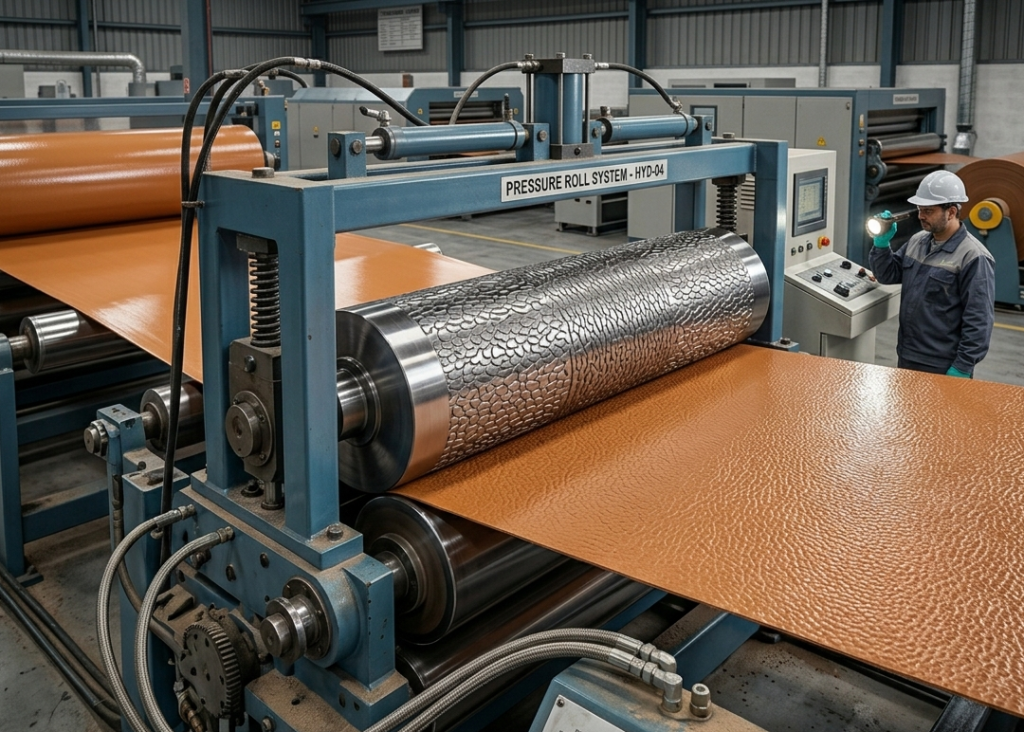
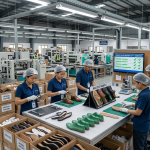
Embossing creates the leather-like appearance required for footwear upper materials. During this process, heated embossing rollers transfer grain patterns onto the coated surface under controlled pressure conditions. Factories may produce:
- Natural leather grain
- Smooth finish textures
- Nubuck effects
- Saffiano patterns
- Customized branding textures
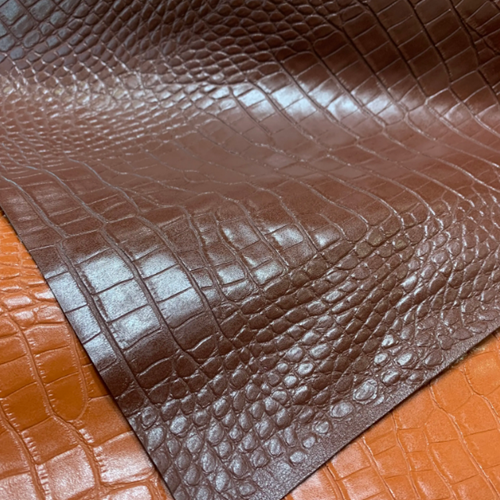
Embossing quality strongly influences customer perception because footwear buyers closely evaluate surface aesthetics and texture consistency. Therefore, manufacturers carefully control roller temperature, pressure, and material softness during operation.
Improper embossing conditions may cause coating cracks, gloss inconsistency, or poor grain definition. Additionally, worn embossing rollers reduce texture sharpness and visual quality. High-end footwear factories often use precision engraved rollers to replicate premium leather grain structures more accurately.
Key Control Points
- Ensure coating softness compatibility
- Maintain stable embossing temperature
- Monitor roller wear condition regularly
- Control embossing pressure accurately
Pro Tip:
Use anti-yellowing additives for light-colored uppers
Standardize gloss levels for repeat orders
Finishing and Top Surface Protection
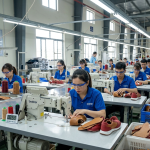
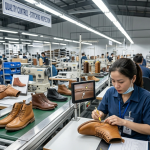
Finishing operations improve both appearance and long-term durability of R.C leather materials. Factories apply finishing systems after embossing to protect the coated surface from abrasion, moisture, and environmental aging. Typical finishing treatments include:
- Matte topcoats
- Gloss coatings
- Anti-scratch layers
- Water-resistant treatments
- Anti-yellowing chemistry
- Soft-touch finishes
For tropical export markets, many factories use anti-hydrolysis systems because humidity exposure can damage low-quality PU coatings over time. Therefore, finishing selection depends heavily on target market requirements.
Surface finishing also affects footwear stitching behavior and upper handling performance during assembly operations. Consequently, manufacturers must balance softness, grip, and abrasion resistance carefully. Factories generally conduct multiple inspection stages after finishing to ensure gloss consistency and coating stability before shipment.
Key Control Points
- Monitor hydrolysis resistance performance
- Maintain uniform topcoat application
- Control drying temperature carefully
- Verify gloss consistency batch-wise
Pro Tip:
Test topcoat compatibility before mass production
Avoid excessive finish hardness in casual footwear
Physical Testing and Quality Control
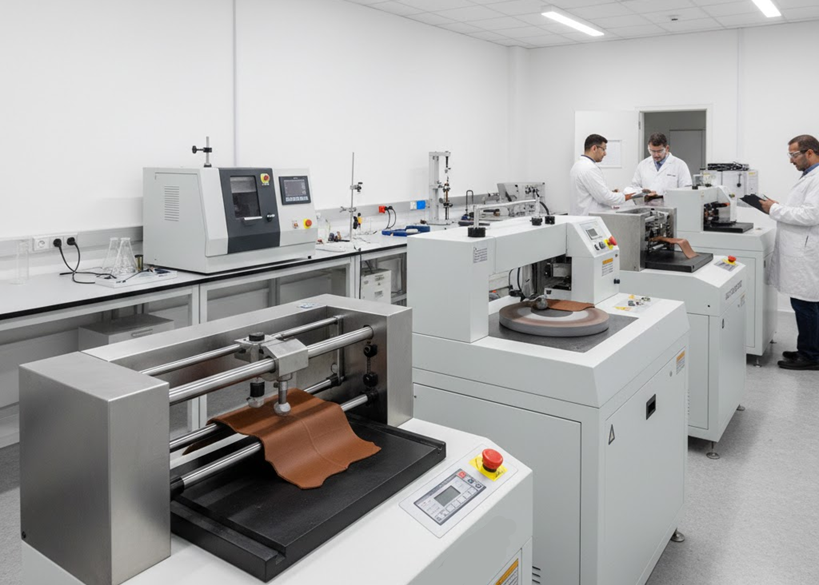
Footwear-grade R.C leather requires strict laboratory testing before production approval. Since bonded materials involve multiple engineered layers, consistent quality control becomes essential for long-term footwear performance. Factories commonly perform:
- Tensile strength testing
- Tear resistance testing
- Flex resistance evaluation
- Adhesion strength testing
- Abrasion resistance testing
- Hydrolysis resistance testing
- Thickness tolerance verification
- Color fastness evaluation
Most footwear failures occur because of weak coating adhesion or poor internal bonding. Therefore, manufacturers must establish strong incoming inspection systems before cutting operations begin.
Additionally, footwear factories should validate material performance after upper assembly because stitching, lasting, and cementing operations may affect bonded structures differently than natural leather. Export-oriented manufacturers often follow SATRA, ISO, or brand-specific testing standards to ensure compliance with buyer requirements.
Key Control Points
- Validate hydrolysis resistance periodically
- Perform flex testing for every production batch
- Verify coating peel strength regularly
- Monitor thickness tolerance continuously
Pro Tip:
Never use economy-grade R.C leather in safety footwear
Use microfiber reinforcement for better durability
Advantages of R.C Leather in Footwear Manufacturing
R.C leather offers several operational and commercial advantages for footwear manufacturers. Since the material uses engineered sheet structures, factories achieve better dimensional consistency compared to natural leather hides.
One major advantage is improved material utilization. Natural leather contains irregular shapes and defect areas, whereas R.C leather provides more predictable cutting efficiency. Consequently, factories reduce material wastage during upper cutting operations. Additionally, manufacturers benefit from:
- Lower raw material cost
- Stable surface appearance
- Controlled thickness consistency
- Easier roll-based production
- Better sustainability positioning
- Improved batch repeatability
The material also supports large-volume industrial production because engineered sheets simplify process standardization across factories.
Key Control Points
- Prevent excessive lasting stress during assembly
- Match material grade with footwear category
- Control warehouse humidity carefully
- Use suitable stitching density for uppers
Pro Tip:
Validate tropical climate performance before export
Conduct wear trials before bulk commercialization
Limitations and Performance Risks
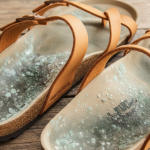
Despite its manufacturing advantages, R.C leather still has several technical limitations compared to full-grain leather. Therefore, footwear factories must select applications carefully based on performance expectations. Common limitations include reduced breathability, lower long-term durability, and weaker tear resistance. Additionally, low-quality coating systems may crack or delaminate under repeated flexing conditions.
Hydrolysis resistance also remains a critical concern in tropical markets. Poor-quality PU systems may deteriorate under prolonged humidity exposure. Consequently, factories should validate aging performance before commercialization.
Heavy-duty footwear applications such as industrial safety shoes generally require stronger upper materials because R.C leather may not withstand extreme mechanical stress consistently. However, high-quality PU-coated constructions with reinforcement layers can still perform successfully in fashion and casual footwear categories.
Key Control Points
- Monitor coating crack resistance regularly
- Avoid excessive flex-stress application areas
- Use reinforcement backing for better stability
- Validate long-term aging performance
Sustainability and Waste Reduction Benefits
R.C leather supports circular manufacturing practices because it converts leather waste into reusable footwear materials. As sustainability targets become stricter globally, many footwear brands increasingly encourage recycled-content material adoption.
Leather waste generated from tanning and footwear production often creates disposal challenges. Therefore, reconstituted leather manufacturing helps reduce landfill pressure while improving resource efficiency. Additional sustainability benefits include:
- Reduced leather waste accumulation
- Improved raw material utilization
- Lower disposal requirements
- Better circular manufacturing integration
However, sustainability performance still depends heavily on coating chemistry, solvent usage, and VOC management. Consequently, many suppliers now invest in water-based PU systems and solvent-reduction technologies. Factories pursuing ESG targets increasingly prioritize certified recycled-content materials for brand compliance and sustainability reporting.
Key Control Points
- Use certified recycled-content suppliers
- Reduce solvent-based chemistry usage
- Monitor VOC emissions regularly
- Improve leather waste segregation systems
Applications of R.C Leather in Footwear
R.C leather is widely used across multiple footwear categories because it balances appearance, processability, and production cost effectively. Manufacturers typically use the material in fashion-oriented and medium-performance footwear products. Common applications include:
Common applications include:
- Casual shoe uppers
- Sandal straps
- School shoes
- Fashion footwear
- Decorative upper panels
- Footbed covering materials
- Wallet-integrated footwear accessories
Application suitability depends heavily on coating quality, reinforcement structure, and intended footwear usage conditions. Therefore, factories should conduct assembly trials and wear testing before large-scale production approval. Many brands also use R.C leather selectively in non-flexing upper zones to improve cost efficiency while maintaining acceptable product performance.
Key Control Points
- Validate post-assembly flex performance
- Match material grade with end-use category
- Verify stitch-holding performance before production
- Test lasting compatibility during upper assembly
Some of the Suppliers of R.C (Reconstituted) Leather
Pony Leather
Global supplier specializing in PU-coated recycled leather materials for footwear uppers, fashion products, and industrial leather sheet applications.
BOZE Leather
Large-scale manufacturer producing recycled leather, PU synthetic leather, and eco-friendly footwear material solutions for international markets.
CIGNO Leather
Industrial synthetic and bonded leather supplier supporting footwear, upholstery, and fashion manufacturing sectors with engineered material systems.
Foxi & Graph
European manufacturer focused on synderm and bonded leather technologies used in footwear reinforcement and leather goods production.
Waltery China
Footwear material supplier providing solvent-free PU, microfiber, and engineered leather materials for global shoe manufacturing industries.
Cici Leather
Synthetic and coated leather producer supplying footwear-grade PU materials with multiple embossing and finishing options.
Viet Ecotex
Vietnam-based eco-material supplier supporting sustainable footwear production with recycled and coated leather alternatives.
Foremost Leather – NUPELLE
Supplier of sustainable leather alternatives designed for fashion, footwear, and environmentally focused manufacturing applications.
Stellium International
International footwear material sourcing and synthetic leather supplier connecting Asian manufacturing operations with global footwear brands.
Conclusion
Retanning in leather manufacturing is the engineering stage that defines final leather quality. By selecting the correct retanning process—semi-chrome, vegetable, resin, synthetic, polymer, oil, or combination—tanneries can produce leather tailored precisely for footwear, garments, upholstery, and luxury goods.
Frequently Asked Questions – FAQs
Is R.C leather genuine leather?
R.C leather contains genuine leather fibers combined with binders and coatings. However, it is not equivalent to full-grain leather.
Why is PU coating important for R.C leather?
PU coating improves abrasion resistance, flexibility, durability, and appearance. Therefore, most footwear-grade R.C leather uses PU surface systems.
Can R.C leather be used for full shoe uppers?
Yes. Many casual and fashion footwear factories successfully use PU-coated R.C leather for complete upper constructions.
Does R.C leather crack easily?
High-quality PU-coated R.C leather performs well under normal footwear use. However, low-quality materials may crack because of weak bonding or poor coating systems.
Is R.C leather sustainable?
R.C leather improves leather waste utilization and supports recycling initiatives. Sustainability performance depends heavily on binder chemistry and VOC management.
What is the biggest failure risk in R.C leather?
Poor coating adhesion and internal delamination are the most common failure risks in footwear applications.
Is R.C leather suitable for safety footwear?
Most standard R.C leather grades are unsuitable for heavy-duty safety footwear because they have lower durability than premium genuine leather systems.