Bologna Construction in Footwear: Sacchetto Construction and Manufacturing Process
What Is Bologna Construction?
Bologna construction, also known as Sacchetto, Bag, Glove or Tubular construction, is a footwear construction designed around a soft, flexible inner structure rather than the conventional rigid insole-based construction.
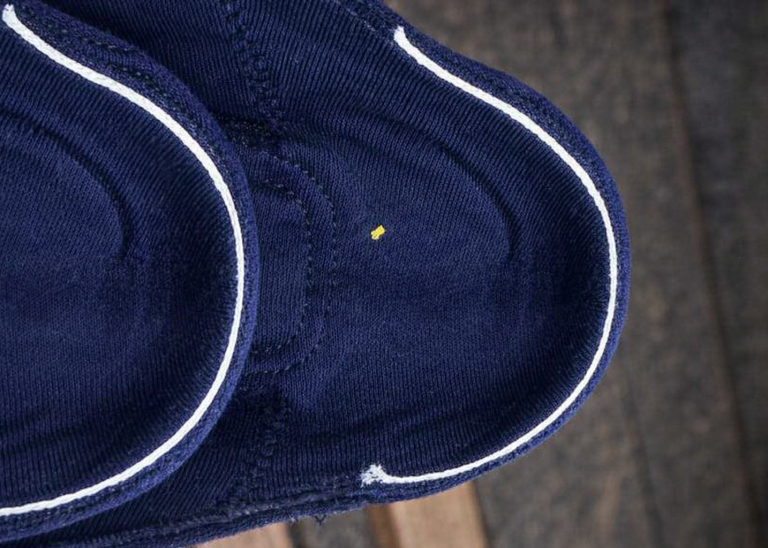
The Italian word sacchetto means “small bag,” describing the characteristic manufacturing principle: selected upper and lining components are stitched to form a bag-like or sock-like assembly around the foot. The construction can produce a very flexible shoe with a close, soft feel because the foot is surrounded by flexible leather rather than a conventional rigid insole structure.
However, Bologna/Sacchetto is not one single construction method. Manufacturers use different Sacchetto arrangements depending on the footwear design, upper material, required flexibility, lasting method and bottom construction.
Basic Principle of Sacchetto Construction
The fundamental idea is to create a flexible leather envelope around the foot.
Instead of simply pulling the upper over a conventional insole, the lining and/or sock component is stitched into a bag-like assembly. A force last is then inserted to expand and shape the assembly. The upper is subsequently lasted over the prepared bag or, depending on the design, the upper and lining are lasted together.
The bottom construction can subsequently use stitching, adhesive bonding or a combination of methods.
Some Bologna constructions use a Blake-type bottom stitch positioned close to the upper wall. The result is a construction characterized by:
Types of Bologna / Sacchetto Construction
There are several practical variations of Sacchetto construction. The following three arrangements illustrate important manufacturing differences.
Full Sacchetto — Lining and Sock as a Bag
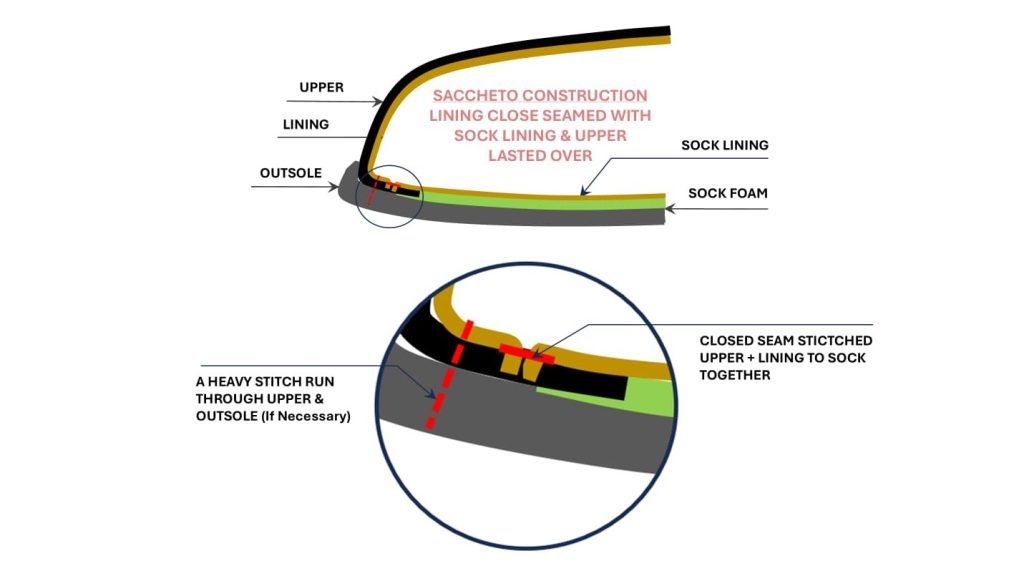
In this version, the lining and sock component are stitched together to form the complete bag.
After stitching, the assembly is turned as required and a force last is inserted. The force last expands the bag and establishes the required shape. The upper is then pulled and lasted over by forepart lasting machine on to the already-formed Sacchetto assembly.
Simplified sequence
Lining + Sock → Sacchetto Stitching (Closed Seam) → Force Last → Upper Lasting → Bottom Construction
This method gives the upper a relatively independent lasting operation while the inner bag provides the soft interface around the foot. It is particularly useful when the design requires a flexible inner construction but the upper still needs controlled lasting over the last.
Full Sacchetto — Complete Upper + Lining as a Bag
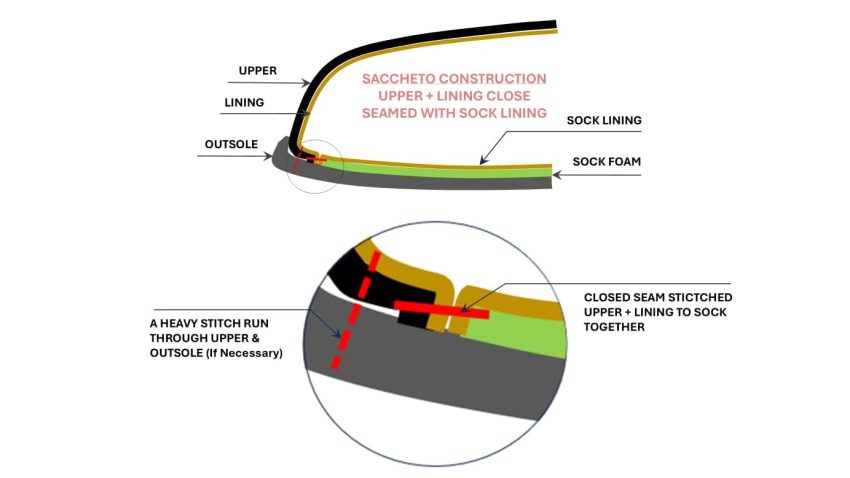
A second arrangement goes further: the complete upper and lining assembly is stitched together like a bag. After the bag is prepared, a force last is inserted to open and shape the complete assembly.
Here, the upper itself becomes an integral part of the Sacchetto structure rather than being subsequently lasted over a separately prepared lining/sock bag.
Simplified sequence
Upper + Lining → Bag Stitching → Force Last → Shaping/Lasting → Bottom Construction
This construction can provide a particularly continuous and soft relationship between the upper and lining. It requires accurate control of leather selection, sewing allowance, stitch position and assembly dimensions because the complete upper/lining package participates in the shaping process.
Half Sacchetto — Forepart Only
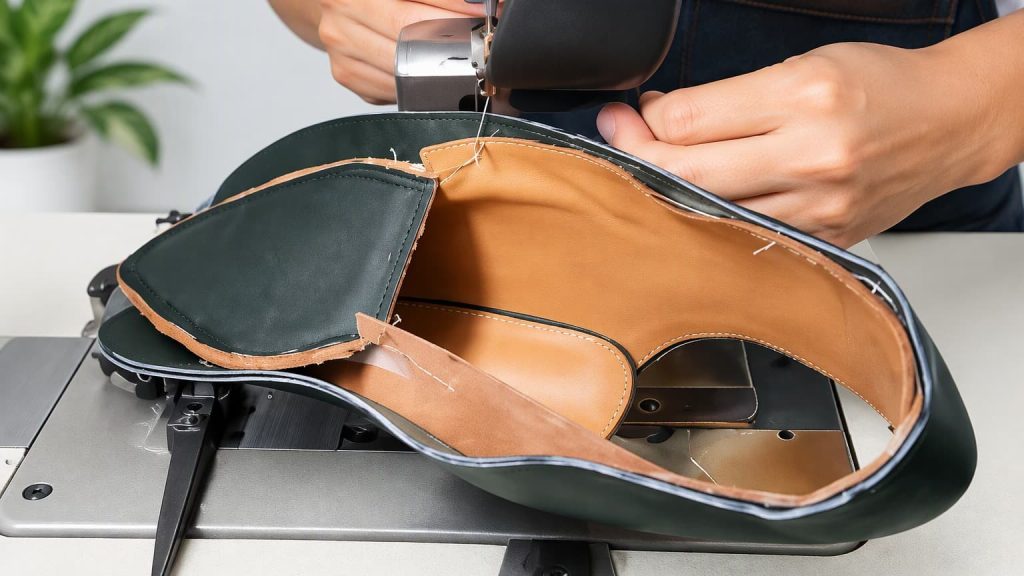
The Half Sacchetto modifies the bag principle so that the Sacchetto construction is applied primarily to the forepart. The lining and sock are stitched together like a bag only through the forepart. The forepart upper is then lasted, while the backpart consists of the upper and lining together, which are lasted in the conventional manner required by the design. A half insole is used to provide the necessary support for the lasting operation.
Simplified sequence
Forepart Lining + Sock → Sacchetto Stitching → Forepart Lasting
Backpart Upper + Lining → Conventional Lasting
Half Insole → Supports Lasting
This arrangement is useful when the designer wants the flexibility and soft feel of Sacchetto through the forefoot, but still requires greater structural control in the heel and back part. This is an important distinction because Bologna/Sacchetto should not automatically be assumed to mean that the entire shoe is constructed as one continuous bag.
Typical Manufacturing Process
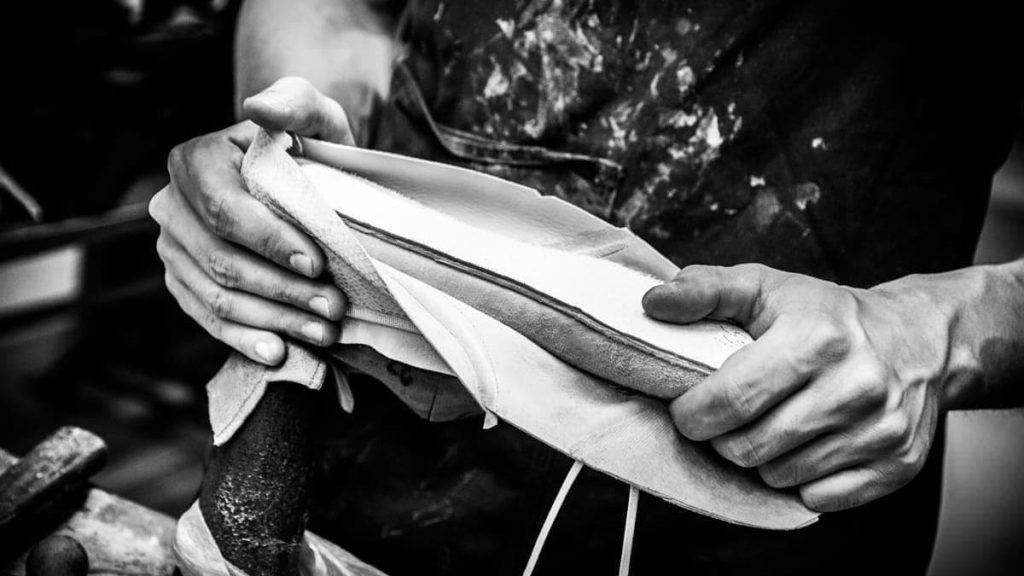
Although the sequence varies with the Sacchetto type, a typical production route includes the following stages.
Upper and Lining Preparation
Upper components are cut, skived, folded and closed according to the model. The choice of leather is important because excessively stiff or unstable material can make the Sacchetto difficult to shape.
Sock / Lining Preparation
The sock or bottom lining is prepared according to the selected construction. Stitching allowances and dimensions must be controlled carefully because the component will influence the final internal volume.
Sacchetto Stitching
The required components are stitched to create the bag-like structure. Stitch position, seam allowance and thread tension are critical.
Force Last Insertion
Depending on the construction:
– The upper may be lasted over the Sacchetto bag.
– The complete upper and lining may be lasted together.
– Only the forepart may use Sacchetto while the backpart uses a different lasting arrangement.
Lasting
Drying has an important influence on leather characteristics.
The way leather is dried can influence firmness, shrinkage, dimensional behaviour and final temper..
Bottom Preparation
The bottom is prepared for the selected sole attachment method. Some Bologna constructions use a Blake-type stitch through the bottom assembly, while other constructions may combine stitching and adhesive bonding.
Sole Attachment
A flexible outsole is attached while maintaining the required flexibility and clean edge appearance. The sole can often be kept relatively close to the upper edge.
Finishing
The last is removed and the shoe undergoes bottom finishing, cleaning, ironing, polishing and final inspection.
Materials and Manufacturing Considerations
Material selection has a direct influence on Sacchetto construction. Soft upper leather generally makes shaping easier, while the lining and sock leather must provide sufficient flexibility without excessive stretching. Important production controls include:
The construction is particularly sensitive to dimensional variation because excessive stretching can alter the final shoe volume and fit.
Bologna Construction: Advantages and Limitations
Advantages
Limitations
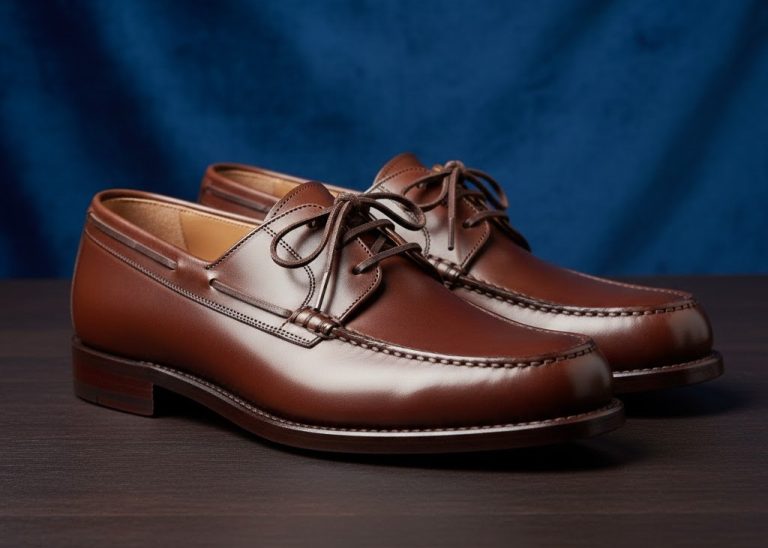
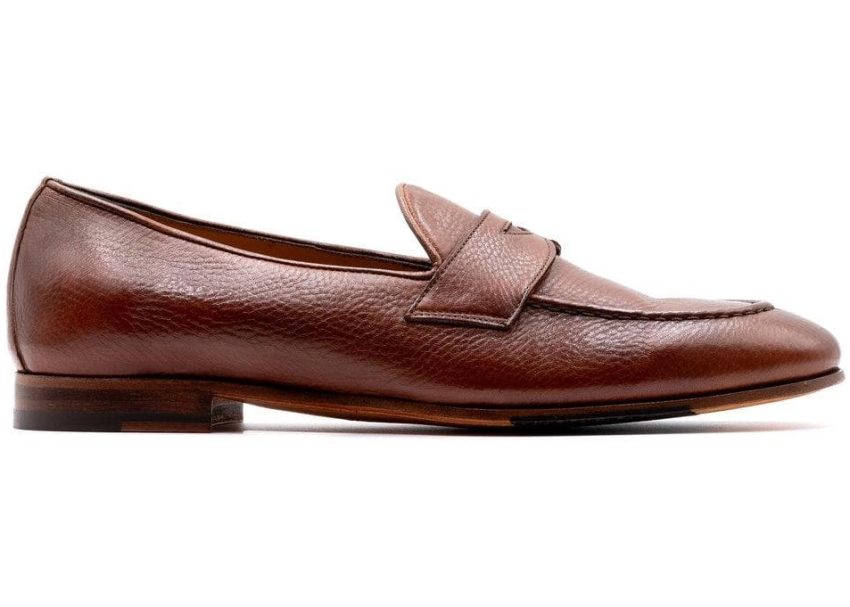
Bologna construction is widely associated with flexible footwear, and manufacturers describe it as particularly suitable for loafers, moccasins and other shoes where softness and flexibility are important.
Final Takeaway
Bologna construction is better understood as a family of flexible Sacchetto construction methods, rather than a single standardized manufacturing sequence. Full Sacchetto, complete upper-and-lining bag construction and Half Sacchetto can all produce different manufacturing solutions from the same fundamental idea: creating a soft, flexible structure that wraps around the foot.
The choice between these variants depends on the design, upper and lining materials, required flexibility, support requirements and lasting method. That flexibility in construction design is what makes Bologna/Sacchetto particularly valuable for footwear manufacturers developing soft, lightweight and close-fitting footwear.
Frequently Asked Questions (FAQs)
Bologna construction, also known as Sacchetto or Bag construction, is a footwear manufacturing method in which the lining and/or upper components are stitched to form a soft, sock-like structure around the foot. It produces flexible footwear with a soft internal feel and reduced dependence on conventional rigid insole construction.
Full Sacchetto uses a bag-like construction extending through the complete foot area, whereas Half Sacchetto applies the bag construction mainly to the forepart. Half Sacchetto typically uses a half insole to provide support during lasting, while the backpart upper and lining are lasted together.
A force last is inserted into the stitched Sacchetto assembly to expand, open and shape the bag-like structure. It helps establish the required internal volume and shape before or during the subsequent lasting operation.
Soft, flexible and dimensionally stable upper and lining leathers are commonly preferred. The materials should allow easy shaping without excessive stretching, wrinkling or distortion during Sacchetto stitching and lasting.
No. Bologna is primarily defined by its bag-like upper and lining construction, whereas Blake is defined by its direct sole-stitching method. Some Bologna shoes also use Blake stitching for outsole attachment, but the two terms describe different aspects of footwear construction.
The main advantages include excellent flexibility, a soft internal feel, lightweight footwear potential, close foot conformity and a relatively thin sole profile. These characteristics make it suitable for loafers, soft dress shoes, ballet flats and other flexible footwear.