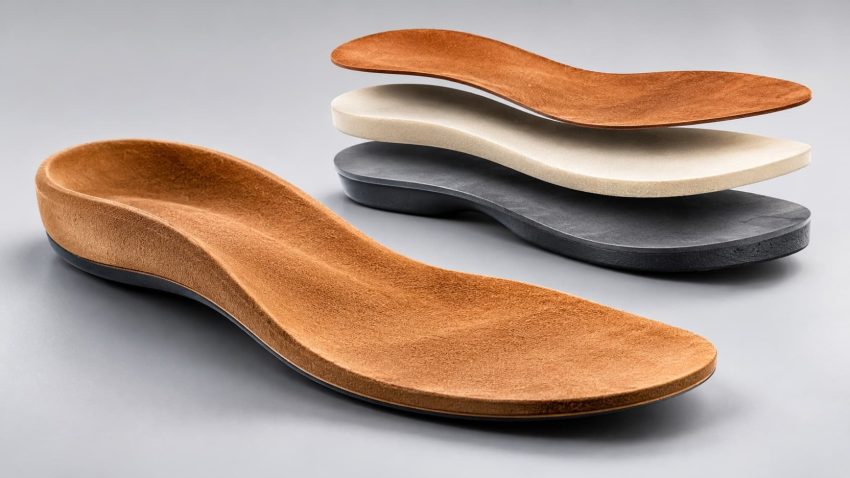
Footbeds in Footwear: The Hidden Technology Behind Comfort, Support & Performance
A footbed may look like a simple layer beneath the foot, but it plays an important engineering role in modern footwear. Its material, thickness, geometry and construction influence foot support, pressure distribution and overall wearing comfort. Consequently, footwear developers carefully consider these factors during product development.
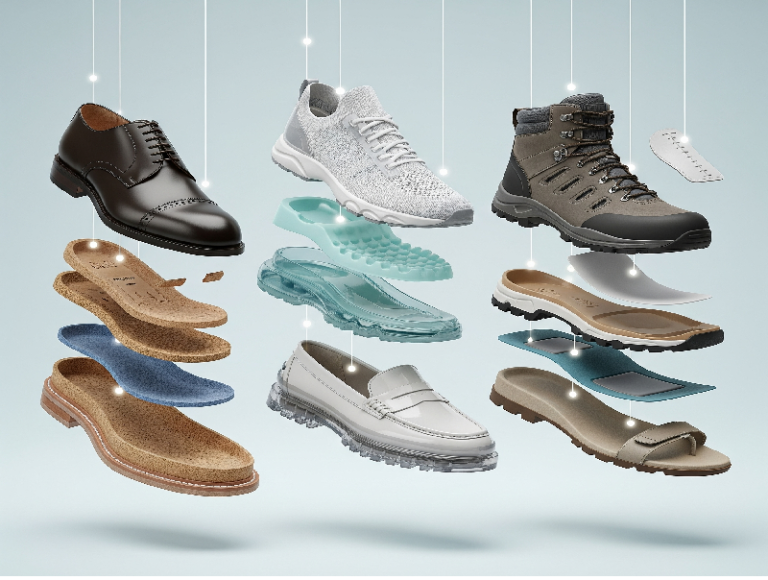
From traditional leather and cork footbeds to modern molded EVA, PU foam and multi-layer constructions, manufacturers select different materials and designs to achieve specific levels of cushioning, support, stability, durability and moisture management.
Furthermore, footwear terminology can sometimes create confusion. The terms footbed, insole, sockliner and insock often appear interchangeably, although they can represent different components and functions depending on the footwear construction.
A well-designed footbed therefore does much more than provide a soft layer inside a shoe. It creates an engineered interface between the foot, last and footwear construction.
What Is a Footbed?
A footbed provides a functional surface or supporting platform for the foot inside footwear. Depending on the construction, manufacturers can produce it as a flat, contoured, molded or multi-layer component.
In comfort and anatomical footwear, designers often incorporate features such as a heel cup, longitudinal arch support, metatarsal contour and raised perimeter. In simpler footwear, manufacturers may use a relatively flat sheet covered with leather, textile or synthetic material.
Footwear manufacturers offer both removable and permanently attached footbeds. Removable versions are particularly common in sports, outdoor and comfort footwear because users can replace, clean or exchange them for alternative constructions.
However, the position and function of a footbed vary according to the footwear construction. In some shoes, it sits over a structural insole, whereas in sandals and anatomical footwear, it can form a major part of the foot-contacting construction.
Technical Note:
A footbed should be considered as part of the complete footwear system. Its performance depends on its material, geometry, the last and the construction beneath and around it.
Why Is a Footbed Used?
A footbed creates a suitable interface between the foot and footwear. However, its role extends considerably beyond basic cushioning. Its material properties and three-dimensional geometry influence pressure distribution, foot positioning, stability and perceived comfort. Furthermore, footwear developers can adjust these characteristics to meet the requirements of different footwear categories.
Support
A shaped footbed can help position the foot and provide support through specific areas such as the heel and arch.
Cushioning
Foam and other resilient materials can reduce the perception of impact and improve underfoot comfort.
Pressure Distribution
Contoured and multi-density constructions can help distribute loading over a larger area rather than concentrating it in specific regions.
Foot Positioning
Heel cups and raised edges can help maintain the intended position of the foot within the footwear.
Moisture Management
The top cover and underlying materials can influence moisture absorption, drying and the internal foot climate.
Stability
The combination of footbed geometry and material firmness can influence how the foot interacts with the footwear during movement.
Footbed vs Insole vs Sock liner
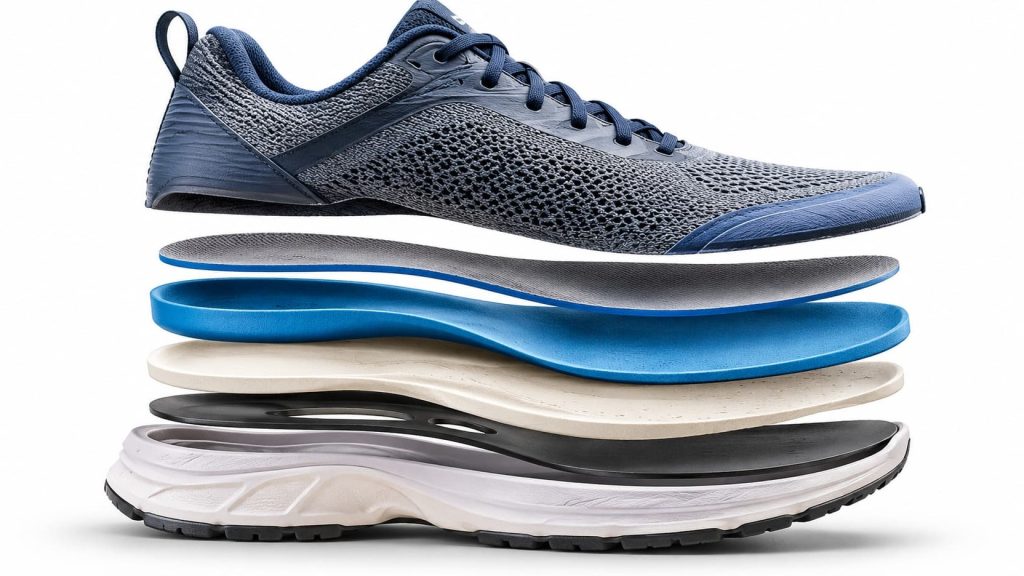
Footwear terminology can vary between manufacturers, countries and footwear categories. Consequently, different companies sometimes use the same term to describe slightly different components or functions.
Component | Typical Function | Typical Position |
Footbed | Foot support, comfort, cushioning and/or anatomical shaping | Directly below the foot |
Insole | Structural foundation for the footwear construction | Within the shoe construction |
Sockliner | Foot-contacting comfort layer | Above the structural insole |
Insock | Thin foot-contacting covering or comfort layer | Uppermost internal surface |
Shank | Supports the waist and influences flex characteristics | Between forepart and heel structure |
This distinction becomes particularly important during footwear development. For example, the structural insole may carry lasting and construction loads, whereas the footbed primarily provides comfort and anatomical support. Therefore, developers should identify the function of each component before finalising the footwear construction.
Main Types of Footbeds
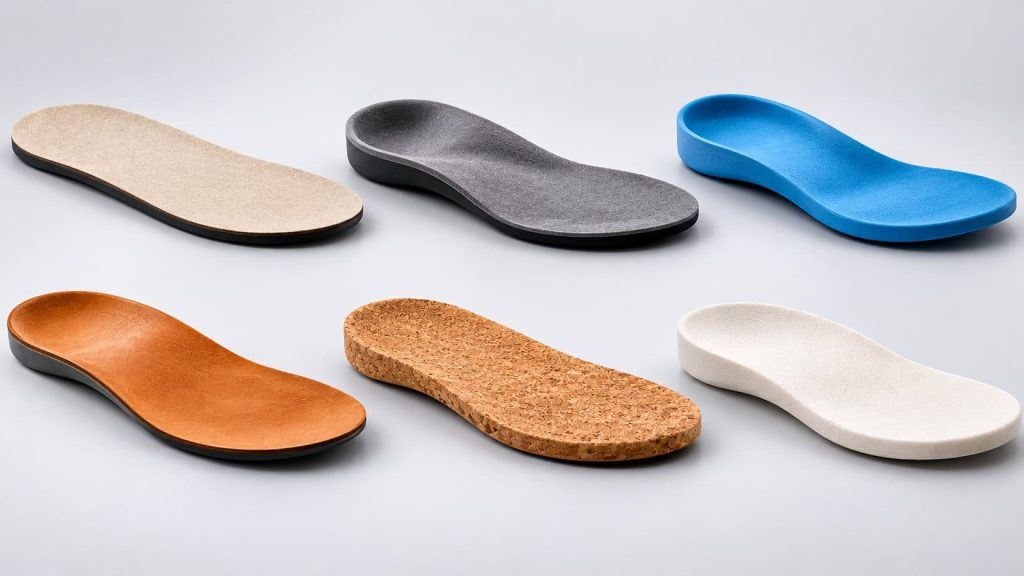
Footwear manufacturers classify footbeds according to their material, construction, geometry and manufacturing method. Each category offers different functional characteristics, making material and construction selection important during product development.
Flat / Die-cut Footbeds
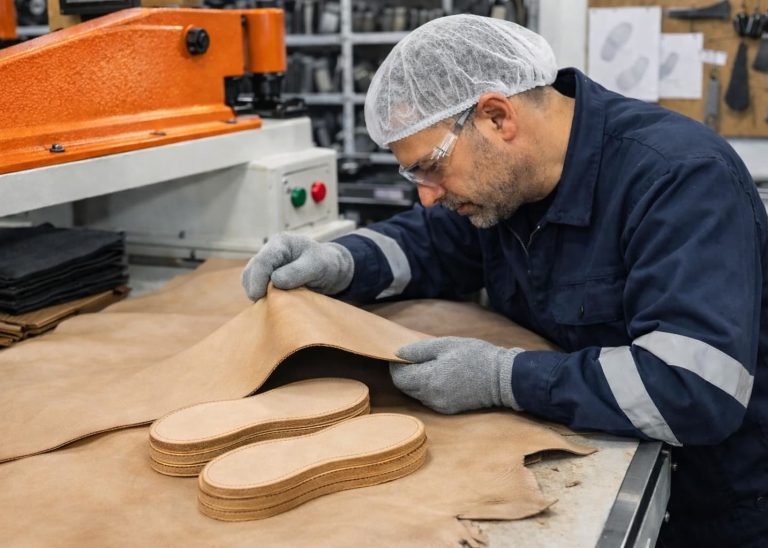
Flat footbeds / Die-cut have relatively little or no anatomical shaping. They are commonly used where the footwear does not require significant arch or heel support.
They may be manufactured from leather, textile composites, foam, EVA, nonwoven materials or laminated combinations.
Anatomical or Contoured Footbeds
Anatomical / Contoured footbeds are shaped to correspond more closely with the general geometry of the foot.
They may incorporate a heel cup, arch contour, metatarsal region and raised edges.
The objective is not simply to make the footbed softer. Its geometry can help create a more controlled interface between the foot and footwear.
Molded Footbeds
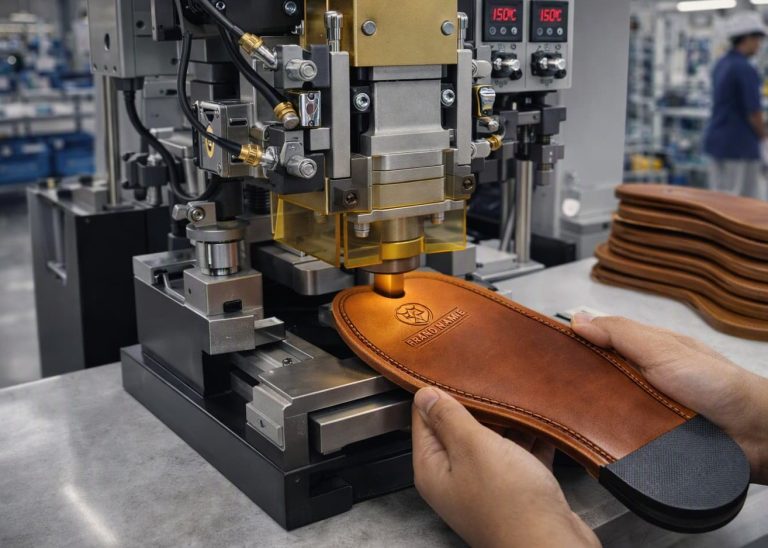
Molded footbeds are formed using dedicated tooling. EVA, PU and other suitable materials can be molded into three-dimensional shapes.
Molding allows manufacturers to control:
- Heel cup depth
- Arch height
- Forefoot thickness
- Edge profile
- Cushioning zones
- Overall geometry
Leather Footbeds
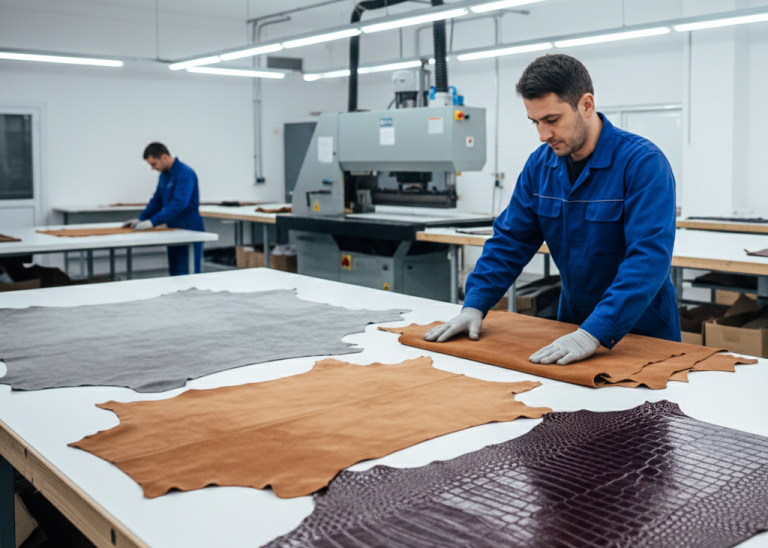
Leather remains an important material for premium footwear and sandals.
It provides a distinctive tactile surface and can provide moisture absorption compared with many non-absorbent synthetic surfaces.
Leather footbeds can be flat or laminated over a shaped supporting layer.
Cork Footbeds
Cork is widely associated with anatomical sandals and comfort footwear.
It can be shaped and combined with other materials to create a contoured footbed. Density, formulation, sealing and construction quality influence its durability and dimensional stability.
EVA and PU Footbeds
EVA is widely used because it can provide a lightweight and flexible cushioning solution. Different formulations and densities allow manufacturers to create different combinations of cushioning and support.
PU foam can provide resilient cushioning and can also be formulated in different densities and hardness levels.
Materials Used in Footbeds
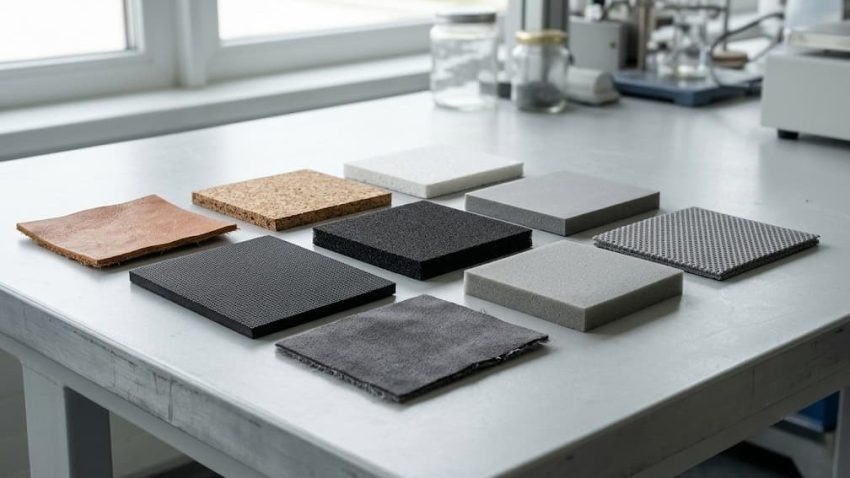
Material selection plays a major role in footbed development because manufacturers must balance comfort, support, weight, durability and production cost.
Material | Typical Characteristics | Common Applications |
Leather | Natural surface, moisture absorption, premium feel | Formal shoes, sandals, premium footwear |
Cork | Lightweight, shapeable, anatomical applications | Comfort sandals, anatomical footwear |
EVA | Lightweight, cushioning, flexible | Sports, casual, comfort footwear |
PU Foam | Resilient cushioning, variable density | Comfort and premium footwear |
Latex Foam | Flexible and resilient | Comfort applications |
Memory Foam | Slow-recovery cushioning | Comfort footwear |
Microcellular PU | Cushioning and pressure distribution | Premium comfort footwear |
PE / PP / TPU | Structural support and dimensional stability | Reinforcement and molded constructions |
Nonwoven | Lightweight structural support | Laminated and economical constructions |
Textile / Mesh | Breathability and surface comfort | Sports and casual footwear |
Material selection should not be based only on hardness. Density, compression set, resilience, fatigue resistance, moisture behavior and thickness retention can all influence long-term footbed performance.
Physical Properties of Footbed Materials
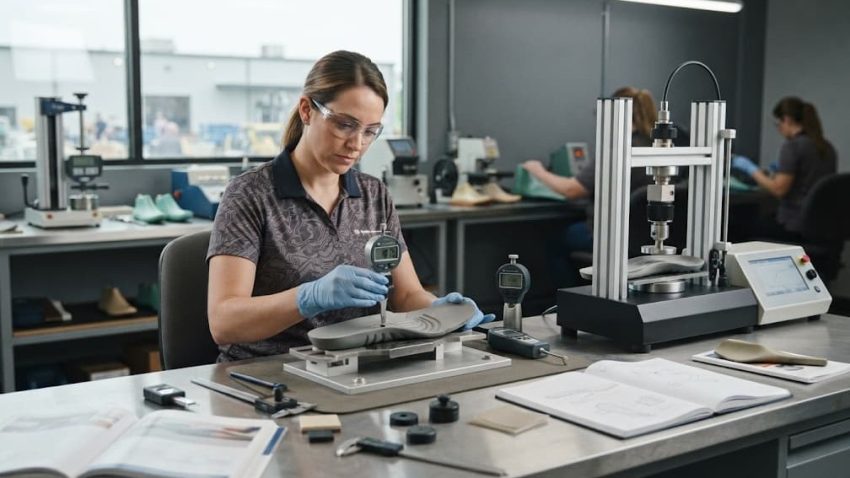
Footbed performance depends on several physical properties working together. Therefore, manufacturers should not evaluate a material by hardness alone.
Physical Property | Importance in Footbed Performance |
Density | Influences weight, material structure and cushioning behavior |
Hardness | Influences perceived firmness and support |
Compression Set | Indicates permanent deformation after compression |
Resilience | Indicates material recovery after loading |
Flexibility | Influences walking comfort and forefoot movement |
Tensile Strength | Indicates resistance to pulling forces |
Tear Strength | Important around edges and stress concentrations |
Abrasion Resistance | Important for exposed surfaces and covers |
Moisture Absorption | Influences foot climate and drying behavior |
Moisture Vapor Transmission | Important for breathable constructions |
Dimensional Stability | Determines retention of shape and size |
Bond Strength | Critical in laminated constructions |
Hardness
Hardness influences how firm or soft the footbed feels.
However, two materials with similar hardness can provide different comfort because their density, resilience, hysteresis and compression behavior may differ.
Compression Set
Compression set plays an important role in cushioning materials. When a material permanently loses thickness after repeated loading, the footbed can become flatter and provide less support over time.
Resilience
Resilience describes how well a material recovers after deformation. Consequently, manufacturers should consider the balance between resilience and energy dissipation when evaluating walking comfort and long-term wearing characteristics.
Footbed Selection by Footwear Type
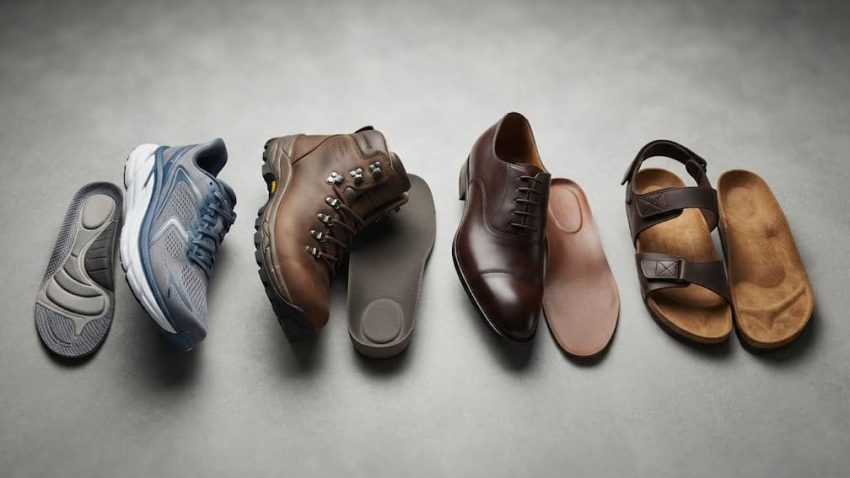
Footwear Type | Typical Footbed Priorities |
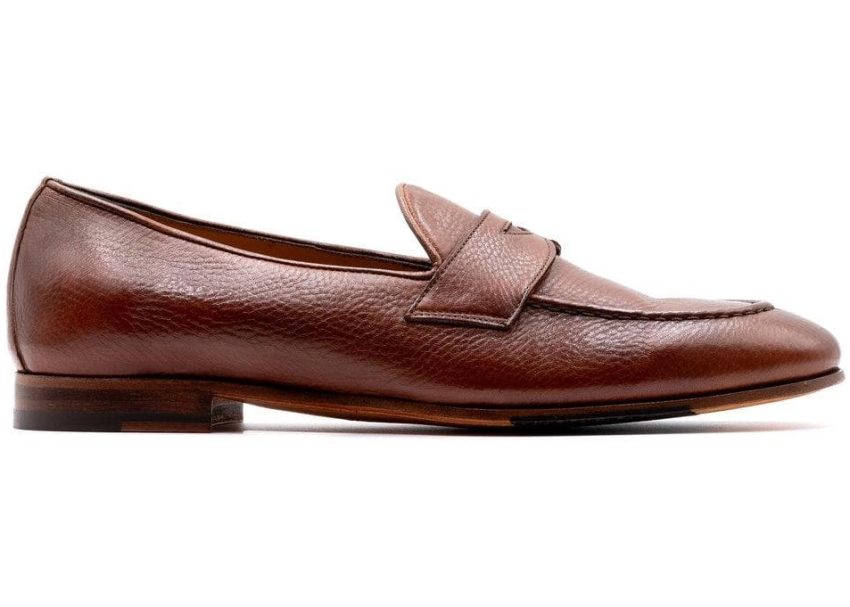
Formal Leather Shoes | Thin profile, leather surface, comfort and shape retention |
Premium Footwear | Material quality, comfort, finishing and dimensional stability |
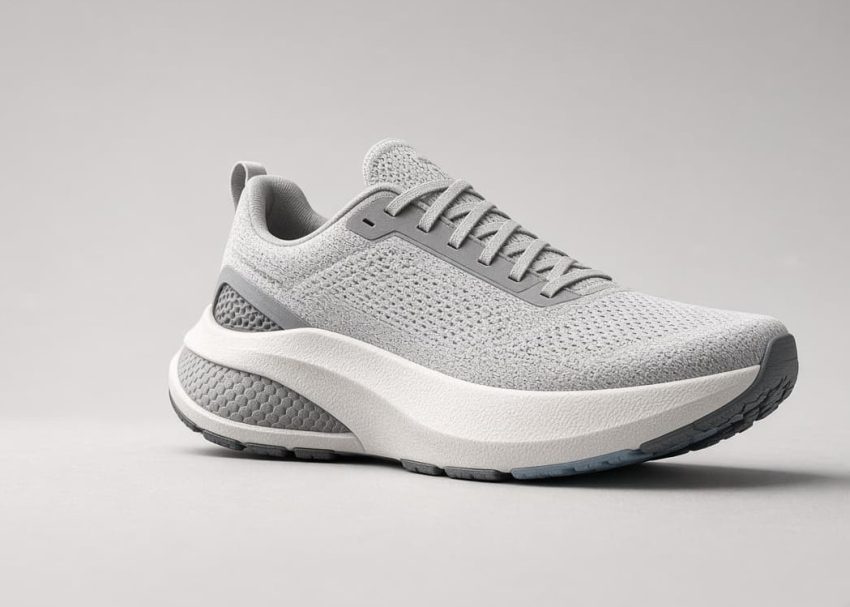
Running Shoes | Low weight, cushioning, resilience and fatigue resistance |
Hiking Shoes | Support, cushioning, moisture management and durability |
Safety Footwear | Cushioning, stability, durability and moisture management |
Sandals | Anatomical shaping, surface comfort and dimensional stability |
Comfort Footwear | Pressure distribution, cushioning and support |
Casual Footwear | Comfort, lightweight construction and cost balance |
A running shoe footbed, for example, generally has different requirements from a leather dress shoe.
One universal footbed construction can therefore create unnecessary compromises when used across different footwear categories.
Footbed Design Considerations
Footbed design should begin with the last and intended footwear application rather than material selection alone. The designer needs to consider:
Last Geometry
The footbed contour should correspond with the last and intended foot position.
Internal Volume
Increasing footbed thickness without considering the last can reduce internal volume and create pressure around the instep or toe area.
Footwear Application
Sports, formal, outdoor, safety and comfort footwear require different balances between cushioning, support, weight and durability.
Material Selection
Material density, hardness, resilience, compression set and moisture behavior should correspond with the intended application.
Manufacturing Process
The selected geometry must also be compatible with the intended cutting, molding, forming, bonding and finishing processes.
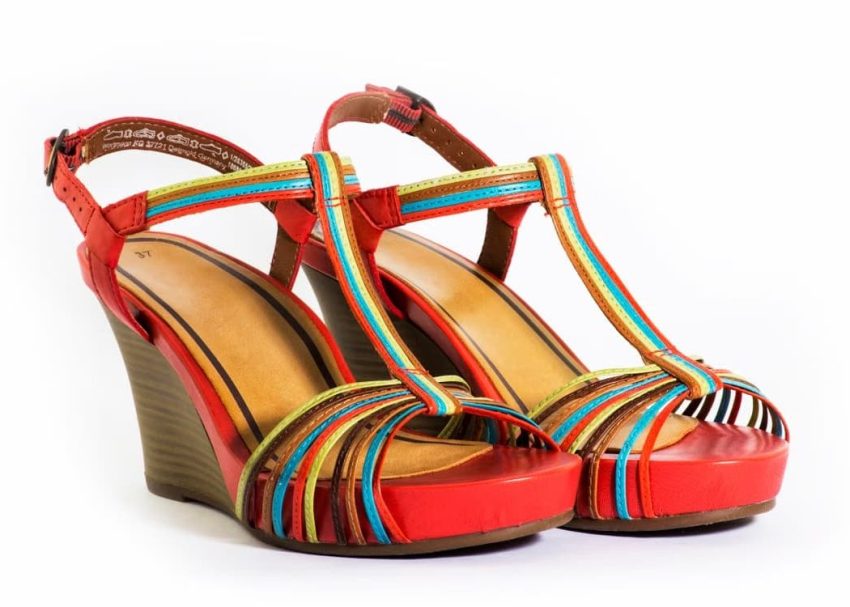
In sandals, the footbed may remain highly visible and therefore becomes both a functional and aesthetic component.
Best Practices
Don’t Select by Softness Alone
Hardness, density, resilience and compression set should be considered together rather than choosing the softest available material.
Develop Around the Last
A footbed can perform poorly when its contour does not match the last and available footwear volume.
Control Thickness Carefully
Additional cushioning thickness can unintentionally reduce usable internal shoe volume.
Check Compression Set
Initial comfort does not guarantee long-term cushioning performance. Permanent deformation should be considered during material selection.
Use Multi-Layer Construction Strategically
When surface comfort, cushioning and structural support conflict, different layers can be engineered for different functions.
Consider Moisture Management
A cushioning material that feels comfortable may not provide suitable moisture behavior when used directly against the foot.
Validate Adhesive Compatibility
Foams, leather, textiles and plastics can require different surface treatments and adhesive systems.
Final Takeaway
A footbed is much more than a cushioning layer inside a shoe. It is a carefully designed component that connects the geometry of the footwear with the requirements of the human foot.
From traditional leather and cork footbeds to modern molded EVA, PU and multi-layer anatomical constructions, manufacturers can manipulate material properties, thickness and geometry to achieve different levels of support, cushioning, durability and comfort.
The most effective footbed design therefore considers the last, footwear category, material properties, foot geometry, manufacturing process and expected service life together.
Understanding these relationships allows footwear developers and manufacturers to select the appropriate construction rather than simply choosing the softest material.
Frequently Asked Questions (FAQs)
A footbed provides a functional interface between the foot and footwear. Depending on its construction, it can provide cushioning, support, pressure distribution, moisture management and foot positioning..
Not necessarily. An insole may serve as a structural component of the footwear construction, while a footbed generally refers to a component designed to support the foot and provide comfort. Terminology varies between footwear manufacturers.
Leather, cork, EVA, PU foam, latex foam, memory foam, rubber, textile composites and various thermoplastic materials can be used in footbed construction.
Neither material is universally better. EVA can provide a lightweight cushioning solution, while different PU formulations can provide various combinations of resilience, cushioning and durability. The appropriate material depends on the footwear application and required properties.
Different layers can perform different functions. A footbed may combine a durable top cover, soft comfort layer, structural support layer and cushioning base to achieve a balance that a single material cannot provide.
An anatomical footbed is shaped to provide a more foot-contoured interface. It may include features such as a heel cup, arch contour, metatarsal support and raised edges.
Yes. Many sports, outdoor and comfort footwear products use removable footbeds. Replacement can restore cushioning or allow the user to select a different footbed construction.
Comfort depends on more than softness. Incorrect contour, excessive arch height, insufficient shoe volume, inappropriate hardness or poor interaction with the last can cause discomfort even when the material itself feels soft.