Open-Cell Thermoplastic Polyurethane (OTPU) in Footwear: Properties, Applications, Manufacturing and Sustainability
Introduction
The footwear industry continuously explores new polymer technologies to improve cushioning, flexibility, durability, comfort and weight reduction. Traditional materials such as Ethylene Vinyl Acetate (EVA), Polyurethane (PU) foam and Thermoplastic Polyurethane (TPU) have established applications across different footwear components. However, increasing demand for lightweight footwear with improved cushioning and mechanical performance has encouraged the development of advanced cellular polymer materials.
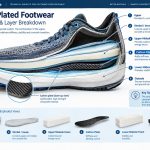
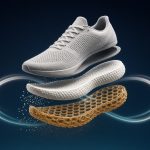
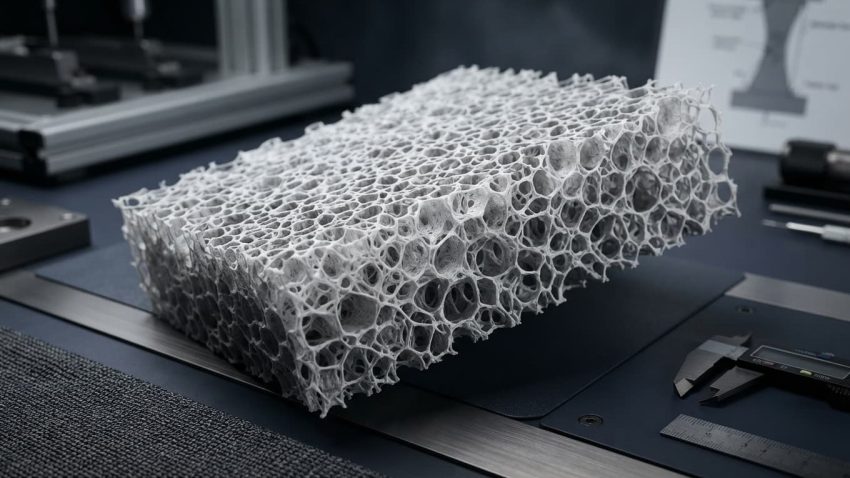
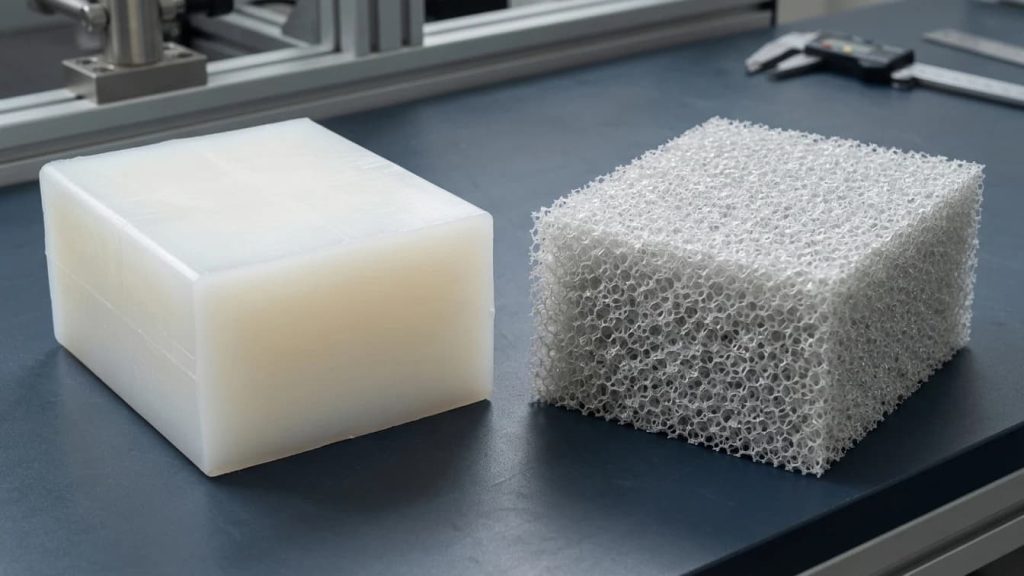
Open-Cell Thermoplastic Polyurethane (OTPU) is a cellular foam structure based on thermoplastic polyurethane. Unlike conventional solid TPU, which has a relatively dense and continuous polymer structure, open-cell TPU contains interconnected pores that allow air and, depending on the structure, moisture vapour to pass through the material.
This cellular construction changes the way the material responds to compression, absorbs impact and manages air movement. By controlling the foam density, cell size, cell distribution and polymer formulation, manufacturers can develop materials with different cushioning, flexibility and mechanical characteristics.
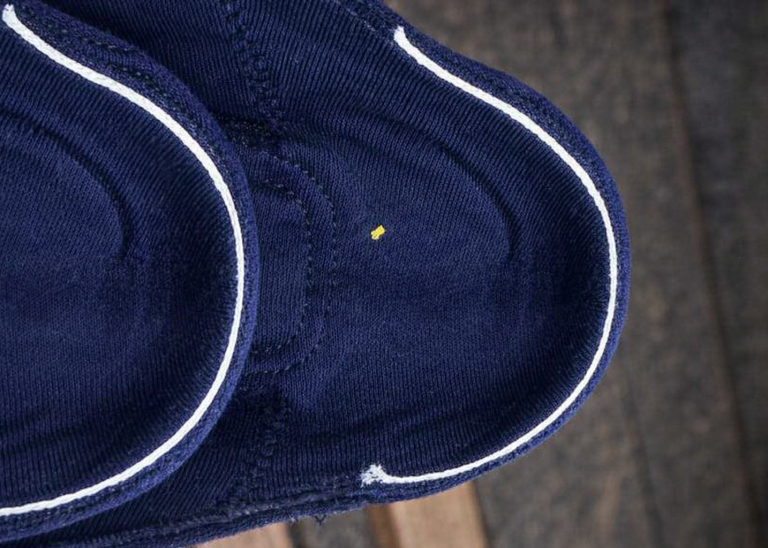
OTPU is particularly interesting for footwear applications where lightweight construction, cushioning and air permeability are important. Potential applications include insoles, cushioning inserts, comfort components and specialised footwear structures. However, its suitability for each application depends on the material’s actual mechanical properties and processing requirements.
It is important to distinguish open-cell TPU from expanded TPU (eTPU). Although both are cellular forms of thermoplastic polyurethane, their manufacturing technologies and cellular structures can differ considerably. Similarly, OrthoLite is an established open-cell polyurethane foam technology used extensively in footwear Footbeds & Insock, but it is not open-cell TPU.
Understanding these differences helps footwear developers select the appropriate material for each component rather than assuming that all cellular polymers offer the same performance.
Understanding OTPU Material Technology
What is Thermoplastic Polyurethane (TPU)?
Thermoplastic Polyurethane is an elastomeric polymer that combines the flexibility of rubber with the processing advantages of thermoplastics. It is produced through the reaction of polyols, diisocyanates and chain extenders, with the formulation determining its final mechanical and chemical properties.
TPU has a segmented molecular structure consisting of hard and soft segments. The hard segments contribute to strength, hardness and abrasion resistance, while the soft segments provide elasticity, flexibility and low-temperature performance.
This combination makes TPU suitable for a wide range of footwear components, including outsoles, technical overlays, reinforcement parts, heel components and other functional elements.
Unlike conventional thermoset rubber, TPU can generally be softened through heating and processed again using suitable thermoplastic processing methods. This characteristic also creates opportunities for material recycling, although actual recyclability depends on the formulation, contamination and processing history.
What Makes TPU an Open-Cell Foam?
Open-cell TPU is produced by introducing a cellular structure into the TPU polymer. During the foaming process, gas bubbles develop within the polymer and expand to create individual cells.
In an open-cell structure, the walls between neighbouring cells are partially or completely ruptured, creating interconnected passages throughout the foam.
These interconnected passages allow air to move through the material. Depending on cell size, connectivity, surface treatment and foam density, they can also influence moisture transport and liquid absorption.
The final structure is controlled through several processing parameters, including:
- TPU grade and polymer formulation.
- Foaming agent and foaming technology.
- Processing temperature and pressure.
- Expansion ratio.
- Cooling and stabilisation conditions.
- Cell size and cell-wall thickness.
The objective is to achieve a consistent cellular structure while maintaining sufficient mechanical strength and dimensional stability for the intended footwear application.
Open-Cell Versus Closed-Cell Structure
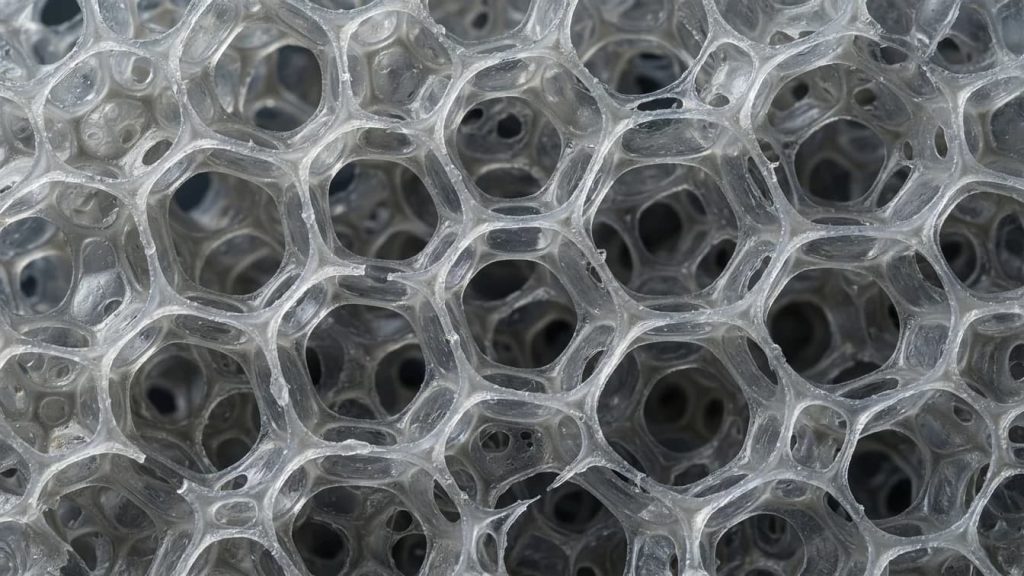
The difference between open-cell and closed-cell foam is mainly related to how the individual cells are connected.
Characteristic | Open-Cell TPU | Closed-Cell TPU |
|---|---|---|
Cellular structure | Interconnected cells | Mostly isolated cells |
Air movement | Generally higher | Generally lower |
Moisture behaviour | Depends on pore structure; liquid may enter | Generally lower liquid penetration |
Cushioning | Depends on density and cell structure | Depends on density and cell structure |
Compression response | Cellular deformation | Cellular deformation |
Potential applications | Cushioning and breathable components | Lightweight cushioning and structural foam components |
Open-cell construction does not automatically guarantee better cushioning or durability. These characteristics depend on the polymer formulation, foam density, cell structure and component design.
How Is the Cellular Structure Developed?
The foaming process converts the TPU polymer into a lightweight cellular material. Two broad approaches are commonly used in thermoplastic foam manufacturing.
Physical foaming
Physical foaming uses a gas or supercritical fluid, such as carbon dioxide or nitrogen, to create bubbles within the polymer. Under controlled temperature and pressure conditions, the gas dissolves into the polymer and forms cells during pressure release or expansion.
The process can provide control over cell nucleation, expansion and foam density.
Chemical foaming
Chemical foaming uses a blowing agent that releases gas during processing. The generated gas forms bubbles within the polymer, producing a cellular structure as the material expands and solidifies.
The selection of the foaming approach depends on the TPU grade, required cell morphology, equipment availability and final product specifications.
For OTPU, an additional processing challenge is controlling cell-wall opening. A foam with many cells is not necessarily an open-cell foam. The process must create sufficient interconnection between the cells to achieve the required air permeability without compromising the mechanical integrity of the material.
OTPU Versus Regular TPU
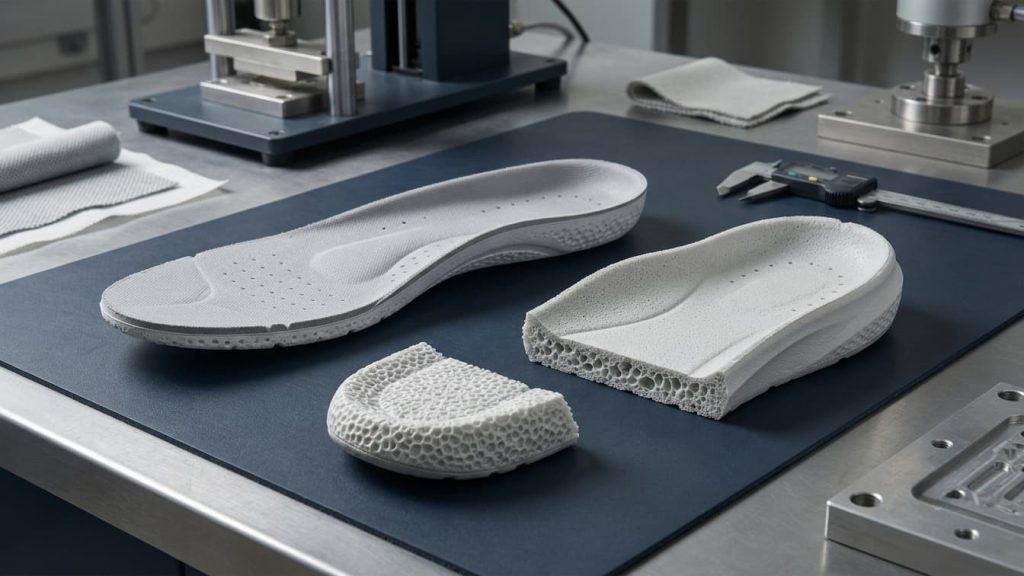
Structural and Material Differences
Regular TPU is generally supplied and processed as a solid thermoplastic elastomer. It provides a continuous polymer structure with mechanical strength, abrasion resistance, flexibility and elasticity.
Open-cell TPU, on the other hand, contains interconnected voids within the polymer structure. These voids reduce the amount of solid polymer present in a given volume and change the material’s compression behaviour.
Consequently, the two materials should not be evaluated using density or hardness alone. Their cellular structure and end-use performance must also be considered.
Parameter | Regular Solid TPU | Open-Cell TPU |
|---|---|---|
Material structure | Continuous solid polymer | Interconnected cellular polymer |
Density | Generally higher | Generally lower |
Weight per unit volume | Higher | Potentially lower |
Air permeability | Very low | Higher |
Cushioning | Depends on elastomer hardness | Depends on foam density and cell structure |
Compression behaviour | Solid elastomer deformation | Cellular compression and recovery |
Tensile strength | Generally higher for comparable formulations | Usually reduced by cellular voids |
Tear resistance | Depends on TPU grade | Depends on cell-wall strength |
Abrasion resistance | Established strength of solid TPU | Requires specific testing |
Water absorption | Generally low | Potentially higher |
Processing | Injection moulding, extrusion and other thermoplastic processes | Specialised foaming and foam-processing technologies |
The comparison represents general structural tendencies rather than guaranteed performance values. A well-engineered foam can outperform a poorly formulated solid material in a particular application.
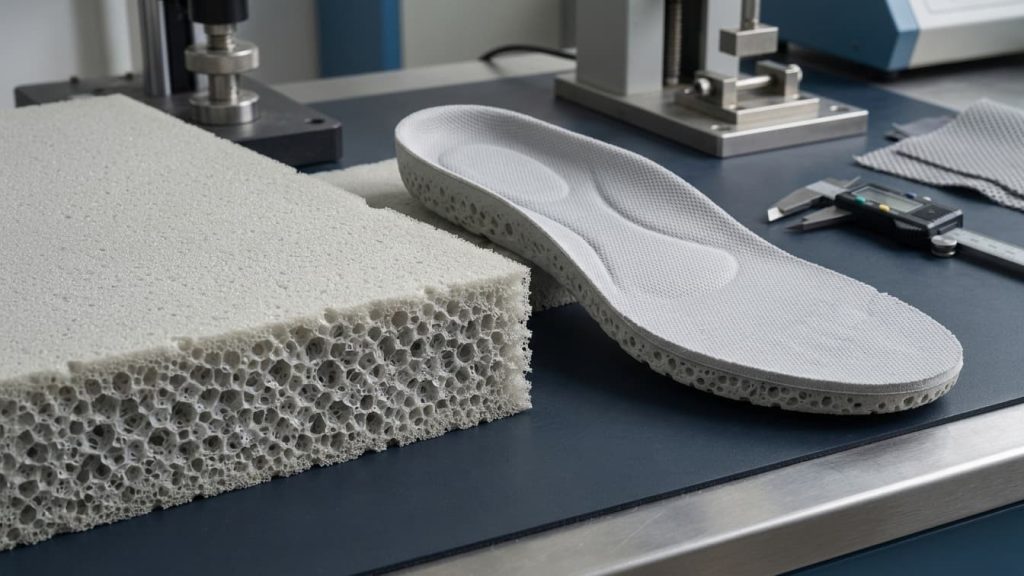
Weight Reduction and Density
One of the main advantages of foam technology is the possibility of reducing material weight.
Because open-cell TPU contains interconnected voids, less polymer is required to occupy the same external volume compared with solid TPU. This can help footwear developers reduce the weight of selected components.
However, weight reduction must be evaluated against the required mechanical performance. Excessive expansion can reduce load-bearing capacity, tear strength and dimensional stability.
Breathability and Moisture Management
Solid TPU does not normally provide significant airflow through its internal structure. Open-cell TPU offers interconnected passages that can allow air to move through the material.
This characteristic can be useful in footwear components where heat and moisture accumulation affect wearer comfort.
However, air permeability and moisture management are not identical properties. Open cells may allow liquid water or perspiration to enter the foam, depending on the pore structure and any surface treatment.
Cushioning and Compression Behaviour
Solid TPU responds to applied force through deformation of its polymer structure. Its hardness and elasticity influence how it absorbs and returns energy.
Open-cell TPU responds through a combination of polymer deformation, cell-wall bending and compression of the cellular structure.
When pressure is applied, the cells deform and the material compresses. After the load is removed, the polymer attempts to recover its original shape.
The cushioning response depends on several factors:
- Foam density.
- Cell size and cell distribution.
- Cell-wall thickness.
- Polymer hardness.
- Compression force and duration.
- Recovery time.
- Temperature and ageing conditions.
A properly designed cellular structure may provide a comfortable cushioning response, but it is necessary to test compression set and recovery performance before approving the material for footwear production.
Physical and Mechanical Properties of OTPU
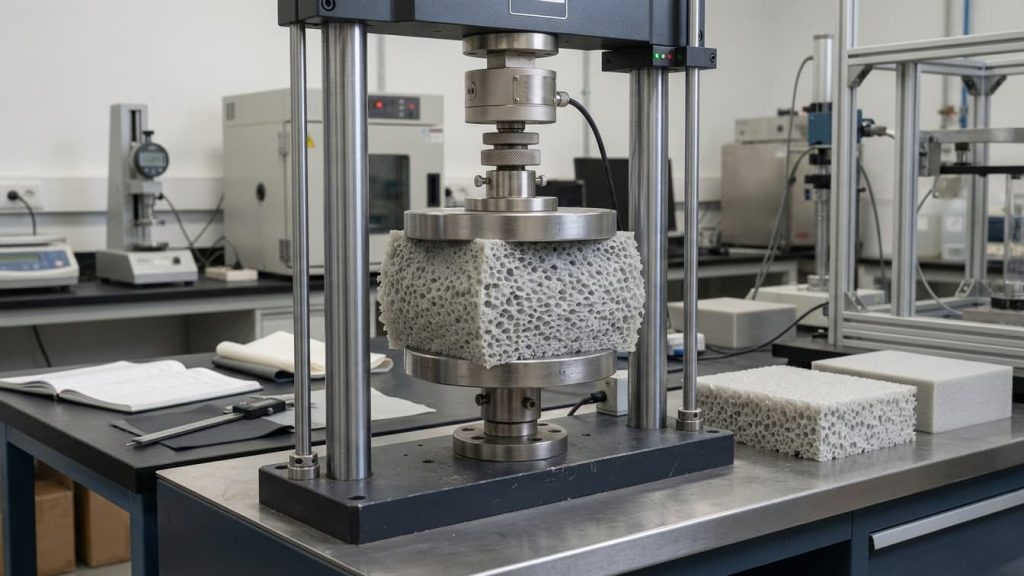
The properties of open-cell TPU depend on the polymer formulation and foaming conditions. Unlike solid TPU, its performance is strongly influenced by the cellular structure.
Density
Density indicates the mass of material per unit volume. It is an important control parameter because it affects component weight, compression response and mechanical strength.
Lower-density foam generally offers greater weight reduction, but excessive reduction can compromise durability and load-bearing performance.
Hardness
Hardness indicates the resistance of a material to indentation. In cellular TPU, the measured hardness is influenced by foam density, cell structure and polymer characteristics.
The testing method must be appropriate for the foam. A Shore hardness value obtained from solid TPU should not be directly compared with a foam result unless the specimen geometry and test method are suitable.
Compression Set
Compression set measures the permanent deformation remaining after a material has been compressed under specified conditions and allowed to recover.
This is particularly important for footwear cushioning components because repeated compression during walking or running can gradually reduce material thickness.
A lower compression-set value generally indicates better recovery under the specified test conditions.
Resilience and Energy Return
Resilience describes the ability of a material to recover energy after deformation.
In footwear, this characteristic influences how cushioning materials respond during repeated loading and unloading.
The resilience of OTPU depends on the TPU formulation and cellular structure. High rebound should not be assumed simply because the base polymer is TPU.
Tensile and Tear Strength
Tensile strength measures the resistance of the material to pulling forces, while tear strength evaluates its resistance to the propagation of a tear.
Open-cell foam contains less solid polymer per unit volume than non-foamed TPU. Consequently, its strength characteristics can differ significantly from those of solid TPU.
For thin footbeds, cushioning inserts and other components subjected to repeated handling or flexing, tensile and tear testing are important during material approval.
Air Permeability and Water Absorption
Air permeability measures the ability of air to pass through the material. It is one of the important characteristics of open-cell foam.
Water absorption measures how much water the material takes up under specified conditions.
A highly interconnected cellular structure may improve airflow but can also increase liquid penetration. Therefore, the material must be selected according to the moisture-management requirements of the footwear application.
Flexibility and Fatigue Resistance
Footwear components are repeatedly subjected to bending and compression during use. OTPU must maintain its structural integrity under these repeated movements.
Fatigue performance depends on cell-wall strength, foam density, polymer elasticity and the quality of the manufacturing process.
Material evaluation should include repeated compression and flexing tests under conditions representative of the intended footwear application.
Conclusion
Open-Cell Thermoplastic Polyurethane (OTPU) represents an interesting development in cellular polymer technology for footwear. By combining the elasticity and durability potential of TPU with an interconnected foam structure, it offers opportunities to develop lightweight cushioning components with improved air permeability.
However, its actual performance depends on polymer formulation, foam density, cell structure and manufacturing control. Footwear developers must evaluate compression recovery, durability, moisture behaviour and production cost before adopting OTPU for commercial applications.