Welcome to The FootwearEdge
We are your dedicated resource for Global Footwear Industry Analysis. Our platform bridges the gap between industry professionals, learners, and enthusiasts. Are you a student, a factory technician, or a designer? If so, you will find valuable insights here..
Carbon Plates in Footwear: Construction, Function, Materials and Manufacturing
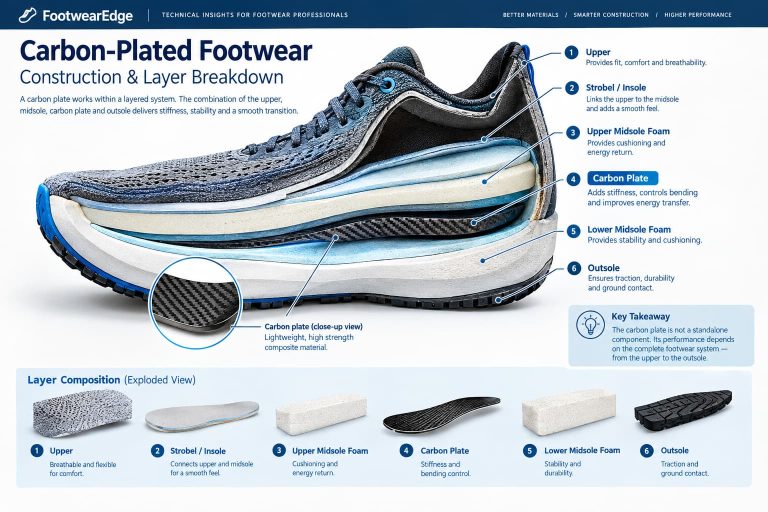
Carbon plates have become an important structural component in modern performance footwear, particularly in racing and high-performance running shoes. A carbon-fiber-reinforced plate can increase the shoe’s longitudinal bending stiffness while adding relatively little weight compared with many conventional structural materials. However, a carbon plate does not work independently. Its behavior depends on the interaction between the plate, midsole foam, shoe geometry, rocker profile, outsole, last and runner. Understanding this complete system is important for footwear designers, developers and manufacturers. Related Posts Vacuum Forming in Footwear: Last Masking, Style Development, Last…
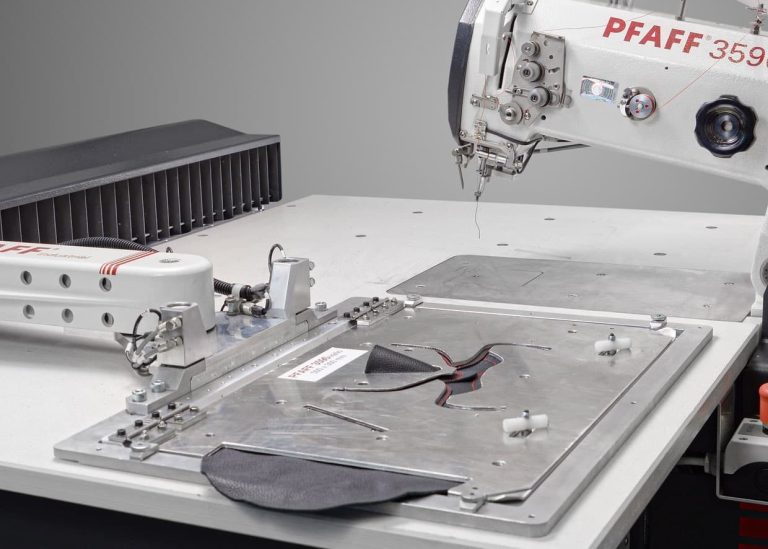
Computerized Stitching Machines for Footwear Manufacturing: Types, Efficiency and Applications
Computerized stitching has become an important technology in footwear manufacturing because it can improve stitching consistency, repeatability and production efficiency. Unlike conventional sewing, where the operator controls most of the material movement manually, a computerized machine can follow a programmed…
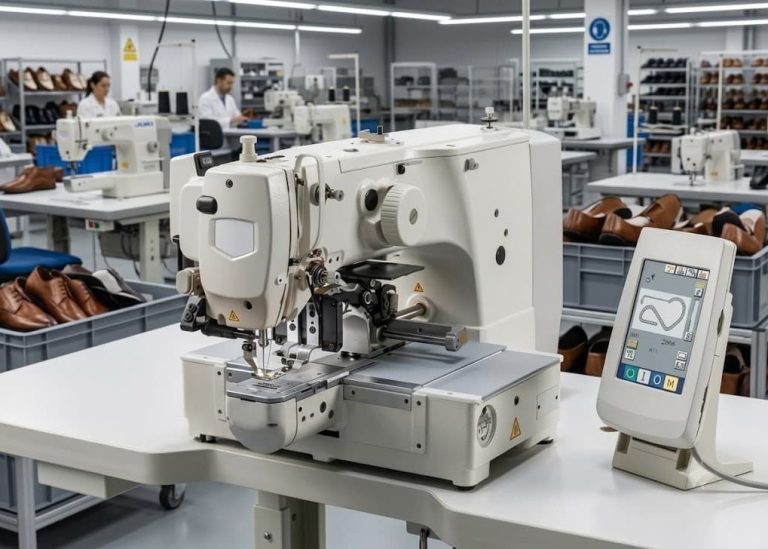
Computer Stitching in Footwear Manufacturing: Technology, Process, Applications & Production Benefits
Computer stitching in footwear manufacturing has transformed many footwear sewing operations by bringing programmable control, repeatability, and greater accuracy to processes that traditionally depended heavily on operator skill. Instead of manually guiding every stitch line, a computer-controlled stitching machine can…
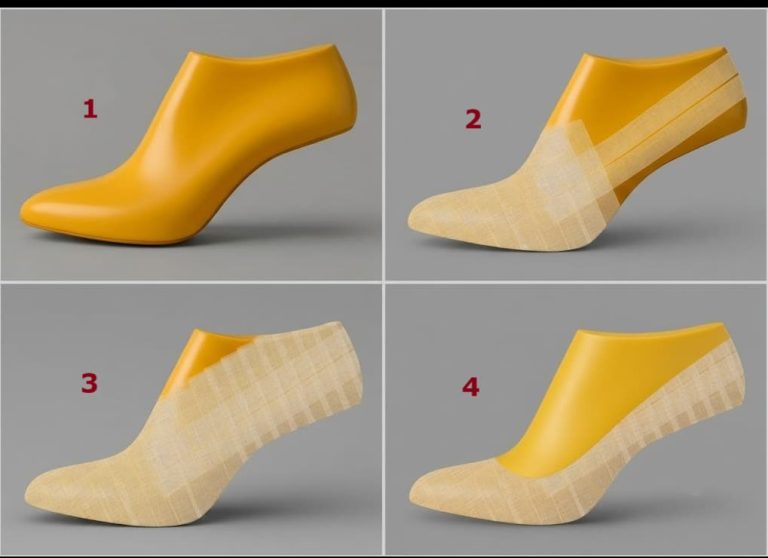
Footwear Last Form Taking with Adhesive Strips: From 3D Last to 2D Pattern
Footwear Manufacturing Insights Footwear pattern development often requires converting the three-dimensional shape of a last into a two-dimensional form. While vacuum-forming and other modern techniques are widely used, the traditional adhesive-strip method remains a simple and useful approach for understanding…
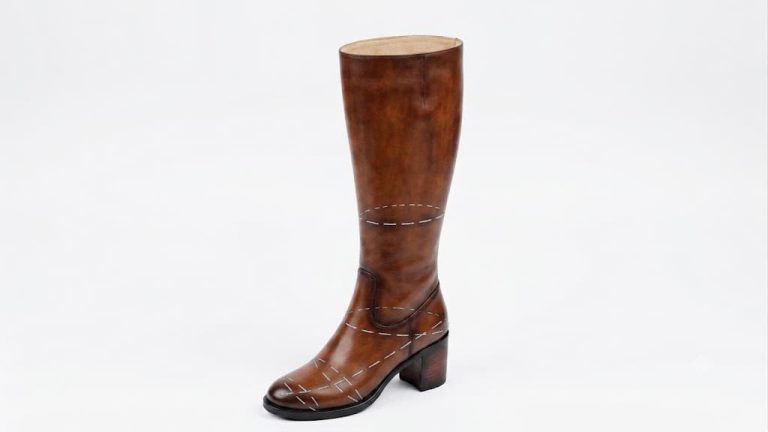
Fit of High Boots: Key Areas That Control Comfort and Foot Entry
Footwear Manufacturing Insights High boots require a careful balance between easy foot entry, secure fit, and wearing comfort. Unlike low footwear, the extended boot shaft introduces additional fitting requirements around the calf and lower leg. A boot that is too…
Pattern Development for Side-Zip Boots: Creating the Correct Zip Curve
Footwear Manufacturing Insights A side zipper on a boot is more than a fastening component—it must follow a controlled curve that works with the shape of the boot leg. If the zipper is forced to follow an unsuitable pattern line,…
More Effective Elastic Gussets in Footwear: Design Tips for Better Stretch
Footwear Manufacturing Insights Elastic gussets are widely used in footwear such as booties, Chelsea boots, slip-on shoes, and casual footwear to provide flexibility and improve ease of entry. However, simply attaching an elastic panel is not enough. The stitching position…