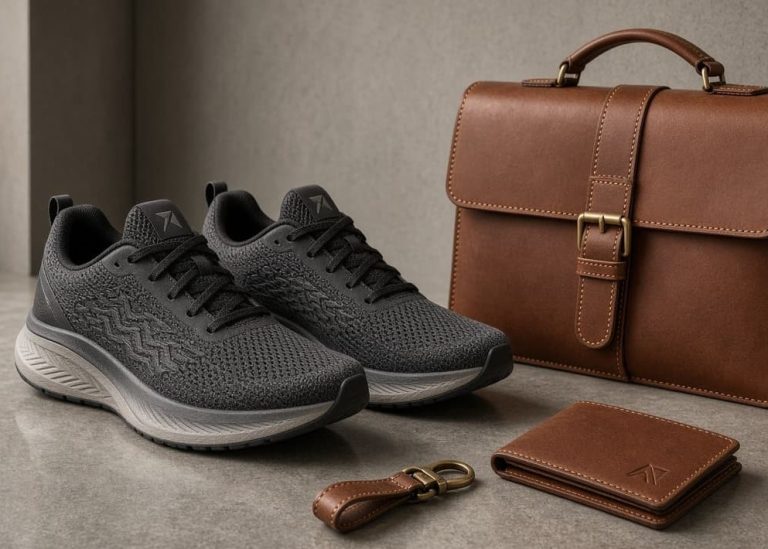

Sleek 6-axis industrial robotic arm with vision sensors hovering over traditional leather pieces on an artisan workbench.
| |

Automating the Artisanal: How the FAIST Project is Bringing Robotics to Shoe Manufacturing

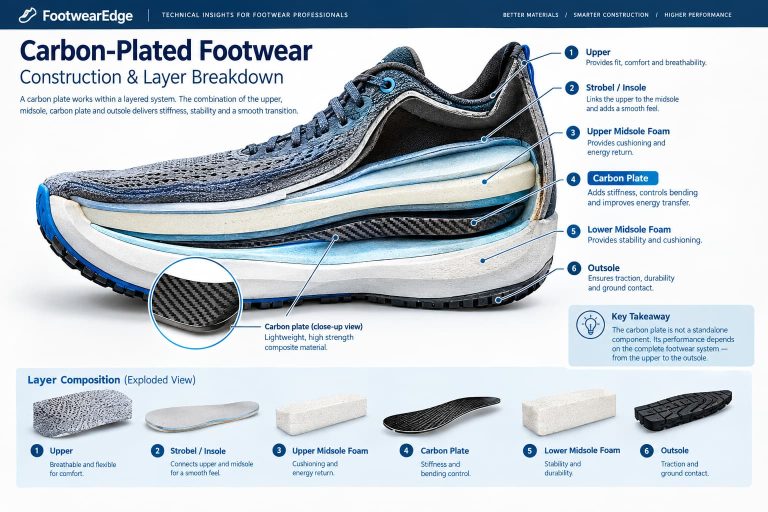
For centuries, shoemaking has been defined by human hands. Crafting a quality shoe—stretching leather, aligning uppers, applying adhesives, and stitching soles—requires a subtle touch and acute spatial judgment that traditional industrial automation has long struggled to replicate.

That narrative is changing. Through major initiatives like the FAIST project (Factory of the Future for the Footwear Sector), the industry is turning a corner. Backed by tens of millions in investments and uniting dozens of tech centers, universities, and historic manufacturers, FAIST is proving that even the most traditional, labor-intensive manufacturing sectors can successfully transition into Industry 4.0.

Why Footwear Automation is Uniquely Hard

If you look at automotive or electronics manufacturing, high-speed robotics are everywhere. Parts are rigid, tolerances are microscopic, and paths are completely predictable.

Footwear, on the other hand, is an automation engineer’s ultimate stress test:

  • High Variance, Low Batch Sizes: Unlike assembly lines churning out millions of identical car doors, modern fashion requires rapid style switching, small batches, and customized runs.
  • Deformable Materials: Leather, textiles, and mesh stretch, warp, and fold. A leather upper reacts differently to tension depending on its cut, hide density, and humidity.
  • Complex 3D Geometries: Shoes aren’t flat blocks. They feature compound curves, undercuts, and dynamic transitions from sole to heel.

Precision Adhesive Deposition

Environmental regulations and sustainability goals demand a reduction in volatile organic compounds (VOCs) and solvent-heavy glues, pushing factories toward water-based alternatives.

  • Waste Reduction: Robot-controlled deposition ensures zero over-spray, dramatically cutting material waste and ensuring consistent bond strength.
  • The Robotic Solution: Automated dispensing heads manage high-viscosity water-based adhesives with microscopic precision.

Smart Last Handling & Soft Grippers

Moving a fragile, unstructured shoe upper through different automated cells requires a delicate touch.

  • The Robotic Solution: Adaptive soft grippers and pneumatic fingers mimic human tactile feedback, holding components securely without creating creases or stretching the material out of alignment.

Beyond the Factory Floor: Data and Sustainability

Automation in FAIST isn’t just about replacing manual labor with robotic arms—it’s a total digital overhaul:
  • The Evolution of Labor: Rather than eliminating jobs, automation shifts human operators from strenuous, hazardous tasks on the line to supervisory, quality control, and programming roles.
  • CAD-to-Robot Pipelines: Digital twins allow factories to test new shoe designs in software, automatically generating machine paths before a single physical sample is built.
  • Eco-Efficiency: Precise material tracking results in drastically lower carbon footprints, reduced scrap rates, and minimized chemical waste.
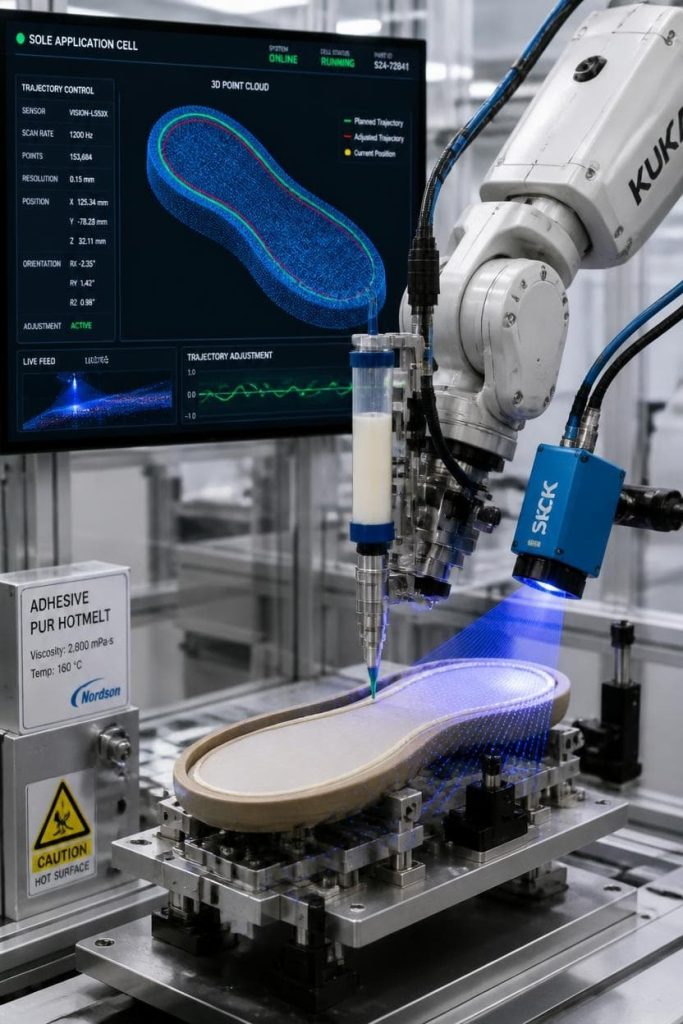
Industrial robot applying adhesive to a shoe sole guided by a blue laser 3D vision sensor, with a 3D point cloud display in the background.
Vision-guided precision: Real-time 3D laser scanning enables robotic arms to trace complex shoe sole contours and apply water-based adhesives evenly.

Final Thoughts

Initiatives like FAIST highlight a vital shift in global manufacturing: the winners won’t necessarily be the cheapest factories, but the smartest ones.

By blending centuries of artisanal shoemaking heritage with cutting-edge 3D vision, adaptive robotics, and sustainable engineering, the footwear sector is setting a blueprint for how traditional industries can future-proof themselves.


References

  • FAIST Consortium. “FAIST – Agile, Intelligent, Sustainable, and Technological Factory.” Knowledge Roadmap and Project Overview, funded by Next Generation EU via IPCA Research Management.
  • World Footwear. “FAIST Voices: Innovation Portugal.” World Footwear News. Case studies and updates on modernization initiatives such as World Footwear – FAIST Project Overview and DCSI PRO Collaboration.
  • ResearchGate. “Towards Footwear Manufacturing 4.0: Shoe Sole Robotic Grasping in Assembling Operations.” Technical framework discussing 3D vision, point cloud analysis, and real-time trajectory generation available on ResearchGate.

Explore More Related Articles

Similar Posts

Leave a Reply

Your email address will not be published. Required fields are marked *