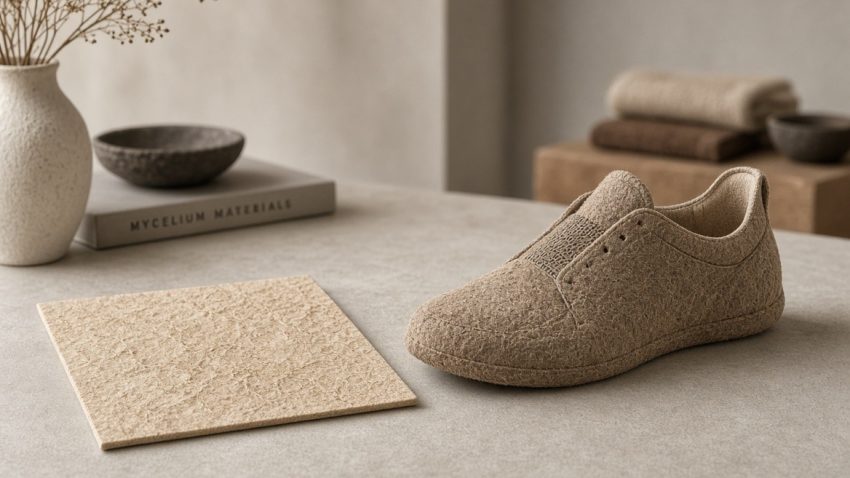
Reimagining the Sole: The Rise of Pure Mycelium Leather & Bio-Grown Footwear
For decades, the footwear industry faced a difficult compromise: choose traditional animal leather with its high carbon, land, and chemical footprint, or choose “vegan pleather”—a petroleum-derived alternative made from Polyurethane (PU) or PVC that sheds microplastics and sits in landfills for centuries.
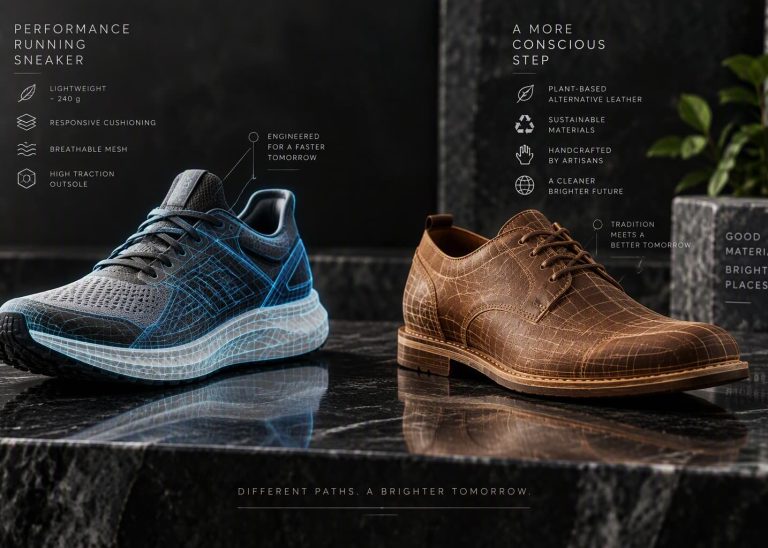
That compromise is rapidly dissolving thanks to mycelium material science. By harnessing the underground root network of fungi, material developers and footwear master craftsmen are growing true, plastic-free bio-materials that match the tensile strength of hide while offering total end-of-life circularity.
What is Mycelium?
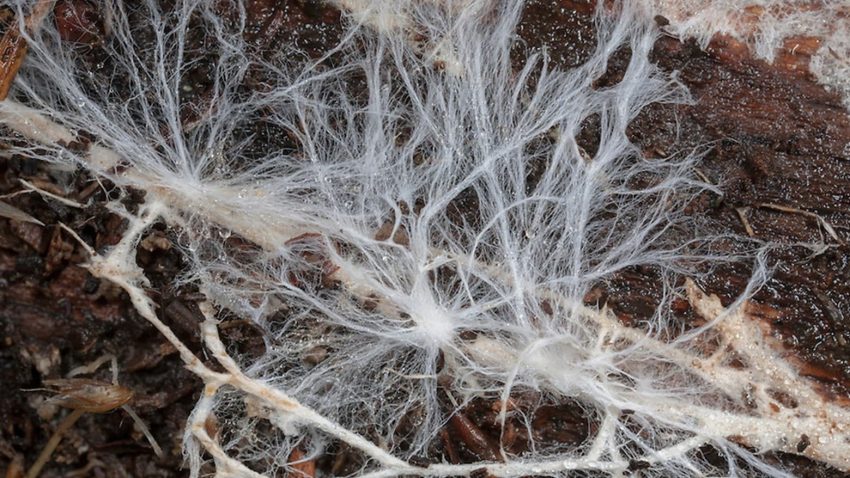
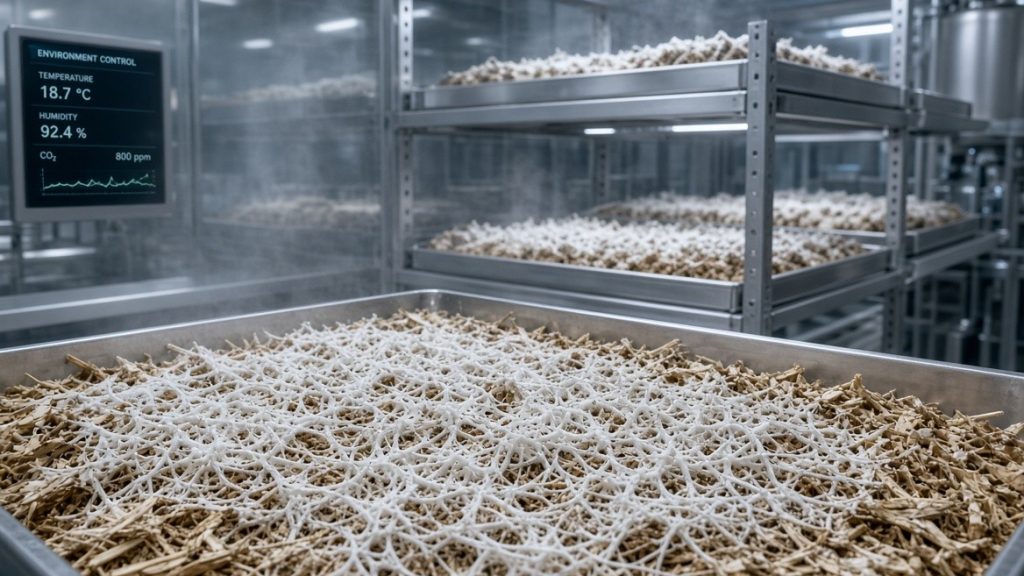
Mycelium is the dense, underground root structure of fungi—a vast, microscopic network of thread-like filaments called hyphae. While mushrooms are simply the temporary fruit that sprouts above ground, mycelium acts as the living engine beneath the soil, breaking down organic matter and absorbing nutrients. In material science, bio-engineers harness this natural growth process by feeding fungal cultures agricultural waste like sawdust or hemp. As the hyphae grow, they self-assemble into a tightly interwoven, durable 3D cellular matrix that can be molded, grown to specific densities, and processed into strong, flexible bio-materials without requiring synthetic petrochemicals or animal hides.
Beyond Faux Leather: What Makes “Pure Mycelium” Different?
Early attempts at plant-based and mushroom leathers often relied on petroleum-based backings, synthetic scrims, or heavy PU coatings to achieve usable tear strength. Pure mycelium bio-materials eliminate synthetic stabilizers entirely.
- Cellular Interlocking: Organisms like Ganoderma lucidum (Reishi) or specialized fungal strains are cultivated in controlled indoor vertical farms. As the hyphae branch out, they naturally weave a tight, 3D cellular lattice.
- Zero Plastic Backing: Unlike composite fabrics embedded with synthetic scrims, pure mycelium hides achieve structural integrity natively.
- Upcycled Substrates: Fungi require no arable livestock land or massive water inputs. They grow directly on upcycled agricultural byproducts like sawdust, corn husks, and hemp hurd.
From Leather Uppers to Load-Bearing Soles
While initial biomaterial applications focused on soft handbag shells and shoe uppers, bio-engineers are now expanding mycelium into structural footwear components.
Shoe Component | Traditional Material | Pure Mycelium Innovation | Environmental Advantage |
|---|---|---|---|
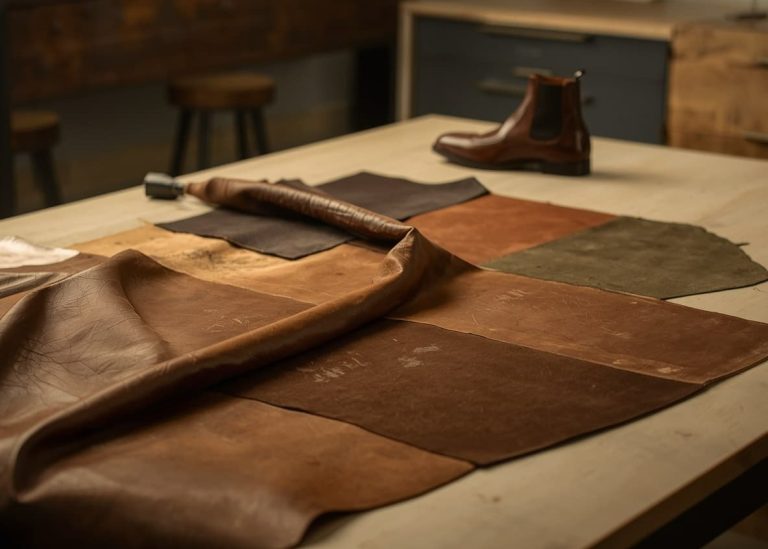
Upper Hide | Bovine Leather / PU Synthetics | Fine Mycelium Sheets (Reishi / Forager) | Less than 1% polymer content; near-zero plastic |
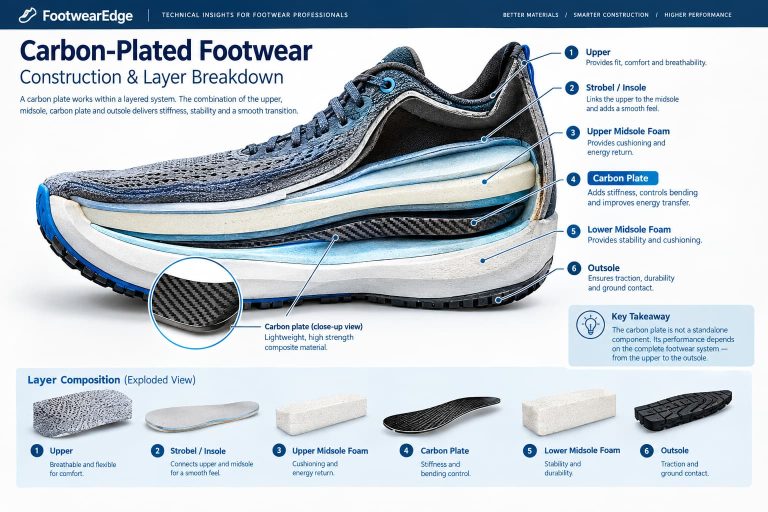
Insoles & Midsole | Ethylene-Vinyl Acetate (EVA) / Polyurethane | Bio-based Mycelium Foams | Fully compostable; replaces petrochemical cushioning |
Structural Outsole | Molded Synthetic Rubber | Laminated Pure Mycelium Density Sheets | Mono-material construction; load-bearing without glues |
“By tuning the fungal growth parameters—adjusting humidity, CO₂ levels, and nutrient flow—scientists can instruct the mycelium to grow into dense, shock-absorbing midsole blocks or supple, breathable upper hides.”
Tanning Without Toxins: The Tannery Integration
One of the largest hurdles for next-gen bio-materials has been industrial scaling. Rather than building entirely new supply chains, leaders like Ecovative (Forager) and MycoWorks collaborate directly with heritage tanneries.
Through innovations like ECCO Leather’s DriTan™ process, raw mycelium hides undergo water-saving bio-tanning. This utilizes the moisture inherently present in the raw biomass, eliminating heavy sludge waste, chromium salts, and millions of gallons of process water.
The Circular Future: Mono-Material Footwear
The ultimate promise of pure mycelium in footwear lies in mono-material circularity.
A traditional shoe contains up to 40 distinct materials bonded with permanent solvent adhesives, making mechanical recycling nearly impossible. A shoe constructed with a pure mycelium upper, mycelium insoles, and a compressed mycelium sole represents a single biological material family. At end-of-life, the entire footwear item can safely decompose in soil without leaving toxic synthetic residues or microplastics behind.
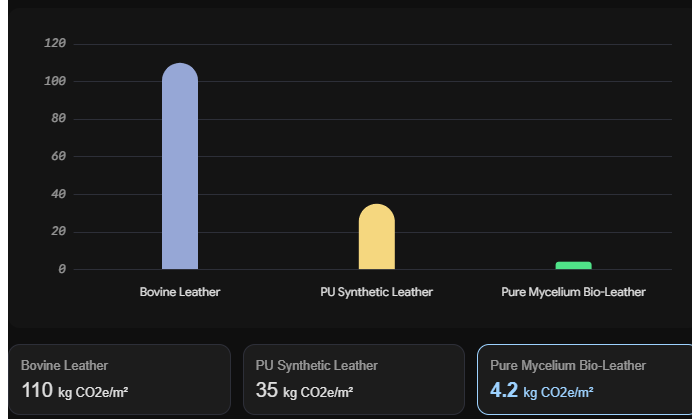
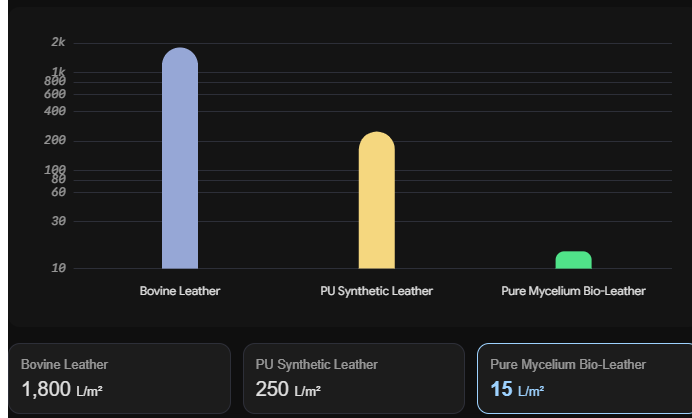
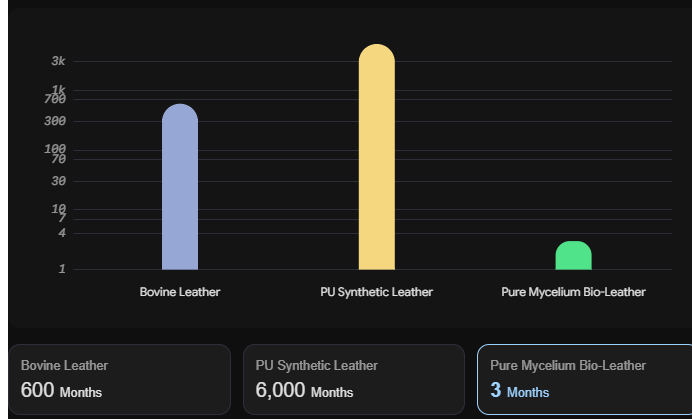
Interactive Comparison Model
Environmental Impact Comparison
Mycelium Bio-Leather vs. Conventional Leather & Synthetic PU
The ultimate promise of pure mycelium in footwear lies in mono-material circularity.
A traditional shoe contains up to 40 distinct materials bonded with permanent solvent adhesives, making mechanical recycling nearly impossible. A shoe constructed with a pure mycelium upper, mycelium insoles, and a compressed mycelium sole represents a single biological material family. At end-of-life, the entire footwear item can safely decompose in soil without leaving toxic synthetic residues or microplastics behind.
Abundance, Global Production & Target Industries
Raw Material Abundance & Feedstock Availability
Mycelium is one of the most abundantly renewable raw materials on Earth because it feeds on lignocellulosic agricultural waste. Fungi do not require arable farmland, livestock feed, or heavy fertilizer. Instead, mycelium cultures feed directly on agricultural byproducts such as:
Because global agriculture generates over 200 billion tons of plant biomass waste annually, the raw feedstock needed to grow mycelium leather is virtually unlimited.
Regional Availability & Production Centers
While the raw agricultural waste is available everywhere grain and wood are processed, industrial-scale bio-manufacturing of mycelium leather is currently concentrated in specific global hubs:
Primary Manufacturers & Target Industries
Mycelium bio-leather has transitioned from small laboratory samples to commercial scale across several multi-billion-dollar industries:
TARGET INDUSTRIES
Footwear & Fashion
(Uppers, Insoles)
Ecovative / MycoWorks
Automotive Interiors
(Dashboards, Seats)
Bolt Threads / MYCL
Furniture & Interior Architecture
(Panels, Upholstery)
Mykkö / Muskin