Raw Material Receipt in Footwear Stitching – Complete Factory Control Guide
Raw material receipt is the first control gate before stitching operations begin. It determines whether production will run smoothly or face quality issues and delays. Therefore, a structured system ensures that only the correct and approved materials move forward into the stitching floor.
This blog is part of our Stitching Series. For a complete understanding of the entire process flow, refer to our pillar guide: Stitching Process in Footwear Manufacturing – Complete Guide from Cutting to Closing Assembly.
Pro Tip : Conduct supplier feedback reviews monthly
Raw Material Receipt – Process Flow
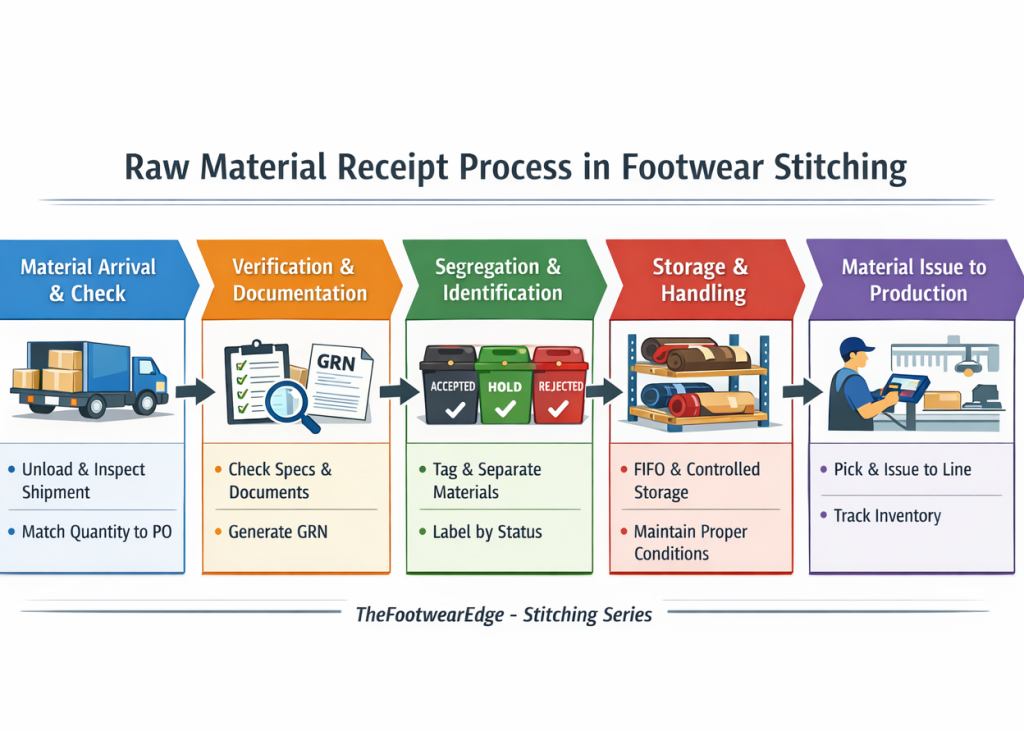
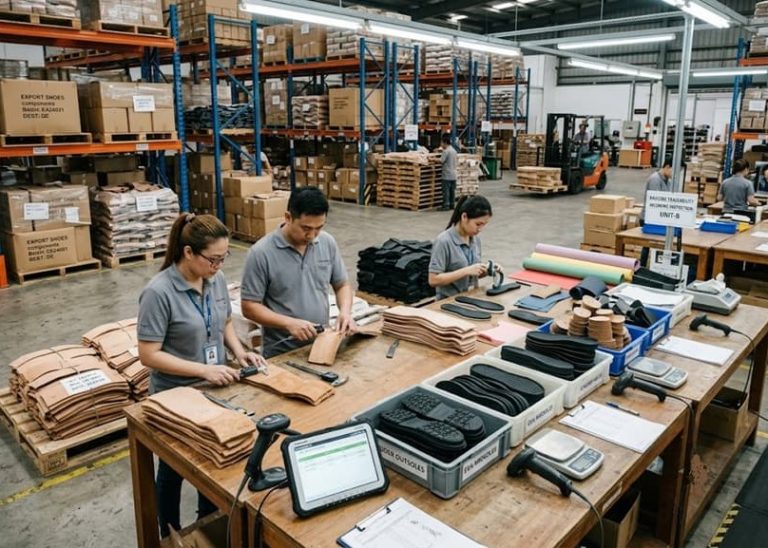
The Raw material receipt starts when materials arrive at the factory warehouse along with supplier documents such as invoices and packing lists. The store team first checks the physical condition of the shipment to ensure there is no visible damage during transit.
Next, the team verifies the received quantity against the purchase order. At this stage, accuracy is critical because any mismatch can directly affect production planning. Once verified, materials are temporarily staged for further processing and internal recording.
After verification, materials are logged into the system, either through ERP or manual registers. This creates the base for inventory tracking and traceability. Only after proper entry, materials are moved to the next stage for identification and storage.
Key Control Points
- Ensure quantity matches Purchase Order exactly
- Check for transit damage before unloading
- Record materials immediately in system
- Maintain batch-wise traceability
Pro Tip : Always implement incoming quality audit reports for supplier evaluation
2. Material Verification & Documentation
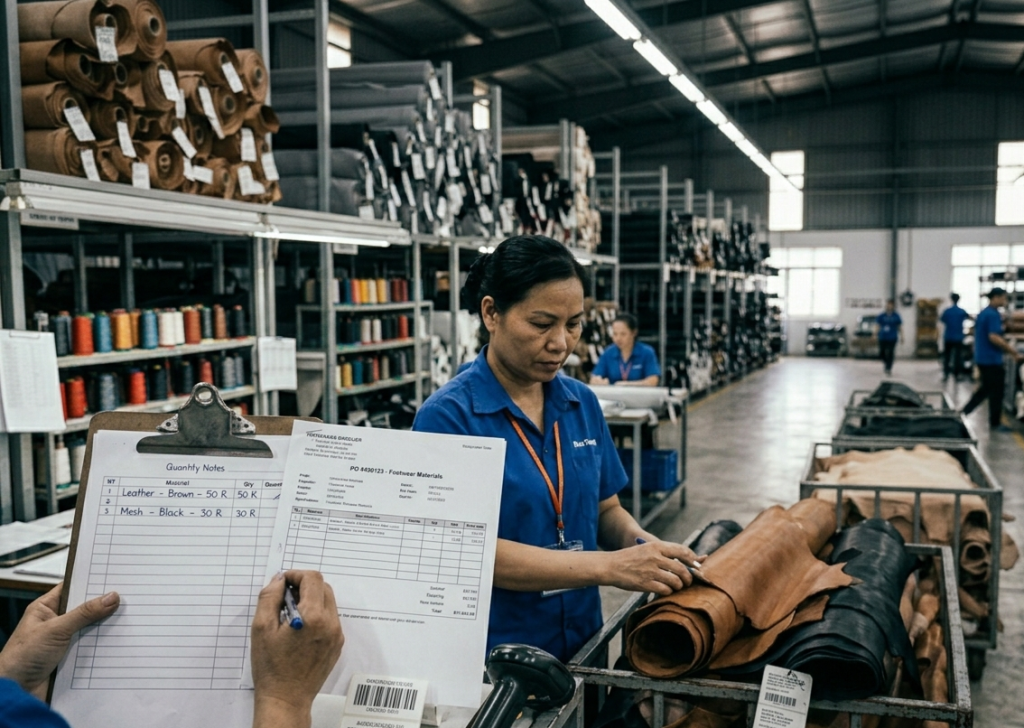
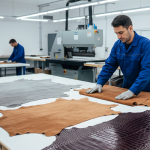
Material verification ensures that the right material has been received as per specifications. The store or planning team compares the purchase order, supplier invoice, and packing list with the actual materials.
During this step, critical parameters such as material code, color, thickness, finish, and specifications are verified. Even a small mismatch can lead to rejection or rework during stitching. Therefore, teams must follow a standard checklist for every material category.
Once verification is completed, a Goods Receipt Note (GRN) is generated. This document acts as official confirmation that materials have been received and accepted into inventory. It also supports audit compliance and supplier accountability.
Additionally, all records must be updated in real time. Delays in documentation often create confusion in inventory status and production planning.
Key Control Points
- Cross-check material codes and specifications
- Ensure document consistency (PO, Invoice, Packing List)
- Generate GRN without delay
- Maintain digital or manual traceability records
Pro Tip : Use barcode or QR-based tracking for better traceability

3. Material Segregation & Identification
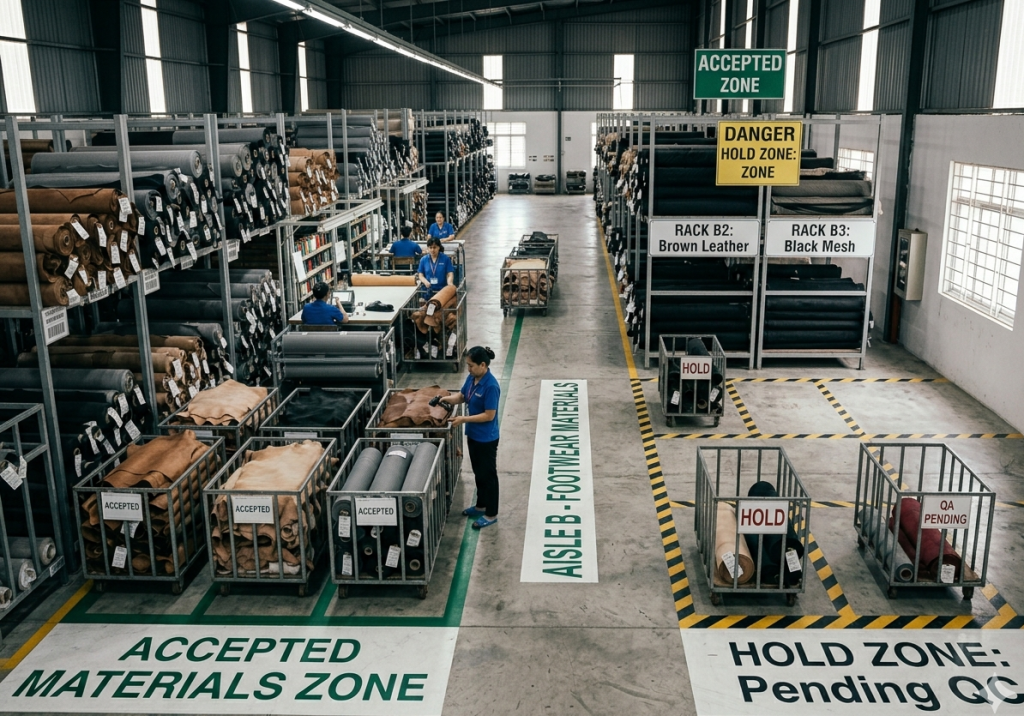
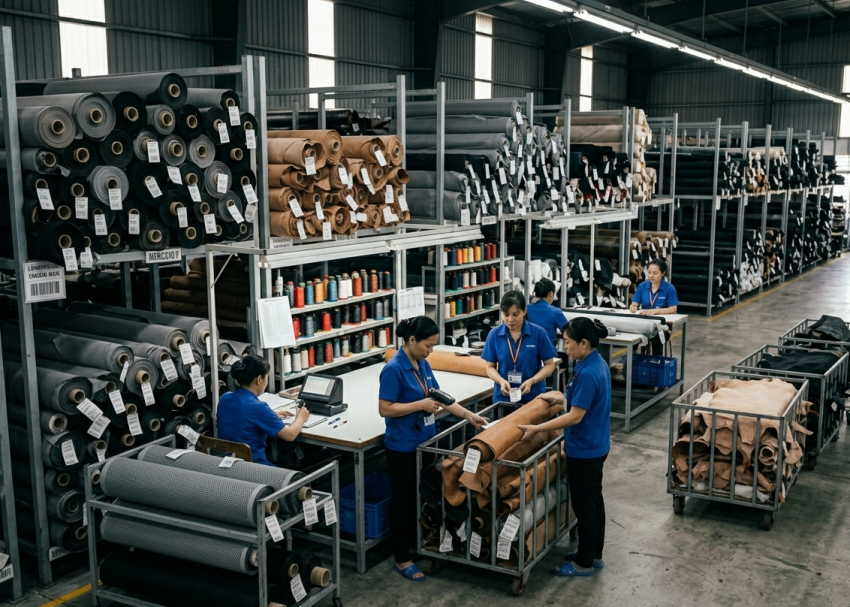
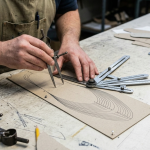
After verification, materials must be clearly segregated and identified. This prevents mixing of materials and ensures only approved materials move forward in the process.
Accepted materials are labeled and moved to designated storage zones. At the same time, any discrepancies or issues identified during verification are tagged and separated. Materials under clarification are placed in a hold area until resolution.
Identification plays a critical role in traceability. Each material batch should carry information such as supplier name, batch number, date of receipt, and material description. This helps track materials throughout the stitching process.
A well-organized segregation system improves workflow efficiency and minimizes handling errors in the warehouse.
Key Control Points
- Use color-coded tags for status identification
- Maintain separate zones for Accepted and Hold materials
- Avoid mixing batches under any condition
- Ensure clear and readable labeling
Pro Tip : Apply FIFO + batch control together for better tracking
4. Storage Conditions & Material Handling
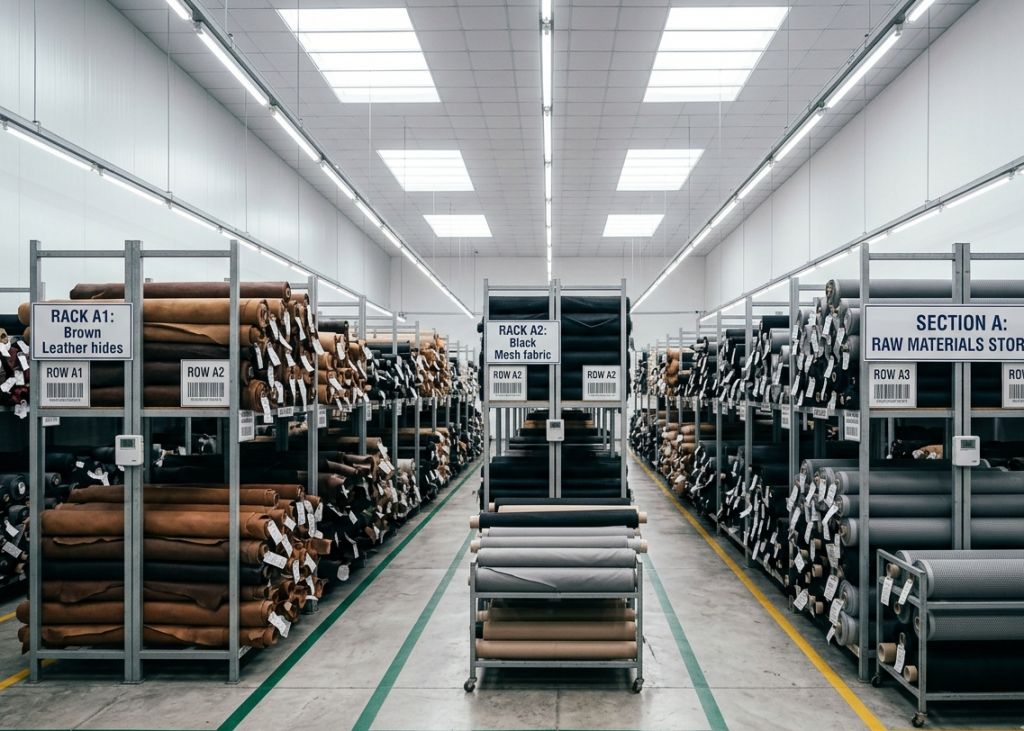
Proper storage conditions are essential to maintain material quality before stitching. Different materials require different storage environments, and ignoring these requirements can lead to defects during production.
For example, leather requires controlled humidity to prevent drying or fungal growth. Similarly, synthetic materials must be stored in dry conditions to avoid deformation or surface damage. Therefore, storage planning must be aligned with material characteristics.
Materials should be stored on racks instead of the floor to avoid contamination and deformation. Additionally, proper spacing between stacks ensures easy access and reduces handling damage.
FIFO (First In First Out) must be strictly followed to ensure older materials are used first. This reduces the risk of material aging and quality deterioration.
Key Control Points
- Maintain controlled temperature and humidity
- Follow FIFO without exception
- Avoid direct sunlight exposure
- Use proper racks and storage systems
Pro Tip : Maintain a defect library for training inspectors


5. Material Issue Readiness for Stitching
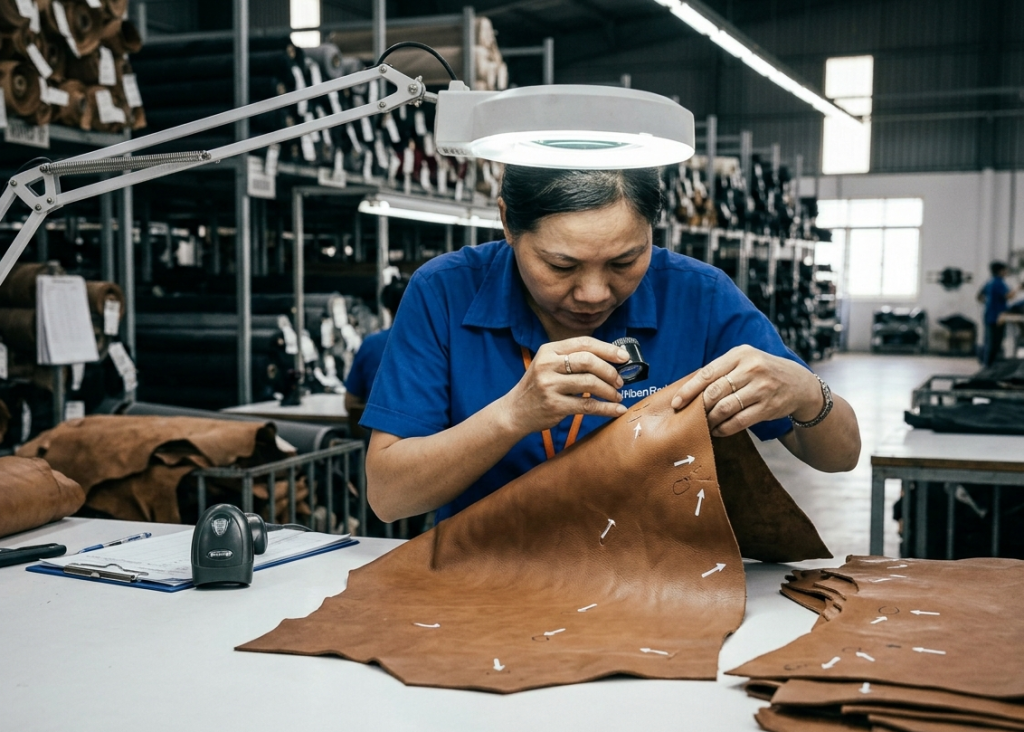
Once materials are verified, recorded, and stored properly, they must be prepared for issue to the stitching floor. This stage ensures that production receives the right materials at the right time.
Materials are allocated based on the production plan and cutting schedule. Coordination between store, planning, and production teams is essential to avoid shortages or excess material movement.
Before issuing materials, the store team rechecks identification labels and ensures correct batch selection. This step is critical for maintaining consistency in production, especially for color and material matching.
Finally, materials are issued against production orders and recorded in the system. This ensures accurate inventory tracking and accountability.
Key Control Points
- Align material issue with production plan
- Verify batch and material details before issue
- Track issued quantity in system
- Avoid over-issuing or shortages
Expert Insight: Standardize lighting conditions for color inspection

Frequently Asked Questions (FAQs)
1. What is the role of raw material receipt in stitching?
It ensures only correct and approved materials enter the production process.
2. Why is documentation important during receipt?
It provides traceability and supports audit and inventory control systems.
3. What is GRN in footwear factories?
GRN is a Goods Receipt Note confirming material acceptance into inventory.
4. How does FIFO help in material management?
It ensures older materials are used first, preventing quality deterioration.
5. What happens if materials are not properly segregated?
It can lead to mixing of defective or wrong materials in production.
6. How can factories improve material traceability?
By using barcode systems and proper labeling practices.
7. What is the biggest risk in raw material receipt?
Using incorrect or mismatched materials, leading to production defects.
Expert Insight:
Train store and QC teams regularly
Digitize GRN and inspection records to avoid manual errors