Skiving in Footwear Manufacturing: Techniques, Machines, and Quality Control
Skiving is a precision operation in footwear manufacturing that involves reducing the thickness of materials in selected areas before stitching, folding, or cementing. This process directly influences shoe comfort, durability, and visual quality. While skiving originated with leather processing, it is now equally important for synthetic, microfiber, and coated materials used in modern footwear.
When controlled correctly, skiving improves seam strength, reduces material stress, and ensures smooth assembly. Poor skiving, however, can weaken components, cause tearing, and increase rejection rates. This makes skiving not just a preparatory step, but a quality-critical operation in shoe production.
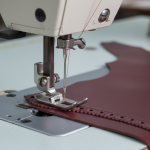
What Skiving Achieves in Shoe Manufacturing
In practical terms, skiving prepares materials so they perform correctly during assembly. Thinner edges allow components to fold cleanly, stitch evenly, and bond securely. The result is footwear that feels better on the foot and performs reliably during wear.
Skiving supports manufacturing by:
- Reducing bulk in folded and stitched zones
- Improving cement adhesion
- Enhancing seam flexibility
- Preventing discomfort at pressure points
Pro Tip:
Always align skiving depth with final seam construction, not just material thickness. Over-skiving for appearance alone often compromises durability.
Key Applications of Skiving
Skiving is applied at multiple stages of upper preparation and assembly. Each application serves a functional purpose, not just a cosmetic one.
Main functional uses include:
- Preparing edges for folding and piping
- Thinning seam allowances for flat stitching
- Reducing bulk in lasting margins
- Improving fit in collars, tongues, and facings
- Supporting clean finishing in visible edges
Pro Tip: Collars and toplines should always be skived progressively, not uniformly, to avoid edge collapse after repeated wear.


Types of Skiving Used in Footwear
Different construction methods require different skiving styles. Instead of treating skiving as a single process, factories apply specific techniques based on how each component will be assembled.
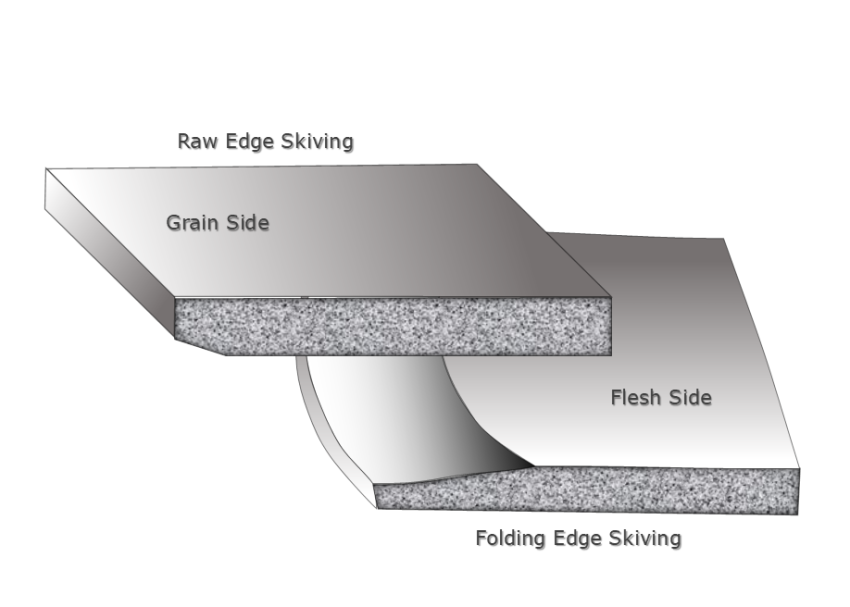
Raw edge skiving is used when the edge remains visible in the finished shoe. The goal is to remove loose fibers and create a clean appearance while maintaining edge strength.
Pro Tip: Avoid aggressive raw-edge skiving on soft leathers—edge painting and wear resistance will suffer.
Folded edge skiving is essential when edges are turned in before stitching or cementing. Thinning the material ensures smooth folding and stronger bonding without stiffness.
Closed seam skiving is applied when two pieces are stitched face-to-face. This reduces seam thickness and allows the joint to sit flatter, improving comfort and durability.
Best Practice : Closed seam skiving depth should never exceed 50% of original material thickness in load-bearing zones.
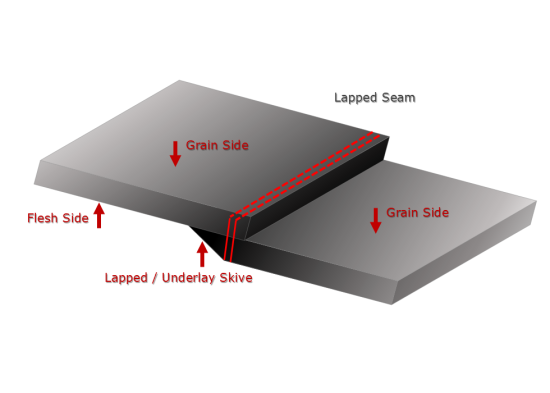
Lapped edge skiving is used where one piece overlaps another, such as linings or reinforcements. This prevents thick ridges and improves visual quality. Lapped edge Skiving also called as “Underlay Edge” Skiving
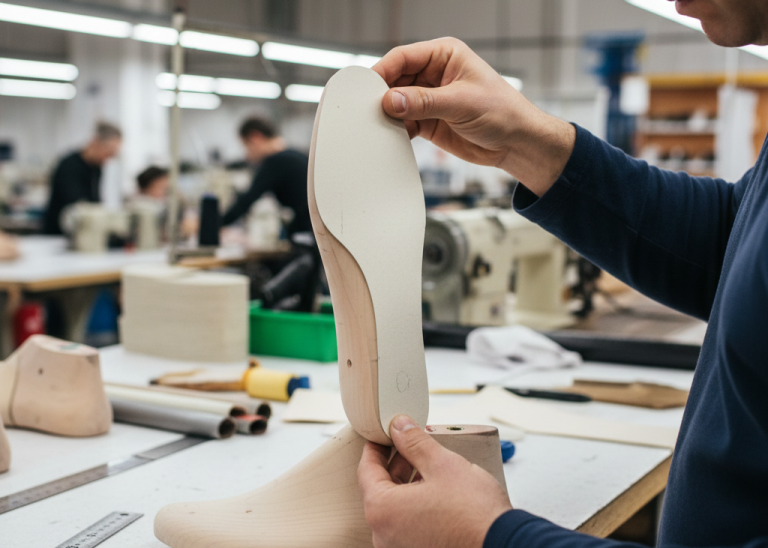
Lasting margin skiving is performed at the bottom of the upper before lasting. It reduces bulk around the insole and helps achieve a better shoe shape and feel.
Pro Tip: Excessive lasting margin skiving is a common cause of upper tear-out during lasting—especially in PU and microfiber materials.
Skiving Tools and Production Methods
Skiving can be performed either manually or by machine. The choice depends on production volume, component complexity, and quality consistency requirements.
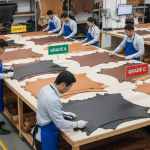
Manual skiving is still common in sampling rooms, small workshops, and special construction areas. Skilled operators control thickness by hand, allowing flexibility but requiring high experience and attention.
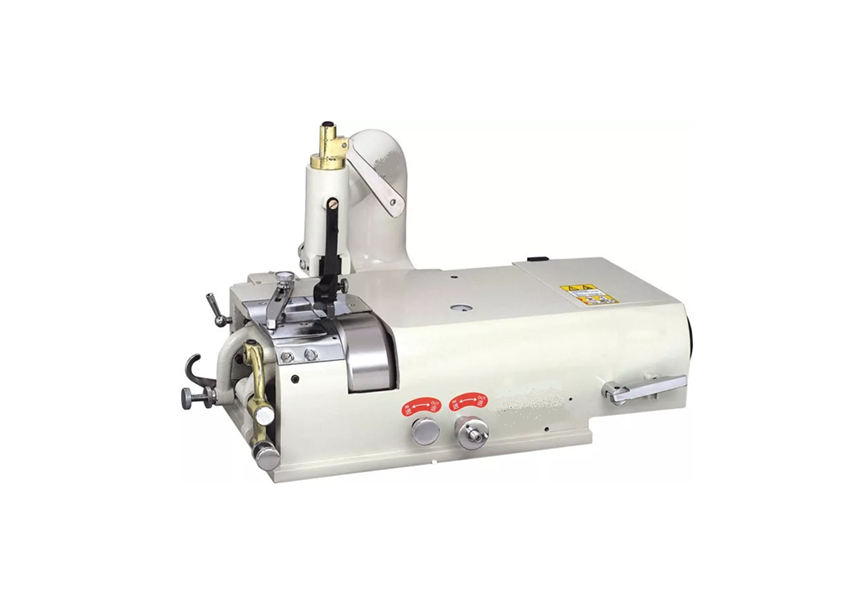
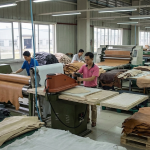
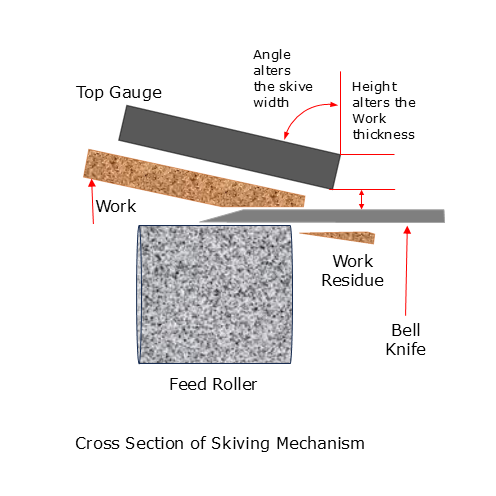
Machine skiving dominates modern factories because it ensures repeatability and productivity. Common machine types include:
- Fixed blade skivers for straight and stable cuts
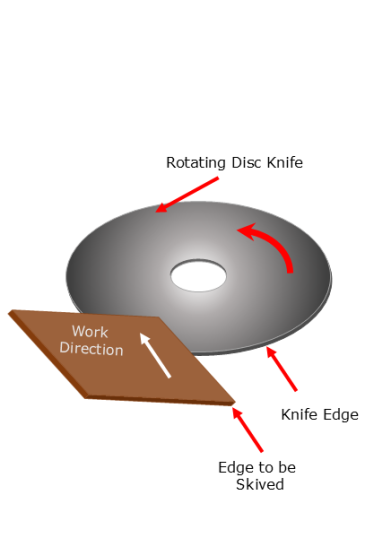
- Rotating disc knife skivers for curved components
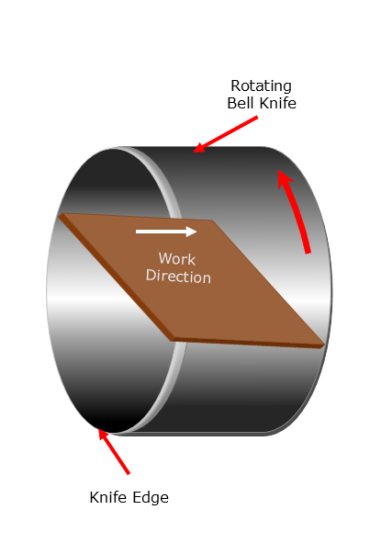
- Bell knife skivers for high-precision, high-volume production
Machine skiving improves output while reducing operator fatigue and variation.
Best Practice: Assign one operator per machine type whenever possible. Cross-rotation without retraining often leads to inconsistent skiving depth.
Matrix Skiving for Complex Components
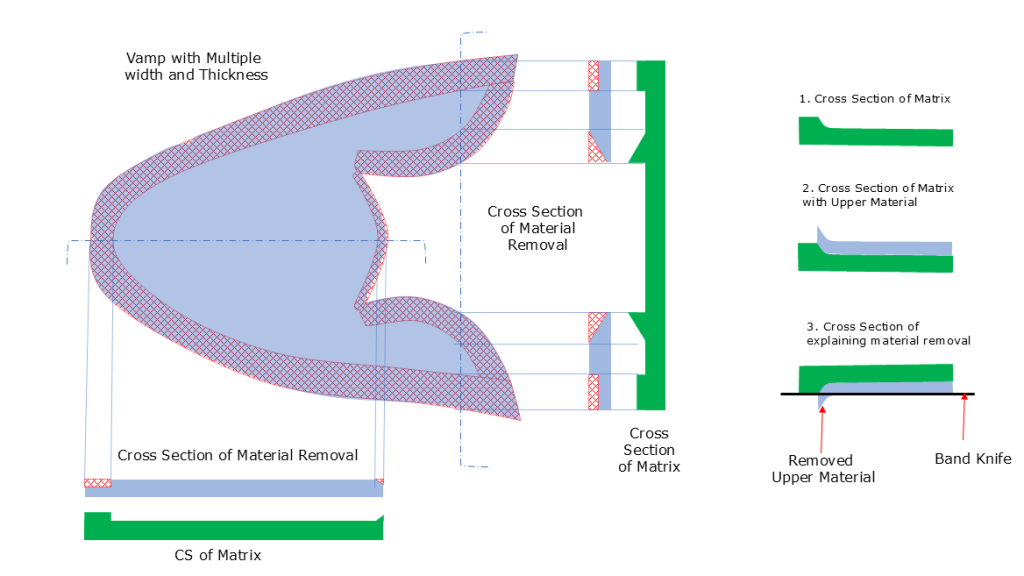
Matrix skiving is used when components have irregular shapes or require highly consistent thinning. A shaped support holds the material in position while skiving takes place. This ensures uniform thickness and is especially valuable in sports and performance footwear where fit and durability are critical. Matrix Skiving also called as “Matrix Splitting” as this operation done in Splitting Machine
Best Practice: Matrix skiving is most effective when combined with pre-set thickness programs on digital skiving machines.
Material Behavior During Skiving
Not all materials respond the same way to skiving. Understanding material behavior is essential to avoid defects and performance loss.
General guidelines:
- Leather skives well but must not be over-thinned in stress areas
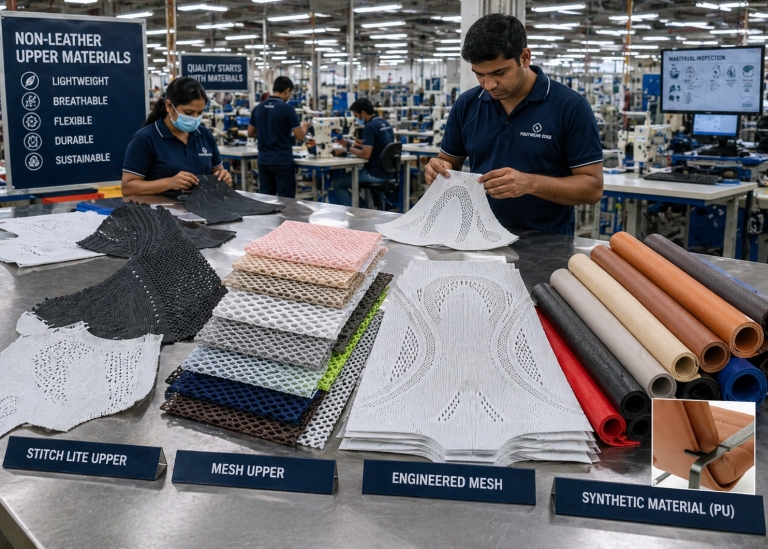
- Synthetic PU requires sharp blades to prevent tearing
- Microfiber needs light, controlled skiving
- Textiles allow only minimal thinning
- Coated materials must be protected from layer separation
Over-skiving can significantly reduce material strength, so balancing flexibility and durability is always a priority.
Pro Tip: If a material shows edge “feathering,” the issue is usually blade sharpness, not operator technique.
Quality Risks in Skiving
Skiving errors are among the hidden causes of footwear failure. Problems often appear later during stitching, lasting, or wear testing.
Common defects include:
- Tearing at seams
- Uneven thickness
- Weak bonding
- Visible ridges
- Early material cracking
Prevention depends on discipline rather than machinery alone:
- Keep blades sharp and well aligned
- Standardize skiving depth in specifications
- Match machine settings to material type
- Train operators regularly
- Inspect skived parts before stitching
Pro Tip :
Introduce skiving audits before stitching, not after. Early detection saves both material and labor cost.
Best Practices for Consistent Skiving
High-performing factories treat skiving as a controlled technical process, not a routine task.
Recommended practices:
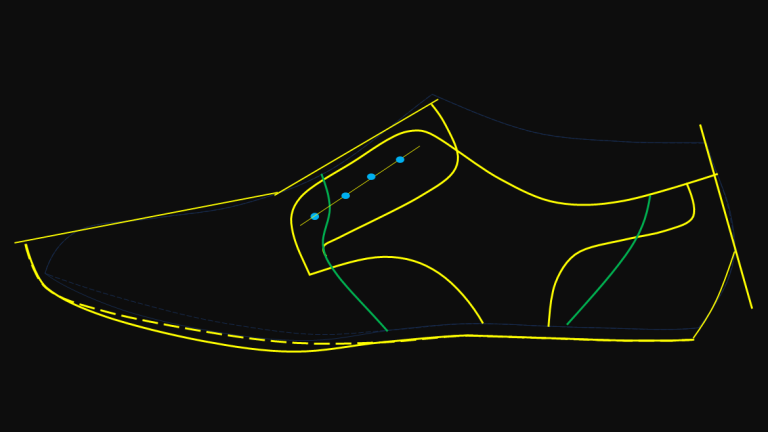
- Define skiving limits in technical drawings
- Use thickness gauges for verification
- Avoid skiving in high-stress load areas
- Audit skiving quality at line level
- Integrate skiving checks into quality systems
Best Practice : Brands increasingly audit skiving standards during factory evaluations—poor control can affect vendor ratings.

Technology Trends in Skiving
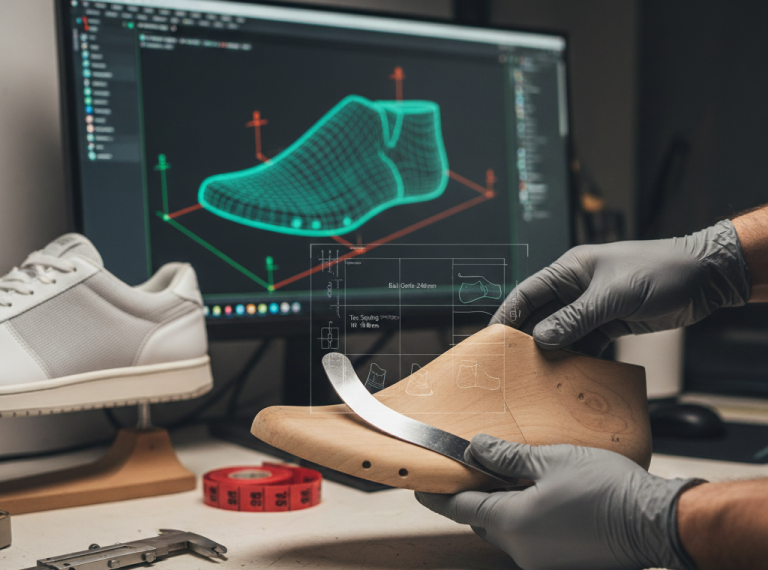
The footwear industry is moving toward smarter skiving solutions. Digital thickness control, preset programs, and guided alignment systems reduce dependency on operator skill alone. These advancements improve repeatability, reduce waste, and help factories maintain stable quality even in high-volume production.
Pro Tip: Even with digital systems, blade maintenance remains the single biggest quality driver in skiving.

Conclusion
Skiving is a silent contributor to footwear quality. It shapes how well a shoe fits, how long it lasts, and how it looks in the market. By combining the right techniques, tools, and quality discipline, manufacturers can transform skiving from a simple thinning operation into astrategic quality advantage.