Next-Gen Footwear Materials: Bio-Synthetics and Chrome-Free Tanning Innovations
September 2026 Material Innovations
Introduction
The footwear sector is undergoing a rapid technological transformation as brands prioritize high-performance bio-based materials and closed-loop tanning chemistry. These innovations successfully reconcile strict environmental regulations with the rigorous durability standards demanded by modern consumers.
Chemical & Fiber Architecture Breakdown
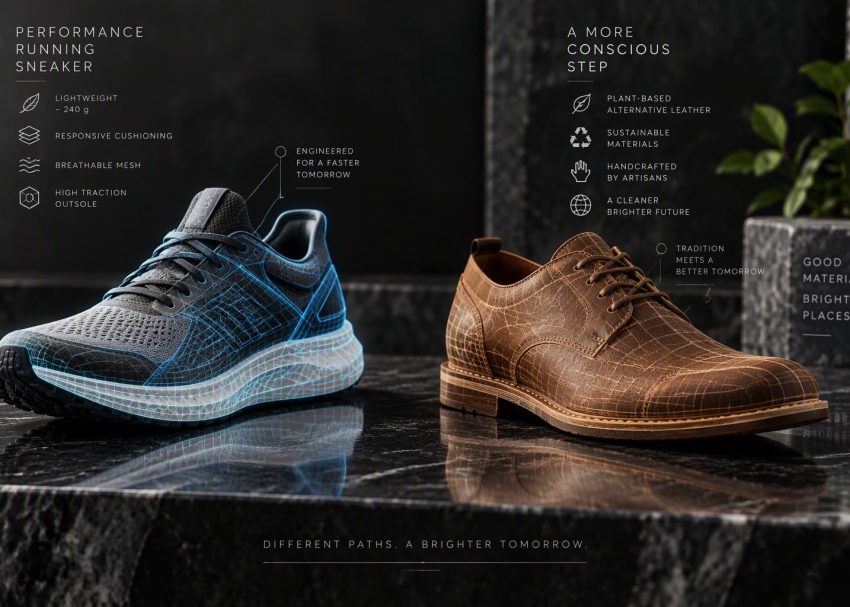
Modern material breakthroughs center on two primary categories reshaping luxury and athletic footwear landscapes: Mycelium-Derived Bio-Leathers and High-Performance Chrome-Free Vegetable/Organic Tanning Systems.
Lab Performance Metrics vs. Traditional Bovine Leather

Material Property | Mycelium Bio-Leather | Chrome-Free Vegetable Leather | Traditional Bovine Leather (Chrome-Tanned) |
|---|---|---|---|
Tensile Strength (MPa) | 18.5 – 22.0 | 24.0 – 28.5 | 25.0 – 30.0 |
Water Vapor Permeability (mg/Sq,cm\ h) | 2.8 – 3.2 | 3.5 – 4.1 | 3.0 – 3.8 |
Hydrothermal Shrinkage Temp (°C) | 82°C (stabilized) | 88°C | 100°C – 105°C |
Elongation at Break (%) | 45% – 55% | 40% – 50% | 50% – 60% |
Biodegradability & End-of-Life | Fully compostable (90 days) | Biodegradable in industrial soil | Non-biodegradable (unless wet-white/organic) |
Factory Integration
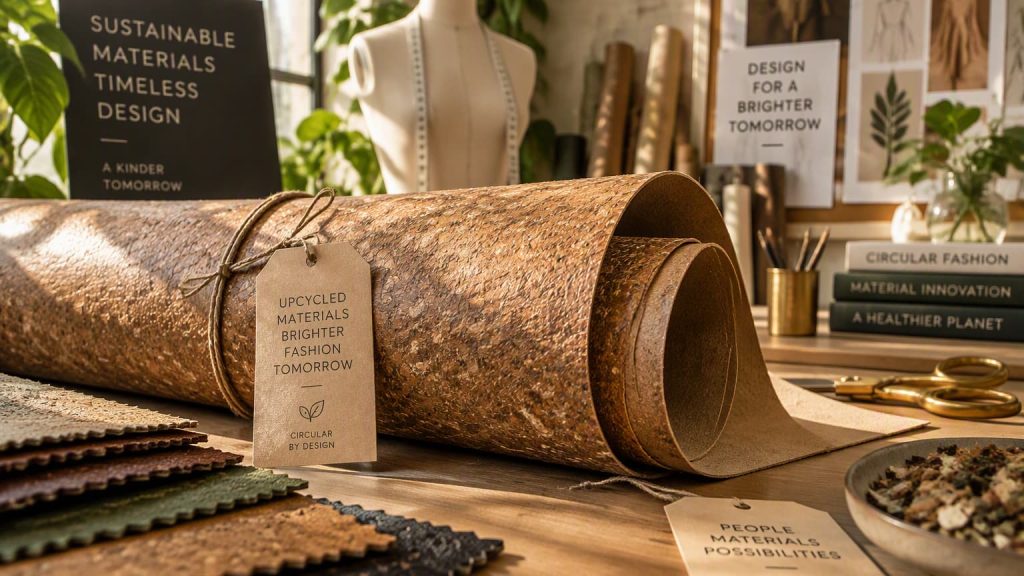
Integrating alternative upper materials into traditional manufacturing lines requires specific operational adjustments:
Cutting & Grading
Mycelium and high-grade bio-synthetics feature uniform roll widths, eliminating natural hide defects and increasing cutting yields by up to 15%. Laser and oscillating-knife CNC tables require adjusted vacuum pressures to prevent material shifting.
Stitching & Seam Strength
Needle heating is significantly reduced due to lower friction coefficients. Recommended needle points (e.g., S, LR, or D point) prevent fiber tearing, while polyester-cotton core-spun threads maintain seam elongation compatibility.
Lasting Behavior & Thermal Activation
Unlike thermoplastic synthetics, bio-leathers require controlled moisture conditioning and moderate toe-lasting thermal settings (60°C$ to $75°C) to prevent surface blistering or excessive rigidity during pull-over operations. Solvent-based cements are replaced by water-based polyurethane adhesives requiring UV-priming activation.
Conclusion
As material science achieves parity with traditional hide performance, footwear brands that successfully optimize factory integration and thermal bonding parameters will capture significant market share in the evolving sustainable economy.