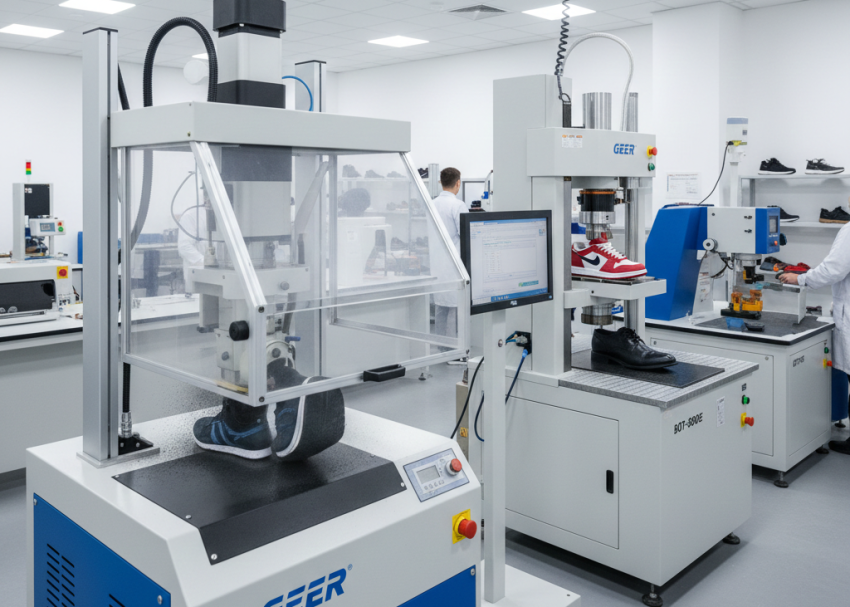
Footwear Manufacturing Insights: Sole, Midsole & Component Testing
Sole systems and footwear components play a decisive role in durability, safety, and functional performance. While upper materials influence comfort and appearance, outsole compounds, midsole foams, and structural components determine wear life, grip, shock absorption, and long-term stability. Many footwear complaints—premature wear, slipping incidents, loss of cushioning, or component breakage—can be traced back to inadequate evaluation of these elements.
Testing of soles, midsoles, and components is therefore essential not only for quality control but also for material selection, design validation, and process optimization. This article provides a detailed technical overview of the key tests applied to footwear soles and components, explaining what each test evaluates, how results should be interpreted, and where misjudgements frequently occur.

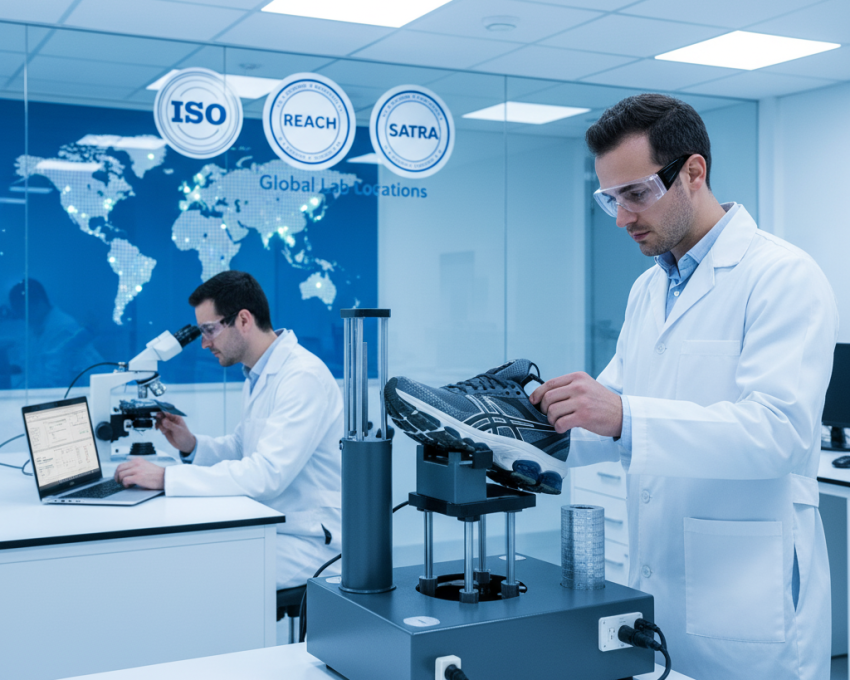
Outsole Abrasion Resistance Testing
Abrasion resistance testing evaluates the ability of outsole materials to withstand wear caused by repeated friction against ground surfaces. SATRA methods such as TM31, TM163, and TM174 are widely used for rubber, EVA, PU, and TPU outsoles. These tests measure material loss after controlled abrasion cycles, expressed as volume or mass loss.
Abrasion performance is influenced by compound formulation, filler content, hardness, and tread geometry. Laboratory results provide comparative data but do not directly translate to wear life unless interpreted in context.
Pro Tip: A harder outsole compound may show lower abrasion loss in testing but wear faster in real use due to reduced contact area and higher localized stress.
Expert Advice: Always review abrasion data alongside hardness and density values. Similar abrasion losses can result from very different compound behaviours in actual walking conditions.
Reference – SATRA TM31 / TM163 / TM174
Search “TM55” on the SATRA Test Method Directory.
🔗 https://new.satra.com/services/test-methods/test-method-list/
Slip Resistance Testing of Outsoles
Slip resistance testing assesses the frictional performance of outsole materials on various surfaces, typically wet and dry ceramic or steel. SATRA methods such as TM144 and TM160 are commonly applied to quantify slip risk under defined conditions.
Slip resistance is affected by compound chemistry, surface texture, tread design, and environmental contamination..
Pro Tip: Improving slip resistance through tread micro-texture is often more effective than softening the compound, which can negatively impact abrasion resistance.
Expert Advice: Slip resistance requirements should be aligned with the intended environment of use. Indoor, outdoor, and occupational footwear demand different friction performance thresholds.
Reference – SATRA TM144 / TM160:
Search “TM144” or “TM160” on the SATRA Test Method Directory.
🔗 https://new.satra.com/services/test-methods/test-method-list/
Midsole Compression Set and Resilience Testing
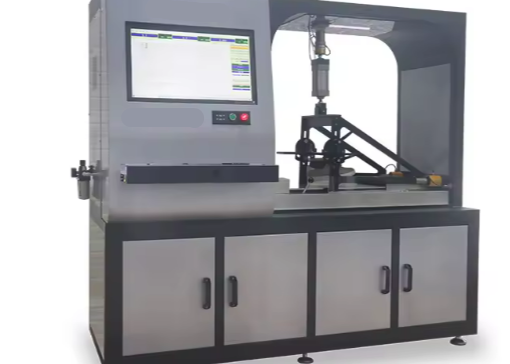
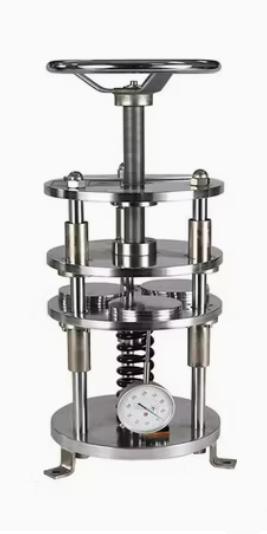
Midsole materials such as EVA, PU, and TPU are tested to evaluate long-term cushioning stability. SATRA methods including TM64 measure compression set, indicating the permanent deformation remaining after prolonged loading.
Resilience testing assesses the ability of the midsole to recover energy during walking, directly influencing comfort and fatigue.
Pro Tip: Low compression set does not automatically indicate good comfort. Materials with poor resilience may retain thickness but feel firm and unresponsive.
Expert Advice: Always conduct compression and resilience testing after aging exposure. Fresh midsoles often perform well initially but degrade significantly over time.
Reference – SATRA TM64:
Search the TM 64 numbers on the SATRA Test Method Directory.
🔗 https://new.satra.com/services/test-methods/test-method-list/
Flex Resistance of Sole Units
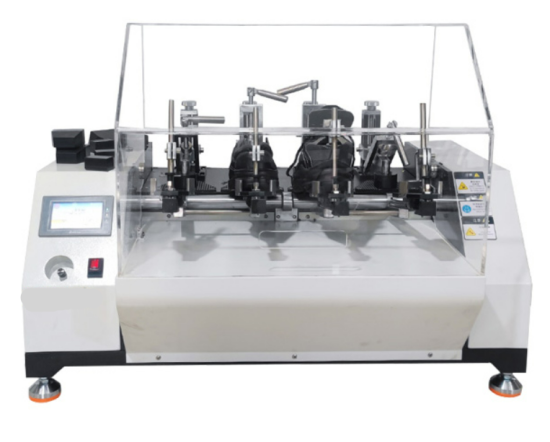
Flex resistance testing evaluates how outsole and midsole systems behave under repeated bending. SATRA methods such as TM92 and TM161 simulate forepart flexing during walking to identify cracking, stiffness increase, or material failure.
Flex performance is influenced by compound elasticity, molding quality, and sole thickness distribution.
Pro Tip: Flex cracking often initiates at mold parting lines or colour junctions rather than in the bulk material.
Expert Advice: Flex tests should be conducted on finished sole units, not raw compounds, to capture molding and design influences.
Reference – SATRA TM92 / TM161:
Search “TM92”, “TM161” on the SATRA Test Method Directory.
🔗 https://new.satra.com/services/test-methods/test-method-list/

Aging and Hydrolysis Testing of Sole Materials
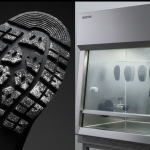
Aging tests evaluate the stability of sole materials under heat, humidity, and time. SATRA methods such as TM63 (heat aging) and TM188 (hydrolysis) are critical for PU-based soles and adhesives.
Hydrolysis degradation leads to embrittlement, cracking, or complete sole failure, often after storage or prolonged exposure to humid environments.
Pro Tip: Hydrolysis failures are frequently misattributed to storage conditions, while the root cause lies in material formulation or stabilizer content.

Expert Advice: Testing conditions should reflect the target market climate. Footwear sold in tropical regions requires more aggressive hydrolysis evaluation.
Reference – SATRA TM63 / TM188:
Search the TM numbers on the SATRA Test Method Directory.
🔗 https://new.satra.com/services/test-methods/test-method-list/
Testing of Footwear Components and Accessories
Footwear components such as laces, eyelets, zippers, and trims are tested for strength, durability, and corrosion resistance. SATRA methods including TM93 (lace strength) and TM155 (corrosion testing) are commonly applied.
Although often treated as minor elements, component failure strongly influences consumer perception of quality.
Pro Tip: Components may pass individual tests but still cause staining or damage to adjacent materials. Always evaluate interaction effects.
Expert Advice: Component testing should be aligned with whole-shoe performance requirements rather than conducted in isolation.
Conclusion
Sole, midsole, and component testing form the foundation of footwear durability and safety. Abrasion, slip resistance, compression, flexing, aging, and component tests provide valuable insight into material behaviour and design robustness. When interpreted holistically, these results guide better material selection, improved designs, and reduced field failures.